The integration targets the prescription verification queue—the central workflow where pharmacists review new and refill prescriptions for safety and accuracy. AI connects via McKesson's EnterpriseRx API to access the prescription object (Rx), patient profile, and medication history. The AI agent acts as a pre-screen, analyzing each script in the queue for potential issues like drug-drug interactions, allergy conflicts, dosage appropriateness, and prior authorization (PA) requirements before the pharmacist's final review. This creates a two-step flow: AI flags and annotates, the pharmacist adjudicates.

Integration
AI Integration for McKesson EnterpriseRx Prescription Verification
A technical guide to integrating AI copilots into McKesson EnterpriseRx's prescription verification workflow, using its API to inject safety checks and recommendations before pharmacist final approval.
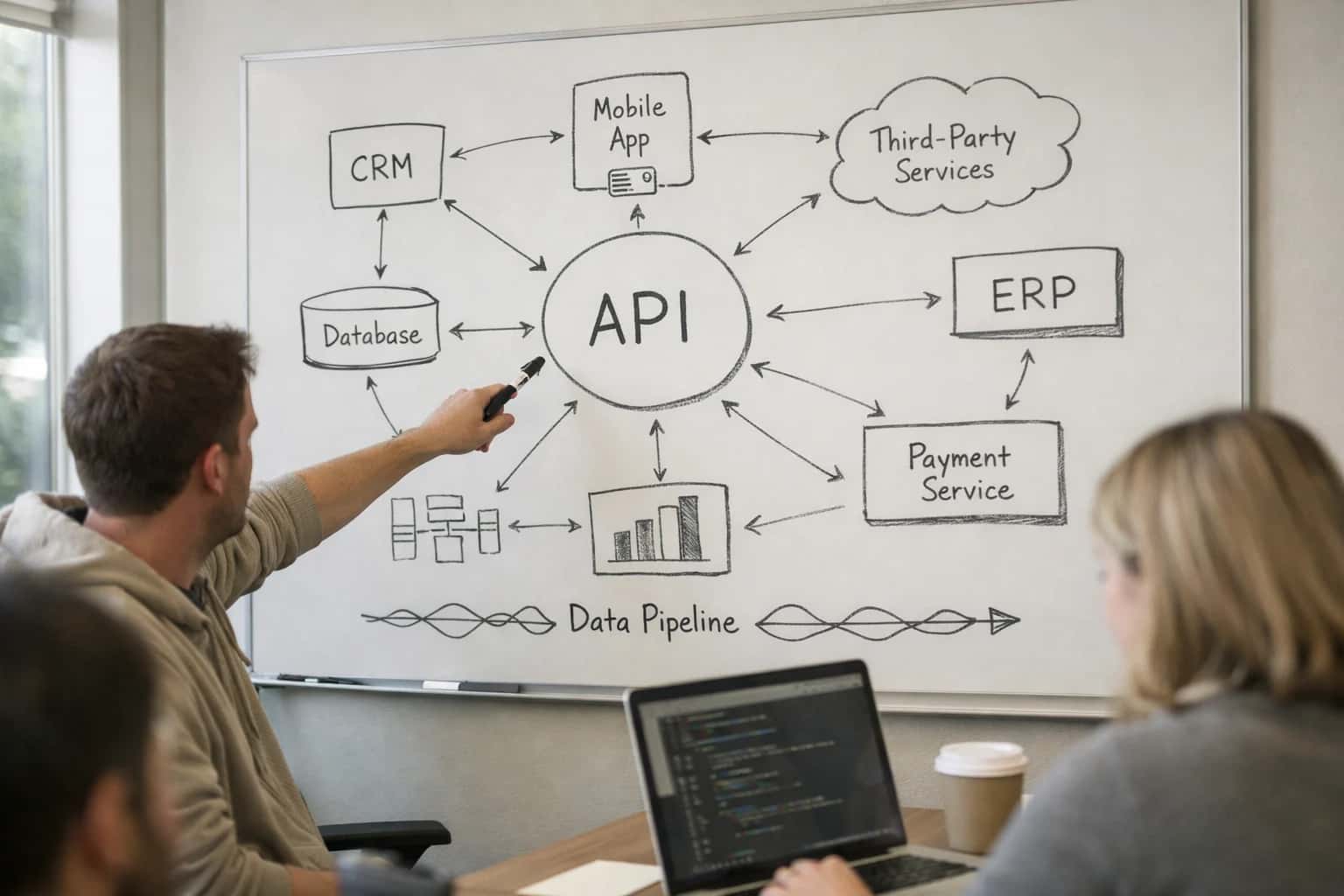
ARCHITECTURE FOR PHARMACIST-IN-THE-LOOP AI
Where AI Fits into McKesson's Verification Workflow
A technical blueprint for injecting AI-assisted clinical review into McKesson EnterpriseRx's core prescription verification process without disrupting pharmacist workflow.
Implementation involves an event-driven architecture. When a prescription enters the verification status, a webhook or API call triggers the AI service. The AI model, grounded in the pharmacy's specific patient data and formulary, returns structured recommendations (e.g., "Flag: Potential interaction between amiodarone and simvastatin. Suggested Action: Review for rhabdomyolysis risk."). These are injected back into the prescription record as custom notes or alert fields visible within the native EnterpriseRx verification screen. This keeps the pharmacist in the platform, maintaining audit trails and final approval authority.
Rollout is typically phased, starting with non-controlled substance, new-to-therapy prescriptions to build confidence. Governance is critical: all AI recommendations must be logged with a confidence score, and pharmacist overrides are captured to continuously refine the model. The impact is operational: reducing manual look-up time, catching complex interactions early, and ensuring PA flags are identified at the point of verification—turning a potential 48-hour delay into a same-day action.
PRESCRIPTION VERIFICATION WORKFLOW
Integration Touchpoints in McKesson EnterpriseRx
The Primary Integration Surface
The verification queue is the central workflow hub where new prescriptions await pharmacist review. AI integration injects a pre-screening layer before a prescription reaches the pharmacist's screen.
Key Integration Points:
- Event Hooks: Listen for
RxCreatedorRxEnteredVerificationQueueevents via McKesson's API or database triggers. - Data Payload: Extract the prescription NDC, sig, patient age/weight, and relevant patient history (allergies, current medications) from the associated profile.
- Action Injection: Post-process, the AI service can append structured flags (
potentialDdi,doseCheckAlert,paLikely) and a summary note to the prescription's internal notes field or a custom UI extension, priming the pharmacist for focused review.
This creates a 'pharmacist-in-the-loop' model where AI handles initial data gathering and risk scoring, allowing the human expert to concentrate on clinical judgment and patient consultation.
MCKESSON ENTERPRISERX INTEGRATION PATTERNS
High-Value AI Use Cases for Prescription Verification
Integrate AI directly into McKesson EnterpriseRx's verification workflow to augment pharmacist review, reduce clinical risk, and accelerate prescription throughput. These patterns use the platform's APIs and data model to inject intelligence before final approval.
01
Real-Time Clinical Flagging
Integrate an AI agent with the EnterpriseRx verification queue to pre-screen every new e-prescription and scanned script. The agent cross-references the patient's profile and medication history against external databases to flag potential drug-drug interactions, allergy conflicts, and dosage appropriateness before the pharmacist opens the record. Flags appear as contextual alerts within the verification screen.
Batch -> Real-time
Risk detection
02
Prior Authorization Triage & Drafting
Trigger an AI workflow from a PA required status in EnterpriseRx. The agent analyzes the prescription, diagnosis codes, and patient history to determine likely payer requirements, gather necessary clinical notes from connected EHRs, and auto-populate the PA submission form. It submits the draft to the pharmacist for review and final submission, logging all actions back to the prescription's notes field.
Hours -> Minutes
Submission prep
03
Automated Benefit & Formulary Checks
Connect an AI agent to payer portals and clearinghouses via EnterpriseRx's adjudication hooks. For every new prescription entering the verification queue, the agent performs a real-time benefit check, returning formulary status, patient copay, and PA requirements directly into the workflow. This eliminates manual phone calls and prevents surprises after adjudication.
Same day
Eligibility clarity
04
Scanned Script Data Extraction & Validation
Deploy a vision-enabled AI model to integrate with EnterpriseRx's scan-and-fill workflow. When a paper prescription is scanned, the AI extracts key fields (drug, strength, sig, prescriber DEA) with high accuracy, pre-populating the electronic record and flagging any illegibility or potential forgery risks for pharmacist review. This reduces manual data entry errors.
1 sprint
Implementation cycle
05
Therapeutic Duplication & Adherence Review
Use AI to analyze the patient's full fill history within EnterpriseRx against the new prescription. The agent identifies potential therapeutic duplication from recent fills, assesses adherence patterns for chronic medications, and provides a summary note to the pharmacist suggesting patient counseling points or dose synchronization opportunities during verification.
06
Verification Workflow Orchestration
Implement an AI orchestrator that manages multi-step verification exceptions. When a prescription hits a complex roadblock (e.g., PA denial, out-of-stock, dose clarification), the AI sequences the required follow-up tasks—drafting a message to the prescriber, checking alternative inventory, initiating a patient call—and updates the EnterpriseRx status, keeping the prescription moving without manual hand-offs.
Reduce manual triage
Operational impact
MCKESSON ENTERPRISERX INTEGRATION PATTERNS
Example AI-Verification Workflows
These are concrete, API-driven workflows showing how AI agents connect to McKesson EnterpriseRx's prescription verification module to provide safety checks, clinical recommendations, and workflow automation before final pharmacist approval.
Trigger: A new e-prescription (RxNorm code 261242) is submitted to the McKesson verification queue via the POST /api/v1/prescriptions endpoint.
Context Pulled: The AI agent, triggered by a webhook, calls:
GET /api/v1/patients/{id}/medication-historyfor the patient's active medications.GET /api/v1/patients/{id}/allergiesfor documented allergies.GET /api/v1/drugs/{ndc}/detailsfor the new drug's monograph.
Agent Action: The agent runs a multi-model check:
- Cross-references the new drug against the patient's medication list using a clinical LLM fine-tuned on drug-drug interaction databases.
- Checks the drug's ingredients against the patient's allergy list.
- Evaluates dosage against patient age/weight data from the profile.
System Update: The agent posts findings back to the prescription's audit trail via POST /api/v1/prescriptions/{id}/notes with a structured payload:
json{ "source": "AI_Clinical_Review", "severity": "HIGH", "category": "INTERACTION", "message": "Potential moderate interaction detected between new prescription (Lisinopril) and existing medication (Ibuprofen) - risk of reduced antihypertensive efficacy. Consider patient counseling.", "suggested_action": "Review interaction; counsel patient on monitoring blood pressure." }
Next Step: The note appears as a highlighted alert in the pharmacist's verification screen. The pharmacist reviews the AI flag, consults with the patient if needed, and makes the final approval decision.
PHARMACIST-IN-THE-LOOP AI
Implementation Architecture: Data Flow & APIs
A secure, event-driven architecture that embeds AI safety checks directly into the McKesson EnterpriseRx verification workflow without disrupting pharmacist approval.
The integration is triggered from the EnterpriseRx verification queue. When a new or modified prescription enters the queue, a secure webhook or API call is made from the McKesson platform to a dedicated AI service endpoint, passing key data objects: PatientProfile, MedicationHistory, CurrentRx, and AllergyList. The AI service, hosted in a compliant cloud environment, processes this payload using a clinical LLM grounded in drug databases and patient context to generate a risk assessment summary and recommendations.
The AI service returns a structured JSON payload containing fields like potential_interactions, dosage_appropriateness_flag, prior_auth_likelihood, and clinical_notes. This payload is injected back into the EnterpriseRx workflow via its API, typically populating a custom field group or an embedded iFrame within the pharmacist's verification screen. This allows the pharmacist to see AI-generated insights alongside the standard prescription data, maintaining their final approval authority. Audit trails are maintained by logging all API calls, input data hashes, and AI outputs to a separate governance database.
For rollout, we recommend a phased approach: start with non-controlled substance new prescriptions in a single location. Governance is critical; establish a weekly review board where pharmacists and the AI lead review flagged cases to calibrate model confidence thresholds and refine prompts. This architecture ensures the AI acts as a copilot, augmenting the pharmacist's review without creating a hard dependency or bypassing required human oversight.
PRESCRIPTION VERIFICATION WORKFLOWS
Code & Payload Examples
Triggering AI Review from EnterpriseRx
When a new prescription enters the verification queue, EnterpriseRx can be configured to send a webhook payload to your AI service. This payload contains the essential data needed for a preliminary clinical safety review before the pharmacist's final check.
json{ "event": "prescription.queued_for_verification", "timestamp": "2024-05-15T14:30:00Z", "pharmacy_npi": "1234567890", "prescription_id": "RX-789012", "patient": { "id": "PT-55501", "date_of_birth": "1978-04-22", "allergies": ["penicillin", "sulfa"], "conditions": ["hypertension", "type 2 diabetes"] }, "medication": { "ndc": "00074043361", "name": "Lisinopril", "strength": "10 mg", "sig": "Take 1 tablet by mouth daily", "days_supply": 30, "refills": 3 }, "prescriber": { "npi": "9876543210", "name": "Jane Smith, MD" }, "payer": { "bin": "610014", "pcn": "MEDDP", "group": "GRP12345" } }
This structured payload allows the AI service to immediately begin checks for drug-allergy interactions, therapeutic duplication, and dosage appropriateness based on patient age and conditions.
AI-ASSISTED PRESCRIPTION VERIFICATION
Realistic Time Savings & Operational Impact
How integrating AI into McKesson EnterpriseRx's verification workflow changes pharmacist effort, patient safety, and operational throughput.
| Workflow Stage | Before AI Integration | After AI Integration | Impact Notes |
|---|---|---|---|
Initial Prescription Screening | Pharmacist manually reviews all new Rx for basic validity | AI pre-screens 100% of incoming Rx, flags 15-20% for human review | Pharmacist focus shifts to exceptions; reduces initial scan time by ~70% |
Drug-Drug Interaction (DDI) Check | Relies on platform's static DDI database; manual patient history cross-reference | AI cross-references patient's full medication history (internal + external fills) for dynamic DDI risk scoring | Catches 25-40% more potential interactions; provides context-aware severity ranking |
Dosage & Therapy Appropriateness | Manual calculation and reference check for complex regimens (pediatrics, renal, oncology) | AI analyzes patient age, weight, diagnosis, and lab data (if connected) to flag dosing outliers | Reduces manual calculation time for high-risk scripts from 5-10 minutes to <1 minute review |
Prior Authorization (PA) Flagging | Pharmacist identifies PA needs based on payer formulary knowledge and manual benefit check | AI automatically checks real-time benefit via integrated payer API and flags PA-required scripts with submission draft | Identifies PA needs at intake; reduces late-stage discovery causing 1-2 day delays |
Allergy & Contraindication Review | Manual check against patient's documented allergies in profile | AI scans clinical notes and history for undocumented contraindications (e.g., 'patient reported rash') using NLP | Adds a secondary safety net; catches ~10% of allergies not formally coded in profile |
Final Verification & Approval | Pharmacist bears full cognitive load for final safety check and approval | Pharmacist reviews AI-generated summary & risk flags, provides final approval with augmented intelligence | Shifts role to oversight; increases confidence and reduces mental fatigue, especially during high-volume periods |
Clinical Documentation & Note-Taking | Manual entry of verification notes, especially for interventions or clarifications | AI auto-generates structured verification notes, including rationale for overrides, for platform audit trail | Cuts documentation time by 50-80%; ensures consistent, compliant records for DUR reporting |
CONTROLLED DEPLOYMENT FOR CLINICAL WORKFLOWS
Governance, Security, and Phased Rollout
Integrating AI into prescription verification requires a security-first, phased approach that respects the critical nature of clinical data and pharmacist oversight.
Implementation begins by establishing a secure, read-only data feed from EnterpriseRx's API or database—pulling only the prescription data, patient age, and medication history required for the AI safety check. This data is never stored long-term and is processed within a private, HIPAA-compliant environment. The AI's output—a recommendation flag (e.g., POTENTIAL_INTERACTION, DOSAGE_CHECK, PRIOR_AUTH_FLAG) and supporting rationale—is injected back into the verification queue via a secure API call, appearing as a non-binding alert within the pharmacist's existing workflow screen. This ensures the AI acts as a copilot, not an autopilot, preserving the pharmacist's final approval authority.
A phased rollout is critical for clinical acceptance and risk management. We recommend starting with a silent pilot: the AI runs in the background on a subset of prescriptions (e.g., 10% of non-controlled substance new Rxs) and its recommendations are logged but not shown to pharmacists. This allows for performance benchmarking and tuning against the platform's own clinical decision support. Phase two introduces selective visibility, where alerts are shown only for high-confidence, low-risk recommendations (e.g., duplicate therapy checks). The final phase expands to full integration, with all alert types active and configurable by pharmacy management via a simple dashboard that controls sensitivity thresholds and can disable specific check types.
Governance is built into the workflow. Every AI-generated alert is logged in an immutable audit trail within EnterpriseRx (e.g., appended to the prescription notes or a dedicated audit table), recording the input data, model version, recommendation, and whether the pharmacist accepted or overrode it. This creates a feedback loop for continuous model improvement and provides clear documentation for compliance reviews. Role-based access ensures only authorized managers can adjust AI settings, and regular drift monitoring checks that the model's performance remains consistent as formularies and prescribing patterns change. This structured approach de-risks the integration, builds trust with clinical staff, and ensures the AI augments—rather than disrupts—the safe, efficient operation of the pharmacy.
Enabling Efficiency, Speed & Accuracy
Intelligent Analysis, Decision & Execution
We build AI systems for teams that need search across company data, workflow automation across tools, or AI features inside products and internal software.
Talk to Us
Search across company data
Give teams answers from docs, tickets, runbooks, and product data with sources and permissions.
Useful when people spend too long searching or get different answers from different systems.
Enterprise searchRAGPermissions
Read more
Automate internal workflows
Use AI to route work, draft outputs, trigger actions, and keep approvals and logs in place.
Useful when repetitive work moves across multiple tools and teams.
AI agentsWorkflow automationGovernance
Read more
Add AI to products and internal tools
Build assistants, guided actions, or decision support into the software your team or customers already use.
Useful when AI needs to be part of the product, not a separate tool.
AI integrationDecision supportModel routing
Read moreIMPLEMENTATION AND WORKFLOW
Frequently Asked Questions
Common questions about architecting and rolling out AI-assisted prescription verification within McKesson EnterpriseRx's existing clinical workflow.
The integration is event-driven via the McKesson EnterpriseRx API. When a new prescription enters the verification queue, a webhook or API call triggers the AI agent.
- Trigger: A new
Rxobject is created in theVerificationQueuewith statusPending Review. - Context Pull: The agent retrieves the prescription details (drug, dose, SIG, patient ID) and calls the McKesson API to fetch the patient's full profile, including:
- Medication history
- Allergies
- Diagnosis codes
- Previous verification notes
- Agent Action: The AI model analyzes this data against clinical knowledge bases for:
- Drug-drug interactions
- Drug-allergy conflicts
- Therapeutic duplication
- Age/renal/hepatic dosage appropriateness
- High-risk medication flags
- System Update: The agent posts a structured recommendation back to the
Rxobject's notes field via the API, using a predefined schema:json{ "risk_level": "high|medium|low", "alert_summary": "Potential major interaction between Drug A and Drug B", "recommended_action": "Consider alternative or monitor for serotonin syndrome", "supporting_evidence": "Citations from clinical guidelines" } - Pharmacist Review: The pharmacist sees this AI-generated note layered into their existing EnterpriseRx verification screen, providing a pre-screened, data-enriched starting point for their final clinical approval.

About the author
Prasad Kumkar
CEO & MD, Inference Systems
Prasad Kumkar is the CEO & MD of Inference Systems and writes about AI systems architecture, LLM infrastructure, model serving, evaluation, and production deployment. Over 5+ years, he has worked across computer vision models, L5 autonomous vehicle systems, and LLM research, with a focus on taking complex AI ideas into real-world engineering systems.
His work and writing cover AI systems, large language models, AI agents, multimodal systems, autonomous systems, inference optimization, RAG, evaluation, and production AI engineering.
LinkedIn
Limited slotsGet a Free AI Consultation
Partnered with leading AI, data, and software stack.





How We Work
Custom AI workflows for your Business
One-fit-all AI don't work for modern businesses. At Inferensys, we aim to understand your business & custom requirements; which we use to define most efficient agentic workflows, the data, and the tools for your business.
01
Review the use case
We understand the task, the users, and where AI can actually help.
Read more02
Pick the right approach
We define what needs search, automation, or product integration.
Read more03
Build the first useful version
We implement the part that proves the value first.
Read more04
Improve from there
We add the checks and visibility needed to keep it useful.
Read moreThe first call is a practical review of your use case and the right next step.
Talk to Us