AI integrations for PRM platforms like Impartner, PartnerStack, Allbound, and ZINFI connect at three primary layers: the data model, the automation/API layer, and the user interface. The most common integration points are the Partner, Deal Registration, MDF Claim, and Commission objects. AI agents typically ingest data from these objects via REST APIs or webhooks, process it (e.g., for scoring, validation, summarization), and then write back recommendations, status updates, or trigger automated workflows. For example, an AI agent for deal registration can listen for new POST /deal-registrations webhooks, parse the unstructured opportunity description, validate it against historical data and partner tier rules, and automatically update the deal's score and routing fields.

Integration
AI Integration for Partner Relationship Management Platforms
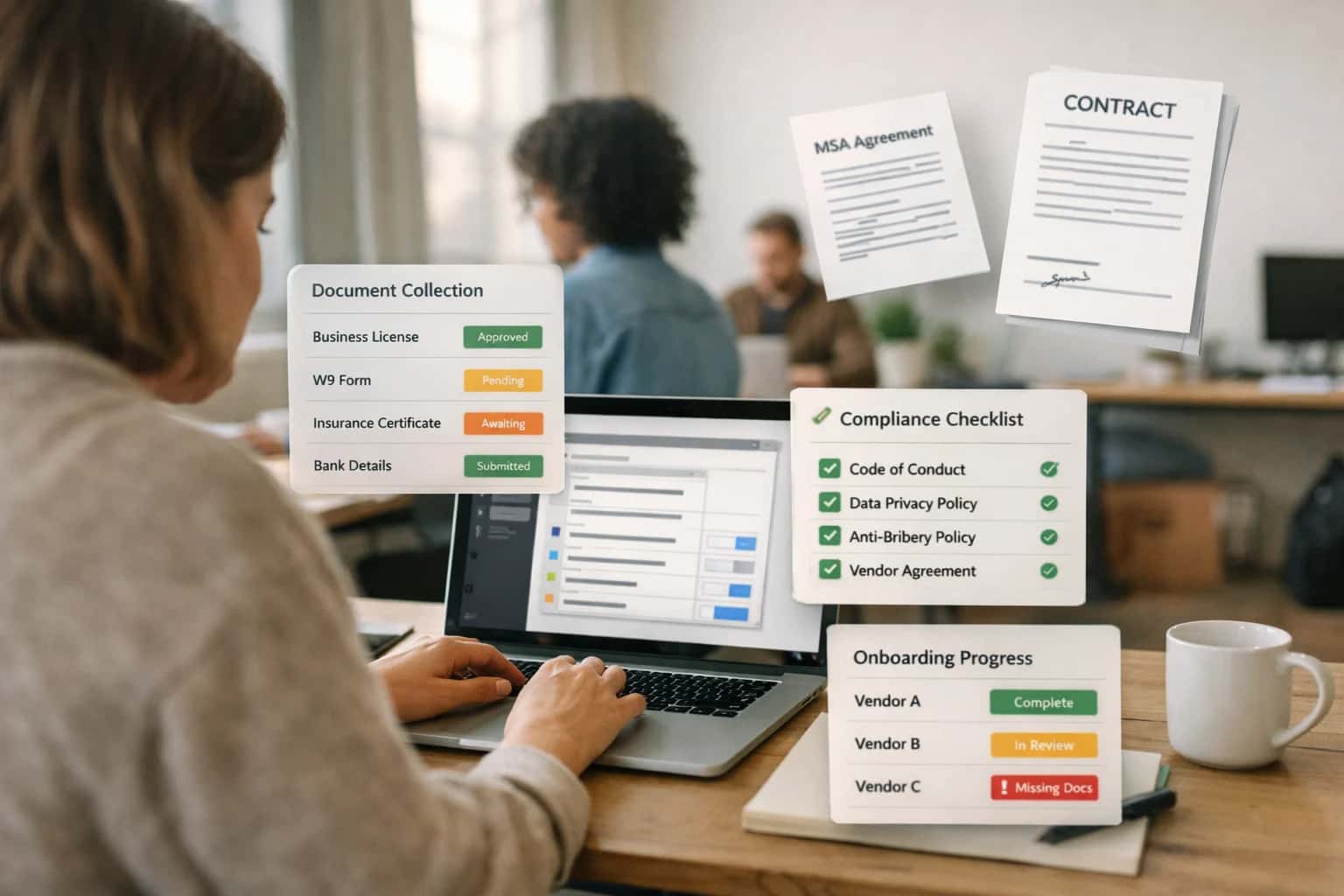
Where AI Fits into the PRM Tech Stack
A practical guide for channel chiefs and CTOs on embedding AI agents into the core surfaces of your PRM platform.
Implementation follows a hub-and-spoke pattern: a central AI orchestration layer (handling prompts, tool calls, and audit logs) connects to the PRM's API and, often, adjacent systems like your CRM (e.g., Salesforce) and ERP (e.g., NetSuite). High-impact starting points are automated deal registration triage (reducing manual review from hours to minutes) and MDF claim document processing (using vision models to extract data from receipts and invoices). Another critical pattern is building a partner portal copilot—a chat interface embedded via iframe or custom component that answers policy questions and provides deal status using Retrieval-Augmented Generation (RAG) over your PRM knowledge base and the partner's specific data.
Rollout requires a phased, workflow-specific approach. Begin with a single, high-volume process like MDF claim intake, where AI acts as a pre-processor for human reviewers, catching clear policy violations and missing documentation. This builds trust and provides clear ROI metrics (e.g., "30% of claims pre-approved without human touch"). Governance is key: all AI-generated actions (like auto-approving a claim under $500) should be configurable, logged in the PRM's audit trail, and have a clear human-in-the-loop escalation path. The final architecture should treat the PRM as the system of record, with AI as an intelligent automation layer that makes its data more actionable and its workflows more efficient for both internal channel teams and external partners.
Key Integration Surfaces Across PRM Platforms
Core Data Model Integration
PRM platforms like Impartner and PartnerStack are built around a central data model of Partner, Deal Registration, and Opportunity objects. AI integrations typically connect here first to automate validation and enrichment.
- Partner Object: Inject AI to score and segment partner profiles based on firmographic data, past performance, and certification status. Use this to trigger automated onboarding or enablement workflows.
- Deal Registration Object: The primary surface for automation. Integrate AI to parse unstructured submission details (e.g., from an email or form), validate against CRM for conflicts, and auto-score the deal's quality based on historical win rates.
- Implementation Pattern: Use platform webhooks (e.g.,
deal.registered) to trigger an AI service. The service fetches the object payload, enriches it, and posts back updates via the REST API to fields likeAI_ScoreorAuto_Validation_Status.
High-Value AI Use Cases for Channel Operations
Practical AI integration patterns for Impartner, PartnerStack, Allbound, and ZINFI that automate high-volume, manual channel operations workflows, directly impacting partner time-to-value and channel team productivity.
Automated Deal Registration Triage
An AI agent ingests new deal submissions via PRM webhook, validates completeness, checks for territory or existing-account conflicts by querying the CRM, and scores submission quality based on historical win rates. High-scoring deals are auto-approved and pushed to Salesforce; flagged deals route to a channel manager queue with a summary of issues.
Intelligent MDF Claim Processing
Automates the tedious review of Market Development Fund claims. An AI workflow uses document intelligence to extract data from uploaded receipts and invoices, validates them against the campaign's budget and policy rules within the PRM (e.g., ZINFI), and either auto-approves compliant claims or routes exceptions to a human reviewer with highlighted discrepancies.
Partner Portal Copilot
Embeds a conversational AI agent directly into the partner portal (Impartner, PartnerStack) interface. Partners can ask natural language questions about program policies, deal status, MDF balances, or training requirements. The agent retrieves answers by querying the PRM's APIs and relevant knowledge bases, reducing support ticket volume.
Predictive Partner Scoring & Alerts
Moves beyond basic activity dashboards. An AI model analyzes PRM data (deal flow, training completion, portal logins) combined with CRM sales data to generate a predictive health score for each partner. Channel managers receive automated alerts for partners trending towards attrition, along with AI-generated root-cause analysis and recommended interventions.
Personalized Partner Onboarding
Automates and personalizes the post-signup journey. Based on a new partner's profile (tier, region, focus), an AI workflow dynamically assembles a customized onboarding checklist in the PRM, assigns relevant training modules from the LMS, schedules kickoff calls, and triggers personalized email sequences—dramatically reducing manual setup and time-to-first-deal.
Commission Anomaly Detection
Integrates AI into the commission calculation and payout workflow. After each accrual run in the PRM (e.g., Allbound), an agent analyzes the data for outliers—unusually high payouts, duplicate claims, or mismatches against invoiced sales in the ERP. It flags potential errors for finance review before payments are finalized, protecting margin.
Example AI Automation Workflows
These concrete workflows illustrate how AI agents and automations connect to core PRM platform APIs and data models to scale channel operations, reduce manual overhead, and improve partner experience.
Trigger: A partner submits a new deal registration via the PRM portal (e.g., Impartner, PartnerStack).
Context/Data Pulled: The AI agent receives the webhook payload containing the deal object. It enriches this with:
- Historical deal data from the PRM for the same partner and end-customer.
- CRM data (via API) to check for existing opportunities.
- Public firmographic data for the prospect company.
Model/Agent Action: A classification model scores the submission on:
- Completeness: Are all required fields (POC, budget, timeline) populated?
- Conflict Risk: Probability this overlaps with another partner's or direct sales territory.
- Quality Score: Likelihood of deal conversion based on partner's historical performance and prospect profile.
System Update/Next Step: The agent updates the PRM deal record with scores and a summary. Based on thresholds:
- High-score, low-risk: Deal auto-approved, confirmation sent to partner, and a corresponding opportunity is created in the CRM.
- Medium-score or risk: Deal routed to a channel manager's queue with the AI-generated summary and recommended actions.
- Incomplete/High-risk: An automated request for clarification is sent to the partner via the portal.
Human Review Point: All medium/high-risk flags and any override of auto-approval triggers a review task for the channel operations team.
Typical Implementation Architecture
A production-ready AI integration for a PRM platform connects to core data objects and automation surfaces to augment, not replace, existing channel operations.
The integration typically sits as a middleware layer between the PRM platform (like Impartner or PartnerStack) and your chosen LLM provider (e.g., OpenAI, Anthropic). It listens for webhooks on key events—such as a new deal_registration submission, an mdf_claim upload, or a partner_portal support query—and processes the associated data. This involves extracting relevant context from PRM objects (Partner, Opportunity, MDF_Request) and any attached documents, then calling the appropriate AI workflow: a validation agent, a document intelligence pipeline, or a Q&A retrieval system.
For high-impact workflows, the architecture is event-driven and auditable. For example, an automated deal registration scoring agent would:
- Ingest the new
DealRegistrationrecord via the PRM's REST API. - Enrich it with related
Partnerperformance history andProductdata. - Call a configured LLM with a prompt to assess submission quality, conflict risk, and strategic fit.
- Write the score and reasoning back to a custom field on the record and, if a threshold is met, trigger the platform's native approval workflow via API. All inputs, prompts, and outputs are logged to a separate audit store for governance and model tuning.
Rollout follows a phased, use-case-first approach. Start with a single, high-volume, rules-heavy process like MDF claim processing, where AI can pre-validate receipts and policy compliance before human review. This delivers quick ROI and builds trust. Subsequent phases expand to more complex, multi-step orchestrations, such as a partner lifecycle management agent that triggers personalized onboarding tasks, training recommendations, and health-check communications based on predictive scores. Throughout, the integration leverages the PRM's existing RBAC and audit trails, ensuring channel managers and partners interact with AI outputs within the familiar system of record.
Code and Payload Examples
Automating Deal Intake and Scoring
Use the PRM platform's API to submit a new deal registration from a partner portal, then trigger an AI agent to validate and score the opportunity. The agent can parse the unstructured description, check for conflicts against the CRM, and assign a priority score before the record is saved.
Example Python call to submit a deal and trigger AI validation:
pythonimport requests # 1. Submit deal to PRM API (e.g., PartnerStack) deal_payload = { "partner_id": "P-78910", "opportunity_name": "Acme Corp ERP Migration", "description": "Prospect is looking to migrate from legacy on-prem SAP to a cloud solution. Initial budget ~$500k. Decision maker is CIO Jane Doe.", "estimated_value": 500000, "expected_close_date": "2024-12-15" } response = requests.post( 'https://api.partnerstack.com/v2/deals', json=deal_payload, headers={'Authorization': 'Bearer YOUR_API_KEY'} ) if response.status_code == 201: deal_data = response.json() # 2. Trigger AI validation webhook ai_trigger = requests.post( 'https://your-ai-service.com/webhooks/deal-validation', json={ "deal_id": deal_data['id'], "raw_description": deal_payload['description'], "source": "partnerstack" } )
The AI service returns a validation result (e.g., {"score": 85, "conflict_flag": false, "recommended_action": "auto-approve"}) which is posted back to the PRM via a custom field update API.
Realistic Operational Impact and Time Savings
A practical comparison of manual vs. AI-assisted workflows for common PRM (Partner Relationship Management) operations, based on typical implementations for platforms like Impartner, PartnerStack, Allbound, and ZINFI.
| Channel Operation | Before AI Integration | After AI Integration | Implementation Notes |
|---|---|---|---|
Deal Registration Intake & Triage | Manual review of PDF/email submissions; 4-8 hour SLA for initial response | Automated extraction & scoring; routed in <30 minutes | AI validates against CRM for conflicts; human approves final registration |
MDF (Market Development Fund) Claim Review | Finance team manually checks receipts against policy; 3-5 day review cycle | Document AI extracts & validates line items; 1-day review cycle | AI flags exceptions for human review; integrates with PRM budget objects |
New Partner Onboarding | Sequential manual tasks: app review, training assignment, welcome comms; 5-10 business days | Automated workflow triggers based on scored application; 2-3 business days | AI scores application completeness; assigns personalized learning path in LMS |
Partner Support Inquiry Triage | All inquiries go to a shared channel ops inbox; manual routing & basic replies | Portal chatbot handles 40-60% of common policy & status queries instantly | Agent escalates complex cases; integrates with PRM's case object for tracking |
Partner Performance Reporting | Monthly manual spreadsheet compilation & email distribution for top partners | Automated scorecard generation & distribution; dynamic insights for all tiers | AI synthesizes PRM data, generates narrative insights, and triggers portal alerts |
Channel Conflict Detection | Reactive discovery during deal registration or quarterly territory reviews | Proactive alerts on overlapping accounts/territories during intake | AI cross-references PRM, CRM, and CPQ data in near-real-time |
Commission Calculation Review | Finance manually audits a sample of high-value transactions for anomalies | AI flags outliers & calculation discrepancies for targeted audit | Focuses review on 5-10% of transactions with highest risk score |
Governance, Security, and Phased Rollout
A production-grade AI integration for PRM platforms requires deliberate governance, secure data handling, and a phased rollout to manage risk and prove value.
Effective governance starts by mapping AI access to your PRM's data model and user roles. For platforms like Impartner or ZINFI, this means defining which AI agents can read or write to objects like Partner, DealRegistration, MDFClaim, and CommissionRun. Implement API-level controls using service accounts with scoped permissions and ensure all AI-generated actions—like auto-approving a deal or adjusting a commission accrual—are logged to an immutable audit trail within the PRM or a separate SIEM. For sensitive workflows, such as MDF claim reviews involving financial documents, enforce a human-in-the-loop step before any system-of-record update.
A phased rollout mitigates risk and builds internal confidence. Start with a read-only pilot, such as an AI agent that analyzes Partner performance data to generate health scores and forecast alerts without taking action. Next, move to assistive automation in a single module—for example, deploying a document AI to extract line items from receipts and pre-populate MDF claim forms in PartnerStack, with a channel manager required to review and submit. Finally, scale to closed-loop workflows, like an AI that ingests a new DealRegistration from Allbound, validates it against CRM and historical data for conflicts, scores it, and automatically routes it to the correct deal desk queue—all while notifying the partner via the portal.
Security is paramount when connecting AI to the partner ecosystem. Ensure all data in transit to and from LLM APIs is encrypted, and for highly sensitive partner PII or financial data, consider using a retrieval-augmented generation (RAG) architecture with a private vector store (like Pinecone or Weaviate) to keep source data within your VPC. This allows the AI to answer partner portal questions or review claims without exposing raw data to external models. Regularly evaluate model outputs for accuracy and bias, especially in commission calculations or partner tiering recommendations, to maintain trust across your channel.
Enabling Efficiency, Speed & Accuracy
Intelligent Analysis, Decision & Execution
We build AI systems for teams that need search across company data, workflow automation across tools, or AI features inside products and internal software.
Talk to Us
Search across company data
Give teams answers from docs, tickets, runbooks, and product data with sources and permissions.
Useful when people spend too long searching or get different answers from different systems.

Automate internal workflows
Use AI to route work, draft outputs, trigger actions, and keep approvals and logs in place.
Useful when repetitive work moves across multiple tools and teams.

Add AI to products and internal tools
Build assistants, guided actions, or decision support into the software your team or customers already use.
Useful when AI needs to be part of the product, not a separate tool.
Frequently Asked Questions for Technical Buyers
Practical answers for architects and channel leaders evaluating AI integration for Impartner, PartnerStack, Allbound, or ZINFI. Focused on implementation patterns, data flows, and rollout sequencing.
The standard pattern is to use the PRM platform's REST API as a secure intermediary, never exposing raw database connections.
- Authentication & Scope: Create a dedicated service account in your PRM (e.g., Impartner Admin User, PartnerStack API Key) with role-based access control (RBAC) scoped to only the objects needed (e.g.,
Partner,DealRegistration,MDFClaim). - Data Flow: Your integration service acts as a middleware layer. It:
- Listens for webhooks from the PRM (e.g.,
deal.registration.created). - Fetches additional context via API calls using the scoped token.
- Sends a structured payload (with PII redacted if necessary) to your AI service endpoint (e.g., Azure OpenAI, Anthropic).
- Receives the AI's output (e.g., a validation score, generated email).
- Writes results back to a custom object or field in the PRM via API (e.g.,
DealRegistration.AI_Validation_Score).
- Listens for webhooks from the PRM (e.g.,
- Security: All communication is over HTTPS. API keys and model credentials are managed in a secrets vault (e.g., Azure Key Vault, AWS Secrets Manager). Audit logs track all data access by the service account.

About the author
Prasad Kumkar
CEO & MD, Inference Systems
Prasad Kumkar is the CEO & MD of Inference Systems and writes about AI systems architecture, LLM infrastructure, model serving, evaluation, and production deployment. Over 5+ years, he has worked across computer vision models, L5 autonomous vehicle systems, and LLM research, with a focus on taking complex AI ideas into real-world engineering systems.
His work and writing cover AI systems, large language models, AI agents, multimodal systems, autonomous systems, inference optimization, RAG, evaluation, and production AI engineering.
Partnered with leading AI, data, and software stack.





How We Work
Custom AI workflows for your Business
One-fit-all AI don't work for modern businesses. At Inferensys, we aim to understand your business & custom requirements; which we use to define most efficient agentic workflows, the data, and the tools for your business.
01
Review the use case
We understand the task, the users, and where AI can actually help.
Read more02
Pick the right approach
We define what needs search, automation, or product integration.
Read more03
Build the first useful version
We implement the part that proves the value first.
Read more04
Improve from there
We add the checks and visibility needed to keep it useful.
Read moreThe first call is a practical review of your use case and the right next step.
Talk to Us