Compulink's performance dashboards aggregate key metrics—daily revenue, appointment volume, no-show rates, optical sales, and AR aging—but remain reactive snapshots. AI integration connects to the dashboard API and underlying data aggregation layer to inject predictive intelligence. This means moving from reviewing yesterday's no-shows to receiving a morning alert predicting today's high-risk cancellations, or from seeing last month's revenue shortfall to getting a weekly forecast with recommended staffing adjustments.

Integration
AI Integration with Compulink Performance Dashboards
A technical guide to adding AI-driven intelligence, dynamic goal setting, and automated insights to Compulink's performance dashboards for optometry practices.
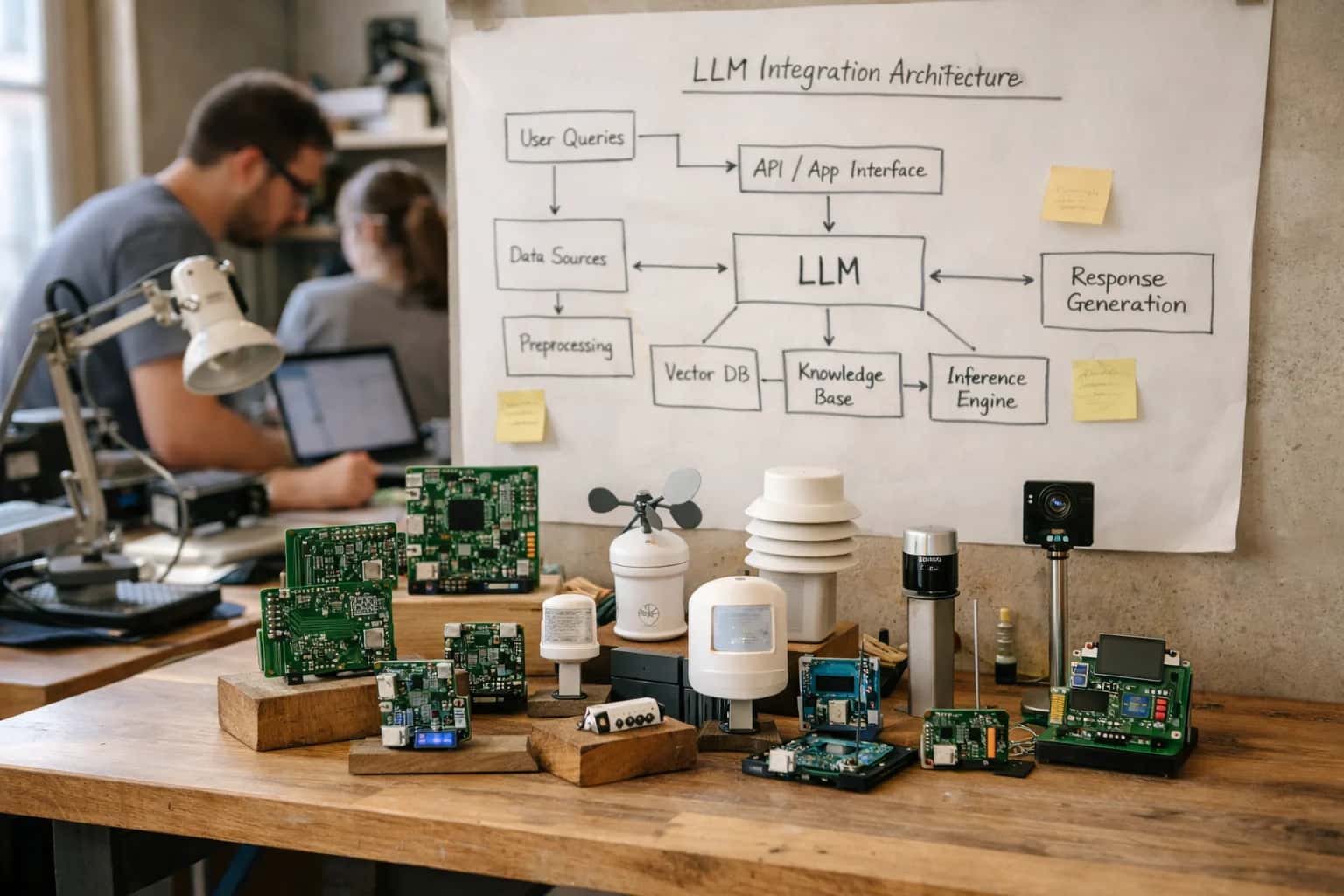
AI INTEGRATION WITH COMPULINK PERFORMANCE DASHBOARDS
From Static Reports to Intelligent Operations
Transform static practice dashboards into proactive, intelligent operations centers with AI-driven insights and automated alerts.
Implementation focuses on three core workflows: dynamic goal setting, benchmark comparison, and automated alerting. For dynamic goals, an AI model analyzes historical trends, seasonal patterns, and local events to suggest realistic, adjustable daily or weekly targets for front desk and optical staff. Benchmark comparison uses anonymized, aggregated industry data (where available) or internal cross-location comparisons to flag performance outliers—for example, highlighting if contact lens reorder rates are significantly below practice average, prompting a review of patient compliance protocols. Automated alerting monitors the live data feed for threshold breaches and emerging trends, sending prioritized notifications via Compulink's internal messaging or integrated platforms like Teams or Slack.
Rollout is phased, starting with a single high-impact metric like appointment utilization to build trust. Governance is critical: all AI-generated insights and alerts include a confidence score and a link to the underlying data in Compulink for human verification. The system is designed as a read-only layer, ensuring it cannot write back to core patient records or financials without explicit approval workflows. This architecture turns dashboards from reporting tools into decision-support systems, enabling practice managers to shift from analyzing the past to managing the present and planning the future.
AI INTEGRATION SURFACES
Where AI Connects to Compulink's Dashboard Ecosystem
Core Performance Metrics & Anomaly Detection
Compulink's executive dashboards aggregate KPIs like daily revenue, patient volume, and optical sales. AI connects here to provide dynamic context, moving beyond static numbers.
Key Integration Points:
- Data Aggregation Layer: Ingest daily KPI feeds via Compulink's reporting APIs or database exports.
- Alerting Engine: Use AI to establish baselines and detect anomalies (e.g., a 20% drop in contact lens sales) in real-time, triggering alerts within the dashboard or via Slack/email.
- Benchmarking: Enrich internal data with anonymized industry benchmarks (where available) to provide context on practice performance.
Example Workflow: An AI agent monitors the "Revenue per Patient" metric. Upon detecting a downward trend correlated with a new insurance plan adoption, it surfaces an insight: "Revenue per patient decreased 15% this month. 42% of visits used new PPO Plan X, which has lower reimbursements for comprehensive exams."
COMPULINK PERFORMANCE DASHBOARDS
High-Value AI Use Cases for Dashboard Intelligence
Transform Compulink's static performance dashboards into proactive, intelligent command centers. These AI integration patterns connect directly to the Compulink Dashboard API and data aggregation layer to automate insight generation, goal management, and operational alerting.
01
Dynamic Goal Setting & Benchmarking
Automatically adjust practice KPIs (like daily revenue per provider or optical capture rate) based on historical trends, seasonality, and regional benchmarks pulled from aggregated, anonymized data. AI analyzes your practice's performance against similar cohorts to suggest realistic, achievable targets for the next quarter, pushing updates directly to the dashboard's goal module.
1 sprint
Setup to value
02
Automated Anomaly Detection & Alerting
Monitor key operational metrics (no-show rates, AR days, inventory turnover) in real-time. AI models establish normal baselines and trigger automated, prioritized alerts via Compulink's notification system when metrics deviate—such as a sudden drop in same-day appointments or a spike in claim denials for a specific insurer—enabling same-day intervention.
Batch -> Real-time
Monitoring shift
03
Natural Language Dashboard Querying
Empower practice managers and doctors to ask questions of their dashboard data in plain English (e.g., "Why did optical sales dip last Tuesday?" or "Show me patients overdue for a diabetic eye exam"). An AI agent interprets the query, fetches and correlates data via the Compulink API, and returns a concise narrative summary with supporting charts, surfaced directly in the dashboard UI.
Hours -> Minutes
Insight discovery
04
Predictive Staffing & Capacity Planning
Integrate AI forecasting with the scheduling and payroll data feeds behind Compulink's dashboards. Predict patient demand by appointment type (comprehensive exam, contact lens fitting) for upcoming weeks, and automatically generate optimal staffing schedules and room allocation plans to maximize utilization and reduce overtime costs. Recommendations appear in a dedicated planning view.
Same day
Planning lead time
05
Root Cause Analysis for Metric Drops
When a critical KPI (like net collection rate) falls below threshold on the dashboard, trigger an automated AI investigation. The system pulls related data from clinical, billing, and scheduling modules to generate a root-cause summary—e.g., "The 8% drop correlates with increased denials from Payer X due to missing modifier 25, affecting Dr. Smith's patients."
Hours -> Minutes
Diagnosis time
06
Automated Executive Summary Generation
Replace manual report compilation. At the close of each week or month, an AI agent aggregates data from all configured dashboard widgets—financial, clinical, operational—and generates a structured executive summary. It highlights key wins, flags areas needing attention, and provides context against goals. The summary is saved as a PDF or posted to a dedicated dashboard tab for review.
Batch -> Automated
Reporting workflow
COMPULINK PERFORMANCE DASHBOARD INTEGRATION
Example AI-Enhanced Dashboard Workflows
These workflows illustrate how to connect AI agents and models directly to Compulink's performance dashboard APIs and data aggregation layer to automate analysis, generate dynamic insights, and trigger operational actions.
Trigger: Nightly batch job after Compulink's daily ETL process completes.
Context Pulled: The agent queries the Compulink Dashboard API for the last 30 days of KPIs (e.g., patient_volume, average_revenue_per_patient, optical_capture_rate, no_show_rate) for the practice and its individual providers.
Model/Action: An LLM-powered analysis agent runs, using a pre-configured prompt that includes practice benchmarks and historical trends. It performs two key functions:
- Goal Adjustment: Evaluates if monthly goals need recalibration based on recent performance trends and seasonal patterns (e.g., adjusting optical sales targets post-holiday).
- Anomaly Detection: Flags statistically significant deviations (e.g., a 15% drop in a provider's capture rate) and generates a root-cause hypothesis by cross-referencing related metrics.
System Update: The agent writes back to a dedicated ai_insights table in the Compulink data warehouse that feeds a custom widget on the dashboard. For critical anomalies, it creates a task in Compulink's task management module for the practice manager and sends a secure Slack/Teams alert.
Human Review Point: The practice manager reviews the AI-generated insights and hypotheses on the dashboard each morning. They can approve, dismiss, or mark the alert for further investigation, which trains the model's future sensitivity.
CONNECTING AI TO COMPULINK'S DASHBOARD API LAYER
Implementation Architecture: Data Flow & Integration Patterns
A practical blueprint for wiring AI agents to Compulink's performance dashboard data to enable dynamic goal setting, automated insights, and predictive alerting.
The integration connects at Compulink's Dashboard API and underlying data aggregation layer, which surfaces key operational metrics like daily revenue, appointment volume, optical sales, and staff productivity. An AI agent acts as a middleware service, polling this API on a scheduled basis (e.g., every 15 minutes) to ingest JSON payloads containing practice KPIs. The agent's first job is contextual enrichment, comparing live metrics against historical benchmarks (stored in a vector database) and practice-defined goals to calculate performance gaps and trends in real-time.
For dynamic goal setting, the agent uses this enriched context to run lightweight forecasting models. For example, it can analyze the past 90 days of net_collections data alongside seasonal factors to suggest adjusted weekly targets, pushing these as configurable alerts back to the dashboard via the same API. Automated alerting is triggered by configurable rules (e.g., optical_sales_per_staff_hour drops 20% week-over-week) and uses Compulink's notification hooks—such as in-dashboard banners or integrated email/SMS—to notify managers with a concise, AI-generated summary of the issue and recommended actions.
Rollout follows a phased approach: start with a single practice location and a non-critical metric like patient_satisfaction_scores to validate data flow and alert accuracy. Governance is critical; all AI-generated insights and suggested goals should be logged in an audit trail with a human-in-the-loop approval step before they modify live dashboard targets or trigger communications to staff. This architecture ensures AI enhances Compulink's native analytics without replacing them, giving practice administrators a co-pilot for operational intelligence. For related technical patterns on data synchronization, see our guide on AI Integration for Optometry Practice Management Platforms.
AI-ENHANCED DASHBOARD INTEGRATION
Code & Payload Examples
Automated KPI Target Generation
This pattern uses historical practice data and seasonal trends to generate dynamic, achievable goals for dashboard metrics like daily revenue, patient volume, or optical sales. The AI analyzes past performance, upcoming schedule density, and external factors (e.g., local events) to propose targets, which are then posted back to Compulink's dashboard configuration.
Example Python Payload to Compulink API:
pythonimport requests # AI-generated goal payload goal_payload = { "dashboardId": "practice_performance_2024", "metric": "daily_revenue_optical", "period": "weekly", "targets": [ {"week_start": "2024-10-07", "goal_value": 12500, "confidence_score": 0.87}, {"week_start": "2024-10-14", "goal_value": 11800, "confidence_score": 0.79} ], "rationale": "Adjusted downward due to historical dip in third week of October; focus on contact lens bundle promotions.", "lastUpdatedBy": "ai_goal_engine_v1" } # POST to Compulink's dashboard configuration endpoint response = requests.post( 'https://api.compulink.com/v1/dashboards/goals', json=goal_payload, headers={'Authorization': 'Bearer YOUR_API_KEY', 'Content-Type': 'application/json'} )
This allows the dashboard to shift from static, annual goals to adaptive, data-informed targets that reflect real practice conditions.
AI-ENHANCED DASHBOARD OPERATIONS
Realistic Time Savings & Operational Impact
This table illustrates the operational impact of integrating AI with Compulink's performance dashboards, focusing on time savings and workflow improvements for practice managers and administrators.
| Metric | Before AI | After AI | Notes |
|---|---|---|---|
Dynamic Goal Setting & Benchmarking | Manual spreadsheet analysis, quarterly reviews | Automated KPI analysis with weekly benchmark suggestions | AI analyzes historical and peer data to propose realistic, data-driven targets |
Anomaly Detection in Operational Metrics | Manual review of dashboards for outliers | Automated alerts for deviations from expected ranges | Proactive notifications for issues like no-show spikes or inventory shortages |
Executive Report Generation | Hours spent compiling data and writing narratives | Automated draft generation with natural language insights | Manager reviews and edits AI-generated summaries for board meetings |
Staff Performance Trend Analysis | Monthly manual calculation of productivity metrics | Continuous monitoring with weekly highlight reports | Identifies coaching opportunities and recognizes top performers automatically |
Marketing Campaign ROI Attribution | Manual correlation of promotions to appointment volume | Automated multi-touch attribution modeling | Links campaign data to scheduling and revenue modules for clearer ROI |
Inventory Turnover & Reorder Alerts | Reactive checks based on low-stock warnings | Predictive alerts based on seasonal demand and lead times | Reduces stockouts and excess inventory through forecast-informed prompts |
Patient Satisfaction & Review Synthesis | Manual reading and categorization of patient feedback | Automated sentiment analysis and theme extraction from reviews | Delivers actionable insights to improve patient experience and service quality |
IMPLEMENTING AI IN A REGULATED PRACTICE
Governance, Security & Phased Rollout
A secure, controlled approach to integrating AI with Compulink's performance dashboards, ensuring data integrity and measurable impact.
Integrating AI with Compulink's dashboard API and data aggregation layer requires a security-first architecture. This typically involves a middleware service that acts as a secure broker: it pulls aggregated, de-identified KPI data (e.g., daily revenue, no-show rates, optical sales) from Compulink's reporting endpoints, processes it through LLMs for analysis and forecasting, and writes insights—like dynamic goal suggestions or anomaly alerts—back to custom dashboard widgets. All PHI must remain within Compulink; the AI service only receives anonymized, practice-level metrics. Access is governed via API keys with strict scopes and audit logging to track all data flows between systems.
A phased rollout mitigates risk and proves value. Phase 1 focuses on read-only analysis: deploying AI to generate narrative summaries of weekly performance against benchmarks, which appear in a dedicated dashboard panel. Phase 2 introduces interactive features, such as a natural-language query interface for the dashboard (e.g., "Why did optical revenue dip last Tuesday?") using Retrieval-Augmented Generation (RAG) over historical metric data. Phase 3 enables prescriptive actions, like AI-generated alerts for the practice manager when key metrics deviate from trend, with suggested root causes and corrective actions. Each phase includes defined success metrics, such as dashboard engagement time or reduction in manual report compilation.
Governance is critical for sustained adoption. Establish a cross-functional team (practice manager, IT, compliance) to review AI-generated insights for accuracy before enabling automated alerting. Implement a human-in-the-loop approval step for any AI-suggested changes to system-wide goals or benchmarks. Use Compulink's audit trail capabilities to log when and by whom AI-generated insights were viewed or acted upon. This controlled, iterative approach allows practices to harness AI for performance intelligence while maintaining full oversight and compliance with healthcare data regulations.
Enabling Efficiency, Speed & Accuracy
Intelligent Analysis, Decision & Execution
We build AI systems for teams that need search across company data, workflow automation across tools, or AI features inside products and internal software.
Talk to Us
Search across company data
Give teams answers from docs, tickets, runbooks, and product data with sources and permissions.
Useful when people spend too long searching or get different answers from different systems.
Enterprise searchRAGPermissions
Read more
Automate internal workflows
Use AI to route work, draft outputs, trigger actions, and keep approvals and logs in place.
Useful when repetitive work moves across multiple tools and teams.
AI agentsWorkflow automationGovernance
Read more
Add AI to products and internal tools
Build assistants, guided actions, or decision support into the software your team or customers already use.
Useful when AI needs to be part of the product, not a separate tool.
AI integrationDecision supportModel routing
Read moreAI INTEGRATION WITH COMPULINK PERFORMANCE DASHBOARDS
Frequently Asked Questions
Practical questions about implementing AI to enhance Compulink's performance dashboards for dynamic goal setting, benchmark comparisons, and automated operational alerts.
AI integration typically connects via Compulink's Dashboard API and its underlying data aggregation layer. The implementation pattern involves:
- Data Extraction: Using scheduled API calls or webhooks to pull key performance indicator (KPI) data from Compulink's reporting modules (e.g., daily production, collections, patient visits).
- Context Enrichment: Merging this data with external context (e.g., local weather for no-show impact, regional market data) in a separate analytics database.
- AI Processing: An inference service (using models like GPT-4 or Claude) analyzes trends, compares against historical benchmarks, and generates insights.
- Dashboard Update: The service pushes dynamic goals, alerts, or annotated insights back to the dashboard via API, often writing to custom fields or a dedicated "AI Insights" widget within Compulink.
Key Technical Note: Ensure your API service account has the necessary permissions to read from the ReportData and PracticeMetrics endpoints and write to custom dashboard objects.

About the author
Prasad Kumkar
CEO & MD, Inference Systems
Prasad Kumkar is the CEO & MD of Inference Systems and writes about AI systems architecture, LLM infrastructure, model serving, evaluation, and production deployment. Over 5+ years, he has worked across computer vision models, L5 autonomous vehicle systems, and LLM research, with a focus on taking complex AI ideas into real-world engineering systems.
His work and writing cover AI systems, large language models, AI agents, multimodal systems, autonomous systems, inference optimization, RAG, evaluation, and production AI engineering.
LinkedIn
Limited slotsGet a Free AI Consultation
Partnered with leading AI, data, and software stack.





How We Work
Custom AI workflows for your Business
One-fit-all AI don't work for modern businesses. At Inferensys, we aim to understand your business & custom requirements; which we use to define most efficient agentic workflows, the data, and the tools for your business.
01
Review the use case
We understand the task, the users, and where AI can actually help.
Read more02
Pick the right approach
We define what needs search, automation, or product integration.
Read more03
Build the first useful version
We implement the part that proves the value first.
Read more04
Improve from there
We add the checks and visibility needed to keep it useful.
Read moreThe first call is a practical review of your use case and the right next step.
Talk to Us