In a government MDM stack—typically built on platforms like Microsoft Intune, VMware Workspace ONE, or Jamf Pro—AI acts as an intelligent orchestration layer that sits between policy definition and automated enforcement. It connects to the MDM's REST API to consume real-time device inventory, compliance states, and security event logs. The core integration surfaces are the configuration profile management, compliance policy engines, and reporting APIs, where AI can dynamically adjust settings, trigger remediations, and synthesize data for accreditation bodies like CISA or DISA. For example, an AI agent can analyze a device's encryption status, installed patches, and network connection in Intune, then automatically apply a stricter configuration profile or initiate a remote wipe if a high-risk anomaly is detected, all while logging the action for the audit trail.

Integration
Smart Device Management for Government Security
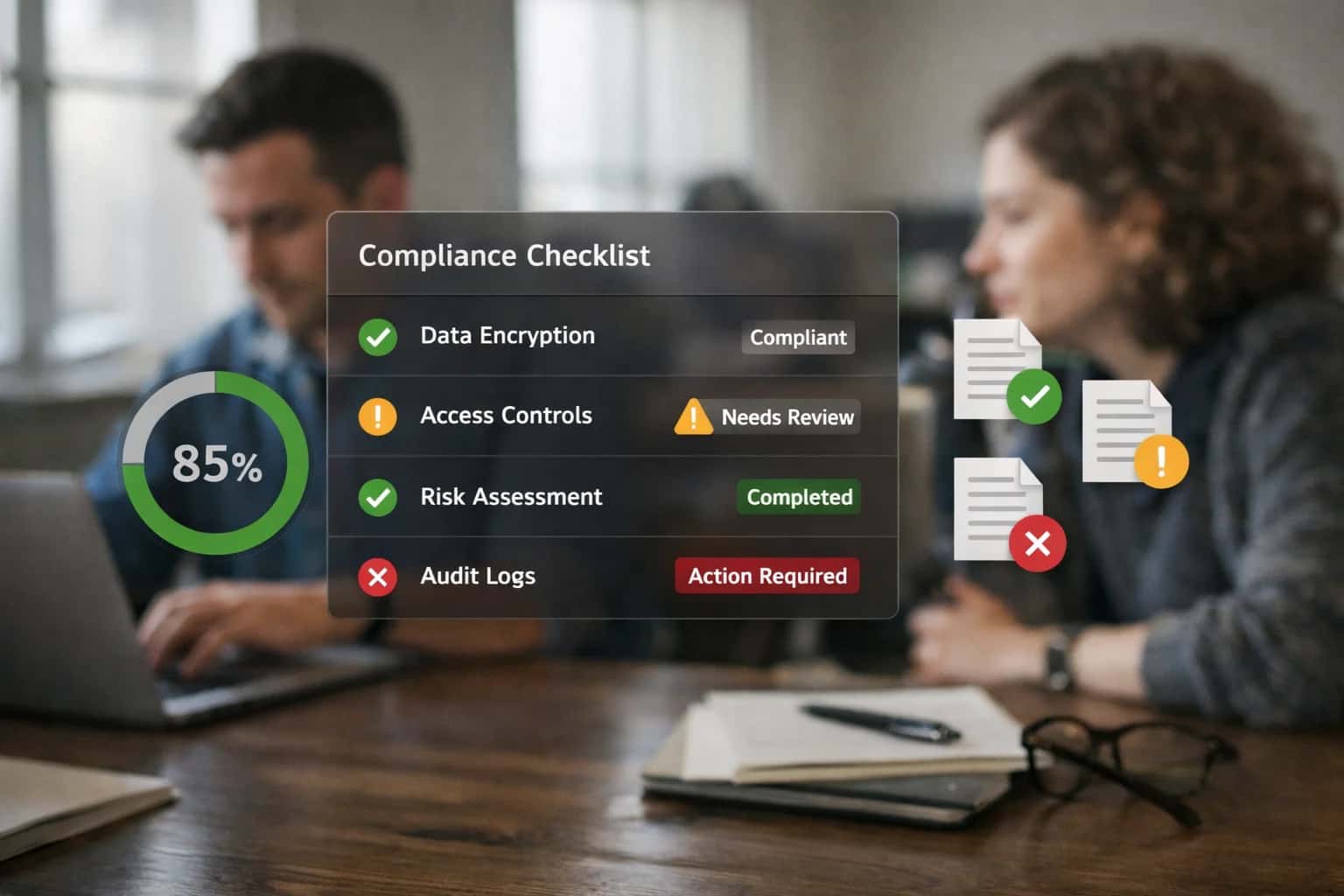
Where AI Fits in Government MDM
A practical blueprint for integrating AI with Mobile Device Management (MDM) platforms to automate security compliance, continuous monitoring, and audit reporting for government IT teams.
The high-value workflow is continuous Authority to Operate (ATO) support. Instead of manual quarterly reviews, an AI system can:
- Ingest the STIGs (Security Technical Implementation Guides) or CIS Benchmarks relevant to the agency.
- Continuously map device states from the MDM against these controls.
- Auto-generate POA&Ms (Plans of Action and Milestones) for non-compliant devices, suggesting specific MDM script or policy remediations.
- Enrich incident tickets in ServiceNow or Jira Service Management with full device context when a violation occurs. This shifts compliance from a periodic audit burden to a real-time, managed state, reducing the window of vulnerability and manual evidence collection from weeks to hours.
Rollout requires a phased, policy-first approach. Start with a pilot group of non-critical devices (e.g., agency-issued tablets) and use the MDM's scoping groups to limit AI-driven policy changes. Implement a human-in-the-loop approval step for any automated remediation beyond low-risk actions (like pushing a Wi-Fi profile). Governance is critical: all AI-initiated actions must write to an immutable log, tagged with the reasoning context (e.g., "AI agent triggered profile update due to detected root access"), and be reversible via the MDM's native rollback features. The architecture must also respect the network segmentation common in government environments, often requiring the AI layer to reside in a specific enclave with controlled API egress to the MDM management plane.
Key MDM Surfaces for AI Integration
Core Policy Enforcement Surfaces
This is the primary control plane for government security baselines. AI integration targets the APIs that manage configuration profiles, compliance policies, and script deployments.
Key integration points:
- Dynamic Policy Assignment: AI agents analyze user role, device type, and network location to automatically assign the strictest allowable security profile from the MDM library.
- Automated Baseline Drift Remediation: AI continuously compares device configurations (e.g., encryption status, password complexity) against the approved Security Technical Implementation Guide (STIG) or CIS Benchmark. It triggers MDM scripts or remediation actions to correct deviations without manual intervention.
- Predictive Policy Testing: Before a new policy is deployed fleet-wide, AI simulates its impact on a test group, predicting application conflicts or user disruption to prevent operational downtime.
Example workflow: An AI monitor detects a device connecting from a new, unapproved country. It automatically pushes a RestrictiveTravel configuration profile via the MDM API, disabling local data storage and enforcing VPN-only access.
High-Value Use Cases for Government Security
For government IT and security teams, integrating AI with Mobile Device Management (MDM) platforms like Microsoft Intune and Jamf Pro transforms manual, reactive compliance into automated, predictive security operations. These use cases focus on enforcing configuration baselines, automating continuous monitoring, and generating audit-ready evidence for security accreditations like FedRAMP, CMMC, and NIST 800-53.
Automated Configuration Drift Detection & Remediation
AI agents continuously analyze MDM inventory (e.g., Intune device configuration, Jamf extension attributes) against approved Security Technical Implementation Guides (STIGs) or CIS Benchmarks. Upon detecting drift—like a disabled firewall or unauthorized software—the system auto-generates and executes a remediation script via the MDM API, logging the action for the audit trail.
Predictive Compliance Violation Forecasting
Models ingest historical compliance data from MDM reports (e.g., Intune device compliance states, Jamf patch reports) and external threat feeds to predict which devices or user groups are likely to fall out of compliance. This enables proactive policy adjustments and targeted user communications before the next audit cycle, reducing findings.
AI-Generated Audit Evidence Packs
For accreditation reviews (e.g., ATO packages), AI synthesizes data from MDM platforms, SIEM logs, and ticketing systems to auto-generate narrative audit trails, compliance matrices, and executive summaries. It maps device policies to control frameworks (NIST, CMMC) and highlights gaps with supporting evidence, cutting manual report preparation from weeks to days.
Intelligent, Risk-Based Conditional Access
An AI layer evaluates real-time signals from MDM (device health, location), Identity (login risk), and EDR to dynamically adjust Intune Conditional Access policies. For example, a device with a pending critical OS patch may be granted only limited network access until compliant, enforcing a 'zero trust' posture based on calculated risk.
Automated Incident Response for Lost/Stolen Devices
Upon receiving a reported incident from a security console or user, AI evaluates context (device sensitivity, last location, data classification) and orchestrates a response via MDM APIs: triggering a remote wipe, pushing a lock command, revoking certificates, and creating a detailed incident ticket in the ITSM—all within minutes, with a full audit log.
Predictive Patching for Critical Vulnerabilities
AI correlates MDM patch status data (from Jamf Pro or Intune) with external CVE databases and threat intelligence to prioritize and schedule patch deployments. It models user disruption, network bandwidth, and maintenance windows to automate the rollout of critical security updates to the most at-risk devices first, minimizing the vulnerability window.
Example AI-Driven Security Workflows
For government IT teams, AI integration with Mobile Device Management (MDM) platforms moves beyond static policy enforcement to proactive, intelligent security operations. These workflows demonstrate how AI agents can automate continuous compliance, accelerate incident response, and generate audit-ready evidence for security accreditation frameworks like NIST, FISMA, or FedRAMP.
Trigger: Scheduled daily inventory sync from the MDM platform (e.g., Jamf Pro, Microsoft Intune) to a central data lake.
Context/Data Pulled: AI agent ingests device configuration profiles, extension attributes, and security settings (disk encryption status, firewall rules, approved app list) for the entire fleet. It compares this against a defined, version-controlled Security Technical Implementation Guide (STIG) baseline stored in a vector database.
Model/Agent Action: A classification model identifies devices with configuration drift (e.g., firewall disabled, unauthorized software installed). For each drift, a reasoning agent:
- Assesses severity based on the STIG control violated.
- Determines the appropriate remediation action (push a configuration profile, execute a remediation script, force a software uninstall).
- Generates the necessary API call payload for the MDM platform.
System Update/Next Step: The agent executes the remediation via the MDM API (e.g., POST /api/v1/computers/{id}/send-command for Jamf). It logs the action, the rationale, and the pre/post-state change in an immutable audit log.
Human Review Point: High-severity drifts or repeated failures on a single device trigger an alert in the SOC dashboard and auto-create a ticket in the ITSM platform for analyst investigation.
Implementation Architecture & Data Flow
A secure, auditable architecture for layering AI-driven compliance and threat detection onto your existing MDM platform for government accreditation.
The integration connects your core MDM platform—Jamf Pro, Microsoft Intune, or VMware Workspace ONE—to an AI orchestration layer via their respective REST APIs and webhook systems. The AI system ingests real-time device telemetry (compliance states, configuration profiles, inventory details, security events) and historical logs. For government use, the flow is unidirectional from the MDM to a secured, air-gapped AI processing environment to prevent any external command and control risks. Key data objects include: DeviceCompliancePolicies, ConfigurationProfiles, DeviceInventoryReports, SecurityBaselineStates, and AuditLogs. The AI layer acts as a continuous monitoring and analysis engine, never directly modifying production policies without human-in-the-loop approval.
High-value workflows are automated through this architecture:
- Continuous Configuration Verification: AI models compare live device states against STIGs (Security Technical Implementation Guides) or CIS Benchmarks ingested as structured rules, flagging drift in encryption settings, password policies, or app allowlists.
- Predictive Accreditation Reporting: The system synthesizes device compliance data across the fleet to auto-generate evidence packages for ATO (Authority to Operate) renewals, highlighting coverage gaps and trend analysis for risk acceptance briefs.
- Anomalous Behavior Detection: By analyzing MDM event logs (unusual login locations, after-hours app installs, USB connection patterns), the AI identifies potential insider threats or compromised devices and creates prioritized alerts in the SOC's SIEM (e.g., Splunk, Microsoft Sentinel) with full device context attached.
- Automated Audit Trail Enrichment: Raw MDM admin logs are transformed into narrative, action-oriented summaries for Inspector General or GAO audits, clearly documenting who changed what policy, when, and the business justification pulled from linked change tickets.
Rollout follows a phased, accreditation-aware pattern:
- Phase 1 (Read-Only Analysis): Deploy the AI connector in a monitoring-only capacity, analyzing 90 days of historical MDM data to establish a baseline and identify top-priority compliance gaps without any operational impact.
- Phase 2 (Approved Workflow Automation): Implement AI-driven, ticket-driven remediation. The AI identifies an issue (e.g., a device missing a critical patch), creates a ticket in ServiceNow or Jira Service Management with recommended script or policy, and awaits approval from the designated Information System Security Officer (ISSO) before the MDM API executes the fix.
- Phase 3 (Predictive Operations): With trust established, enable predictive alerts for device health failures and automated, policy-compliant reporting that reduces manual audit preparation from weeks to days.
Governance is paramount. All AI recommendations and actions are logged in an immutable ledger integrated with the agency's GRC (Governance, Risk, and Compliance) platform. AI model decisions are explainable, allowing security officers to query the 'why' behind any flag or recommendation. The system is designed for FedRAMP Moderate or IL4/IL5 environments, with all data processing occurring within the agency's certified cloud or on-premises infrastructure.
Code & Payload Examples
Generating FISMA / CMMC Audit Packs
AI agents can synthesize device posture data from MDM APIs into narrative compliance evidence. This workflow triggers when a device check-in occurs, analyzes its security settings against a NIST control baseline, and auto-generates a JSON snippet for the audit trail.
json{ "audit_event": "DEVICE_COMPLIANCE_SNAPSHOT", "timestamp": "2024-05-15T14:30:00Z", "device_id": "GOV-LAPTOP-78910", "mdm_platform": "Microsoft Intune", "assessed_controls": ["NIST 800-53 IA-2(1)", "CMMC AC.2.016"], "findings": [ { "control": "Disk Encryption", "requirement": "FIPS 140-2 Validated", "status": "COMPLIANT", "evidence": "BitLocker with TPM 2.0, key escrowed to Azure" }, { "control": "Screen Lock Policy", "requirement": "5-minute timeout", "status": "NON_COMPLIANT", "remediation_action": "PUSH_CONFIGURATION_PROFILE", "mdm_reference": "/deviceConfigurations/deviceConfigurationId='config123'" } ], "next_review": "2024-05-22T14:30:00Z" }
This structured output feeds directly into GRC platforms like RSA Archer or ServiceNow GRC, eliminating manual evidence collection for accreditation packages.
Realistic Time Savings & Operational Impact
How AI integration with MDM platforms transforms manual, reactive government security operations into proactive, automated workflows for continuous accreditation.
| Security Workflow | Manual Process (Before AI) | AI-Augmented Process (After AI) | Key Impact & Notes |
|---|---|---|---|
Configuration Baseline Verification | Manual spot-checks across device groups; 2-3 days per audit cycle | Continuous automated analysis of MDM inventory; anomalies flagged in real-time | Shifts from periodic sampling to 100% continuous monitoring. Reduces audit prep from days to hours. |
Policy Exception Review & Documentation | Spreadsheet tracking and manual justification write-ups for each exception | AI-assisted categorization, risk scoring, and auto-drafted justification memos for reviewer approval | Cuts exception documentation time by 70%. Ensures consistent narrative for auditor review. |
Audit Evidence Pack Generation | IT staff manually collating screenshots, logs, and reports from multiple MDM consoles | AI agent synthesizes data from MDM APIs, auto-generates formatted evidence packs with executive summary | Reduces evidence compilation from 40+ person-hours to under 4 hours. Standardizes output for assessors. |
Continuous Monitoring Alert Triage | Security team reviews all MDM compliance alerts; high false-positive rate leads to alert fatigue | AI pre-filters and correlates alerts with user/device context; surfaces only high-fidelity incidents requiring action | Reduces alert volume for review by 60-80%. Allows analysts to focus on genuine policy violations. |
Remediation Workflow Orchestration | Manual ticket creation, assignment, and follow-up for each non-compliant device | AI auto-creates tickets in ITSM, suggests remediation scripts, and pushes approved fixes via MDM API | Closes standard compliance gaps (e.g., disk encryption off) from next-day to within 2 hours. |
POA&M (Plan of Action & Milestones) Tracking | Manual updates to spreadsheets and project plans; status calls with system owners | AI ingests MDM compliance data and ticket status to auto-update POA&M progress dashboards | Provides real-time accreditation status. Eliminates weekly manual data calls, saving ~15 hours/month. |
User Behavior Anomaly Detection | Reactive investigation after a security incident occurs | Proactive analysis of MDM event logs (app usage, location) to flag anomalous patterns for investigation | Enables early detection of insider risk or compromised credentials before data exfiltration. |
Governance, Security & Phased Rollout
Deploying AI for government MDM requires a zero-trust architecture, immutable audit trails, and a phased approach that prioritizes accreditation evidence.
AI integration surfaces must be scoped to read-only APIs for inventory and telemetry (e.g., Jamf Pro's /api/v1/computers-inventory, Intune's deviceManagement/managedDevices endpoint) and controlled execution APIs for remediation actions. All AI-initiated commands—such as pushing a configuration profile, triggering a remote wipe, or executing a compliance script—must pass through a human-in-the-loop approval queue or a policy engine that validates the action against a pre-authorized playbook before the MDM API call is made. This ensures the principle of least privilege and creates a non-repudiable chain of custody for all changes to the device estate.
A three-phase rollout minimizes risk and builds accreditation evidence:
- Phase 1: Monitoring & Reporting. AI agents consume MDM telemetry (patch status, encryption, firewall settings) to auto-generate continuous monitoring reports formatted for ATO packages. This phase validates data ingestion pipelines and report accuracy without taking any action.
- Phase 2: Assisted Triage. AI surfaces prioritized lists of non-compliant devices (e.g., devices missing Critical Security Updates) and recommended remediation scripts to an admin console. Actions are manually approved and executed, building a library of validated playbooks.
- Phase 3: Conditional Automation. For low-risk, high-volume tasks (e.g., auto-remediating a known disk encryption issue on a device with a specific hardware model), AI can execute approved playbooks automatically, but each action is logged to a SIEM like Splunk or a
ServiceNow CMDBwith full context for audit.
Governance is enforced through a dedicated Policy & Audit Layer that sits between the AI system and the MDM platform. This layer checks every intended action against the current Configuration Baseline (e.g., DISA STIGs, CISA guidelines), the device's sensitivity level, and the operational phase. All prompts, model outputs, and API calls are versioned, hashed, and written to an immutable ledger. This architecture not only meets NIST 800-53 controls for audit and accountability (AU) and system and information integrity (SI) but also provides the evidence trail required for re-accreditation. The final state is an AI-augmented operations center where routine compliance is automated, allowing security engineers to focus on strategic threat hunting and policy evolution.
Enabling Efficiency, Speed & Accuracy
Intelligent Analysis, Decision & Execution
We build AI systems for teams that need search across company data, workflow automation across tools, or AI features inside products and internal software.
Talk to Us
Search across company data
Give teams answers from docs, tickets, runbooks, and product data with sources and permissions.
Useful when people spend too long searching or get different answers from different systems.

Automate internal workflows
Use AI to route work, draft outputs, trigger actions, and keep approvals and logs in place.
Useful when repetitive work moves across multiple tools and teams.

Add AI to products and internal tools
Build assistants, guided actions, or decision support into the software your team or customers already use.
Useful when AI needs to be part of the product, not a separate tool.
Frequently Asked Questions
Practical questions for government IT leaders and security architects planning AI integration with Mobile Device Management (MDM) platforms to meet strict accreditation standards like FISMA, FedRAMP, and CMMC.
AI agents can transform periodic manual checks into a real-time, automated compliance engine. Here’s a typical workflow:
- Trigger: Scheduled run or event-driven webhook from the MDM platform (e.g., Intune, Jamf).
- Context Pulled: The AI system queries the MDM API for a batch of devices, pulling inventory data (OS version, encryption status, installed apps), compliance policies, and security logs.
- Model/Action: A rules-based AI model or classifier evaluates each device against the FISMA control baseline (e.g., NIST SP 800-53). It identifies deviations like unapproved software, disabled disk encryption, or outdated security patches.
- System Update: For minor, low-risk deviations (e.g., a pending update), the AI can automatically execute a remediation via the MDM API, such as pushing a configuration profile or initiating a patch installation. For major violations, it creates a prioritized ticket in the ITSM (e.g., ServiceNow) with all evidence attached.
- Human Review Point: All AI-initiated remediations and major violation tickets are logged in an immutable audit trail. A security officer reviews a daily summary report of AI actions and any high-severity findings before they are included in the official System Security Plan (SSP) update.

About the author
Prasad Kumkar
CEO & MD, Inference Systems
Prasad Kumkar is the CEO & MD of Inference Systems and writes about AI systems architecture, LLM infrastructure, model serving, evaluation, and production deployment. Over 5+ years, he has worked across computer vision models, L5 autonomous vehicle systems, and LLM research, with a focus on taking complex AI ideas into real-world engineering systems.
His work and writing cover AI systems, large language models, AI agents, multimodal systems, autonomous systems, inference optimization, RAG, evaluation, and production AI engineering.
Partnered with leading AI, data, and software stack.





How We Work
Custom AI workflows for your Business
One-fit-all AI don't work for modern businesses. At Inferensys, we aim to understand your business & custom requirements; which we use to define most efficient agentic workflows, the data, and the tools for your business.
01
Review the use case
We understand the task, the users, and where AI can actually help.
Read more02
Pick the right approach
We define what needs search, automation, or product integration.
Read more03
Build the first useful version
We implement the part that proves the value first.
Read more04
Improve from there
We add the checks and visibility needed to keep it useful.
Read moreThe first call is a practical review of your use case and the right next step.
Talk to Us