Modern enterprises manage a mix of Apple (Jamf), Windows/Android (Microsoft Intune), and cross-platform (VMware Workspace ONE, Cisco Meraki) endpoints, each with its own API, data model, and policy engine. An AI orchestration layer sits above these systems, consuming telemetry—device inventory, compliance states, app usage, and security events—via their respective REST APIs and webhooks. This layer acts as a single source of truth and intelligence, enabling unified workflows like predictive patching that analyzes Jamf patch reports and Intune update rings to create a cross-platform deployment schedule, or automated incident response that triggers a remote wipe in Workspace ONE and a firewall block in Meraki based on a consolidated risk score.

Integration
AI-Powered Unified Endpoint Management for Enterprises
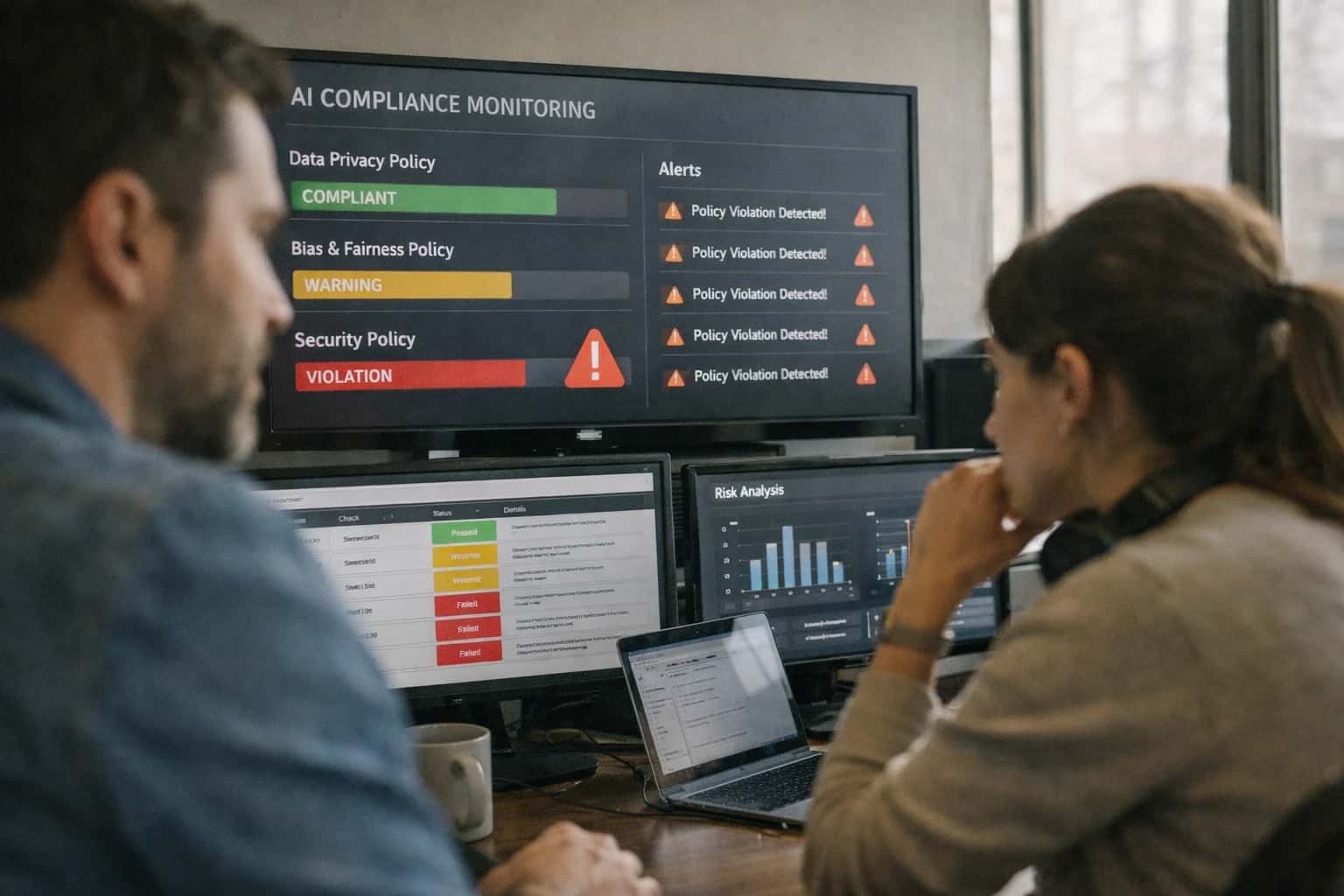
The AI Orchestration Layer for Heterogeneous Endpoint Estates
A practical blueprint for unifying policy, compliance, and support workflows across Jamf, Intune, Workspace ONE, and other MDM/UEM platforms using a centralized AI layer.
Implementation requires mapping the functional surface areas of each underlying platform: policy objects, script execution engines, remediation actions, and inventory attributes. For example, an AI agent tasked with 'remediate high CPU usage' must determine if the target is a Mac (execute a Jamf Pro shell script), a Windows PC (deploy an Intune PowerShell remediation), or an Android device (push a Workspace ONE Freestyle Orchestrator workflow). The orchestration layer uses a unified device identity to route actions, maintains an execution audit log, and handles API rate limiting and error recovery. High-value workflows include proactive device health scoring (correlating battery, storage, and crash data from all MDMs to predict failures) and dynamic policy enforcement (adjusting conditional access in Intune based on real-time security posture ingested from CrowdStrike or SentinelOne via the AI layer).
Rollout is phased, starting with read-only reporting and analytics to build trust in the AI's recommendations, then progressing to semi-automated workflows with human-in-the-loop approvals for policy changes or remediations, and finally to fully automated, closed-loop actions for low-risk, high-volume tasks like compliance tag updates. Governance is critical: the AI layer must enforce RBAC, mirroring admin roles from the source MDMs, and maintain a tamper-evident audit trail of all decisions and actions taken across platforms. This architecture doesn't replace your existing MDM investments; it makes them smarter by enabling coordinated, intelligence-driven management that is impossible when each platform operates in a silo.
Primary Integration Surfaces Across Leading MDM/UEM Platforms
Policy & Compliance Automation
This surface covers the core policy engines and compliance reporting APIs where AI can automate enforcement and remediation. Key integration points include:
- Conditional Access & Configuration Policies: AI agents can ingest real-time signals (device health, user risk, location) via Microsoft Graph API for Intune or Jamf Pro's Classic API to dynamically adjust policy assignments, moving beyond static group-based logic.
- Automated Compliance Remediation: Use platform-specific remediation actions—Intune's
deviceManagement/remediationScripts, Jamf Pro scripts, or Workspace ONE's Freestyle Orchestrator—to allow AI to execute fixes for common non-compliance issues (e.g., disk encryption, OS updates). - Predictive Violation Detection: Build models that analyze historical compliance data from MDM reports to forecast which devices or user groups are likely to violate policies, enabling proactive communications or preemptive policy adjustments.
Integrating here shifts policy management from a reactive, manual task to a predictive, self-healing layer.
High-Value Use Cases for AI-Powered Unified Management
Integrating AI across your MDM/UEM platforms (Jamf, Intune, Workspace ONE, Meraki) enables proactive, policy-driven orchestration of diverse endpoints—mobile, desktop, and IoT—from a single intelligence layer. These use cases translate telemetry into automated workflows that reduce manual overhead and improve security posture.
Predictive Device Health & Failure Prevention
AI models analyze battery cycles, storage trends, crash reports, and thermal data from Jamf Pro, Intune, and Workspace ONE to predict hardware failures. Automatically generate support tickets and schedule proactive replacements before critical user downtime occurs.
Cross-Platform Compliance Orchestration
An AI agent consumes compliance states from multiple MDM APIs, correlates them with HR data, and dynamically adjusts conditional access policies in Intune or configuration profiles in Jamf. It auto-remediates drift and generates unified audit trails for regulations like HIPAA or GDPR.
Intelligent, Risk-Based Patch Deployment
AI prioritizes OS and app patches by analyzing Jamf patch reports, Intune update rings, and external CVE feeds. It schedules deployments based on device role, user location, and network bandwidth (via Meraki insights), minimizing vulnerability windows without disrupting productivity.
Automated Incident Response for Lost/Stolen Devices
Upon receiving a high-risk signal (geofence breach, suspicious login), AI evaluates context from Workspace ONE Intelligence or Meraki location data before orchestrating a response: escalating to security, triggering a remote wipe via the MDM API, and creating an ITSM ticket with full timeline.
AI-Optimized Software License Reclamation
Continuously analyzes application installation inventory from all managed MDM platforms to identify unused or underutilized licenses. AI recommends reclamation, automates removal via MDM script or uninstall payload, and updates the software asset management system, directly reducing OpEx.
Unified User Behavior Anomaly Detection
Ingests and correlates event logs—app usage, network access, location pings—from Jamf, Intune, and Cisco Meraki MDM. AI establishes baselines and flags anomalous behavior (e.g., off-hours data exfiltration), triggering automated security workflows like network quarantine or step-up authentication.
Example Cross-Platform AI Orchestration Workflows
These workflows illustrate how an AI orchestration layer can automate complex, multi-step operations across disparate MDM/UEM platforms (like Jamf, Intune, and Workspace ONE) and adjacent systems (like ITSM, HRIS, and EDR) to create a unified, self-healing endpoint environment.
Trigger: A new_hire_provisioned event is received from the HRIS (e.g., Workday).
Context/Data Pulled:
- AI agent queries the HRIS for the new hire's role, department, location, and start date.
- It checks the asset inventory for an available, appropriate device model based on role (e.g., MacBook Pro for developers, Windows laptop for finance).
- It retrieves the target user's email from the corporate directory.
Model/Agent Action: The AI agent executes a multi-platform orchestration sequence:
- Jamf Pro: For an Apple device, it creates a pre-stage enrollment record, assigns the device to the user, and applies role-based configuration profiles (security settings, department-specific apps).
- Microsoft Intune: For a Windows device, it triggers an Autopilot reset, assigns the user, and deploys the required applications and compliance policies.
- Workspace ONE: It ensures the user is added to the correct organizational group for app catalog access.
- Unified Step: It sends a personalized welcome email with setup instructions and a link to the company portal.
System Update/Next Step: The agent logs all actions, updates the CMDB with the device-user assignment, and creates a task in the IT project board for the physical device to be shipped or prepared for pickup.
Human Review Point: None for standard roles. For executive or highly privileged roles, the workflow pauses and sends the proposed device configuration to the security team for approval before execution.
Implementation Architecture: The AI Orchestration Hub
A practical blueprint for deploying a centralized AI layer that orchestrates policies and automations across multiple, disparate MDM/UEM platforms.
The core architecture is an AI Orchestration Hub—a middleware service that sits between your operational teams and the underlying MDM platforms (e.g., Jamf Pro, Microsoft Intune, VMware Workspace ONE). This hub ingests real-time telemetry and events via each platform's REST API (Jamf Pro API, Microsoft Graph for Intune, Workspace ONE UEM API) and maintains a unified, normalized view of your entire endpoint estate. It uses this data to power AI models that make centralized decisions, which are then executed as API calls back to the respective MDM systems. For example, an AI model predicting device failure based on battery health data from Jamf can trigger an automated remediation script in Jamf, while a similar model using Intune's device diagnostics can push a PowerShell remediation script via Microsoft Graph.
Key implementation surfaces include policy orchestration, where the AI hub evaluates conditions across platforms to dynamically assign configuration profiles; compliance automation, synthesizing reports from multiple consoles to auto-remediate violations; and lifecycle workflows, triggering coordinated actions like automated enrollment in Jamf and application assignment in Workspace ONE based on a single HRIS onboarding event. The hub acts as a unified policy engine, allowing you to define intent-based rules (e.g., "ensure all finance department devices have encryption enabled") that the AI translates and executes through the native APIs of each MDM, regardless of their differing data models or capabilities.
Governance is critical. The hub should implement a human-in-the-loop approval layer for high-risk actions (like remote wipes), maintain a immutable audit log of all AI-driven decisions and API calls, and enforce role-based access control (RBAC) so automations are scoped to appropriate device groups. Rollout follows a phased approach: start with read-only monitoring and alerting, progress to automated reporting, then introduce low-risk remediations (e.g., tagging, script execution) before handling security policies. This architecture doesn't replace your MDM investments; it makes them smarter by adding a single, intelligent control plane. For a deeper dive on connecting to specific platforms, see our guides on AI Integration for Jamf Pro and AI Integration with Microsoft Intune.
Code Patterns: API Calls and Payload Examples
Orchestrating Policies Across Multiple MDM APIs
A unified AI layer must broker requests between different MDM provider APIs (e.g., Microsoft Graph for Intune, Jamf Pro Classic API, Workspace ONE REST API). The core pattern involves an AI agent evaluating a business rule (e.g., "apply high-security profile to devices accessing financial data"), determining the target device's managing platform, and executing the appropriate API call.
Key steps include normalizing device identifiers (UDID, serial number) across systems, handling provider-specific authentication (OAuth, Basic Auth), and mapping a canonical policy intent to platform-specific JSON payloads. The AI agent's context includes the unified device inventory and a mapping of which policy types (compliance, configuration, app deployment) are supported by each underlying platform.
python# Example: Apply a security baseline based on AI risk score def enforce_security_baseline(device_id, risk_score): platform = device_inventory[device_id]['mdm_platform'] if platform == "intune": # Map to Intune device compliance policy payload = { "@odata.type": "#microsoft.graph.deviceCompliancePolicy", "roleScopeTagIds": ["0"], "passwordRequired": True, "passwordMinimumLength": 8, "osMinimumVersion": "10.0.19042" } response = requests.patch( f"https://graph.microsoft.com/v1.0/deviceManagement/deviceCompliancePolicies/{policy_id}", json=payload, headers={"Authorization": f"Bearer {intune_token}"} ) elif platform == "jamf": # Map to Jamf configuration profile payload = { "general": { "name": "AI-High-Security-Baseline", "description": "Applied by AI based on risk score" }, "scope": { "all_computers": False, "computers": [{"id": jamf_computer_id}] } } response = requests.post( f"https://{jamf_server}/JSSResource/computerprofiles/id/0", json=payload, auth=(jamf_user, jamf_pass), headers={"Content-Type": "application/json"} ) return response.status_code
Realistic Operational Impact and Time Savings
This table illustrates the operational shift from reactive, manual management across disparate MDM consoles to proactive, unified orchestration driven by an AI layer. Impact is measured in time saved, risk reduction, and administrative burden lifted.
| Operational Workflow | Before AI (Multi-Platform Silos) | After AI (Unified AI Layer) | Implementation Notes |
|---|---|---|---|
Policy Conflict Detection & Resolution | Manual review across 3+ consoles; 4-8 hours per major change | Automated cross-platform analysis with conflict alerts; 30-60 minutes review | AI correlates policies from Jamf, Intune, and Workspace ONE into a single risk dashboard |
Endpoint Compliance Reporting | Manual data extraction and consolidation; 2-3 days monthly | Automated, unified report generation; same-day, on-demand | AI agent ingests compliance APIs, normalizes data, and populates a central Power BI dashboard |
Proactive Device Health Remediation | Reactive tickets; technician-driven script execution; next-day resolution | Predictive alerts with automated scripted remediations; same-hour resolution | AI analyzes battery, storage, crash logs to trigger platform-specific scripts (Jamf/Intune) before failure |
Security Incident Response Orchestration | Manual coordination between EDR, MDM, and network teams; 2-4 hours to contain | Automated playbook execution (quarantine via MDM, block via NAC); 15-30 minutes to contain | AI agent receives alert from Sentinel, executes API calls to Intune (wipe) and Meraki (block VLAN) |
Cross-Platform Software Update Scheduling | Separate maintenance windows per platform; user disruption and overtime | Intelligent, staggered scheduling based on user group and location; zero overtime | AI models usage patterns to optimize timing, orchestrating updates via each platform's native deployment tools |
New Hire Device Provisioning | Manual checklist across systems; 3-5 business day setup lead time | Automated workflow triggered from HRIS; zero-touch enrollment ready on day one | AI orchestration platform (like n8n) sequences tasks: Intune enrollment, Workspace ONE app assignment, Jamf policy push |
Asset Lifecycle & Procurement Forecasting | Quarterly manual inventory reconciliation; reactive replacement purchases | Predictive failure and refresh modeling; 90-day procurement lead time | AI analyzes MDM telemetry and warranty data to generate quarterly refresh recommendations for finance |
Governance, Security, and Phased Rollout Strategy
A unified AI layer for endpoint management must be architected for enterprise-grade security, policy enforcement, and controlled adoption.
Architectural Governance: Policy as Code and AI Guardrails A unified AI layer does not replace your underlying MDM/UEM platforms (Jamf, Intune, Workspace ONE). Instead, it acts as an orchestration brain that consumes telemetry and executes actions through their APIs. Governance starts by codifying your organization's device policies into a central AI policy engine. This engine defines the decision logic for AI agents, ensuring all automated actions—like pushing a configuration profile, triggering a remote wipe, or reassigning a device group—are evaluated against pre-approved rules. Key components include:
- Policy-Aware Agents: AI workflows are designed to check a central policy store before executing any MDM API call, ensuring compliance with IT, security, and data privacy standards.
- Approval Gates & Human-in-the-Loop: High-risk actions (e.g., mass policy changes, executive device remediations) are routed for human approval via integrated ticketing systems like ServiceNow before execution.
- Immutable Audit Trails: Every AI-initiated action is logged with a full context chain—the triggering event, the policy evaluated, the decision made, and the exact API call—creating an immutable record for compliance audits and root cause analysis.
Security and Data Flow Controls Security is paramount when an AI system has privileged access to manage thousands of endpoints. The integration architecture must enforce:
- Least-Privilege API Credentials: AI service accounts are granted scoped, read/write permissions only to the necessary MDM API endpoints (e.g., can read inventory and push scripts, but cannot delete enrollment profiles).
- Data Residency and Processing: Device telemetry (inventory, compliance status, location) ingested by the AI layer can be processed in your chosen cloud or on-premises environment, ensuring sensitive data never leaves approved boundaries.
- Encrypted Context for AI Decisions: When an AI model analyzes device data to recommend an action (e.g., "Device battery health is critical, recommend replacement"), the payload is encrypted in transit and at rest. The AI system does not retain raw device telemetry beyond the session needed for decision-making.
- Integration with Security Tools: The AI layer is designed to consume alerts from your EDR (CrowdStrike, SentinelOne) and SIEM (Splunk, Sentinel). This allows it to correlate security events with device management state and automate containment actions via MDM APIs, such as quarantining a compromised device in Meraki Systems Manager.
Phased Rollout Strategy: From Pilot to Enterprise Scale A successful rollout mitigates risk and builds organizational trust. We recommend a three-phase approach:
- Phase 1: Non-Disruptive Monitoring & Insights (Weeks 1-4)
- Deploy AI agents in read-only mode across all managed endpoints. They synthesize data from Jamf, Intune, and Workspace ONE into unified dashboards, highlighting compliance gaps, patch status, and device health trends.
- The AI generates recommended actions but requires manual admin approval and execution within the native MDM console. This phase validates AI accuracy and builds confidence.
- Phase 2: Automated Remediation for Low-Risk Workflows (Weeks 5-12)
- Enable automated execution for predefined, low-risk workflows. Examples include:
- Auto-tagging devices in Jamf Pro based on AI-detected usage patterns.
- Automatically creating Intune compliance tickets for devices drifting from baseline.
- Executing pre-approved, non-disruptive scripts to fix common Wi-Fi or printer issues on Windows devices managed by Workspace ONE.
- Roll out to a pilot group (e.g., IT department devices) first, then expand to low-touch user groups.
- Enable automated execution for predefined, low-risk workflows. Examples include:
- Phase 3: Predictive & Proactive Orchestration (Months 4+)
- Activate cross-platform AI orchestration. The AI layer now makes predictive decisions and executes coordinated actions across multiple MDM systems.
- Example Workflow: AI predicts a macOS device will fail based on battery health trends in Jamf. It automatically checks the user's calendar (via Microsoft Graph), schedules a replacement during a free slot, pre-stages the new device in Jamf, and creates a self-service pickup ticket in ServiceNow—orchestrating Jamf, Intune, and ITSM without human intervention.
- Continuous evaluation loops are established, where the outcomes of AI actions are fed back to improve model accuracy and policy definitions.
Enabling Efficiency, Speed & Accuracy
Intelligent Analysis, Decision & Execution
We build AI systems for teams that need search across company data, workflow automation across tools, or AI features inside products and internal software.
Talk to Us
Search across company data
Give teams answers from docs, tickets, runbooks, and product data with sources and permissions.
Useful when people spend too long searching or get different answers from different systems.

Automate internal workflows
Use AI to route work, draft outputs, trigger actions, and keep approvals and logs in place.
Useful when repetitive work moves across multiple tools and teams.

Add AI to products and internal tools
Build assistants, guided actions, or decision support into the software your team or customers already use.
Useful when AI needs to be part of the product, not a separate tool.
Frequently Asked Questions for Technical Architects
Architecting an AI layer for Unified Endpoint Management (UEM) requires connecting multiple MDM platforms, orchestrating cross-platform policies, and enabling autonomous operations. Below are detailed implementation patterns for the most critical workflows.
The core pattern is a central AI orchestration engine that uses each platform's REST API as an execution layer.
Architecture Flow:
- Trigger: A business rule is defined (e.g., "All devices accessing patient data must have disk encryption enabled and a screen lock under 5 minutes").
- Context/Data Pulled: The AI agent queries a unified inventory view, which is populated by periodic sync jobs from:
- Jamf Pro API (
/api/v1/computers-inventory) - Microsoft Graph API (
/deviceManagement/managedDevices) - Workspace ONE UEM API (
/API/mdm/devices)
- Jamf Pro API (
- Model/Agent Action: An AI model classifies each device's compliance status against the rule. For non-compliant devices, it determines the correct remediation API call for each platform:
- Jamf: Pushes a Configuration Profile with
com.apple.mobiledevice.passwordpolicypayload. - Intune: Updates a Device Configuration Policy or triggers a Device Compliance Policy action.
- Workspace ONE: Updates or assigns a Device Profile via the
/API/mdm/profilesendpoint.
- Jamf: Pushes a Configuration Profile with
- System Update: The orchestrator executes the platform-specific API calls, logging each transaction to an audit trail.
- Human Review Point: Devices that fail remediation after 3 attempts are flagged in a dashboard for manual intervention by the endpoint team.
Key Integration Nuance: You must handle API rate limiting and asynchronous job completion (e.g., Jamf Pro's command endpoints) by implementing a stateful workflow engine with retry logic.

About the author
Prasad Kumkar
CEO & MD, Inference Systems
Prasad Kumkar is the CEO & MD of Inference Systems and writes about AI systems architecture, LLM infrastructure, model serving, evaluation, and production deployment. Over 5+ years, he has worked across computer vision models, L5 autonomous vehicle systems, and LLM research, with a focus on taking complex AI ideas into real-world engineering systems.
His work and writing cover AI systems, large language models, AI agents, multimodal systems, autonomous systems, inference optimization, RAG, evaluation, and production AI engineering.
Partnered with leading AI, data, and software stack.





How We Work
Custom AI workflows for your Business
One-fit-all AI don't work for modern businesses. At Inferensys, we aim to understand your business & custom requirements; which we use to define most efficient agentic workflows, the data, and the tools for your business.
01
Review the use case
We understand the task, the users, and where AI can actually help.
Read more02
Pick the right approach
We define what needs search, automation, or product integration.
Read more03
Build the first useful version
We implement the part that proves the value first.
Read more04
Improve from there
We add the checks and visibility needed to keep it useful.
Read moreThe first call is a practical review of your use case and the right next step.
Talk to Us