Ignition's alarm system is built on a high-velocity pipeline of tag-based events, status changes, and acknowledgments. AI fits into this flow at three key integration points: 1) Alarm Suppression, where models analyze incoming tag floods to identify and suppress nuisance or correlated alarms before they hit the operator console; 2) Root Cause Prioritization, where AI contextualizes active alarms with historical data and process parameters to surface the probable primary fault; and 3) Response Suggestion, where a copilot agent suggests documented procedures, relevant HMI screens, or automated script actions based on the diagnosed alarm pattern. This is implemented by intercepting alarm journal data via Ignition's scripting or database bridge, running inference through a dedicated service (often containerized alongside the Gateway), and returning enriched alerts or actions back into the alarm table or a dedicated Perspective module.

Integration
AI Integration with Ignition for Alarm Management
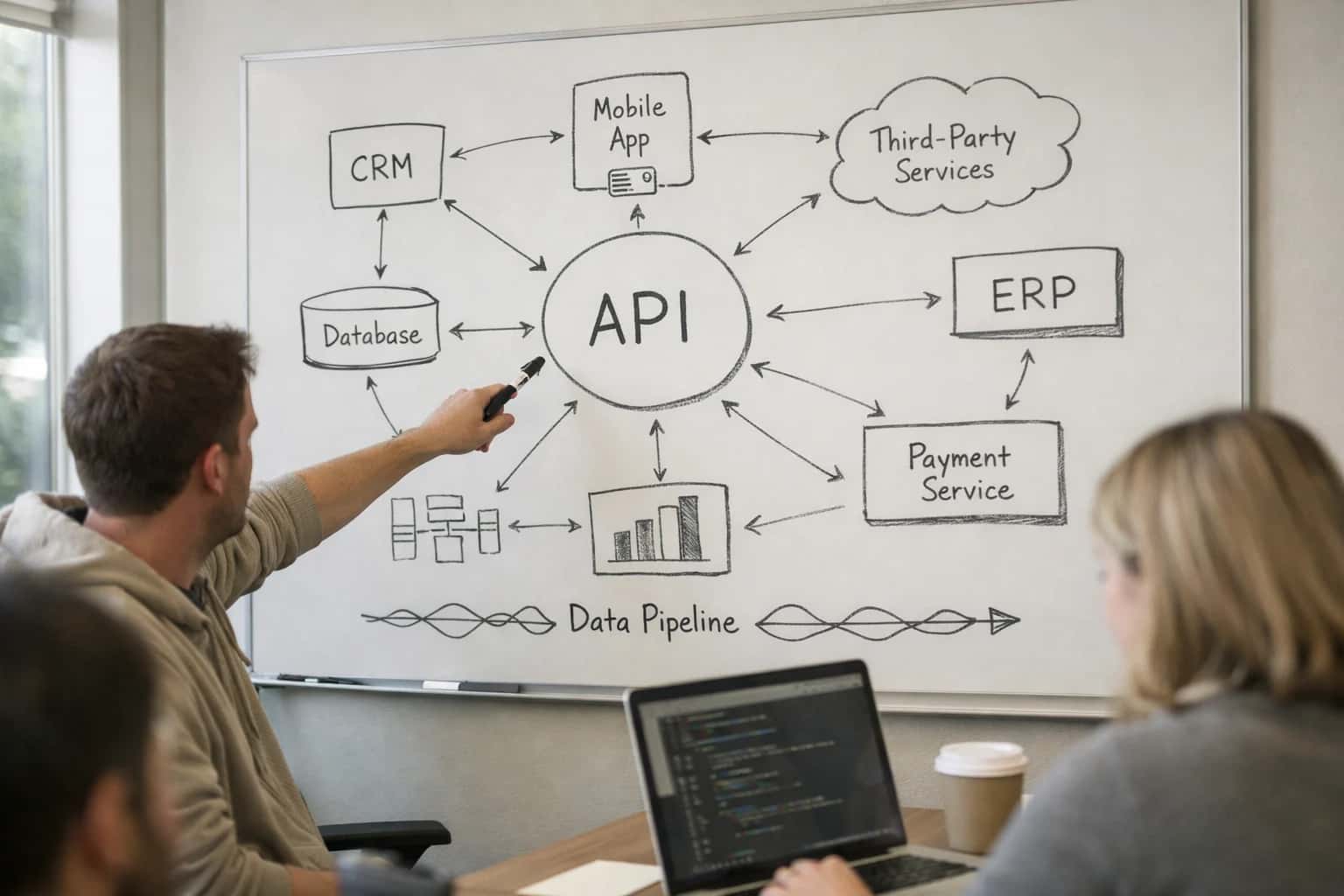
Where AI Fits into Ignition's Alarm Ecosystem
A practical guide to embedding AI inference within Ignition's real-time alarm pipeline to reduce cognitive load and automate response.
A production rollout follows a phased, governed approach. Start with a read-only analysis phase, where AI models run in parallel to the live system, logging suggestions without taking action. This builds trust and provides training data. Next, implement supervised automation for low-risk, high-frequency alarms (e.g., temporary sensor spikes) using Ignition's system.alarm scripting functions to automatically acknowledge or shelve alarms that meet AI-confidence thresholds. Finally, deploy an operator copilot interface within a Perspective view, presenting prioritized alarms, root cause reasoning, and one-click action buttons (like running a diagnostic script or opening a work order). Governance is critical: all AI-driven actions must be logged in a separate audit table with model version, input data snapshot, and confidence score, and there should always be a manual override path via the standard alarm console.
The value isn't in replacing Ignition's robust alarm engine, but in augmenting it. The goal is to turn hundreds of raw tag events into a handful of actionable, contextualized alerts. This reduces operator fatigue, accelerates mean-time-to-repair (MTTR) by pointing to the likely culprit, and creates a feedback loop where alarm resolutions improve future model accuracy. For teams using Ignition's MES modules, this AI layer can also link alarms to specific production orders, equipment, and quality specs, enabling prescriptive maintenance or workflow triggers. Successful integration requires treating the AI service as a stateful, monitored component within the Ignition architecture—handling its failures gracefully and ensuring it doesn't become a single point of failure for core alarm delivery.
Key Ignition Surfaces for AI Alarm Integration
The Core Event Stream for AI Inference
Ignition's alarm notification system is the primary real-time event stream for AI integration. This pipeline captures every alarm state change—ACKNOWLEDGED, CLEARED, ACTIVE—and can be extended via scripting or MQTT/Webhook transmitters to feed an AI inference service.
Key integration surfaces:
- Alarm Journal Database Tables: Historical alarm data for training models on patterns and root causes.
- Gateway Event Scripts: Python or Jython scripts triggered on alarm events to call external AI APIs with context (tag values, previous alarms).
- MQTT Transmission: Stream alarm payloads (JSON) to a message broker for decoupled AI processing.
AI models analyze this stream to perform intelligent alarm suppression (filtering nuisance alarms), root cause prioritization (bubbling up primary faults), and automated response suggestion (suggesting operator actions based on similar historical events).
High-Value AI Use Cases for Ignition Alarms
Ignition's alarm and notification system is a powerful real-time nerve center for the plant floor. By integrating AI, you can transform reactive alarm floods into intelligent, prioritized guidance that reduces cognitive load and accelerates response.
Intelligent Alarm Suppression & Flood Management
Use AI to analyze incoming alarm streams and contextually suppress nuisance or correlated alarms based on plant state, equipment mode, and preceding events. This reduces alarm floods by 40-60%, allowing operators to focus on root causes, not symptom noise.
Root Cause Prioritization & Causal Chain Analysis
Connect AI models to Ignition's tag historian and alarm journal. When a primary alarm fires, the AI instantly analyzes preceding tag behavior to identify and rank the most probable root cause from secondary alarms or process deviations, presenting a causal chain to the operator.
Automated Response Suggestion & SOP Retrieval
For each high-priority alarm, an AI agent retrieves and surfaces the relevant standard operating procedure (SOP) from connected document systems. It can also suggest immediate containment actions based on historical resolution data, displayed directly in the Ignition HMI or Perspective session.
Predictive Alarm & Early Warning Generation
Deploy models that analyze real-time sensor data (via Ignition's OPC UA/MQTT connectors) to predict impending alarm conditions before thresholds are breached. Generate soft "watchlist" alerts in Ignition, enabling preventive intervention that avoids downtime or quality events.
Shift Handover & Alarm Summary Automation
At shift change, an AI workflow analyzes the alarm journal, acknowledged vs. unacknowledged alarms, and ongoing incidents to generate a concise natural language summary. This ensures critical context is transferred, reducing missed follow-ups and improving continuity.
Alarm System Performance & Rationalization Auditing
Continuously monitor alarm system health. AI analyzes alarm frequency, standing alarms, and chattering tags to identify candidates for rationalization. It generates reports recommending threshold adjustments, deadband changes, or priority modifications to improve system effectiveness.
Example AI-Enhanced Alarm Workflows
These workflows illustrate how AI agents can be integrated with Ignition's alarm system to move from reactive notification to intelligent response. Each pattern connects to specific Ignition components—like the Alarm Journal, Tag Historian, or Perspective screens—to reduce cognitive load and accelerate resolution.
Trigger: A primary alarm (e.g., Pump-101_Pressure_Low) triggers, followed by a cascade of 10+ related alarms within 30 seconds.
Context/Data Pulled:
- The AI agent queries Ignition's Alarm Journal via its REST API for the last 60 seconds of alarms on the same area/line.
- It fetches the 5-minute historical trend for the primary alarm's tag and 3 key correlated tags from the Tag Historian.
- It checks the current state of related equipment (running/stopped) from Ignition tags.
Model/Agent Action: A lightweight classification model analyzes the alarm pattern and tag trends to:
- Identify the root cause alarm (e.g., the initial pressure drop).
- Group secondary alarms as consequential effects.
- Assign a priority score (1-10) based on impact to OEE, safety, or quality.
System Update/Next Step:
- The agent uses Ignition's scripting API to suppress the grouped secondary alarms in the operator's console, showing only the root cause with a note: "12 related alarms suppressed."
- It posts a prioritized alert to a designated Perspective HMI panel or Slack/MS Teams channel:
"Root Cause: Feed Pump PF-101 Failure. Priority: High. Suppressed 12 cascade alarms." - It automatically opens a maintenance work ticket in the connected CMMS with the tag history snapshot attached.
Human Review Point: The operator can click a "Show All" button in the HMI to review suppressed alarms. The suppression logic is logged for audit.
Implementation Architecture: Data Flow & Model Layer
A production-ready AI integration for Ignition alarm management connects real-time SCADA data to inference models and routes prioritized insights back to operators and systems.
The architecture begins at Ignition's Tag Historian and Alarm Pipelines. Real-time and historical alarm events, along with contextual tag data (setpoints, process variables, equipment states), are streamed via Ignition's REST API or Message Queuing (MQTT/Kafka) to a dedicated inference service. This service performs two critical functions: first, it applies unsupervised anomaly detection to identify subtle, multi-variable patterns preceding major alarm floods, enabling predictive suppression. Second, it uses a supervised classification model to triage incoming alarms, scoring them for severity, likely root cause (e.g., 'sensor drift' vs. 'mechanical failure'), and recommended immediate action.
Processed insights are returned to Ignition through a bi-directional channel. High-priority, AI-enriched alarms are injected back into the Alarm Status Table with appended metadata (root cause probability, linked tags). For operators, a custom Perspective HMI component displays these prioritized alerts alongside suggested response checklists. For engineers, a separate service generates summarized Alarm Flood Reports and logs model decisions to an audit database for continuous feedback and model retraining. The system is designed to be model-agnostic, allowing swaps between cloud-hosted LLMs for complex root cause narratives and lean, on-premise models for low-latency, high-frequency signal classification.
Rollout is phased, starting with a shadow mode where AI inferences are logged but do not affect the live alarm console, building confidence in model accuracy. Governance is managed through Ignition's existing security and role-based access control (RBAC); only authorized roles can approve the transition from shadow to active suppression or view the underlying model confidence scores. This architecture reduces cognitive load not by removing alarms, but by providing the context operators need to act faster, turning alarm consoles from noise generators into decision-support tools.
Code & Configuration Patterns
Intelligent Alarm Filtering Logic
Alarm floods overwhelm operators, causing critical issues to be missed. An AI model can analyze the sequence and context of incoming alarms to suppress secondary or consequential alerts, presenting only the root-cause alarm to the operator console.
Implementation Pattern:
- Subscribe to Ignition's Alarm Notification Pipeline via its internal scripting or a dedicated gateway module.
- Stream alarm events (tag path, state, timestamp, priority) to a lightweight inference service.
- The model evaluates the alarm stream against learned patterns (e.g., pump failure → pressure drop → flow alarm) and returns a
suppression_reasonandroot_cause_alarm_id. - Use Ignition's scripting or a custom module to filter the alarm journal and HMI display based on the AI response.
python# Example: Pseudo-service call for alarm flood analysis def analyze_alarm_sequence(alarm_batch): """ Receives a batch of alarms from Ignition's last 60 seconds. Returns a filtered list and root cause. """ payload = { "alarms": alarm_batch, "context": { "production_line": "Line_A", "current_recipe": "Batch_XYZ" } } response = inference_client.post("/alarms/suppress", json=payload) return response.json() # { "primary_alarms": [...], "suppressed_count": 5 }
This pattern reduces cognitive load by 60-80% during major upsets, allowing operators to focus on resolution.
Realistic Operational Impact & Time Savings
How AI integration reduces cognitive load and accelerates response by prioritizing, suppressing, and diagnosing alarms in Ignition SCADA/MES environments.
| Alarm Workflow Stage | Before AI | After AI | Implementation Notes |
|---|---|---|---|
Alarm Flood Triage | Manual scan of 100+ concurrent alarms | AI groups related alarms & surfaces root cause | Reduces operator stress during critical events |
Nuisance Alarm Identification | Weekly engineering review of alarm logs | AI suggests suppression rules based on patterns | Pilot: 2-4 weeks to build confidence in suggestions |
Root Cause Suggestion | Consult manuals, call maintenance, check trends | AI cross-references process history & suggests top 3 likely causes | Human final approval required for safety-critical systems |
Response Guidance Retrieval | Search digital SOP library or paper binders | AI surfaces relevant procedures & past work orders | Integrates with Ignition's document management module |
Shift Handover Reporting | 30-45 minutes to summarize alarm activity | AI auto-generates shift alarm summary with trends | Provides narrative insight, not just data dump |
Preventive Action Trigger | Reactive work order after repeated alarms | AI predicts recurring fault & triggers CMMS work order | Links to Ignition's maintenance module or external CMMS |
Regulatory Audit Preparation | Days to compile and justify alarm rationalization | AI auto-documents suppression logic & performance metrics | Maintains full audit trail within Ignition's historian |
Governance, Security, and Phased Rollout
A production-grade AI integration for Ignition alarm management requires deliberate governance, secure data handling, and a phased rollout to manage risk and prove value.
Governance starts with defining the alarm context window—which tags, historical states, and related process variables are sent to the AI model for each inference. We establish rules for AI-suggested actions, such as suppressing alarms only when confidence exceeds a configurable threshold (e.g., 95%) and the root cause is linked to a known, logged maintenance event. All AI interactions are logged to Ignition's transaction groups or a dedicated audit table, capturing the original alarm, the model's reasoning, the suggested action, and the operator's final decision for compliance and model retraining.
Security is enforced at the data layer. Sensitive process data remains within the plant network; AI inference can occur on-premises via a containerized model or through a secure, authenticated API call to a cloud endpoint. We implement role-based access control (RBAC) within Ignition to determine which operators or engineers can approve AI-recommended suppressions or cause analyses, ensuring only authorized personnel can modify alarm handling logic based on AI input.
A phased rollout is critical for adoption and tuning. Phase 1 targets a single, high-noise alarm group for intelligent suppression, running the AI in a 'shadow mode' where suggestions are logged but not acted upon, allowing us to calibrate confidence scores and gather feedback. Phase 2 enables AI-assisted root cause prioritization for a specific production line, presenting operators with ranked probable causes within the Ignition HMI to reduce diagnostic time. Phase 3 rolls out automated response suggestions (e.g., 'adjust setpoint X') with a mandatory human approval step, scaling to the full alarm system only after validating accuracy and operator trust across multiple shift teams.
Enabling Efficiency, Speed & Accuracy
Intelligent Analysis, Decision & Execution
We build AI systems for teams that need search across company data, workflow automation across tools, or AI features inside products and internal software.
Talk to Us
Search across company data
Give teams answers from docs, tickets, runbooks, and product data with sources and permissions.
Useful when people spend too long searching or get different answers from different systems.

Automate internal workflows
Use AI to route work, draft outputs, trigger actions, and keep approvals and logs in place.
Useful when repetitive work moves across multiple tools and teams.

Add AI to products and internal tools
Build assistants, guided actions, or decision support into the software your team or customers already use.
Useful when AI needs to be part of the product, not a separate tool.
Frequently Asked Questions
Practical questions for teams planning to add AI-driven intelligence to Ignition's alarm and notification systems to reduce operator cognitive load and improve response times.
AI integrates with Ignition's alarm system through a combination of its native APIs and database connectivity. The typical architecture involves:
- Data Ingestion: An AI service subscribes to Ignition's alarm journal (stored in its SQL database) and real-time tag values via the Ignition Gateway Web API or MQTT. This provides the raw event stream.
- Context Enrichment: The service pulls additional context from related tags, historian data, and production order information to understand the alarm's operational setting.
- AI Inference: A model processes the enriched alarm event to classify its severity, predict its root cause, or suggest a suppression rule.
- Action Loop: Results are sent back to Ignition via:
- SQL Updates: Writing recommendations or new priority scores to a dedicated table for display on HMI screens.
- Tag Writes: Updating memory tags that drive alarm list filtering or operator guidance pop-ups.
- Script Triggers: Calling Ignition's built-in Python or Jython scripts to execute automated acknowledgments or log recommended actions.
The key is to treat the AI as a parallel advisory layer that reads from and writes to Ignition's data fabric without replacing its core alarm engine.

About the author
Prasad Kumkar
CEO & MD, Inference Systems
Prasad Kumkar is the CEO & MD of Inference Systems and writes about AI systems architecture, LLM infrastructure, model serving, evaluation, and production deployment. Over 5+ years, he has worked across computer vision models, L5 autonomous vehicle systems, and LLM research, with a focus on taking complex AI ideas into real-world engineering systems.
His work and writing cover AI systems, large language models, AI agents, multimodal systems, autonomous systems, inference optimization, RAG, evaluation, and production AI engineering.
Partnered with leading AI, data, and software stack.





How We Work
Custom AI workflows for your Business
One-fit-all AI don't work for modern businesses. At Inferensys, we aim to understand your business & custom requirements; which we use to define most efficient agentic workflows, the data, and the tools for your business.
01
Review the use case
We understand the task, the users, and where AI can actually help.
Read more02
Pick the right approach
We define what needs search, automation, or product integration.
Read more03
Build the first useful version
We implement the part that proves the value first.
Read more04
Improve from there
We add the checks and visibility needed to keep it useful.
Read moreThe first call is a practical review of your use case and the right next step.
Talk to Us