AI integration for SampleManager LIMS focuses on three core functional surfaces: the Quality Management module for deviations and CAPAs, the Sample and Test Result data stream for real-time analysis, and the Instrument Integration layer (via ASTM, HL7) for incoming data validation. The goal is to insert lightweight AI checkpoints and copilots into existing GxP workflows—not to replace them—preserving the system's audit trail, electronic signatures (21 CFR Part 11), and role-based approvals. For example, an AI agent can be triggered upon a new result entry via a webhook, analyze it against historical data and specifications, and automatically draft an Out-of-Specification (OOS) flag with a preliminary investigation note for QA review.

Integration
AI Integration with SampleManager LIMS
Connect AI agents and models to Thermo Fisher SampleManager to automate OOS detection, draft deviation reports, summarize audit trails, and accelerate GxP compliance workflows without disrupting validated systems.
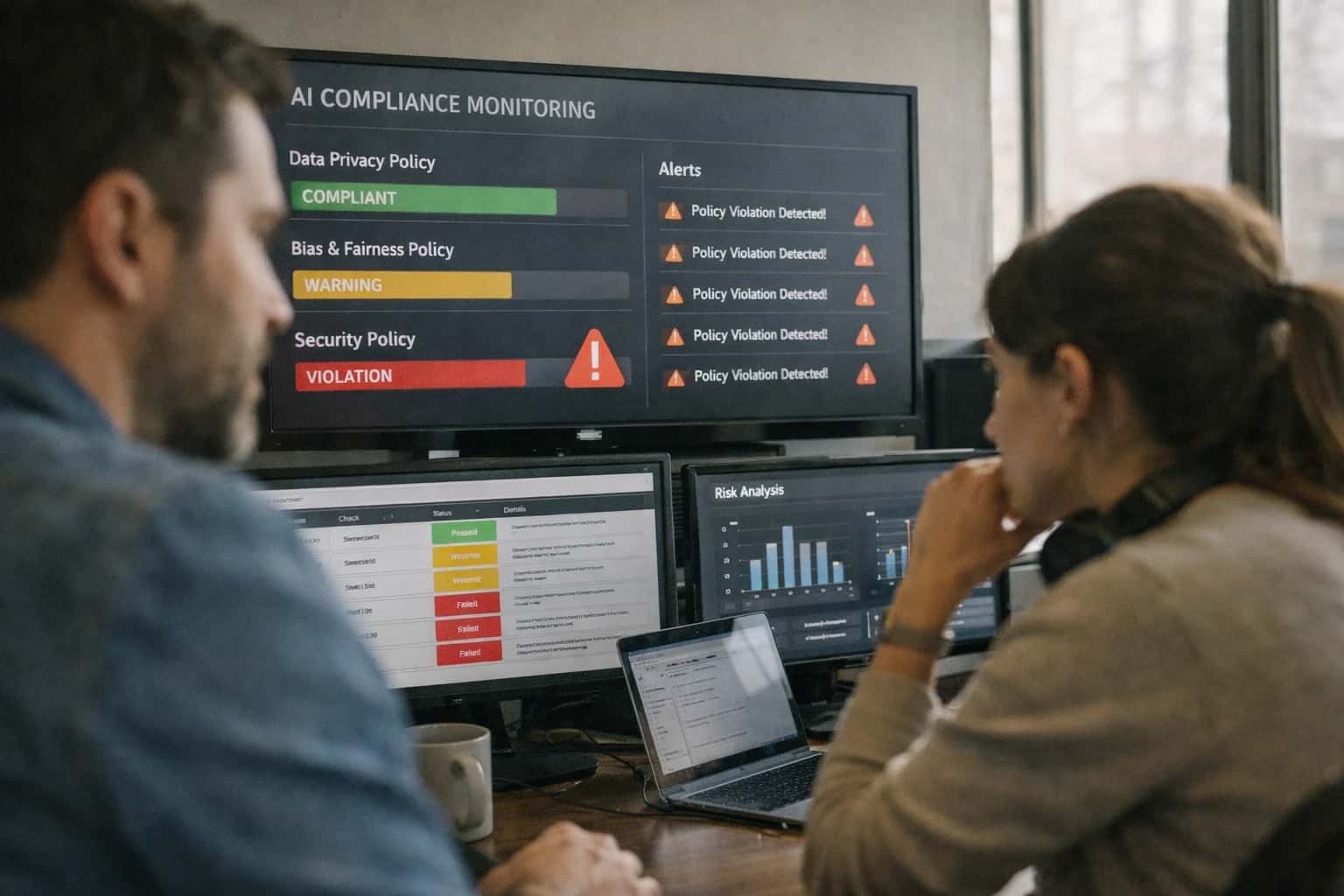
ARCHITECTURE AND OPERATIONAL IMPACT
Where AI Fits into SampleManager's GxP Workflows
A practical guide to embedding AI agents into Thermo Fisher SampleManager's compliance-critical data streams and quality workflows.
High-value use cases are operational and compliance-focused: Automated Deviation Drafting where AI parses instrument data and sample context to populate deviation forms; Corrective Action (CAPA) Intelligence that suggests relevant root causes and actions from past similar records in the QMS module; and Audit Trail Summarization for preparing for regulatory inspections by condensing months of change logs into narrative summaries. Implementation typically involves a secure middleware layer that hosts the AI models, calls SampleManager's REST/SOAP APIs to fetch and write data, and enforces a human-in-the-loop approval step before any AI-suggested action is committed to the permanent record.
Rollout is phased, starting with read-only agents for data summarization and anomaly highlighting to build trust, followed by controlled write-back for draft generation in non-critical fields. Governance is paramount: all AI interactions must be logged in a separate audit trail linked to the original SampleManager record, and prompts, models, and data sources are version-controlled. This ensures the integration accelerates review cycles—turning batch record review from days to hours—while maintaining the data integrity and compliance posture SampleManager is deployed to protect. For a deeper dive on architecting these integrations for regulated environments, see our guide on AI Integration for LIMS in Regulated Industries (GxP).
ARCHITECTURE BLUEPRINTS
Key Integration Surfaces in SampleManager
Core Sample and Test Data Workflows
The Sample and Test Management modules are the primary surfaces for AI integration, handling the lifecycle from sample login to final result. AI agents can be triggered at key workflow stages to automate manual checks and accelerate throughput.
Key Integration Points:
- Sample Login Automation: Use document intelligence (IDP) to parse PDF request forms or emails, extracting fields like
SampleID,TestCode,Priority, andClientIDto auto-populate the SampleManager registration screen via API. - Result Validation Assist: After manual or instrument result entry, an AI checkpoint can review values against historical ranges, flag unit mismatches, or identify statistically improbable outliers before the data is committed and locked.
- Disposition Recommendation: Based on test results against specifications, AI can suggest a final disposition (
Accept,Reject,Hold) and draft the initial comment for reviewer approval.
Example Impact: Reduces manual data entry for lab technicians during sample login and provides a second-layer, consistent check on result entry before QA review.
AUTOMATED COMPLIANCE & WORKFLOW ACCELERATION
High-Value AI Use Cases for SampleManager
Integrating AI with Thermo Fisher SampleManager transforms manual, document-heavy GxP workflows into intelligent, automated processes. These use cases connect directly to SampleManager's APIs, data model, and compliance modules to accelerate release cycles, reduce human error, and provide actionable insights.
01
Automated OOS/Deviation Flagging & Drafting
AI agents monitor incoming instrument data streams and result entries in real-time. Using statistical process control and rule-based logic, they automatically flag Out-of-Specification (OOS) results and deviations against pre-defined specifications. The agent retrieves relevant SOPs and past similar events, then drafts the initial deviation report within the SampleManager QMS module, including suggested investigation steps.
Hours -> Minutes
Initial report drafting
02
Audit Trail Summarization & Anomaly Detection
Batch -> Real-time
Compliance monitoring
03
Intelligent Corrective Action (CAPA) Support
Integrated within the SampleManager CAPA module, an AI agent analyzes the root cause investigation data from a deviation. It searches a knowledge base of past CAPAs and external regulatory guidance to suggest effective corrective and preventive actions. It can also draft the initial CAPA plan, assign tasks based on role, and track effectiveness metrics post-implementation.
1 sprint
CAPA cycle acceleration
04
Automated Certificate of Analysis (CoA) Generation
Upon batch release approval in SampleManager, an AI workflow is triggered. It pulls all required test results, specifications, and sample metadata. Using a governed template library, it drafts the complete CoA, populates tables, and performs a final consistency check against the raw data in the LIMS. This eliminates manual copy-paste errors and accelerates customer shipments.
Same day
CoA turnaround
05
Instrument Data Validation & Anomaly Detection
AI models sit between analytical instruments (via ASTM/HL7) and SampleManager's data acquisition layer. They perform real-time validation of incoming data streams, checking for calibration drift, improbable values, and missing controls before results are posted to the LIMS. Alerts are routed to instrument managers within SampleManager's workflow engine, preventing invalid data entry.
Real-time
Pre-LIMS validation
06
Change Control & Protocol Review Assistance
For changes to test methods or SOPs managed in SampleManager, an AI copilot assists QA reviewers. It analyzes the change request against impacted sample types, historical data, and regulatory references. It highlights potential downstream effects on existing data or validation status and can draft sections of the impact assessment report, ensuring a thorough and consistent review process.
Hours -> Minutes
Impact analysis
SAMPLEMANAGER LIMS
Example AI-Augmented Workflows
These workflows illustrate how AI agents and models can be integrated into specific SampleManager surfaces to automate compliance-heavy tasks, accelerate reviews, and reduce manual data handling for lab and QA teams.
Trigger: A final test result is posted to a SampleManager batch record and fails against its predefined specification limits.
Context Pulled: The AI agent, via a secured API call, retrieves:
- The failing result, test method, and specification details.
- The complete batch record and associated manufacturing steps.
- Historical OOS data for the same product, test, and instrument.
- Relevant SOPs for OOS investigation (e.g., FDA OOS Guidance).
Agent Action: A governed LLM analyzes the context to:
- Flag & Categorize: Determine if the result is a clear OOS, an aberrant value, or requires immediate retest.
- Draft Deviation: Auto-generate the initial fields for a SampleManager Deviation record, including:
- A concise problem statement.
- Preliminary impact assessment (batch, product line).
- Suggested investigation steps based on the test type.
- References to similar past deviations for root-cause patterns.
System Update: The drafted deviation is created in SampleManager in a "Draft - AI Assisted" status, routed to the assigned QA Investigator for review and electronic signature.
Human Review Point: The QA investigator reviews the AI-generated draft, adds investigator notes, and approves the deviation to proceed through the formal workflow. The AI's role is fully audited in the deviation's history log.
GxP-READY INTEGRATION PATTERNS
Implementation Architecture: Secure, Governed, and Compliant
A production-ready AI integration for SampleManager LIMS is built on a secure, event-driven architecture designed for regulated environments.
The core integration connects to SampleManager's REST API and database triggers to listen for key events, such as a completed test result posting to a batch record or a new deviation being logged. This event payload—containing sample ID, test data, specifications, and audit trail context—is securely routed via a dedicated integration service layer. This layer handles authentication, payload validation, and logging before invoking the appropriate AI model, such as an OOS detection classifier or a summarization agent. Processed outputs, like a flagged anomaly or a draft investigation note, are posted back to specific SampleManager objects (e.g., Deviation, Investigation, or a custom AI Findings module) via API, maintaining full data lineage.
Governance is enforced at multiple levels. All AI interactions are logged with a complete audit trail, linking the original SampleManager record ID, the user who triggered the workflow, the AI model version, prompt inputs, and generated outputs. For high-risk actions like auto-drafting a deviation, the workflow can be configured for human-in-the-loop review, where the AI's suggestion is placed in a draft state requiring QA approval before finalization. The architecture supports role-based access control (RBAC) aligned with SampleManager's security model, ensuring only authorized personnel (e.g., QA Managers, Lab Supervisors) can trigger or approve AI-generated content. Data residency and privacy are maintained by keeping all PHI and IPI within the controlled lab network, with AI model calls made to private endpoints, not public APIs.
Rollout follows a phased, validated approach. We typically start with a non-GxP pilot in a development or validation environment, focusing on a single, high-value workflow like automated OOS flagging for a specific product line. The integration is documented in the system's validation plan (IQ/OQ/PQ), with test scripts verifying data accuracy, audit trail completeness, and fail-safes. Once validated, deployment moves to production with a change control in SampleManager, often leveraging its built-in electronic signature workflows. This controlled, incremental path minimizes disruption, builds user trust, and delivers measurable impact—reducing manual review time from hours to minutes—while maintaining the integrity of your GxP data ecosystem. For related architectural patterns, see our guides on AI Integration for LIMS in Regulated Industries (GxP) and AI Integration for LIMS API Development.
SAMPLEMANAGER LIMS INTEGRATION
Code and Payload Patterns
Real-Time Anomaly Detection on Instrument Data
Integrate AI directly with SampleManager's ASTM or HL7 instrument interfaces to analyze results before they are committed to the database. This pattern uses a lightweight Python service to intercept the data stream, apply statistical and model-based checks, and flag potential Out-of-Specification (OOS) results for immediate review.
python# Example: Intercepting and analyzing an ASTM stream import json from inference_client import InferenceClient def process_astm_message(astm_record): """Process a single ASTM record from SampleManager.""" sample_id = astm_record.get('sample_id') test_name = astm_record.get('test_name') result_value = float(astm_record.get('result')) specification_limits = get_spec_limits(sample_id, test_name) # Call AI service for anomaly detection client = InferenceClient() analysis = client.analyze_result( test_name=test_name, result=result_value, historical_context=get_recent_results(sample_id, test_name), limits=specification_limits ) if analysis.get('flag') == 'OOS': # Create a preliminary deviation record via SampleManager API create_deviation_draft( sample_id, test_name, result_value, analysis.get('confidence'), analysis.get('reason') ) return analysis
This pre-validation step reduces manual review load and accelerates the initiation of required quality events.
AI-ENHANCED SAMPLEMANAGER WORKFLOWS
Realistic Time Savings and Operational Impact
How AI integration with Thermo Fisher SampleManager accelerates key GxP workflows, reduces manual effort, and maintains compliance.
| Workflow / Metric | Before AI | After AI | Notes |
|---|---|---|---|
OOS (Out-of-Spec) Flagging | Manual review of results tables | Automated anomaly detection & alerting | AI pre-screens 100% of results; human review focuses on flagged items only |
Deviation Report Drafting | 1-2 hours per incident | Initial draft in 5-10 minutes | AI pulls data from sample, test, and instrument records; investigator refines |
Audit Trail Summarization | Hours of manual log filtering | Key event summary in seconds | Generates chronological narrative for specific samples or batches for audits |
Corrective Action (CAPA) Suggestions | Manual search of past similar deviations | AI-retrieved similar cases & suggested actions | Provides context from historical data; QA manager makes final selection |
Sample Login from COA/Request | Manual data entry from PDF/email | Automated parsing & field population | Reduces transcription errors; technician verifies AI-extracted data |
Instrument Data Validation | Post-upload manual spot-check | Real-time anomaly check before LIMS posting | Flags calibration drift or improbable values via ASTM/HL7 feed |
Stability Study Trend Analysis | Monthly manual chart review | Continuous monitoring & alerting | Predicts shelf-life breaches and auto-generates interim report sections |
ENSURING CONTROLLED DEPLOYMENT IN GXP ENVIRONMENTS
Governance, Validation, and Phased Rollout
A structured approach to implementing AI in SampleManager that prioritizes data integrity, regulatory compliance, and measurable impact.
In a GxP-regulated environment, AI integration must be governed by the same change control and validation rigor as the LIMS itself. We architect integrations to treat AI models as validated components within SampleManager's workflow. This means establishing clear data boundaries: AI agents interact with SampleManager data via secure, audited APIs—such as those for Test Results, Deviations, and Samples—without writing back to primary records until a human reviewer or electronic signature approves the action. All AI-generated content, like a draft OOS investigation summary, is stored as a new Draft Note or Workflow Task with a full audit trail linking to the prompting context and source records.
A successful rollout follows a phased, risk-based approach. Phase 1 typically targets a single, high-volume, and well-defined workflow, such as automated first-pass review of routine Stability Test data for out-of-trend flagging. We deploy a pilot AI agent that reads result data via SampleManager's API, applies configured rules and anomaly detection, and creates a Review Task in the relevant module for a QA specialist. This controlled scope allows for validation of the AI's accuracy against historical decisions, tuning of prompts, and socialization with the QA team. Phase 2 expands to adjacent workflows, like parsing instrument-generated PDFs for Raw Material COA data entry, after establishing governance and trust from the initial phase.
Continuous validation and monitoring are critical. We implement human-in-the-loop checkpoints at each stage; for example, an AI-suggested corrective action from a deviation record cannot auto-populate the CAPA module—it must be reviewed and approved by an assigned investigator. Performance is tracked through metrics like reduction in manual review time per batch or the false-positive rate of OOS flags, providing tangible ROI evidence. This governance model ensures the integration augments SampleManager's compliance operations without introducing unmanaged risk, turning AI from a black box into a reliable, auditable component of the quality system.
Enabling Efficiency, Speed & Accuracy
Intelligent Analysis, Decision & Execution
We build AI systems for teams that need search across company data, workflow automation across tools, or AI features inside products and internal software.
Talk to Us
Search across company data
Give teams answers from docs, tickets, runbooks, and product data with sources and permissions.
Useful when people spend too long searching or get different answers from different systems.
Enterprise searchRAGPermissions
Read more
Automate internal workflows
Use AI to route work, draft outputs, trigger actions, and keep approvals and logs in place.
Useful when repetitive work moves across multiple tools and teams.
AI agentsWorkflow automationGovernance
Read more
Add AI to products and internal tools
Build assistants, guided actions, or decision support into the software your team or customers already use.
Useful when AI needs to be part of the product, not a separate tool.
AI integrationDecision supportModel routing
Read moreIMPLEMENTATION AND GOVERNANCE
Frequently Asked Questions
Practical questions for teams planning AI integration with Thermo Fisher SampleManager in regulated GxP environments.
AI steps are implemented as non-binding review checkpoints within existing electronic workflows. The architecture ensures:
- Audit Trail Integrity: Every AI action (data pull, analysis, suggestion) generates a discrete, time-stamped audit entry in SampleManager, linked to the parent record (e.g., test result, deviation).
- Electronic Signatures: AI-generated summaries or flags are presented to the human reviewer (e.g., QA Analyst) within the SampleManager UI. The final decision and signature are performed by the authorized human user on the complete record.
- System Validation: The AI integration components (APIs, data pipelines, models) are treated as "GxP-relevant computerized systems." We assist with a risk-based validation approach, including:
- Requirements Traceability Matrix (RTM) linking AI functions to business processes.
- Testing of data accuracy and integrity across the integration boundary.
- Change control procedures for model updates or prompt modifications.
- Data Governance: AI models only access data via secure, logged API calls with role-based permissions enforced by SampleManager. No raw data is stored permanently within the AI layer.

About the author
Prasad Kumkar
CEO & MD, Inference Systems
Prasad Kumkar is the CEO & MD of Inference Systems and writes about AI systems architecture, LLM infrastructure, model serving, evaluation, and production deployment. Over 5+ years, he has worked across computer vision models, L5 autonomous vehicle systems, and LLM research, with a focus on taking complex AI ideas into real-world engineering systems.
His work and writing cover AI systems, large language models, AI agents, multimodal systems, autonomous systems, inference optimization, RAG, evaluation, and production AI engineering.
LinkedIn
Limited slotsGet a Free AI Consultation
Partnered with leading AI, data, and software stack.





How We Work
Custom AI workflows for your Business
One-fit-all AI don't work for modern businesses. At Inferensys, we aim to understand your business & custom requirements; which we use to define most efficient agentic workflows, the data, and the tools for your business.
01
Review the use case
We understand the task, the users, and where AI can actually help.
Read more02
Pick the right approach
We define what needs search, automation, or product integration.
Read more03
Build the first useful version
We implement the part that proves the value first.
Read more04
Improve from there
We add the checks and visibility needed to keep it useful.
Read moreThe first call is a practical review of your use case and the right next step.
Talk to Us