
Inferensys

Integration

AI Integration for Laboratory Sample Management

Implement AI across LabWare, LabVantage, and Benchling LIMS to automate sample login via document parsing, intelligent aliquot planning, and disposition recommendation, reducing manual entry for lab technicians.
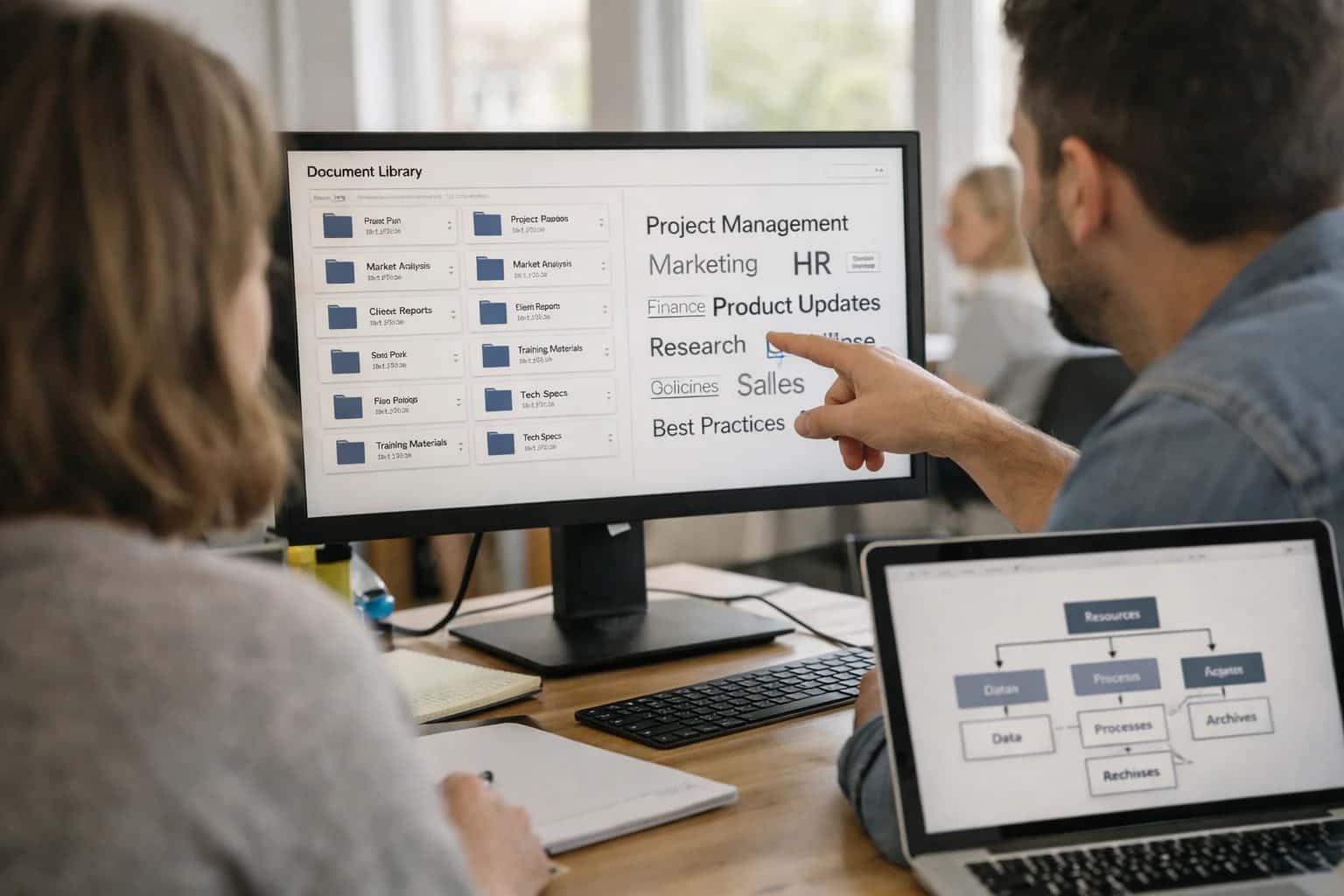
Knowledge manager reviewing enterprise knowledge management system on laptop, document library visible, casual office.
ARCHITECTURE AND ROLLOUT

Where AI Fits into LIMS Sample Management

A practical guide to integrating AI into LabWare, LabVantage, and Benchling for sample login, aliquot planning, and disposition workflows.

AI integrates into LIMS sample management by connecting to specific functional surfaces and data objects. The primary touchpoints are:

  • Sample Login & Accessioning: AI agents parse incoming documents (PDF COAs, email requests, scanned forms) using NLP and computer vision to auto-populate fields like SampleID, TestCode, Priority, ClientID, and MaterialLot. This connects to the LIMS sample registration API or a staging table before final posting.
  • Aliquot & Subsampling Workflow: Based on the test plan and available sample volume, an AI model can suggest an optimal aliquot scheme, generating child sample records and updating the ParentSample relationship and Container location in the inventory module.
  • Disposition & Result Review: After analytical results are posted, an AI checkpoint reviews values against specifications, flags potential Out-of-Specification (OOS) or Out-of-Trend (OOT) conditions, and suggests a preliminary disposition (Accept, Reject, Hold) for the QA reviewer.

Implementation typically follows an event-driven pattern. A new sample request triggers a webhook to an AI service, which processes the attached document and returns a structured JSON payload. This payload is validated against business rules (e.g., required fields for GxP) before the LIMS creates the sample record via its REST or SOAP API. For result review, a scheduled job or post-result trigger sends the data to an AI model for anomaly detection; the output is logged as a comment or creates a preliminary deviation record for further investigation. This architecture keeps the core LIMS intact while adding an intelligent orchestration layer.

Rollout requires a phased approach, starting with a non-GxP pilot for document parsing to build confidence. Governance is critical: all AI suggestions must be logged in an audit trail with a clear human-in-the-loop approval step before any system-of-record update. For regulated environments, the AI service itself must be validated, and its outputs should not bypass existing electronic signature workflows. The integration should reduce manual data entry from hours to minutes for accessioning staff and cut preliminary review time for QA analysts, but final disposition authority always remains with the qualified human reviewer.

SAMPLE MANAGEMENT AUTOMATION

AI Touchpoints Across LIMS Platforms

Automating Sample Intake

AI agents can intercept and parse incoming sample requests from emails, PDF forms, and scanned documents, extracting key entities like sample ID, test codes, priority, and client information. This data is then structured and used to auto-populate LIMS records in platforms like LabWare or LabVantage, eliminating manual data entry for lab technicians.

Key integration surfaces:

  • Email Inboxes & Web Portals: AI monitors designated channels for submission attachments.
  • LIMS API Endpoints: Extracted data is posted via REST or SOAP APIs to create new Sample and TestRequest objects.
  • Business Rule Engines: AI can trigger platform-specific validation rules or routing workflows upon record creation.

Impact: Reduces sample login time from 10-15 minutes per batch to near-instantaneous processing, minimizing transcription errors and accelerating lab throughput.

LIMS INTEGRATION PATTERNS

High-Value AI Use Cases for Sample Management

Integrating AI into LabWare, LabVantage, or Benchling transforms manual, reactive sample workflows into intelligent, automated operations. These patterns focus on connecting AI to specific LIMS modules and data streams to deliver immediate value to lab technicians, QA managers, and data stewards.

01

Automated Sample Login via Document Parsing

Deploy AI agents that monitor sample submission emails and portals, using NLP and computer vision to parse request forms, PDFs, and COAs. The agent extracts key fields (Sample ID, Test Codes, Priority, Client Info) and auto-creates sample records in the LIMS via its REST or SOAP API, eliminating manual data entry for accessioning staff.

Minutes vs. Hours
Per batch of samples
02

Intelligent Aliquot & Worklist Planning

Enhance the LIMS sample planning module with AI that analyzes sample type, test requirements, and historical throughput to optimize aliquot volumes and generate intelligent worklists. The model sequences samples based on instrument capacity, technician availability, and priority, routing the optimized plan back to the LIMS scheduler for execution.

Batch -> Dynamic
Scheduling logic
03

Real-Time Anomaly Detection in Results

Connect AI models to the LIMS instrument data interface (HL7, ASTM) or post-result API hooks. As results are posted, the model performs statistical process control and pattern recognition against historical data, flagging improbable values, unit mismatches, or out-of-trend readings before final validation. Flags are written back to the sample record for analyst review.

Pre-Validation
Error catching
04

Automated Disposition & Deviation Drafting

For samples triggering OOS (Out-of-Specification) or atypical results, an AI agent interfacing with the LIMS QA module can auto-assign preliminary disposition (e.g., 'Investigate', 'Reject'). It retrieves similar past deviations and relevant SOPs, then drafts an initial deviation report with suggested investigation steps, accelerating the workflow for QA investigators.

Same-Day Initiation
For critical deviations
05

Predictive Inventory & Reagent Management

Integrate AI with the LIMS inventory module (e.g., LabWare's Inventory Manager) to analyze consumption rates, open work orders, and supplier lead times. The model predicts reagent shortages, suggests lot consolidation to minimize waste, and can automatically generate reorder POs or alerts for lab managers, optimizing stock levels and reducing downtime.

Proactive vs. Reactive
Replenishment
06

Unified Natural Language Search & Query

Implement a RAG (Retrieval-Augmented Generation) layer over the LIMS database and linked document repositories (SOPs, notebooks). Lab staff can ask questions like 'Show me all stability results for Product X where pH exceeded spec last quarter' in plain language. The AI queries the vector store, grounds the response in LIMS data, and returns a summarized answer with citations to source records.

No Complex Queries
For scientists & managers
CONCRETE AUTOMATION PATTERNS FOR LIMS

Example AI-Powered Workflows

These workflows illustrate how AI agents integrate directly with LIMS platforms like LabWare, LabVantage, and Benchling to automate manual steps, accelerate reviews, and improve data quality. Each pattern is triggered by a system event, uses context from the LIMS, and updates records or routes tasks.

Trigger: Email arrives in a dedicated lab inbox with a sample submission form or a PDF Certificate of Analysis (COA) attached.

Context Pulled: The AI agent uses the LIMS API (e.g., LabVantage REST) to check for existing client and material master data.

Agent Action:

  1. Extracts key entities from the unstructured document:
    • Sample ID, Client Name, Material Name/Lot #
    • Requested Tests (mapped to internal test codes)
    • Priority and Due Date
  2. Validates extracted data against LIMS master data (e.g., confirms test code is valid, client exists).
  3. If confident, it auto-creates the sample record. If ambiguous, it flags the field for human review.

System Update: A new sample record is created in the LIMS with status 'Logged-In', and a worklist assignment is triggered. A confirmation email is sent to the submitter.

Human Review Point: The agent presents a summary of extracted data and its confidence scores in a UI dashboard for the accessioning technician to approve or correct before final submission to the LIMS.

A PRODUCTION-BLUE PRINT FOR GXP ENVIRONMENTS

Implementation Architecture: Data Flow & Guardrails

A secure, auditable architecture for integrating AI agents into LabWare, LabVantage, and Benchling without disrupting validated workflows.

The core integration pattern connects AI agents to the LIMS via its secured APIs (e.g., Benchling GraphQL, LabVantage REST) and listens to key business events—like a new sample login, a completed test result, or a deviation creation. An event-driven queue (e.g., Azure Service Bus, AWS SQS) decouples the LIMS from AI processing, ensuring system stability. For each event, relevant context is retrieved: the sample record, associated test methods, previous results, and linked documents like SOPs or COAs from the LIMS document management module. This structured data, combined with extracted text from uploaded PDFs, forms the grounded context for the LLM.

AI actions are executed as controlled tool calls back into the LIMS. For example, an agent might: create_deviation() with a pre-populated description and initial impact assessment, update_sample_status() to "Hold" based on an anomaly flag, or suggest_aliquot_plan() within the sample hierarchy. Every AI-generated output—a drafted deviation, a parsed value from a COA, a recommended test—is staged in a human-in-the-loop review interface embedded in the LIMS user workflow (e.g., a custom dashboard in LabWare or a task in Benchling). A lab technician or QA analyst must review, edit if necessary, and explicitly approve the action before it is committed to the system of record, maintaining data integrity and user accountability.

Governance is built into the data flow. All AI interactions are logged to a separate audit trail database, capturing the initial trigger, the full prompt context, the model's raw response, the reviewer's identity, and the final action taken. This traceability is essential for GxP compliance and model performance monitoring. The architecture also enforces strict RBAC, ensuring AI suggestions and data are scoped to the user's project, client (for CROs), or operational area. Rollout follows a phased validation approach, starting with a single, high-volume, low-risk workflow like automated sample login from PDF forms, before expanding to more complex processes like OOS flagging or stability trend analysis.

AI INTEGRATION PATTERNS FOR LIMS

Code & Payload Examples

Automating Sample Registration

AI can parse incoming sample submission forms, emails, or PDFs (like Chain of Custody forms) to auto-populate the LIMS sample record. This reduces manual data entry for lab accessioning staff.

A common pattern uses an event-driven architecture: a file is uploaded to a monitored folder or arrives via email, triggering an Azure Function or AWS Lambda. The function calls a vision or document intelligence API (like Azure Document Intelligence or AWS Textract) to extract key fields, then validates and posts the data to the LIMS REST API.

Example Payload to LIMS API:

json
POST /api/v1/samples
{
  "sampleId": "SMP-2024-00123",
  "clientCode": "CLT-555",
  "sampleType": "Water",
  "matrix": "Surface Water",
  "testsRequested": [
    { "testCode": "MET-EPA200.8", "priority": "Routine" },
    { "testCode": "BACT-9221B", "priority": "Routine" }
  ],
  "receivedDate": "2024-05-15",
  "dueDate": "2024-05-22",
  "comments": "Parsed from CoC form #7891 via AI service."
}

The AI service maps extracted text (e.g., "Metals by ICP-MS") to the internal LIMS test code MET-EPA200.8, ensuring the correct workflow is triggered.

AI-ENHANCED SAMPLE WORKFLOWS

Realistic Time Savings & Operational Impact

How AI integration for LabWare, LabVantage, and Benchling reduces manual effort and accelerates sample lifecycle operations.

Workflow / TaskBefore AIAfter AIKey Notes

Sample Login & Registration

Manual data entry from paper/PDF forms (5-15 mins per sample)

Automated parsing from request forms & COAs (1-2 mins per sample)

AI extracts fields (sample ID, test codes, client) with human review for exceptions

Aliquot Planning & Worklist Generation

Technician calculates volumes and creates worklists manually (30-60 mins per batch)

AI suggests optimal aliquoting and auto-generates prioritized worklists (5-10 mins per batch)

Considers sample priority, test requirements, and instrument availability

Result Entry & Preliminary Validation

Manual transcription from instruments; visual checks for outliers

Auto-population from instrument feeds; AI flags mismatches & statistical anomalies

Analyst reviews AI-highlighted exceptions before final validation

Deviation / OOS Investigation Initiation

QA manually reviews batch records to identify issues (1-2 hours per event)

AI pre-scans results against specs & SOPs, drafts initial deviation report (15-30 mins per event)

Provides context from past similar deviations; QA investigator approves and edits

Stability Study Trend Analysis

Scientist manually plots data and reviews for out-of-trend (OOT) results (2-4 hours per study interval)

AI monitors data points, forecasts trends, and alerts on potential OOT (30 mins review)

Generates interim report drafts with highlighted sections for scientist sign-off

Document Search & Knowledge Retrieval

Keyword searches across PDFs and notebooks; manual synthesis of relevant methods

Semantic search across SOPs, past experiments, and COAs; AI summarizes findings

Integrated with Benchling ELN or LabVantage document modules for R&D support

Inventory Reorder Trigger & PO Drafting

Lab manager manually checks stock levels and creates POs (weekly 1-2 hour task)

AI predicts usage, suggests reorder points, and drafts PO lines (automated alert + 10 min review)

Considers lead times, lot expiration, and open orders; integrates with ERP

ARCHITECTING FOR GXP AND PRODUCTION CONFIDENCE

Governance, Compliance & Phased Rollout

A controlled, phased implementation is critical for integrating AI into regulated laboratory workflows without disrupting compliance or data integrity.

In regulated environments (GxP, ISO 17025), AI agents must operate within the existing change control and electronic signature (21 CFR Part 11) frameworks of your LIMS. Our architecture treats AI as a governed 'reviewer' or 'analyst' within the workflow. For example, an AI agent that pre-reviews batch records in LabWare or SampleManager writes its findings to a dedicated audit trail object, flagging potential inconsistencies against SOPs. A human QA manager then reviews these AI-generated highlights, adds context, and provides the final electronic signature. This maintains a clear, defensible chain of custody where AI assists but does not autonomously approve.

A phased rollout mitigates risk and builds user trust. Phase 1 typically targets a low-risk, high-volume process like automated sample login via document parsing. AI extracts data from COAs and request forms into a staging area within the LIMS (e.g., a custom object in LabVantage), where an accessioning technician reviews and confirms before the official sample record is created. Phase 2 might introduce intelligent aliquot planning, where AI suggests optimal sample subdivision based on historical test requirements, with a lab supervisor approving the generated worklist. Phase 3 expands to disposition recommendation, where AI analyzes test results against specifications to suggest 'Pass', 'Fail', or 'Hold', requiring final validation by a qualified analyst.

Governance is embedded through role-based access controls (RBAC) for AI features, prompt versioning tied to method revisions, and continuous performance monitoring. We instrument AI outputs with confidence scores and track drift against known good outcomes. For instance, if an AI model recommending stability study trends begins to deviate from a scientist's manual reviews, alerts are sent to the system owner for retraining or investigation. This operational model ensures AI augments your lab's expertise while keeping your quality system intact and audit-ready.

IMPLEMENTATION BLUEPRINTS

Frequently Asked Questions

Practical questions and workflow walkthroughs for integrating AI into LabWare, LabVantage, and Benchling to automate sample management, reduce manual entry, and accelerate quality workflows.

This workflow uses an AI agent triggered by a new document upload to a monitored network folder or via a LIMS API webhook.

  1. Trigger: A new supplier COA PDF is saved to a designated incoming_coas folder or emailed to a dedicated inbox.
  2. Context Pull: The agent retrieves the PDF and extracts key entities using a vision/LLM model fine-tuned for lab documents. It looks for:
    • Material Name and Lot/Batch Number
    • Test Parameters (e.g., potency, impurities)
    • Specification Limits and Reported Results
    • Supplier and Date of Analysis
  3. Agent Action: The parsed data is structured into a JSON payload. The agent calls the LIMS REST API (e.g., LabVantage's POST /samples) to create a preliminary sample record.
    json
    {
      "sampleType": "Raw Material",
      "material": "Sodium Chloride, USP",
      "lotNumber": "SNC-22408",
      "tests": [
        { "testCode": "PH-001", "result": "5.2", "unit": "pH" },
        { "testCode": "AS-005", "result": "<0.1", "unit": "%" }
      ],
      "sourceDocument": "coa_22408.pdf"
    }
  4. System Update: The LIMS creates the sample with a "Pending Review" status and links the original PDF. A task is assigned to a lab technician in the accessioning queue.
  5. Human Review Point: The technician reviews the auto-populated fields in the LIMS UI, makes any necessary corrections, and approves the sample for testing, cutting manual data entry by 70-90%.
Prasad Kumkar

About the author

Prasad Kumkar

CEO & MD, Inference Systems

Prasad Kumkar is the CEO & MD of Inference Systems and writes about AI systems architecture, LLM infrastructure, model serving, evaluation, and production deployment. Over 5+ years, he has worked across computer vision models, L5 autonomous vehicle systems, and LLM research, with a focus on taking complex AI ideas into real-world engineering systems.

His work and writing cover AI systems, large language models, AI agents, multimodal systems, autonomous systems, inference optimization, RAG, evaluation, and production AI engineering.




