AI integration targets Spectro Cloud's core bare metal surfaces: the Cluster Profile for hardware definitions, the Cloud Account for provider integrations (Equinix Metal, AWS Outposts, vSphere), and the Machine Management layer for node lifecycle. Key data objects include MachinePools defining server specs, Cluster manifests with firmware and driver requirements, and telemetry streams from the Spectro Cloud Kubernetes Platform (SCKP) agent on each physical host. AI agents can plug into Palette's REST API and webhooks to read cluster state, analyze hardware inventory, and trigger provisioning or remediation jobs.

Integration
AI Integration for Spectro Cloud Bare Metal
Embed AI agents into Spectro Cloud's bare metal provisioning and management workflows to automate hardware validation, optimize cluster configurations, predict failures, and maintain firmware compliance.
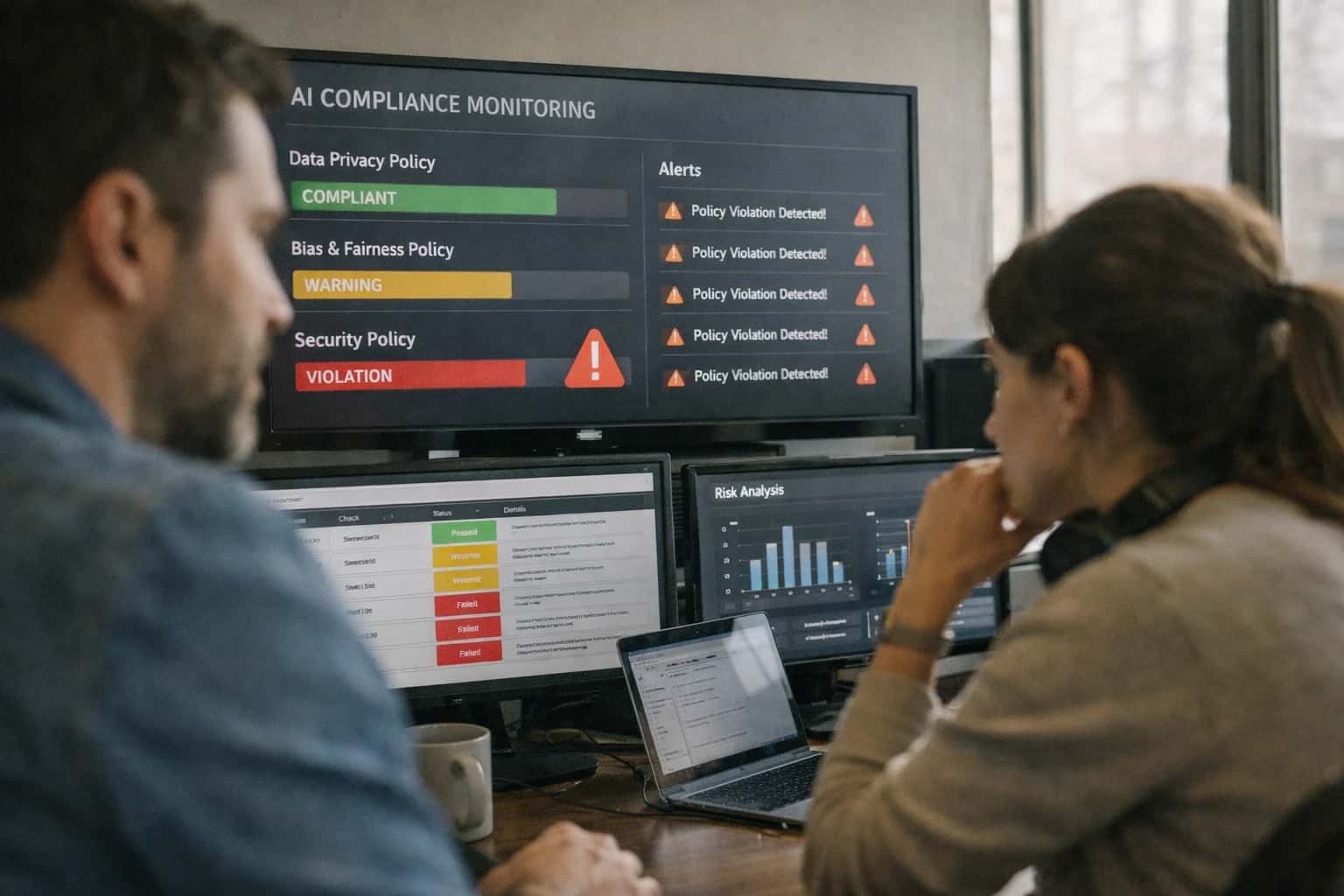
ARCHITECTURE AND ROLLOUT
Where AI Fits in Spectro Cloud Bare Metal Management
Integrating AI into Spectro Cloud's bare metal management transforms hardware provisioning, compliance, and maintenance from manual, reactive tasks into automated, predictive workflows.
High-value workflows include predictive maintenance by analyzing SMART disk data and BMC sensor logs to forecast hardware failures before they impact Kubernetes workloads, and intelligent provisioning that analyzes workload resource requests (e.g., GPU memory, NVMe throughput) to match them with the optimal bare metal server profile from your inventory. For example, an AI agent can monitor a MachinePool's capacity, predict a shortage of GPU nodes for scheduled ML training jobs, and automatically submit a Cluster update to provision additional servers via the Equinix Metal integration, all before the developer's pipeline fails.
Rollout should start with a single staging cluster profile and a narrow use case, like automating firmware compliance checks. An AI agent can be deployed as a Kubernetes Job or Deployment within a management cluster, using RBAC scoped to a specific Project in Palette. It should write audit logs back to Palette's Events or an external SIEM. Governance is critical: all AI-driven Cluster updates should flow through Palette's existing approval workflows, and any hardware decommissioning recommendations should require human review. This phased approach de-risks the integration while delivering immediate operational relief, turning days of manual hardware triage into minutes of automated analysis.
BARE METEL PROVISIONING AND OPERATIONS
Key Integration Surfaces in Spectro Cloud Palette
Automating Infrastructure-as-Code with AI
Cluster Profiles are the core building blocks in Spectro Cloud, defining the OS, Kubernetes version, CNI, CSI, and add-ons for a cluster. AI can integrate here to:
- Analyze workload requirements (GPU, high I/O, low latency) and recommend optimal pack combinations from the public or private catalog.
- Generate and validate Pack values (YAML configurations) based on natural language descriptions of the target environment.
- Enforce governance by scanning proposed profiles for compliance with security policies (e.g., required CIS-enabled OS packs) before provisioning.
- Predict upgrade compatibility by analyzing pack dependencies and changelogs to suggest safe version progression paths for day-2 operations.
This turns profile management from a manual search-and-configure task into an intelligent, guided workflow.
SPECTRO CLOUD PALETTE INTEGRATION
High-Value AI Use Cases for Bare Metal
Integrate AI agents with Spectro Cloud Palette to automate the provisioning, compliance, and lifecycle management of bare metal Kubernetes clusters, turning hardware into intelligent, self-optimizing infrastructure.
01
Intelligent Bare Metal Provisioning
Use AI to analyze hardware specs (CPU, RAM, GPU, NICs) and automatically generate optimal Spectro Cloud cluster profiles. Agents ingest hardware inventory, match workloads to capabilities, and execute provisioning via Palette APIs, reducing manual configuration from hours to minutes.
Hours -> Minutes
Provisioning time
02
Predictive Firmware & Driver Compliance
Deploy AI agents that continuously scan bare metal nodes for firmware versions, BIOS settings, and GPU drivers. Compare against a CIS-hardened Spectro Cloud blueprint and automatically generate remediation playbooks or initiate compliant updates through Palette's lifecycle manager.
Proactive
Compliance posture
03
AI-Optimized GPU Scheduling for AI/ML
For clusters hosting AI training or inference, integrate an AI scheduler that analyzes GPU workloads (TensorFlow, PyTorch) and dynamically adjusts Palette node pool definitions. It optimizes for cost-performance by mixing GPU types, managing MIG profiles, and preempting low-priority jobs, maximizing hardware ROI.
20-40%
Higher utilization
04
Predictive Hardware Failure & Maintenance
Connect AI agents to node-level telemetry (SMART stats, thermal sensors, memory ECC) and cluster metrics. Use pattern recognition to predict disk, PSU, or fan failures. Automatically generate Spectro Cloud maintenance tickets, schedule node cordoning via the Palette API, and trigger hardware replacement workflows.
Same-day
Issue prediction
05
Cost-Aware Bare Metal Capacity Planning
An AI agent analyzes historical resource consumption across Palette-managed clusters and forecasts future demand for CPU, memory, and storage. It provides right-sizing recommendations for new bare metal purchases or reallocation, and can automatically adjust cluster pool sizes to avoid over-provisioning capital hardware.
1 Sprint
Planning cycle
06
Automated Security Posture Drift Remediation
Continuously audit bare metal cluster configurations against Spectro Cloud's declarative profiles. An AI agent detects drift (e.g., kernel parameters, network policies), assesses risk, and either auto-remediates via GitOps or generates prioritized tickets with exact CLI commands for the operations team to execute.
Batch -> Real-time
Drift detection
FOR SPECTRO CLOUD BARE METAL
Example AI-Driven Workflows
These workflows demonstrate how AI agents can automate and optimize the provisioning, management, and maintenance of bare metal Kubernetes clusters using Spectro Cloud's APIs and Palette's declarative model.
Trigger: A developer submits a cluster profile request via a service catalog (e.g., Jira Service Management, Slack) for a GPU-enabled development cluster.
Context/Data Pulled: The AI agent analyzes the request against:
- Available bare metal inventory from Spectro Cloud's infrastructure pool (CPU cores, RAM, GPU models, NICs).
- Existing cluster allocations and team quotas.
- The requested cluster profile (OS image, Kubernetes version, GPU drivers, CNI).
- Historical provisioning success/failure rates for similar hardware combinations.
Model or Agent Action: The agent selects the optimal physical host(s), generates a Spectro Cloud ClusterProfile manifest with the correct machine pool definitions and add-ons (e.g., NVIDIA GPU Operator, SR-IOV network device plugin), and submits it via the Palette API.
System Update or Next Step: The agent monitors the Palette cluster status, streaming logs. Upon successful provisioning, it:
- Registers the new cluster in the corporate service registry.
- Configures DNS entries.
- Sends a completion notification with access details to the requester and the platform team.
Human Review Point: If the agent detects a hardware compatibility issue (e.g., requested GPU driver version unsupported on available hardware), it pauses the workflow and alerts a platform engineer with its analysis and a suggested alternative configuration.
FROM HARDWARE INVENTORY TO INTELLIGENT ORCHESTRATION
Implementation Architecture and Data Flow
Integrating AI with Spectro Cloud Bare Metal transforms static hardware pools into a predictive, self-optimizing substrate for Kubernetes.
The integration connects at two primary layers: the Spectro Cloud Palette API for cluster lifecycle orchestration and the hardware management plane (via IPMI, Redfish, or vendor APIs) for physical control. An AI agent acts as a middleware orchestrator, ingesting real-time telemetry from Palette (cluster health, resource requests) and from the bare metal servers (power state, firmware versions, hardware sensor data). This unified data stream enables the AI to make placement decisions—for example, automatically provisioning a new GPU-enabled cluster on servers with compliant NVIDIA drivers and available thermal headroom, directly through Palette's cluster profiles and machine pools.
A typical predictive maintenance workflow is event-driven: hardware sensor alerts (e.g., rising memory ECC errors) are captured, enriched by the AI with historical failure data and current workload criticality, and then trigger automated actions via the Palette API. This could involve live-migrating stateful workloads off a suspect node using Palette's integration with Kubernetes storage classes, placing the host in a maintenance pool, and generating a service ticket with detailed diagnostics. For provisioning, the AI analyzes pending workload demands (from a queue or CI/CD system), cross-references against hardware inventory and Spectro Cloud's Placement Policies, and executes a fully parameterized cluster deployment, optimizing for factors like GPU generation, NUMA alignment, or power efficiency.
Governance is enforced through Spectro Cloud's RBAC and Projects model, where the AI agent's API permissions are scoped to specific machine pools and cluster profiles. All orchestration actions are logged in Palette's audit trail and can be routed through approval workflows for high-risk operations. The AI's recommendations and actions are grounded in a vector store containing hardware manuals, firmware compatibility matrices, and past incident resolutions, ensuring decisions are explainable and compliant with organizational policies for hardware lifecycle and security baselines.
AI-ENHANCED BARE METEL OPERATIONS
Code and Payload Examples
Automating Bare Metal Node Onboarding
Integrate AI with Spectro Cloud's Cluster API (CAPI) for bare metal to analyze hardware manifests and automate provisioning decisions. An AI agent can process BMC (IPMI/Redfish) inventory data, validate against firmware compliance baselines, and generate the necessary BareMetalHost and Machine manifests for Palette.
Example AI Workflow Payload:
json{ "task": "validate_and_provision_bare_metal", "input": { "bmc_address": "192.168.1.100", "inventory": { "cpu_cores": 64, "memory_gb": 512, "gpu_type": "NVIDIA_A100", "storage_tb": 15, "firmware_version": "2.1.5" }, "cluster_profile": "gpu-ai-training" }, "ai_decision": { "action": "provision", "recommended_machine_pool": "bm-gpu-large", "compliance_check": "firmware_2.1.5_ok", "generated_manifest": "spec.bareMetalHostRef.name: bm-host-xyz" } }
This enables zero-touch provisioning where AI handles the compatibility check and manifest generation, reducing manual inspection from hours to minutes.
AI-ASSISTED BARE METAL KUBERNETES OPERATIONS
Realistic Time Savings and Operational Impact
This table shows how AI integration for Spectro Cloud Bare Metal transforms manual, reactive cluster management into a predictive, automated workflow, focusing on hardware lifecycle and operational efficiency.
| Metric | Before AI | After AI | Notes |
|---|---|---|---|
Hardware Provisioning Lead Time | Days to weeks (manual spec, PXE, firmware) | Hours (automated spec matching, image streaming) | AI analyzes workload requirements and available hardware specs to generate optimal cluster profiles. |
Firmware/Driver Compliance Checks | Manual quarterly audits, spreadsheet tracking | Continuous automated scanning with drift alerts | AI correlates hardware inventory with vendor CVE databases and approved baselines. |
Predictive Node Failure Intervention | Reactive after hardware alerts or crashes | Proactive alerts based on SMART data & telemetry trends | AI models analyze historical failure patterns from sensor data to forecast issues. |
GPU Workload Placement & Scheduling | Manual bin-packing based on static labels | Dynamic scheduling based on real-time utilization & thermal data | AI optimizes for performance-per-watt and prevents thermal throttling across the rack. |
Bare Metal Capacity Forecasting | Quarterly review based on ticket backlog | Weekly forecasts with 'what-if' scenario modeling | AI projects cluster growth and identifies underutilized hardware for reclamation. |
Disaster Recovery Runbook Execution | Manual runbook following, prone to human error | Guided, context-aware execution with pre-flight checks | AI validates recovery steps against current cluster state and hardware availability. |
Security Policy (CIS) Enforcement | Post-deployment scans with manual remediation | Pre-provisioning policy validation & automated hardening | AI applies and validates security benchmarks during image build and before node join. |
Lifecycle Management (Updates/Reboots) | Scheduled maintenance windows with service downtime | Intelligent, workload-aware rolling updates | AI coordinates node draining and reboots based on application SLA and pending patches. |
ARCHITECTURE FOR PRODUCTION
Governance, Security, and Phased Rollout
Integrating AI into bare metal Kubernetes management requires a security-first, phased approach to ensure stability and control.
AI governance for Spectro Cloud Bare Metal starts with secure tool calling and audit trails. AI agents should interact with the Spectro Cloud Palette API via dedicated service accounts with scoped RBAC permissions—limiting actions to specific cluster profiles, machine pools, or tenant projects. Every AI-initiated action, such as a cluster scale-up or firmware compliance scan, must generate an immutable audit log entry in your SIEM or logging platform, capturing the original user prompt, the agent's reasoning, and the exact API call payload. This creates a transparent chain of custody for all automated infrastructure changes.
A phased rollout mitigates risk and builds organizational trust. Start with read-only analysis and recommendation agents that monitor cluster health, hardware utilization, and compliance drift without taking action. Phase two introduces approval-gated automation for low-risk, repetitive tasks like non-disruptive node drain-and-cordon operations or generating predictive maintenance reports. The final phase enables closed-loop automation for pre-authorized scenarios, such as auto-scaling machine pools based on GPU demand forecasts or applying pre-validated firmware updates during maintenance windows. Each phase should include a defined rollback procedure, like reverting to a known-good cluster profile snapshot.
For security, the AI integration layer must be deployed within your private network or VPC, with all calls to external LLM APIs (e.g., OpenAI, Anthropic) proxied through a secure gateway that enforces data loss prevention (DLP) policies. Sensitive data—like BMC/IPMI credentials, hardware serial numbers, or internal network topology—should be masked or hashed before being sent for processing. Vector databases used for RAG on your infrastructure runbooks or compliance documents must be encrypted at rest and have access controls aligned with your Spectro Cloud tenant structure. This ensures your AI operations enhance, rather than compromise, your bare metal security posture.
Enabling Efficiency, Speed & Accuracy
Intelligent Analysis, Decision & Execution
We build AI systems for teams that need search across company data, workflow automation across tools, or AI features inside products and internal software.
Talk to Us
Search across company data
Give teams answers from docs, tickets, runbooks, and product data with sources and permissions.
Useful when people spend too long searching or get different answers from different systems.
Enterprise searchRAGPermissions
Read more
Automate internal workflows
Use AI to route work, draft outputs, trigger actions, and keep approvals and logs in place.
Useful when repetitive work moves across multiple tools and teams.
AI agentsWorkflow automationGovernance
Read more
Add AI to products and internal tools
Build assistants, guided actions, or decision support into the software your team or customers already use.
Useful when AI needs to be part of the product, not a separate tool.
AI integrationDecision supportModel routing
Read moreAI INTEGRATION FOR SPECTRO CLOUD BARE METAL
Frequently Asked Questions
Practical questions about embedding AI agents and copilots into Spectro Cloud's bare metal Kubernetes lifecycle, from provisioning to predictive maintenance.
AI agents connect to Spectro Cloud's Palette API and webhooks to automate and optimize the hardware provisioning sequence.
Typical integration flow:
- Trigger: A request for a new bare metal cluster is submitted via API, UI, or Infrastructure-as-Code (e.g., Terraform).
- Context Pull: The AI agent retrieves available hardware inventory from integrated systems (e.g., IPMI, Redfish) and cross-references with Spectro Cloud's cluster profiles and constraints.
- Agent Action: The model analyzes the request (e.g., "GPU cluster for training") against hardware specs, firmware compliance status, and current utilization to select optimal nodes. It can generate the final cluster manifest or suggest modifications.
- System Update: The validated configuration is passed back to Spectro Cloud Palette to initiate the provisioning via the chosen machine driver.
- Human Review Point: For high-cost or non-standard requests, the agent can pause and route the plan for human approval before execution.

About the author
Prasad Kumkar
CEO & MD, Inference Systems
Prasad Kumkar is the CEO & MD of Inference Systems and writes about AI systems architecture, LLM infrastructure, model serving, evaluation, and production deployment. Over 5+ years, he has worked across computer vision models, L5 autonomous vehicle systems, and LLM research, with a focus on taking complex AI ideas into real-world engineering systems.
His work and writing cover AI systems, large language models, AI agents, multimodal systems, autonomous systems, inference optimization, RAG, evaluation, and production AI engineering.
LinkedIn
Limited slotsGet a Free AI Consultation
Partnered with leading AI, data, and software stack.





How We Work
Custom AI workflows for your Business
One-fit-all AI don't work for modern businesses. At Inferensys, we aim to understand your business & custom requirements; which we use to define most efficient agentic workflows, the data, and the tools for your business.
01
Review the use case
We understand the task, the users, and where AI can actually help.
Read more02
Pick the right approach
We define what needs search, automation, or product integration.
Read more03
Build the first useful version
We implement the part that proves the value first.
Read more04
Improve from there
We add the checks and visibility needed to keep it useful.
Read moreThe first call is a practical review of your use case and the right next step.
Talk to Us