Portainer webhooks fire on critical container and cluster events—like Container stats, Deployment status, Image push, or Stack update—but typically only notify a Slack channel or trigger a basic script. AI integration layers intelligence onto these events by analyzing the payload (e.g., container logs, resource metrics, deployment context) to decide the next action. Instead of a static rule like "notify on high CPU," an AI agent can correlate the spike with recent deployment logs, check for known issues in your ITSM tool like Jira Service Management, and either auto-remediate by scaling the service or create a pre-populated incident ticket with suggested root cause.

Integration
AI Integration for Portainer Webhooks
Add AI-powered intelligence to Portainer webhook events for automated incident triage, intelligent notifications, and cross-system workflow orchestration.
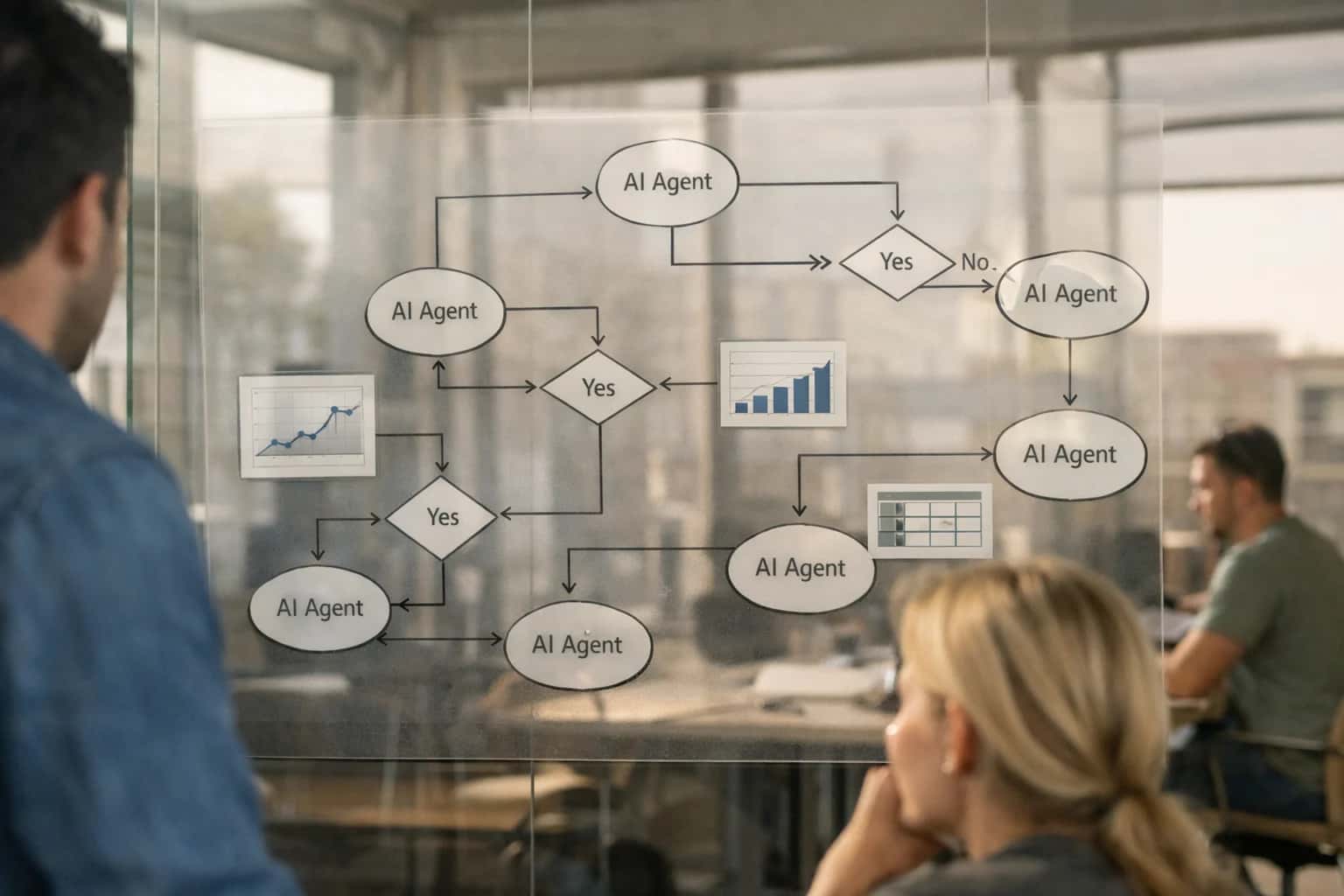
INTELLIGENT EVENT PROCESSING
Where AI Fits into Portainer Webhook Workflows
Transform Portainer webhook events from simple notifications into triggers for intelligent, multi-step automations.
Implementation involves deploying a lightweight AI agent as a service within your Kubernetes cluster, secured to receive webhooks from Portainer Business Edition. The agent uses the webhook payload to query relevant data sources: it might fetch recent kubectl describe pod output via the Portainer API, retrieve related error patterns from a central log aggregator, or check the status of linked services. Based on a pre-configured policy and real-time analysis, it then executes actions through Portainer's REST API—like rolling back a deployment—or updates external systems via their APIs, such as posting a formatted alert to PagerDuty or updating a ServiceNow CI record. This turns Portainer from a passive monitor into an active orchestrator.
Rollout should start with non-production, read-only analysis of webhooks to build trust in the AI's recommendations. Governance is critical: all AI-initiated actions on production environments (e.g., kubectl scale, stack updates) should be routed through an approval queue, logged to an audit trail, and be reversible. A common pattern is to have the AI agent generate a proposed action and reason in a Slack thread or Microsoft Teams channel, requiring a human \approve command before the Portainer API call is executed. This balances automation speed with operational control, ensuring your team retains oversight while delegating the initial triage and analysis work to AI.
INTELLIGENT CONTAINER OPERATIONS
Portainer Webhook Event Types and AI Touchpoints
Container Lifecycle Events
Portainer webhooks for container creation, start, stop, and removal provide a real-time signal stream for AI-driven operational workflows. These events can trigger intelligent automations that analyze the context of the change.
Key AI Touchpoints:
- Start/Stop Events: Trigger AI agents to analyze container logs on startup for known error patterns or configuration warnings, generating preemptive alerts for SRE teams.
- Creation Events: Use AI to evaluate the new container's image tags, resource requests, and security context against organizational policies, automatically creating a Jira ticket or Slack notification for policy violations.
- Removal Events: Feed event data into an AI model that correlates container churn with deployment success rates, identifying unstable services for platform engineering review.
Integrating with these events allows teams to move from reactive monitoring to predictive container management, embedding governance and insight directly into the operational fabric.
INTELLIGENT AUTOMATION FOR CONTAINER OPERATIONS
High-Value AI Use Cases for Portainer Webhooks
Portainer webhooks provide a powerful event stream for container lifecycle and cluster health. By integrating AI, you can transform these raw events into intelligent automations that reduce manual toil, accelerate incident response, and optimize infrastructure. Below are key workflows where AI adds immediate operational value.
01
Intelligent Deployment Failure Triage
When a Portainer webhook signals a failed stack deployment or container start, an AI agent analyzes the failure logs, correlates with recent image updates or config changes, and suggests a root cause. It can then trigger a specific remediation workflow—like rolling back to a previous image tag, adjusting resource limits, or creating a Jira Service Management ticket with a pre-populated diagnosis—reducing MTTR from manual investigation to automated triage.
Hours -> Minutes
MTTR reduction
02
Automated Resource Scaling Recommendations
Process webhooks for sustained high CPU/memory usage or OOM kills. An AI model analyzes the historical resource consumption patterns of the affected service, compares them to current limits in the Portainer stack definition, and generates a precise recommendation for updated deploy.resources in the Docker Compose or Kubernetes manifest. It can even submit a Pull Request with the changes to your GitOps repository for review, shifting scaling from reactive to predictive.
Batch -> Real-time
Optimization cycle
03
Security Event Correlation & Response
Integrate Portainer webhooks from security scans (e.g., image vulnerability events) with AI to prioritize risks. The agent correlates a new CVE with the running container's exposure, network policies, and business criticality. It then orchestrates a response: generating a Slack alert for high-severity items, creating a temporary network policy to isolate the workload in Portainer, or drafting a patch plan for the dev team, elevating security from checklist to continuous enforcement.
Same day
Policy enforcement
04
Self-Service Provisioning with Guardrails
Use AI to power a natural-language interface for developers requesting new environments via Portainer's API. A developer asks, "Spin up a Redis cluster with 3 nodes and 4GB memory." The AI validates the request against cost and security policies, generates the appropriate Docker Compose or Kubernetes YAML, and uses Portainer webhooks to monitor the provisioning status—sending a completion message back to the user. This reduces platform team ticket volume while maintaining governance.
1 sprint
Dev onboarding time
05
Edge Device Health & Update Orchestration
For Portainer Edge Agents, process webhooks for device connectivity, low disk space, or failed update rollouts. An AI system analyzes the fleet-wide health signal, identifies patterns (e.g., update failures specific to an OS version), and dynamically adjusts the rollout strategy. It can pause a problematic update wave, route a maintenance ticket to a field technician with diagnostic data, or trigger a rollback to a stable stack version—ensuring resilience for distributed infrastructure.
Batch -> Real-time
Fleet response
06
Cost Anomaly Detection & Alerting
Monitor webhooks related to container creation and resource allocation. An AI model baselines typical resource consumption per team/project and detects anomalies—like a suddenly over-provisioned service or a forgotten development namespace. It triggers a FinOps workflow: posting a cost alert in the team's channel, suggesting a rightsizing configuration, or even applying a Portainer resource limit after approval, turning cloud cost control from monthly reports to real-time governance.
Hours -> Minutes
Anomaly detection
PORTRAINER INTEGRATION PATTERNS
Example AI-Powered Workflows from Webhook to Action
These concrete workflows illustrate how AI can process Portainer webhook events to trigger intelligent automations, generate context-aware notifications, and update external systems, moving beyond simple alerting to proactive operations.
Trigger: Portainer webhook for a container health status change (e.g., unhealthy).
Context/Data Pulled:
- The webhook payload provides container ID, name, and stack/service.
- An AI agent immediately queries the Portainer API for the container's recent logs (last 100 lines), resource metrics (CPU, memory), and recent events.
- The agent also checks the container's definition (image tag, environment variables) from the associated stack file in Portainer.
Model or Agent Action: The agent passes the aggregated context to an LLM with a system prompt like: "Analyze this container failure. Identify the most likely root cause category: out-of-memory (OOM), application crash, dependency failure (database down), or configuration error. Suggest a specific, safe remediation command."
System Update or Next Step:
- If the diagnosis is OOM: The agent uses the Portainer API to update the container's memory limit in the service definition and redeploys the stack.
- If the diagnosis is a crashed app with a known restart pattern: The agent executes
docker restart <container_id>via the API. - If the diagnosis is ambiguous or high-risk: The workflow creates a detailed incident ticket in the connected ITSM tool (e.g., Jira Service Management) with the AI-generated analysis, logs, and suggested steps for a human engineer.
Human Review Point: All auto-remediation actions are logged to an audit channel (e.g., Slack, Microsoft Teams) with the AI's reasoning. The agent can be configured to require approval for certain actions, like modifying stack definitions.
PRODUCTION AI WORKFLOW
Implementation Architecture: From Webhook to AI Agent
A practical blueprint for processing Portainer webhook events with AI agents to automate container operations.
The integration connects to Portainer's webhook system, listening for events like Container stats, Deployment status, Image push, and Stack update. Each webhook payload is enriched with context from the Portainer API—pulling in environment details, stack metadata, and user information—before being queued for AI processing. This ensures the agent has the full operational picture, not just an isolated event.
An AI agent, built with a framework like CrewAI or AutoGen, consumes events from the queue. It uses a retrieval-augmented generation (RAG) layer against your internal runbooks, past incident logs, and Kubernetes documentation to ground its decisions. For a high memory usage alert, the agent might first check the container's historical baseline, then execute a diagnostic command via the Portainer API, and finally decide on an action: scaling the service, restarting the container, or creating a ticket in your ITSM tool like ServiceNow or Jira. All actions are logged back to Portainer as audit events.
Governance is handled through a mandatory approval loop for certain action classes (e.g., container deletion, production restarts) and a human-in-the-loop review channel in Slack or Microsoft Teams. The system maintains a full trace of the webhook → enrichment → agent reasoning → action → outcome, which is essential for troubleshooting and compliance. Rollout typically starts with a single, non-critical environment to validate the agent's decision logic against known operational playbooks before expanding to production clusters.
AI-ENHANCED PORTAINER WEBHOOK PROCESSING
Code and Payload Examples
Understanding Portainer Webhook Payloads
Portainer webhooks deliver JSON payloads containing event details. An AI integration agent listens for these events, parses the payload, and decides on an intelligent response. Below is a typical payload structure for a container state change event.
json{ "event_type": "container_state_change", "timestamp": "2024-05-15T10:30:45Z", "data": { "endpoint_id": 1, "endpoint_name": "Production-K8s", "resource_type": "container", "resource_id": "a1b2c3d4e5f6", "resource_name": "customer-api-v1", "previous_state": "running", "current_state": "exited", "exit_code": 137, "stack_name": "customer-services", "service_name": "api" } }
An AI agent can analyze this payload to determine severity. For example, an exit_code of 137 (OOMKilled) triggers a different automation than a graceful shutdown (code 0). The agent enriches this data with cluster metrics before deciding on an action.
AI-ENHANCED WEBHOOK PROCESSING
Realistic Time Savings and Operational Impact
This table shows the operational impact of integrating AI with Portainer webhook events to automate responses, generate intelligent notifications, and update external systems.
| Metric | Before AI | After AI | Notes |
|---|---|---|---|
Event Triage & Classification | Manual review of logs and webhook payloads | Automated classification and priority scoring | AI tags events (e.g., 'deployment-failed', 'container-oom') for routing |
External System Update | Manual ticket creation in ITSM tool (e.g., ServiceNow) | Automated ticket creation with enriched context | AI extracts relevant data from webhook and populates ticket fields |
Notification Generation | Generic, templated alert sent to broad channel | Context-aware summary sent to relevant team | Notification includes suggested next steps based on event history |
Anomaly Detection in Metrics | Scheduled report review or threshold-based alerts | Real-time pattern analysis on container stats webhooks | Detects subtle performance degradation before thresholds are breached |
Remediation Workflow Trigger | Manual runbook execution after diagnosis | Conditional automation trigger based on AI analysis | e.g., Auto-scaling action triggered by trend analysis, not just a single spike |
Audit Log Enrichment | Raw webhook data stored for compliance | AI-generated summary appended to audit trail | Enables faster incident review and compliance reporting |
Edge Deployment Coordination | Manual batch processing of edge agent status updates | Intelligent rollout pacing based on cluster health signals | AI analyzes success/failure patterns to optimize update schedules for offline-capable nodes |
PRODUCTION-READY INTEGRATION
Governance, Security, and Phased Rollout
A secure, governed approach to embedding AI-driven automation into your Portainer event stream.
Integrating AI with Portainer webhooks requires a security-first architecture. The AI agent should operate as a dedicated service with scoped API credentials, listening on a secure endpoint for authenticated webhook payloads from Portainer. Event data (e.g., container stats, deployment status, image pull events) is processed in-memory or via a transient queue, with sensitive fields like environment variables or secrets explicitly redacted before any LLM interaction. All actions—such as creating a Jira ticket from a failed deployment or posting a Slack summary—are executed through approved, audited service accounts, maintaining a clear chain of custody from Portainer event to external system update.
A phased rollout is critical for operational confidence. Start with a read-only monitoring phase, where the AI analyzes webhook events to generate internal summaries and alerts without taking any external actions. Next, move to a human-in-the-loop phase, where the agent suggests automations (e.g., 'Restart service X?') for manual approval via a Portainer custom template or a separate dashboard. Finally, enable controlled automation for low-risk, high-volume tasks, such as tagging images in a registry after a successful build or updating a status page. Each phase should be governed by clear RBAC, with all AI-generated decisions and actions logged back to Portainer's audit trail or a dedicated SIEM for review.
This approach ensures the integration enhances platform reliability without introducing unmanaged risk. By treating AI as a governed extension of your Portainer automation layer, you maintain control over the event pipeline while unlocking intelligent responses to cluster events, from predictive scaling recommendations to automated incident triage with your ITSM tools.
Enabling Efficiency, Speed & Accuracy
Intelligent Analysis, Decision & Execution
We build AI systems for teams that need search across company data, workflow automation across tools, or AI features inside products and internal software.
Talk to Us
Search across company data
Give teams answers from docs, tickets, runbooks, and product data with sources and permissions.
Useful when people spend too long searching or get different answers from different systems.
Enterprise searchRAGPermissions
Read more
Automate internal workflows
Use AI to route work, draft outputs, trigger actions, and keep approvals and logs in place.
Useful when repetitive work moves across multiple tools and teams.
AI agentsWorkflow automationGovernance
Read more
Add AI to products and internal tools
Build assistants, guided actions, or decision support into the software your team or customers already use.
Useful when AI needs to be part of the product, not a separate tool.
AI integrationDecision supportModel routing
Read moreAI INTEGRATION FOR PORTAINER WEBHOOKS
Frequently Asked Questions
Practical questions for teams evaluating AI-driven automation triggered by Portainer webhook events for container stats, deployment status, and edge agent activity.
Focus on events that signal a state change requiring analysis or an external system update. High-value triggers include:
- Container/Service State Changes:
container.create,service.update,container.die. AI can analyze logs on failure, classify the error, and trigger a runbook or ticket. - Deployment Status: Webhooks from stack deployments or Kubernetes operations. AI can summarize the deployment outcome, update a central dashboard, or notify a channel with a contextual summary.
- Edge Agent Heartbeat/Disconnect: Events from Portainer Edge Agents. AI can correlate disconnects with network health data, predict maintenance windows, or auto-create low-priority tickets for follow-up.
- Image Build/Push Events: From integrated registries. AI can scan new image tags for security policy violations and comment on the associated Git commit or chat channel.
Implementation Note: Configure these webhooks in Portainer's Settings > Webhooks section, sending a JSON payload to your AI agent's secure endpoint.

About the author
Prasad Kumkar
CEO & MD, Inference Systems
Prasad Kumkar is the CEO & MD of Inference Systems and writes about AI systems architecture, LLM infrastructure, model serving, evaluation, and production deployment. Over 5+ years, he has worked across computer vision models, L5 autonomous vehicle systems, and LLM research, with a focus on taking complex AI ideas into real-world engineering systems.
His work and writing cover AI systems, large language models, AI agents, multimodal systems, autonomous systems, inference optimization, RAG, evaluation, and production AI engineering.
LinkedIn
Limited slotsGet a Free AI Consultation
Partnered with leading AI, data, and software stack.





How We Work
Custom AI workflows for your Business
One-fit-all AI don't work for modern businesses. At Inferensys, we aim to understand your business & custom requirements; which we use to define most efficient agentic workflows, the data, and the tools for your business.
01
Review the use case
We understand the task, the users, and where AI can actually help.
Read more02
Pick the right approach
We define what needs search, automation, or product integration.
Read more03
Build the first useful version
We implement the part that proves the value first.
Read more04
Improve from there
We add the checks and visibility needed to keep it useful.
Read moreThe first call is a practical review of your use case and the right next step.
Talk to Us