AI connects to Rancher OPA Gatekeeper at three key surfaces: the ConstraintTemplate authoring layer, the live audit and violation data stream, and the policy library management workflow. Instead of manually crafting Rego code, engineering teams can use AI agents to generate initial constraint templates from natural language descriptions of security, compliance, or cost-control requirements (e.g., "no pods in the default namespace," "all images must be from our private registry"). The AI analyzes historical violation data from Gatekeeper's audit results—available via the Rancher API or directly from the Gatekeeper audit endpoint—to identify common misconfigurations, noisy policies, and emerging risks across managed clusters.

Integration
AI Integration for Rancher OPA Gatekeeper
Automate the creation, validation, and maintenance of OPA Gatekeeper policies in Rancher using AI. Generate constraints from natural language, analyze violation patterns, and maintain compliance across multi-cluster environments.
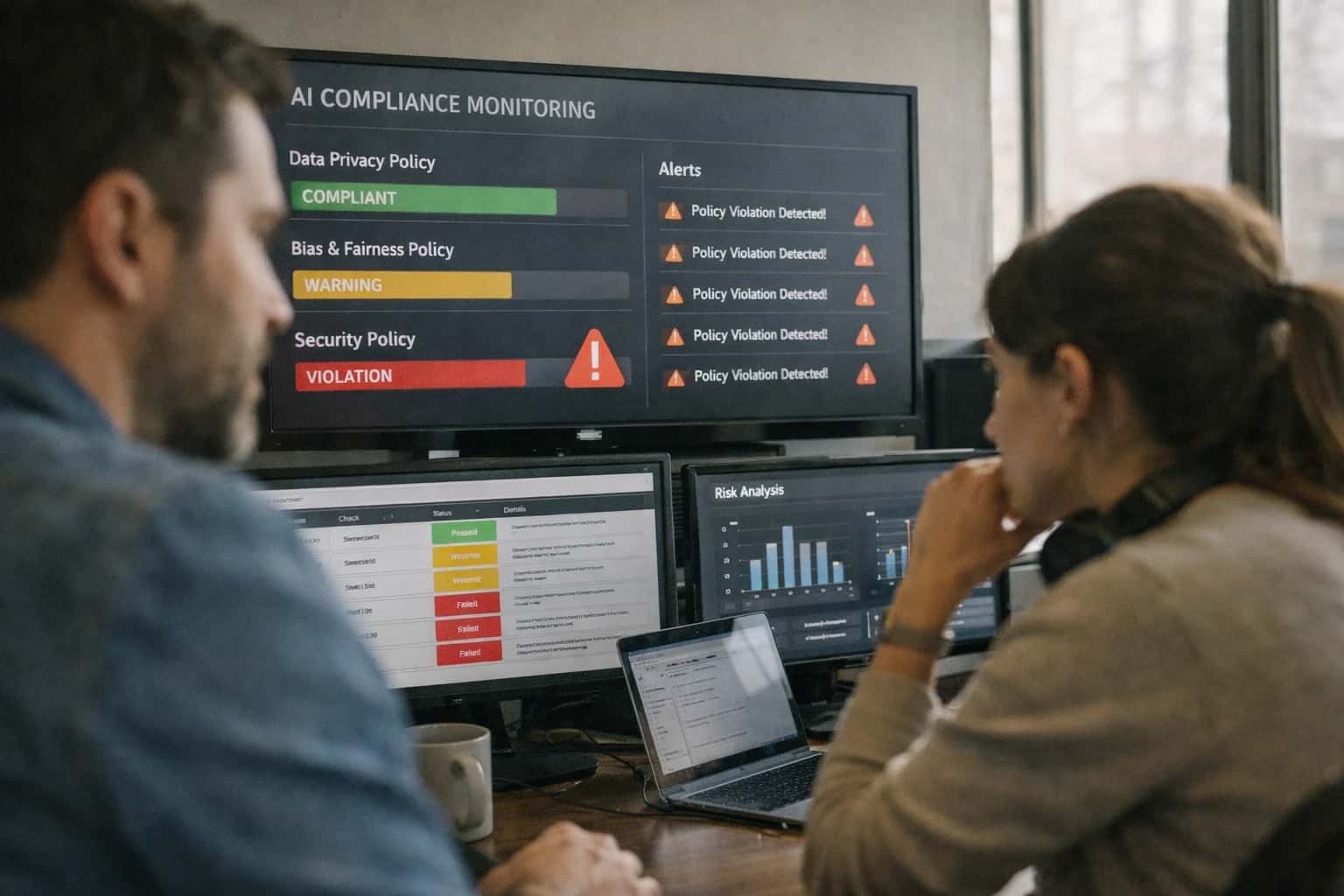
AUTOMATING POLICY GOVERNANCE
Where AI Fits into Rancher OPA Gatekeeper
Integrating AI with Rancher OPA Gatekeeper transforms static policy enforcement into a dynamic, self-improving governance layer for Kubernetes.
The high-value workflow is a continuous feedback loop: 1) AI suggests new ConstraintTemplates based on CIS benchmarks, internal incidents, or compliance frameworks; 2) After deployment, AI monitors violation events and cluster metrics to recommend policy tuning—such as adjusting match criteria or adding exclusions—reducing false positives for platform teams; 3) For complex policies, AI can generate synthetic test cases (invalid and valid Kubernetes manifests) to validate Rego logic before promotion. This shifts policy management from a reactive, manual process to a proactive system where the governance layer itself learns from the environment it controls.
A production implementation wires an AI agent as a sidecar service or external controller that polls Rancher and Gatekeeper APIs. It uses the violation history as a fine-tuning dataset, enabling the AI to prioritize which policy gaps to address first. Governance is maintained because the AI only suggests changes; a human or automated pipeline (integrated with Rancher Projects or GitOps) must approve and apply new ConstraintTemplates. This ensures audit trails and RBAC controls remain intact. Rollout starts with non-production clusters, using AI to baseline existing compliance and generate a starter policy library, which then gets hardened and promoted through environments.
AI-POLICY GENERATION & VALIDATION
Integration Touchpoints in the Rancher OPA Stack
AI-Assisted Policy Code Generation
Generating OPA Gatekeeper ConstraintTemplates and Constraints from natural language or security requirements is a primary integration point. An AI agent can ingest:
- Security Benchmarks: CIS Kubernetes, NIST SP 800-190, or internal security standards.
- Historical Violations: Past audit findings or incident reports from Rancher's monitoring or security scanning tools.
- Natural Language Requests: SRE or security team prompts like "prevent containers from running as root" or "ensure all Ingress hosts use TLS."
The AI analyzes these inputs to draft Rego policy code within the ConstraintTemplate spec.targets.rego field. It can also generate the corresponding Constraint YAML, populating spec.parameters and spec.match fields (e.g., kinds, namespaces, labelSelectors) based on the intended scope. This turns policy design from a manual coding task into a guided, rapid iteration workflow, ensuring policies are syntactically correct and aligned with best practices from the start.
POLICY AUTOMATION
High-Value AI Use Cases for OPA Gatekeeper
Integrate AI with Rancher OPA Gatekeeper to automate the creation, validation, and maintenance of security and compliance policies, reducing manual effort and improving cluster governance.
01
AI-Generated Constraint Templates
Use AI to analyze your application manifests, security benchmarks (CIS, NIST), and historical violations to draft custom Rego policies. The AI suggests constraint templates for common risks like hostPath mounts, privilege escalation, or missing resource limits, cutting initial policy authoring from days to hours.
Days -> Hours
Policy drafting
02
Violation Triage & Remediation Guidance
Deploy an AI agent that monitors Gatekeeper audit results. It classifies violations by severity, correlates them with deployment context (namespace, team), and suggests specific remediation steps—like updating a Deployment spec—directly in the engineer's workflow, speeding up resolution.
Batch -> Real-time
Violation analysis
03
Dynamic Policy Exemption Management
Automate the lifecycle of ConstraintTemplate exemptions. AI analyzes exemption requests, checks historical compliance of the requesting workload/team, and can auto-generate temporary, audited exemption manifests with expiry dates, reducing manual review backlog for platform teams.
1 sprint
Exemption workflow
04
Policy Drift Detection & Sync
Continuously compare enforced OPA policies against a centralized, version-controlled policy library (e.g., in Git). AI detects configuration drift, highlights differences, and can generate pull requests to sync Rancher-managed constraints back to the source of truth, ensuring consistency across clusters.
05
Compliance Evidence Reporting
Automate audit preparation. An AI workflow aggregates Gatekeeper violation logs, cluster inventory, and constraint states to generate compliance reports for standards like SOC 2 or HIPAA, mapping controls to specific policy enforcement evidence, saving weeks of manual evidence collection.
Weeks -> Days
Audit prep
06
Intelligent Policy Testing & Simulation
Before deploying a new constraint, use AI to simulate its impact against a sample of live workload manifests. The AI predicts violation rates, identifies potential false positives, and suggests refinements to the Rego logic, preventing disruptive rollouts and reducing support tickets.
FOR RANCHER OPA GATEKEEPER
Example AI-Powered Policy Workflows
These workflows illustrate how AI agents can augment Rancher OPA Gatekeeper to move from static, manually written policies to dynamic, context-aware constraint generation and enforcement. Each flow connects Gatekeeper's admission control, audit, and mutation capabilities with AI-driven analysis of cluster state, security posture, and historical violations.
Trigger: A new CIS Kubernetes Benchmark scan completes in Rancher, identifying a high-severity finding (e.g., 1.2.1 Ensure that the --anonymous-auth argument is set to false).
Context/Data Pulled: The AI agent retrieves:
- The raw CIS finding description and remediation steps.
- The current
kube-apiservermanifest from the cluster. - Existing Gatekeeper
ConstraintTemplatelibrary to check for a relevant template. - Namespace labels and workload types to assess impact.
Model/Agent Action: The agent uses a structured prompt to generate a new OPA Rego policy and a corresponding Constraint YAML. For example, it creates a constraint that blocks Pods if the service account automount setting is incorrectly configured, based on the CIS control. It explains the policy's intent and potential side effects in the constraint's metadata.annotations.
System Update: The agent submits a Pull Request to the cluster's GitOps repository containing the new Constraint and, if needed, a ConstraintTemplate. It also creates a Rancher Project alert for the security team to review the PR.
Human Review Point: The PR requires manual approval before the GitOps operator syncs it to the cluster. The security team can review the AI-generated Rego, adjust the match fields, or set the enforcement action (deny vs dryrun).
CONSTRAINT GENERATION AND VALIDATION WORKFLOW
Implementation Architecture: Data Flow and Integration Points
Integrating AI with Rancher OPA Gatekeeper transforms policy management from a manual, reactive process into a proactive, intelligence-driven workflow.
The integration architecture centers on two primary data flows. First, for constraint and template generation, the AI agent ingests multiple inputs: security benchmarks (like CIS Kubernetes), historical violation data from the Rancher audit log or Prometheus metrics, and existing cluster configurations. It processes these through a Retrieval-Augmented Generation (RAG) pipeline against a curated knowledge base of OPA Rego syntax and security best practices. The output is a draft ConstraintTemplate (CRD) and accompanying Constraint manifest, which is submitted as a Pull Request to a Git repository for human review before being synced to the cluster via Rancher Fleet or Argo CD.
Second, for runtime validation and feedback, the system monitors the constrainttemplates.constraints.gatekeeper.sh and constraints.constraints.gatekeeper.sh Custom Resources. When a violation is recorded in a constraint's status.violations field, this event—along with the offending resource YAML—is sent to the AI agent. The agent analyzes the violation context to suggest more precise Rego rules, identify false positives, or recommend exception policies. This creates a closed-loop system where policy efficacy continuously improves. The AI agent interacts with the Rancher API (/v1/management.cattle.io.clusters) and the Kubernetes API to gather cluster state, ensuring recommendations are context-aware.
Rollout and governance are critical. Implementations typically start in audit mode (enforcementAction: dryrun) on non-production clusters. A human-in-the-loop approval step is mandatory for all generated constraints before enforcement. All AI-suggested policies, along with the rationale and source data snippets, are logged to an immutable audit trail (e.g., in the cluster's logging stack) for compliance. This ensures the AI acts as a copilot for platform and security teams, augmenting their expertise while maintaining full control and accountability over cluster security posture.
AI-ASSISTED POLICY GENERATION FOR RANCHER OPA GATEKEEPER
Code and Configuration Patterns
Generating OPA Constraint Manifests from Natural Language
Use AI to translate security and compliance requirements into valid OPA Gatekeeper Constraint manifests. This pattern analyzes historical violations, cluster context, and best practice frameworks (like CIS or NSA Kubernetes Hardening) to produce ready-to-apply YAML.
Example AI Workflow:
- Input: A natural language policy like "Prevent containers from running as root in production namespaces."
- Processing: The AI identifies the relevant OPA ConstraintTemplate (e.g.,
K8sPSPAllowedUsers), extracts the targetkind(Pod), and scopes it to namespaces with the labelenvironment=production. - Output: A validated Constraint manifest with the correct
spec.parametersandspec.matchfields.
This reduces manual YAML authoring, ensures syntactic correctness, and embeds organizational context directly into the generated policy.
AI-ASSISTED POLICY MANAGEMENT
Time Savings and Operational Impact
How integrating AI with Rancher OPA Gatekeeper transforms manual, reactive policy management into a proactive, scalable workflow, reducing time-to-compliance and operational overhead for platform and security teams.
| Workflow | Before AI | After AI | Implementation Notes |
|---|---|---|---|
Constraint Template Authoring | Manual research, copy-paste from docs, peer review cycles (2-4 days) | AI drafts templates from natural language spec, human validates (2-4 hours) | AI suggests based on CIS, NSA, and internal violation history; final approval required |
Constraint Validation & Testing | Manual YAML editing, iterative kubectl apply --dry-run, cluster testing | AI validates syntax, simulates impact against cluster snapshot, suggests fixes (minutes) | Uses a sandbox or historical cluster data to predict violations before deployment |
Policy Exception Request Triage | Manual Jira ticket review, cross-referencing constraints, risk assessment (1-2 hours/request) | AI analyzes request, suggests approved exception patterns or alternative constraints (10-15 minutes) | Agent summarizes risk and precedent; security engineer makes final call |
Audit Evidence Generation | Manual log queries, screenshot collection, spreadsheet compilation for auditor (1-2 days/cluster) | AI auto-generates compliance report from Gatekeeper audit logs, highlights gaps (1-2 hours/cluster) | Report includes constraint coverage, violation trends, and remediation status |
Violation Root Cause Analysis | Manual correlation of violations with deployment events, team outreach, log digging (1-3 hours/violation) | AI clusters violations, suggests common deployment patterns or misconfigured Helm charts (15-30 minutes) | Speeds up feedback loop to development teams for fix |
Policy Library Maintenance | Quarterly manual review for deprecated APIs or new best practices | AI monitors Kubernetes changelogs and security advisories, flags outdated constraints | Proactive alerts ensure policy library evolves with the K8s ecosystem |
New Cluster Policy Bootstrap | Manual selection and application of baseline constraint set from wiki | AI recommends a tailored baseline based on cluster labels (env, team, workload type) | Ensures consistent security posture from day one across dev, staging, prod |
CONTROLLED POLICY AUTOMATION
Governance, Security, and Phased Rollout
Integrating AI with Rancher OPA Gatekeeper requires a security-first approach that prioritizes auditability, human review, and incremental trust.
The integration architecture treats the AI as a policy authoring assistant, not an autonomous enforcement engine. A typical workflow involves the AI analyzing historical Constraint violations, cluster audit logs, and security benchmarks to draft new ConstraintTemplate manifests or suggest modifications to existing ones. These drafts are submitted as Pull Requests to a Git repository that serves as the source of truth for your Rancher Fleet or GitOps pipeline. This creates a mandatory human-in-the-loop review stage where platform security engineers can validate, test, and approve changes before they are synced to the cluster via Rancher's GitOps engine. All AI-suggested policies are tagged with metadata (e.g., generated-by: ai-assistant, source-benchmark: cis-kubernetes-v1.6) for full lineage tracking in Rancher's audit trails.
For security, the AI agent operates with strictly scoped permissions. It requires read access to Rancher's Constraint and audit API endpoints to analyze data, but it should never have write access to the constraints.gatekeeper.sh or constrainttemplates.gatekeeper.sh CRDs directly. Policy generation happens in a secure, isolated environment. The prompts and context sent to the LLM are carefully engineered to avoid leaking sensitive cluster data (e.g., pod names, namespace details), focusing instead on anonymized violation patterns and policy logic. All generated Rego code is statically analyzed for potentially dangerous constructs before being committed.
A phased rollout is critical for building confidence and managing risk. Start with a dry-run and report-only phase: deploy AI-generated constraints in dryrun: true or enforcementAction: dryrun mode within a single, non-production Rancher-managed cluster. Monitor the Gatekeeper audit results to compare the AI's policy suggestions against actual violations, tuning the prompts and validation rules. Next, progress to enforcement in low-risk environments, such as developer namespaces, for policies like label requirements. Finally, after establishing a high accuracy rate, expand to core security and compliance policies in production clusters, always maintaining the Git-based review and promotion workflow. This controlled approach ensures the AI enhances your security posture without introducing unintended operational disruption.
Enabling Efficiency, Speed & Accuracy
Intelligent Analysis, Decision & Execution
We build AI systems for teams that need search across company data, workflow automation across tools, or AI features inside products and internal software.
Talk to Us
Search across company data
Give teams answers from docs, tickets, runbooks, and product data with sources and permissions.
Useful when people spend too long searching or get different answers from different systems.
Enterprise searchRAGPermissions
Read more
Automate internal workflows
Use AI to route work, draft outputs, trigger actions, and keep approvals and logs in place.
Useful when repetitive work moves across multiple tools and teams.
AI agentsWorkflow automationGovernance
Read more
Add AI to products and internal tools
Build assistants, guided actions, or decision support into the software your team or customers already use.
Useful when AI needs to be part of the product, not a separate tool.
AI integrationDecision supportModel routing
Read moreAI INTEGRATION FOR RANCHER OPA GATEKEEPER
Frequently Asked Questions
Practical questions about using AI to generate, validate, and manage OPA Gatekeeper constraints and templates within Rancher-managed Kubernetes clusters.
The workflow uses a combination of natural language input, security policy libraries, and analysis of existing cluster configurations.
- Trigger: A platform engineer or security admin provides a natural language policy goal (e.g., "Prevent containers from running as root in production namespaces") via a chat interface or structured form.
- Context Pull: The AI agent queries Rancher's API to understand the target cluster's existing constraints, namespaces, and labels. It may also pull relevant security frameworks (CIS, NSA) and internal compliance documents.
- Model Action: A language model (like GPT-4) drafts the Rego policy code for the
ConstraintTemplate, including theviolationblock. It cross-references the draft against a library of known-good Rego patterns and common pitfalls. - Validation & Output: The system outputs the proposed ConstraintTemplate YAML, a corresponding example Constraint YAML, and a plain-English explanation of what the policy checks. The engineer reviews and can iterate before applying.
- Human Review Point: The generated template is never applied automatically. It is submitted as a Pull Request to the team's policy-as-code repository for peer review and testing in a non-production environment first.

About the author
Prasad Kumkar
CEO & MD, Inference Systems
Prasad Kumkar is the CEO & MD of Inference Systems and writes about AI systems architecture, LLM infrastructure, model serving, evaluation, and production deployment. Over 5+ years, he has worked across computer vision models, L5 autonomous vehicle systems, and LLM research, with a focus on taking complex AI ideas into real-world engineering systems.
His work and writing cover AI systems, large language models, AI agents, multimodal systems, autonomous systems, inference optimization, RAG, evaluation, and production AI engineering.
LinkedIn
Limited slotsGet a Free AI Consultation
Partnered with leading AI, data, and software stack.





How We Work
Custom AI workflows for your Business
One-fit-all AI don't work for modern businesses. At Inferensys, we aim to understand your business & custom requirements; which we use to define most efficient agentic workflows, the data, and the tools for your business.
01
Review the use case
We understand the task, the users, and where AI can actually help.
Read more02
Pick the right approach
We define what needs search, automation, or product integration.
Read more03
Build the first useful version
We implement the part that proves the value first.
Read more04
Improve from there
We add the checks and visibility needed to keep it useful.
Read moreThe first call is a practical review of your use case and the right next step.
Talk to Us