
Inferensys

Integration

AI Integration for Portainer Environments

Use AI to automate the grouping, health monitoring, and failover of Portainer Environments (endpoints), reducing manual oversight and improving resilience for Kubernetes and Docker Swarm infrastructure.
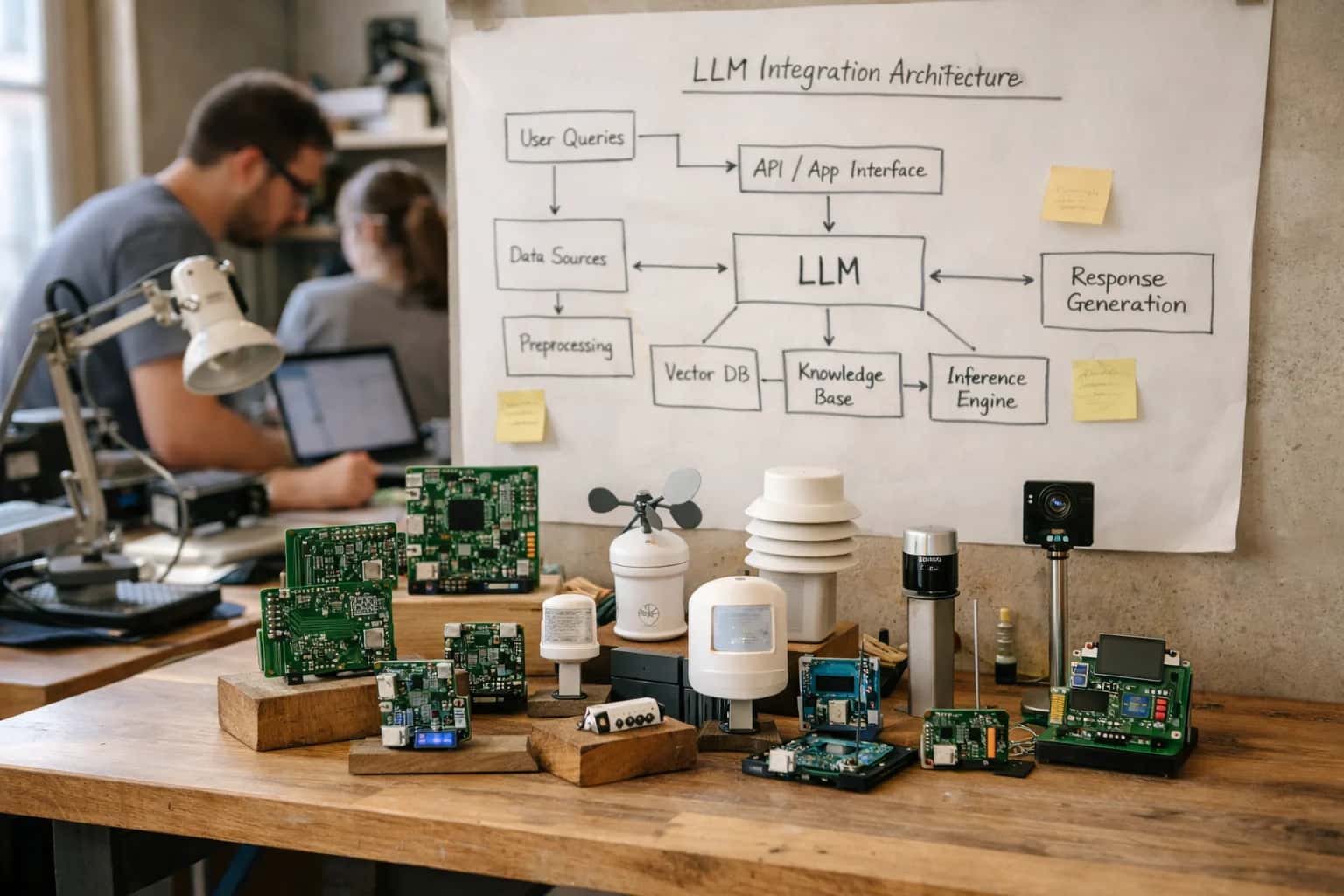
Hardware engineer integrating LLM with IoT sensors, circuit boards on desk, soldering iron nearby, maker lab aesthetic.
ARCHITECTURE AND ROLLOUT

Where AI Fits into Portainer Environment Management

Integrating AI into Portainer's Environment (endpoint) management layer automates operational workflows and enhances resilience for containerized infrastructure.

AI integration targets Portainer's Environment API and webhook system to monitor and manage endpoints—whether they are local Docker hosts, remote Kubernetes clusters, or edge devices. The primary surfaces for automation are:

  • Environment Grouping & Tagging: AI analyzes cluster metadata (provider, region, workload type) to suggest logical groupings and apply tags for dynamic team access and policy application.
  • Connection Health Monitoring: By processing Portainer's health check events and agent heartbeat data, AI can predict endpoint degradation, correlate failures across environments, and trigger automated diagnostics or failover procedures.
  • Self-Service Provisioning: AI assistants embedded in the Portainer UI can guide users through environment setup, validate parameters against organizational policies, and automate approval workflows for new endpoint registrations.


Implementation typically involves a sidecar service or external orchestrator that subscribes to Portainer webhooks (e.g., EndpointStatusChanged) and uses the Portainer REST API to execute remediation actions. For high-availability setups, AI workflows can:

  • Automatically promote a standby environment to active if the primary endpoint's health score drops below a threshold.
  • Re-route CI/CD deployment pipelines to a healthy environment using Portainer's stack deployment APIs.
  • Generate and execute pre-configured recovery runbooks, such as restarting the Portainer Agent or adjusting firewall rules, based on historical incident patterns.

This moves environment management from reactive manual checks to predictive, policy-driven operations, reducing mean time to recovery (MTTR) for distributed container platforms.

Rollout requires careful governance, starting with read-only monitoring and analysis before enabling any automated write actions. Key considerations include:

  • Implementing a human-in-the-loop approval step for critical actions like environment failover, especially in production.
  • Maintaining a clear audit trail by logging all AI-suggested actions and their outcomes back to Portainer's activity logs or an external SIEM.
  • Defining RBAC boundaries so the AI system only interacts with environments and stacks within its assigned team or project scope, respecting Portainer's existing access controls. Successful integration turns Portainer from a static management dashboard into an intelligent orchestration plane for resilient, multi-environment container operations.
ARCHITECTURAL SURFACES

Key Portainer Surfaces for AI Integration

Core Management Surfaces

Portainer's primary value is managing Kubernetes clusters and Docker endpoints. The Environment API (/api/endpoints) is the central surface for AI integration. AI agents can use this to:

  • Group and Analyze Endpoints: Automatically categorize environments by type (K8s, Docker Swarm, Edge), provider (AWS ECS, AKS), or health status for intelligent oversight.
  • Monitor Connection Health: Continuously poll endpoint status and connection latency. An AI can predict failures based on trend analysis and trigger automated remediation workflows, such as restarting an Edge Agent or updating credentials.
  • Orchestrate Failover: For high-availability setups, AI can analyze environment health scores and execute controlled failover procedures by updating application ingress rules or re-routing workloads via Portainer's deployment APIs.

This turns Portainer from a static dashboard into a self-healing control plane for distributed container infrastructure.

CONTAINER OPERATIONS AUTOMATION

High-Value AI Use Cases for Portainer Environments

Integrate AI agents with Portainer's API and webhooks to automate complex container management tasks, enhance developer self-service, and improve the reliability of edge and data center environments.

01

Intelligent Self-Service Stack Deployment

Embed an AI assistant within Portainer's App Templates or custom forms. Developers describe their application needs in natural language, and the agent generates validated Docker Compose or Kubernetes YAML, configures resource limits, and initiates the deployment workflow through Portainer's API. This reduces configuration errors and accelerates provisioning from hours to minutes.

Hours -> Minutes
Provisioning time
02

Predictive Edge Environment Health

Connect AI to Portainer Edge Agent metrics and webhook events. The system analyzes connection latency, container restart rates, and resource trends across distributed endpoints. It predicts node failures, suggests preemptive maintenance, and can trigger automated failover procedures by updating environment groups and redeploying stacks to healthy nodes.

Proactive
Failure detection
03

Automated Image & Registry Hygiene

An AI agent periodically audits Docker registries configured in Portainer. It analyzes image pull frequencies, scans for critical CVEs using integrated tools, and suggests cleanup policies for unused or vulnerable images. The agent can execute safe deletion workflows via the API and generate compliance reports, optimizing storage and security.

>50%
Storage reduction potential
04

Natural Language Cluster Diagnostics

Provide platform engineers a chat interface to Portainer-managed Kubernetes clusters. Ask "Why is pod X pending?" or "Show me services with high restarts." The AI agent queries Portainer's API for cluster state, analyzes events and logs, and returns a root-cause summary with suggested remediation commands or links to relevant Portainer views.

1 sprint
MTTR reduction
05

RBAC & Team Provisioning Workflows

Automate user and team management by integrating AI with Portainer's access control and corporate LDAP/AD. The agent processes join/leave requests, suggests role assignments based on project patterns, executes provisioning via API, and conducts periodic access reviews—generating cleanup tickets for orphaned accounts in the ITSM.

Same day
Access fulfillment
06

Cost-Optimized Resource Right-Sizing

An AI agent analyzes historical CPU/memory usage from Portainer container stats and correlates it with cloud billing data. It identifies over-provisioned Docker services or Kubernetes deployments, generates specific recommendations for resource limit adjustments, and can submit pull requests with updated stack definitions for team review.

15-30%
Typical waste reduction
PRACTICAL AUTOMATION PATTERNS

Example AI-Driven Workflows for Portainer

These workflows demonstrate how AI agents can be integrated with Portainer's API and webhooks to automate routine operations, provide intelligent guidance, and enhance the management of container environments for IT admins and platform teams.

Trigger: A developer submits a request via a chat interface (e.g., Slack/Microsoft Teams) or a Portainer custom template form.

Context/Data Pulled: The AI agent authenticates to the Portainer API and retrieves:

  • The requester's team and project from an integrated directory (e.g., LDAP).
  • Available resource quotas and existing environments from Portainer.
  • Approved base templates and compliance policies.

Model/Agent Action: A language model interprets the natural language request (e.g., "spin up a test environment for app X with a PostgreSQL database"). It maps this to a specific Portainer App Template or generates a Docker Compose/Kubernetes manifest. The agent validates the request against policies (cost, security) and may ask clarifying questions.

System Update/Next Step: The agent uses the Portainer API to:

  1. Create a new Portainer Environment (endpoint) or a stack within an existing environment.
  2. Apply the correct resource limits and network settings.
  3. Tag the deployment with metadata (owner, project, expiry date).

Human Review Point: For requests exceeding quota or requiring special access, the agent automatically routes an approval task to the platform team lead within the ITSM tool, providing a summary and justification.

AI-ENHANCED PORTFOLIO MANAGEMENT

Implementation Architecture: Data Flow and System Design

A production-ready AI integration for Portainer connects its API layer to an orchestration engine, enabling intelligent environment grouping, predictive health monitoring, and automated failover for containerized workloads.

The core integration connects to Portainer's REST API, focusing on the environments (endpoints) and stacks resources. An AI orchestration agent, deployed as a container within the management cluster, continuously polls the /api/endpoints and /api/stacks endpoints. It ingests environment metadata—connection status, Docker or Kubernetes version, resource utilization, and stack deployment states—into a time-series vector store. This creates a real-time operational graph of your entire container estate, from edge devices to cloud clusters.

For high-availability setups, the AI layer applies clustering algorithms to Portainer environments based on attributes like geographic region, workload type (e.g., stateful vs. stateless), and failure domains. It monitors the /api/endpoints/{id}/docker/containers/json health checks. Upon detecting a connection failure or degraded performance in a primary environment, the system automatically triggers a failover workflow: it updates stack definitions via the PUT /api/stacks/{id} endpoint to target a pre-designated standby environment within the same group, and can execute rollback via Portainer's webhooks if deployment health checks fail. This reduces manual intervention from hours to minutes for critical service recovery.

Rollout is managed through a dedicated Portainer AI Service Account with scoped RBAC, logging all AI-driven actions to Portainer's audit trail. Governance is enforced via a policy engine that requires human-in-the-loop approval for any environment grouping changes or failover actions on production stacks tagged as tier-1. The orchestration agent's prompts and decision logic are versioned in Git, allowing for precise rollback and compliance reporting. This architecture ensures AI augments Portainer's native capabilities without compromising operational control or security postures.

AI-ENHANCED PORTAINER MANAGEMENT

Code and Payload Examples

Automated Endpoint Monitoring

Use AI to analyze Portainer Environment (endpoint) connection health and logs, triggering automated failover or remediation workflows. This example processes webhook events from Portainer to assess endpoint status and update a central dashboard.

python
import requests
import json
from typing import Dict, Any

# Process Portainer webhook for environment health
# Webhook payload example from Portainer Events
webhook_payload = {
    "event_type": "endpoint_connection_failure",
    "timestamp": "2024-05-15T10:30:00Z",
    "endpoint_id": 42,
    "endpoint_name": "prod-k8s-cluster-us-east-1",
    "error_message": "Connection timeout after 30s",
    "previous_status": "healthy",
    "current_status": "unreachable"
}

def analyze_endpoint_health(payload: Dict[str, Any]) -> Dict[str, Any]:
    """AI analysis of endpoint failure pattern"""
    # Call LLM to analyze historical patterns and suggest action
    analysis_prompt = f"""
    Endpoint {payload['endpoint_name']} (ID: {payload['endpoint_id']}) 
    failed with: {payload['error_message']}.
    
    Based on similar past failures, should we:
    1. Retry connection immediately
    2. Failover to secondary endpoint
    3. Alert engineering team
    4. Check network configuration
    
    Provide reasoning and recommended action.
    """
    
    # Simulated LLM response
    return {
        "recommended_action": "failover_to_secondary",
        "confidence": 0.87,
        "reasoning": "Pattern matches previous network partition events. Secondary endpoint in us-west-2 is healthy and can handle load.",
        "estimated_recovery_time": "2 minutes"
    }

# Execute analysis and trigger automation
analysis = analyze_endpoint_health(webhook_payload)
if analysis["recommended_action"] == "failover_to_secondary":
    # Call Portainer API to update load balancer configuration
    portainer_api_url = "https://portainer.example.com/api/endpoints/42"
    headers = {"X-API-Key": "your-portainer-api-key"}
    update_payload = {
        "group_id": 2,  # Move to failover group
        "tags": ["failed-over", "needs-investigation"]
    }
    # requests.patch(portainer_api_url, json=update_payload, headers=headers)
AI-ASSISTED PORTAINER MANAGEMENT

Realistic Time Savings and Operational Impact

This table illustrates the operational impact of integrating AI agents with Portainer's API and webhook ecosystem, focusing on automating routine tasks, improving response times, and enabling proactive management for IT admins and platform teams.

MetricBefore AIAfter AINotes

Environment (Endpoint) Health Check

Manual dashboard review, 15-30 min daily

Automated anomaly detection & alerting, <5 min review

AI analyzes Portainer agent metrics and connection states, flags deviations

Stack Deployment & Update Guidance

Manual YAML/Compose file review, prone to config errors

AI-assisted template validation & parameter suggestion

Integrates with Portainer App Templates and Git repos to reduce misconfigurations

Edge Device Update Rollout

Manual, sequential updates across low-connectivity sites

AI-optimized rollout with failure prediction & pause/resume

Leverages Portainer Edge Agent APIs for intelligent, resilient deployments

User Access Review & RBAC Cleanup

Quarterly manual audit, takes 4-8 hours

Continuous analysis with monthly summary & suggestions

AI reviews Portainer team/role assignments against activity logs

Incident Triage for Container Failures

Reactive log diving, 30-60 min to diagnose

Proactive log pattern analysis with root cause summary

Processes Portainer container stats and logs via webhooks

Self-Service Catalog Curation

Static template library, infrequent updates

Dynamic template suggestions based on team usage patterns

AI analyzes deployment frequency and success rates to recommend new App Templates

Security Baseline Enforcement

Scheduled CIS scans, manual result review

Continuous config analysis with prioritized remediation tickets

Checks Docker daemon & stack configurations against policies, creates Portainer notes

ARCHITECTURE FOR CONTROLLED AUTOMATION

Governance, Security, and Phased Rollout

Integrating AI into Portainer requires a security-first approach that preserves administrative control while enabling intelligent automation.

AI agents interact with Portainer primarily through its comprehensive REST API and webhook system. This requires careful management of API tokens, with scoped permissions limited to specific Endpoints, Stacks, or Teams. A production architecture typically involves a dedicated service account with RBAC policies that prevent the AI from modifying core Portainer settings or accessing production endpoints without explicit approval gates. All AI-initiated actions should be logged to Portainer's audit trail and a separate SIEM for correlation, ensuring a clear chain of custody for any configuration change, environment creation, or stack deployment.

Rollout follows a phased, environment-based strategy. Begin in a sandbox Endpoint group containing non-production Docker hosts or Kubernetes clusters. Use AI initially for read-only analysis—such as suggesting environment groupings based on labels or flagging connection health issues—before progressing to advisory actions like generating Docker Compose YAML. The next phase introduces automated remediation for pre-approved, low-risk scenarios, such as restarting unhealthy services in development environments. Final production approval gates often integrate with existing ITSM tools like ServiceNow or Jira, where an AI-suggested action (e.g., a failover procedure) creates a ticket for human review and one-click execution via Portainer's API.

For edge computing scenarios managed by Portainer Edge Agents, governance must account for intermittent connectivity. AI workflows for these Environments should be designed for eventual consistency, with commands queued locally and sync status monitored. Security mandates that any AI model processing data from Portainer (like container logs or performance stats) operates within your own VPC or on-premises infrastructure, avoiding external data leakage. A successful integration turns Portainer from a manual management console into an intelligent control plane, where AI handles routine operations and surfaces critical insights, all within the guardrails set by your platform team.

AI INTEGRATION FOR PORTAINER

Frequently Asked Questions

Practical questions from platform engineers and IT admins planning to embed AI agents and copilots into their Portainer-managed container environments.

AI agents interact with Portainer via its comprehensive REST API, which is secured using API tokens, JWT, or integration with your existing identity provider (e.g., LDAP/AD).

Typical secure integration pattern:

  1. Service Account Creation: Create a dedicated Portainer user/service account with role-based access control (RBAC) scoped to the specific environments, endpoints, or stacks the AI needs to manage.
  2. Token Generation: Generate a long-lived API token for this service account within Portainer.
  3. Secure Storage: Store the token in a secrets manager (e.g., HashiCorp Vault, Kubernetes Secrets) – never hardcode it in prompts or application code.
  4. Agent Tool Calling: Your AI agent (e.g., built with LangChain, CrewAI) retrieves the token and uses it to make authenticated HTTPS requests to the Portainer API.
  5. Audit Trail: All actions performed by the AI agent are logged in Portainer's audit logs under the service account, providing a clear trail for governance and troubleshooting.
Prasad Kumkar

About the author

Prasad Kumkar

CEO & MD, Inference Systems

Prasad Kumkar is the CEO & MD of Inference Systems and writes about AI systems architecture, LLM infrastructure, model serving, evaluation, and production deployment. Over 5+ years, he has worked across computer vision models, L5 autonomous vehicle systems, and LLM research, with a focus on taking complex AI ideas into real-world engineering systems.

His work and writing cover AI systems, large language models, AI agents, multimodal systems, autonomous systems, inference optimization, RAG, evaluation, and production AI engineering.


