AI connects to the Rancher Security Scanning module, specifically the CIS Benchmark scanner that runs against your managed Kubernetes clusters. The integration typically works by processing the scanner's JSON output—which contains hundreds of individual checks for controls like 1.1.1 (Ensure that the API server pod specification file permissions are set to 644 or more restrictive)—through an AI agent. This agent analyzes each finding in the context of your specific cluster's workloads, namespaces, and security posture to assign a contextual risk score, moving beyond the generic PASS/FAIL/WARN.

Integration
AI Integration for Rancher CIS Scanning
Automate the analysis, prioritization, and remediation of CIS Benchmark findings across your Rancher-managed Kubernetes clusters using AI agents. Reduce manual review from hours to minutes and maintain continuous compliance evidence.
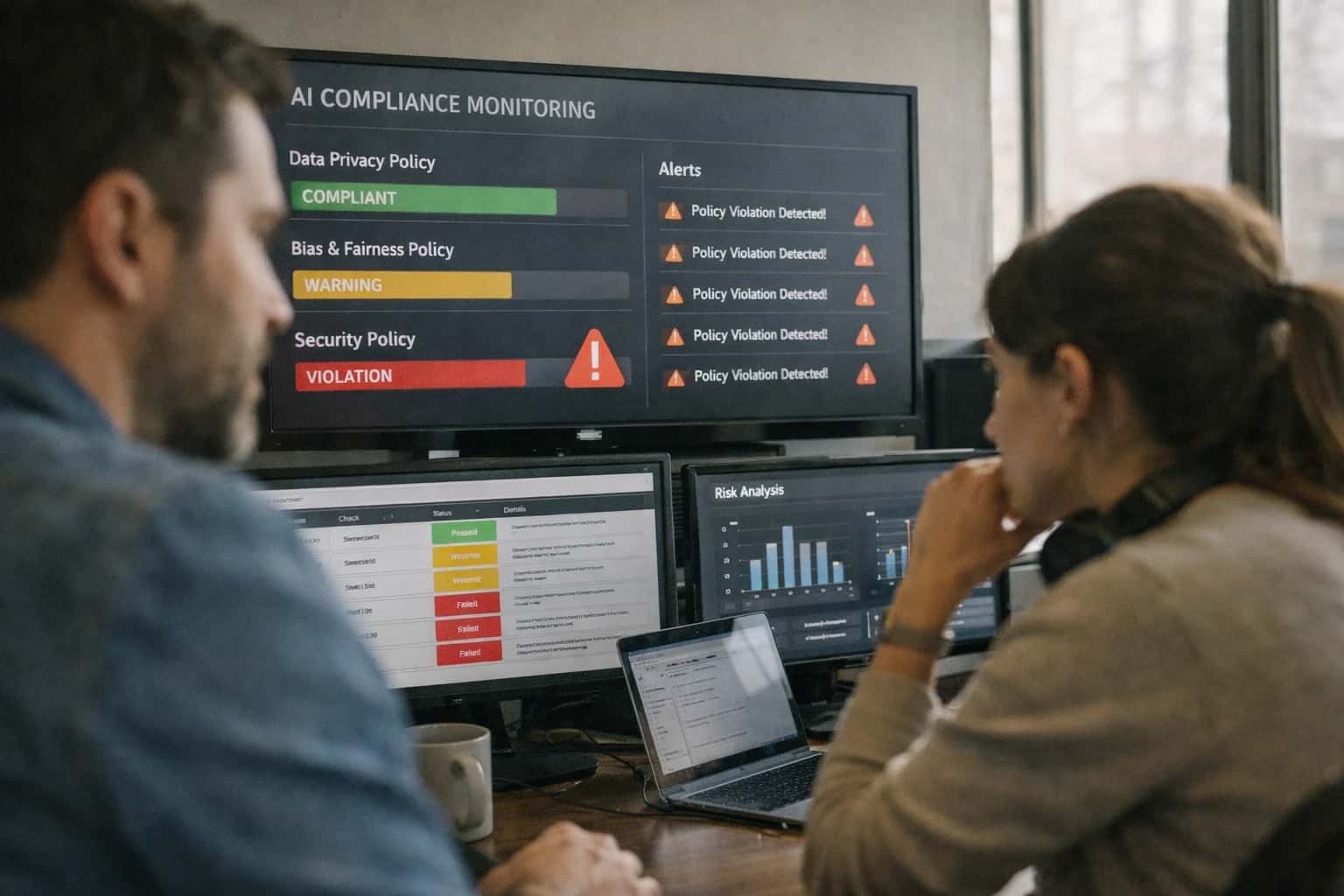
FROM REACTIVE SCANS TO INTELLIGENT COMPLIANCE
Where AI Fits into Rancher CIS Scanning Workflows
Integrate AI with Rancher's CIS scanning to prioritize risks, generate remediation scripts, and automate compliance evidence for audit trails.
The high-value workflow is prioritized remediation. For example, an AI agent can cross-reference a failing control for etcd encryption with the cluster's actual usage: if the cluster only runs non-sensitive development workloads, the finding is deprioritized. Conversely, a control about anonymous auth on a cluster hosting customer data is flagged as critical. For these high-priority items, the agent can generate cluster-specific remediation scripts (e.g., a kubectl patch command or a snippet for your GitOps repository) and even draft a Jira ticket or ServiceNow incident with the necessary context for your platform team.
For governance and rollout, the AI layer should be deployed as a post-scan webhook processor. After each scheduled CIS scan in Rancher, results are sent to an AI service that enriches them, stores the prioritized list and generated scripts in a secure audit log (like a vector database), and triggers notifications. This creates a searchable compliance timeline, allowing you to demonstrate to auditors not just that a scan was run, but how risks were intelligently assessed and addressed over time. This shifts compliance from a periodic checklist to a continuous, context-aware operation.
AI INTEGRATION FOR RANCHER CIS SCANNING
Rancher Modules and APIs for AI Integration
Analyzing and Prioritizing Scan Results
The Rancher CIS Benchmark scan results are accessible via the GET /v3/cisBenchmarkRuns and related detail endpoints. This data is the primary surface for AI integration, providing a raw list of failures, passes, and skips across hundreds of controls.
An AI agent can ingest this JSON payload to perform contextual prioritization. For example, it can cross-reference a FAIL for 1.1.12 (Ensure that the etcd data directory permissions are set to 700 or more restrictive) with the cluster's current workload: is etcd running on a dedicated, isolated node, or is it a single-node development cluster? The AI can weigh the exploitability and business impact to assign a true risk score, moving beyond a simple pass/fail list. This enables security teams to focus remediation efforts on the 20% of findings that represent 80% of the actual risk, based on their specific environment context.
RANCHER CIS SCANNING
High-Value AI Use Cases for CIS Compliance
AI transforms Rancher CIS benchmark scanning from a periodic compliance checklist into a continuous, intelligent workflow. By analyzing scan results in context, AI can prioritize risks, generate precise remediation, and automate evidence collection for audit trails.
01
Context-Aware Finding Prioritization
AI analyzes CIS scan results alongside cluster workload types, sensitivity labels, and runtime telemetry to prioritize findings. A critical vulnerability in a public-facing ingress namespace is flagged above a low-risk setting in an isolated dev cluster, focusing remediation efforts where risk is highest.
Batch -> Real-time
Risk scoring
02
Automated Remediation Script Generation
For each prioritized CIS failure, an AI agent generates a Kubernetes manifest patch, Helm values override, or kubectl command sequence tailored to the specific Rancher cluster version and configuration. This turns generic benchmark recommendations into executable, reviewed remediation steps for platform engineers.
Hours -> Minutes
Remediation drafting
03
Compliance Drift Detection & Alerting
AI establishes a continuous baseline of compliant cluster state by monitoring not just periodic scans but also configuration changes via Rancher's audit logs and GitOps sync status. It alerts on drift from hardened configurations, such as a newly created namespace missing required Pod Security Standards.
Same day
Drift detection
04
Audit Evidence Package Assembly
For internal or external audits, AI automates the collection and summarization of compliance evidence. It pulls scan histories, applied remediations, user approvals, and cluster metadata from Rancher and related systems, generating a structured, time-stamped report that demonstrates continuous compliance.
1 sprint
Report assembly
05
Policy-as-Code Rule Suggestion
AI analyzes recurring CIS failures across the fleet to suggest new OPA Gatekeeper constraints or Kyverno policies. For example, if multiple clusters fail the same control regarding privileged containers, the AI drafts a reusable policy to enforce it at admission, preventing future drift.
06
Remediation Workflow Orchestration
AI integrates CIS findings into existing platform workflows. It can create tickets in Jira Service Management, post to Slack channels for team review, or trigger automated pull requests in a GitOps repository with the generated fixes, ensuring remediation is tracked and executed within existing DevOps processes.
Batch -> Real-time
Workflow triggering
PRODUCTION WORKFLOWS
Example AI-Powered CIS Workflow Automations
These are concrete, deployable workflows that integrate AI agents with Rancher's CIS scanning pipeline. Each example outlines the trigger, data context, AI action, and system update to help platform and security teams prioritize, remediate, and govern compliance at scale.
Trigger: A scheduled Rancher CIS Benchmark scan completes and posts results to a webhook.
Context Pulled: The AI agent ingests the raw scan results JSON and enriches it with:
- Cluster metadata (environment:
prod/dev, business unit, criticality tags). - Real-time cluster metrics (CPU/Memory load, node count) from Rancher Monitoring.
- Historical data on previous findings for this cluster.
AI Action: A classification model analyzes each finding (FAIL, WARN) to assign a priority score (1-5) and a business risk context. For example:
"Finding K8S-1.2.1:
--anonymous-authistrue. Priority: 4. This dev cluster is internet-facing; anonymous auth presents a material attack vector. Last scanned 14 days ago, status unchanged."
System Update: The agent updates a dedicated CISFindings Custom Resource in the cluster with the prioritized list. It also creates a high-severity ticket in Jira Service Management for findings with Priority >=4 in production clusters.
Human Review Point: Security engineers review the prioritized dashboard in Rancher, focusing on high-priority items first. The AI provides a one-click ACKNOWLEDGE or DEFER action with required justification.
PRODUCTION-READY INTEGRATION PATTERNS
Implementation Architecture: Data Flow and Guardrails
A practical blueprint for wiring AI into your Rancher CIS scanning workflow, from data extraction to prioritized remediation.
The integration connects at two primary layers: the Rancher Security Scanning API (or a tool like kube-bench managed via Rancher) and the Rancher Projects/Clusters API. The AI agent, deployed as a sidecar service or external workflow, ingests raw CIS scan results (JSON or YAML), cluster metadata (node types, workloads, namespaces), and historical compliance states. This data is structured into a prompt context that includes the finding's ID, severity, description, affected resources, and the cluster's environment tag (e.g., production, development). The agent calls a configured LLM (like GPT-4 or Claude 3) via a secure, rate-limited gateway to analyze the context.
For each finding, the AI performs a contextual risk assessment: a HIGH severity finding on an internet-facing LoadBalancer service in a production cluster is prioritized over the same finding in an isolated dev namespace. The agent then generates a remediation script (Bash, PowerShell, or a Kubernetes manifest patch) and a plain-language summary for the platform team. These outputs, along with a confidence score, are posted back to a dedicated Rancher Project Annotations or a webhook endpoint that creates a tracked issue in a system like Jira or ServiceNow. All interactions are logged with a correlation_id for a full audit trail linking the scan, AI analysis, and any subsequent actions.
Guardrails are enforced via a pre-flight validation layer that redacts sensitive data (secrets, IPs) from the prompt and a post-processing approval workflow. High-risk automated remediations (e.g., modifying Pod Security Standards) can be routed to a Rancher Project Owner for manual approval via a comment in the created annotation. The system's decisions are periodically evaluated by sampling a subset of findings for human review, feeding results back to fine-tune the prioritization model. This closed-loop design ensures the AI augments the security team's workflow without bypassing established governance for your Rancher-managed estate.
AI-ENHANCED CIS SCANNING WORKFLOWS
Code and Payload Examples
Prioritizing Findings with Cluster Context
An AI agent consumes raw CIS scan results (JSON) and enriches them with real-time cluster context from the Rancher API. It cross-references findings against workload criticality, node roles, and existing security policies to generate a risk-adjusted priority score.
Example Payload for Enrichment:
json{ "scan_id": "cis-2025-04-15-10-30", "cluster": "prod-us-east-1", "raw_findings": [ { "id": "1.2.3", "description": "Ensure that the --authorization-mode argument is not set to AlwaysAllow", "status": "FAIL" } ], "context_request": { "workloads_in_default_ns": true, "node_roles": ["control-plane", "etcd"], "existing_psp": "restricted" } }
The AI returns a prioritized list, tagging findings as CRITICAL, HIGH, or LOW based on exploit potential and business impact, moving beyond static severity.
AI-PRIORITIZED CIS COMPLIANCE
Realistic Time Savings and Operational Impact
How AI integration transforms manual, periodic CIS scanning into a continuous, context-aware compliance workflow within Rancher, reducing alert fatigue and accelerating remediation.
| Workflow Stage | Before AI | After AI | Implementation Notes |
|---|---|---|---|
Finding Triage & Prioritization | Manual review of 1000+ findings per cluster | AI ranks top 10-20 critical findings per cluster | AI uses cluster context (workloads, exposure, compliance framework) to score risk |
Remediation Script Generation | Engineer writes custom kubectl/Helm commands | AI drafts remediation YAML/scripts for review | Scripts are validated against cluster state before suggestion |
Compliance Evidence Collection | Manual screenshot and log aggregation for audits | Automated report generation with timeline | AI correlates scan history, applied fixes, and policy exceptions |
Policy Exception Management | Spreadsheet or wiki-based tracking | Integrated workflow with RBAC and approval chains | AI suggests temporary exceptions based on low risk and business justification |
Drift Detection & Re-scan Triggering | Scheduled weekly/monthly scans | Event-driven scans after config changes or deployments | AI monitors Rancher projects and GitOps repos for high-risk changes |
Team Notification & Assignment | Broad email blasts to platform team | Targeted Slack/MS Teams alerts to namespace owners | AI routes findings based on Rancher project membership and historical ownership |
Remediation Verification | Manual follow-up to confirm fix applied | Automated post-remediation scan and status update | AI closes the loop, marking findings as resolved or escalating |
PRODUCTION-READY IMPLEMENTATION
Governance, Security, and Phased Rollout
A practical blueprint for deploying AI-enhanced CIS scanning in Rancher with enterprise-grade controls.
Integrating AI with Rancher's CIS scanning workflow introduces new data flows and decision points that must be governed. The architecture typically involves a secure sidecar service or a dedicated pod within the Rancher management cluster. This service ingests raw scan results from tools like kube-bench or Rancher's built-in scanner via the Kubernetes API or a webhook. It then calls an AI model—hosted in a secure, internal inference endpoint—to analyze findings against the cluster's specific context: workload criticality, network exposure, and existing security policies. All prompts, model outputs, and remediation suggestions are logged to a dedicated audit index (e.g., in Elasticsearch) with immutable timestamps and user/service principal attribution, creating a clear lineage from finding to action.
Security is enforced at multiple layers. Access to the AI service is controlled via Kubernetes NetworkPolicies and Rancher Projects, ensuring it only communicates with authorized scanner pods and the inference endpoint. Sensitive cluster context (like namespace labels or pod specs) is never sent to external LLM APIs; all processing occurs within the customer's VPC or data center. The AI's remediation scripts—such as YAML patches for PodSecurityStandards or NetworkPolicy creations—are generated as pull requests or change requests in Git (e.g., via Rancher Fleet's GitOps repo), never applied directly. This creates a mandatory human or automated policy check (OPA Gatekeeper, Kyverno) before any change reaches the cluster.
A phased rollout is critical for managing risk and building trust. Start with a read-only analysis phase: AI prioritizes findings and generates reports but does not suggest automated fixes. Deploy to a single non-production cluster, using Rancher's Project isolation to limit scope. In phase two, enable dry-run remediation scripting for a defined set of low-risk controls (e.g., CIS check 1.2.1 – --anonymous-auth=false). Finally, progress to approved automation for specific, repeatable tasks like annotating non-compliant resources or creating Jira tickets, governed by a Rancher RoleTemplate that restricts who can promote AI-suggested changes. This controlled approach allows security teams to validate AI accuracy and tune prompts using real audit data before scaling across the fleet.
For platform teams managing this integration, internal resources like our guide on AI Governance for Kubernetes and our service overview for Rancher Multi-Cluster Management provide deeper architectural patterns for scaling AI agents securely across hundreds of clusters.
Enabling Efficiency, Speed & Accuracy
Intelligent Analysis, Decision & Execution
We build AI systems for teams that need search across company data, workflow automation across tools, or AI features inside products and internal software.
Talk to Us
Search across company data
Give teams answers from docs, tickets, runbooks, and product data with sources and permissions.
Useful when people spend too long searching or get different answers from different systems.
Enterprise searchRAGPermissions
Read more
Automate internal workflows
Use AI to route work, draft outputs, trigger actions, and keep approvals and logs in place.
Useful when repetitive work moves across multiple tools and teams.
AI agentsWorkflow automationGovernance
Read more
Add AI to products and internal tools
Build assistants, guided actions, or decision support into the software your team or customers already use.
Useful when AI needs to be part of the product, not a separate tool.
AI integrationDecision supportModel routing
Read moreAI INTEGRATION FOR RANCHER CIS SCANNING
Frequently Asked Questions
Practical answers for platform, security, and DevOps teams evaluating AI to automate and enhance CIS compliance workflows in Rancher.
An AI agent analyzes each CIS scan result in the context of your specific cluster to assign a risk-adjusted priority score. It considers:
- Cluster Role & Sensitivity: Is this a production cluster handling PII, or a dev/test environment?
- Exploitability & Exposure: Is the vulnerable service exposed to the internet or internal networks only?
- Historical Data: Has this finding been flagged before? Did previous manual fixes succeed or fail?
- Business Impact: Would remediation require a cluster restart, potentially causing downtime?
The agent uses this context to generate a prioritized backlog, moving findings like Ensure that the --anonymous-auth argument is set to false on an internet-facing API server to the top, while deprioritizing items on isolated, ephemeral clusters. The output is a structured JSON payload sent to your ticketing system (e.g., Jira) or Rancher Projects for action.

About the author
Prasad Kumkar
CEO & MD, Inference Systems
Prasad Kumkar is the CEO & MD of Inference Systems and writes about AI systems architecture, LLM infrastructure, model serving, evaluation, and production deployment. Over 5+ years, he has worked across computer vision models, L5 autonomous vehicle systems, and LLM research, with a focus on taking complex AI ideas into real-world engineering systems.
His work and writing cover AI systems, large language models, AI agents, multimodal systems, autonomous systems, inference optimization, RAG, evaluation, and production AI engineering.
LinkedIn
Limited slotsGet a Free AI Consultation
Partnered with leading AI, data, and software stack.





How We Work
Custom AI workflows for your Business
One-fit-all AI don't work for modern businesses. At Inferensys, we aim to understand your business & custom requirements; which we use to define most efficient agentic workflows, the data, and the tools for your business.
01
Review the use case
We understand the task, the users, and where AI can actually help.
Read more02
Pick the right approach
We define what needs search, automation, or product integration.
Read more03
Build the first useful version
We implement the part that proves the value first.
Read more04
Improve from there
We add the checks and visibility needed to keep it useful.
Read moreThe first call is a practical review of your use case and the right next step.
Talk to Us