Rancher's alerting pipeline, powered by integrated Prometheus and Alertmanager, generates a high volume of notifications across clusters. AI integration connects at the Alertmanager webhook receiver or via the Rancher Monitoring API to process these raw alerts before they reach human responders. The AI agent analyzes the incoming alert stream—including labels like alertname, severity, cluster, namespace, and pod—to perform three core functions: deduplication of similar firing alerts, intelligent routing based on historical responder assignment and resolution time, and enrichment by pulling relevant context from cluster logs (kubectl logs), recent events (kubectl get events), and related Kubernetes resource states.

Integration
AI Integration for Rancher Alerting
Embed AI into Rancher's Prometheus and Grafana alerting pipeline to deduplicate noise, route alerts based on historical response, and generate preliminary incident reports for on-call engineers.
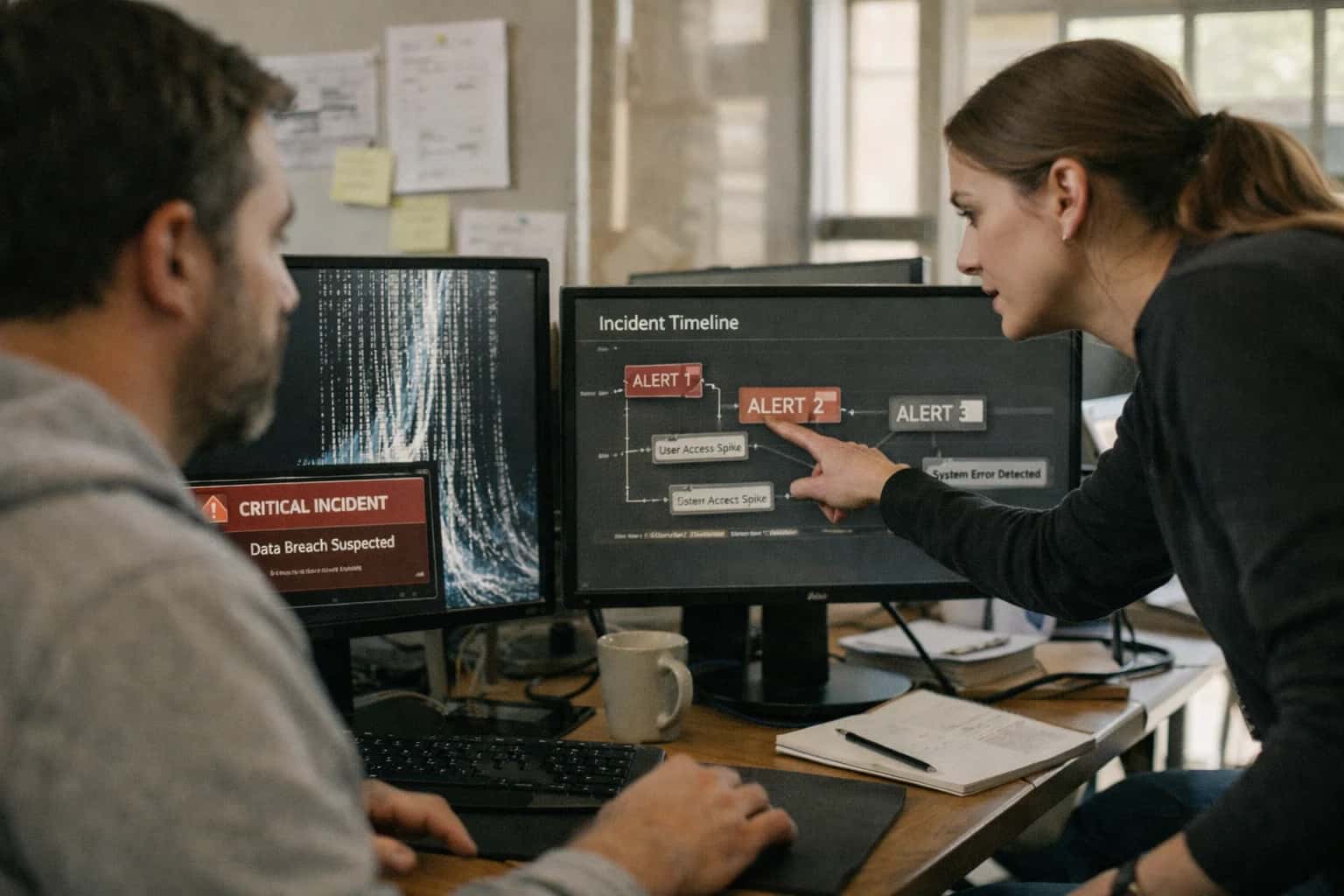
FROM NOISE TO ACTIONABLE SIGNALS
Where AI Fits into Rancher's Alerting Pipeline
Integrate AI to deduplicate, route, and enrich alerts from Rancher-managed clusters, reducing on-call fatigue and accelerating incident response.
For a production implementation, you deploy a lightweight service that subscribes to Alertmanager webhooks. This service uses an LLM with a system prompt tuned for Kubernetes SRE knowledge to generate a preliminary incident report. This report includes a likely root cause hypothesis (e.g., "Memory pressure likely due to Java heap configuration in pod X based on similar past incidents"), a severity reassessment, and suggested runbook links. The enriched alert is then pushed back into your ITSM tool (like ServiceNow or Jira) via API or posted to a dedicated Slack/Teams channel for the on-call engineer. This cuts the "context gathering" phase from 15-20 minutes to seconds, allowing engineers to focus on remediation. Governance is maintained by logging all AI suggestions and routing decisions for audit, and implementing a human-in-the-loop approval step for critical severity alerts before any automated actions are taken.
Rollout should start with a non-critical cluster or a specific namespace, using the AI agent in a shadow mode where its recommendations are logged but not acted upon. This builds confidence in its accuracy and allows for tuning of the deduplication logic and enrichment prompts. Over time, you can automate the routing of low-severity, high-frequency alerts (like pod restarts due to memory limits) entirely, while escalating complex, novel alerts to senior engineers with the AI-generated context attached. This approach turns Rancher's alerting from a reactive noise generator into a proactive, context-aware operations layer. For related architectural patterns, see our guides on AI Integration for Rancher Monitoring and AI Integration with OpenShift Cluster Monitoring.
AI-POWERED INCIDENT RESPONSE
Key Integration Points in Rancher's Alerting Stack
Ingesting Raw Alerts for AI Triage
Rancher's integrated Prometheus stack sends all triggered alerts to Alertmanager. This is the primary integration point for AI-powered deduplication and enrichment. Configure Alertmanager's webhook receiver to POST alert payloads to an AI processing service.
AI Workflow:
- The webhook payload contains the full alert metadata: labels, annotations, and firing timestamps.
- An AI agent receives this payload, vectorizes the alert description and labels, and searches a historical alert database for semantic duplicates.
- It suppresses duplicate alerts and enriches the primary alert with context from past incidents (e.g., "Similar to incident #INC-123, resolved by restarting deployment
frontend-api"). - The enriched alert is then forwarded to the final destination (e.g., PagerDuty, Slack, ServiceNow).
This layer reduces alert fatigue for on-call engineers by grouping related failures before they hit the notification channel.
INTELLIGENT ALERT MANAGEMENT
High-Value AI Use Cases for Rancher Alerting
Integrate AI with Rancher's Prometheus-based monitoring and alerting system to reduce noise, accelerate response, and automate incident workflows for platform engineering and SRE teams.
01
Alert Deduplication & Correlation
AI analyzes incoming Prometheus alerts from multiple clusters to identify root-cause events, suppressing cascading or duplicate notifications. For example, a node failure event can be correlated with its dependent pod and deployment alerts, presenting a single, consolidated incident instead of dozens of alerts. This reduces alert fatigue for on-call engineers.
80% Reduction
In alert volume
02
Intelligent On-Call Routing
Based on historical alert response data and team RBAC, AI suggests the optimal engineer or team for routing. It analyzes the alert's namespace, involved workload type (e.g., StatefulSet in prod-database), and past resolution patterns to bypass manual triage and assign directly to the team with context and permissions.
Minutes Saved
Per incident assignment
03
Automated Preliminary Incident Reports
When a critical alert fires, an AI agent automatically queries Rancher and cluster APIs to generate a preliminary report. This includes relevant logs from the last 5 minutes, recent deployment changes from Fleet or GitOps, current resource utilization graphs, and suggested runbook steps from past similar incidents, delivered to Slack or PagerDuty.
Same-Day Context
For post-mortems
04
Dynamic Alert Rule Tuning
AI continuously analyzes Prometheus alert rule effectiveness—tracking firing frequency, resolution time, and correlation with actual issues. It suggests adjustments to thresholds, for: durations, or labeling to reduce false positives and catch subtle degradation earlier, integrating suggestions back into the Rancher-monitored PrometheusRule custom resources.
1 Sprint
To optimize rule sets
05
Forensic Timeline Generation
For post-incident review, AI agents reconstruct a timeline by querying Rancher's audit logs, Kubernetes events, and metric history. It sequences key events like config map updates, node cordons, or HPA scaling actions that preceded the alert, creating a shareable narrative for blameless post-mortems without manual log stitching.
Hours -> Minutes
For timeline creation
06
Proactive Anomaly Detection
Beyond static thresholds, AI models baseline normal behavior for key metrics (e.g., pod startup time, API server latency) across your Rancher fleet. It detects subtle deviations and generates early-warning alerts or creates low-priority tickets in connected ITSM systems like Jira Service Management, allowing proactive intervention before user impact.
Batch -> Real-time
Insight delivery
PRACTICAL IMPLEMENTATION PATTERNS
Example AI-Enhanced Alert Workflows
These workflows illustrate how AI agents can be integrated with Rancher's alerting system to reduce noise, accelerate response, and provide actionable context for on-call engineers. Each pattern connects to specific Rancher APIs and data sources.
Trigger: A Prometheus alert fires in Rancher Monitoring (e.g., KubePodCrashLooping).
Context Pulled: The AI agent queries:
- The Rancher Management API (
/v3/projects/{project_id}/pods) for pod status, events, and recent image changes. - The cluster's Prometheus API for similar alerts in the last 30 minutes across namespaces.
- Git repository (via webhook) for recent deployment manifests to the affected namespace.
Agent Action: An LLM analyzes the data to determine if this is a new incident or related to an existing one. It creates a correlation key based on pod name pattern, error message, and deployment hash.
System Update: If a duplicate, the agent updates the Rancher AlertManager configuration via API to group the alerts under a single notification. It posts a summary comment to the linked incident in the team's ITSM tool (e.g., Jira).
Human Review Point: The agent flags the root cause hypothesis (e.g., "Likely related to image app:v1.2.3 deployed 2 hours ago") for engineer confirmation in the consolidated alert.
FROM ALERT STORM TO INTELLIGENT RESPONSE
Implementation Architecture: Data Flow and Guardrails
A production-ready architecture for integrating AI with Rancher's Prometheus-based alerting system to reduce noise and accelerate incident resolution.
The integration connects at Rancher's Prometheus Federation layer, where raw alerts are first aggregated. An AI agent, deployed as a sidecar or a separate service, subscribes to the Alertmanager's webhook receiver. Each incoming alert—containing labels like cluster_name, namespace, severity, and the PromQL expression—is processed through a deduplication engine. This engine uses vector embeddings of the alert's fingerprint, message, and labels to cluster similar alerts (e.g., multiple pods in a deployment hitting the same memory threshold) into a single incident thread, dramatically reducing the alert volume presented to on-call engineers.
For each deduplicated incident, the system performs two parallel enrichments using historical data from Rancher's monitoring stack. First, it queries the Rancher Monitoring API for past alert responses, correlating resolved incidents by team, service, and resolution steps to suggest an initial routing path (e.g., "Route to Platform-SRE based on past handling of NodeFilesystemAlmostOutOfSpace"). Second, it retrieves relevant metrics and log snippets from the preceding 15 minutes to generate a preliminary incident report. This report includes likely root cause (e.g., "Spike in container_memory_working_set_bytes correlates with deployment ai-model-serving-* 10 minutes prior"), affected resources, and a link to the relevant Grafana dashboard.
All AI-generated suggestions—routing and reports—are written as annotations to the source alert in Alertmanager and logged to a secure audit trail. A critical guardrail is the human-in-the-loop approval for any automated action. The system can be configured to only auto-route low-severity alerts or to require a senior engineer's approval via a Slack/Teams webhook before applying high-severity routing changes. Furthermore, the AI model's suggestions are continuously evaluated against a feedback loop where engineers can confirm or correct the routing and report quality, creating a labeled dataset to fine-tune the models and improve accuracy over time, ensuring the system adapts to your specific cluster environment and team practices.
AI-ENHANCED ALERTING WORKFLOWS
Code and Payload Examples
Deduplicating Noisy Alerts
Rancher's Prometheus alerting can generate duplicate or near-identical alerts from multiple clusters. An AI agent can analyze incoming alerts, group them by root cause, and suppress noise before they reach the on-call engineer.
Example Python Logic:
python# Pseudo-code for alert grouping incoming_alerts = fetch_rancher_alerts(rancher_api_url, cluster_id) for alert in incoming_alerts: # Embed alert metadata (name, labels, annotations) alert_embedding = embed_text(f"{alert['name']} {alert['labels']}") # Find similar recent alerts in vector store similar = vector_store.similarity_search(alert_embedding, k=5) if similarity_score > THRESHOLD: # Group with existing incident update_existing_incident(similar[0]['incident_id'], alert) suppress_alert(alert['id']) else: # Create new incident group incident_id = create_incident(alert) vector_store.add(alert_embedding, metadata={'incident_id': incident_id})
This reduces alert fatigue by grouping similar PodCrashLooping or NodeNotReady alerts across namespaces.
AI-ENHANCED ALERT MANAGEMENT
Realistic Time Savings and Operational Impact
This table illustrates the operational impact of integrating AI with Rancher's alerting system, focusing on realistic time savings and workflow improvements for on-call engineers and SRE teams.
| Metric | Before AI | After AI | Notes |
|---|---|---|---|
Alert Triage & Deduplication | Manual correlation across dashboards | Automated grouping and root-cause suggestion | Reduces noise from 100s of alerts to 10-15 actionable groups |
Initial Incident Report Drafting | Manual note-taking from multiple sources | AI-generated summary with relevant logs & metrics | Provides structured context for handoff, saving 15-30 minutes per major alert |
Routing & Escalation Decision | Based on tribal knowledge and manual lookup | Suggested routing based on historical responder success | Reduces misroutes and speeds up assignment to correct team |
Post-Incident Documentation | Manual compilation of timeline and actions | Automated draft of timeline from alert, chat, and log data | Cuts documentation time from 1-2 hours to 20-30 minutes of review |
Alert Rule Tuning & Feedback | Periodic manual review (e.g., quarterly) | Continuous analysis of alert fatigue and suppression patterns | Proactively suggests rule adjustments to reduce false positives |
On-Call Handoff & Context Sharing | Verbal or text-based summary in chat | AI-generated handoff brief with open items and context | Ensures continuity and reduces context-switching overhead for new responders |
Mean Time to Acknowledge (MTTA) | 5-15 minutes during business hours | 2-5 minutes with prioritized, summarized alerts | Improvement varies by alert volume and team size; most impactful during off-hours |
ARCHITECTURE FOR PRODUCTION
Governance, Security, and Phased Rollout
A practical approach to deploying AI for Rancher Alerting with security, control, and incremental value delivery.
Integrating AI with Rancher's alerting system requires a secure, governed architecture that respects the critical nature of production incidents. The integration typically connects via Rancher's Prometheus Alertmanager API or a dedicated webhook receiver to ingest firing alerts. An AI agent, deployed as a sidecar service or within a dedicated namespace, processes these alerts. It should have read-only access to historical alert data, incident response logs (from tools like PagerDuty or Opsgenie), and relevant cluster metrics via the Rancher Management API or direct Prometheus queries. All AI-generated outputs—such as deduplication keys, suggested routing, or preliminary reports—should be written to a secure audit log and an intermediate queue (like Redis or RabbitMQ) for human review or automated approval before any action is taken.
A phased rollout is critical for trust and operational safety. Phase 1 focuses on observation and suggestion: the AI analyzes alert streams in real-time but only surfaces its deduplication analysis and routing suggestions to a dedicated dashboard or Slack channel for SRE team review, with zero automated actions. Phase 2 introduces controlled automation: after validating accuracy over 4-6 weeks, you can configure the AI to auto-close clearly duplicate alerts (e.g., 100 identical PodCrashLooping alerts from the same namespace) and auto-assign alerts to pre-defined responder groups based on historical patterns, but only after logging the action and requiring a configurable confidence threshold. Phase 3 enables generative reporting: the AI agent uses the alert context, related logs, and past resolution notes to draft a structured incident summary, which is posted to the incident channel for on-call engineers to edit and approve, turning alert triage from a 15-minute manual process into a 2-minute review.
Governance is enforced through RBAC integration with Rancher's projects and clusters, ensuring the AI agent only accesses data from permitted environments. All AI prompts and model interactions should be traced and logged for auditability, and a human-in-the-loop approval step should be mandatory for any action that modifies alert state or assigns personnel during the initial rollout. This approach minimizes risk while delivering immediate value in reducing alert fatigue and accelerating mean time to acknowledge (MTTA). For related architectural patterns, see our guides on AI Integration for Rancher Monitoring and AI Governance and LLMOps Platforms.
Enabling Efficiency, Speed & Accuracy
Intelligent Analysis, Decision & Execution
We build AI systems for teams that need search across company data, workflow automation across tools, or AI features inside products and internal software.
Talk to Us
Search across company data
Give teams answers from docs, tickets, runbooks, and product data with sources and permissions.
Useful when people spend too long searching or get different answers from different systems.
Enterprise searchRAGPermissions
Read more
Automate internal workflows
Use AI to route work, draft outputs, trigger actions, and keep approvals and logs in place.
Useful when repetitive work moves across multiple tools and teams.
AI agentsWorkflow automationGovernance
Read more
Add AI to products and internal tools
Build assistants, guided actions, or decision support into the software your team or customers already use.
Useful when AI needs to be part of the product, not a separate tool.
AI integrationDecision supportModel routing
Read moreAI INTEGRATION FOR RANCHER ALERTING
Frequently Asked Questions
Common questions about integrating AI with Rancher's alerting system to reduce noise, accelerate response, and generate actionable incident context for on-call teams.
The integration connects to Rancher's Prometheus Alertmanager webhook receiver. When an alert fires, the AI agent:
- Receives the alert payload via a configured webhook endpoint.
- Extracts key entities such as cluster name, namespace, pod, deployment, alert name, severity, and labels.
- Performs semantic similarity analysis against recent alert history stored in a short-term vector database.
- Clusters related alerts (e.g., multiple pods in the same deployment failing readiness probes) into a single incident thread.
- Updates the Rancher UI or external ITSM (like ServiceNow or PagerDuty) with a deduplicated incident, including a summary of the root cause pattern.
This reduces alert storms from widespread issues, allowing engineers to address the core problem instead of dozens of symptoms.

About the author
Prasad Kumkar
CEO & MD, Inference Systems
Prasad Kumkar is the CEO & MD of Inference Systems and writes about AI systems architecture, LLM infrastructure, model serving, evaluation, and production deployment. Over 5+ years, he has worked across computer vision models, L5 autonomous vehicle systems, and LLM research, with a focus on taking complex AI ideas into real-world engineering systems.
His work and writing cover AI systems, large language models, AI agents, multimodal systems, autonomous systems, inference optimization, RAG, evaluation, and production AI engineering.
LinkedIn
Limited slotsGet a Free AI Consultation
Partnered with leading AI, data, and software stack.





How We Work
Custom AI workflows for your Business
One-fit-all AI don't work for modern businesses. At Inferensys, we aim to understand your business & custom requirements; which we use to define most efficient agentic workflows, the data, and the tools for your business.
01
Review the use case
We understand the task, the users, and where AI can actually help.
Read more02
Pick the right approach
We define what needs search, automation, or product integration.
Read more03
Build the first useful version
We implement the part that proves the value first.
Read more04
Improve from there
We add the checks and visibility needed to keep it useful.
Read moreThe first call is a practical review of your use case and the right next step.
Talk to Us