AI integration for Portainer logging connects directly to the platform's core logging surfaces: the aggregated container logs available via the Portainer API (/api/endpoints/{id}/docker/containers/{id}/logs), the environment event stream, and the underlying Docker daemon or Kubernetes control plane logs that Portainer surfaces. The primary data objects are unstructured log lines from stdout/stderr, enriched with metadata like container name, service/stack, namespace (in Kubernetes mode), and timestamp. AI agents process this stream to perform log aggregation, anomaly detection, and pattern recognition, moving beyond simple keyword filtering to understand context and sequence.

Integration
AI Integration for Portainer Logging
Add AI-powered log analysis to Portainer for automated pattern detection, incident summarization, and alert creation, reducing manual triage for application support teams.
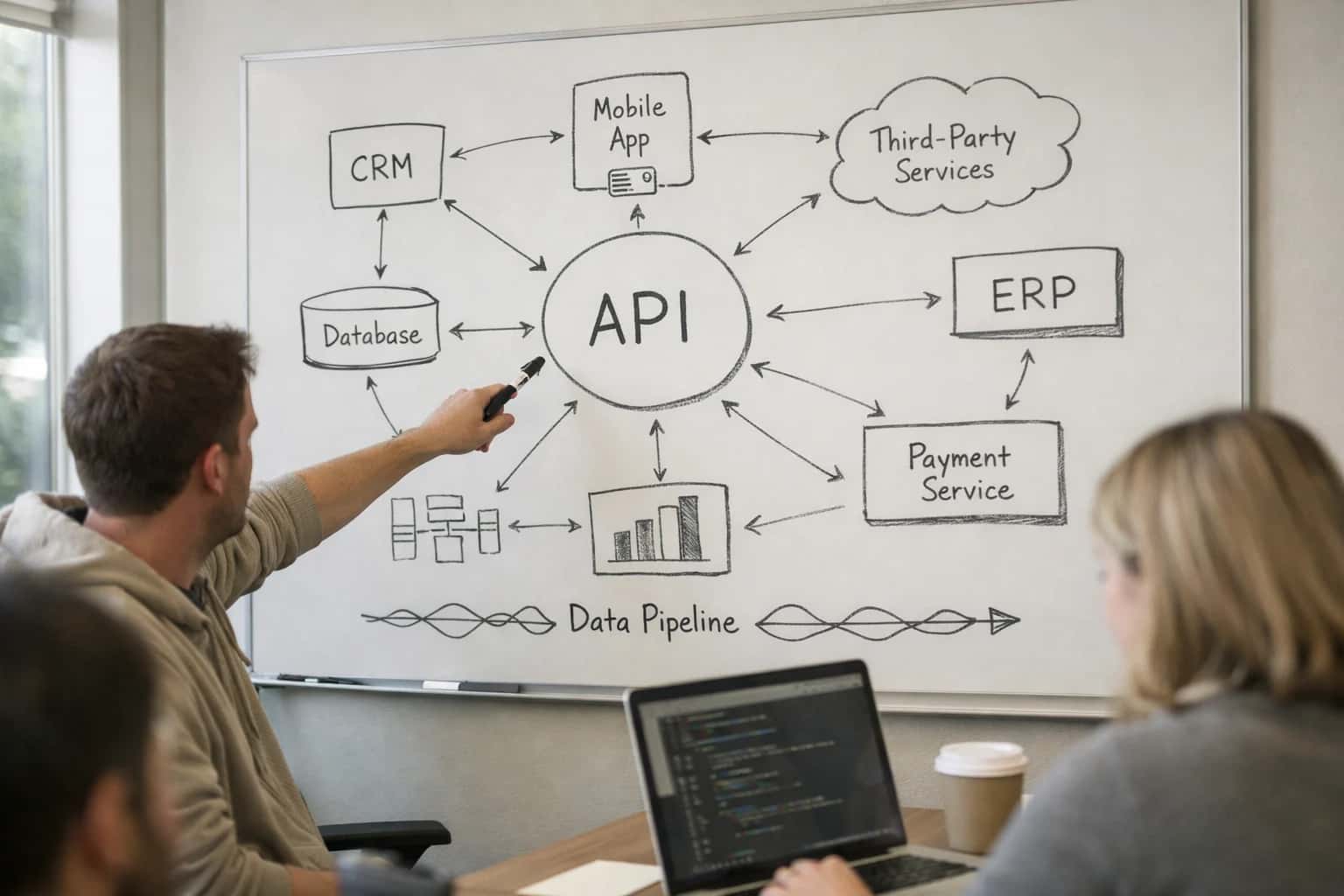
FROM REACTIVE TO PROACTIVE OPERATIONS
Where AI Fits into Portainer Logging Workflows
Integrate AI with Portainer's logging infrastructure to transform raw container and service logs into actionable insights, automated alerts, and predictive support.
High-value use cases center on reducing manual toil for application support and platform teams. For example, an AI agent can continuously analyze logs from a business-critical stack, detect error patterns correlating with deployment events or resource constraints, and automatically create a detailed incident ticket in a connected ITSM tool like Jira Service Management. Another workflow involves using AI to summarize the last 24 hours of logs for a misbehaving service into a concise diagnostic report for an on-call engineer, highlighting probable root causes based on historical incidents. For security, AI can scan logs for suspicious access patterns or compliance violations, triggering Portainer webhooks to isolate a container or update a network policy.
A production implementation is typically wired using a sidecar or daemonset pattern that taps into the log stream, avoiding performance impact on the Portainer Business Edition server itself. Logs are streamed to a vector database for semantic search and retrieval-augmented generation (RAG), enabling the AI to answer questions like "What errors did the payment service have after the last database migration?" Governance is critical: all AI-generated alerts or actions should be routed through an approval queue or audit log within Portainer's activity feed, and prompts must be tuned to avoid hallucinations by grounding responses in the specific log context. Rollout starts with a non-production environment, focusing on a single high-noise application to demonstrate value in reducing alert fatigue before expanding to broader cluster logging.
LOG AGGREGATION AND ANALYSIS
Portainer Logging Touchpoints for AI Integration
Container and Service Log Streams
Portainer collects stdout/stderr logs from all managed containers and services (Docker Swarm or Kubernetes). This raw stream is the primary data source for AI analysis. Key touchpoints include:
- Real-time log ingestion via Portainer's API (
GET /api/endpoints/{id}/docker/containers/{id}/logs) or webhook events for container state changes. - Historical log retrieval for forensic analysis, using time-range queries against Portainer's backend logging driver (configured as JSON-file, syslog, or external log aggregator).
- Structured metadata such as container name, image, service/stack, host endpoint, and labels, which provide essential context for AI to correlate events across environments.
AI integration here focuses on pattern detection (e.g., error frequency spikes), anomaly identification (deviations from baseline log signatures), and log classification (separating application errors, infrastructure warnings, security events). This enables automated alert creation in tools like PagerDuty or ServiceNow directly from Portainer's event stream.
LOG ANALYSIS AND AUTOMATION
High-Value AI Use Cases for Portainer Logs
Portainer aggregates logs from containers, services, and Docker Swarm or Kubernetes clusters. AI transforms these logs from reactive troubleshooting data into proactive intelligence for application support, security, and platform operations teams.
01
Automated Log Triage and Alert Creation
AI continuously analyzes container and service logs from Portainer's aggregated stream. It detects error patterns, latency spikes, or crash loops, then automatically creates and prioritizes alerts in connected ITSM tools like ServiceNow or Jira. This moves teams from manual log spelunking to structured incident response.
Hours -> Minutes
Mean time to detect
02
Root Cause Suggestion for Failed Deployments
When a Portainer stack or Kubernetes deployment fails, AI correlates build logs, container startup logs, and health check failures. It suggests the most likely root cause—such as a missing config map, image pull error, or resource constraint—directly in the Portainer UI or via Slack/Teams, accelerating developer remediation.
1 sprint
Faster debugging
03
Security Anomaly Detection in Runtime Logs
AI models baseline normal application behavior from Portainer logs. They flag anomalies like unexpected outbound connection attempts, privilege escalation patterns, or suspicious file access—often missed by static security scans. Findings can trigger Portainer to isolate a container or create a security ticket.
Batch -> Real-time
Threat detection
04
Intelligent Log Retention and Cost Optimization
Analyzes log volume and value from each Portainer environment (Dev, Prod, Edge). AI suggests retention policies—keeping high-value error logs longer while archiving or dropping verbose debug logs—to control costs in destinations like Elasticsearch or S3, directly influencing Portainer's logging configuration.
30-50%
Potential storage savings
05
Compliance Audit Trail Summarization
For regulated industries, AI processes Portainer's audit logs of user actions (who deployed what, when) and runtime logs. It generates summarized compliance reports, highlighting configuration changes, access events, and policy deviations, ready for internal audit or external compliance reviews.
Same day
Report generation
06
Predictive Health Scoring for Edge Stacks
For Portainer-managed edge deployments, AI analyzes historical log patterns from remote agents and containers. It predicts potential failures due to network latency, disk space, or memory trends, allowing central IT to proactively remediate issues before edge sites are impacted.
Proactive
vs. reactive
PRODUCTION PATTERNS
Example AI-Powered Log Analysis Workflows
These workflows illustrate how AI agents can be integrated with Portainer's logging data and APIs to automate container operations, reduce mean time to resolution (MTTR), and provide intelligent support for application teams.
This workflow uses AI to detect abnormal patterns in container logs and automatically create prioritized alerts in your ITSM system.
- Trigger: Portainer's logging agent streams container
stdout/stderrlogs to a central aggregator (e.g., Loki, Elasticsearch). - Context Pulled: The AI agent queries the aggregated logs for the last 15 minutes, focusing on error rates, exception keywords, and deviation from baseline patterns for the specific service.
- Agent Action: A fine-tuned model analyzes the log snippets. It classifies the anomaly (e.g.,
"DatabaseConnectionTimeout","MemoryOOMKillPattern","HighLatencyAPI") and extracts relevant context like pod name, namespace, and the last 10 lines before the error. - System Update: The agent uses Portainer's REST API to tag the affected service with an
"ai-investigating"label and then creates a high-priority ticket in ServiceNow or Jira via webhook. The ticket includes:- Summary:
"[AI-Detected] Database connection timeouts for service 'payment-api' in namespace 'prod'" - Description: A concise analysis and the relevant log snippet.
- Suggested Action:
"Check database cluster health and network policies for namespace 'prod'."
- Summary:
- Human Review Point: The ticket is assigned to the on-call platform engineer. The AI's classification and suggested action are presented as guidance, not an automated fix.
FROM LOG COLLECTION TO ACTIONABLE INSIGHTS
Implementation Architecture: Data Flow and Integration Points
A practical blueprint for integrating AI-driven log analysis directly into Portainer's operational workflows.
The integration connects to Portainer's logging subsystem, which aggregates container, service, and Docker daemon logs from all managed environments (Kubernetes, Docker Swarm, standalone Docker). The primary data flow begins with Portainer's internal log collection, where logs are streamed via the Portainer Agent or directly from the Docker API. Instead of merely displaying raw logs in the UI, the AI layer subscribes to these log streams, processes them in real-time, and enriches them with contextual metadata (environment, stack, service name). This creates a unified, searchable log corpus that serves as the foundation for pattern detection and anomaly alerting.
Implementation centers on two key integration points: the Portainer REST API for administrative control and the Portainer Webhook system for event-driven automation. The AI service uses the API to fetch historical logs, environment details, and user/team structures for baseline analysis. For real-time processing, it listens for webhook events triggered by log volume thresholds or specific error patterns configured within Portainer. When a significant pattern is detected—such as a cascading failure across replicated services or a security-repeated authentication failure—the AI agent uses the Portainer API to automatically create an alert within the Portainer UI, tag the affected services, and, if configured, execute a remediation action like restarting a service or scaling a deployment.
Rollout is designed for incremental adoption. A common starting point is a sidecar container or a dedicated microservice deployed within the same infrastructure as the Portainer server, ensuring low-latency access to logs. Governance is maintained through Portainer's existing Role-Based Access Control (RBAC); the AI's actions are scoped to the permissions of the service account it uses, and all automated alerts or actions are logged in Portainer's audit trail. This architecture ensures the AI augments the platform without bypassing its security model, providing application support teams with faster triage—shifting log analysis from manual grep operations to automated, prioritized incident detection.
AI-PORTRAINER LOG ANALYSIS
Code and Configuration Examples
Ingesting Portainer Logs for AI Analysis
Portainer logs can be streamed via its API or collected by an agent. The key is to structure the unstructured log data for semantic search. This example uses a Python service to fetch logs from the Portainer API, chunk them, and generate embeddings for a vector database.
pythonimport requests import json from datetime import datetime, timedelta from sentence_transformers import SentenceTransformer # Portainer API Configuration PORTAINER_URL = "https://portainer.example.com/api" API_KEY = "your-portainer-api-key" ENDPOINT_ID = 1 # Target environment ID headers = { "X-API-Key": API_KEY, "Content-Type": "application/json" } # Fetch logs for the last hour since = int((datetime.now() - timedelta(hours=1)).timestamp()) logs_url = f"{PORTAINER_URL}/endpoints/{ENDPOINT_ID}/docker/logs" params = { "since": since, "stderr": 1, "stdout": 1, "timestamps": 1 } response = requests.get(logs_url, headers=headers, params=params) logs = response.text.split('\n') # Chunk and embed logs model = SentenceTransformer('all-MiniLM-L6-v2') log_chunks = [] for log in logs[:100]: # Process first 100 lines if log: # Simple chunking by line; real logic would group related lines embedding = model.encode(log).tolist() log_chunks.append({ "text": log, "embedding": embedding, "source": "portainer", "timestamp": datetime.now().isoformat() }) # Store in vector DB (e.g., Pinecone, Weaviate) # vector_db.upsert(vectors=log_chunks) print(f"Ingested and vectorized {len(log_chunks)} log lines.")
This pipeline creates a searchable knowledge base from container stdout/stderr, enabling queries like "show me all database connection errors from the last 4 hours."
AI-POWERED LOG ANALYSIS
Realistic Time Savings and Operational Impact
This table illustrates the operational impact of integrating AI with Portainer's logging stack, moving from reactive manual review to proactive, automated log intelligence for application support and platform teams.
| Metric | Before AI | After AI | Notes |
|---|---|---|---|
Critical Issue Triage | Manual log search across containers, 30-60 minutes | Automated pattern detection & alerting, <5 minutes | AI identifies anomalies and correlates logs across services |
Daily Log Review | Manual scanning for errors/warnings, 1-2 hours | Automated summary of key events & trends, 15 minutes | Focus shifts from finding issues to reviewing AI-generated insights |
Alert Noise Reduction | High volume of low-level system alerts | Context-aware filtering & deduplication | AI suppresses known benign patterns and clusters related events |
Root Cause Investigation | Manual timeline reconstruction, hours to days | AI-suggested causal chains & related logs, minutes | Provides engineers with a focused starting point for debugging |
Compliance & Audit Reporting | Manual extraction and sampling for audits | Automated sensitive data detection & report generation | AI scans logs for PII, secrets, and policy violations continuously |
Proactive Capacity Planning | Reactive scaling based on manual metric review | Predictive alerts on log patterns indicating future load | Identifies trends like increasing error rates or slower response times |
Onboarding New Services | Manual baseline establishment for alerting | AI-driven baseline learning & anomaly threshold suggestion | Reduces time to define monitoring rules for new deployments |
OPERATIONALIZING AI FOR LOG ANALYSIS
Governance, Security, and Phased Rollout
Integrating AI with Portainer logging requires a controlled approach to data access, model governance, and incremental deployment to ensure reliability and trust.
A production AI integration for Portainer logging operates on a pull-based architecture where a secure sidecar agent or external service ingests logs from Portainer's aggregated sources—container stdout/stderr, Docker daemon logs, and Kubernetes pod logs via the Portainer API or direct cluster access. This agent should run with service account tokens scoped to read-only log access and stream data to a dedicated processing layer. To maintain security, sensitive data (PII, keys) should be scrubbed or masked in-flight before reaching the AI model, and all log traffic should be encrypted in transit. Access is governed by Portainer's existing team and endpoint permissions, ensuring only authorized users can configure or view AI-generated insights.
The implementation focuses on high-value, low-risk workflows first. A typical phased rollout begins with non-critical development or staging environments, using AI to detect known error patterns (e.g., CrashLoopBackOff, connection timeouts) and generate automated alerts in Slack or Microsoft Teams. The second phase introduces root-cause summaries for frequent incidents, where the AI correlates log entries across services to suggest the likely source—such as a misconfigured environment variable or a downstream API outage. The final phase enables predictive alerts based on anomaly detection in log volume or error rate trends, allowing teams to intervene before user impact. Each phase includes a human-in-the-loop review step, where AI suggestions are validated by a support engineer before any automated action (like creating a Jira ticket) is taken.
Governance is maintained through an audit trail that logs every AI query, the data scope used, and any actions taken. Model outputs should be continuously evaluated against a ground-truth dataset of past incidents to measure precision and avoid alert fatigue. Rollback procedures must be documented, allowing teams to disable AI analysis per environment via a Portainer stack label or environment variable without affecting core logging. For teams subject to compliance standards (SOC 2, HIPAA), log data used for AI training must be anonymized and retained according to existing data policies, with processing confined to approved cloud regions or on-premise inference endpoints.
Enabling Efficiency, Speed & Accuracy
Intelligent Analysis, Decision & Execution
We build AI systems for teams that need search across company data, workflow automation across tools, or AI features inside products and internal software.
Talk to Us
Search across company data
Give teams answers from docs, tickets, runbooks, and product data with sources and permissions.
Useful when people spend too long searching or get different answers from different systems.
Enterprise searchRAGPermissions
Read more
Automate internal workflows
Use AI to route work, draft outputs, trigger actions, and keep approvals and logs in place.
Useful when repetitive work moves across multiple tools and teams.
AI agentsWorkflow automationGovernance
Read more
Add AI to products and internal tools
Build assistants, guided actions, or decision support into the software your team or customers already use.
Useful when AI needs to be part of the product, not a separate tool.
AI integrationDecision supportModel routing
Read moreAI INTEGRATION FOR PORTAINER LOGGING
Frequently Asked Questions
Practical questions about implementing AI to analyze container logs from Portainer for automated alerting, pattern detection, and operational support.
AI integration for Portainer logging typically uses a sidecar or centralized log aggregation pattern. The core steps are:
-
Log Collection: Portainer itself does not store logs long-term. You must ship logs from your Docker or Kubernetes environments (managed by Portainer) to a central system. Common targets include:
- Elastic Stack (ELK)
- Loki
- Datadog or Splunk
- A cloud object store like S3 for batch processing
-
AI Processing Layer: An AI service (like an Inference Systems agent) subscribes to this log stream or periodically queries the log store.
-
Key Data Context: For effective AI analysis, enrich logs with metadata available from Portainer's API:
container_nameandservice_namestack_name(for Docker Compose/Stacks)environment_id(which Portainer endpoint)resource_limits(CPU/Memory) to contextualize OOM errors
This creates a rich dataset where the AI can correlate log patterns with specific applications, teams, and resource constraints managed within Portainer.

About the author
Prasad Kumkar
CEO & MD, Inference Systems
Prasad Kumkar is the CEO & MD of Inference Systems and writes about AI systems architecture, LLM infrastructure, model serving, evaluation, and production deployment. Over 5+ years, he has worked across computer vision models, L5 autonomous vehicle systems, and LLM research, with a focus on taking complex AI ideas into real-world engineering systems.
His work and writing cover AI systems, large language models, AI agents, multimodal systems, autonomous systems, inference optimization, RAG, evaluation, and production AI engineering.
LinkedIn
Limited slotsGet a Free AI Consultation
Partnered with leading AI, data, and software stack.





How We Work
Custom AI workflows for your Business
One-fit-all AI don't work for modern businesses. At Inferensys, we aim to understand your business & custom requirements; which we use to define most efficient agentic workflows, the data, and the tools for your business.
01
Review the use case
We understand the task, the users, and where AI can actually help.
Read more02
Pick the right approach
We define what needs search, automation, or product integration.
Read more03
Build the first useful version
We implement the part that proves the value first.
Read more04
Improve from there
We add the checks and visibility needed to keep it useful.
Read moreThe first call is a practical review of your use case and the right next step.
Talk to Us