AI integration for Sapiens Customer Communications focuses on three primary surfaces: the document generation engine, the outbound communication queue, and the customer interaction history. The goal is to inject intelligence into the process of creating claim updates, payment explanations, denial letters, and regulatory notices. Instead of static templates, AI can dynamically draft personalized narratives by pulling specific data from the claims file (e.g., claim number, loss details, payment amounts, deductible status) and the policy record (e.g., coverage limits, insured name). This happens via API calls from the Sapiens platform to your AI service layer, which returns structured text, ready for compliance review and merging into the final correspondence.

Integration
AI Integration for Sapiens Customer Communications
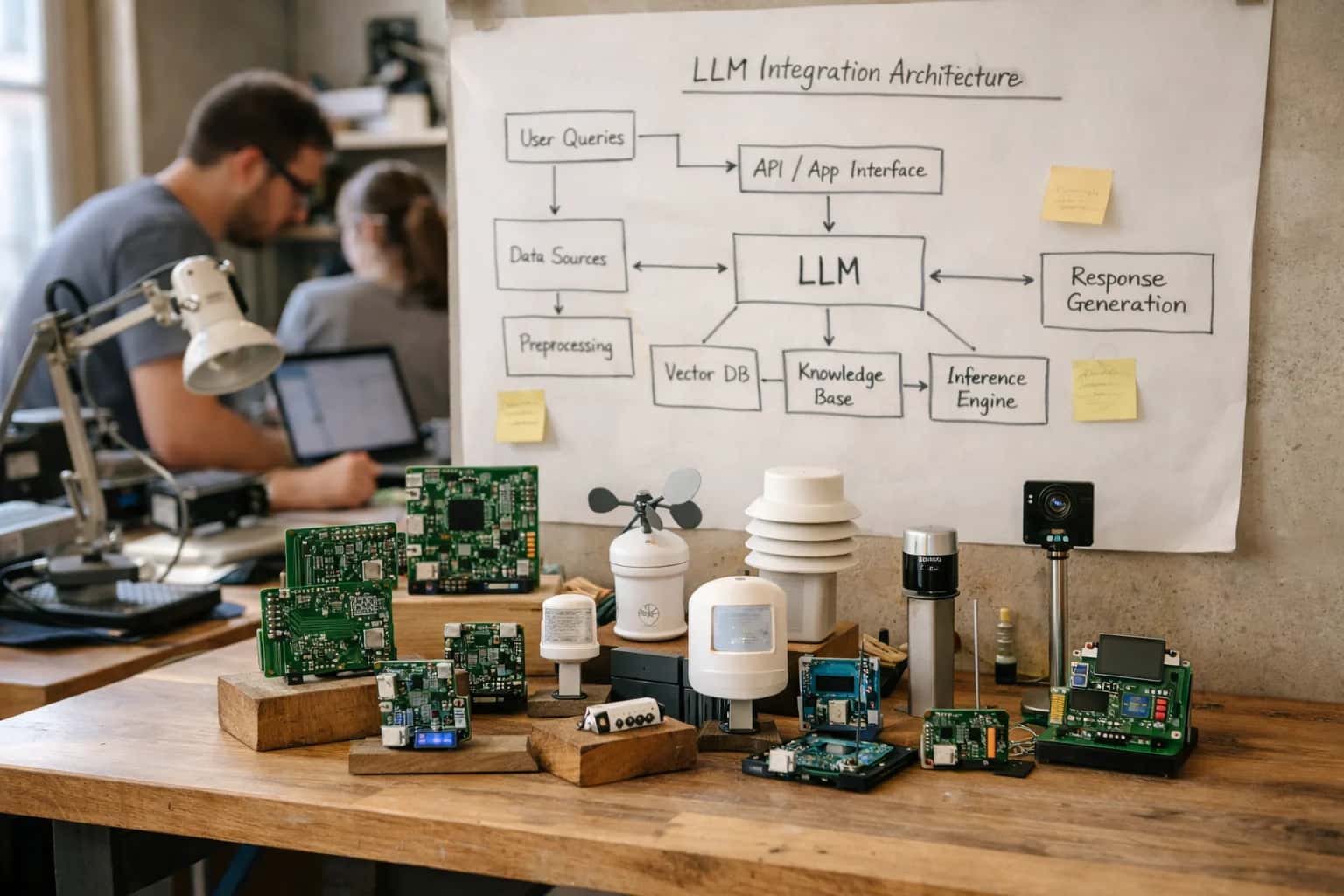
Where AI Fits into Sapiens Customer Communications
A practical guide to integrating AI agents and generative models directly into the Sapiens Customer Communications workflow for automated, personalized, and compliant correspondence.
High-value use cases include automated status updates triggered by claim milestones (e.g., "payment issued"), complex explanation generation for coverage decisions that require clear, plain-language reasoning, and regulatory notice drafting that adapts boilerplate language to the specific jurisdiction and claim context. For example, an AI agent can be triggered when a payment is posted in Sapiens CoreSuite. It retrieves the payment details, claimant information, and any outstanding deductible, then generates a clear, empathetic email explaining the payment, the net amount, and next steps—all in the brand's voice. This turns a manual, copy-paste task into a same-day, automated communication that improves customer satisfaction and reduces call center inquiries.
A production implementation requires a middleware layer (often an orchestration engine like n8n or a custom service) that listens for Sapiens events via webhook or polls its APIs. This layer calls the appropriate AI model (e.g., GPT-4 for drafting, a smaller model for data extraction), applies guardrails and compliance checks (e.g., ensuring required disclosures are present), and posts the approved draft back to Sapiens for final review, approval, and dispatch through the chosen channel (email, SMS, portal). Governance is critical; all AI-generated content should be logged with the prompt, source data, and model used, creating an audit trail within your existing systems. Rollout typically starts with low-risk, high-volume communications like payment confirmations before expanding to more complex narratives. For a deeper dive into orchestrating these multi-step AI workflows, see our guide on AI Agent Builder and Workflow Platforms.
Key Integration Surfaces in Sapiens Customer Communications
Template-Driven AI Generation
Integrate AI directly with Sapiens' template management and batch generation engines. Use AI to dynamically populate template variables with personalized, context-aware content pulled from the policy, claim, and customer profile data models.
Key Integration Points:
- Template Variable Enrichment: Hook into the data binding layer to inject AI-generated narrative for complex fields (e.g., loss explanation, coverage rationale).
- Batch Job Enhancement: Augment scheduled correspondence runs with AI services to personalize each output based on recipient history and communication preferences.
- Compliance Guardrails: Integrate AI output with Sapiens' built-in compliance and disclosure rules to ensure generated text meets regulatory requirements before final rendering to PDF or email.
This moves correspondence from static fill-in-the-blank to adaptive, clear communication that reduces follow-up calls.
High-Value AI Use Cases for Customer Communications
Integrating AI with Sapiens Customer Communications enables the automation and personalization of high-volume, compliance-sensitive correspondence. These patterns connect AI services to the platform's document generation and delivery workflows to create clear, tailored messages for claimants, agents, and regulators.
Automated Claim Status Updates
Trigger AI to draft personalized claim status letters and emails based on real-time data from Sapiens ClaimsPro. The workflow pulls claim stage, adjuster notes, and payment details, then generates a clear, empathetic update that explains next steps and timelines, automatically queuing it for delivery via the Sapiens platform.
Personalized Payment Explanations
Integrate AI to analyze settlement calculations, deductions, and payee information, then automatically generate detailed payment explanation letters. This ensures complex settlement breakdowns (e.g., actual cash value vs. replacement cost, depreciation) are communicated in plain language, reducing follow-up calls and disputes.
Regulatory & Compliance Notice Generation
Connect AI to compliance rule sets and policy data to automatically draft mandatory regulatory notices (e.g., state-specific cancellation, non-renewal, or adverse action letters). The AI ensures correct clause inclusion and formatting, with outputs routed through the Sapiens platform for final review, approval, and audit trail logging.
Intelligent Correspondence Triage & Routing
Use AI to analyze inbound customer emails and letters ingested into Sapiens, classifying intent (status inquiry, dispute, document submission) and sentiment. The system automatically routes high-priority or complex communications to the appropriate adjuster's queue and can trigger the generation of templated acknowledgment responses.
Multi-Channel Communication Summarization
Integrate an AI agent to summarize all customer interactions (calls, emails, portal messages) related to a claim. The summary, highlighting key decisions, promises, and customer sentiment, is automatically appended to the claim file in Sapiens and can be referenced to ensure consistency in all outbound correspondence.
Dynamic FAQ & Self-Service Content
Power the customer portal and IVR with an AI that generates dynamic, personalized answers by querying the Sapiens core systems in real-time. Instead of static FAQs, claimants receive specific answers about their claim's status, coverage details, or document requirements, reducing the volume of generic inquiries that require manual response.
Example AI-Powered Communication Workflows
These concrete workflows demonstrate how AI integrates with Sapiens Customer Communications to automate and personalize high-volume, regulated correspondence. Each pattern connects to specific platform APIs and data objects, moving from trigger to final audit trail.
Trigger: A Reserve or Payment transaction is posted in the core claims system (e.g., Sapiens ClaimsPro).
Context/Data Pulled:
- The integration layer (via API/webhook) receives the claim ID, transaction type, amount, and payee details.
- It fetches the full claim context from the claims database: policyholder name, policy number, loss details, and previous communications.
- It retrieves the appropriate, approved communication template and compliance rules for the jurisdiction and line of business from Sapiens Customer Communications.
Model/Agent Action: An AI agent is invoked with a structured prompt:
json{ "instruction": "Draft a clear, empathetic claim status update for a {{transaction_type}} of {{amount}}.", "claim_context": "{{claim_summary}}", "recipient": "{{policyholder_name}}", "tone": "professional, supportive", "compliance_constraints": ["Include mandatory disclaimer ID: JUR-2024-05", "Use plain language for financial terms"] }
The LLM generates a personalized narrative explaining the transaction in the context of the claim.
System Update/Next Step:
- The draft is submitted to Sapiens Customer Communications via its
DocumentGenerationAPI, merging the AI-generated narrative into the approved template. - The final document is routed through configured channels (email, customer portal, postal mail).
- A record of the communication, including the AI-generated content version, is logged back to the claim file for a complete audit trail.
Human Review Point: For transactions above a pre-defined threshold (configurable in the orchestration layer), the draft is placed in a supervisor approval queue within the communications platform before being sent.
Implementation Architecture: Data Flow and Guardrails
A secure, governed data flow is critical for generating compliant, personalized communications within Sapiens Customer Communications.
The integration architecture is built around a secure, event-driven data flow. A communication request—triggered by a claim status change in Sapiens ClaimsPro, a billing event from Sapiens CoreSuite, or a scheduled regulatory notice—sends a payload via API or message queue. This payload contains the template identifier, recipient data, and claim/policy context. The AI service, hosted in your VPC or a compliant cloud, enriches this context by retrieving additional ground truth from the core systems via secure APIs. It then generates a draft using a governed prompt library, ensuring all outputs reference the correct policy sections, state regulations, and internal procedural guidelines.
Key technical guardrails are implemented at multiple layers:
- Input/Output Validation: All generated text is scanned against a deny-list for non-compliant language, unapproved phrasing, or speculative statements.
- Data Minimization: The AI service only receives the specific data fields required for the communication (e.g., claim number, payment amount, effective date), not the full claim file.
- Audit Trail: Every generation request and its final output are logged with a unique correlation ID back to the source system event, user ID, and the specific prompt version used, creating a complete chain of custody for compliance reviews.
- Human-in-the-Loop (HITL) Gates: For high-risk communications (e.g., coverage denials, large settlement offers), drafts are routed to a designated reviewer queue within the Sapiens workflow before release. The system can be configured to auto-approve low-risk, high-volume updates like payment confirmations.
Rollout follows a phased, risk-based approach. Start with non-adverse, informational communications like claim acknowledgment letters or payment explanations, where the impact of an error is low but the volume and manual effort are high. Use this phase to validate data flows, accuracy, and user trust. Subsequent phases can introduce more complex communications, such as subrogation demands or state-mandated disclosure notices, always maintaining the HITL approval step. This architecture ensures personalization at scale—turning a generic template into a clear, context-aware message—while keeping the process auditable, secure, and firmly within the guardrails of insurance compliance. For related patterns on governing AI decisions in claims, see our guide on AI Integration for Insurance Compliance Platforms.
Code and Payload Examples
Triggering AI from Claim Milestones
Use Sapiens' event framework or a workflow rule to trigger AI communication generation when a claim reaches a key status (e.g., reserve_set, payment_approved). The AI service receives the claim context and recipient profile to draft a personalized, compliant update.
Example Payload to AI Service:
json{ "trigger": "claim.payment_approved", "claim_id": "CL-2024-56789", "policyholder": { "name": "Jane Doe", "preferred_channel": "email" }, "context": { "payment_amount": 1250.00, "payment_method": "EFT", "expected_date": "2024-10-28", "claim_type": "auto_collision", "deductible_applied": true }, "compliance_ruleset": "NAIC_Model_Unfair_Claims_Practices" }
The AI returns a draft for review or, if configured for straight-through processing, posts the final communication directly to the Sapiens correspondence log via the POST /api/v1/communications endpoint, attaching it to the claim record.
Realistic Time Savings and Operational Impact
How integrating AI with Sapiens Customer Communications transforms manual, templated correspondence into personalized, automated workflows, reducing operational burden and improving customer experience.
| Communication Workflow | Before AI Integration | After AI Integration | Key Notes |
|---|---|---|---|
Claim Status Update Generation | Manual drafting from adjuster notes, 15-30 mins per update | AI auto-generates draft from claim activity log, 2-5 mins for review | Ensures consistency, reduces adjuster admin time; human approval required before sending |
Payment Explanation Letter Creation | Copy-paste from billing system into template, 10-20 mins per letter | AI pulls payment details and policy language, generates compliant draft in <1 min | Dynamically personalizes explanations for deductibles, co-pays, and settlements |
Regulatory/Compliance Notice Dispatch | Manual list management and mail-merge, hours per batch | AI identifies affected policyholders, personalizes notices, triggers omnichannel sends | Reduces compliance risk; audit trail of generated content and dispatch logs |
Complex Correspondence (e.g., Coverage Denial) | Senior adjuster drafts over 1-2 hours with legal review | AI provides structured draft with cited policy clauses, adjuster refines in 20-30 mins | Maintains rigorous compliance; accelerates difficult communications |
Bulk Renewal or Endorsement Communication | Generic batch emails, low engagement, manual segmentation | AI personalizes content based on policy changes & customer history, auto-segments | Improves customer understanding and retention; operational effort shifts to strategy |
Follow-up/Reminder Message Orchestration | Manual tracking in diaries or spreadsheets, prone to misses | AI triggers context-aware follow-ups based on customer action/inaction | Increases response rates and reduces cycle time for document collection |
Multi-language Communication Support | External translation service, 24-48 hour turnaround | AI provides instant first-draft translation, human linguist reviews for nuance | Enables same-day communication in preferred language; reduces cost and delay |
Governance, Security, and Phased Rollout
A practical framework for deploying AI in Sapiens Customer Communications with controlled risk and measurable impact.
Integrating AI with Sapiens Customer Communications requires a governance model that enforces compliance, data security, and auditability. This starts with a secure API architecture where AI services are invoked via dedicated service accounts, with all prompts, inputs, and generated outputs logged against the specific policy number, claim ID, and correspondence template. Data never leaves your controlled environment; AI models are called as a service, and sensitive PII can be masked or redacted before processing. Access to AI-generated drafts should be governed by the same role-based permissions (RBAC) that control access to manual correspondence within Sapiens, ensuring only authorized adjusters or processors can review and approve AI-suggested content.
A phased rollout is critical for managing change and measuring value. Start with a pilot in a low-risk, high-volume workflow, such as generating standard acknowledgment letters or payment explanation notices. Use Sapiens' workflow engine to route AI-drafted communications to a human-in-the-loop review queue, capturing feedback and approval rates. In Phase 2, expand to more complex, variable communications like coverage determination letters or regulatory disclosure notices, where AI assists by pulling relevant clauses from the policy wording and past correspondence to ensure consistency. Finally, target fully automated, straight-through processing for simple, repetitive updates where confidence scores are consistently high, always maintaining the ability for any output to be flagged for manual review.
Continuous monitoring is built into the operational layer. Track key performance indicators like draft acceptance rate, average review time, and compliance audit pass rate for AI-assisted correspondence versus manual. Establish a feedback loop where rejected or edited drafts are used to fine-tune prompts and improve the system. This controlled, iterative approach de-risks the integration, builds organizational trust, and delivers tangible ROI by shifting adjuster effort from drafting to higher-value review and decision-making. For a deeper dive on orchestrating these workflows, see our guide on AI Integration for Insurance Workflow Automation.
Enabling Efficiency, Speed & Accuracy
Intelligent Analysis, Decision & Execution
We build AI systems for teams that need search across company data, workflow automation across tools, or AI features inside products and internal software.
Talk to Us
Search across company data
Give teams answers from docs, tickets, runbooks, and product data with sources and permissions.
Useful when people spend too long searching or get different answers from different systems.

Automate internal workflows
Use AI to route work, draft outputs, trigger actions, and keep approvals and logs in place.
Useful when repetitive work moves across multiple tools and teams.

Add AI to products and internal tools
Build assistants, guided actions, or decision support into the software your team or customers already use.
Useful when AI needs to be part of the product, not a separate tool.
Frequently Asked Questions
Common technical questions about integrating AI agents and generative models with Sapiens Customer Communications to automate and personalize claim correspondence.
The integration is typically event-driven, using Sapiens' APIs or database triggers.
- Trigger: A claim status change (e.g.,
Reserve Set,Payment Issued,Investigation Complete) in the core claims system (like Sapiens ClaimsPro or IDITSuite) fires a webhook or updates a monitored queue. - Context Retrieval: The integration service receives the claim ID and event type. It calls Sapiens APIs to fetch:
- Policyholder details (name, policy number, address)
- Claim specifics (claim number, loss date, type of loss)
- Relevant data (e.g., payment amount, adjuster name, next steps).
- Orchestration & Generation: A pre-configured AI agent selects the appropriate correspondence template (e.g., "Payment Explanation Letter") and uses an LLM (like GPT-4) with a structured prompt to populate it. The prompt includes the fetched data, compliance rules, and a defined tone.
- System Update: The generated draft is posted back to the Sapiens Customer Communications module via its
DocumentServiceAPI, attached to the claim file, and placed in a "Pending Review" queue for the adjuster or compliance officer. - Human Review & Dispatch: The adjuster reviews, makes any necessary edits, and approves. Upon approval, Sapiens handles the final formatting, branding, and dispatch via the configured channel (mail, email, portal).

About the author
Prasad Kumkar
CEO & MD, Inference Systems
Prasad Kumkar is the CEO & MD of Inference Systems and writes about AI systems architecture, LLM infrastructure, model serving, evaluation, and production deployment. Over 5+ years, he has worked across computer vision models, L5 autonomous vehicle systems, and LLM research, with a focus on taking complex AI ideas into real-world engineering systems.
His work and writing cover AI systems, large language models, AI agents, multimodal systems, autonomous systems, inference optimization, RAG, evaluation, and production AI engineering.
Partnered with leading AI, data, and software stack.





How We Work
Custom AI workflows for your Business
One-fit-all AI don't work for modern businesses. At Inferensys, we aim to understand your business & custom requirements; which we use to define most efficient agentic workflows, the data, and the tools for your business.
01
Review the use case
We understand the task, the users, and where AI can actually help.
Read more02
Pick the right approach
We define what needs search, automation, or product integration.
Read more03
Build the first useful version
We implement the part that proves the value first.
Read more04
Improve from there
We add the checks and visibility needed to keep it useful.
Read moreThe first call is a practical review of your use case and the right next step.
Talk to Us