AI integration for voice analytics connects directly to your call recording infrastructure—whether a cloud contact center like Genesys or Five9, an on-premise recorder, or a unified communications platform like Cisco or Avaya. The integration operates on a post-call or real-time stream, processing audio through an AI transcription and analysis pipeline. Key functional surfaces include: the call recording repository, the claims FNOL (First Notice of Loss) intake workflow, the quality assurance/compliance module, and the underlying claims system's activity log and document management (e.g., Guidewire ClaimCenter, Duck Creek Claims). The AI pipeline extracts structured data (policy number, loss details, sentiment flags) and generates summaries, which are then posted back via API to create activities, populate claim fields, or attach analysis reports to the claim file.

Integration
AI Integration for Insurance Voice Analytics
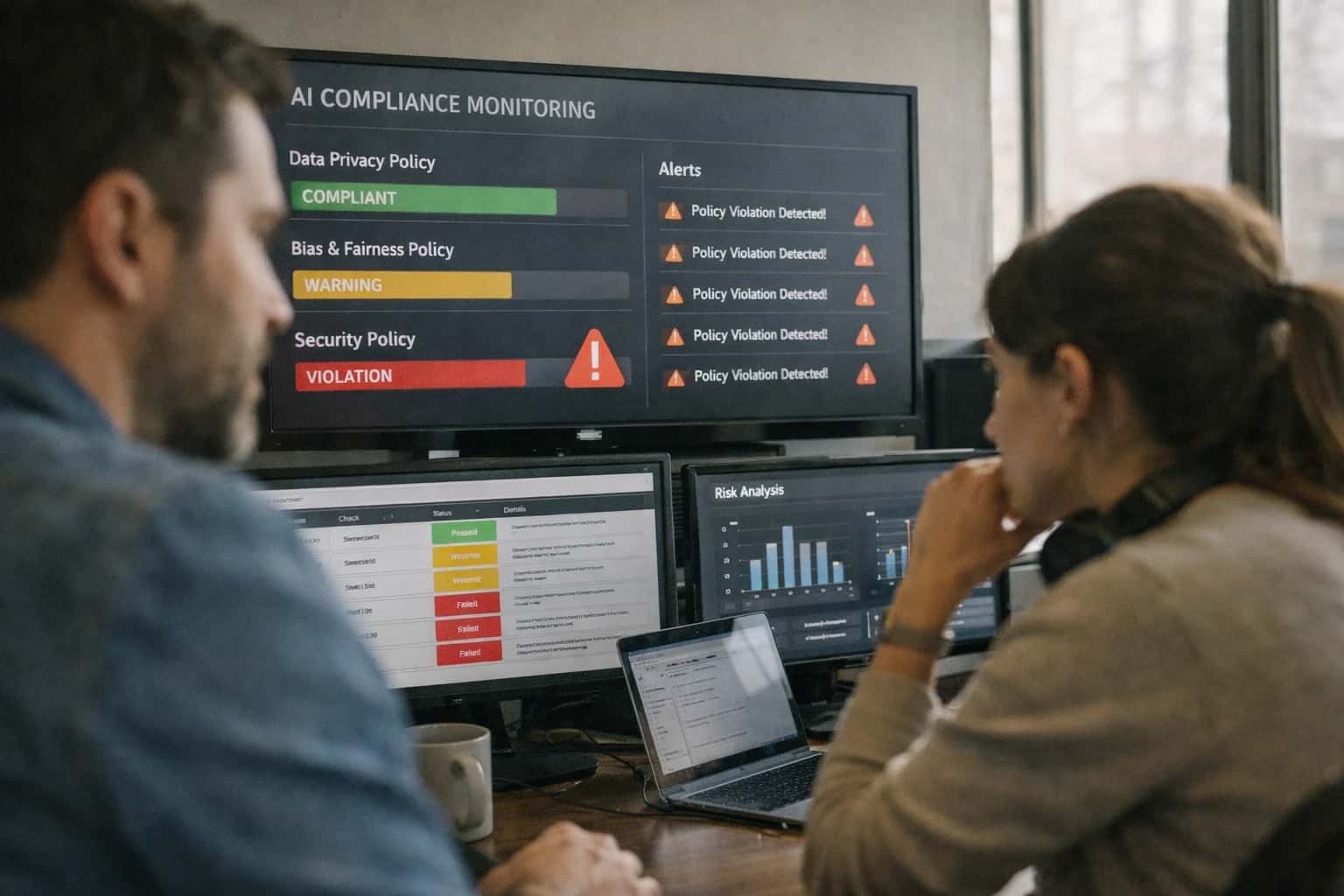
Where AI Fits into Insurance Voice Analytics
A technical blueprint for integrating AI into call center voice streams to automate compliance, extract claims intelligence, and feed structured data directly into core claims platforms.
Implementation follows a phased, governed rollout. Phase 1 typically involves batch processing of historical recordings to train and validate models for your specific terminology and accent profiles, while building the API connectors to your claims platform. Phase 2 moves to real-time processing for a pilot queue (e.g., auto claims FNOL calls), where AI-generated summaries and extracted data are presented to adjusters in a side-panel for validation before auto-population. Critical governance elements include: establishing a human-in-the-loop review queue for low-confidence extractions, implementing RBAC (Role-Based Access Control) to determine which roles see AI suggestions, and creating audit trails that log the original audio, the AI's output, and any human overrides for compliance and model retraining.
The operational impact is directional but significant: moving from manual note-taking and post-call data entry to same-day instead of next-day claim file setup, reducing average handle time by surfacing key details instantly, and automating 100% compliance monitoring for required disclosures versus manual spot checks. This integration doesn't replace adjusters; it arms them with a complete, searchable call summary and structured data the moment the call ends, turning voice interactions into immediately actionable claims intelligence.
Integration Surfaces: Where AI Connects
Ingesting Audio Streams and Recordings
AI voice analytics begins at the telephony layer. Integration connects to the call recording systems (e.g., NICE, Verint, Genesys Cloud, Cisco) or live audio streams from contact center platforms. The key is to establish a secure pipeline—often via API or SFTP—to feed audio files or real-time streams to AI transcription and analysis services.
Key Integration Points:
- Recording APIs: Fetch completed call recordings post-interaction for batch analysis.
- Real-Time Streams: Connect to SIP/RTP streams for live sentiment and compliance monitoring.
- Metadata Sync: Ensure call metadata (claim number, policy ID, agent ID, timestamp) is attached to each audio file for downstream linking to the claims system.
This foundational layer must handle scale, encryption, and failover to support high-volume claim intake centers, especially during catastrophe events.
High-Value Use Cases for Claims Operations
Integrating AI-powered voice analytics into your claims call center transforms recorded conversations into actionable intelligence. These use cases connect directly to your core claims platform to automate workflows, enhance compliance, and improve customer outcomes.
Automated FNOL Data Extraction
Analyze call recordings in real-time to extract structured claim details—date, location, involved parties, loss description—and automatically populate the FNOL screen in Guidewire ClaimCenter or Duck Creek Claims. Reduces manual data entry errors and speeds up intake.
Sentiment-Based Triage & Escalation
Use AI to detect caller distress, frustration, or confusion from voice tone and language. Automatically flag high-priority calls in the claims workflow engine for immediate supervisor review or specialized handler assignment, improving customer satisfaction and mitigating risk.
Compliance & Script Adherence Monitoring
Continuously monitor agent calls against regulatory scripts and disclosure requirements (e.g., specific phrases for total loss, coverage explanations). Generate automated audit reports and feed exceptions into Sapiens' rules engine for corrective action workflows.
Call Summary & Activity Note Generation
Automatically generate concise, structured summaries of customer calls, including key decisions, promises made, and next steps. Post these summaries directly as activity notes in the claim file, ensuring a complete audit trail and freeing up adjuster time.
Fraud Indicator Detection
Analyze linguistic patterns, inconsistencies in story, and stress cues across multiple calls linked to a claim. Score calls for potential fraud indicators and push these scores into the native fraud module in your claims platform to enrich existing detection models.
Agent Coaching & Performance Insights
Provide supervisors with AI-generated insights on agent performance, identifying common knowledge gaps, communication strengths, and areas for improvement. Integrate findings with learning management systems to trigger targeted training modules, closing the feedback loop.
Example AI-Powered Workflows
These concrete workflows show how AI can be integrated with your call center infrastructure and claims platform to automate compliance, extract insights, and accelerate claim handling. Each pattern connects voice data to core claims operations.
Trigger: A call recording is finalized and uploaded to cloud storage (e.g., AWS S3, Azure Blob) or delivered via a telephony provider webhook.
Context/Data Pulled:
- The audio file is retrieved.
- The associated claim number or policy ID is extracted from call metadata.
- The claims platform (e.g., Guidewire ClaimCenter) is queried for the current claim status and assigned adjuster.
Model/Agent Action:
- Transcription: Audio is transcribed using a high-accuracy ASR service.
- Sentiment Analysis: The transcript is analyzed for negative sentiment spikes, customer frustration, or distress indicators.
- Compliance Check: The conversation is scanned for required regulatory disclosures (e.g., specific phrasing for total loss, rights to appraisal).
- Key Phrase Extraction: Phrases indicating urgency ("flooding," "no place to stay," "injured") are identified.
System Update/Next Step:
- A structured JSON payload is sent to the claims platform API, creating a new activity note titled "AI Call Analysis."
- If sentiment is highly negative or a compliance miss is detected, a high-priority task is automatically created and assigned to a supervisor or the adjuster's queue.
- The transcript and analysis are stored in the claim's document repository, indexed for search.
Human Review Point: The system flags the call for human QA review only if confidence in a compliance miss is above a configured threshold (e.g., 90%). The supervisor can then listen to the specific segment.
Implementation Architecture & Data Flow
A practical blueprint for connecting AI voice analytics to core claims platforms like Guidewire, Duck Creek, or Sapiens.
The integration architecture connects your call center telephony system (e.g., Cisco, Avaya, Genesys) or recording platform to an AI processing layer, which then feeds structured insights directly into the claims system of record. The core flow is: 1) Call Ingestion: New call recordings and associated metadata (claim number, policy ID, agent ID) are pushed via secure API or placed in a cloud storage bucket (e.g., AWS S3, Azure Blob). 2) AI Processing Pipeline: An orchestration service (like Apache Airflow or a serverless function) triggers a multi-step AI analysis: automatic speech-to-text (ASR), followed by models for sentiment scoring, entity extraction (dates, locations, vehicle details), compliance keyword spotting, and summary generation. 3) Claims System Integration: The resulting JSON payload—containing the transcript, sentiment score, extracted claim facts, and a concise summary—is posted to the claims platform's API (e.g., Guidewire ClaimCenter's ActivityAPI or Duck Creek's ClaimService). This creates a new activity note, populates relevant exposure fields, and can trigger workflow rules (e.g., flag for supervisor review if high distress is detected).
Key implementation details focus on governance and accuracy. A human-in-the-loop review queue should be established for low-confidence extractions or calls flagged for potential compliance issues before data is written to the core system. All AI inferences must be logged with traceability back to the original recording and model version for audit purposes. For platforms like Sapiens, the integration often leverages the document management module to store the full transcript and audio as a related document, with extracted metadata written to indexed custom fields for search and reporting. Performance is measured by reduction in manual note-taking time (often 15-20 minutes per complex call) and improved accuracy in capturing critical loss details during the emotionally charged FNOL window.
Rollout is typically phased, starting with a single call center queue or specific loss type (e.g., auto glass claims). The AI's extracted data should be presented to adjusters in a comparative view alongside their own notes during a pilot period to build trust and calibrate model performance. Successful deployment requires tight collaboration between the IT team managing the telephony/recording infrastructure, the claims operations team defining the critical data points, and the AI team responsible for model training and pipeline reliability. This integration turns a passive recording archive into an active, searchable source of truth that accelerates triage and enhances customer understanding.
Code & Payload Examples
Ingesting Call Recordings for AI Analysis
Voice analytics begins with ingesting call recordings from your contact center platform (e.g., Genesys, Five9, NICE inContact) into a secure processing pipeline. The typical pattern involves a webhook listener that triggers when a call recording is available, fetches the audio file via the provider's API, and stores it in a cloud object store for analysis.
Key integration points include:
- Webhook Configuration: Set up a secure endpoint to receive call completion events with metadata (call ID, timestamp, agent, policy/claim number).
- Secure Audio Retrieval: Use the provider's API with OAuth to download the encrypted recording.
- Metadata Enrichment: Correlate the call with the claim file in your core system (Guidewire, Duck Creek) using the claim number or policy ID from the call metadata.
python# Example: Webhook handler to trigger ingestion from flask import Flask, request import boto3 import requests app = Flask(__name__) @app.route('/call-webhook', methods=['POST']) def handle_call_event(): data = request.json call_id = data['callId'] claim_ref = data.get('customFields', {}).get('claimNumber') # 1. Fetch recording from provider API recording_url = fetch_recording_url(call_id) audio_content = requests.get(recording_url).content # 2. Store in secure bucket with claim context s3_key = f"recordings/{claim_ref}/{call_id}.mp3" s3_client.put_object(Bucket='voice-analytics-raw', Key=s3_key, Body=audio_content) # 3. Publish event for downstream processing publish_to_queue({ 'callId': call_id, 'claimRef': claim_ref, 's3Location': s3_key }) return {'status': 'queued'}
Realistic Time Savings & Operational Impact
How integrating AI for voice analytics impacts key insurance call center and claims operations, based on typical implementations.
| Metric | Before AI | After AI | Notes |
|---|---|---|---|
Call Sentiment & Escalation Flagging | Manual QA sampling (1-2% of calls) | Real-time analysis of 100% of calls | Proactive alerts for distressed customers routed to supervisors |
Compliance Phrase Detection | Post-call manual review checklist | Real-time agent prompting & automated audit log | Reduces regulatory risk; prompts agents during call |
Claim Detail Extraction (e.g., date, location) | Adjuster listens and manually types notes | Auto-populated into FNOL/claim activity log | Cuts FNOL call handle time by 30-50%; reduces data entry errors |
Call Summary Creation | Adjuster spends 5-10 mins post-call writing summary | AI-generated draft summary in <60 seconds | Adjuster reviews and edits, saving ~5-9 minutes per call |
Customer Intent Categorization | Agent selects from dropdown post-call | Real-time automatic categorization during call | Improves routing accuracy and workflow triggering |
Fraud Indicator Triage | Relies on adjuster intuition or later SIU referral | Real-time scoring of verbal inconsistencies | Flags high-risk calls for immediate special investigation unit (SIU) review |
Quality Assurance Coverage | QA team reviews a small random sample monthly | 100% automated scoring on key behaviors (empathy, clarity) | QA focuses coaching on targeted agent improvement areas |
Governance, Security & Phased Rollout
Deploying AI for voice analytics in insurance requires a secure, auditable architecture that respects the sensitivity of call recordings and integrates findings into core claims workflows.
Voice data is highly sensitive, containing personally identifiable information (PII), protected health information (PHI), and financial details. A production integration must treat call recordings as a governed data source. This involves establishing a secure ingestion pipeline—often via APIs from call recording platforms like Nice, Verint, or Five9—that streams audio to a transient processing queue. AI services for transcription, sentiment analysis, and entity extraction should run in a private cloud or VPC, with outputs (structured JSON) never containing raw audio. All extracted data, such as claim details or compliance flags, should be posted back to the claims file in systems like Guidewire ClaimCenter or Duck Creek Claims via their native APIs, creating a clear audit trail linking the AI-generated insight to the specific call recording ID and claim number.
Governance is critical for regulated use cases like compliance monitoring or fraud detection. Implement a human-in-the-loop (HITL) layer for high-risk flags—for instance, a potential compliance violation flagged by the AI should create a review task in the adjuster's queue before any official note is added to the claim. Use role-based access control (RBAC) within the claims platform to determine who can see AI-generated insights and annotations. For sentiment analysis driving customer experience scores, establish clear thresholds for escalating "distressed" calls to a supervisor workflow. All AI actions should be logged in a separate audit system, capturing the model version, input data hash, output, and the ID of any human who approved or overrode the recommendation.
A phased rollout mitigates risk and builds organizational trust. Start with a non-operational pilot, using AI to analyze historical calls for retrospective insights into call driver analysis or agent performance, with no real-time integration. Phase two introduces assistive insights, displaying AI-extracted claim details (e.g., date of loss, vehicle description) in a side panel within the claims adjuster's workspace for confirmation before manual entry. The final phase enables automated workflow triggers, where high-confidence extractions from FNOL calls automatically populate the FNOL form in Guidewire or Duck Creek, and severe negative sentiment automatically creates a proactive outreach task. Each phase should include parallel runs and validation against a control group to measure impact on handle time, accuracy, and customer satisfaction before broadening the deployment.
Enabling Efficiency, Speed & Accuracy
Intelligent Analysis, Decision & Execution
We build AI systems for teams that need search across company data, workflow automation across tools, or AI features inside products and internal software.
Talk to Us
Search across company data
Give teams answers from docs, tickets, runbooks, and product data with sources and permissions.
Useful when people spend too long searching or get different answers from different systems.

Automate internal workflows
Use AI to route work, draft outputs, trigger actions, and keep approvals and logs in place.
Useful when repetitive work moves across multiple tools and teams.

Add AI to products and internal tools
Build assistants, guided actions, or decision support into the software your team or customers already use.
Useful when AI needs to be part of the product, not a separate tool.
Frequently Asked Questions
Practical questions for technical teams planning to integrate AI voice analytics into insurance claims call centers.
The typical secure integration pattern involves:
- Trigger & Ingestion: Call recordings and metadata (claim number, policy ID, agent ID) are pushed from your telephony or recording platform (e.g., Nice, Verint, AWS Connect) to a secure cloud storage bucket (e.g., AWS S3, Azure Blob) via a webhook or scheduled export.
- Orchestration: A workflow engine (like Apache Airflow or a serverless function) is triggered by the new file. It retrieves the recording, strips any direct PII (like credit card numbers spoken aloud) using a pre-processing service, and submits the audio to the AI transcription and analysis pipeline.
- AI Processing: The audio is sent to speech-to-text services (like Azure Speech, Google Speech-to-Text, or a custom Whisper model) and then the transcript is analyzed by LLMs for:
- Sentiment & Emotion: Flagging distressed customers for priority follow-up.
- Compliance Monitoring: Detecting missing required disclosures (e.g., "your claim may be recorded for quality assurance").
- Entity Extraction: Pulling claim details (date of loss, location, vehicle make/model), injury mentions, or third-party information.
- Post-Processing & Storage: The structured results (transcript, sentiment score, extracted entities, compliance flags) are written to a database (like PostgreSQL) and linked to the original recording URI. The raw audio and PII-stripped transcript are stored with encryption-at-rest and access logging.
- Claims System Integration: A separate, secure API call is made from your integration layer to your claims platform (e.g., Guidewire ClaimCenter, Duck Creek) to update the claim file with the summary and extracted data, typically using a custom object or activity note.
Key Security Controls: All data in transit uses TLS 1.3. Processing happens within your designated cloud region. Access to the pipeline requires service principal authentication and is audited.

About the author
Prasad Kumkar
CEO & MD, Inference Systems
Prasad Kumkar is the CEO & MD of Inference Systems and writes about AI systems architecture, LLM infrastructure, model serving, evaluation, and production deployment. Over 5+ years, he has worked across computer vision models, L5 autonomous vehicle systems, and LLM research, with a focus on taking complex AI ideas into real-world engineering systems.
His work and writing cover AI systems, large language models, AI agents, multimodal systems, autonomous systems, inference optimization, RAG, evaluation, and production AI engineering.
Partnered with leading AI, data, and software stack.





How We Work
Custom AI workflows for your Business
One-fit-all AI don't work for modern businesses. At Inferensys, we aim to understand your business & custom requirements; which we use to define most efficient agentic workflows, the data, and the tools for your business.
01
Review the use case
We understand the task, the users, and where AI can actually help.
Read more02
Pick the right approach
We define what needs search, automation, or product integration.
Read more03
Build the first useful version
We implement the part that proves the value first.
Read more04
Improve from there
We add the checks and visibility needed to keep it useful.
Read moreThe first call is a practical review of your use case and the right next step.
Talk to Us