Large loss claims—involving major property damage, severe bodily injury, or complex commercial liability—are defined by their volume of unstructured data and multi-threaded workflows. AI integration targets specific surfaces within claims platforms like Guidewire ClaimCenter, Duck Creek Claims, or Sapiens ClaimsPro: the document repository for organizing police reports, engineering assessments, and medical records; the activity diary for timeline synthesis and next-action prompting; and the exposure/reserve module for analyzing settlement ranges and litigation risk. The goal is not to replace the senior adjuster or special investigator, but to equip them with a copilot that automates information synthesis.

Integration
AI Integration for Insurance Large Loss Handling
A technical blueprint for integrating AI agents and document intelligence into large/complex claims workflows to assist senior adjusters and special investigators with organization, research, and analysis.
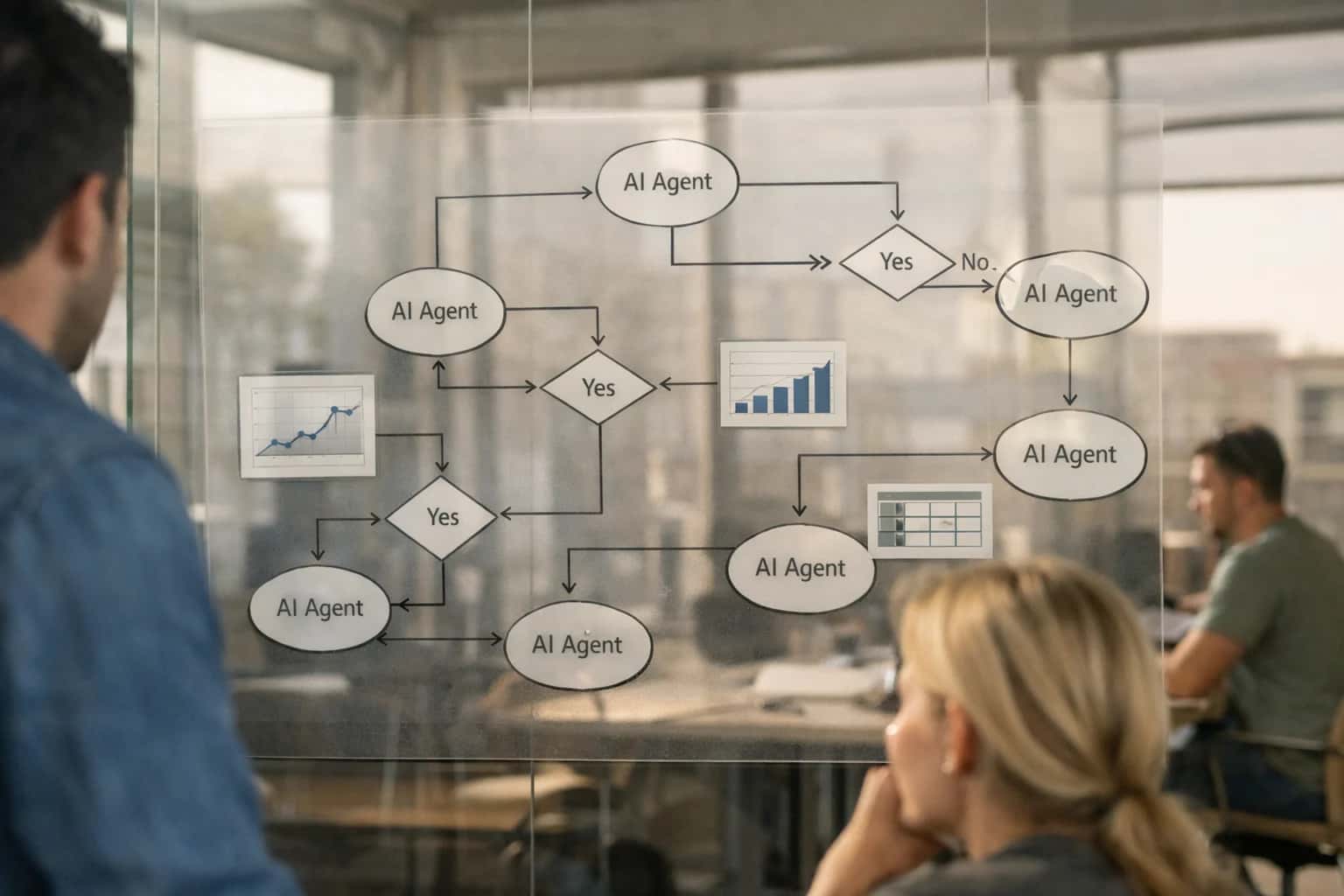
ARCHITECTURE FOR COMPLEXITY
Where AI Fits in Large Loss Claims
A technical blueprint for integrating AI into the high-stakes, multi-party workflows of large loss claims handling.
Implementation follows a human-in-the-loop architecture. An AI orchestration layer, often deployed as a microservice, connects via the platform's APIs (e.g., Guidewire's Gosu/Plugin API, Duck Creek's REST APIs). It triggers on events like a new document upload or a claim exceeding a reserve threshold. For a catastrophic property claim, the flow might be: 1) Ingest hundreds of photos, drone footage, and contractor estimates; 2) Use computer vision to categorize damage and flag potential code violations; 3) Extract key data points (e.g., square footage, material types) into structured fields; 4) Summarize findings into a bulleted report for the adjuster. This reduces the initial data compilation phase from days to hours, letting the expert focus on coverage analysis and negotiation strategy.
Rollout requires careful governance and explainability. AI outputs—such as a recommended initial reserve or a flagged subrogation opportunity—must be logged as system-generated recommendations within the claim's audit trail, not automatic updates. Integration should include a confidence score and a "show reasoning" feature that cites source documents. This is critical for compliance and litigation readiness. Furthermore, AI models should be continuously evaluated on a subset of closed large loss files to measure recommendation accuracy and impact on cycle time, ensuring the system learns from the unique patterns of your most complex claims.
AI FOR LARGE LOSS HANDLING
Integration Surfaces in Claims Platforms
Centralizing and Analyzing Complex Evidence
Large loss claims generate hundreds of documents: police reports, expert witness statements, engineering assessments, medical records, and legal correspondence. The integration surface is the platform's document management module (e.g., Guidewire ClaimCenter's Document Management, Duck Creek's Document Intelligence).
AI connects here to:
- Automatically classify and tag incoming documents by type, relevance, and criticality.
- Extract key entities (dates, names, amounts, findings) into structured data for timeline creation.
- Perform semantic search across the entire document corpus, allowing investigators to ask natural language questions like "show all documents referencing the structural integrity of the south wall."
- Flag inconsistencies between expert reports or witness statements for further review.
This transforms a chaotic evidence repository into a searchable, connected knowledge base, saving senior adjusters hours of manual sorting and cross-referencing.
ARCHITECTURE FOR COMPLEX CLAIMS
High-Value AI Use Cases for Large Loss
Large loss claims demand specialized handling, deep investigation, and precise documentation. Integrating AI directly into the adjuster's workflow can accelerate evidence organization, expert research, and negotiation strategy, allowing senior staff to focus on high-judgment decisions.
01
Automated Chronology & Timeline Builder
AI ingests claim documents—police reports, witness statements, repair logs, medical records—to extract dates, events, and entities. It builds a master timeline, highlights inconsistencies, and surfaces gaps in the narrative for investigator follow-up. Integrates via the claims platform's document API to tag and link events directly to the claim file.
Hours -> Minutes
Timeline creation
02
Expert Witness & Case Law Research Agent
An AI agent, triggered from the claims workspace, performs contextual research. Given loss details (e.g., 'construction crane collapse'), it retrieves relevant case law summaries, locates potential expert witnesses with published work, and drafts a preliminary scope of work for engagement. Outputs are saved as a note, grounding recommendations in citable sources.
1 sprint
Research prep time
03
Settlement Range Analysis & Negotiation Brief
AI analyzes the claim's damages, liability assessment, jurisdiction, and historical settlement data for similar large losses. It generates a data-backed settlement range and a negotiation brief outlining strengths/weaknesses, potential counter-arguments, and recommended communication strategy. Pulls from internal claims data warehouses and surfaces analysis in the adjuster's dashboard.
Same day
Analysis turnaround
04
Multi-Party Liability & Subrogation Mapping
For complex losses with multiple potentially liable parties (contractors, manufacturers, municipalities), AI parses contracts, incident reports, and regulatory codes to map relationships and initial liability theories. It visualizes a liability web and auto-flags subrogation opportunities, creating tasks for recovery specialists. Integrates with the platform's party/contact management and financials modules.
Batch -> Real-time
Entity analysis
05
Special Investigation Unit (SIU) Triage & Package Prep
AI continuously scores incoming large loss claims for fraud indicators using NLP on notes and external data checks. High-scoring claims are automatically packaged for SIU review, including a summarized dossier of red flags, linked entities, and suggested investigation paths. Triggers workflows in the SIU case management system or creates high-priority activities.
Hours -> Minutes
SIU referral prep
06
Regulatory & Compliance Checklist Automation
Based on loss type (e.g., environmental, major injury) and jurisdiction, AI generates a dynamic compliance checklist. It monitors the claim file, auto-populates checklist items as documents are received (e.g., 'OSHA report filed'), and alerts the adjuster to pending regulatory filings or reporting deadlines. Leverages the platform's rules engine and diary system for enforcement.
Batch -> Real-time
Compliance tracking
LARGE LOSS HANDLING
Example AI-Augmented Workflows
For complex, high-value claims, AI can orchestrate information gathering, analysis, and decision support, allowing senior adjusters and special investigators to focus on strategic judgment and negotiation. Below are concrete workflows for integrating AI into large loss handling within platforms like Guidewire ClaimCenter, Duck Creek Claims, or Sapiens ClaimsPro.
Trigger: A claim is manually flagged or automatically scored as a 'Large Loss' based on exposure amount, loss type (e.g., major fire, fatality), or jurisdiction.
AI Action:
- Context Pull: The AI agent queries the core claims system (e.g., Guidewire ClaimCenter) for all related activities, notes, and parties. It simultaneously initiates searches across connected systems: Document Management (e.g., Sapiens DMS), email archives, and external data feeds (news, weather).
- Docket Creation: Using a Retrieval-Augmented Generation (RAG) pipeline with a vector database (like Pinecone or Weaviate), the agent ingests all retrieved documents (police reports, initial statements, photos, contracts). It creates a structured, chronological 'case docket' with:
- A timeline of key events.
- A dramatis personae list of all involved parties, witnesses, and experts with contact details.
- A summary of key allegations and contested points.
- System Update: The assembled docket is saved as a new activity note and attached to the claim file. A task is created for the assigned senior adjuster: 'Review AI-Assembled Case Docket.'
Human Review Point: The adjuster reviews the docket for completeness and accuracy, adding or correcting information before the first major strategy session.
ARCHITECTING FOR COMPLEXITY AND CONTROL
Implementation Architecture & Data Flow
A production-ready architecture for integrating AI into large loss workflows, connecting document management, expert systems, and adjuster workspaces.
The integration architecture is built around a central AI Orchestration Layer that sits between your core claims platform (e.g., Guidewire ClaimCenter, Duck Creek Claims) and specialized AI services. This layer ingests key data objects—the Claim record, all linked Documents (police reports, expert assessments, medical records), Exposures, Reserves, and Activity Logs—via secure APIs or event streams. For a large loss, the system is triggered by a complexity flag or manual assignment, initiating a parallel workflow to organize the voluminous case file, create a master timeline, and begin background research.
Data flows through a sequence of purpose-built AI services, with outputs posted back to the claims system as structured notes or attached analyses. For example:
- A Document Intelligence Service classifies and extracts key facts (dates, parties, amounts, causal statements) from thousands of pages, populating a searchable evidence database.
- A Timeline Agent cross-references extracted dates with claim system diaries and communications to build a unified chronological narrative.
- A Research Copilot, grounded in internal guidelines and external legal/medical databases, runs continuous queries on case-specific issues (e.g., 'pre-existing condition relevance in spinal injury claims') and drafts summaries for the adjuster.
- A Settlement Analysis Module compares the case against historical similar large losses, considering jurisdiction, counsel, and injury type, to model potential settlement ranges and litigation risks.
Governance is critical. All AI-generated outputs are tagged as draft recommendations and logged in an immutable audit trail linked to the claim file. The system enforces a human-in-the-loop approval step before any AI-synthesized document (like a negotiation brief) is attached to external correspondence. The orchestration layer manages API calls, rate limiting, and fallback procedures, ensuring the core claims platform's performance and stability are unaffected. Rollout typically starts with a pilot on specific large loss types (e.g., commercial auto fatalities), integrating first with the document management system and adjuster workspace before expanding to full timeline and research automation.
IMPLEMENTATION PATTERNS
Code & Payload Examples
Automated Document Processing for Large Loss
For large loss claims, the volume of unstructured documents (police reports, expert witness statements, medical records, repair estimates) is immense. A production pipeline ingests, classifies, and extracts key facts, posting structured data back to the claims platform for adjuster review.
Typical Integration Flow:
- A claim is flagged as "large loss" in Guidewire ClaimCenter or Duck Creek Claims.
- A platform webhook triggers our document processing service, passing the claim ID and document storage URLs.
- The service uses a multi-model AI pipeline: a vision model for OCR, an LLM for classification, and a fine-tuned extractor for entity recognition (e.g., dates, parties, amounts, findings).
- Extracted data is validated against business rules and formatted into a payload for the claims system API.
python# Example: Triggering document analysis from a claims event import requests def process_large_loss_documents(claim_id, document_urls): """Call Inference Systems pipeline to analyze claim docs.""" payload = { "claim_id": claim_id, "documents": document_urls, "extraction_schema": { "required_entities": ["incident_date", "liable_party", "total_damage_estimate", "expert_name", "key_finding"] } } # Call to Inference Systems orchestration API response = requests.post( "https://api.inferencesystems.com/v1/document/analyze", json=payload, headers={"Authorization": f"Bearer {API_KEY}"} ) return response.json() # Returns structured extractions
The output is a normalized JSON array of entities ready for import into the claim's exposure, activity, or financial modules, creating a searchable timeline and evidence index.
AI-ASSISTED LARGE LOSS HANDLING
Realistic Time Savings & Operational Impact
How AI integration transforms the handling of complex, high-value claims by augmenting senior adjusters and special investigators with intelligent document processing, timeline synthesis, and research support.
| Workflow Stage | Before AI | After AI | Key Impact |
|---|---|---|---|
Initial Document Triage & Indexing | 4-8 hours manual sorting | 30-60 minutes assisted classification | Adjuster starts analysis with organized digital file |
Key Fact & Timeline Extraction | Manual reading & note-taking across 100s of pages | Automated entity & event extraction with summary | Core narrative assembled in hours, not days |
Expert Witness & Case Law Research | Days of manual database searches | Hours of AI-assisted querying & synthesis | Faster identification of relevant precedents and specialists |
Settlement Range Analysis Draft | Manual data collation from past similar claims | AI-generated comparative analysis with cited data | Data-driven first draft for adjuster refinement |
Communication Drafting (e.g., coverage letters) | Manual composition for complex, nuanced correspondence | AI-assisted drafting with compliance guardrails | High-quality drafts produced in minutes, not hours |
Stakeholder Update Preparation | Manual compilation of status from disparate notes | Automated weekly summary generated from activity log | Consistent, audit-ready reporting with minimal effort |
Final File Quality & Compliance Review | Manual pre-close checklist review | AI-powered anomaly detection & completeness check | Reduced risk of oversight, faster file closure |
ARCHITECTING FOR CONTROL AND CONFIDENCE
Governance, Security & Phased Rollout
Implementing AI for large loss claims requires a deliberate, secure, and controlled approach to manage risk and ensure compliance.
Integrating AI into large loss workflows requires a zero-trust data architecture. AI services should never directly access the core claims platform database. Instead, all interactions must flow through secure APIs and webhooks. For platforms like Guidewire ClaimCenter or Duck Creek Claims, this means creating dedicated service accounts with role-based access controls (RBAC) scoped to specific objects—like Claim, Exposure, Activity, and Document—and actions, such as read and createNote. All AI-generated outputs, such as timeline summaries or negotiation analyses, must be written to a dedicated audit log before being proposed as a draft activity or reserve recommendation, creating an immutable record for compliance and review.
A phased rollout is critical for managing complexity and user adoption. Start with a non-critical, high-volume support task, such as automated document organization and tagging for incoming evidence in a LargeLoss claim folder. This provides immediate utility without touching financials. Phase two introduces assistive intelligence, like an AI copilot that helps senior adjusters by drafting timeline narratives from activity logs and medical records, which requires adjuster review and approval before posting. The final phase involves predictive and prescriptive AI, such as settlement range modeling or expert witness research, which should always be presented as a decision-support tool with clear confidence scores and source citations, never as an automated action.
Governance is enforced through a human-in-the-loop (HITL) framework and regular model validation. Every AI-suggested action, from a subrogation flag to a reserve change, should route through an approval queue configurable by claim complexity or monetary threshold. For instance, a recommendation over $250k might require a special investigator's sign-off. Continuous monitoring for model drift and bias is essential, especially for models trained on historical large loss data that may reflect past biases. Establish a cross-functional steering committee (Claims, Legal, IT, Compliance) to review AI performance, audit logs, and approve the expansion of AI into new workflows, ensuring the integration remains aligned with regulatory requirements and business objectives.
Enabling Efficiency, Speed & Accuracy
Intelligent Analysis, Decision & Execution
We build AI systems for teams that need search across company data, workflow automation across tools, or AI features inside products and internal software.
Talk to Us
Search across company data
Give teams answers from docs, tickets, runbooks, and product data with sources and permissions.
Useful when people spend too long searching or get different answers from different systems.
Enterprise searchRAGPermissions
Read more
Automate internal workflows
Use AI to route work, draft outputs, trigger actions, and keep approvals and logs in place.
Useful when repetitive work moves across multiple tools and teams.
AI agentsWorkflow automationGovernance
Read more
Add AI to products and internal tools
Build assistants, guided actions, or decision support into the software your team or customers already use.
Useful when AI needs to be part of the product, not a separate tool.
AI integrationDecision supportModel routing
Read moreIMPLEMENTATION AND WORKFLOW DETAILS
Frequently Asked Questions
Technical questions for architects and claims leaders planning AI integration for complex claims handling.
The integration typically uses a webhook or API listener on the claims platform (e.g., Guidewire ClaimCenter's Activity API, Duck Creek's Event Framework). When a new activity note, document upload, or communication is logged against a large loss claim, the event payload is sent to an orchestration service.
This service:
- Triggers on new diary entries or document postings flagged for large loss claims.
- Calls an AI summarization service to condense lengthy notes, emails, or reports into a concise timeline update.
- Posts the summary back to a dedicated "AI Timeline" custom object or activity subtype within the claim file.
- Optionally updates a vector database with the new context for future Q&A by the adjuster.
The key is maintaining a clear audit trail: the original source document is preserved, and the AI-generated summary is marked as such, with a timestamp and model version for governance.

About the author
Prasad Kumkar
CEO & MD, Inference Systems
Prasad Kumkar is the CEO & MD of Inference Systems and writes about AI systems architecture, LLM infrastructure, model serving, evaluation, and production deployment. Over 5+ years, he has worked across computer vision models, L5 autonomous vehicle systems, and LLM research, with a focus on taking complex AI ideas into real-world engineering systems.
His work and writing cover AI systems, large language models, AI agents, multimodal systems, autonomous systems, inference optimization, RAG, evaluation, and production AI engineering.
LinkedIn
Limited slotsGet a Free AI Consultation
Partnered with leading AI, data, and software stack.





How We Work
Custom AI workflows for your Business
One-fit-all AI don't work for modern businesses. At Inferensys, we aim to understand your business & custom requirements; which we use to define most efficient agentic workflows, the data, and the tools for your business.
01
Review the use case
We understand the task, the users, and where AI can actually help.
Read more02
Pick the right approach
We define what needs search, automation, or product integration.
Read more03
Build the first useful version
We implement the part that proves the value first.
Read more04
Improve from there
We add the checks and visibility needed to keep it useful.
Read moreThe first call is a practical review of your use case and the right next step.
Talk to Us