AI integration for auto claims isn't about replacing your core platform—it's about augmenting the workflows in Guidewire ClaimCenter, Duck Creek Claims, Snapsheet, or Sapiens ClaimsPro. The integration points are specific: the FNOL intake API for triage, the document management layer for estimating supplements, the assignment engine for routing, the reserve transaction object for predictive setting, and the payment processing queue for automated settlements. Each touchpoint requires a secure, auditable connection that respects the platform's data model and business rules.

Integration
AI Integration for Auto Claims Platforms
A technical blueprint for embedding AI into auto claims workflows, from FNOL to settlement. Learn where AI connects to core platforms, high-value use cases, and implementation patterns for photo estimating, parts procurement, and adjuster support.
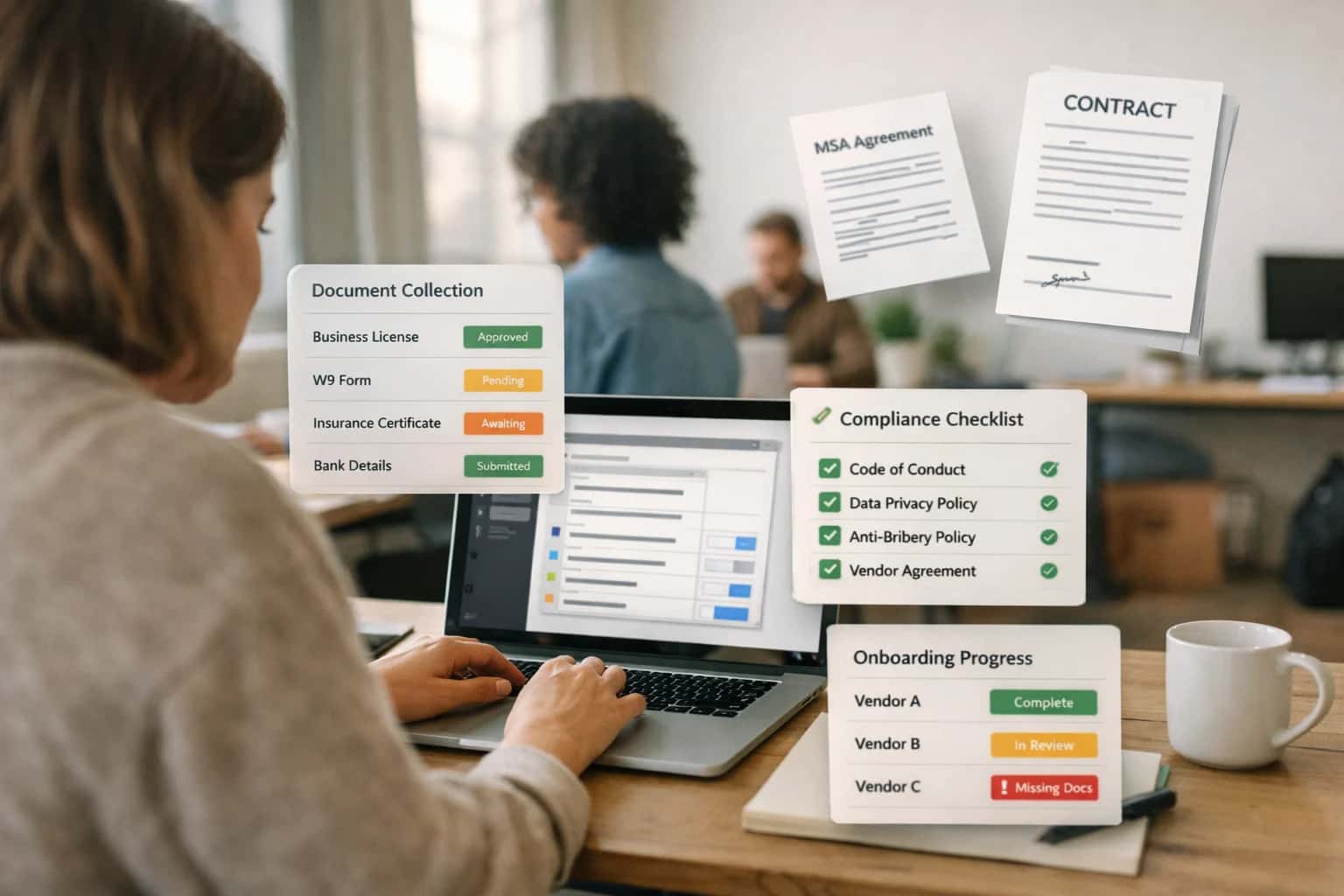
ARCHITECTURE BLUEPRINT
Where AI Fits in the Auto Claims Tech Stack
A practical guide to connecting AI services to the core systems that handle auto claims, from FNOL to final payment.
For a typical implementation, AI services sit in a middleware orchestration layer. When a new auto claim is created via a customer portal or call center IVR, the event triggers an AI workflow: a computer vision model analyzes uploaded photos via an API call to services like Google Vision AI or Azure Computer Vision, extracting VIN, license plate, and primary damage areas. This structured data is posted back to the claim's vehicle exposure and coverage fields. Concurrently, an NLP service summarizes the loss description from the FNOL notes, and a rules-based agent checks for potential fraud indicators by cross-referencing the loss location and time against historical patterns. All AI actions are logged as system activities with a confidence score and a link to the raw model output for auditability.
The real operational impact comes from closing loops. For instance, an AI agent monitoring the estimate approval workflow in Snapsheet can automatically flag supplements by comparing the repair facility's estimate against the initial appraisal and parts database APIs (like CCC ONE or Mitchell). It generates a recommendation for the adjuster, citing the specific line-item discrepancy and suggested action. This reduces manual review from hours to minutes for high-volume, low-complexity claims. Similarly, integrating an AI copilot into the adjuster's workspace can draft complex correspondence for bodily injury claims by pulling relevant data from the claimant contact, injury details, and medical billing records, ensuring consistency and saving 15-20 minutes per complex letter.
Rollout and governance are critical. Start with a single, high-volume use case like photo-based triage for clear-cut auto physical damage. Use the platform's native testing environments and sandbox APIs to build the integration, implementing a human-in-the-loop review queue for all AI outputs before they write back to the production system. Establish a model monitoring dashboard to track accuracy drift in damage detection or sentiment analysis. As confidence grows, expand to more complex workflows like total loss valuation or subrogation identification, ensuring each new AI service integrates with the existing role-based access controls (RBAC) and audit trails of your core claims platform. This phased, governed approach de-risks the investment and delivers compounding efficiency gains across the claims lifecycle.
WHERE AI CONNECTS TO THE WORKFLOW
Key Integration Surfaces in Auto Claims Platforms
Automating First Notice of Loss
AI integrates directly into the initial claim reporting layer, which is often a multi-channel mix of call centers, mobile apps, web portals, and partner integrations (e.g., tow trucks, body shops). Key surfaces include:
- IVR & Call Analytics: AI processes live call audio or transcripts for real-time sentiment analysis, intent recognition, and automated data extraction (policy number, VIN, location). This populates the FNOL record in systems like Guidewire ClaimCenter or Duck Creek Claims.
- Digital Self-Service: Chatbots and virtual assistants embedded in customer portals or mobile apps (like Snapsheet's) guide users through photo/video upload, scene description, and coverage verification, creating a structured intake ticket.
- IoT & Telematics Streams: AI ingests data from connected car platforms (e.g., CCC, Mitchell) or OEM feeds to automatically trigger FNOL based on crash detection, validate incident details, and pre-populate loss facts.
The goal is to transform unstructured initial reports into a fully populated, triaged claim file, routing it to the correct assignment group with minimal adjuster data entry.
LINE-OF-BUSINESS AUTOMATION
High-Value AI Use Cases for Auto Claims
Integrating AI into auto claims platforms like Guidewire, Duck Creek, or Snapsheet automates high-volume, manual tasks, reduces cycle times, and improves accuracy. These use cases connect to core modules for FNOL, estimating, and payments.
01
AI-Powered Photo Estimating
Integrates computer vision APIs with platforms like Snapsheet or Mitchell to analyze customer-submitted photos/videos. Automatically detects damage, suggests parts from databases (CCC, OE), and generates initial repair estimates, populating the estimate module in the core claims system.
Hours -> Minutes
Initial estimate creation
02
Automated FNOL & Triage
Connects AI voice/text analysis to FNOL intake channels (IVR, web chat, mobile). Extracts entities (VIN, location, parties), verifies coverage in real-time against PolicyCenter, and auto-triages claim complexity for routing to the appropriate assignment group in ClaimCenter or Duck Creek.
Batch -> Real-time
Coverage verification
03
Intelligent Supplement Detection
AI model compares initial appraisals with repair facility supplements in platforms like Snapsheet. Flags discrepancies in parts, labor, or missed operations for adjuster review, automating approval workflows and reducing supplemental cycle time.
1 sprint
Integration timeline
04
Bodily Injury Document Analysis
Integrates NLP services with the claims document management module. Automatically extracts key data from unstructured medical records, police reports, and attorney letters—summarizing injuries, treatments, and claimed damages to populate exposure reserves.
Same day
Document review
05
Rental & Logistics Orchestration
AI agent monitors claim status and integrates with third-party rental (e.g., Enterprise) and repair network APIs. Automatically triggers rental reservations based on repair ETA, manages extensions, and coordinates vehicle return—updating activity logs in the claim file.
Batch -> Real-time
Coordination
06
Subrogation & Recovery Flagging
Analyzes FNOL data and police reports at intake to identify potential third-party liability. Integrates with the subrogation module in systems like Guidewire to automatically create recovery tasks, set alerts for statutes of limitations, and draft initial correspondence.
IMPLEMENTATION PATTERNS
Example AI-Powered Auto Claims Workflows
These concrete workflow examples show how AI agents and services integrate with auto claims platforms like Guidewire, Duck Creek, or Snapsheet to automate key processes, reduce manual touchpoints, and accelerate cycle times.
Trigger: Customer submits a First Notice of Loss via mobile app with photos/video of vehicle damage.
Workflow:
- AI Photo Analysis: Computer vision service (e.g., via API) analyzes uploaded media to detect damage location, severity, and likely parts affected. It generates a preliminary severity score (e.g., Minor, Moderate, Complex).
- Coverage & Policy Check: Concurrently, an AI agent calls the policy system (e.g., Guidewire PolicyCenter) to verify active coverage, deductible, and any relevant endorsements using the VIN and policy number from the FNOL form.
- Automated Triage & Routing: A rules engine combines the damage severity score, coverage status, and policy limits. The workflow then:
- For Minor/Moderate, Clear-Coverage Claims: Automatically creates the claim file in the claims platform (e.g., Duck Creek Claims), populates initial fields with extracted data, and assigns it to the "Straight-Through Processing" queue or a specific adjuster pool based on workload. An initial reserve is suggested by a model.
- For Complex or Unclear Coverage: Routes the claim to a "Needs Human Review" queue with the AI-generated summary and flagged issues (e.g., "Potential prior damage detected," "Coverage question: rental limit").
- Instant Communication: The customer receives an immediate, personalized acknowledgment via SMS/email, including their claim number, next steps, and, for low-severity claims, a link to schedule a virtual inspection or find a network repair shop.
Integration Points: Mobile App APIs, Computer Vision API, Policy Administration System API, Claims Platform Create/Assign API, Communication Platform Webhook.
AUTOMOTIVE CLAIMS FOCUS
Implementation Architecture: Orchestration, APIs, and Guardrails
A production-ready AI integration for auto claims connects vision models, parts databases, and workflow engines to accelerate handling while maintaining strict auditability.
The core architecture layers AI services atop your existing auto claims platform—whether Guidewire ClaimCenter, Duck Creek Claims, or a modern system like Snapsheet. Key integration points are the FNOL intake channel, document/photo ingestion API, assignment engine, and supplement management workflow. For example, when a customer uploads photos via a mobile app, the system calls a computer vision service (via a secure API gateway) to detect damage, classify parts (e.g., bumper, headlight, quarter panel), and estimate severity. This structured assessment is posted back as a preliminary estimate object, triggering rules for immediate triage: low-severity claims can route to straight-through processing, while totals or complex injuries flag for senior adjuster review.
Orchestration is critical for multi-step processes like parts procurement or rental management. An AI agent can be triggered from within a work item to: 1) query the Mitchell or CCC parts database for OEM vs. aftermarket availability and cost, 2) check the rental management module for approved vendors and daily rates based on repair time forecasts, and 3) draft a communication to the insured with options—all within a single logged session. This orchestration layer, often built with tools like n8n or Azure Logic Apps, manages the API calls, handles exceptions (e.g., part on backorder), and requires human approval before committing to costly actions. All tool calls and model inferences are logged with a correlation ID back to the claim file for full auditability.
Governance and rollout require a phased, claim-type-specific approach. Start with non-injury, clear-liability auto claims as a pilot, where AI handles photo estimating and initial assignment. Implement a human-in-the-loop review queue for all AI-generated estimates before payment authorization, especially for supplements over a threshold. Use the platform's native role-based access control (RBAC) to determine which adjusters can override AI recommendations. Rollout involves configuring webhooks from your claims platform to an AI event router, which manages prompt templates, model versioning, and fallback logic. Performance is monitored by tracking cycle time reduction for AI-touched claims versus manual, and the accuracy of initial severity triage. This controlled integration minimizes disruption while delivering measurable reductions in cycle time and supplement frequency.
AUTO CLAIMS INTEGRATION PATTERNS
Code and Payload Examples
AI-Powered Photo Analysis for Auto Damage
Integrate computer vision APIs to analyze customer-submitted photos and videos. The service returns structured damage assessments, part recommendations, and severity scores, which can be used to auto-populate initial estimates in platforms like Mitchell or CCC.
Example Python call to an AI service:
pythonimport requests # Payload with image data and claim context payload = { "claim_id": "CLM-2024-78901", "vehicle_vin": "1HGCM82633A123456", "images": ["base64_encoded_image_data"], "context": "front-end collision, airbags deployed" } response = requests.post( "https://api.inferencesystems.com/v1/auto-damage", json=payload, headers={"Authorization": "Bearer YOUR_API_KEY"} ) # Response includes part codes, labor times, and confidence scores damage_report = response.json() print(f"Detected Damage: {damage_report['primary_damage']}") print(f"Suggested Parts: {damage_report['parts']}") print(f"Severity Score: {damage_report['severity_score']}")
This output can trigger a supplement review workflow in Snapsheet or create a line-item estimate in your claims platform.
AUTO CLAIMS FOCUS
Realistic Time Savings and Operational Impact
Expected impact of integrating AI into auto claims workflows, based on typical implementations for platforms like Guidewire, Duck Creek, and Snapsheet. Metrics assume a human-in-the-loop model where AI handles initial processing and routing, with adjuster oversight on complex decisions.
| Workflow / Task | Before AI Integration | After AI Integration | Implementation Notes |
|---|---|---|---|
First Notice of Loss (FNOL) Intake & Triage | 15-25 minutes per call (agent-led) | 5-8 minutes (AI-assisted self-service) | AI chatbot or voice agent collects details, verifies coverage, and creates draft claim. Adjuster reviews for accuracy. |
Photo-Based Damage Assessment | Manual review by adjuster; 30+ minutes per estimate | AI pre-screens photos for damage severity; 5-10 minute adjuster review | Integrates with Snapsheet or CCC. AI flags totals, supplements, or inconsistencies for human focus. |
Document Processing (Police Report, Medical Records) | Manual data entry; 20-40 minutes per document | AI extracts key fields; 2-5 minutes for validation | AI populates claim fields in Guidewire/Duck Creek. Adjuster confirms extracted data and handles exceptions. |
Initial Reserve Setting | Based on manual review and historical averages; next-day update | AI provides recommended reserve range at FNOL; same-day setting | Model uses claim details, vehicle data, and historical outcomes. Adjuster approves or adjusts with reasoning. |
Claim Assignment & Routing | Manual assignment based on adjuster availability | AI matches claim complexity/loss type to adjuster expertise; automated routing | Considers adjuster workload, location, and specialty (e.g., bodily injury, total loss). |
Rental Management Coordination | Manual tracking of rental duration vs. repair ETA | AI monitors repair status and predicts overages; automated alerts | Integrates with rental vendor APIs. Triggers alerts for adjuster intervention to control costs. |
Subrogation Identification | Manual review post-payment; often missed opportunities | AI flags potential subrogation at FNOL and during investigation | Analyzes accident details against policy wordings. Creates task for adjuster to pursue recovery. |
Supplement Review & Approval | Manual line-by-line comparison of estimates | AI compares estimates, flags discrepancies, suggests approval/denial | Integrates with Mitchell/CCC. Highlights price variances, missed parts, or non-OEM parts for adjuster decision. |
ARCHITECTING FOR PRODUCTION
Governance, Security, and Phased Rollout
A practical framework for deploying AI in auto claims with control, compliance, and measurable impact.
Integrating AI into auto claims platforms like Guidewire, Duck Creek, or Snapsheet requires a security-first architecture that respects existing data boundaries. This means implementing a dedicated AI orchestration layer that sits between your core systems and model providers. Key patterns include:
- API Gateways & Secure Tool Calling: All AI service calls (e.g., for photo analysis, parts lookup, rental logic) are routed through a central gateway enforcing authentication, rate limits, and audit logging.
- Data Masking & PII Scrubbing: Before images or notes are sent for AI processing, a pre-processing service redacts sensitive customer information (license plates, VINs, personal details) from payloads.
- Context-Aware Permissions: AI agent actions, such as generating a supplement or contacting a repair shop, are governed by the same role-based access controls (RBAC) as your human adjusters, ensuring actions are only suggested or taken for authorized users.
A successful rollout follows a phased, use-case-driven approach, starting with low-risk, high-volume tasks to build trust and demonstrate ROI before expanding.
Phase 1: Augmentation & Triage (Weeks 1-8)
- Target: Automate FNOL data extraction and initial triage.
- Integration: Connect AI document processing to your FNOL intake channel (web, mobile, call center). Extracted data (policy number, incident details) is posted to the claim file via the platform's REST API, but all assignments remain manual.
- Governance: Every AI-extracted field is logged with a confidence score and presented to the intake specialist for verification before system commit.
Phase 2: Assisted Decision Support (Months 3-6)
- Target: Provide adjuster copilots for photo estimating and parts procurement.
- Integration: Embed AI suggestions directly into the adjuster's workspace in ClaimCenter or Snapsheet. For example, an AI service analyzes uploaded photos, suggests a preliminary parts list and labor hours from Mitchell/CCC, and pre-populates a draft estimate line item.
- Governance: All AI suggestions are clearly labeled as "AI-Proposed." The adjuster must explicitly accept or modify each line. A full audit trail links the final decision back to the original AI input and the adjusting staff member.
Phase 3: Conditional Automation (Months 6-12+)
- Target: Achieve straight-through processing for simple, low-value claims.
- Integration: Implement a rules engine that, for qualifying claims (e.g., clear liability, under $2,500, no bodily injury), allows the AI workflow to proceed from FNOL to payment approval without human touch, governed by strict business rules.
- Governance & Rollback: This phase requires robust monitoring. Implement a human-in-the-loop queue where any claim exceeding pre-defined confidence thresholds or encountering system exceptions is automatically routed for manual review. Regular sampling of auto-closed claims by supervisors is mandatory. This phased, governed approach de-risks implementation, aligns AI capabilities with operational readiness, and creates a clear path from pilot to production-scale automation.
Enabling Efficiency, Speed & Accuracy
Intelligent Analysis, Decision & Execution
We build AI systems for teams that need search across company data, workflow automation across tools, or AI features inside products and internal software.
Talk to Us
Search across company data
Give teams answers from docs, tickets, runbooks, and product data with sources and permissions.
Useful when people spend too long searching or get different answers from different systems.
Enterprise searchRAGPermissions
Read more
Automate internal workflows
Use AI to route work, draft outputs, trigger actions, and keep approvals and logs in place.
Useful when repetitive work moves across multiple tools and teams.
AI agentsWorkflow automationGovernance
Read more
Add AI to products and internal tools
Build assistants, guided actions, or decision support into the software your team or customers already use.
Useful when AI needs to be part of the product, not a separate tool.
AI integrationDecision supportModel routing
Read moreAUTO CLAIMS INTEGRATION
Frequently Asked Questions
Practical questions for technical teams planning AI integration into auto claims platforms like Mitchell, CCC, or core systems like Guidewire and Duck Creek.
This workflow connects customer-submitted photos to AI services and posts structured estimates back to your claims platform.
- Trigger: A claimant uploads photos/videos via a mobile app or portal, or a field appraiser submits a full vehicle appraisal.
- Context/Data Pulled: The integration service extracts the media files and associated claim metadata (VIN, policy coverage, prior estimates) from the claims platform via API.
- Model/Agent Action:
- Photos are sent to a computer vision model (e.g., trained for auto damage) via a secure API.
- The model returns a structured damage assessment: parts identified, repair/replace decisions, and severity codes.
- An agent workflow cross-references this with a parts database (like Mitchell's or CCC's) to generate a preliminary line-item estimate.
- System Update: The structured estimate (in a format like Mitchell's MEC or CCC's ESU) is posted back to the claims file via the platform's estimate API, creating a draft supplement or initial appraisal for adjuster review.
- Human Review Point: The estimate is flagged for adjuster approval before any payment is authorized or work is scheduled. The system highlights high-cost items or parts with low confidence scores for specific review.
Key Integration Points: Mobile/portal upload APIs, estimate management APIs (e.g., POST /estimates), and parts catalog services.

About the author
Prasad Kumkar
CEO & MD, Inference Systems
Prasad Kumkar is the CEO & MD of Inference Systems and writes about AI systems architecture, LLM infrastructure, model serving, evaluation, and production deployment. Over 5+ years, he has worked across computer vision models, L5 autonomous vehicle systems, and LLM research, with a focus on taking complex AI ideas into real-world engineering systems.
His work and writing cover AI systems, large language models, AI agents, multimodal systems, autonomous systems, inference optimization, RAG, evaluation, and production AI engineering.
LinkedIn
Limited slotsGet a Free AI Consultation
Partnered with leading AI, data, and software stack.





How We Work
Custom AI workflows for your Business
One-fit-all AI don't work for modern businesses. At Inferensys, we aim to understand your business & custom requirements; which we use to define most efficient agentic workflows, the data, and the tools for your business.
01
Review the use case
We understand the task, the users, and where AI can actually help.
Read more02
Pick the right approach
We define what needs search, automation, or product integration.
Read more03
Build the first useful version
We implement the part that proves the value first.
Read more04
Improve from there
We add the checks and visibility needed to keep it useful.
Read moreThe first call is a practical review of your use case and the right next step.
Talk to Us