AI integration connects to PingOne DaVinci at three primary surfaces: the no-code workflow canvas, the PingOne API Gateway, and the PingOne Risk Management service. Within DaVinci, you can inject AI decisions as custom nodes in the visual flow, calling external AI services via REST APIs or webhooks. This allows you to augment standard authentication steps—like MFA challenges or registration form validation—with intelligent checks. For example, a DaVinci flow for a high-value transaction can call an AI model to analyze the user's session behavior, device posture, and historical patterns, then pass a risk score back to DaVinci to dynamically adjust the authentication journey, skipping steps for low-risk users or adding biometric verification for high-risk scenarios.

Integration
AI Integration for PingOne DaVinci
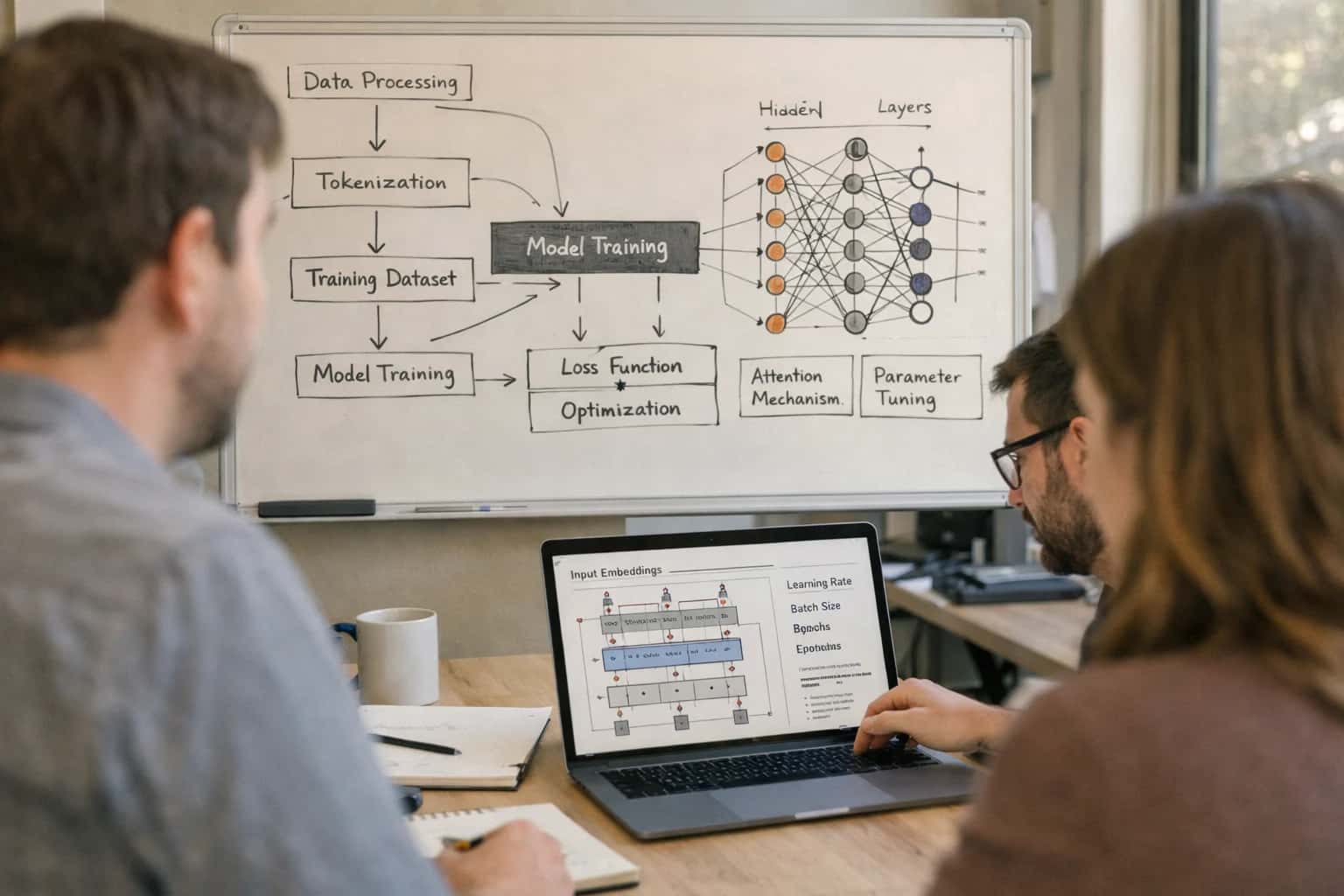
Where AI Fits in PingOne DaVinci
Integrating AI into PingOne DaVinci's no-code canvas to orchestrate intelligent, context-aware customer identity journeys.
Implementation typically involves deploying a lightweight AI service (e.g., a containerized microservice) that DaVinci's HTTP Request node calls. This service can leverage PingOne Risk signals, user profile data from PingOne Directory, and external context (like geolocation or threat feeds) to make real-time decisions. A common pattern is using AI for adaptive step-up authentication: instead of a static rule that always requires a second factor for 'admin' roles, the AI node evaluates the request in context—Is the user on a trusted network? Is this a typical time of access?—and returns a recommendation to DaVinci to proceed, step up, or block. The AI service's prompts and logic are version-controlled, and all decisions are logged back to PingOne's System Log for audit trails and model retraining.
Rollout requires a phased approach, starting with non-critical user journeys like self-service password reset or profile updates to validate the AI's accuracy and latency. Governance is critical: you must establish a human-in-the-loop review process for edge cases and configure DaVinci to fall back to a predefined, secure default path if the AI service is unavailable. By treating AI as a dynamic policy engine within DaVinci's orchestration layer, you move from rigid, rule-based identity flows to responsive, user-centric journeys that improve security posture without sacrificing customer experience. For related implementation patterns, see our guides on AI Integration for Ping Identity and AI-Powered Access Reviews for IAM Platforms.
DaVinci Touchpoints for AI Integration
Inject AI into DaVinci Flows
The DaVinci canvas is your orchestration layer. AI services integrate as custom nodes or actions within your identity journey flows.
Key Integration Points:
- Decision Nodes: Call an AI model to evaluate risk, analyze user context, or determine the next authentication step. Replace static rules with dynamic, model-driven logic.
- Action Nodes: Use actions to call external AI services via REST API. For example, after a successful login, trigger an action to generate a personalized welcome message or summarize the user's session intent.
- Data Transform Nodes: Process and structure payloads from AI services before sending them to other systems like PingOne Risk or your user profile store.
Example Workflow: A POST /login event triggers a DaVinci flow. A decision node calls a fraud detection model; if the risk score is low, the flow proceeds to MFA. If high, it routes to a step-up action or human review.
High-Value AI Use Cases for DaVinci
PingOne DaVinci's no-code canvas is the ideal engine for injecting AI into customer identity journeys. These cards outline practical patterns for using DaVinci to orchestrate AI services, creating dynamic, adaptive authentication and registration experiences.
Adaptive Authentication Workflows
Use DaVinci to call an AI risk-scoring API based on login context (device, location, behavior). The workflow can dynamically adjust the authentication step-up, routing users from simple password to biometric verification based on real-time risk, reducing friction for trusted sessions while hardening security for anomalies.
Intelligent Registration & Profile Enrichment
Orchestrate an LLM call within a DaVinci sign-up flow to validate user-provided information, detect synthetic data, and enrich profiles using external APIs. The workflow can flag high-risk registrations for manual review or auto-approve low-risk ones, improving data quality and reducing fraud.
AI-Powered Customer Support Agent
Build a DaVinci flow that acts as a bridge between a chat interface and backend IAM systems. When a user asks for help (e.g., 'reset my MFA'), the flow uses an LLM to interpret the request, calls the PingOne API to execute the action, and returns a confirmation—automating Tier-1 support tickets.
Dynamic Consent & Preference Management
Leverage DaVinci to create personalized consent journeys. After authentication, a workflow uses an LLM to analyze user context and past behavior to generate tailored privacy notices and preference options, increasing transparency and compliance with regulations like GDPR.
Behavioral Anomaly Detection & Response
Configure DaVinci to consume PingOne logs or external SIEM signals. The workflow sends user session data to an AI model for anomaly detection (e.g., impossible travel, unusual resource access). If a threat is scored high, DaVinci can automatically trigger a step-up auth, alert security, or suspend the session.
Personalized Post-Login Journeys
Use DaVinci to call a recommendation engine after successful login. Based on the user's profile and history, the AI suggests relevant applications, offers, or next-best actions. The workflow then orchestrates the redirection or in-app messaging, driving engagement and conversion.
Example AI-Enhanced DaVinci Workflows
PingOne DaVinci's no-code canvas is ideal for orchestrating AI services within identity journeys. These workflows show how to inject intelligence into authentication, registration, and support flows, creating adaptive, context-aware experiences.
Trigger: A user attempts to access a high-value application from a new device or location.
Context Pulled: DaVinci retrieves the user's historical login patterns, device fingerprint, and current risk score from PingOne Risk via API.
Model Action: A lightweight AI model (hosted externally or via a DaVinci HTTP connector) analyzes the context. It returns a probability score for risk and a recommended action: proceed, require_mfa, or block.
System Update: Based on the AI's recommendation, DaVinci dynamically adjusts the authentication journey:
proceed: User is granted immediate access.require_mfa: User is routed through a DaVinci node that triggers a PingOne MFA push notification or email OTP.block: User is shown a block page and an alert is sent to the security team via webhook.
Human Review Point: All block decisions are logged with the AI's reasoning in a SIEM or case management system for analyst review.
Implementation Architecture and Data Flow
A practical blueprint for injecting AI services into PingOne DaVinci's visual workflows to create dynamic, adaptive customer identity journeys.
The integration architecture centers on DaVinci's Action Node and Webhook Node, which serve as the primary injection points for AI services. A typical flow begins with a customer interaction—like a login attempt or registration form submission—triggering a DaVinci canvas. At a designated decision point, the workflow calls an external AI inference endpoint via a secure REST API. The payload includes contextual signals (e.g., device fingerprint, geolocation, previous failed attempts) from DaVinci's context variables. The AI service—hosted in your cloud or ours—processes this data to return a structured decision, such as a risk score, a step-up authentication requirement, or a personalized registration field recommendation. This result is fed back into DaVinci's flow variables to dictate the next step in the journey.
For production, we recommend a serverless function (e.g., AWS Lambda, Azure Functions) acting as the AI orchestration layer. This function manages the call to your chosen LLM (like OpenAI or Anthropic) or a custom model, applies business logic and guardrails, and returns a JSON response that DaVinci can parse. Key implementation details include:
- Idempotency & Rate Limiting: Ensuring repeated triggers from the same session don't cause duplicate AI calls or billing spikes.
- Prompt Management: Storing and versioning prompts that define the AI's task (e.g., "Analyze these signals for account takeover risk") external to the code.
- Audit Logging: Logging all AI decisions with the associated DaVinci
sessionIdanduserIdto a SIEM or data lake for compliance and model tuning. - Fallback Logic: Defining clear rules for when the AI service is unavailable, defaulting to a standard DaVinci path.
Rollout should follow a phased, journey-specific approach. Start with a low-risk, high-volume canvas, such as the post-registration welcome flow, to inject a simple AI task like profile enrichment. Use DaVinci's testing and versioning features to run a percentage of traffic through the AI-enhanced flow, comparing metrics like completion rate and time-to-success. Governance is critical: establish a review process for the AI's outputs, initially routing a sample to human analysts via a DaVinci branch to a ticketing system like ServiceNow. This creates a feedback loop for continuous improvement before expanding to more sensitive workflows like adaptive step-up authentication.
Code and Payload Examples
Injecting AI Decisions into the Canvas
PingOne DaVinci's no-code canvas uses nodes to orchestrate identity journeys. You can integrate AI by calling external services from a Custom Node or HTTP Connector. The typical pattern is to send context (user attributes, device signals, risk scores) to an AI service, receive a decision (allow, step-up, block), and use DaVinci's branching logic to adapt the flow.
Example DaVinci Node Configuration (Pseudocode):
json{ "nodeType": "httpConnector", "config": { "url": "{{AI_SERVICE_ENDPOINT}}", "method": "POST", "headers": { "Authorization": "Bearer {{API_KEY}}", "Content-Type": "application/json" }, "body": { "userId": "{{user.id}}", "ipAddress": "{{context.ip}}", "userAgent": "{{context.userAgent}}", "requestedResource": "{{application.name}}", "historicalRiskScore": "{{pingRisk.score}}" } }, "outputVariable": "aiDecision" }
The AI service returns a payload like {"action": "step_up", "confidence": 0.92, "reason": "unusual_location"}. A subsequent Condition Node evaluates aiDecision.action to route the user to MFA, allow access, or trigger a fraud review workflow.
Realistic Operational Impact and Time Savings
How AI integration transforms manual, rule-based identity workflows into dynamic, intelligent journeys, reducing operational overhead and improving user experience.
| Workflow / Task | Before AI (Manual/Static) | After AI (Intelligent/Dynamic) | Implementation Notes |
|---|---|---|---|
High-Risk Authentication Step-Up | Static rule blocks all users from a flagged IP or region. | AI analyzes device, behavior, and transaction context to allow low-risk users, stepping up only suspicious sessions. | Integrates with PingOne Risk API; reduces false positives and user friction. |
Customer Registration & Profile Enrichment | Basic form capture; manual or batch data enrichment later. | Real-time AI enriches profiles during sign-up using external APIs, improving first-touch personalization. | Uses DaVinci connectors to call AI services; data written back to PingOne profiles. |
Dynamic FAQ & Support Routing | Static help pages or basic keyword routing to agents. | AI-powered virtual agent resolves common access queries (e.g., MFA reset) using live identity context, escalating complex cases. | Agent uses PingOne APIs to verify user and perform actions; reduces Tier 1 support tickets. |
Access Review Campaign Preparation | Analyst manually runs reports to compile user-list for review. | AI pre-scans entitlements and activity to highlight outliers, auto-generating a prioritized review list for managers. | Connects to PingOne DaVinci for data, outputs to Ping Identity Governance or a ticketing system. |
Anomaly Detection & Alert Triage | SOC analyst reviews raw PingOne System Log alerts for anomalies. | AI correlates logs with external signals, scores risk, and provides investigative summary, prioritizing critical alerts. | DaVinci workflow ingests logs, calls AI model, posts enriched alert to SIEM or Slack. |
B2B Partner Onboarding Workflow | Manual approval and group assignment for each new partner user. | AI validates partner domain, suggests access packages based on contract data, and automates low-risk provisioning. | Orchestrates between DaVinci, email, and document systems; human-in-the-loop for exceptions. |
Post-Authentication Journey Routing | All users see the same post-login portal or application menu. | AI analyzes user role, recent activity, and time of day to present a personalized landing page or next-best-action. | Decision node in DaVinci canvas calls AI service to determine journey path. |
Governance, Security, and Phased Rollout
A production-ready AI integration for PingOne DaVinci requires deliberate controls, secure data handling, and a measured rollout.
Implementing AI within DaVinci's no-code canvas introduces new data flows and decision points that must be governed. Key considerations include: Data Minimization—ensuring only necessary user attributes (e.g., device fingerprint, geolocation, behavioral signals) are passed to external AI services via secure API calls. Audit Trails—configuring DaVinci to log all AI-driven decisions (e.g., risk score adjustments, adaptive step insertions) alongside traditional authentication events for compliance and forensics. Prompt and Model Governance—managing the LLM prompts and logic embedded in DaVinci nodes through a version-controlled repository, with review gates for changes to authentication logic or customer-facing messages.
Security is enforced at the integration layer. AI service calls should be routed through a dedicated API gateway that enforces rate limiting, validates payloads, and strips any unintended PII before egress. The DaVinci workflow itself must include circuit-breaker nodes to handle AI service latency or failure, defaulting to a secure, predefined authentication path. For high-stakes decisions, such as step-up authentication triggers, consider a human-in-the-loop approval node where anomalous AI recommendations are queued for security team review before execution.
A phased rollout mitigates risk and builds confidence. Start with a monitoring-only phase, where AI risk scoring runs in parallel to existing rules but does not alter the user journey, allowing you to compare outcomes. Next, implement AI for low-risk augmentations, such as personalizing post-login messages or dynamically selecting MFA methods based on user context. Finally, after validating accuracy and performance, activate AI for core adaptive authentication decisions, like inserting a challenge step or granting step-down access. Each phase should be gated by success metrics measured in DaVinci's analytics and include a clear rollback path to the previous workflow state.
Enabling Efficiency, Speed & Accuracy
Intelligent Analysis, Decision & Execution
We build AI systems for teams that need search across company data, workflow automation across tools, or AI features inside products and internal software.
Talk to Us
Search across company data
Give teams answers from docs, tickets, runbooks, and product data with sources and permissions.
Useful when people spend too long searching or get different answers from different systems.

Automate internal workflows
Use AI to route work, draft outputs, trigger actions, and keep approvals and logs in place.
Useful when repetitive work moves across multiple tools and teams.

Add AI to products and internal tools
Build assistants, guided actions, or decision support into the software your team or customers already use.
Useful when AI needs to be part of the product, not a separate tool.
Frequently Asked Questions
Common technical and strategic questions about integrating AI services with PingOne DaVinci's no-code orchestration layer to build intelligent, adaptive customer identity journeys.
DaVinci's Connector nodes are the primary method for secure external API calls. For AI integration:
- Create a Secure Connector: Configure a Connector node with your AI service's API endpoint (e.g., OpenAI, Azure OpenAI, Anthropic). Store the API key in DaVinci's encrypted credential store—never hardcode it in the canvas.
- Structure the Request: Use a Compose node to build the proper JSON payload for the model. This includes the prompt, system instructions, and any contextual data (e.g., user attributes, risk score) pulled from the journey.
- Handle the Response: The Connector node returns the AI response. Use a Decision node to parse the JSON and route the workflow based on the result (e.g.,
response.choices[0].message.content).
Example Connector Configuration for a Chat Completion:
json{ "url": "https://api.openai.com/v1/chat/completions", "method": "POST", "headers": { "Authorization": "Bearer {{$credentials.openai_key}}", "Content-Type": "application/json" }, "body": { "model": "gpt-4o-mini", "messages": [ {"role": "system", "content": "You are a helpful assistant for user registration."}, {"role": "user", "content": "{{composeNode.output.prompt}}"} ] } }
All traffic is encrypted in transit, and you can implement additional API gateway patterns for rate limiting and audit logging.

About the author
Prasad Kumkar
CEO & MD, Inference Systems
Prasad Kumkar is the CEO & MD of Inference Systems and writes about AI systems architecture, LLM infrastructure, model serving, evaluation, and production deployment. Over 5+ years, he has worked across computer vision models, L5 autonomous vehicle systems, and LLM research, with a focus on taking complex AI ideas into real-world engineering systems.
His work and writing cover AI systems, large language models, AI agents, multimodal systems, autonomous systems, inference optimization, RAG, evaluation, and production AI engineering.
Partnered with leading AI, data, and software stack.





How We Work
Custom AI workflows for your Business
One-fit-all AI don't work for modern businesses. At Inferensys, we aim to understand your business & custom requirements; which we use to define most efficient agentic workflows, the data, and the tools for your business.
01
Review the use case
We understand the task, the users, and where AI can actually help.
Read more02
Pick the right approach
We define what needs search, automation, or product integration.
Read more03
Build the first useful version
We implement the part that proves the value first.
Read more04
Improve from there
We add the checks and visibility needed to keep it useful.
Read moreThe first call is a practical review of your use case and the right next step.
Talk to Us