AI integrates with BambooHR by connecting to its REST API and webhook system, acting as an intelligent layer atop your existing HR data and workflows. Key integration surfaces include the Employee Directory, Onboarding Checklists, Time Off requests, Company Files, and Custom Reports. An AI agent can be configured to listen for events (e.g., a new hire's onboarding_started webhook), retrieve relevant employee records and policy documents, and execute follow-up actions via API—such as assigning tasks, sending personalized messages, or updating custom fields—without manual HR intervention.

Integration
AI Integration for BambooHR
A technical implementation guide for adding AI-powered employee support, automated onboarding workflows, and intelligent people analytics to the BambooHR platform using its REST API and webhooks.
ARCHITECTURE & ROLLOUT
Where AI Fits into Your BambooHR Stack
A practical blueprint for embedding AI agents and automation into BambooHR's core modules and APIs.
For implementation, we architect a secure middleware service that handles authentication, prompt engineering, and audit logging. This service calls LLMs like OpenAI or Anthropic Claude with context retrieved from BambooHR (e.g., an employee's job title and location to answer a benefits question). High-impact use cases include:
- Employee Support Agent: Answers common policy questions by querying the
Company FilesAPI, reducing HR ticket volume. - Automated Onboarding: Triggers a multi-system workflow (IT, facilities) when a new hire is added, using AI to personalize the checklist and send welcome content.
- People Analytics Copilot: Enables natural language queries against BambooHR Reports, turning complex data into actionable insights for managers.
- Compliance Assistant: Monitors
Time Offapprovals and employee data changes for policy violations, flagging exceptions for review.
Rollout is typically phased, starting with a read-only support agent in a controlled channel like Slack or Microsoft Teams, governed by strict role-based access controls (RBAC) to mirror BambooHR permissions. All AI-generated actions should be logged in an audit trail and, for transactional changes, require a human-in-the-loop approval step before the BambooHR API is called. This approach minimizes risk while demonstrating value, paving the way for more autonomous workflow automation. For related patterns, see our guides on AI Integration for Employee Support Agents in HRIS and AI Integration for Onboarding Workflows in HRIS.
ARCHITECTURAL BLUEPRINT
Key Integration Surfaces in BambooHR
Core Data Foundation
The Employee Records API is the primary integration surface for any AI agent that needs to read or update employee data. This includes retrieving profiles, job information, compensation, and reporting structures. AI workflows for employee support, analytics, and automation are built on this layer.
Key Objects for AI:
Employeeobjects for profile and job details.Employment Statusfor filtering active/inactive employees.TableAPI for custom fields storing skills, certifications, or project history.
AI Use Cases:
- An employee support agent answering "Who is my manager?" or "What is my job title?"
- A retention model analyzing tenure, role changes, and compensation history.
- An onboarding workflow updating an employee's work location or department after hire.
Security Note: Implement strict role-based access control (RBAC) at the API level, ensuring AI agents only access data scoped to their purpose (e.g., a manager's agent can only see their direct reports).
PRACTICAL INTEGRATION PATTERNS
High-Value AI Use Cases for BambooHR
Embed AI directly into BambooHR workflows to automate high-volume tasks, provide instant employee support, and unlock insights from people data. These patterns use the BambooHR API and webhooks to connect AI agents to core HR objects and processes.
01
AI-Powered Employee Support Agent
Deploy a conversational AI agent that answers common HR policy questions, guides self-service tasks (like PTO requests or address updates), and retrieves employee-specific data from BambooHR. Integrates via API to fetch employee records, company files, and knowledge base articles, reducing HR ticket volume by deflecting routine inquiries.
Hours -> Minutes
Response time for common queries
02
Automated & Personalized Onboarding
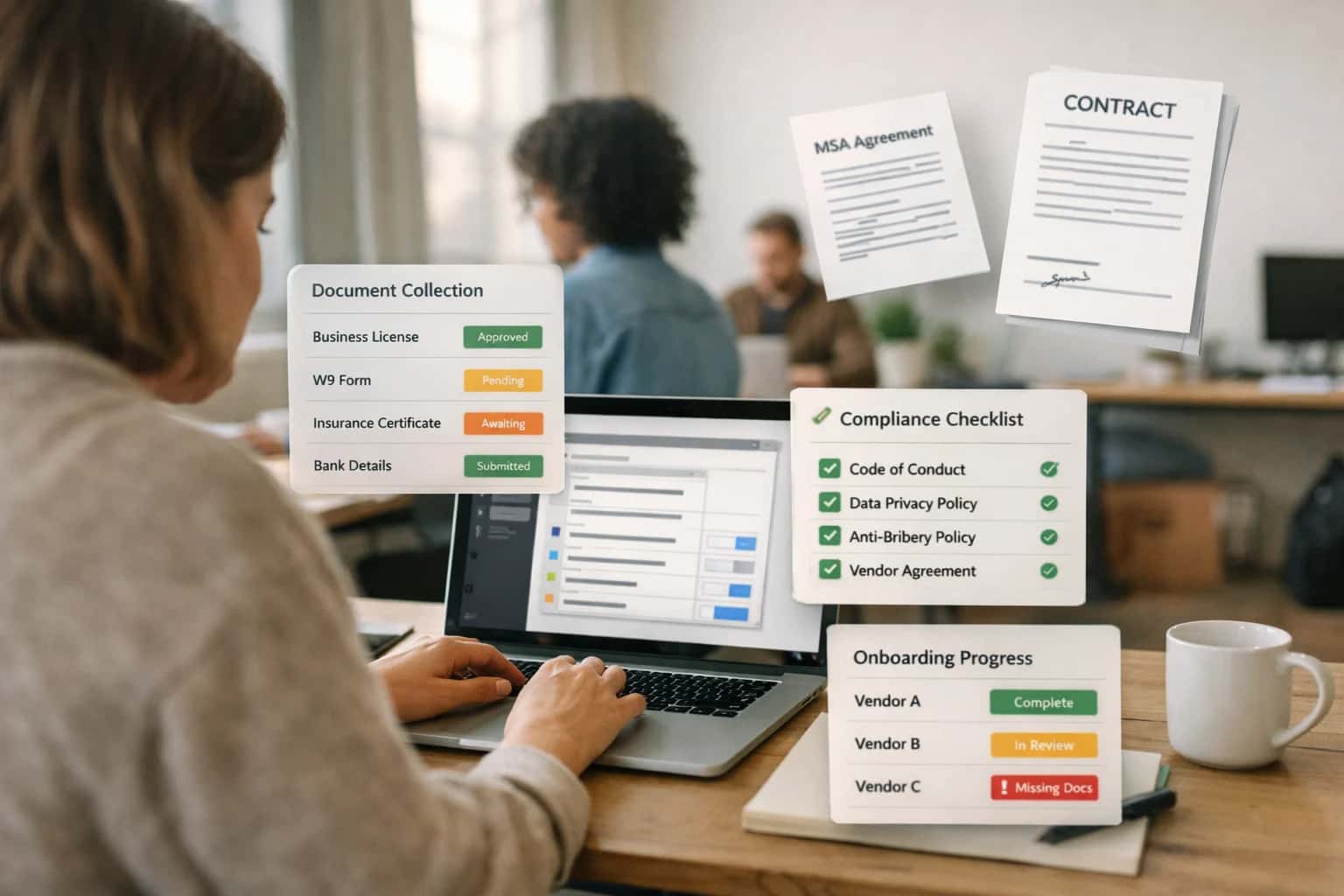
Orchestrate multi-department onboarding from a single trigger in BambooHR. An AI agent uses the new hire's role, location, and department to generate personalized task lists, send welcome communications, and coordinate with IT (for equipment) and facilities (for access). Automates document collection and tracks completion via webhook callbacks.
1 sprint
Typical implementation timeline
03
Performance Feedback Analysis & Coaching
Augment the BambooHR performance review cycle. AI analyzes draft manager feedback for bias, sentiment, and actionability, providing real-time coaching to improve quality. Post-review, it can synthesize 360-feedback and generate development plan suggestions, writing summaries back to the employee's BambooHR profile.
Batch -> Real-time
Feedback review workflow
04
Natural Language People Analytics
Enable managers and HR leaders to ask questions about their team data in plain English. An AI agent translates queries into API calls against BambooHR reports and employee tables, returning insights on headcount, turnover risk, compensation ratios, or diversity metrics without requiring report-building skills.
Same day
Insight availability
05
Compliance Monitoring & Audit Automation
Continuously monitor BambooHR data for compliance risks. AI agents run scheduled checks for expired certifications, missing I-9 documents, or policy acknowledgment lapses. They automatically create tasks in BambooHR for HR admins or send alerts, creating an audit trail and reducing manual review workload.
06
Intelligent Offboarding Workflow Orchestration
Automate the complex cross-system process when an employee leaves. Triggered by a status change in BambooHR, an AI agent coordinates IT access revocation, equipment recovery, final pay calculations, and exit interview scheduling. It ensures all steps are completed and documents the process, mitigating security and compliance risk.
BAMBOOHR INTEGRATION PATTERNS
Example AI-Augmented Workflows
These concrete workflows demonstrate how to connect AI agents to BambooHR's API and webhooks to automate high-volume tasks, enhance employee self-service, and provide intelligent support. Each pattern is designed for production implementation.
An AI agent acts as a first-line responder to common HR inquiries, deflecting tickets and providing instant, accurate answers by querying BambooHR in real-time.
Trigger: An employee asks a question via Slack, Teams, or a web chat widget.
Workflow:
- Context Pull: The agent uses the employee's authenticated identity to fetch their relevant BambooHR records via the API (e.g., employment status, manager, PTO balance, pay schedule).
- Query & Grounding: The agent's prompt is grounded using retrieved company policy documents and the employee's specific data. It formulates a precise API call if needed (e.g.,
GET /api/v1/employees/{id}/time_off/balance). - Action & Response: The LLM synthesizes a personalized, compliant answer (e.g., "You have 18.5 hours of PTO remaining. Your next payday is Friday, March 15th.").
- Escalation Path: If the query requires human intervention (e.g., a sensitive complaint), the agent creates a new
Casein BambooHR via the API and informs the employee of the ticket number.
Key Integration Points: BambooHR Employee API, Company Files API (for policy docs), Custom Tables API (for extended data).
A PRACTICAL BLUEPRINT
Typical Implementation Architecture
A production-ready AI integration for BambooHR connects secure agents to its API layer, orchestrates workflows, and surfaces intelligence where employees and HR teams work.
The core integration pattern uses BambooHR's REST API and webhooks as the primary conduit. An AI orchestration layer—hosted in your cloud—acts as middleware, handling authentication, prompt engineering, and workflow execution. Key data objects accessed include Employee, Time Off, Onboarding, Files, and Reports. For employee-facing agents, the system typically listens for messages from a chat interface (Slack, Teams, a web widget), uses the BambooHR API to fetch relevant employee context (e.g., employee/{id}), and generates a grounded response or executes a simple, approved transaction like fetching a pay stub or submitting a time-off request.
High-value workflows are built by chaining API calls with conditional logic. For example, an automated onboarding agent might: 1) Trigger on a new Employee record creation via webhook, 2) Generate a personalized welcome message and task checklist, 3) Use the Files API to request missing documents, and 4) Post updates to a designated BambooHR Employee note field for audit. A people analytics copilot for managers would query the Reports API, use an LLM to analyze trends in turnover or engagement, and deliver a summary via email or a dashboard, with data never leaving the controlled environment.
Rollout follows a phased, governed approach. Start with a read-only HR policy Q&A agent to build trust and validate the integration pattern, using Retrieval-Augmented Generation (RAG) on your employee handbook. Phase two introduces transactional workflows like leave balance checks or onboarding status, implementing strict RBAC so agents only act on behalf of authenticated users with appropriate permissions. All agent actions should write an audit log, potentially back to a custom BambooHR Employee note or an external system. This architecture ensures AI augments BambooHR without compromising its security model or data integrity. For deeper patterns on cross-platform HR orchestration, see our guide on AI Integration for HRIS Platforms.
BAMBOOHR API INTEGRATION
Code and Payload Patterns
Querying Employee Records for AI Context
AI agents supporting employees need real-time access to HR data. Use the BambooHR GET /employees/{id} and GET /employees/directory endpoints to fetch core profiles, employment status, and manager hierarchies. This data grounds agent responses in facts, preventing hallucinations about policies or employment details.
A common pattern is to use the employee's email (from the chat session) to look up their internal ID via the directory, then retrieve their specific record. Always filter the returned fields to only what's necessary for the agent's task (e.g., fields=firstName,lastName,department,supervisorId,employmentStatus) to minimize data exposure and token usage.
python# Example: Get employee context for an AI support agent import requests def get_employee_context(user_email, api_key, subdomain): headers = {"Accept": "application/json", "Authorization": f"Bearer {api_key}"} # 1. Find employee ID from directory dir_url = f"https://api.bamboohr.com/api/gateway.php/{subdomain}/v1/employees/directory" dir_resp = requests.get(dir_url, headers=headers) employee = next((e for e in dir_resp.json()["employees"] if e["workEmail"] == user_email), None) if not employee: return None # 2. Get detailed employee record emp_url = f"https://api.bamboohr.com/api/gateway.php/{subdomain}/v1/employees/{employee['id']}" params = {"fields": "firstName,lastName,department,division,location,employmentStatus"} emp_resp = requests.get(emp_url, headers=headers, params=params) return emp_resp.json()
AI-ENHANCED HR OPERATIONS
Realistic Time Savings and Operational Impact
This table illustrates the measurable impact of integrating AI agents and copilots into core BambooHR workflows, focusing on time savings, process efficiency, and improved employee experience.
| Workflow / Task | Before AI Integration | After AI Integration | Implementation Notes |
|---|---|---|---|
Employee Policy & Payroll Inquiries | HR team manually answers 50+ daily tickets via email/chat | AI assistant deflects 60-70% of common inquiries instantly | Agent uses BambooHR API for data lookup; complex cases routed to human |
New Hire Onboarding Task Completion | New hires complete 15-20 tasks over 5-7 business days | Personalized AI guide reduces task completion to 2-3 business days | AI orchestrates checklists, sends reminders, and answers questions via BambooHR Onboarding |
Performance Review Feedback Drafting | Managers spend 1-2 hours drafting feedback per review | AI writing assistant cuts drafting time by 50%, suggests goal language | Tool analyzes past reviews and role data; final approval remains with manager |
HR Report Generation & Analysis | Analyst spends 4-8 hours monthly building custom reports | Natural language queries generate standard reports in minutes | AI connects to BambooHR Reporting API; complex analyses still require human oversight |
Benefits Enrollment Support | HR hosts multiple live Q&A sessions during open enrollment | AI guide provides 24/7 personalized recommendations and answers | Integrates with BambooHR Benefits data; elections submitted via secure API call |
Offboarding Checklist & Exit Coordination | HR admin manually coordinates 5+ systems over 3-5 days | AI agent triggers and tracks multi-system workflows in 1-2 days | Orchestrates IT, finance, and facilities via webhooks from BambooHR offboarding |
Data Change Requests & Audits | Manual entry and verification for routine data updates (e.g., address) | AI agent validates and processes standard updates via API, logs audit trail | Handles high-volume, low-risk changes; exceptions flagged for HR review |
ARCHITECTING CONTROLLED AI DEPLOYMENT
Governance, Security, and Phased Rollout
A practical framework for deploying AI in BambooHR with security, compliance, and change management built-in.
A production-grade AI integration for BambooHR requires a governance layer that sits between the language model and the HRIS API. This typically involves a middleware service that handles authentication, enforces role-based access control (RBAC) by mapping AI sessions to BambooHR user permissions, and maintains a full audit log of all queries and transactions. For sensitive workflows—like viewing compensation data or initiating a job change—the architecture should include a human-in-the-loop approval step, where the AI agent drafts the action in a queue for manager or HRBP review before the BambooHR API is called. Data privacy is paramount; employee PII should never be sent directly to a third-party LLM. Instead, use retrieval-augmented generation (RAG) patterns where the AI queries a secure, indexed cache of BambooHR policy documents and anonymized knowledge articles, keeping live data queries to a minimum and using the BambooHR REST API only for specific, consented transactions.
We recommend a phased rollout, starting with a read-only support agent in a pilot group. This agent answers FAQs about policies, time-off balances, and company procedures by querying a knowledge base synced from BambooHR's documents and company files. Phase two introduces controlled write-back, automating low-risk tasks like updating personal information or submitting time-off requests, with clear user confirmation prompts. The final phase enables orchestrated workflows, such as AI-guided onboarding that triggers IT provisioning tickets or benefits enrollment tasks across systems. Each phase should be accompanied by change management: communicating the AI assistant's capabilities and limits, training HR admins on monitoring its activity via the audit dashboard, and establishing a clear feedback loop for incorrectly handled queries to continuously fine-tune the system.
For security, all integrations must use BambooHR's OAuth 2.0 and respect its API rate limits. The AI agent's access should be scoped to the minimum necessary permissions—often a custom API key with read access to employee directories and company reports, but write access only to specific objects like time_off/requests. Consider implementing a data masking proxy for development and testing. A successful rollout is not just technical; it involves aligning with HR leadership on key success metrics (e.g., reduction in Tier 1 support tickets, improved onboarding completion time) and establishing a cross-functional steering committee to govern the AI's evolving use cases, ensuring it remains a secure, compliant, and valuable extension of the BambooHR platform.
Enabling Efficiency, Speed & Accuracy
Intelligent Analysis, Decision & Execution
We build AI systems for teams that need search across company data, workflow automation across tools, or AI features inside products and internal software.
Talk to Us
Search across company data
Give teams answers from docs, tickets, runbooks, and product data with sources and permissions.
Useful when people spend too long searching or get different answers from different systems.
Enterprise searchRAGPermissions
Read more
Automate internal workflows
Use AI to route work, draft outputs, trigger actions, and keep approvals and logs in place.
Useful when repetitive work moves across multiple tools and teams.
AI agentsWorkflow automationGovernance
Read more
Add AI to products and internal tools
Build assistants, guided actions, or decision support into the software your team or customers already use.
Useful when AI needs to be part of the product, not a separate tool.
AI integrationDecision supportModel routing
Read moreIMPLEMENTATION BLUEPRINT
Frequently Asked Questions
Practical questions for technical teams planning an AI integration with BambooHR, covering architecture, security, rollout, and common workflows.
Secure integration requires a service account with scoped API permissions and a dedicated middleware layer.
Typical Implementation Pattern:
-
Create a Dedicated Service Account in BambooHR:
- Create an API key for a service user (e.g.,
ai-agent@yourcompany.com). - Apply the principle of least privilege: grant only the specific
GETandPOSTpermissions needed (e.g.,employees.read,time_off.read,company_files.read).
- Create an API key for a service user (e.g.,
-
Implement a Secure Middleware (API Gateway/Proxy):
- Do not call the BambooHR API directly from your AI agent code. Route all requests through a secure backend service you control.
- This service handles:
- Authentication token management and rotation.
- Request logging and audit trails.
- Rate limiting to respect BambooHR API limits.
- Data masking or redaction of sensitive fields (e.g., SSN, bank details) before passing context to the LLM.
-
Payload Example for Employee Lookup:
json// Request from AI Agent to your middleware { "intent": "get_employee_info", "parameters": { "employee_identifier": "john.doe@company.com", "fields": ["id", "firstName", "lastName", "department", "hireDate"] } } // Your middleware calls BambooHR API: // GET https://api.bamboohr.com/api/gateway.php/{companyDomain}/v1/employees/{id}?fields=firstName,lastName,department,hireDate
This pattern keeps API keys secure, provides a full audit log, and allows you to govern data exposure to the AI model.

About the author
Prasad Kumkar
CEO & MD, Inference Systems
Prasad Kumkar is the CEO & MD of Inference Systems and writes about AI systems architecture, LLM infrastructure, model serving, evaluation, and production deployment. Over 5+ years, he has worked across computer vision models, L5 autonomous vehicle systems, and LLM research, with a focus on taking complex AI ideas into real-world engineering systems.
His work and writing cover AI systems, large language models, AI agents, multimodal systems, autonomous systems, inference optimization, RAG, evaluation, and production AI engineering.
LinkedIn
Limited slotsGet a Free AI Consultation
Partnered with leading AI, data, and software stack.





How We Work
Custom AI workflows for your Business
One-fit-all AI don't work for modern businesses. At Inferensys, we aim to understand your business & custom requirements; which we use to define most efficient agentic workflows, the data, and the tools for your business.
01
Review the use case
We understand the task, the users, and where AI can actually help.
Read more02
Pick the right approach
We define what needs search, automation, or product integration.
Read more03
Build the first useful version
We implement the part that proves the value first.
Read more04
Improve from there
We add the checks and visibility needed to keep it useful.
Read moreThe first call is a practical review of your use case and the right next step.
Talk to Us