AI integration for employee support targets the HR Service Delivery layer—the primary interface where employees and managers ask questions and initiate transactions. This typically involves connecting to the HRIS via its REST APIs (like Workday's Web Services, UKG Pro's API, or BambooHR's developer endpoints) and webhook systems to listen for events. The AI agent acts on core objects such as Employee, Job Profile, Compensation, Benefit Election, and Case or Service Request. Its primary surfaces are: a conversational interface embedded in the company intranet or HR portal, and an automation engine that executes approved, low-risk transactions like resetting a password or providing a verification letter.

Integration
AI Integration for Employee Support Agents in HRIS
A practical guide to deploying conversational AI agents that answer employee questions, automate HR workflows, and reduce ticket volume by integrating directly with Workday, UKG, ADP, and BambooHR APIs.
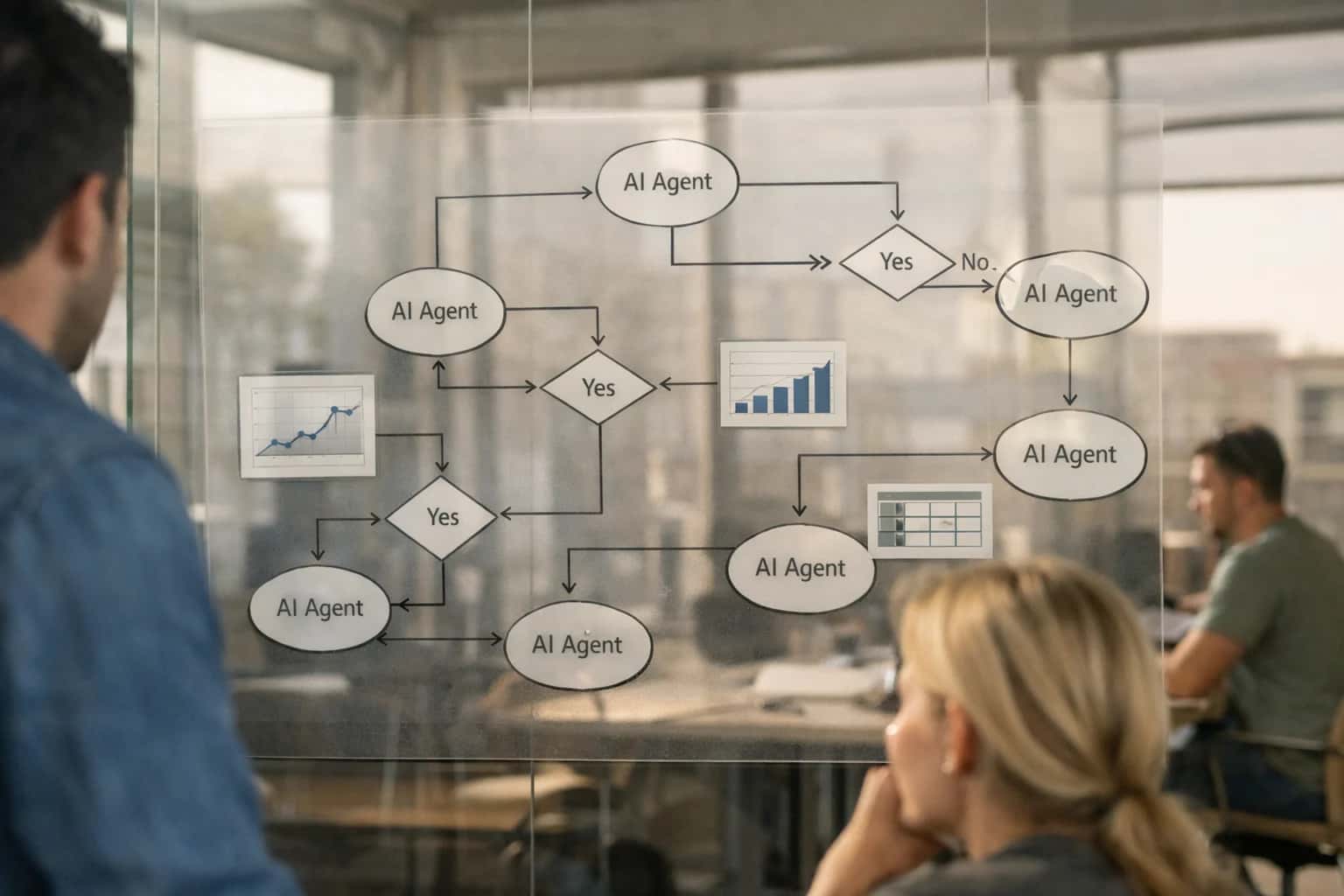
ARCHITECTURE AND ROLLOUT
Where AI Fits into HR Service Delivery
A practical blueprint for integrating AI-powered support agents into your HRIS to automate tier-1 inquiries and guide complex workflows.
For high-impact implementation, start with a narrow, high-volume workflow. A common first use case is leave of absence guidance. An employee asks, "How do I request parental leave?" The AI agent, using a Retrieval-Augmented Generation (RAG) system over your HR policy documents and knowledge base, provides the specific steps. It can then, with proper RBAC and audit logging, call the HRIS API to check the employee's eligibility, pre-fill a request form in Workday or UKG, and guide them through submission. This reduces HR ticket volume for routine inquiries from hours to near-instant resolution, while ensuring answers are consistent and grounded in official policy.
Governance is critical. Roll out in phases: begin as a read-only copilot for information retrieval, then progress to assisted transactions with a human-in-the-loop approval step for any system writes. Implement strict audit trails logging every AI interaction, the data retrieved, and any API calls made. Use the HRIS's native security model to enforce data access; the AI agent should inherit permissions based on the user's role. For a deeper dive on securing these integrations, see our guide on [/integrations/human-resources-information-systems/ai-integration-for-hr-in-regulated-industries](AI Integration for HR in Regulated Industries). A successful rollout shifts HR staff from repetitive Q&A to handling exceptional cases and strategic advisory work.
WHERE AI AGENTS CONNECT
Integration Touchpoints Across Major HRIS Platforms
Conversational Interface for Common Inquiries
The primary surface for an AI agent is the employee-facing portal or chatbot embedded within Workday, UKG, or BambooHR. This is where agents handle high-volume, repetitive questions, deflecting tickets from the HR service desk.
Key Integration Points:
- Embedded Chat Widget: Deploy a secure, branded chat interface directly into the HRIS homepage or navigation bar using iFrame or JavaScript SDKs.
- Authentication & Context: The agent must inherit the user's SSO session to enforce role-based access control (RBAC). It should know the employee's ID, department, and location to provide personalized answers about pay, benefits, or policies.
- Transaction Execution: For simple tasks, the agent can call HRIS APIs. For example, after confirming intent, it could execute a
POSTto theChange_Personal_Informationendpoint in Workday or submit a time-off request in UKG Pro via its REST API.
Example Workflow: An employee asks, "How much PTO do I have left?" The authenticated agent calls the GET /workers/{ID}/timeOffBalances API, formats the response into natural language, and delivers it in the chat.
EMPLOYEE SUPPORT & OPERATIONS AUTOMATION
High-Value Use Cases for HRIS AI Agents
Practical AI integration patterns that connect conversational agents and automation workflows directly to your HRIS data model and APIs, enabling instant support and back-office efficiency.
01
24/7 Employee Policy & Data Assistant
An AI agent answers common employee questions about PTO balances, policy details, and org charts by querying the HRIS API in real-time. It deflects routine HR tickets by providing instant, accurate answers sourced directly from Workday, UKG, or BambooHR, reducing HR case volume.
Hours -> Minutes
Response time for common inquiries
02
Intelligent Onboarding Workflow Orchestrator
AI coordinates multi-system onboarding triggered from the HRIS hire event. It personalizes checklists, sends welcome messages, and automates IT provisioning via webhooks. The agent follows up with the new hire, answering questions and ensuring tasks are completed, creating a seamless Day 1 experience.
Batch -> Real-time
Provisioning workflow
03
Manager Copilot for People Operations
A secure AI copilot assists managers with HR tasks. It drafts performance feedback, explains compensation guidelines, and guides them through processes like promotions or leaves by pulling data and policy context from the HRIS. This reduces manager admin time and ensures policy compliance.
1 sprint
Typical implementation timeline
04
Automated Payroll & Benefits Inquiry Resolution
AI handles sensitive payroll and benefits questions by securely accessing employee records. It can explain pay stub details, guide benefits enrollment changes via the HRIS API, and flag anomalies for human review. This shifts HR focus from repetitive inquiries to complex exceptions.
Same day
Deflection for common pay questions
05
Proactive Retention & Flight Risk Alerting
AI models analyze HRIS data (tenure, promotion history, engagement survey scores) to generate predictive retention scores. The system integrates these scores into manager dashboards or triggers automated, personalized check-in workflows to enable proactive retention efforts before attrition occurs.
06
HR Operations Automation for Data Changes
AI agents execute high-volume, low-risk HR transactions by calling HRIS APIs. Examples include processing address updates, generating employment verification letters, or auditing I-9 document completion. This automates manual data work, improves accuracy, and creates a full audit trail.
Hours -> Minutes
Time for standard data updates
HRIS INTEGRATION PATTERNS
Example AI Agent Workflows for Employee Support
These concrete workflows illustrate how AI agents can be integrated into HRIS platforms like Workday, UKG, or BambooHR to automate support, reduce ticket volume, and provide instant, accurate guidance to employees and managers. Each workflow connects to specific HRIS APIs and data objects.
Trigger: An employee asks a chatbot, "How do I start a medical leave?" or "What's our parental leave policy?"
Workflow:
- Authentication & Context: The AI agent authenticates the user via SSO and retrieves their employee record (tenure, location, job profile) from the HRIS API (e.g., Workday
GET /workers/{ID}). - Policy Retrieval & Personalization: The agent queries a vector store of HR policy documents (grounded in the latest handbook) and cross-references the employee's specific eligibility based on their HRIS data (e.g., length of service, full-time status).
- Interactive Guidance: The agent provides a personalized, step-by-step summary: "Based in California with 2 years tenure, you're eligible for up to 12 weeks of CFRA leave. You'll need a certification form from your doctor. Would you like to:
- See the exact policy document?
- Get the certification form emailed to you?
- Start the formal request in Workday now?"
- Transaction Execution: If the employee chooses to initiate, the agent uses the HRIS API (e.g., Workday
POST /leaveOfAbsenceRequests) to create a draft request with prefilled employee data, routes it to the correct manager for approval, and sends a confirmation to the employee. - Human Handoff: Complex scenarios (e.g., intermittent leave, previous denials) are flagged, and the agent offers to create a case in the HR service management platform (like UKG HR Service Delivery) with the full conversation context for an HR specialist.
SECURE, AUDITABLE AGENT DEPLOYMENT
Implementation Architecture: Data Flow, APIs, and Guardrails
A production-ready blueprint for connecting AI agents to HRIS platforms like Workday, UKG, and ADP.
The core integration pattern connects an AI agent layer to the HRIS via its REST APIs and webhook systems. For employee support, the agent primarily interacts with objects like Employee, Job Profile, Compensation, Benefits Enrollment, and Time Off Request. A typical data flow begins when an employee asks a question via a chat interface (e.g., Slack, Teams, or a custom portal). The agent uses a retrieval-augmented generation (RAG) system over a secure knowledge base of HR policies and, for personalized answers, makes an authenticated API call to the HRIS to fetch the employee's specific data (e.g., GET /api/v1/workers/{id}/pay). For transactional requests like submitting a time-off request, the agent constructs the proper JSON payload (e.g., POST /api/v1/time_off/requests) and submits it, often triggering a downstream approval workflow in the HRIS.
Critical guardrails are implemented at multiple layers. Role-based access control (RBAC) is enforced by mapping the user's identity from the chat session to their HRIS security role, ensuring the agent only accesses data and executes transactions the user is permitted to perform. All agent interactions are logged to an immutable audit trail, capturing the original query, the data retrieved, the action taken, and the final response. For sensitive transactions (e.g., compensation changes), the architecture can be configured to require human-in-the-loop approval before the API call is executed, with the approval workflow managed within the HRIS or a separate system of record. This ensures the AI agent acts as a guided assistant, not an autonomous actor.
Rollout follows a phased approach, starting with read-only Q&A on public policies and personal data (e.g., "How much PTO do I have?") to build trust and validate the data pipeline. The second phase introduces simple transactional support for low-risk, high-volume tasks like address updates or document uploads. The final phase expands to orchestrated workflows, such as guiding a manager through a promotion process, where the agent interacts with multiple HRIS modules and external systems. Governance is maintained through continuous evaluation of the agent's accuracy and a clear escalation path to live HR support, ensuring the integration reduces ticket volume without degrading service quality.
PRACTICAL IMPLEMENTATION PATTERNS
Code and Payload Examples for HRIS Integration
Querying Employee Records via API
An AI agent supporting employees needs secure, real-time access to HRIS data. This typically involves calling the HRIS API with proper authentication to retrieve specific employee information or check permissions.
Common Use Case: An employee asks, "What is my remaining PTO balance?" The agent must authenticate, find the employee's record, and extract the correct accrual data.
Example Python Request (Pseudocode):
pythonimport requests # Authenticate with OAuth 2.0 Client Credentials (service account) auth_response = requests.post( 'https://api.your-hris.com/oauth/token', data={'grant_type': 'client_credentials', 'client_id': CLIENT_ID, 'client_secret': CLIENT_SECRET} ) access_token = auth_response.json()['access_token'] # Query for a specific employee's data headers = {'Authorization': f'Bearer {access_token}', 'Accept': 'application/json'} # Use the employee's internal ID or email from the authenticated session response = requests.get( 'https://api.your-hris.com/v1/employees/EMP12345?fields=timeOffBalances,personalInfo', headers=headers ) employee_data = response.json() pto_balance = employee_data['timeOffBalances']['vacation']['remaining']
Key Considerations: Implement field-level security checks, respect data privacy boundaries, and cache non-sensitive data to reduce API load.
AI-POWERED EMPLOYEE SUPPORT AGENTS
Realistic Time Savings and Operational Impact
How conversational AI agents integrated with HRIS data transform common HR service delivery workflows, reducing manual effort and improving response times.
| HR Service Workflow | Before AI Integration | After AI Integration | Implementation Notes |
|---|---|---|---|
Policy & FAQ Inquiries | HR team manually answers repetitive questions via email/tickets | AI agent provides instant, consistent answers via chat, deflecting 40-60% of tier-1 inquiries | Agent is grounded in official HR policy docs; complex/escalated cases routed to human |
Employee Data Verification (e.g., employment letters) | Employee submits ticket, HR manually retrieves data from HRIS, drafts, and sends document | AI agent authenticates employee, retrieves live HRIS data via API, and generates a compliant document in seconds | Requires secure identity verification and read-only API access to core employee objects |
Benefits Enrollment Guidance | Scheduled 1:1 sessions or lengthy self-navigation through complex plan documents | AI assistant provides personalized plan comparisons and answers specific coverage questions conversationally | Integrated with benefits enrollment APIs for final submission; human review recommended for complex cases |
Onboarding Task Coordination | HR manually sends checklist emails and follows up across IT, facilities, and payroll | AI guide personalizes the checklist, sends automated reminders, and confirms task completion via system APIs | Orchestrates workflows across HRIS and other provisioning systems using webhooks and service accounts |
Payroll & Payslip Inquiries | Employees file tickets; payroll specialists manually investigate and explain deductions | AI agent securely accesses payroll data to explain line items and common deductions in real-time | Handles only non-sensitive, aggregated pay data; flags discrepancies for human review |
Leave Balance & Policy Checks | Employees log into self-service portal or email HR to calculate complex accruals | AI calculates entitlements based on HRIS data and company policy, providing instant balance and next steps | Core logic must mirror official HRIS calculations; audit trail for all queries is essential |
Manager Guidance (e.g., promotion process) | Managers search intranet or email HR for process steps and required forms | AI copilot walks managers through step-by-step workflows, pre-filling forms with HRIS data | Triggers official workflows in the HRIS (e.g., Job Change) upon manager approval and validation |
ARCHITECTING FOR ENTERPRISE CONTROL
Governance, Security, and Phased Rollout
A production-ready AI integration for HRIS platforms requires deliberate governance, data security, and a phased rollout to manage risk and build trust.
Start with a sandbox and read-only access. Initial integrations should connect to a non-production HRIS instance (e.g., Workday Implementation Tenant, UKG Preview) using API credentials with read-only permissions on core objects like Worker, Job_Profile, Benefit_Election, and Time_Off_Request. This allows you to prototype the agent's knowledge retrieval and response accuracy without risk of unintended data modification. Use this phase to map the HRIS data model to common employee inquiries and establish the agent's retrieval-augmented generation (RAG) layer using a vector store like Pinecone or Weaviate for policy documents and knowledge articles.
Implement a secure, auditable middleware layer. The AI agent should never call the HRIS API directly from the frontend. Deploy it behind a secure middleware service (e.g., built with FastAPI or AWS Lambda) that handles authentication, enforces role-based access control (RBAC), and logs all interactions. This layer validates the user's HRIS permissions, masks sensitive fields (like SSN or salary) from the LLM context, and executes any approved write-backs—such as creating a Case in UKG HR Service Delivery or submitting a Change_Job request in Workday—only after explicit user confirmation. All prompts, data payloads, and agent decisions are written to an immutable audit log.
Adopt a phased, use-case-led rollout. Begin with a controlled pilot for a low-risk, high-volume use case, such as answering public policy questions (PTO accrual, holiday schedule) or guiding employees to existing self-service forms. Measure deflection rate and user satisfaction. Phase 2 introduces transactional capabilities for a specific team, like automating I-9 document collection for new hires in BambooHR. The final phase expands to complex, multi-step workflows like leave management or international transfer coordination, which require orchestration across the HRIS and other systems like IT ticketing or payroll. Each phase includes clear rollback procedures and a designated human-in-the-loop for handling escalations from the agent.
Governance is continuous, not one-time. Establish a cross-functional review board (HR, IT, Legal, Security) to approve new agent capabilities and prompt changes. Integrate with your existing HRIS change management process. Use LLM evaluation frameworks and synthetic test suites to monitor for performance drift, policy compliance, and security vulnerabilities. For platforms like ADP or Workday, leverage their native extensibility frameworks (Workday Extend, ADP Marketplace) where possible to maintain upgrade compatibility and align with the vendor's own security model.
Enabling Efficiency, Speed & Accuracy
Intelligent Analysis, Decision & Execution
We build AI systems for teams that need search across company data, workflow automation across tools, or AI features inside products and internal software.
Talk to Us
Search across company data
Give teams answers from docs, tickets, runbooks, and product data with sources and permissions.
Useful when people spend too long searching or get different answers from different systems.
Enterprise searchRAGPermissions
Read more
Automate internal workflows
Use AI to route work, draft outputs, trigger actions, and keep approvals and logs in place.
Useful when repetitive work moves across multiple tools and teams.
AI agentsWorkflow automationGovernance
Read more
Add AI to products and internal tools
Build assistants, guided actions, or decision support into the software your team or customers already use.
Useful when AI needs to be part of the product, not a separate tool.
AI integrationDecision supportModel routing
Read moreAI AGENT IMPLEMENTATION
Frequently Asked Questions
Common technical and operational questions about building and deploying AI-powered employee support agents integrated with HRIS platforms like Workday, UKG, BambooHR, and ADP.
Access is governed through a dedicated service account with scoped API permissions, never end-user credentials.
Typical Implementation:
- Service Account Provisioning: Create a dedicated integration user in the HRIS (e.g.,
svc_ai_agent) with a narrowly defined role (e.g., "Employee Data Reader," "Case Creator"). - OAuth 2.0 / API Keys: Authenticate using the HRIS's standard OAuth 2.0 client credentials flow or API keys, storing secrets in a vault like AWS Secrets Manager or Azure Key Vault.
- Data Scoping: Configure the service account's security profile to restrict data access. For example, limit to specific worker populations or prevent access to sensitive fields like SSN or salary history.
- Audit Trail: All agent-initiated API calls (GET, POST, PATCH) are logged with the service account ID, timestamp, and action, creating a clear audit trail in the HRIS and your own logs.
- Updates via Workflow: For data changes (e.g., address update), the agent typically creates a case/ticket or initiates a pre-configured business process in the HRIS, triggering the standard approval workflow, rather than making direct writes to core tables.

About the author
Prasad Kumkar
CEO & MD, Inference Systems
Prasad Kumkar is the CEO & MD of Inference Systems and writes about AI systems architecture, LLM infrastructure, model serving, evaluation, and production deployment. Over 5+ years, he has worked across computer vision models, L5 autonomous vehicle systems, and LLM research, with a focus on taking complex AI ideas into real-world engineering systems.
His work and writing cover AI systems, large language models, AI agents, multimodal systems, autonomous systems, inference optimization, RAG, evaluation, and production AI engineering.
LinkedIn
Limited slotsGet a Free AI Consultation
Partnered with leading AI, data, and software stack.





How We Work
Custom AI workflows for your Business
One-fit-all AI don't work for modern businesses. At Inferensys, we aim to understand your business & custom requirements; which we use to define most efficient agentic workflows, the data, and the tools for your business.
01
Review the use case
We understand the task, the users, and where AI can actually help.
Read more02
Pick the right approach
We define what needs search, automation, or product integration.
Read more03
Build the first useful version
We implement the part that proves the value first.
Read more04
Improve from there
We add the checks and visibility needed to keep it useful.
Read moreThe first call is a practical review of your use case and the right next step.
Talk to Us