AI integration for automated HR reporting connects directly to your HRIS's core data objects and reporting APIs. In platforms like Workday, this means tapping into the Report-as-a-Service (RaaS) API or the Composite API to pull live data for headcount, turnover, diversity, compensation, and other key metrics. For UKG Pro or ADP Workforce Now, this involves scheduled calls to their respective reporting endpoints or direct database connections to a data warehouse fed by the HRIS. The AI's role is to execute these data pulls, apply business logic (like calculating voluntary vs. involuntary turnover), and generate narrative explanations, moving the process from a manual, error-prone spreadsheet exercise to an automated, auditable pipeline.

Integration
AI Integration for Automated HR Reporting
Connect AI directly to your HRIS to automate the generation, distribution, and explanation of recurring HR reports—turning hours of manual work into minutes.
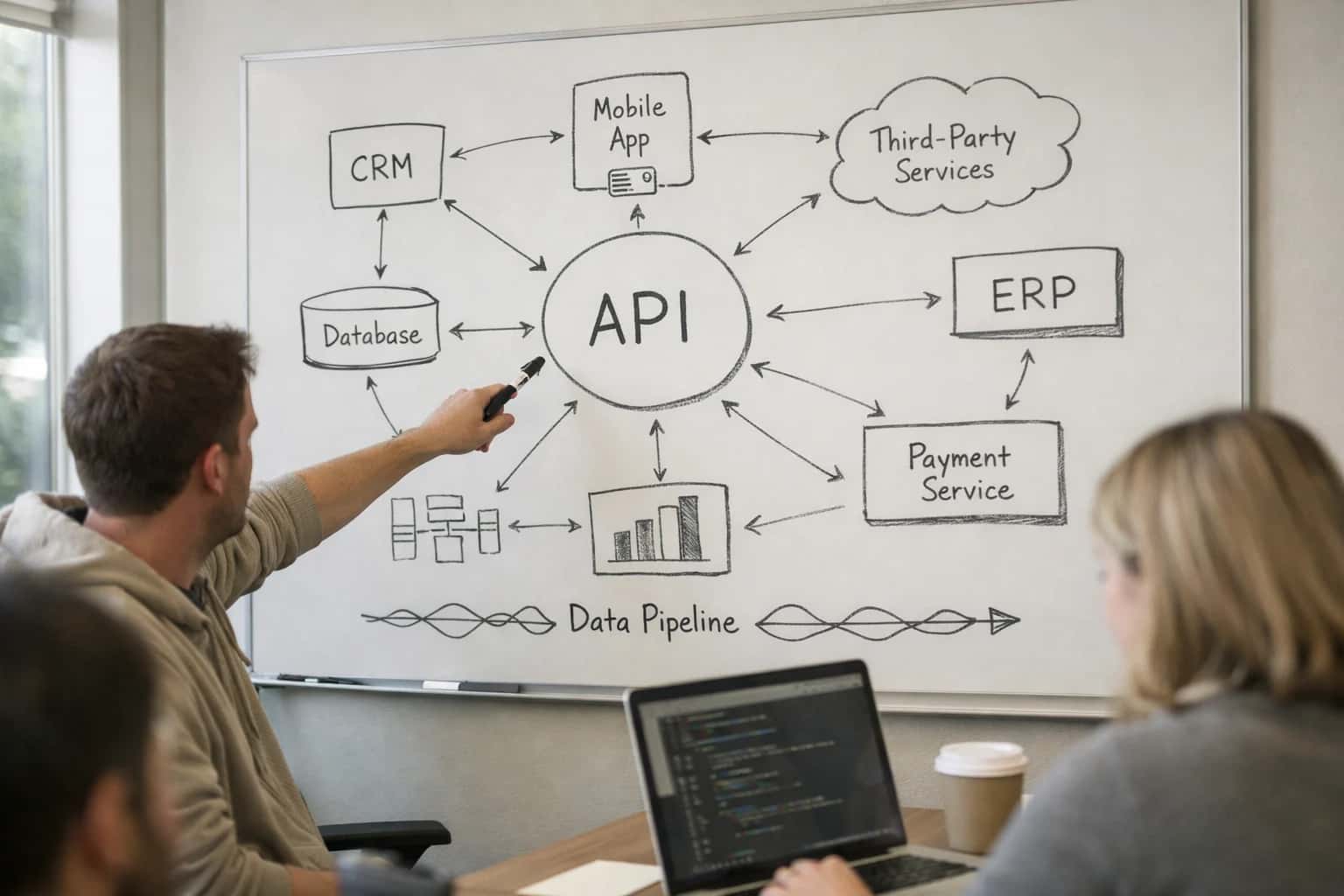
ARCHITECTURE & ROLLOUT
Where AI Fits into Your HR Reporting Stack
A practical blueprint for automating recurring HR reports by connecting AI directly to your HRIS data pipelines.
The implementation typically involves a lightweight orchestration layer that sits between your HRIS and your distribution channels (email, Slack, Power BI). This layer:
- Schedules & Executes: Runs the correct HRIS report calls on a daily, weekly, or monthly cadence.
- Processes & Explains: Uses an LLM to analyze the raw data, identify trends ("Headcount increased by 5% in Q2, driven by Engineering"), and flag anomalies ("Voluntary turnover in the Sales department is 3x the company average").
- Formats & Distributes: Structures the output into a formatted PDF, slide deck, or interactive dashboard widget, then routes it to the correct stakeholders via email, a SharePoint site, or a channel like Microsoft Teams.
Rollout should start with a single, high-value recurring report—like a monthly headcount report for the executive team. Governance is critical: establish clear approval gates (e.g., HRBP review of AI-generated insights before distribution) and maintain a full audit trail of data sources, prompts used, and output versions. This ensures the AI augments—not replaces—human oversight, providing consistency and freeing up analysts for deeper strategic work. For related patterns on building these data foundations, see our guide on AI Integration for HR Reporting and Dashboards and our architectural overview for AI Integration for People Analytics in HR Systems.
AI INTEGRATION FOR AUTOMATED HR REPORTING
Connecting AI to Your HRIS Reporting Layer
Accessing HRIS Data for AI
AI-driven reporting requires reliable, secure access to HRIS data. Most platforms expose core reporting objects via REST APIs or dedicated data export services.
Key Integration Points:
- Workday: Utilize the
Report_ServiceAPI to run and retrieve pre-built reports (e.g., Headcount Detail, Turnover Summary). For custom data, theWeb Service_ReportorWorkday Extendprovides more flexibility. - UKG Pro: Leverage the
ReportDataendpoint within the UKG Pro Business Intelligence API to fetch report data in JSON or CSV format. - BambooHR: Use the
ReportsAPI to run standard or custom reports. TheEmployee FilesAPI can supplement with document data. - ADP: Access aggregated workforce data via the
HRendpoints in ADP Workforce Now® API or use ADP DataCloud for a unified analytics layer.
Implementation Pattern: An AI agent or scheduled job calls these APIs, retrieves the structured data, and passes it to an LLM for analysis, summarization, or anomaly detection. Ensure API credentials are managed securely, often via OAuth 2.0.
AUTOMATED INSIGHTS & DISTRIBUTION
High-Value AI Use Cases for HR Reporting
Move beyond static dashboards. Connect AI directly to your HRIS data pipelines to automate the generation, explanation, and distribution of recurring reports, turning raw data into actionable intelligence for leaders and managers.
01
Automated Headcount & Turnover Reporting
AI agents query the HRIS API on a scheduled cadence to generate headcount, turnover, and attrition reports. The system analyzes trends, flags significant deviations (e.g., a department's voluntary turnover spikes 15%), and drafts a narrative summary for HR leadership. Reports are formatted and distributed via email or Slack, saving 4-6 hours of manual compilation per cycle.
Weekly
Report Cadence
02
Natural Language Diversity & Inclusion Dashboards
Empower non-technical leaders to ask questions of their D&I data. An AI layer sits atop the HRIS reporting API or data warehouse, allowing users to query, "Show me promotion rates by gender in Engineering for the last two years" or "What is our representation progress for Hispanic/Latino employees in leadership?" The AI generates the query, runs it, and returns a plain-English summary with visual charts.
Self-Service
Analytics Access
03
Manager-Specific Pulse Reports
Automate the creation and delivery of personalized reports to people managers. An AI workflow pulls a manager's direct report data from the HRIS (engagement scores, performance ratings, tenure, compensation ratios) and generates a confidential, one-page summary. It highlights potential risks (e.g., an employee nearing the compensation band maximum) and suggests actions, like scheduling career conversations. Delivered securely ahead of calibration meetings.
Personalized
Per Manager
04
Regulatory & Compliance Reporting
Automate the assembly of data for required compliance reports (EEO-1, pay equity analyses, OSHA). AI agents extract the necessary employee demographic and job data from the HRIS, transform it into the required format, and perform initial consistency checks. This reduces manual error risk and compresses the data-gathering phase from days to hours, allowing HR compliance teams to focus on analysis and submission.
Audit-Ready
Data Output
05
Recruiting Pipeline to Hire Forecasting
Integrate AI with the HRIS Recruiting module and ATS data to automate recruitment funnel reporting. The system forecasts time-to-fill and quality-of-hire based on historical data and current pipeline velocity. It generates weekly reports for TA leaders, highlighting bottlenecks (e.g., extended interview stages) and predicting headcount attainment for the quarter, enabling proactive resource allocation.
Predictive
Forecasting
06
Automated Benefits Enrollment Analytics
Post-open-enrollment, AI analyzes election data from the HRIS Benefits module against benchmarks and prior years. It generates reports on plan migration trends, high-deductible plan adoption, and dependent coverage changes. The AI summarizes key takeaways for Benefits administrators and finance partners, supporting vendor negotiations and communications planning for the next cycle.
Post-Event
Insight Generation
AI-INTEGRATED HR REPORTING
Example Automated Reporting Workflows
These workflows demonstrate how AI agents, connected directly to your HRIS via API, can automate the creation, distribution, and explanation of recurring HR reports. Each flow is triggered by a schedule or event, pulls relevant data, applies analysis, and delivers actionable insights—dramatically reducing manual effort from hours to minutes.
Trigger: Scheduled job runs on the first business day of each month.
Context/Data Pulled: The AI agent calls the HRIS API (e.g., Workday Report-as-a-Service, BambooHR API) to retrieve:
- Current employee count by department, location, and job family.
- Voluntary and involuntary terminations for the prior month.
- New hires and internal transfers.
- Historical headcount data for trend comparison.
Model or Agent Action: The agent processes the data to:
- Calculate key metrics: headcount change, turnover rate (voluntary/involuntary), and internal mobility rate.
- Compare metrics against budget and prior periods to flag variances (>10%).
- Generate a narrative summary explaining the primary drivers of turnover (e.g., "Turnover increased in the Engineering department, primarily in the 'Software Engineer II' role").
System Update or Next Step:
- The agent formats the data and narrative into a pre-designed template (PowerPoint, Google Slides).
- It posts the completed dashboard to a designated Slack/Teams channel for HR leadership.
- It creates a task in the HR team's project management tool (e.g., Asana) for any flagged variances requiring follow-up.
Human Review Point: The HRBP for a flagged department receives an automated alert to review the analysis and schedule a meeting with the department head.
FROM DATA PIPELINE TO INSIGHT DELIVERY
Implementation Architecture: Data Flow, APIs, and Guardrails
A production-ready blueprint for automating HR reports by connecting AI to your HRIS data flows.
The core of this integration is an orchestration layer that sits between your HRIS data pipeline and your reporting consumers. It typically involves:
- Trigger: A scheduled job (e.g., weekly, monthly) or a data-change webhook from your HRIS (Workday, UKG, BambooHR, ADP) that signals new data is ready.
- Extraction: Using the HRIS's native reporting API (like Workday's
Report_Serviceor UKG Pro'sReportQueryAPI) to pull the raw dataset for headcount, turnover, diversity, or other metrics. - Enrichment & Analysis: The raw data is passed to an AI service where a pre-configured agent applies business logic, calculates derived metrics (e.g., voluntary vs. involuntary turnover rate), and generates narrative summaries explaining trends, outliers, and key drivers.
- Delivery: The enriched report (data + narrative) is formatted and distributed via the channels your business uses: emailed PDFs, Slack messages to leaders, rows appended to a Google Sheet, or cards posted in a BI tool like Tableau.
Governance and accuracy are non-negotiable. This architecture builds in guardrails:
- Data Validation: The AI agent's output is compared against pre-defined thresholds for metric plausibility. If a calculated turnover rate spikes beyond a sanity-check limit, the system can flag it for human review before distribution.
- Approval Workflows: For sensitive reports (e.g., executive diversity metrics), the system can route a draft to the HR leader via a simple web interface or email for a final sign-off before release.
- Audit Trail: Every report generation is logged with a timestamp, data source snapshot ID, the AI model version used, and the distributing user or service account, creating a clear lineage for compliance.
Rollout is iterative. Start by automating a single, high-volume report like a weekly headcount summary by department. Use this to validate the data pipeline, refine the AI's narrative tone, and establish the approval rhythm. Once stable, expand to more complex reports like quarterly turnover analysis with root-cause commentary or diversity representation trends. The goal is to shift HR analysts from manual compilation and formatting to reviewing and refining AI-generated insights, turning report generation from a days-long task into a same-day operation.
AI INTEGRATION FOR AUTOMATED HR REPORTING
Code and Payload Examples
Connecting to HRIS APIs
Automated reporting starts with programmatic access to HRIS data. Most platforms (Workday, UKG, BambooHR) provide REST APIs for core objects like Workers, Positions, and Custom Reports. Your AI agent or orchestration layer will authenticate via OAuth 2.0 and call these endpoints to retrieve the raw data needed for report generation.
Example: Fetching Headcount Data from Workday
This Python snippet uses the Workday Get_Workers API to retrieve active employee records, a foundational step for headcount and turnover reports.
pythonimport requests # Authenticate and obtain bearer token (simplified) auth_response = requests.post( 'https://wd2-impl-services1.workday.com/ccx/oauth2/{tenant}/token', data={'grant_type': 'client_credentials', 'client_id': CLIENT_ID, 'client_secret': CLIENT_SECRET} ) token = auth_response.json()['access_token'] # Fetch worker data for reporting headers = {'Authorization': f'Bearer {token}', 'Accept': 'application/json'} report_response = requests.post( 'https://wd2-impl-services1.workday.com/ccx/service/{tenant}/Staffing/v{version}/Get_Workers', headers=headers, json={ 'Request_References': { 'Worker_Reference': [ {'ID': {'type': 'Employee_ID', '_value_1': 'All_Active'}} ] }, 'Response_Filter': { 'As_Of_Entry_DateTime': '2024-01-31T23:59:59', # End of period 'Page': 1, 'Count': 100 } } ) worker_data = report_response.json() # Process JSON to extract headcount by department, location, etc.
AI-ENHANCED HR REPORTING
Realistic Time Savings and Operational Impact
How integrating AI into HRIS data pipelines transforms the creation, distribution, and analysis of recurring HR reports.
| Report Type / Task | Manual Process | AI-Augmented Process | Key Impact & Notes |
|---|---|---|---|
Monthly Headcount & Turnover Report | 2-3 hours of data extraction, validation, and formatting | 15-30 minutes for review and finalization | AI queries HRIS APIs, validates data consistency, and drafts narrative insights. HRBP reviews for nuance. |
Quarterly Diversity & Inclusion Dashboard | 1-2 days consolidating data from multiple sources and manual calculations | 2-4 hours for analysis, narrative generation, and stakeholder review | AI automates data aggregation, calculates key metrics, and highlights trends vs. goals. Focus shifts to action planning. |
Annual Compensation Planning Data Pack | 3-5 days per business unit for data gathering and benchmarking prep | 1 day per unit for analysis and recommendation drafting | AI pulls internal comp data, aligns with external benchmarks, and flags outliers. Analysts focus on strategic adjustments. |
Ad-hoc Report Request (e.g., tenure by department) | 4-8 hour turnaround, dependent on analyst availability | Near-instant generation via natural language query | Empowers managers with self-service, freeing HR analysts for complex, strategic requests. |
Regulatory Compliance Report (e.g., EEO-1) | 1-2 weeks of meticulous data review and manual form preparation | 2-3 days for automated data validation and submission prep | AI ensures data accuracy, flags potential discrepancies, and generates draft filings. Legal/HR final review required. |
Executive Leadership Report (PPT + Narrative) | 8-16 hours per cycle for data synthesis and slide creation | 2-4 hours for editing, storytelling, and visual refinement | AI assembles core data, suggests talking points, and creates initial visuals. HR leader tailors message and strategy. |
Report Distribution & Stakeholder Communication | Manual email distribution and follow-up on questions | Automated, personalized distribution with embedded Q&A bot | Reduces administrative load. AI-powered FAQ bot handles common data questions post-distribution, deflecting follow-up tickets. |
ARCHITECTING CONTROLLED, AUDITABLE AI FOR HR DATA
Governance, Security, and Phased Rollout
A practical framework for deploying AI-driven reporting with the security and change management required for sensitive HR data.
Production AI reporting integrations require a governance-first architecture. This means implementing strict access controls at the API layer, ensuring all AI queries are scoped to the user's role-based permissions within the HRIS (e.g., a manager can only see their team's data). Every AI-generated insight or report draft must be logged with a full audit trail, linking the output to the source query, user, timestamp, and underlying data slices. For platforms like Workday, this involves leveraging the Workday Extend security model and API tenant isolation. For UKG Pro or ADP Workforce Now, it means integrating via OAuth 2.0 with precise scope definitions and using the system's native reporting security groups as a data firewall.
A phased rollout is critical for adoption and risk management. We recommend starting with a read-only pilot focused on a single, high-value report like monthly voluntary turnover. In this phase, the AI agent is granted access to a sandbox or a limited production data set to generate narrative summaries and identify anomalies, but all outputs are reviewed by an HR analyst before distribution. The next phase introduces automated distribution of approved reports via scheduled Slack or email, triggered from the HRIS. The final phase enables interactive exploration, where authorized leaders can ask natural language follow-up questions (e.g., "Show me turnover for remote engineers in Q3") with the AI querying live data via a secure, logged session. This gradual approach builds trust and surfaces integration issues early.
Security extends to the AI models and prompts themselves. We implement data minimization, ensuring prompts never send full employee records to a model. Instead, the integration uses a retrieval-augmented generation (RAG) pattern where the AI queries aggregated, anonymized data sets or uses vector embeddings of pre-approved report templates. All prompts are version-controlled and tested for bias or data leakage. For a practical example, see our guide on AI Governance for HR Systems. Rollback plans are essential; if an anomaly is detected, the system can revert to manual reporting workflows while the AI logic is audited, ensuring business continuity.
Enabling Efficiency, Speed & Accuracy
Intelligent Analysis, Decision & Execution
We build AI systems for teams that need search across company data, workflow automation across tools, or AI features inside products and internal software.
Talk to Us
Search across company data
Give teams answers from docs, tickets, runbooks, and product data with sources and permissions.
Useful when people spend too long searching or get different answers from different systems.
Enterprise searchRAGPermissions
Read more
Automate internal workflows
Use AI to route work, draft outputs, trigger actions, and keep approvals and logs in place.
Useful when repetitive work moves across multiple tools and teams.
AI agentsWorkflow automationGovernance
Read more
Add AI to products and internal tools
Build assistants, guided actions, or decision support into the software your team or customers already use.
Useful when AI needs to be part of the product, not a separate tool.
AI integrationDecision supportModel routing
Read moreAI INTEGRATION FOR AUTOMATED HR REPORTING
FAQ: Technical and Commercial Questions
Practical answers for technical leaders and HR operations managers evaluating AI to automate the generation, distribution, and explanation of recurring HR reports.
Secure integration follows a layered architecture:
- API-Based Data Access: We configure a dedicated service account with the minimum necessary permissions (e.g., read-only access to specific objects like
Worker,Job,Compensation) in your HRIS (Workday, UKG, ADP, BambooHR). - Data Pipeline: A scheduled or event-triggered pipeline extracts report-relevant data. For sensitive reports, we often use a staging database or data warehouse (like Snowflake or BigQuery) as an intermediary, never sending raw PII directly to a model.
- Contextual Retrieval: For report generation, the AI agent uses a Retrieval-Augmented Generation (RAG) pattern. It queries a vector store containing pre-processed, de-identified aggregates and metadata, not live PII. The system retrieves only the statistical context needed (e.g., "Q3 headcount by department").
- Audit & Governance: All data access, report generation triggers, and distribution actions are logged with user/agent IDs for a complete audit trail.
This approach ensures data never leaves your controlled environment unnecessarily and access is strictly governed by your HRIS's native RBAC.

About the author
Prasad Kumkar
CEO & MD, Inference Systems
Prasad Kumkar is the CEO & MD of Inference Systems and writes about AI systems architecture, LLM infrastructure, model serving, evaluation, and production deployment. Over 5+ years, he has worked across computer vision models, L5 autonomous vehicle systems, and LLM research, with a focus on taking complex AI ideas into real-world engineering systems.
His work and writing cover AI systems, large language models, AI agents, multimodal systems, autonomous systems, inference optimization, RAG, evaluation, and production AI engineering.
LinkedIn
Limited slotsGet a Free AI Consultation
Partnered with leading AI, data, and software stack.





How We Work
Custom AI workflows for your Business
One-fit-all AI don't work for modern businesses. At Inferensys, we aim to understand your business & custom requirements; which we use to define most efficient agentic workflows, the data, and the tools for your business.
01
Review the use case
We understand the task, the users, and where AI can actually help.
Read more02
Pick the right approach
We define what needs search, automation, or product integration.
Read more03
Build the first useful version
We implement the part that proves the value first.
Read more04
Improve from there
We add the checks and visibility needed to keep it useful.
Read moreThe first call is a practical review of your use case and the right next step.
Talk to Us