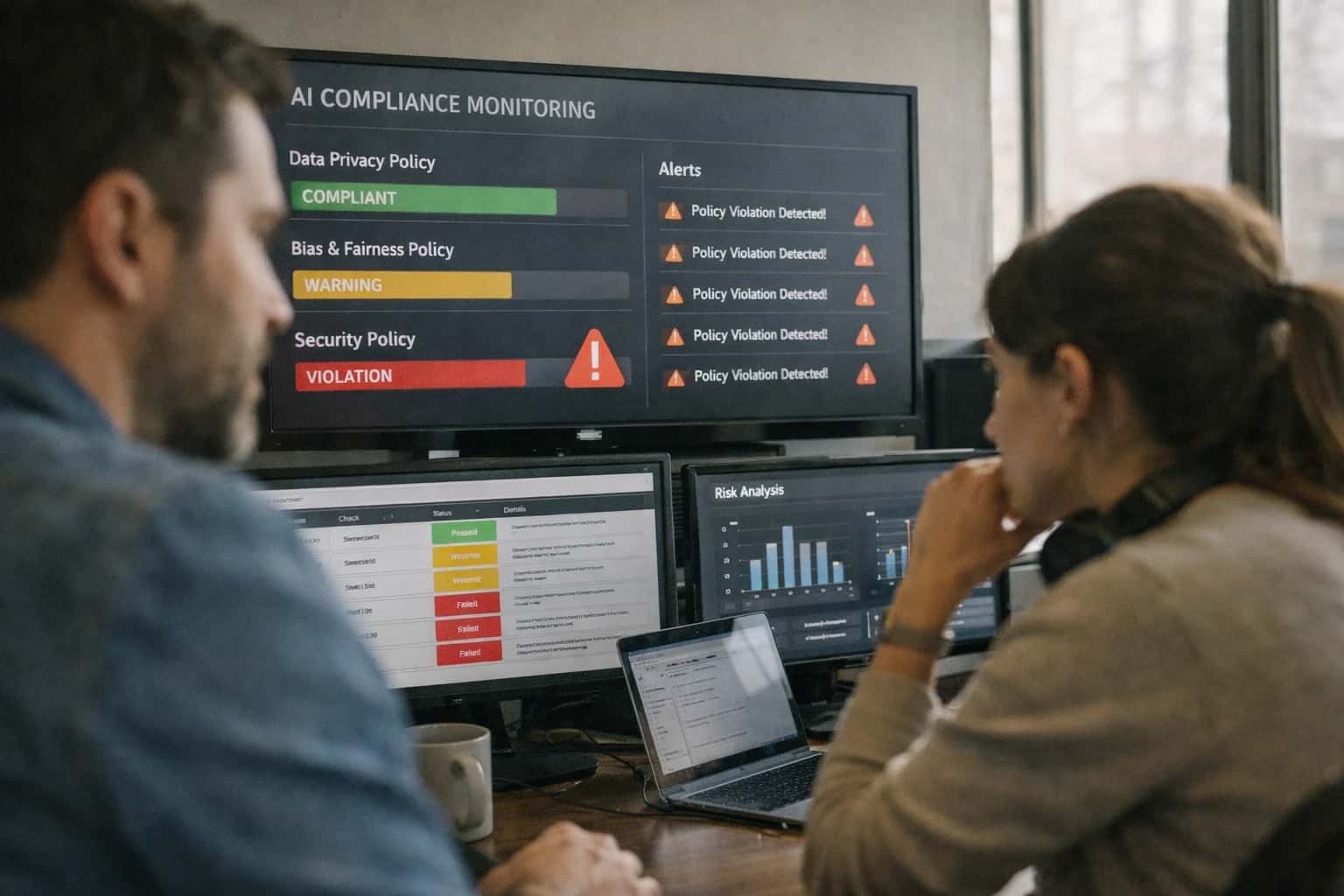
AI integration for ADP SmartCompliance focuses on augmenting its core functions—regulatory monitoring, reporting, and risk management—by connecting to its data model and automation surfaces. Key integration points include the Compliance Dashboard API for real-time alert ingestion, the Reporting Engine to automate the generation of complex filings (like ACA, EEO-1, or payroll tax forms), and the Case Management module for routing flagged discrepancies. An AI agent can act as a continuous audit layer, parsing incoming regulatory updates from government feeds, cross-referencing them with your company's configured policies in SmartCompliance, and automatically creating review tasks or draft compliance reports.

Integration
AI Integration for ADP SmartCompliance
A technical guide for augmenting ADP SmartCompliance with AI to automate regulatory monitoring, generate compliance reports, and flag potential issues—reducing manual review from hours to minutes.
ARCHITECTURAL BLUEPRINT
Where AI Fits into ADP SmartCompliance Workflows
A technical guide to integrating AI for automated monitoring, reporting, and issue detection within ADP SmartCompliance.
Implementation typically involves a middleware service that subscribes to SmartCompliance webhooks for new alerts or report deadlines. This service uses an LLM to analyze the alert context—such as a potential wage-hour violation or a new state sick leave law—and enriches it with internal employee data pulled via the ADP Workforce Now or Vantage HCM API. The AI can then draft a preliminary impact assessment, suggest corrective actions, and even populate a structured response or filing draft back into SmartCompliance, turning a manual research task into a reviewed-and-approved workflow. For example, a multi-state payroll tax change can trigger an AI workflow that identifies affected employees, calculates potential adjustments, and generates a summary for the compliance officer's review in the system.
Governance is critical. All AI-generated outputs should be routed through SmartCompliance's existing approval workflows and logged as system-generated recommendations within the platform's audit trail. A human-in-the-loop step is essential for final submission, ensuring accountability. Rollout should start with a single, high-volume compliance workflow—such as I-9 document expiry tracking or benefits compliance reporting—to validate accuracy and user trust before expanding to more complex areas like predictive penalty risk scoring. This approach leverages ADP SmartCompliance as the system of record while using AI to accelerate the analysis and drafting that currently consumes significant specialist time.
ARCHITECTURAL BLUEPRINT
Key Integration Surfaces in ADP SmartCompliance
Centralized Monitoring & Alerting
The Regulatory Intelligence Hub is the core engine for tracking federal, state, and local employment law changes. AI integration here focuses on automating the ingestion, analysis, and dissemination of regulatory updates.
Key AI Workflows:
- Automated Document Processing: Use LLMs to parse new legislation, agency rulings, and court decisions from RSS feeds, government portals, and legal databases. Extract key entities like effective dates, affected jurisdictions, and required actions.
- Impact Assessment & Triage: Classify updates by relevance to the client's specific industry, workforce locations, and current policies. An AI agent can score urgency and route high-priority items to the appropriate compliance or HR team member within SmartCompliance.
- Proactive Alerting: Generate and send tailored summaries via the platform's notification system, highlighting required changes to handbooks, posters, or payroll configurations.
ADP SMARTCOMPLIANCE INTEGRATION PATTERNS
High-Value AI Use Cases for Compliance Teams
Integrate AI directly into ADP SmartCompliance to automate regulatory monitoring, accelerate reporting, and proactively manage risk. These patterns connect to compliance data, workflows, and alerting surfaces within the platform.
01
Automated Regulatory Change Monitoring
Deploy an AI agent to continuously scan for new federal, state, and local employment regulations. The agent analyzes updates, maps them to impacted ADP SmartCompliance modules (e.g., wage/hour, tax, leave), and creates flagged review tasks for the compliance team. Workflow: Agent ingests regulatory feeds → classifies relevance → creates a Compliance Alert record in SmartCompliance with a summary and required action steps.
Batch → Real-time
Monitoring cadence
02
AI-Powered Compliance Reporting Drafts
Accelerate EEO-1, OSHA, and other mandated reports. An AI copilot accesses aggregated workforce data from ADP, applies reporting logic, and generates a first-draft report within the SmartCompliance interface. Workflow: User triggers a report → AI queries ADP data via APIs → populates a pre-formatted template → highlights anomalies or missing data for human review before final submission.
Hours -> Minutes
Draft generation
03
Proactive Audit Risk Flagging
Use AI to analyze payroll, time & attendance, and benefits data flowing into SmartCompliance to identify patterns that could trigger a regulatory audit. The system flags high-risk patterns (e.g., consistent overtime miscalculation, misclassified workers) and creates a Mitigation Case with recommended corrective actions. Workflow: Scheduled analysis of ADP data streams → anomaly detection against compliance rules → automated case creation and assignment to a compliance officer.
Same day
Risk identification
04
Intelligent Policy Acknowledgment & Training
Automate and personalize the policy rollout process. An AI agent segments employees by role/location, delivers tailored policy summaries, and manages acknowledgment tracking within SmartCompliance. For complex changes, it can generate micro-training content. Workflow: New policy is logged in SmartCompliance → AI determines impacted populations → orchestrates communications via ADP portals/email → syncs acknowledgment status back to compliance records.
1 sprint
Rollout timeline
05
Cross-Jurisdiction Wage Law Analysis
Support multi-state employers by integrating an AI analysis layer for complex wage/hour compliance. The agent compares timecard data from ADP against a dynamic database of local minimum wage, overtime, and meal/break rules, flagging potential violations before payroll runs. Workflow: Agent ingests pre-payroll data → applies jurisdiction-specific rule sets → outputs an exception report for payroll administrators to review within the SmartCompliance dashboard.
Pre-payroll
Check timing
06
Compliance Inquiry Virtual Agent
Deploy a secure chatbot for managers and employees to ask compliance questions (e.g., 'Is this worker overtime-exempt?', 'What leave applies here?'). The agent retrieves answers from the integrated SmartCompliance knowledge base and company policies, logging all inquiries for audit trails. Workflow: User queries via Teams/Slack/portal → agent grounds response in policy docs → provides citation and, if needed, creates a case for specialist follow-up in SmartCompliance.
Deflect 40%+
Tier-1 inquiries
ADP SMARTCOMPLIANCE
Example AI-Augmented Compliance Workflows
These concrete workflows illustrate how AI agents can be integrated into ADP SmartCompliance to automate monitoring, accelerate reporting, and proactively flag risks. Each flow connects to specific SmartCompliance modules and APIs.
Trigger: Daily scheduled job or webhook from a regulatory news feed.
Context/Data Pulled:
- Agent queries the ADP SmartCompliance API for the current list of tracked jurisdictions and regulations (e.g.,
GET /api/v1/compliance/jurisdictions). - Fetches the latest regulatory update summaries from the configured source.
Model or Agent Action:
- An LLM classifies each update by jurisdiction, regulation type (e.g., Wage & Hour, OSHA, ACA), and severity.
- The agent cross-references the update against the company's employee data footprint (headcount by state, job codes) pulled from ADP Workforce Now to assess potential impact.
- It drafts a plain-English summary: "New California OSHA reporting rule likely impacts 120 warehouse employees in Los Angeles. Key change: reporting deadline reduced to 24 hours."
System Update or Next Step:
- The agent creates a new Compliance Task in SmartCompliance via
POST /api/v1/compliance/tasks, assigning it to the appropriate HR or Legal owner with the AI-generated summary and source links attached. - Sends a priority alert via the connected communication channel (e.g., Teams, email).
Human Review Point: The assigned owner reviews the task, impact assessment, and can approve, modify, or reject the agent's classification before any automated actions are taken.
PRODUCTION-READY INTEGRATION PATTERNS
Implementation Architecture: Data Flow and Guardrails
A secure, governed architecture for connecting AI to ADP SmartCompliance's regulatory monitoring and reporting workflows.
A production AI integration for ADP SmartCompliance is built on a secure middleware layer that sits between your compliance team and the ADP platform. This layer handles three core data flows:
- Ingestion: Pulling regulatory updates, compliance task lists, and flagged issues from ADP SmartCompliance APIs into a vector-enabled data store for analysis.
- Processing: Using LLMs to summarize new regulations, cross-reference them with existing company policies, and generate draft action items or required report changes.
- Action: Routing AI-generated insights and drafts back into SmartCompliance as new tasks, comments on existing issues, or structured data for reporting modules via secure API calls.
Critical guardrails are implemented at each stage to ensure reliability and compliance:
- Human-in-the-Loop Approvals: Before any AI-generated compliance action (e.g., filing a report, updating a policy register) is committed to SmartCompliance, it is routed through a configured approval workflow in a system like ServiceNow or Jira, or presented for review within a custom dashboard.
- Audit Trail Logging: Every AI interaction—query, generated output, and subsequent system action—is logged with a full chain of custody, including user ID, timestamp, source data hash, and the final human approver. This log is stored separately from ADP for independent auditability.
- Data Minimization & PII Stripping: The middleware layer is configured to strip Personally Identifiable Information (PII) and sensitive employee data from payloads sent to external LLM APIs, sending only the relevant regulatory text, policy clauses, or anonymized issue descriptions for analysis.
Rollout follows a phased, risk-based approach. Start with read-only analysis—using AI to summarize new regulations and suggest potential impacts without writing back to SmartCompliance. Then, progress to assistive drafting for routine reports (e.g., OSHA 300A logs, EEO-1 Component 1 data). Finally, implement closed-loop automation for low-risk, repetitive tasks like tracking certification expiry dates and sending reminder workflows. This architecture, emphasizing secure data flow, mandatory approvals, and comprehensive logging, allows compliance teams to augment their capacity with AI while maintaining strict governance over the process. For related patterns on orchestrating multi-system workflows, see our guide on Cross-Platform HR Orchestration.
ADP SMARTCOMPLIANCE INTEGRATION PATTERNS
Code and Payload Examples
Monitoring API for New Regulations
An AI agent can be configured to periodically poll the ADP SmartCompliance API for updates to regulatory content, such as new state tax forms or updated labor law summaries. When a change is detected, the agent extracts the relevant text, uses an LLM to summarize the impact for your specific workforce locations, and triggers a workflow in your case management system.
python# Example: Polling for regulatory updates import requests def check_regulatory_updates(api_key, client_id): headers = { 'Authorization': f'Bearer {api_key}', 'Accept': 'application/json' } # ADP SmartCompliance API endpoint (example) url = f'https://api.adp.com/smartcompliance/v1/clients/{client_id}/regulatory-updates?since=2024-01-01' response = requests.get(url, headers=headers) updates = response.json().get('updates', []) for update in updates: # Send update to LLM for analysis analysis_payload = { 'regulation_text': update['description'], 'client_industries': ['manufacturing', 'retail'], 'client_states': ['CA', 'TX', 'NY'] } # Call LLM service to assess impact impact_summary = call_llm_for_impact(analysis_payload) # Create a task in your case management system create_compliance_task(update['id'], impact_summary)
This pattern automates the first review of new regulations, flagging only those requiring action based on your operational footprint.
AI-ENHANCED COMPLIANCE WORKFLOWS
Realistic Time Savings and Operational Impact
How AI integration transforms manual monitoring and reporting tasks within ADP SmartCompliance, focusing on measurable efficiency gains and risk reduction.
| Compliance Workflow | Before AI | After AI | Implementation Notes |
|---|---|---|---|
Regulatory Change Monitoring | Manual review of updates (2-4 hours/week) | Automated alerts with summaries (15 minutes/week) | AI scans official sources; human reviews flagged high-impact changes |
Multi-State Payroll Rule Verification | Manual lookup per inquiry (20-30 minutes) | Instant agent query with cited source (<2 minutes) | Agent accesses integrated compliance database; provides audit trail |
Compliance Report Drafting (Quarterly) | Data gathering & formatting (1-2 days) | AI-assisted data pull & first draft (3-4 hours) | Human reviews, edits, and finalizes AI-generated narrative |
Issue Flagging & Triage | Reactive review during audits | Proactive anomaly detection & case creation | AI models baseline patterns; creates tickets in SmartCompliance for review |
Policy Acknowledgment Tracking | Manual follow-up emails & spreadsheets | Automated reminders & dashboard alerts | AI monitors completion status; escalates via existing ADP workflows |
Audit Support Document Preparation | Manual collection & redaction (Days) | Assisted document retrieval & summarization (Hours) | AI identifies relevant records; preparer reviews for sensitivity |
Employee Inquiry Routing (Compliance) | HR generalist triage (5-10 minutes/inquiry) | AI chatbot deflection & accurate routing (<1 minute) | Chatbot resolves common questions; routes complex cases to specialist |
ARCHITECTING FOR COMPLIANCE AND CONTROL
Governance, Security, and Phased Rollout
A practical approach to deploying AI within ADP SmartCompliance that prioritizes security, auditability, and incremental value.
Integrating AI into a compliance platform like ADP SmartCompliance requires a governance-first architecture. This means building on a secure middleware layer that acts as a policy enforcement point. All AI agent interactions with SmartCompliance data—whether reading regulatory updates, analyzing payroll data for compliance flags, or generating draft reports—should be routed through this layer. This allows for centralized audit logging, role-based access control (RBAC) aligned with ADP user permissions, and data masking for sensitive PII before any payload reaches an LLM. The integration should leverage ADP's existing APIs and webhooks to trigger AI workflows, ensuring actions are traceable back to specific compliance modules or user-initiated events.
A phased rollout is critical for user adoption and risk management. Start with a read-only analysis phase, where AI agents monitor regulatory feeds and internal data to flag potential issues for human review, with no automated actions. The next phase introduces assistive automation, such as AI-drafted compliance summaries or pre-filled audit checklists that require manager approval within SmartCompliance before submission. The final phase, after extensive validation, enables closed-loop automation for low-risk, repetitive tasks like filing standard reports or updating compliance tracking status, always with a clear human-in-the-loop override and rollback procedure.
Security is non-negotiable. All data in transit and at rest must be encrypted. AI prompts and contexts must be designed to avoid leaking sensitive data into model training loops (using zero-retention APIs). Furthermore, a change management workflow should be integrated, where any AI-suggested modification to a compliance record or process is logged, requires justification, and can be traced through SmartCompliance's audit trail. This controlled, stepwise approach ensures the AI integration augments your compliance posture without introducing unmanaged risk. For related architectural patterns, see our guides on AI Integration for HR Compliance Automation and building AI-Powered HR Assistants.
Enabling Efficiency, Speed & Accuracy
Intelligent Analysis, Decision & Execution
We build AI systems for teams that need search across company data, workflow automation across tools, or AI features inside products and internal software.
Talk to Us
Search across company data
Give teams answers from docs, tickets, runbooks, and product data with sources and permissions.
Useful when people spend too long searching or get different answers from different systems.
Enterprise searchRAGPermissions
Read more
Automate internal workflows
Use AI to route work, draft outputs, trigger actions, and keep approvals and logs in place.
Useful when repetitive work moves across multiple tools and teams.
AI agentsWorkflow automationGovernance
Read more
Add AI to products and internal tools
Build assistants, guided actions, or decision support into the software your team or customers already use.
Useful when AI needs to be part of the product, not a separate tool.
AI integrationDecision supportModel routing
Read moreAI INTEGRATION FOR ADP SMARTCOMPLIANCE
Frequently Asked Questions
Practical answers for technical leaders planning to augment ADP SmartCompliance with AI for regulatory monitoring, reporting automation, and risk detection.
The integration uses a secure, API-first approach:
- Authentication & Scope: The AI system authenticates to ADP's APIs (typically OAuth 2.0) with scoped permissions, ensuring least-privilege access—often read-only for compliance data and write access only to specific logs or case objects.
- Data Retrieval: Agents query the ADP SmartCompliance API to pull structured data (e.g., payroll audit logs, tax filing statuses, employee classification records) and relevant unstructured documents (e.g., regulatory PDFs, policy updates).
- Processing Layer: Retrieved data is processed in a secure, isolated environment. Structured data is used directly; documents are parsed via OCR and text extraction. A RAG (Retrieval-Augmented Generation) pipeline is often used, where relevant compliance data is indexed into a vector database for semantic search.
- Action & Update: The AI model analyzes the context and can take actions like flagging a record for review, generating a draft report, or creating a task within SmartCompliance—all via API calls. All actions are logged with a full audit trail.

About the author
Prasad Kumkar
CEO & MD, Inference Systems
Prasad Kumkar is the CEO & MD of Inference Systems and writes about AI systems architecture, LLM infrastructure, model serving, evaluation, and production deployment. Over 5+ years, he has worked across computer vision models, L5 autonomous vehicle systems, and LLM research, with a focus on taking complex AI ideas into real-world engineering systems.
His work and writing cover AI systems, large language models, AI agents, multimodal systems, autonomous systems, inference optimization, RAG, evaluation, and production AI engineering.
LinkedIn
Limited slotsGet a Free AI Consultation
Partnered with leading AI, data, and software stack.





How We Work
Custom AI workflows for your Business
One-fit-all AI don't work for modern businesses. At Inferensys, we aim to understand your business & custom requirements; which we use to define most efficient agentic workflows, the data, and the tools for your business.
01
Review the use case
We understand the task, the users, and where AI can actually help.
Read more02
Pick the right approach
We define what needs search, automation, or product integration.
Read more03
Build the first useful version
We implement the part that proves the value first.
Read more04
Improve from there
We add the checks and visibility needed to keep it useful.
Read moreThe first call is a practical review of your use case and the right next step.
Talk to Us