The RMS Cloud Central Reservation System (CRS) is the operational core for managing reservations, rates, and inventory across direct and indirect channels. AI integration targets three primary surfaces: the Contract & Wholesale Management modules for automated rate loading and allotment tracking, the Agent Desktop interface for call center support, and the XML/API Gateway for intelligent, automated responses to channel partner availability requests. By connecting to the Reservation, RatePlan, and Allotment objects via the RMS Cloud API, AI systems can read, analyze, and act on real-time booking data without disrupting the core transaction layer.

Integration
AI Integration for RMS Cloud Central Reservation System
A technical blueprint for embedding AI agents and workflows into RMS Cloud's Central Reservation System to automate call center support, manage wholesale contracts, and respond to channel partners in real-time.
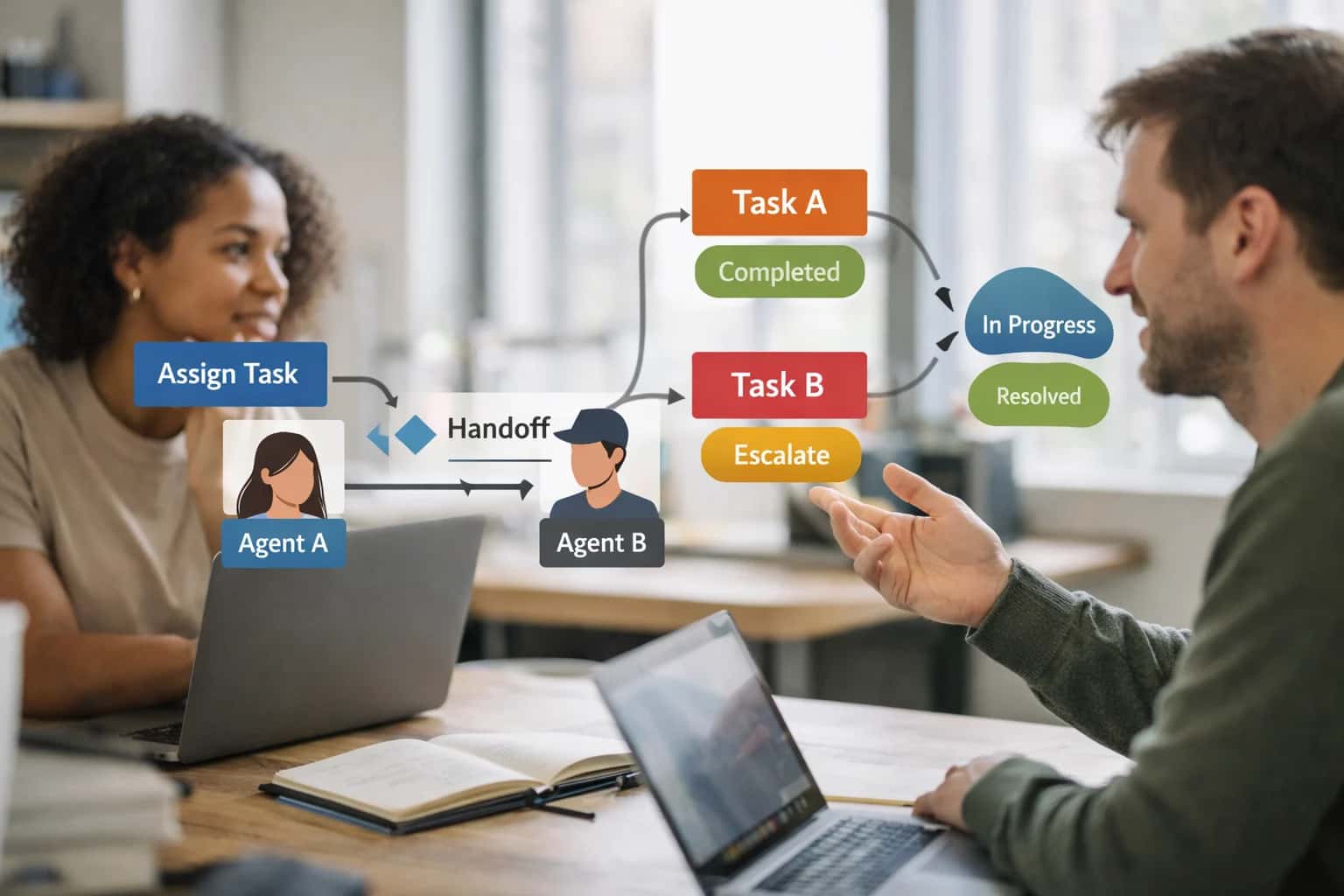
ARCHITECTURE FOR ENTERPRISE CRS
Where AI Fits into RMS Cloud's Central Reservation System
A technical blueprint for integrating AI agents and models into RMS Cloud's CRS to automate wholesale workflows, support call center agents, and manage channel partner communications.
High-value implementations focus on reducing manual, repetitive work. For example, an AI agent can monitor incoming Request for Proposal (RFP) emails, extract key terms (dates, room blocks, rates), and pre-populate a group booking worksheet in the CRS for agent review—cutting data entry time from 15 minutes to under 60 seconds. For wholesale partners, an AI-driven workflow can automatically generate and send contract rate confirmations based on negotiated terms stored in the CRS, while another agent monitors allotment consumption and triggers reallocation alerts before blocks are sold out. In the call center, a copilot interface layered over the agent desktop can instantly surface a guest's lifetime value, stay history, and active preferences during a call, suggesting personalized offers or resolving common inquiries without tab-switching.
Rollout requires a phased approach, starting with read-only data connections to train models on historical booking patterns and failure modes (e.g., rate loading errors). The first live workflows should be human-in-the-loop, such as an AI that drafts wholesale contract emails for an agent to review and send. Governance is critical: all AI-generated actions (like a proposed rate change) should be logged in the CRS audit trail, and approvals can be routed through existing RMS Cloud user roles. This ensures revenue integrity while automating the 80% of routine tasks that occupy revenue managers and reservation agents. For a deeper technical foundation, see our guide on RMS Cloud API integration.
ENTERPRISE RESERVATION SYSTEM
Key Integration Surfaces in RMS Cloud CRS
Automating Agent Support for Complex Bookings
Integrate AI directly into the call center interface used with RMS Cloud CRS to create a real-time agent copilot. This surface connects to live availability, rate plans, and guest profile data via API to assist agents during phone and email inquiries.
Key Workflows:
- Automated Availability Responses: The AI listens to agent conversations (via transcript) or reads email inquiries, then queries RMS Cloud for real-time availability across room types and dates, drafting a structured response for the agent to review and send.
- Contract Rate Retrieval: When an agent mentions a corporate or wholesale account, the copilot automatically fetches the applicable negotiated rates and allotments from RMS Cloud, ensuring accuracy and saving lookup time.
- Upsell Prompting: Based on the booking context (length of stay, guest history), the AI suggests relevant upsell opportunities (e.g., suite upgrades, late check-out) for the agent to offer.
Implementation typically involves: a middleware layer that subscribes to the telephony/email platform, calls the RMS Cloud API, and uses an LLM to generate context-aware drafts.
ENTERPRISE RESERVATION AUTOMATION
High-Value AI Use Cases for RMS Cloud CRS
RMS Cloud's Central Reservation System (CRS) manages complex enterprise bookings, wholesale contracts, and channel distribution. These AI integrations target high-friction, manual workflows within the CRS to improve agent productivity, contract accuracy, and partner responsiveness.
01
Call Center Agent Copilot
An AI assistant integrated into the RMS Cloud agent desktop that listens to calls and surfaces relevant guest history, property details, and rate rules in real-time. It can draft follow-up emails, calculate complex group quotes, and suggest alternative dates during high-demand periods, reducing agent lookup time and errors.
Handle time -15%
Typical change
02
Wholesale & Contract Rate Audit
AI agents automatically monitor and validate allocated room blocks, contracted rates, and attrition clauses against live bookings in RMS Cloud. They flag discrepancies (e.g., overbooked allotments, incorrect net rates) and generate summary reports for revenue managers, replacing manual spreadsheet audits.
Weekly -> Daily
Audit frequency
03
Automated Channel Partner Responses
For GDS and tour operator partners, an AI system connects to RMS Cloud's availability and rate APIs. It parses incoming XML/EDI requests for group space or allotments, checks real-time inventory against business rules, and generates compliant, instant responses—turning manual email workflows into automated, same-minute replies.
Batch -> Real-time
Response mode
04
Complex Group Booking Analyzer
AI analyzes incoming RFPs and historical RMS Cloud data to predict the profitability of group business. It evaluates factors like displacement of transient revenue, seasonality, and ancillary spend, providing revenue managers with a scored recommendation and suggested negotiation points before responding to the RFP.
1-2 days
Analysis time saved
05
Corporate Rate Compliance Monitor
An AI workflow continuously scans booked corporate rates in RMS Cloud against master contracts stored in a connected CLM system. It identifies bookings made under expired or incorrect rates, automatically triggers correction workflows, and provides audit trails for billing reconciliation with corporate clients.
06
CRS Data Quality & Enrichment Agent
This AI service cleanses and enriches RMS Cloud master data. It standardizes property names, room type codes, and rate plan descriptions across a portfolio, identifies duplicate or inactive records, and suggests merges. It ensures AI-driven analytics and reporting are built on consistent, high-quality CRS data.
ENTERPRISE CRS AUTOMATION
Example AI-Powered Workflows for RMS Cloud
These concrete workflows illustrate how AI agents and models can be integrated with RMS Cloud's API and data model to automate high-value, manual processes in central reservations and revenue management.
Trigger: An email RFP arrives from a tour operator or corporate client, or a web form is submitted via the property's website.
Context Pulled: The AI agent uses the RMS Cloud API to fetch:
- Real-time availability for the requested dates and room types.
- Historical pickup and wash for similar group blocks.
- Current BAR (Best Available Rate) and competitor set pricing.
- Contractual rules (minimum nights, attrition clauses) from the RMS Cloud contract module.
Agent Action: A multi-step agent:
- Extracts key terms (dates, pax, room type, meal plan) from the unstructured RFP.
- Calculates a dynamic quote using a pricing model that factors in demand forecast, displacement cost, and desired margin.
- Drafts a professional response email with the quote, terms & conditions, and a personalized note.
- Creates a tentative block in RMS Cloud with a unique ID linked to the quote.
System Update: The draft response is sent to a human sales manager for final review and sending. The tentative block in RMS Cloud reserves inventory and starts the tracking clock.
Human Review Point: The manager reviews the quote, can adjust figures, and clicks 'send'. All activity is logged in RMS Cloud against the block ID for audit.
ENTERPRISE CRS INTEGRATION
Implementation Architecture: Connecting AI to RMS Cloud
A technical blueprint for embedding AI agents and models into the RMS Cloud Central Reservation System to automate call center support, wholesale rate management, and channel partner communications.
The integration connects to RMS Cloud's core reservation and rate management APIs, focusing on the Reservation, RatePlan, Availability, and Channel objects. AI agents are deployed as middleware services that subscribe to RMS Cloud webhooks for events like new bookings, rate changes, and availability inquiries. For call center support, an AI copilot uses a RAG pipeline over RMS Cloud's reservation notes, property policies, and rate rules to provide real-time answers to agent queries, reducing lookup time from minutes to seconds. For wholesale and contract management, an automated workflow ingests incoming RFPs and contract rate requests via email or API, uses an LLM to extract key terms, and proposes rate structures by analyzing historical performance for similar segments in RMS Cloud.
Channel partner automation is handled by an AI responder service that listens for availability requests from GDS and third-party channels. It interprets natural language or structured queries, checks real-time RMS Cloud inventory and restrictions, and generates compliant, optimized responses. This service runs within a secure, containerized environment, calling the RMS Cloud SOAP and REST APIs with appropriate rate limiting and audit logging. All AI-generated actions—such as a proposed rate change or a drafted response to a travel agent—are routed through a human-in-the-loop approval queue within a custom dashboard before being committed back to RMS Cloud, ensuring governance and control.
Rollout follows a phased approach: starting with a single-property pilot for call center agent support, then expanding to automated contract rate analysis for a defined wholesale segment, and finally layering on the channel partner responder for a select group of connected distributors. Each phase includes integration testing with RMS Cloud's sandbox environment, performance benchmarking against manual baselines, and role-based access control (RBAC) configuration to align with existing RMS Cloud user permissions. The architecture is designed for resilience, with fallback to default RMS Cloud workflows during AI service outages, ensuring core reservation operations remain uninterrupted.
RMS CLOUD API INTEGRATION PATTERNS
Code and Payload Examples
Automating Call Center & Wholesaler Inquiries
Integrate an AI agent with RMS Cloud's Reservation and Availability APIs to handle high-volume, repetitive inquiries from travel agents and wholesalers. The agent can process natural language requests for availability, rates, and contract terms, query RMS in real-time, and return structured, compliant responses.
Example Workflow:
- A wholesaler emails asking for availability for 10 rooms in December.
- An AI agent parses the email, extracts the parameters (date range, room type, number of rooms).
- The agent calls the RMS Cloud
GET /api/v1/availabilityendpoint with the extracted criteria. - Using the response, the agent drafts a reply with available room types, rates (respecting contracted net rates), and a booking link.
- The draft is logged in RMS Cloud's
Communicationmodule against the wholesaler's account.
This reduces call center load for simple queries, allowing agents to focus on complex negotiations and exceptions.
AI-ENHANCED CRS OPERATIONS
Realistic Time Savings and Operational Impact
This table illustrates the tangible operational improvements achievable by integrating AI agents and workflows with the RMS Cloud Central Reservation System, focusing on high-volume enterprise workflows.
| Workflow / Metric | Before AI Integration | After AI Integration | Implementation Notes |
|---|---|---|---|
Wholesale/Contract Rate Quote Response | Manual review and email; 4-8 hour SLA | AI-drafted quotes with rule validation; 15-30 minute SLA | Agent reviews final quote; integrates with RMS rate codes and contract modules |
Channel Manager Availability & Stop-Sell Updates | Manual monitoring and bulk updates; next-day adjustments | AI monitors demand signals, suggests & executes updates; intra-day adjustments | Requires API integration to RMS distribution endpoints; human oversight for major changes |
Group & Block Booking Analysis | Spreadsheet analysis for displacement; 2-4 hours per request | AI-powered displacement modeling & recommendation; 20-30 minutes per request | Leverages RMS booking pace and forecast data; outputs to RMS group blocks |
Call Center Agent Support for Complex Inquiries | Agent searches multiple RMS screens; 5-10 minute handle time | AI copilot surfaces consolidated guest/rate data; 2-3 minute handle time | Deployed as a browser overlay; pulls from RMS guest profiles, folios, and rate plans |
Automated RFP (Request for Proposal) Triage | Manual email sorting and initial qualification; next-day assignment | AI extracts key terms, scores fit, routes to correct manager; same-day assignment | Connects to RMS sales module; learns from historical win/loss data |
Rate Parity Monitoring Across OTAs | Weekly manual audits; reactive corrections | Continuous AI monitoring with automated alerting; proactive corrections | Integrates with RMS channel management API; flags exceptions for manager approval |
Post-Stay Revenue Analysis & Reporting | Manual compilation from RMS reports; half-day per week | AI-generated narrative insights with anomaly detection; 1 hour per week | Queries RMS data warehouse; delivers pre-built insights to revenue meeting decks |
ENTERPRISE IMPLEMENTATION STRATEGY
Governance, Security, and Phased Rollout
A production-ready AI integration for RMS Cloud requires a deliberate approach to security, data governance, and controlled rollout.
Start with a sandbox environment and a pilot property. Map the RMS Cloud API objects you'll need: Reservation, RatePlan, RoomType, GuestProfile, and Channel. Use API keys with scoped permissions (e.g., read-only for initial data ingestion, write-access only for specific modules like guest communications). Your AI agents should operate through a secure middleware layer that handles authentication, logging, and rate limiting to the RMS Cloud API, ensuring no direct model-to-CRS connections that bypass audit trails.
Governance is defined by RMS Cloud's role-based access control (RBAC). An AI agent suggesting contract rate adjustments should only be visible to users with RevenueManager roles. Automated responses to channel partners via the Channel API must be configured within pre-approved templates and subject to a human-in-the-loop approval step for the first 90 days. All AI-generated actions—like modifying a RatePlanRestriction—must create an audit log entry in your middleware, referencing the source reservation ID and the reasoning payload from the LLM for full traceability.
A phased rollout mitigates risk and proves value.
- Phase 1 (Read-Only Intelligence): Deploy agents that analyze
Reservationpickup andRatePlanperformance to deliver daily briefings via email or a dashboard. No system writes. - Phase 2 (Assisted Workflows): Introduce AI co-pilots for call center agents. The system suggests responses or rate quotes, but the agent approves and executes the action in RMS Cloud.
- Phase 3 (Conditional Automation): Activate fully automated workflows for low-risk, high-volume tasks. Example: auto-responding to availability requests from configured channel partners when all business rules are met, with a nightly report of all automated actions for manager review. This crawl-walk-run approach builds trust, aligns with change management processes, and allows you to refine prompts and guardrails using real production data at each stage.
Enabling Efficiency, Speed & Accuracy
Intelligent Analysis, Decision & Execution
We build AI systems for teams that need search across company data, workflow automation across tools, or AI features inside products and internal software.
Talk to Us
Search across company data
Give teams answers from docs, tickets, runbooks, and product data with sources and permissions.
Useful when people spend too long searching or get different answers from different systems.
Enterprise searchRAGPermissions
Read more
Automate internal workflows
Use AI to route work, draft outputs, trigger actions, and keep approvals and logs in place.
Useful when repetitive work moves across multiple tools and teams.
AI agentsWorkflow automationGovernance
Read more
Add AI to products and internal tools
Build assistants, guided actions, or decision support into the software your team or customers already use.
Useful when AI needs to be part of the product, not a separate tool.
AI integrationDecision supportModel routing
Read moreRMS CLOUD AI INTEGRATION
Frequently Asked Questions (FAQ)
Common technical and operational questions about implementing AI agents and workflows within the RMS Cloud Central Reservation System for enterprise hospitality.
Secure integration requires a dedicated middleware layer, often deployed in your cloud environment (e.g., AWS, Azure).
Key steps:
- Authentication: Use RMS Cloud's OAuth 2.0 or API key authentication. Credentials should be stored in a secure secrets manager, not in code.
- API Gateway: Route all AI agent calls through an API gateway (e.g., Kong, AWS API Gateway) for rate limiting, logging, and security policy enforcement.
- Data Mapping: Map RMS Cloud's core objects (Reservation, Guest, RatePlan, RoomType, Company) to your AI agent's context. Focus on fields needed for the use case (e.g.,
arrivalDate,marketSegment,corporateId). - Webhook Setup: Configure RMS Cloud webhooks for real-time triggers (e.g.,
reservation.created,rateplan.updated). The webhook payload should be validated and queued for processing by your AI workflow.
Security Note: The AI agent should operate with the principle of least privilege, accessing only the specific API endpoints and data required for its function (e.g., read-only for analysis, write for specific updates).

About the author
Prasad Kumkar
CEO & MD, Inference Systems
Prasad Kumkar is the CEO & MD of Inference Systems and writes about AI systems architecture, LLM infrastructure, model serving, evaluation, and production deployment. Over 5+ years, he has worked across computer vision models, L5 autonomous vehicle systems, and LLM research, with a focus on taking complex AI ideas into real-world engineering systems.
His work and writing cover AI systems, large language models, AI agents, multimodal systems, autonomous systems, inference optimization, RAG, evaluation, and production AI engineering.
LinkedIn
Limited slotsGet a Free AI Consultation
Partnered with leading AI, data, and software stack.





How We Work
Custom AI workflows for your Business
One-fit-all AI don't work for modern businesses. At Inferensys, we aim to understand your business & custom requirements; which we use to define most efficient agentic workflows, the data, and the tools for your business.
01
Review the use case
We understand the task, the users, and where AI can actually help.
Read more02
Pick the right approach
We define what needs search, automation, or product integration.
Read more03
Build the first useful version
We implement the part that proves the value first.
Read more04
Improve from there
We add the checks and visibility needed to keep it useful.
Read moreThe first call is a practical review of your use case and the right next step.
Talk to Us