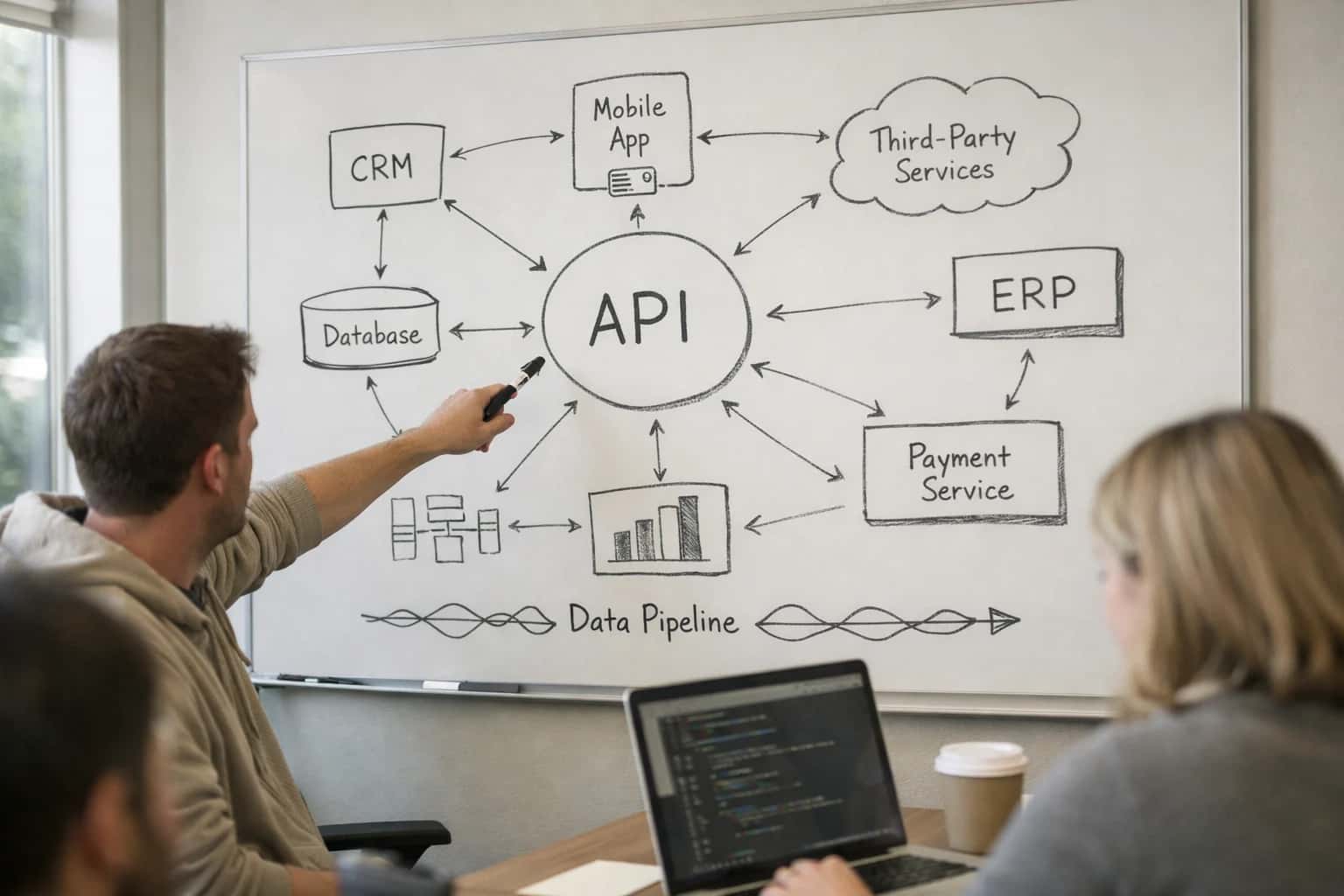
The integration connects to OPERA's core data model via its APIs, primarily targeting the Guest Profile, Lost Item Report, and Communication History objects. An AI agent sits as a middleware service, listening for new entries in the Lost Item Report table via webhook or polling. When a report is created—whether through the front desk module, guest app, or email parser—the agent ingests the free-text description (e.g., "black laptop charger left in ballroom"), guest name/contact, and Reservation ID. Using a pre-trained classifier, it automatically categorizes the item (Electronics, Clothing, Jewelry, Documents), extracts key attributes (brand, color, location), and assigns a priority based on item value and guest status.

Integration
AI Integration for Oracle OPERA Lost and Found Management
A technical blueprint for automating the manual, time-intensive lost and found process in Oracle OPERA using AI to categorize items, match guests, manage communication, and streamline return logistics.
ARCHITECTURE & ROLLOUT
Where AI Fits in OPERA Lost and Found
A technical blueprint for integrating AI agents into the Oracle OPERA Lost and Found workflow to automate categorization, matching, and guest communication.
The system then performs a fuzzy match against the Guest Profile database to confirm identity and retrieve the most recent contact method. For matched guests, it triggers a personalized, multi-channel communication workflow: first, an automated message acknowledging receipt and providing a case number; later, status updates if the item is found. If found, the agent can draft a return logistics proposal, checking OPERA's Folio module to see if shipping charges can be posted. All interactions are logged back to the Communication History and the Lost Item Report status is updated, creating a full audit trail for the front desk team.
Rollout is phased: start with a pilot on non-critical categories (e.g., clothing, toiletries) to tune the classification model and communication templates. Governance is critical—implement a human-in-the-loop approval step for high-value items or any communication containing sensitive logistics details before sending. The AI agent should be configured with strict RBAC, ensuring only authorized OPERA users can override its decisions. This architecture reduces manual data entry and follow-up, turning a reactive, paper-heavy process into a tracked, automated workflow that improves guest recovery rates and frees staff for higher-value tasks.
LOST AND FOUND WORKFLOW AUTOMATION
OPERA Modules and Integration Surfaces for AI
OPERA Integration Points
The initial report of a lost item can originate from multiple surfaces within OPERA, each requiring a different integration pattern.
- Front Desk Module (FDM): The primary interface where staff log items. An AI agent can be embedded here via a custom widget or API call to instantly categorize the item from a free-text description (e.g., "black laptop charger") into a standardized taxonomy (Electronics > Laptop Accessory > Power Adapter).
- Guest Folio & Activities: Lost items are sometimes reported during checkout or linked to a specific activity booking. AI can scan folio notes and activity records to automatically associate an item with a guest or event.
- Mobile Staff Apps: For housekeeping or engineering teams finding items in rooms or public areas. AI can process photos or voice notes submitted via mobile, extracting key attributes (brand, color, type) to pre-populate the lost item record.
AI Impact: Reduces manual data entry, ensures consistent categorization for searchability, and accelerates the initial triage process from minutes to seconds.
ORACLE OPERA INTEGRATION PATTERNS
High-Value AI Use Cases for Lost and Found
Transform a manual, error-prone process into a streamlined, guest-centric operation. These AI integration patterns connect directly to OPERA's Guest Profiles, Reservations, and Activities modules to automate categorization, matching, communication, and logistics.
01
Automated Item Categorization & Triage
AI analyzes text descriptions and images from front desk reports to automatically categorize lost items (e.g., 'electronics', 'clothing', 'jewelry', 'documents'). It tags items with urgency (high-value, perishable) and routes them to the correct storage location or department workflow within OPERA.
Batch -> Real-time
Processing speed
02
Intelligent Guest Matching
The system cross-references found item details (location, date, item type) with OPERA reservation data and guest profiles. It uses fuzzy matching on guest names, stay dates, and past lost item history to suggest probable owners, dramatically reducing manual search time for staff.
Hours -> Minutes
Search time
03
Proactive Guest Communication
Once a match is made, AI automates the outreach workflow. It drafts and sends personalized messages via the guest's preferred channel (email, SMS, in-app), embedded in OPERA's communication logs. It can handle multi-language responses and schedule follow-ups if the guest doesn't reply.
Same day
Initial contact
04
Return Logistics & Folio Automation
For verified matches, AI orchestrates the return process. It can generate shipping labels with integrated tracking, update the item's status in OPERA, and, if applicable, automatically post shipping charges to the guest's folio with a detailed description, ensuring accurate billing and audit trails.
1 sprint
Implementation scope
05
Storage Optimization & Disposal Workflows
AI monitors the storage duration of each item against policy rules. It automatically flags items approaching disposal dates, generates compliance reports for management, and can suggest donation partners for unclaimed clothing, turning a cost center into a potential CSR opportunity.
Reduce manual tracking
Primary benefit
06
Analytics for Operational Improvement
A connected AI copilot analyzes all lost and found data to surface trends and root causes. It answers questions like: 'Which locations lose the most items?' or 'What's our average return rate for phones vs. chargers?' This intelligence informs staff training and preventative measures.
ORACLE OPERA INTEGRATION PATTERNS
Example AI-Driven Lost and Found Workflows
These workflows demonstrate how AI agents can automate the manual, time-intensive processes of lost and found management by connecting directly to OPERA's guest, reservation, and incident modules. Each flow is triggered by OPERA events and updates records in real-time.
Trigger: A front desk agent creates a new 'Lost Item' incident record in OPERA's Incidents module or a housekeeping supervisor logs a found item via mobile.
AI Agent Action:
- An AI agent, listening via OPERA's API or a dedicated webhook, retrieves the new incident details and any attached notes/photos.
- Using a vision+language model, the agent analyzes the description and image to:
- Categorize the item (e.g.,
Electronics > Smartphone,Clothing > Jacket,Jewelry > Watch). - Extract key attributes (brand, color, model, distinguishing features).
- Estimate a value range for insurance or prioritization.
- Categorize the item (e.g.,
- The agent updates the OPERA incident record with structured metadata in custom fields, assigns a priority flag (e.g.,
Highfor passports/wallets,Mediumfor electronics), and suggests a storage location code.
Human Review Point: The categorized record is presented to the loss prevention manager for a quick verification before the item is moved to storage. The system logs all AI-suggested changes for audit.
FROM REPORT TO RETURN: A GOVERNED WORKFLOW
Implementation Architecture: Data Flow and Guardrails
A secure, auditable architecture for automating lost and found operations within Oracle OPERA.
The integration connects at two primary points within OPERA: the Guest Services or Incident Logging modules (where items are reported) and the Guest Profile and Folio systems. When a lost item report is logged—either by a staff member via the front desk interface or by a guest through a connected portal—a webhook or API call triggers the AI workflow. The payload includes the item description, location found, date/time, and, if available, a tentative guest match based on the room or area. This data flows to a secure processing queue, ensuring no OPERA transaction is blocked.
Our AI agent, acting as a classification and matching engine, processes each item. It first categorizes the item (e.g., 'electronics', 'clothing', 'travel documents') and extracts key attributes (brand, color, model) using a vision model if an image is attached. It then queries OPERA's guest database via secure API for potential matches, scanning recent check-outs from the relevant room block, analyzing name similarities on found identification, or correlating with reported lost item inquiries. For high-confidence matches, the system can automate the first outreach via the guest's preferred channel (email or SMS), drafted by the LLM and requiring a staff approval step before sending. All actions are logged back to the incident record in OPERA with a distinct audit trail.
Governance is built into each step. Human-in-the-loop approvals are required for any communication containing personal data or for matches below a configured confidence threshold. The system enforces data retention policies, automatically archiving or escalating unresolved items after a configurable period. A separate dashboard provides managers with analytics on recovery rates, common item types, and workflow bottlenecks, feeding continuous improvement. This architecture ensures the AI augments—rather than replaces—staff judgment, keeping OPERA as the single source of truth while turning a manual, error-prone process into a streamlined, trackable operation.
ORACLE OPERA INTEGRATION PATTERNS
Code and Payload Examples
Categorizing Lost Item Reports
When a guest reports a lost item via the front desk or a mobile app, the raw description (e.g., "black glasses case") must be categorized into OPERA's standard LostItemType codes (e.g., EYEGLASSES, ELECTRONICS, CLOTHING). An AI service processes the description and returns the standardized code for system entry.
Example Python API Call:
pythonimport requests # Payload from OPERA interface or webhook description = "A silver laptop charger with a UK plug" payload = { "description": description, "property_code": "NYC123", "language": "en" } # Call to Inference Systems categorization service response = requests.post( "https://api.inferencesystems.com/v1/opera/lost-item/categorize", json=payload, headers={"Authorization": "Bearer YOUR_API_KEY"} ) # Expected response for system update print(response.json()) # { # "category_code": "ELECTRONICS", # "confidence": 0.92, # "suggested_description": "Laptop Charger, Silver, UK Plug" # }
This structured output allows the front desk agent to confirm and save the item directly to the OPERA LostAndFound table with the correct ItemType, reducing manual lookup errors.
AI-ENHANCED LOST AND FOUND WORKFLOWS
Realistic Time Savings and Operational Impact
This table compares manual vs. AI-assisted lost and found operations in Oracle OPERA, showing realistic improvements in speed, accuracy, and guest satisfaction.
| Workflow Stage | Manual Process | AI-Assisted Process | Impact Notes |
|---|---|---|---|
Item Report Intake & Categorization | Front desk manually logs description, guesses category | AI analyzes guest-submitted text/photo, suggests category & tags | Reduces data entry time from 5-10 minutes to under 1 minute per report |
Matching Item to Guest Record | Manual search of recent check-outs, prone to errors | AI cross-references item attributes, location, timestamps with OPERA folios | Increases match accuracy from ~60% to over 90%, saving 15+ minutes per search |
Initial Guest Notification | Email drafted manually, often delayed until next shift | AI drafts personalized message, suggests contact method, triggers same-day send | Reduces notification lag from 'next business day' to 'within 2 hours' |
Return Logistics & Documentation | Paper trail for shipping, manual folio updates for charges | AI generates shipping labels, drafts internal notes, suggests OPERA posting codes | Cuts administrative time for a shipped item from 30+ minutes to under 10 minutes |
Storage Management & Disposition | Periodic manual audits to clear unclaimed items | AI flags items approaching policy deadlines, suggests donation/auction workflows | Prevents policy violations, automates compliance, reclaims storage space proactively |
Reporting & Audit Trail | Manual compilation from disparate logs for monthly reports | AI auto-generates summary reports (items found, return rate, cost) | Turns a 2-3 hour monthly task into a review of a pre-built dashboard |
Guest Service Inquiry Handling | Agent searches multiple logs to answer status questions | AI-powered copilot provides instant status using natural guest inquiry | Reduces call handle time from 5-7 minutes to under 1 minute for status checks |
ENTERPRISE OPERATIONAL CONTROL
Governance, Security, and Phased Rollout
A practical framework for deploying AI in a regulated, high-trust environment like hotel lost and found.
Integrating AI into the Oracle OPERA Lost and Found workflow requires a security-first architecture. This means AI agents interact with OPERA data via secure, API-based connectors that respect existing role-based access controls (RBAC). Item descriptions, guest PII from GUEST_PROFILE, and contact details from RESERVATION records are never sent to external models without strict data masking and anonymization protocols. All AI-generated actions—like creating a LOST_ITEM record or sending a communication—are logged in an immutable audit trail within OPERA's AUDIT_TRAIL module, linking the AI agent ID to the specific transaction for full traceability.
A phased rollout minimizes operational risk. Phase 1 (Pilot): Start with AI-powered categorization and matching for a single department (e.g., Housekeeping), running in a "shadow mode" where AI suggestions are reviewed by staff before any system updates are made. Phase 2 (Assisted): Enable automated creation of LOST_ITEM records and draft guest notifications for high-confidence matches, but require a front desk agent's approval before sending. Phase 3 (Automated): For pre-defined, low-risk workflows (e.g., matching a clearly labeled item to an active reservation), allow full automation, with a weekly sampling review by the loss prevention manager to monitor accuracy and drift.
Governance is maintained through a human-in-the-loop escalation matrix. The AI system is configured with confidence thresholds; matches below a set score automatically route to a human agent queue in OPERA's task management. Furthermore, any item flagged with high value, containing sensitive data (like electronics), or linked to a guest with a special status (e.g., VIP) is always routed for manual review. This controlled approach ensures the AI augments staff efficiency—reducing manual data entry and search time—while keeping hotel staff firmly in control of guest relations and compliance.
Enabling Efficiency, Speed & Accuracy
Intelligent Analysis, Decision & Execution
We build AI systems for teams that need search across company data, workflow automation across tools, or AI features inside products and internal software.
Talk to Us
Search across company data
Give teams answers from docs, tickets, runbooks, and product data with sources and permissions.
Useful when people spend too long searching or get different answers from different systems.
Enterprise searchRAGPermissions
Read more
Automate internal workflows
Use AI to route work, draft outputs, trigger actions, and keep approvals and logs in place.
Useful when repetitive work moves across multiple tools and teams.
AI agentsWorkflow automationGovernance
Read more
Add AI to products and internal tools
Build assistants, guided actions, or decision support into the software your team or customers already use.
Useful when AI needs to be part of the product, not a separate tool.
AI integrationDecision supportModel routing
Read moreIMPLEMENTATION AND WORKFLOW DETAILS
Frequently Asked Questions
Practical questions and workflow walkthroughs for integrating AI into Oracle OPERA's Lost and Found management process. Focused on automation, data flow, and operational impact.
This workflow automates the first critical step when a lost item is reported.
-
Trigger: A new
LostItemrecord is created in OPERA, either via front desk entry, guest portal submission, or staff mobile app. -
Context Pulled: The AI agent retrieves the item description text field from the new OPERA record.
-
Model Action: A classification model (e.g., fine-tuned for hospitality) analyzes the description. It categorizes the item into predefined types (e.g.,
Electronics,Clothing/Accessories,Jewelry,Travel Documents,Toiletries,Miscellaneous) and extracts key attributes (brand, color, model). -
System Update: The agent calls the OPERA API to update the
LostItemrecord with the structured categorization and attributes. This populates custom fields added for AI integration. -
Human Review Point: For high-value categories like
JewelryorElectronics, or if the model's confidence score is low, the system can flag the record for manual supervisor review before proceeding to the matching phase.

About the author
Prasad Kumkar
CEO & MD, Inference Systems
Prasad Kumkar is the CEO & MD of Inference Systems and writes about AI systems architecture, LLM infrastructure, model serving, evaluation, and production deployment. Over 5+ years, he has worked across computer vision models, L5 autonomous vehicle systems, and LLM research, with a focus on taking complex AI ideas into real-world engineering systems.
His work and writing cover AI systems, large language models, AI agents, multimodal systems, autonomous systems, inference optimization, RAG, evaluation, and production AI engineering.
LinkedIn
Limited slotsGet a Free AI Consultation
Partnered with leading AI, data, and software stack.





How We Work
Custom AI workflows for your Business
One-fit-all AI don't work for modern businesses. At Inferensys, we aim to understand your business & custom requirements; which we use to define most efficient agentic workflows, the data, and the tools for your business.
01
Review the use case
We understand the task, the users, and where AI can actually help.
Read more02
Pick the right approach
We define what needs search, automation, or product integration.
Read more03
Build the first useful version
We implement the part that proves the value first.
Read more04
Improve from there
We add the checks and visibility needed to keep it useful.
Read moreThe first call is a practical review of your use case and the right next step.
Talk to Us