AI integration for SmartSimple compliance tracking focuses on three core surfaces: the document management module for evidence files, the custom object and field layer storing compliance status, and the workflow engine that triggers reviews and alerts. The primary goal is to automate the monitoring of grant requirements—such as reporting deadlines, expenditure categories, or program-specific regulations—by connecting AI agents to SmartSimple's API and webhooks. These agents can read attached documents (e.g., progress reports, financial statements), extract key obligations and dates, and compare them against grant terms stored in custom fields, flagging discrepancies for officer review.

Integration
AI Integration for SmartSimple Compliance Tracking
Automate the monitoring of grant requirements and regulatory compliance within SmartSimple using AI to analyze documents, track obligations, and generate proactive alerts for compliance officers.
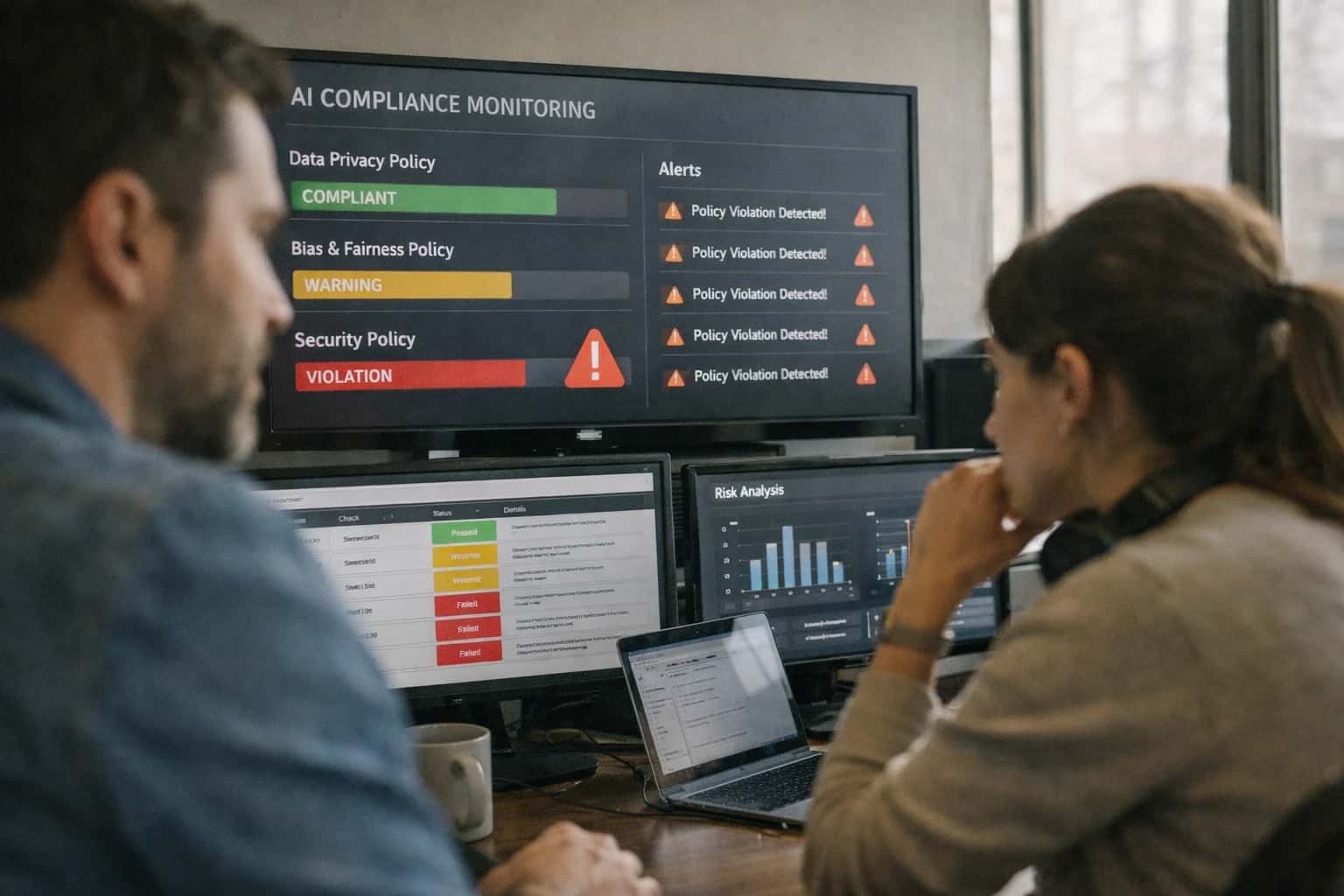
ARCHITECTURE AND ROLLOUT
Where AI Fits into SmartSimple Compliance Operations
A practical blueprint for integrating AI into SmartSimple's compliance monitoring, evidence collection, and audit workflows.
Implementation typically involves a dedicated AI microservice that subscribes to SmartSimple events—like a new document upload or a status field change. For each event, the service retrieves the relevant grant record and its attachments, uses an LLM with retrieval-augmented generation (RAG) over the grant agreement and policy documents to understand requirements, and then analyzes the new data. Findings are written back to SmartSimple as audit log entries or updates to a compliance score custom field. High-risk flags can automatically trigger a workflow to assign a task to a compliance officer or send a notification through SmartSimple's communication tools. This shifts monitoring from periodic manual checks to a continuous, event-driven system.
Rollout should start with a single, high-volume compliance rule (e.g., quarterly narrative report submission) to validate the integration's accuracy and user acceptance. Governance is critical: all AI-generated flags should be logged with confidence scores and source citations, and a human-in-the-loop approval step should be required for any automated status change that could affect funding. This ensures control and provides a feedback loop to improve the AI models. For organizations, the impact is operational—reducing the time compliance officers spend on manual document review and data entry, allowing them to focus on investigating exceptions and managing stakeholder relationships.
INTEGRATION BLUEPRINT
Key SmartSimple Surfaces for AI Compliance Tracking
Core Data Structures for AI Monitoring
AI-driven compliance tracking in SmartSimple hinges on the platform's core objects and custom records. The primary surfaces are:
- Grant Records: The central object containing award details, budgets, and timelines. AI can monitor these for milestone adherence and spending against plan.
- Compliance Checklists & Requirements: Custom objects or form sections that define specific grant conditions (e.g., "Submit quarterly narrative," "Provide audited financials"). AI can parse these structured requirements to build a monitoring framework.
- Document & Attachment Records: Every uploaded file (PDFs, spreadsheets, images) associated with a grant. This is the primary evidence source for AI to review via OCR and document intelligence.
- Activity & History Logs: System-generated audit trails of user actions and status changes. AI can analyze these logs for patterns indicating compliance process bottlenecks or unusual access.
Integrating at this object level allows AI agents to read the "rules" (requirements), monitor the "evidence" (documents), and flag discrepancies against the "state" (grant record status).
COMPLIANCE TRACKING
High-Value AI Compliance Use Cases for SmartSimple
Transform manual, reactive compliance monitoring into a proactive, automated system. Integrate AI directly with SmartSimple's objects, workflows, and document stores to surface risks, validate evidence, and maintain audit-ready status across your grant portfolio.
01
Automated Regulatory & Policy Document Monitoring
Connect AI to SmartSimple's document management and custom object layers to continuously scan uploaded grantee reports, contracts, and amendments. The system flags deviations from funder policies, OMB circulars, or program-specific terms, creating tasks for compliance officers in the associated workflow.
Batch -> Real-time
Monitoring cadence
02
Evidence Gap & Expiration Alerts
AI agents monitor SmartSimple date fields, file attachments, and milestone objects to predict compliance evidence gaps. For example, the system tracks insurance certificate expirations, diversity reports, or audit submissions, triggering automated reminders via SmartSimple's notification engine before a violation occurs.
Same day
Proactive alerting
03
Narrative Report Compliance Scoring
Integrate an LLM scoring layer into SmartSimple's report submission workflows. AI analyzes narrative progress reports against the original grant objectives and approved budget, scoring alignment and extracting un-reported variances or risks. Scores and excerpts are written back to custom fields for reviewer dashboards.
Hours -> Minutes
Review time
04
Cross-Grantee Benchmarking & Anomaly Detection
Leverage AI to analyze financial and performance data across the entire grant portfolio stored in SmartSimple. Detect statistical outliers in spending patterns, outcome metrics, or reporting latencies that may indicate compliance issues or need for technical assistance, surfacing insights to portfolio managers.
1 sprint
Implementation cycle
05
Audit Trail Synthesis & Explanation
For internal or external audits, use AI to process SmartSimple's extensive system audit logs and record history. The agent generates plain-English summaries of key grant modifications, approval paths, and user actions, drastically reducing the manual effort to explain process compliance during audits.
06
Conditional Payment & Milestone Release
Embed AI decision points into SmartSimple's payment request and milestone approval workflows. The system evaluates if all preceding compliance evidence (reports, certificates, deliverables) is satisfied before a workflow can route for financial officer approval, enforcing hard gates programmatically.
Manual -> Automated
Gatekeeping
SMARTSIMPLE INTEGRATION PATTERNS
Example AI-Powered Compliance Workflows
These workflows illustrate how AI agents can be integrated into SmartSimple's compliance tracking modules to automate monitoring, evidence collection, and risk alerting for grant officers and controllers.
Trigger: A grantee submits a required compliance document (e.g., IRS Form 990, audit report, progress narrative) via the SmartSimple portal.
AI Agent Action:
- The document is routed to an AI agent via a SmartSimple webhook.
- The agent performs OCR (if needed) and extracts key entities: grant ID, reporting period, total expenses, key personnel names, independent auditor opinion.
- It cross-references the extracted data against the grant's stored requirements in SmartSimple custom objects (e.g.,
required_audit_type,reporting_deadline,budget_ceiling).
System Update:
- The agent updates the SmartSimple
Compliance_Checklistrecord, marking the item as "Received - AI Reviewed." - If gaps are found (e.g., missing signature, expense total exceeds budget, audit opinion is qualified), the agent:
- Creates a task for the grant manager titled "Compliance Gap Detected."
- Appends the specific discrepancy to the
Compliance_Notesfield. - Optionally, triggers an automated email to the grantee via SmartSimple's communication module with a polite request for clarification or corrected documentation.
Human Review Point: The grant manager reviews the flagged task and the agent's notes to make a final determination, closing the loop in the system.
AI-ENHANCED COMPLIANCE WORKFLOWS
Implementation Architecture: Data Flow and System Design
A practical blueprint for integrating AI-driven compliance monitoring into SmartSimple's grant lifecycle.
The integration connects to SmartSimple's core data objects—primarily Applications, Projects (awards), and Files—via its REST API and webhook system. An AI agent, deployed as a secure microservice, subscribes to events like project.status_change, file.uploaded, or custom_field.updated. When triggered, it fetches the relevant record and its associated attachments (budgets, narrative reports, IRS 990s). Using a retrieval-augmented generation (RAG) pipeline, the agent grounds its analysis in the specific grant's requirement terms, stored as structured data in SmartSimple custom objects or linked documents. It then performs checks against a vectorized knowledge base of funder policies and regulatory frameworks.
For each compliance check, the agent generates a structured finding—such as { "requirement": "Quarterly Financial Report", "status": "Overdue", "evidence_location": "File ID #12345", "confidence_score": 0.92 }—and posts it back to a dedicated Compliance Findings custom object in SmartSimple. This creates a centralized, auditable log. High-confidence failures or missed deadlines can automatically trigger SmartSimple workflows: generating a task for a compliance officer, sending a templated email to the grantee via SmartSimple's communication engine, or escalating to a Project Status of "Compliance Review." The system design ensures all AI actions are permission-scoped using SmartSimple's native role-based access control (RBAC), so findings are only visible to authorized staff.
Rollout is typically phased, starting with a single grant program or requirement type (e.g., reporting deadlines). The AI agent's logic is first applied in a human-in-the-loop mode, where findings are created in a "Pending Review" status, allowing compliance officers to validate and calibrate the system. Governance is managed through a separate AI Governance custom object in SmartSimple, which logs each agent invocation, the model version used, and the human reviewer's final disposition. This audit trail is crucial for internal controls and funder audits. For a deeper look at connecting AI services to SmartSimple's API ecosystem, see our guide on SmartSimple Integration Services.
SMARTSIMPLE COMPLIANCE TRACKING
Code and Payload Examples
Automating Document Intake for Compliance
AI can process uploaded grantee evidence (e.g., receipts, reports, certifications) attached to SmartSimple records. Use an external service to perform OCR, classification, and key data extraction, then post the structured results back to a custom object or field.
Example Python payload to send a document for processing and update the SmartSimple record via webhook:
pythonimport requests # Payload to AI processing service doc_payload = { "record_id": "GR-2024-5678", "document_url": "https://smartsimple-instance.com/files/receipt_123.pdf", "extraction_schema": { "vendor_name": {"type": "string", "required": true}, "date": {"type": "date", "format": "%Y-%m-%d"}, "amount": {"type": "currency"}, "compliance_rule_id": "CR-501" # Links to a specific requirement } } # Call your AI service ai_response = requests.post("https://ai-service.yourdomain.com/extract", json=doc_payload).json() # Construct payload for SmartSimple webhook to update record update_payload = { "event": "compliance_evidence_processed", "recordUid": doc_payload["record_id"], "extracted_data": ai_response.get("extracted_data"), "confidence_score": ai_response.get("confidence"), "requires_human_review": ai_response.get("confidence", 0) < 0.85 } # This would trigger a SmartSimple workflow to route for review or auto-validate
AI-POWERED COMPLIANCE MONITORING
Realistic Time Savings and Operational Impact
How AI integration transforms manual, reactive compliance checks in SmartSimple into a proactive, automated oversight system, freeing up compliance officers for strategic review.
| Compliance Workflow | Before AI | After AI | Key Notes |
|---|---|---|---|
Requirement Tracking & Evidence Collection | Manual spreadsheet & email chase, 2-4 hours per grant | Automated document scanning & flagging, 15-30 minutes review | AI scans attachments for required docs (e.g., IRS 990, budgets, insurance certificates) |
Deadline & Milestone Monitoring | Calendar reminders, manual status checks, high risk of missed dates | Predictive alerts for at-risk items, automated dashboard updates | AI analyzes grant terms and historical patterns to forecast delays 30 days out |
Regulatory Change Cross-Reference | Quarterly manual review of regulations against grant terms | Automated policy ingestion & impact scoring on active grants | AI maps new regulatory text to grant clauses, flags high-priority conflicts for review |
Audit Trail & Documentation | Fragmented across emails, notes, and uploaded files; difficult to assemble | Centralized, AI-generated activity log with linked evidence | Automatically creates a chronological narrative of compliance actions for each grant |
Exception & Variance Review | Ad-hoc discovery during financial or programmatic audits | Continuous anomaly detection on reported data & narratives | AI flags budget overruns, narrative inconsistencies, and outlier metrics for immediate investigation |
Compliance Reporting Generation | Manual compilation for board or funder reports, 1-2 days quarterly | AI-drafted report sections with officer validation, 2-4 hours quarterly | Pulls from monitored evidence, audit trails, and exception logs to create first drafts |
Grantee Communication on Issues | Reactive emails after a problem is identified | Proactive, templated notifications with resolution guidance | AI suggests communication templates based on issue severity and grantee history, maintaining consistent messaging |
CONTROLLED IMPLEMENTATION FOR REGULATED ENVIRONMENTS
Governance, Security, and Phased Rollout
Deploying AI for compliance tracking requires a controlled, audit-ready approach that respects the sensitivity of grant data and regulatory oversight.
A production integration for SmartSimple compliance monitoring is built as a secure, event-driven service layer. The typical architecture listens for webhooks on key objects—like Compliance Tasks, Document Uploads, or Milestone Status changes—and passes relevant context (e.g., requirement text, uploaded evidence, historical data) to a governed AI service. This service, often containerized and deployed in your VPC or a compliant cloud, performs analysis—such as checking a progress report against a grant agreement's deliverable list—and posts results back to a custom AI Audit Log object in SmartSimple. This keeps the core platform as the system of record, with all AI inferences fully traceable back to source records and user actions.
Security is paramount. Implement role-based access controls (RBAC) so AI insights are only visible to authorized roles like Compliance Officers or Program Directors. All data in transit to and from AI models should be encrypted, and prompts should be engineered to avoid including sensitive personally identifiable information (PII) unless absolutely necessary. For high-stakes compliance decisions, design workflows that flag AI-generated alerts for human-in-the-loop review before any official status change is made in SmartSimple, ensuring final accountability rests with staff.
A phased rollout mitigates risk and builds trust. Start with a pilot program on a single, well-defined grant stream with clear compliance rules. Use AI initially for non-binding monitoring, such as generating daily digests of potential compliance gaps for officer review. Measure accuracy and reduce false positives by refining prompts and data context. Phase two introduces automated, low-risk actions, like sending reminder emails for upcoming deadlines via SmartSimple's communication engine. The final phase enables conditional workflow triggers, where high-confidence AI validations (e.g., "all required IRS forms are present and signed") can automatically advance an application to the next stage, all logged in the audit trail.
This governance-first approach ensures the AI integration augments—rather than disrupts—existing compliance protocols. It provides compliance officers with a powerful copilot that scans thousands of data points across the SmartSimple portfolio, surfacing only the exceptions that need their expert judgment. For a deeper look at architecting these secure, event-driven integrations, see our guide on SmartSimple Integration Services.
Enabling Efficiency, Speed & Accuracy
Intelligent Analysis, Decision & Execution
We build AI systems for teams that need search across company data, workflow automation across tools, or AI features inside products and internal software.
Talk to Us
Search across company data
Give teams answers from docs, tickets, runbooks, and product data with sources and permissions.
Useful when people spend too long searching or get different answers from different systems.
Enterprise searchRAGPermissions
Read more
Automate internal workflows
Use AI to route work, draft outputs, trigger actions, and keep approvals and logs in place.
Useful when repetitive work moves across multiple tools and teams.
AI agentsWorkflow automationGovernance
Read more
Add AI to products and internal tools
Build assistants, guided actions, or decision support into the software your team or customers already use.
Useful when AI needs to be part of the product, not a separate tool.
AI integrationDecision supportModel routing
Read moreIMPLEMENTATION BLUEPRINT
Frequently Asked Questions
Practical questions for compliance officers and IT leaders planning AI integration with SmartSimple to automate monitoring, evidence collection, and alerting.
AI integration connects via SmartSimple's REST API and webhooks to access the specific objects and custom fields that hold compliance data. The typical architecture involves:
-
Data Ingestion: A secure service polls or receives webhooks for updates to key records:
UDFs(User Defined Forms) containing grantee-submitted reports and evidence.Applicationobjects for tracking award terms and conditions.ProjectandTaskobjects for milestone and deliverable tracking.- Attachments (e.g., PDFs, spreadsheets) where supporting documentation is stored.
-
AI Processing: Extracted text and structured data are sent to an AI service for analysis against a configured rule set (e.g., "must submit quarterly financial report within 30 days of period end").
-
System Update: Results are written back to SmartSimple via API, typically updating:
- A custom
Compliance Statusfield (e.g.,On Track,At Risk,Breached). - A
Compliance Logobject for an audit trail of checks and findings. - Triggering automated alerts or tasks for compliance officers.
- A custom

About the author
Prasad Kumkar
CEO & MD, Inference Systems
Prasad Kumkar is the CEO & MD of Inference Systems and writes about AI systems architecture, LLM infrastructure, model serving, evaluation, and production deployment. Over 5+ years, he has worked across computer vision models, L5 autonomous vehicle systems, and LLM research, with a focus on taking complex AI ideas into real-world engineering systems.
His work and writing cover AI systems, large language models, AI agents, multimodal systems, autonomous systems, inference optimization, RAG, evaluation, and production AI engineering.
LinkedIn
Limited slotsGet a Free AI Consultation
Partnered with leading AI, data, and software stack.





How We Work
Custom AI workflows for your Business
One-fit-all AI don't work for modern businesses. At Inferensys, we aim to understand your business & custom requirements; which we use to define most efficient agentic workflows, the data, and the tools for your business.
01
Review the use case
We understand the task, the users, and where AI can actually help.
Read more02
Pick the right approach
We define what needs search, automation, or product integration.
Read more03
Build the first useful version
We implement the part that proves the value first.
Read more04
Improve from there
We add the checks and visibility needed to keep it useful.
Read moreThe first call is a practical review of your use case and the right next step.
Talk to Us