AI integration for Fluxx decision support connects at three key points in the platform's data model and workflow engine: Application Objects, Review Stages, and Committee Workspaces. The integration typically consumes data from Fluxx's REST API—pulling narrative responses, uploaded documents (budgets, IRS forms), historical award data, and reviewer comments—to feed a central AI orchestration layer. This layer, often a set of microservices, runs analysis (sentiment aggregation, financial risk scoring, alignment with RFP criteria) and returns structured outputs like a consolidated briefing memo, risk flags, or a ranked shortlist back into Fluxx via custom objects or notes attached to the grant record.

Integration
AI Integration for Fluxx Decision Support
Architect AI systems that synthesize reviewer comments, financial data, and historical outcomes in Fluxx to provide grant committee chairs with consolidated, actionable briefing memos, reducing prep time from days to hours.
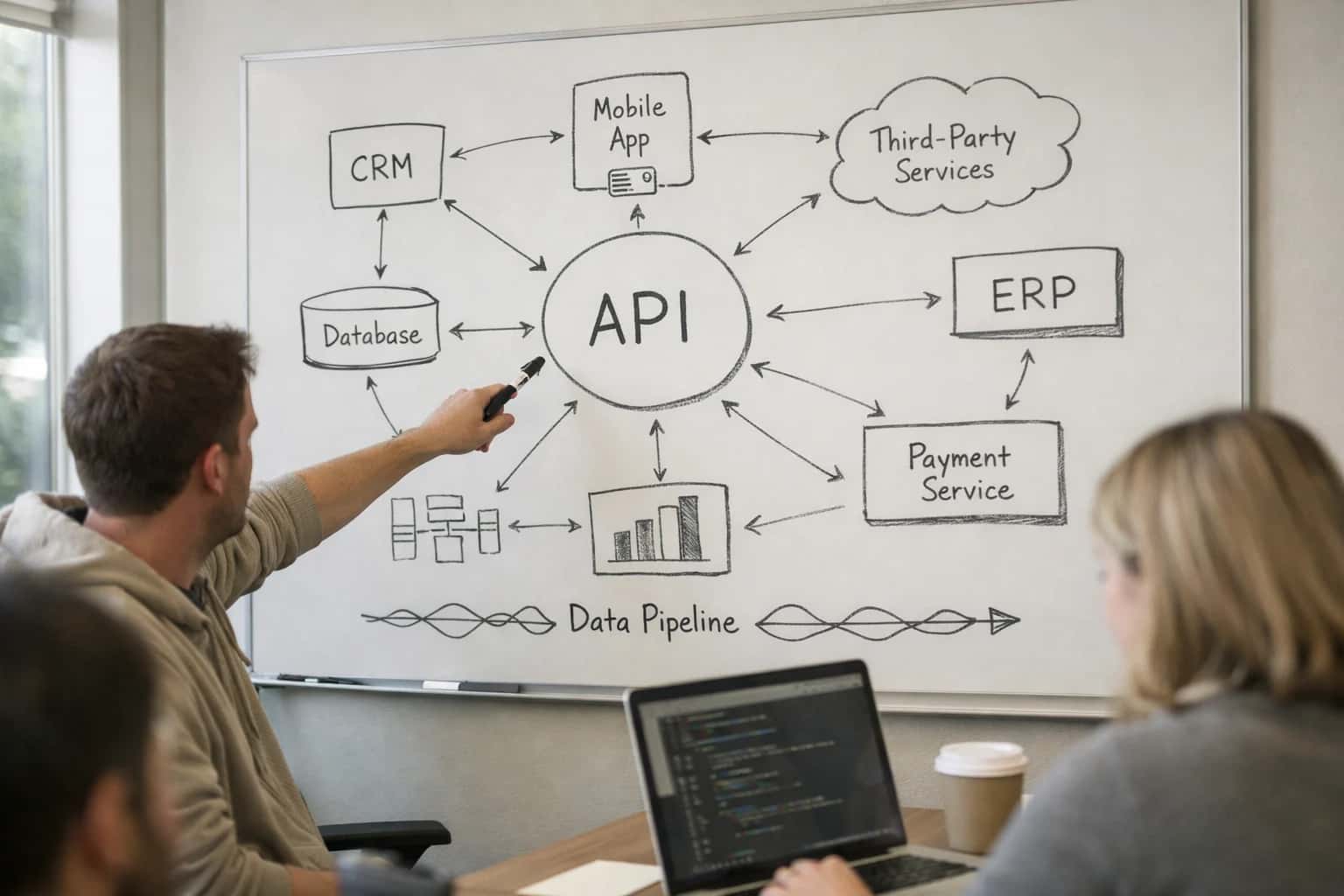
ARCHITECTURE & ROLLOUT
Where AI Fits into Fluxx Grant Decision-Making
A practical blueprint for integrating AI into Fluxx's review workflows to support committee chairs and program officers.
For a production rollout, we recommend starting with a single, high-volume grant program. Implement the AI agent to run automatically when an application reaches a specific Review Stage (e.g., 'Committee Prep'), triggered by a Fluxx workflow rule or a scheduled job. The agent's output—a summary memo—can be written to a Custom Object (e.g., AI_Briefing) linked to the application, visible only to users with 'Committee Chair' or 'Program Director' roles. This keeps the AI assistive, auditable, and non-disruptive to existing reviewer workflows. Governance is critical: all AI-generated content should be clearly labeled, stored with a prompt and model version audit trail, and include a human approval step before final committee distribution.
The value isn't in replacing human judgment but in compressing days of manual synthesis into hours. A committee chair can review 50 applications with AI-prepared memos in a single sitting, focusing discussion on the 10 most nuanced or high-stakes cases. This shifts reviewer time from data consolidation to strategic deliberation. For implementation teams, the key technical considerations are API rate limits, data privacy for sensitive applicant information, and designing a fallback mechanism (e.g., a manual 'Generate Memo' button) for when the AI service is unavailable. A successful pilot here often expands to other Fluxx modules, such as portfolio analytics for leadership dashboards or AI-enhanced communication tools for grantee support. For related architectural patterns, see our guide on Fluxx API Development and AI Integration for Grant Management Systems.
ARCHITECTURE BLUEPRINT
Key Fluxx Surfaces for AI Decision Support
Core Data Objects for AI Synthesis
AI decision support in Fluxx begins by grounding analysis in the platform's primary data objects. The Application object contains the full narrative, budget, and attachments. The Review object holds individual scores, comments, and recommendations from committee members. AI agents can be triggered via webhook on object creation or update to synthesize disparate reviewer feedback, detect consensus or contention, and flag applications where scores diverge significantly from comment sentiment.
Key integration points include:
- Fluxx REST API endpoints for
GET /applications/{id}andGET /reviewsto retrieve full context. - Custom Field values, where AI can populate derived fields like
review_sentiment_scoreorfeedback_summary. - Webhook listeners on the
review.submittedevent to initiate real-time analysis as reviews are completed, ensuring the committee chair has a consolidated memo before deliberation begins.
FLUXX GRANT PLATFORM
High-Value Use Cases for AI-Powered Decision Support
Integrating AI into Fluxx transforms how grant committees synthesize information, moving from manual data aggregation to intelligent, evidence-based briefing. These use cases target the specific surfaces and workflows where AI can augment human judgment for faster, more consistent decisions.
01
Consolidated Reviewer Briefing Memos
AI synthesizes disparate reviewer comments, scores, and applicant attachments into a single, structured briefing memo for the committee chair. It highlights areas of consensus, flags critical concerns from financials or narratives, and provides a neutral summary, reducing pre-meeting prep from hours to minutes.
Hours -> Minutes
Prep time reduction
02
Portfolio Risk & DEI Alignment Scoring
An AI agent analyzes active applications against the foundation's historical portfolio and strategic goals. It scores each proposal for potential risks (e.g., organizational capacity, budget realism) and alignment with Diversity, Equity, and Inclusion (DEI) criteria, surfacing insights directly within the Fluxx application record for committee review.
Batch -> Real-time
Strategic analysis
03
Historical Outcome Synthesis
For returning applicants, AI automatically retrieves and summarizes data from their prior grants within Fluxx—including past reports, outcomes, and compliance history. This context is appended to the new application, giving reviewers a longitudinal view without manual digging through old records.
Same day
Context delivery
04
Financial Narrative Cross-Validation
AI extracts key figures from uploaded budget documents (PDFs, spreadsheets) and cross-references them with the narrative proposal text within Fluxx. It flags inconsistencies (e.g., a described program cost not in the budget) or notable variances from typical grants of similar size/scope for committee attention.
05
Dynamic Committee Dashboard Insights
AI-powered natural language queries allow committee members to ask ad-hoc questions of the entire applicant pool directly from a Fluxx dashboard (e.g., "Show me all proposals with a sustainability plan under $50k"). The AI generates the filter, retrieves the data, and provides a succinct summary, enabling real-time exploration during deliberations.
06
Automated Due Diligence Summaries
Integrating with external APIs (like GuideStar, IRS), an AI agent pulls and summarizes key due diligence data for each applicant organization. It creates a concise profile covering financial health, leadership, and mission alignment, which is attached to the Fluxx record, automating a manual research task for program officers.
1 sprint
Implementation timeline
FLUXX INTEGRATION PATTERNS
Example AI-Augmented Decision Support Workflows
These workflows illustrate how AI agents, connected to Fluxx via its API, can synthesize disparate data points into actionable briefing memos for grant committee chairs, reducing pre-meeting preparation from days to hours.
Trigger: All reviewer scores and comments are submitted for an application within a Fluxx review stage.
AI Agent Action:
- Pulls all reviewer comments, scores, and custom field data via the Fluxx
GET /api/v1/applications/{id}/reviewsendpoint. - Executes a multi-step analysis:
- Summarization: Creates a concise, neutral summary of all reviewer feedback.
- Sentiment & Theme Extraction: Identifies key strengths, concerns, and recurring themes (e.g., "budget clarity," "community impact evidence").
- Score Analysis: Flags significant scoring disparities between reviewers for chair attention.
- Historical Context: Queries a connected vector database for insights from similar past applications and their outcomes.
- System Update: Posts the synthesized analysis as a formatted comment to the application's timeline in Fluxx using
POST /api/v1/applications/{id}/comments, tagged as[AI Briefing Draft].
Human Review Point: The program officer or committee chair reviews the AI-generated summary, can edit it directly in Fluxx, and then uses it as the foundation for the official committee briefing memo.
ARCHITECTURE BLUEPRINT
Implementation Architecture: Connecting AI to Fluxx
A practical guide to wiring AI decision support into Fluxx's data model and workflow engine.
The integration connects to Fluxx's REST API and webhook system, focusing on key objects: applications, reviews, organizations, and financials. An AI microservice, hosted in your cloud, acts as an orchestration layer. It listens for webhook events (e.g., review.submitted, application.status_changed) and uses Fluxx's API to fetch related data—reviewer comments from review_comment objects, historical outcomes from past awards, and budget figures from custom financial fields. This data is synthesized by an LLM, with prompts grounded in your scoring rubric and committee guidelines, to generate a consolidated briefing memo.
The generated memo is posted back to Fluxx as a file attachment on the relevant application record and/or as a rich-text summary in a dedicated custom field (e.g., AI_Briefing). For governance, all AI interactions are logged with trace IDs in a separate audit store, and the system can be configured to route low-confidence summaries for human review before they become visible to committee chairs. This architecture keeps Fluxx as the system of record while injecting intelligence at critical decision junctures.
Rollout typically starts with a single grant program. The AI service is configured to process applications only after a minimum number of manual reviews are completed, ensuring the model has sufficient input. Committee chairs access the AI briefing alongside traditional review packets directly within the Fluxx interface. This phased approach allows for calibration, user feedback, and bias mitigation before scaling across the portfolio.
FLUXX API INTEGRATION PATTERNS
Code and Payload Examples
Fetching Application Context for AI
To synthesize a decision memo, you first need to retrieve the full application context from Fluxx. This includes the core application record, linked custom objects for budgets and narratives, and historical data from previous submissions by the same organization.
A typical API call fetches the application and expands related records in a single request. The AI service uses this structured payload to understand the proposal's goals, financial ask, and organizational track record.
pythonimport requests # Example: Get application with expanded related data response = requests.get( 'https://your-instance.fluxx.io/api/v2/application_requests/{id}', headers={'Authorization': 'Bearer YOUR_TOKEN'}, params={ 'include': 'organization,reviewers', 'fields[application_requests]': 'title,summary,requested_amount', 'fields[organizations]': 'name,total_awards_last_3_years' } ) app_data = response.json() # Pass app_data['data'] and app_data['included'] to your AI service
This payload forms the foundation for all subsequent AI analysis, ensuring the model is grounded in the complete application record.
FLUXX DECISION SUPPORT
Realistic Time Savings and Operational Impact
How AI integration for Fluxx decision support changes key grant committee workflows, focusing on realistic time savings and quality improvements for program officers and committee chairs.
| Metric | Before AI | After AI | Notes |
|---|---|---|---|
Committee briefing memo preparation | 4-8 hours manual synthesis | 1-2 hours assisted drafting | AI consolidates reviewer comments, financials, and historical data; human finalizes |
Initial application triage & completeness check | 30-45 minutes per application | 5-10 minutes with AI pre-screen | AI flags missing docs and basic eligibility; staff handles exceptions |
Reviewer comment synthesis for panel | Manual compilation, 2-3 hours per panel | Automated summary generated in minutes | AI extracts themes, contradictions, and consensus from all reviewer notes |
Portfolio risk & DEI analysis | Ad-hoc, manual spreadsheet work | Dashboard insights refreshed nightly | AI runs continuous analysis on active grants against strategic criteria |
Post-meeting action item documentation | Manual note-taking and distribution | Automated summary & task assignment | AI transcribes key decisions and assigns follow-ups in Fluxx tasks |
Historical outcome reference for similar grants | Manual search through past awards | Contextual retrieval in briefing view | AI surfaces comparable past grants, outcomes, and lessons learned |
Final award recommendation rationale drafting | Drafted from scratch for each slate | Assisted with data-driven narrative | AI suggests evidence-backed talking points from review data |
ARCHITECTING CONTROLLED AI FOR GRANT DECISIONS
Governance, Security, and Phased Rollout
A production-ready AI integration for Fluxx requires deliberate governance, secure data handling, and a phased rollout to build trust and demonstrate value.
Governance starts with defining clear boundaries for AI assistance. In Fluxx, this means mapping which data objects—such as Applications, Reviewer Comments, Financial Attachments, and Historical Award records—the AI can access and synthesize. Access is enforced via Fluxx's role-based permissions (RBAC), ensuring the AI agent operates with the same contextual security as a human committee member. All AI-generated outputs, like consolidated briefing memos, are stored as System Notes or dedicated AI Analysis custom objects with a complete audit trail linking back to the source data and the specific LLM prompt version used.
A phased rollout mitigates risk and builds institutional confidence. A typical implementation follows this path:
- Phase 1: Silent Observer – The AI processes completed review cycles in a sandbox environment, generating memos that are compared to human-prepared summaries for accuracy and bias. No live data is altered.
- Phase 2: Committee Copilot – The AI provides draft memos to committee chairs as a starting point within a dedicated Fluxx dashboard view, clearly labeled as AI-assisted. Chairs can edit, approve, or discard the drafts.
- Phase 3: Integrated Workflow – Upon validation, the memo generation is automated within key Fluxx workflows, triggered when all reviewer scores are submitted. The memo is automatically attached to the
Applicationrecord and routed for chair approval via a Fluxx workflow step.
Security is non-negotiable. All calls to external LLM APIs (e.g., OpenAI, Anthropic) are routed through a secure proxy that strips personally identifiable information (PII) and grantee financial details unless explicitly required. Sensitive data remains within Fluxx and your VPC; only de-identified, context-rich text is sent for processing. We implement strict rate limiting and budget controls on API consumption to prevent cost overruns. For foundations with heightened sensitivity, a hybrid approach using smaller, locally-hosted open-source models for initial processing can be architected, keeping all data on-premises.
Continuous monitoring and human-in-the-loop checkpoints are essential for responsible scaling. We instrument the integration to log key metrics: memo adoption rates by chairs, edit frequency, and time-to-decision impact. A quarterly review with program leadership assesses the AI's influence on review consistency and committee workload. This governance framework, built on Fluxx's robust platform, ensures AI augments—rather than replaces—human judgment, turning a powerful integration into a trusted operational asset.
Enabling Efficiency, Speed & Accuracy
Intelligent Analysis, Decision & Execution
We build AI systems for teams that need search across company data, workflow automation across tools, or AI features inside products and internal software.
Talk to Us
Search across company data
Give teams answers from docs, tickets, runbooks, and product data with sources and permissions.
Useful when people spend too long searching or get different answers from different systems.
Enterprise searchRAGPermissions
Read more
Automate internal workflows
Use AI to route work, draft outputs, trigger actions, and keep approvals and logs in place.
Useful when repetitive work moves across multiple tools and teams.
AI agentsWorkflow automationGovernance
Read more
Add AI to products and internal tools
Build assistants, guided actions, or decision support into the software your team or customers already use.
Useful when AI needs to be part of the product, not a separate tool.
AI integrationDecision supportModel routing
Read moreIMPLEMENTATION DETAILS
Frequently Asked Questions
Common technical and operational questions about integrating AI decision support into the Fluxx grant management platform.
The integration uses Fluxx's REST API and webhooks to pull relevant data on-demand, which is then processed by an orchestration layer before being sent to an LLM.
Typical data flow for a committee briefing:
- Trigger: A workflow in Fluxx is initiated (e.g., "Prepare for Committee Review") for a specific grant application or batch.
- Context Pull: The AI service calls the Fluxx API to retrieve:
- Application narratives and attachments (via pre-processed document store).
- All reviewer scores and comments from custom scoring objects.
- Historical grant data for the applicant organization.
- Budget figures and financial data from related records.
- Synthesis: A structured prompt instructs the LLM to analyze the data, highlight consensus/dissent among reviewers, flag budget anomalies, and reference similar past outcomes.
- Output: A concise, formatted briefing memo is generated and posted back to a dedicated custom object in Fluxx (e.g.,
AI_Briefing_Memo__c), linked to the application record for committee chairs to review.

About the author
Prasad Kumkar
CEO & MD, Inference Systems
Prasad Kumkar is the CEO & MD of Inference Systems and writes about AI systems architecture, LLM infrastructure, model serving, evaluation, and production deployment. Over 5+ years, he has worked across computer vision models, L5 autonomous vehicle systems, and LLM research, with a focus on taking complex AI ideas into real-world engineering systems.
His work and writing cover AI systems, large language models, AI agents, multimodal systems, autonomous systems, inference optimization, RAG, evaluation, and production AI engineering.
LinkedIn
Limited slotsGet a Free AI Consultation
Partnered with leading AI, data, and software stack.





How We Work
Custom AI workflows for your Business
One-fit-all AI don't work for modern businesses. At Inferensys, we aim to understand your business & custom requirements; which we use to define most efficient agentic workflows, the data, and the tools for your business.
01
Review the use case
We understand the task, the users, and where AI can actually help.
Read more02
Pick the right approach
We define what needs search, automation, or product integration.
Read more03
Build the first useful version
We implement the part that proves the value first.
Read more04
Improve from there
We add the checks and visibility needed to keep it useful.
Read moreThe first call is a practical review of your use case and the right next step.
Talk to Us