AI integration targets three primary surfaces within public sector parks and rec software: the registration and activity management module, the facility booking and scheduling system, and the maintenance work order platform. For systems like Tyler Munis, Infor CloudSuite Public Sector, or specialized platforms like RecTrac, this means deploying AI agents that can interact with constituent records, class rosters, facility calendars, and asset work orders via secure APIs. The goal is to inject intelligence into high-volume, repetitive interactions—like answering program availability questions, processing waitlist requests, or triaging maintenance reports—freeing staff for complex service delivery.

Integration
AI Integration with Public Sector Parks and Recreation
A technical blueprint for adding AI to parks and recreation management systems to automate citizen inquiries, personalize program discovery, optimize facility scheduling, and prioritize maintenance.
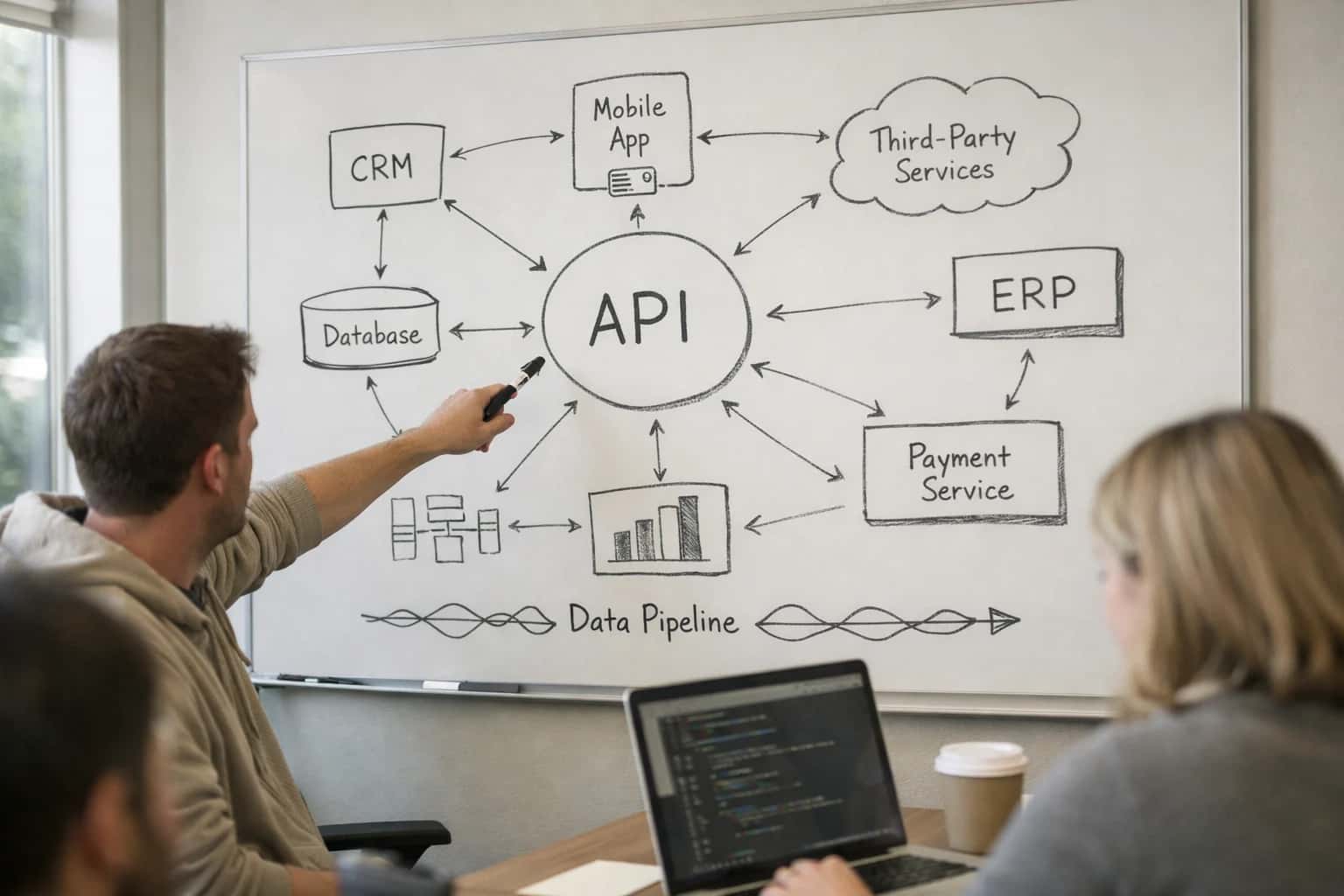
ARCHITECTING AI FOR PUBLIC FACILITIES AND PROGRAMS
Where AI Fits in Parks and Recreation Operations
Integrating AI into parks and recreation systems transforms constituent experience and operational efficiency by connecting to core registration, facility, and maintenance platforms.
Implementation typically involves a middleware layer that orchestrates between the AI service (e.g., an LLM) and the parks ERP. For example, an AI-powered virtual recreation assistant can be embedded in the department website, connected via API to query live class capacity from the registration system and return personalized recommendations based on a resident's past enrollment history. For maintenance, a computer vision model integrated with the work order system can analyze uploaded photos of park equipment or playgrounds to automatically categorize damage severity and suggest priority, which then creates a pre-populated work order in the CMMS (like Infor EAM or Tyler's asset module) for supervisor approval.
Rollout requires a phased, use-case-led approach, starting with a single high-impact workflow like automated program recommendation emails or smart irrigation alerts based on weather data and facility bookings. Governance is critical: all AI interactions with constituent PII must be logged, and any system-generated actions (like booking a slot) should require a human-in-the-loop approval step or clear audit trail before committing changes to the system of record. This ensures public trust while delivering tangible efficiency gains—converting manual phone calls for program info into instant web answers, or turning next-day inspection responses into same-day triage and dispatch.
WHERE AI AGENTS CONNECT TO CORE SYSTEMS
Key Integration Surfaces in the Parks & Rec Tech Stack
Program Registration & Facility Booking Systems
This is the primary transactional surface for citizen engagement. AI integration focuses on the APIs and data models behind program catalogs, class rosters, waitlists, and facility calendars.
Key Integration Points:
- Program Discovery APIs: Use AI to analyze a resident's past registrations, household composition, and expressed interests to generate personalized program recommendations, surfaced directly in the registration portal.
- Waitlist & Cancellation Automation: Connect AI agents to waitlist databases and cancellation webhooks. Agents can automatically offer newly available spots via SMS/email, confirm attendance, and process the enrollment—reducing no-shows and filling classes.
- Facility Booking Intelligence: Integrate with resource scheduling modules to optimize block bookings. AI can analyze historical usage to suggest ideal rental rates, predict peak demand for maintenance scheduling, and even draft custom rental agreements based on event type.
PERSONALIZE SERVICES AND OPTIMIZE OPERATIONS
High-Value AI Use Cases for Parks and Recreation
Integrate AI with your parks and rec registration, facility booking, and maintenance systems to move from reactive management to intelligent, proactive service delivery.
01
Personalized Program Discovery
Deploy an AI recommendation engine on top of your activity registration platform (like RecTrac or ActiveNet). It analyzes household history, age, location, and past participation to suggest relevant programs via the portal, email, or SMS, increasing enrollment and reducing manual inquiry volume.
5-15%
Typical enrollment lift
02
Intelligent Facility Booking & Yield Management
Integrate AI with your facility scheduling system to dynamically adjust rental rates for sports fields, pavilions, and community centers based on demand, season, weather forecasts, and local event calendars. Automatically suggest optimal times to callers and manage waitlists.
Batch -> Real-time
Pricing updates
03
Predictive Maintenance for Parks Assets
Connect AI models to your maintenance management system (like Infor EAM or a CMMS) and IoT sensors. Analyze work order history, weather, and usage data to predict failures for playground equipment, irrigation systems, and turf, scheduling repairs before issues cause closures or safety hazards.
Reactive -> Proactive
Maintenance mode
04
Automated Permit & Reservation Support
Implement an AI agent integrated with your permitting system (like Tyler EnerGov) and CRM. It handles common inquiries for special use permits, picnic reservations, and athletic field allocations 24/7, checks availability via API, guides applicants through forms, and triages complex cases to staff.
Hours -> Minutes
Applicant resolution time
05
Resource Allocation & Staff Planning
Use AI to forecast demand for lifeguards, instructors, and maintenance crews by analyzing registration trends, school calendars, and historical attendance. Generate optimized weekly schedules and integrate them directly into your workforce management or timekeeping system, reducing overtime and understaffing.
1 sprint
Implementation timeline
06
Citizen Sentiment & Service Request Analysis
Apply NLP to analyze unstructured feedback from surveys, social media, and 311/CRM cases related to parks. Automatically categorize sentiment, identify recurring issues (e.g., 'dog park cleanliness', 'trail maintenance'), and route prioritized insights to the correct operations team for action.
Manual -> Automated
Insight generation
PARKS AND RECREATION OPERATIONS
Example AI-Powered Workflows
These workflows demonstrate how AI agents and copilots can integrate directly with your parks and recreation management system to automate high-volume tasks, personalize citizen interactions, and optimize resource allocation without replacing your core software.
Trigger: A citizen visits the parks and rec portal or calls the department.
Context/Data Pulled: The AI agent queries the registration system (e.g., ActiveNet, RecTrac) via API for:
- Available programs (type, age group, location, schedule, openings).
- The citizen's historical registration data (past enrollments, waitlist status).
- Citizen profile data from the CRM (household members, age, special requests on file).
Model/Agent Action: A recommendation engine analyzes the citizen's profile against program attributes and historical success rates. The agent generates a personalized, ranked list of 3-5 program suggestions with a natural language explanation (e.g., "Based on your daughter's age and her successful soccer camp last summer, we recommend...").
System Update/Next Step: The agent presents options via chat or IVR. Upon citizen selection, it initiates the registration workflow in the backend system, pre-filling known data, and guides the user through payment. A confirmation is sent via the system's standard comms channel.
Human Review Point: If the agent cannot confidently match preferences (e.g., for a complex accommodation request), it flags the interaction and creates a draft case in the CRM for a staff member to complete, with all context attached.
PARKS AND RECREATION OPERATIONS
Implementation Architecture: Connecting AI to Core Systems
A practical blueprint for integrating AI agents and copilots into public sector parks and recreation management platforms to automate workflows and enhance constituent service.
Effective AI integration for parks and rec hinges on connecting to three core system surfaces: the registration and facility booking module, the maintenance work order system, and the constituent communication portal. AI agents interact via APIs to read from and write to key data objects like Program_Registration, Facility_Reservation, Maintenance_Request, and Customer_Profile. For example, an AI copilot can be triggered by a new web inquiry to suggest personalized program recommendations based on a resident's past activity and demographic data pulled from their profile, then create a draft registration via the booking API.
Implementation typically involves a middleware layer (often on platforms like Infor OS or SAP BTP) that orchestrates between the AI service and the core ERP. This layer handles authentication, data transformation, and workflow execution. A common pattern is an AI-driven maintenance optimizer: the system ingests sensor data from irrigation systems or facility usage logs, predicts equipment failure or turf issues using a predictive model, and automatically generates and prioritizes a work order in the CMMS (like Infor EAM or a specialized module) with suggested parts and labor estimates. This shifts maintenance from scheduled to condition-based, optimizing crew deployment.
Rollout requires a phased approach, starting with a single high-impact workflow like automated waitlist management. An AI agent monitors registration capacity, predicts no-shows based on historical patterns, and proactively contacts the next person on the list via SMS or email—a process managed through the communication platform's API. Governance is critical; all AI-generated actions (like sending a communication or creating a work order) should route through an approval queue or audit log within the core system before execution in production, ensuring staff oversight and system-of-record integrity. This controlled integration allows parks departments to scale personalized service without overburdening staff or compromising data security.
AI FOR PARKS AND RECREATION SYSTEMS
Code and Integration Patterns
Connecting AI to Activity Registration APIs
Integrate AI agents directly with the registration module APIs of platforms like Tyler Munis or Infor CloudSuite Public Sector. The agent can query live class availability, waitlist status, and facility schedules to provide personalized recommendations.
Example Workflow:
- A resident asks, "What swimming lessons are available for my 7-year-old on weekends?"
- The AI agent calls the
GET /programsendpoint, filtering byage_group=7,category=swimming, andday_of_week=Saturday, Sunday. - It cross-references results with the
GET /facilities/{id}/scheduleendpoint to confirm pool availability. - The agent returns a structured summary and can initiate a registration draft via a
POST /cartAPI call.
This pattern reduces call center volume and helps residents discover programs matching their interests and schedule, directly from your website or 311 chatbot.
AI FOR PARKS AND RECREATION OPERATIONS
Realistic Time Savings and Operational Impact
How AI integration reduces manual effort and improves service delivery in public sector parks and recreation departments.
| Workflow / Metric | Before AI | After AI | Implementation Notes |
|---|---|---|---|
Program Registration Inquiry Handling | Staff answers 15-25 emails/calls per day | AI chatbot handles 60-70% of common inquiries | Human staff escalates complex cases; chatbot integrated with RecTrac/ActiveNet API |
Facility Booking & Permit Conflict Resolution | Manual calendar review takes 30+ minutes per complex request | AI suggests available slots & flags conflicts in <2 minutes | AI reads from facility management APIs; final approval requires staff sign-off |
Personalized Program Recommendations | Generic flyers or staff memory-based suggestions | AI-driven suggestions based on household history & demographics | Requires integration with registration system household data; opt-in for residents |
Maintenance Work Order Triage & Prioritization | Phone/email intake, manual prioritization based on staff judgment | AI categorizes requests, suggests priority based on safety/usage data | Integrates with asset management (Infor EAM, etc.); dispatcher reviews AI ranking |
Seasonal Staff Scheduling Support | Manager spends 4-6 hours weekly building schedules | AI generates draft schedules based on demand forecasts & availability | AI uses historical attendance & program enrollment data; manager reviews and adjusts |
Financial Assistance Application Pre-Screening | Staff reviews each application for completeness (10-15 mins each) | AI checks for completeness & calculates preliminary eligibility score | Reduces administrative burden; final determination and sensitive review by human |
Park Usage & Amenity Demand Forecasting | Relies on previous year's data and manual trend observation | AI predicts weekly demand using weather, events, and historical data | Output feeds into maintenance planning and staffing models for proactive operations |
ENSURING PUBLIC TRUST AND OPERATIONAL CONTROL
Governance, Security, and Phased Rollout
Integrating AI into public sector parks and recreation systems requires a deliberate approach to data stewardship, security, and change management.
A production AI integration must operate within the strict data governance and security frameworks of your existing ERP or recreation management platform (e.g., Tyler Munis, RecTrac, ActiveNet). This means implementing AI agents with role-based access controls (RBAC) that mirror existing user permissions, ensuring a program coordinator's AI copilot cannot access financial data, and a maintenance supervisor's agent only sees relevant work orders. All AI-generated outputs, such as personalized program recommendations or optimized facility schedules, should be logged with a full audit trail linking back to the source data, user session, and the specific AI model version used, which is critical for public transparency and internal review.
A phased rollout is essential for managing risk and building internal confidence. Start with a low-risk, high-impact pilot, such as an AI-powered chatbot for answering common registration questions (e.g., refund policies, program prerequisites) that pulls answers from your official policy documents in a system like Tyler Content Manager. This pilot operates in a "human-in-the-loop" mode, where all AI-suggested responses are reviewed by staff before being sent, allowing for tuning and validation. Subsequent phases can introduce more autonomous workflows, like AI-driven maintenance triage that analyzes citizen-reported issues from a 311 integration and automatically creates and prioritizes work orders in your CMMS, with alerts sent to supervisors for any high-risk or high-cost predictions.
Finally, a successful rollout depends on clear change management and continuous evaluation. This involves training staff not just on how to use the new AI tools, but on how to interpret and validate their suggestions—treating the AI as a highly capable but fallible assistant. Establish regular review cycles to monitor key performance indicators (e.g., reduction in call center volume for routine inquiries, improvement in facility utilization rates) and to evaluate the AI's output for bias or drift, especially in sensitive areas like scholarship program recommendations. This governance-first, phased approach ensures AI augments public service delivery without compromising the accountability and trust that are foundational to government operations.
Enabling Efficiency, Speed & Accuracy
Intelligent Analysis, Decision & Execution
We build AI systems for teams that need search across company data, workflow automation across tools, or AI features inside products and internal software.
Talk to Us
Search across company data
Give teams answers from docs, tickets, runbooks, and product data with sources and permissions.
Useful when people spend too long searching or get different answers from different systems.
Enterprise searchRAGPermissions
Read more
Automate internal workflows
Use AI to route work, draft outputs, trigger actions, and keep approvals and logs in place.
Useful when repetitive work moves across multiple tools and teams.
AI agentsWorkflow automationGovernance
Read more
Add AI to products and internal tools
Build assistants, guided actions, or decision support into the software your team or customers already use.
Useful when AI needs to be part of the product, not a separate tool.
AI integrationDecision supportModel routing
Read moreAI FOR PARKS AND RECREATION SYSTEMS
Frequently Asked Questions
Practical questions about integrating AI into public sector parks and recreation platforms like ActiveNet, RecTrac, CivicRec, or Tyler EnerGov for registration and facility management.
AI integration typically connects via the platform's API layer or a middleware service like Infor OS or SAP BTP. The connection serves two primary purposes:
-
Data Ingestion for Personalization:
- Pulls anonymized historical registration data, facility usage patterns, and waitlist information.
- Ingests program descriptions, instructor bios, and facility details to build a knowledge base.
-
Action Orchestration:
- AI agents can use API endpoints to check real-time availability, simulate bookings, or, with proper governance, create draft registrations for user confirmation.
- Sends personalized recommendation payloads back to the system to display on user dashboards or in confirmation emails.
Example API Flow:
jsonPOST /api/v1/recommendations { "resident_id": "anon_12345", "past_programs": ["A101", "B205"], "household_members": 2, "recommendations": [ { "program_code": "C307", "reason": "Matches past interest in aquatics.", "available_slots": 12 }, { "facility_id": "GYM_EAST", "reason": "Based on peak usage patterns for your preferred time.", "available_windows": ["2024-06-15T18:00:00"] } ] }

About the author
Prasad Kumkar
CEO & MD, Inference Systems
Prasad Kumkar is the CEO & MD of Inference Systems and writes about AI systems architecture, LLM infrastructure, model serving, evaluation, and production deployment. Over 5+ years, he has worked across computer vision models, L5 autonomous vehicle systems, and LLM research, with a focus on taking complex AI ideas into real-world engineering systems.
His work and writing cover AI systems, large language models, AI agents, multimodal systems, autonomous systems, inference optimization, RAG, evaluation, and production AI engineering.
LinkedIn
Limited slotsGet a Free AI Consultation
Partnered with leading AI, data, and software stack.





How We Work
Custom AI workflows for your Business
One-fit-all AI don't work for modern businesses. At Inferensys, we aim to understand your business & custom requirements; which we use to define most efficient agentic workflows, the data, and the tools for your business.
01
Review the use case
We understand the task, the users, and where AI can actually help.
Read more02
Pick the right approach
We define what needs search, automation, or product integration.
Read more03
Build the first useful version
We implement the part that proves the value first.
Read more04
Improve from there
We add the checks and visibility needed to keep it useful.
Read moreThe first call is a practical review of your use case and the right next step.
Talk to Us