AI integration connects to the core data and workflow surfaces of platforms like Rave Alert, Everbridge, or custom ESRI-based systems. Key integration points include the incident command module for real-time data synthesis, the resource management database for predictive allocation, and the public information officer (PIO) interface for automated communication drafting. AI agents are typically deployed as microservices that consume feeds from CAD/RMS, weather APIs, and sensor networks, then write structured insights back to the incident log or trigger automated workflows via platform APIs.

Integration
AI Integration for Government Emergency Management
A practical blueprint for integrating AI agents and copilots with government emergency management platforms to synthesize reports, model scenarios, and automate public communication, reducing manual workload during crises.
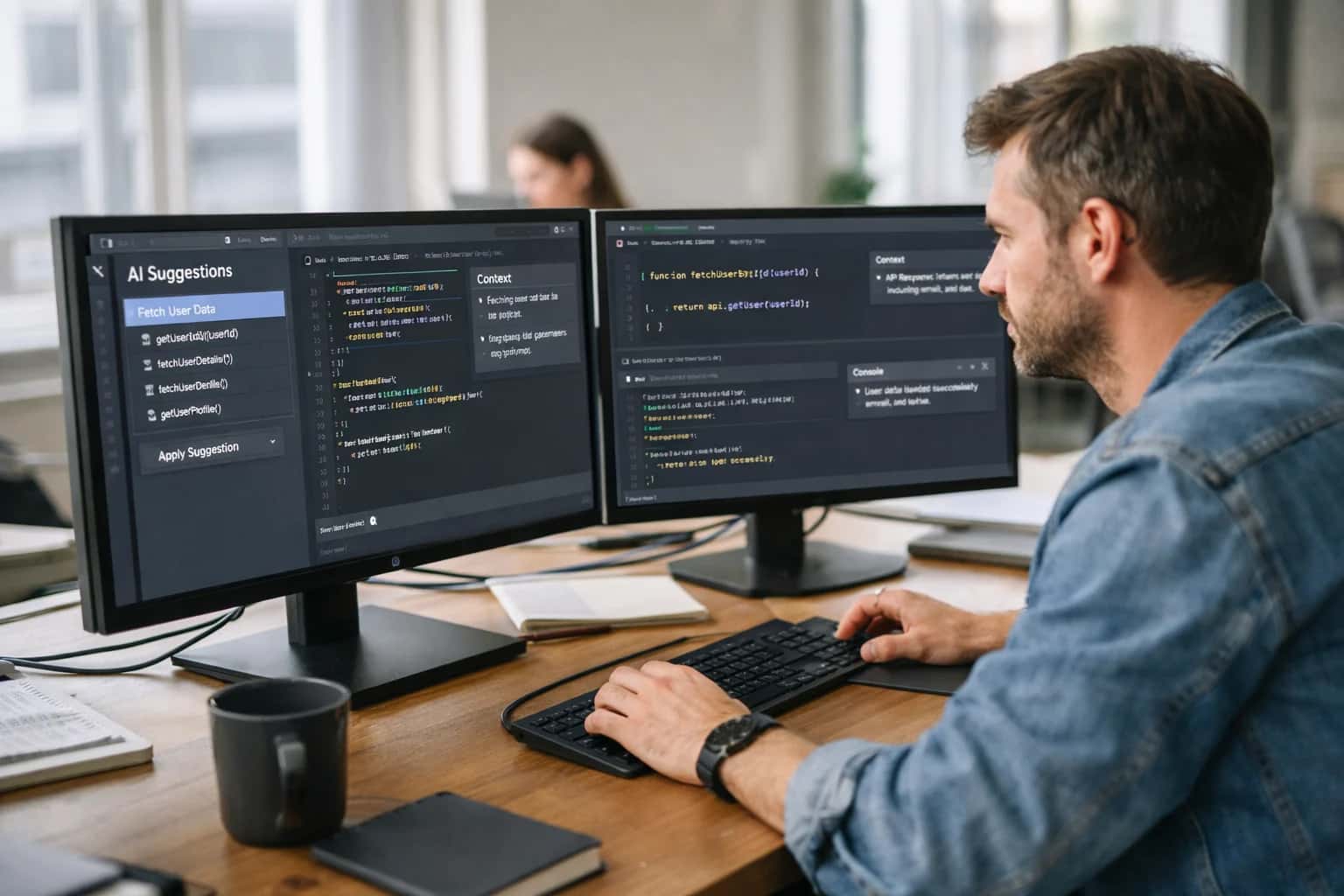
ARCHITECTURE & ROLLOUT
Where AI Fits in Emergency Management Platforms
A practical blueprint for integrating AI into emergency management systems to enhance situational awareness, accelerate response, and automate public communication.
High-value use cases focus on reducing cognitive load during crises: an AI copilot can synthesize situational reports from fragmented radio transcripts and field updates, model disaster scenarios (like flood inundation or evacuation routing) by pulling live GIS data, and automate the drafting and targeting of public safety alerts. Implementation involves a secure orchestration layer—often on Azure Government or AWS GovCloud—that handles tool calling, maintains a vector store of plans and past incidents for RAG, and enforces strict RBAC and audit trails for all AI-generated actions and communications.
Rollout requires a phased approach, starting with a read-only analysis agent for training data generation and operator trust-building, followed by assistive workflows like report summarization, before progressing to prescriptive agents that can suggest resource deployments. Governance is critical; all AI outputs should be tagged, require human-in-the-loop approval for public-facing actions, and be logged alongside traditional dispatcher notes for after-action reviews. This architecture ensures AI augments, rather than disrupts, the established chain of command and accountability inherent in public safety operations.
WHERE AI CONNECTS TO CRISIS WORKFLOWS
Key Integration Surfaces in Emergency Management Systems
Synthesizing Disparate Data Streams
AI integrates with the Common Operating Picture (COP) dashboard, the central hub for real-time crisis data. Key surfaces include:
- Incident feed APIs from CAD, RMS, weather services, and social media monitors.
- GIS mapping layers for visualizing asset locations, hazards, and population density.
- Resource status databases tracking personnel, equipment, and shelter availability.
An AI agent consumes these streams to generate executive summaries, detect data conflicts, and highlight critical gaps in the COP. For example, it can cross-reference social media reports of flooding with sensor data to validate and prioritize incidents for the Incident Commander. Implementation involves subscribing to webhooks or polling REST APIs, then using an LLM with a structured prompt to output a formatted situational report every 15 minutes.
Example Workflow: AI monitors the resource database for low inventory of a critical supply (e.g., sandbags), checks procurement system lead times, and automatically generates a resource request for approval, posting it to the logistics channel.
INTEGRATION PATTERNS
High-Value AI Use Cases for Emergency Management
Deploy AI agents and copilots within platforms like Tyler Incode, EnerGov, and specialized emergency management software to transform situational awareness, resource coordination, and public communication during crises.
01
Automated Situational Report Synthesis
Integrate AI with Computer-Aided Dispatch (CAD), field reports, and sensor feeds to generate real-time, unified situational reports. The agent ingests disparate data streams—text, voice logs, IoT alerts—and produces a consolidated summary for the Emergency Operations Center (EOC), reducing manual synthesis from hours to minutes.
Hours -> Minutes
Report generation
02
Intelligent Resource Dispatch & Logistics
Connect AI to resource management modules within your emergency platform. The system analyzes incident severity, location, resource availability (personnel, equipment, shelters), and traffic conditions to recommend optimal dispatch and logistics plans, dynamically adjusting as the situation evolves.
Batch -> Real-time
Decision support
03
Public Communication & Rumor Management
Deploy a governed AI agent integrated with public notification systems (e.g., Everbridge, mass notification) and social media monitoring tools. It drafts and personalizes alerts, answers high-volume citizen inquiries via chatbot, and identifies trending misinformation for rapid official response.
Same day
Alert personalization
04
Predictive Impact Modeling & Scenario Planning
Integrate AI models with GIS layers, weather data, and asset inventories to simulate disaster scenarios (flood, wildfire, chemical spill). The system predicts impact zones, vulnerable populations, and critical infrastructure at risk, outputting actionable data directly into EOC dashboards and planning tools.
05
Post-Incident Analysis & After-Action Reporting
Automate the compilation of after-action reports by connecting AI to incident timelines, response logs, and damage assessment records. The agent structures key events, identifies response gaps, and generates a draft report for review, compressing a multi-week process into days.
Weeks -> Days
Report drafting
06
Volunteer & Donation Coordination
Build an AI copilot for volunteer management and donation tracking systems. It matches volunteer skills and locations to needs, processes and categorizes incoming donation offers, and automates communication workflows, ensuring efficient mobilization of community support.
FROM SITUATIONAL AWARENESS TO PUBLIC COMMUNICATION
Example AI-Powered Emergency Workflows
These concrete workflows demonstrate how AI agents can be integrated into existing emergency management platforms (like WebEOC, Veoci, or proprietary systems) to synthesize data, model scenarios, and automate critical communications, moving from reactive reporting to proactive orchestration.
Trigger: A new incident is created in the Emergency Operations Center (EOC) platform or a major update is logged.
Data Pulled: The AI agent connects via API to multiple data streams:
- EOC Platform: Incident logs, resource status updates, and field reports.
- External Feeds: National Weather Service alerts, traffic camera APIs, social media monitoring for geotagged posts.
- Internal Systems: CAD/RMS for fire/police dispatch data, utility outage maps.
Agent Action:
- Ingests and summarizes key updates from the last 30-60 minutes.
- Extracts and tabulates critical resources (e.g.,
Shelters Open: 3,Road Closures: 5). - Flags conflicting information for human review.
- Generates a draft SITREP in the required agency format.
System Update: The draft report is posted to a designated "AI Drafts" channel in the EOC platform or sent via Slack/Microsoft Teams to the Planning Section Chief for review and approval.
Human Review Point: The Section Chief reviews, edits, and clicks "Publish," which posts the final SITREP to the shared incident dashboard and distributes it to command staff.
BUILDING A RESILIENT AI ORCHESTRATION LAYER
Implementation Architecture: Connecting AI to Emergency Systems
A practical blueprint for integrating AI agents with platforms like Tyler Incode, Everbridge, and Veoci to enhance situational awareness and response coordination.
Effective AI integration for emergency management hinges on a middleware orchestration layer that sits between core response platforms and AI services. This layer, often built on a cloud-native stack, ingests real-time data feeds from Computer-Aided Dispatch (CAD), Emergency Notification Systems (ENS), and field reporting tools via APIs and webhooks. It normalizes this data—transforming disparate incident reports, sensor alerts, and social media intel into a unified context—before routing it to specialized AI models for situational report synthesis, resource demand forecasting, and public communication drafting. The processed intelligence is then pushed back into the systems-of-record, such as updating an incident's Common Operating Picture (COP) in Tyler Incode or triggering a targeted public alert through Everbridge, all within a governed, auditable workflow.
Implementation focuses on three key integration surfaces: the incident lifecycle, the resource management module, and the public information workflow. For the incident lifecycle, AI agents are connected to the CAD/RMS Event object to automatically summarize fragmented radio traffic and initial reports into a coherent Incident Narrative. For resource management, AI models analyze historical response data and live asset telematics to predict resource depletion and recommend optimal staging via the platform's Resource Request API. For public communication, a secure LLM is integrated with the ENS's Message Template and Audience Segment endpoints to generate and target plain-language alerts, press releases, and FAQ updates based on the evolving incident context, with human-in-the-loop approval steps enforced through the platform's workflow engine.
Rollout requires a phased, use-case-first approach, starting with a non-critical, high-volume workflow like automated after-action report generation. Governance is paramount; all AI-generated outputs must be tagged with provenance metadata and routed through a human validation queue before being committed to the official record or disseminated to the public. The architecture must also include a fallback mechanism to default to standard operating procedures during AI service outages. By treating AI as a force multiplier for existing emergency platforms—not a replacement—agencies can enhance decision speed and operational consistency while maintaining the robust accountability and chain of command required in crisis response.
EMERGENCY MANAGEMENT INTEGRATION PATTERNS
Code and Payload Examples
Ingesting Multi-Source Field Reports
AI agents can continuously monitor and synthesize incoming data from field units, social media, IoT sensors, and partner agencies. The integration typically involves subscribing to event streams or polling REST APIs from platforms like WebEOC, Veoci, or custom reporting tools. The AI parses unstructured text, extracts key entities (location, resource needs, hazards), and creates a consolidated Common Operating Picture (COP) summary.
Example Payload for Report Analysis:
json{ "source": "field_unit_alpha", "timestamp": "2024-05-15T14:30:00Z", "raw_text": "Multiple trees down on Oak St. Blocking both lanes. No power lines observed. No injuries reported. Need public works for clearance.", "platform_context": { "incident_id": "INC-2024-9876", "reporting_jurisdiction": "Public Works District 3" } }
The AI returns a structured summary with extracted location (Oak St), hazard (trees down), impacted infrastructure (roadway), and required resource (public works crew), ready for insertion into the incident management system.
AI-ENHANCED EMERGENCY OPERATIONS CENTER (EOC) WORKFLOWS
Realistic Time Savings and Operational Impact
This table illustrates the tangible impact of integrating AI agents and copilots with platforms like Tyler EnerGov, SAP Public Sector, and specialized EOC software. It compares manual processes to AI-assisted workflows, showing realistic time compression and operational improvements for emergency management teams.
| Emergency Management Workflow | Before AI (Manual Process) | After AI (Assisted Process) | Implementation Notes |
|---|---|---|---|
Situational Report (SITREP) Synthesis | Analyst compilation from 5+ sources: 2-4 hours | AI drafts from ingested feeds & logs: 15-30 minutes | Human review and validation required for accuracy and context. |
Public Communication Drafting (Press Release / Alert) | Comms officer drafting from scratch: 1-2 hours | AI generates initial draft from incident data: 10-20 minutes | Officer edits for tone, policy, and final approval. Integrated with mass notification systems. |
Resource Request Triage & Routing | Manual logging and phone/radio dispatch: 20-40 minutes per request | AI parses requests, suggests priority & unit: <5 minutes | AI suggests based on location, type, and availability; dispatcher confirms. |
Damage Assessment Report Aggregation | Field data collation and manual entry: Next-day reporting | AI extracts & summarizes from field photos/notes: Same-day, near real-time | AI processes submitted imagery and notes; GIS integration for mapping. |
Shelter Capacity & Supply Monitoring | Manual calls and spreadsheet updates every 4-6 hours | AI aggregates data from shelter check-ins & inventory APIs: Continuous dashboard | AI flags shortages or capacity thresholds for manager review. |
Volunteer & Donation Coordination | Email/phone intake, manual database entry: High lag, potential mismatch | AI chatbot intake, skills matching, automated logging: Immediate triage & routing | Chatbot handles initial FAQ and intake; coordinators manage complex placements. |
After-Action Report (AAR) Data Compilation | Post-incident manual data gathering across systems: 1-2 weeks | AI pre-populates timeline, comms logs, resource use: 2-3 days | AI structures data from EOC platform logs; analysts add narrative and lessons. |
IMPLEMENTING AI IN CRITICAL INFRASTRUCTURE
Governance, Security, and Phased Rollout
Integrating AI into emergency management platforms requires a security-first, phased approach that maintains operational control and public trust.
AI agents must operate within a strictly governed security perimeter. This means implementing role-based access controls (RBAC) tied to your emergency management platform's user roles (e.g., Dispatcher, Incident Commander, Public Information Officer). All AI-generated outputs—such as synthesized situational reports or public messaging drafts—should be routed through a human-in-the-loop approval queue within the platform's workflow engine before dissemination. Every interaction is logged to the platform's audit trail, creating a complete chain of custody for AI-assisted decisions during after-action reviews.
A phased rollout mitigates risk and builds confidence. Start with a non-critical decision support pilot, such as using AI to summarize incoming field reports from first responders into a common operating picture. This provides immediate value without automating public alerts. Phase two might involve AI-driven resource allocation modeling for staging areas, where the system suggests optimal placements based on incident type and traffic patterns, but requires commander approval. The final phase could introduce a public communication copilot that drafts social media updates and press releases based on approved incident data, which are then vetted by the Public Information Officer before publishing.
Data sovereignty and model governance are paramount. AI models processing sensitive data (e.g., casualty estimates, infrastructure vulnerabilities) should be deployed on-premises or in a government-certified cloud, not sent to external APIs. Use retrieval-augmented generation (RAG) to ground AI responses in your official playbooks, GIS data, and resource inventories, preventing hallucinations. Establish a clear rollback protocol to disable AI features instantly and revert to manual workflows if the system behaves unexpectedly during a declared emergency. This controlled, incremental path ensures AI enhances—rather than disrupts—the mission-critical reliability of platforms like Everbridge, Rave Alert, or integrated CAD/RMS systems.
Enabling Efficiency, Speed & Accuracy
Intelligent Analysis, Decision & Execution
We build AI systems for teams that need search across company data, workflow automation across tools, or AI features inside products and internal software.
Talk to Us
Search across company data
Give teams answers from docs, tickets, runbooks, and product data with sources and permissions.
Useful when people spend too long searching or get different answers from different systems.
Enterprise searchRAGPermissions
Read more
Automate internal workflows
Use AI to route work, draft outputs, trigger actions, and keep approvals and logs in place.
Useful when repetitive work moves across multiple tools and teams.
AI agentsWorkflow automationGovernance
Read more
Add AI to products and internal tools
Build assistants, guided actions, or decision support into the software your team or customers already use.
Useful when AI needs to be part of the product, not a separate tool.
AI integrationDecision supportModel routing
Read moreIMPLEMENTATION BLUEPRINT
FAQ: AI Integration for Emergency Management
Practical questions and workflow blueprints for integrating AI into emergency management platforms like Everbridge, Veoci, Rave, and custom systems to enhance situational awareness, accelerate response, and automate public communication.
This workflow ingests multi-format field reports to create a unified Common Operating Picture (COP).
- Trigger: A new field report is submitted via mobile app, email, or radio transcription into the emergency management platform.
- Context Pulled: The AI agent retrieves the report content and relevant context: incident type, location, assigned units, and recent related updates.
- Agent Action: A multi-modal AI model processes the text, attached images (for damage assessment), and geodata. It extracts key entities (e.g.,
affected_count: 12,resource_needed: generator,hazard: downed_power_line), assesses urgency, and cross-references with existing incident data for contradictions or corroboration. - System Update: The synthesized summary and extracted structured data are posted back to the incident log in the platform. Critical new elements (like a newly identified hazard) automatically trigger alerts to the Incident Commander's dashboard.
- Human Review: The AI-generated summary is flagged as
AI-Assistedand remains editable by the Planning Section Chief, who approves it before it becomes part of the official Incident Action Plan (IAP).

About the author
Prasad Kumkar
CEO & MD, Inference Systems
Prasad Kumkar is the CEO & MD of Inference Systems and writes about AI systems architecture, LLM infrastructure, model serving, evaluation, and production deployment. Over 5+ years, he has worked across computer vision models, L5 autonomous vehicle systems, and LLM research, with a focus on taking complex AI ideas into real-world engineering systems.
His work and writing cover AI systems, large language models, AI agents, multimodal systems, autonomous systems, inference optimization, RAG, evaluation, and production AI engineering.
LinkedIn
Limited slotsGet a Free AI Consultation
Partnered with leading AI, data, and software stack.





How We Work
Custom AI workflows for your Business
One-fit-all AI don't work for modern businesses. At Inferensys, we aim to understand your business & custom requirements; which we use to define most efficient agentic workflows, the data, and the tools for your business.
01
Review the use case
We understand the task, the users, and where AI can actually help.
Read more02
Pick the right approach
We define what needs search, automation, or product integration.
Read more03
Build the first useful version
We implement the part that proves the value first.
Read more04
Improve from there
We add the checks and visibility needed to keep it useful.
Read moreThe first call is a practical review of your use case and the right next step.
Talk to Us