The Jobber customer portal is a primary touchpoint for service requests, scheduling, and communication. AI integration focuses on three key surfaces: the quote request form, the booking/rescheduling interface, and the post-service messaging channel. By connecting an AI agent layer to Jobber's webhooks and REST API, you can intercept and enrich these interactions. For example, when a customer submits a vague service request (e.g., 'my AC is making noise'), an AI agent can instantly analyze the description against historical work orders, ask clarifying questions via the portal's chat, and auto-populate a detailed, line-item estimate in Jobber—turning a manual back-and-forth into a same-day quote.

Integration
AI Integration with Jobber Customer Portal
Embed AI agents and workflows into Jobber's customer-facing portal to automate quote generation, enable intelligent self-service booking, and deliver personalized communications—reducing manual back-office work and improving customer satisfaction.
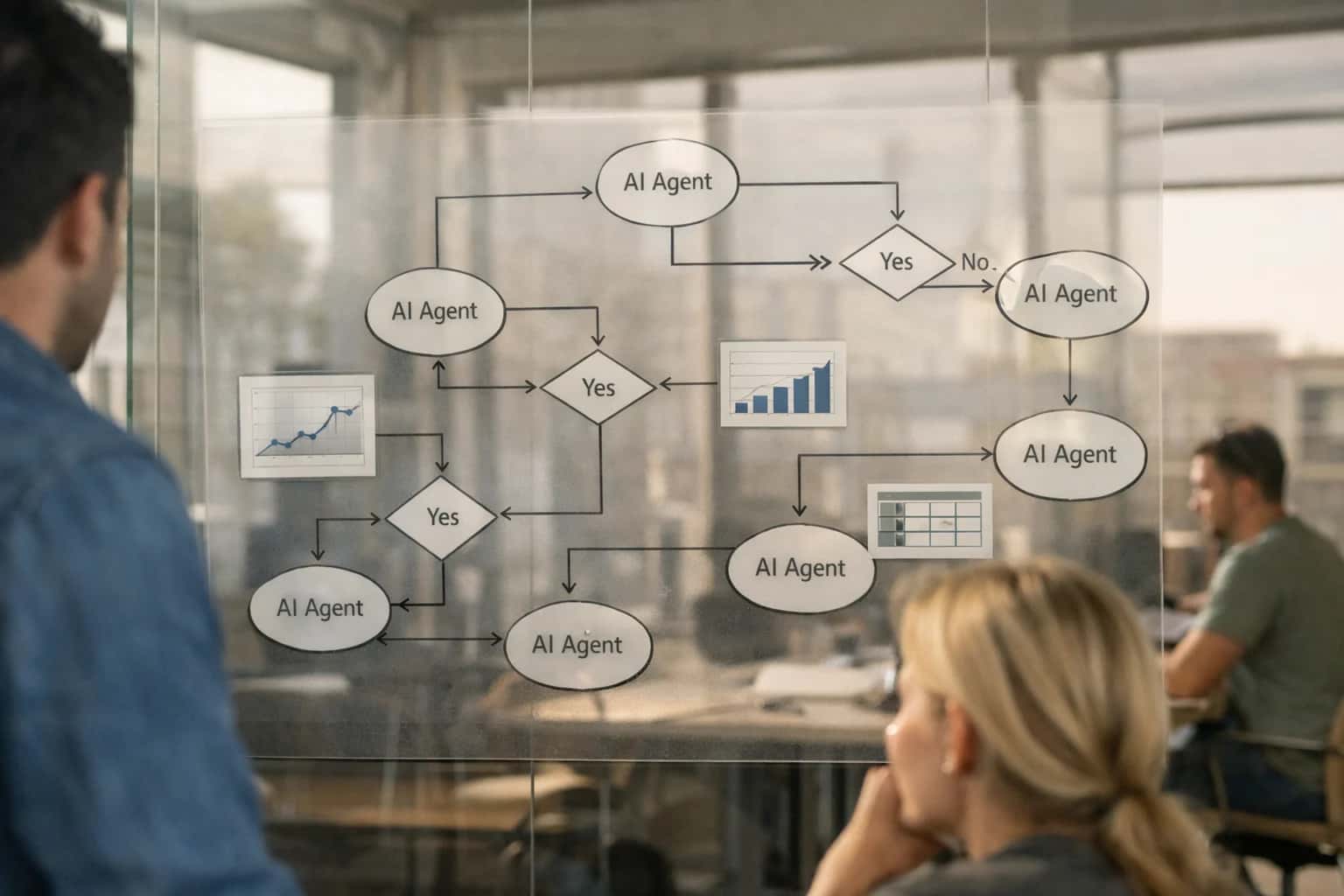
ARCHITECTURE AND ROLLOUT
Where AI Fits in the Jobber Customer Portal
A practical blueprint for embedding AI into Jobber's customer-facing surfaces to automate service interactions and reduce administrative load.
Implementation requires mapping Jobber's data model—specifically the Job, Client, Estimate, and Visit objects—to provide the AI with context. A typical architecture uses a middleware service (like an Inference Systems agent) that listens for estimate.created or visit.scheduled webhooks. This service calls an LLM with prompt templates grounded in your company's service catalog, pricing rules, and technician availability. The AI then uses the Jobber API to create or update records, and triggers personalized SMS or email via Jobber's communication tools. This creates a closed-loop where the portal becomes a 24/7 automated service desk.
Rollout should be phased, starting with AI-assisted quote generation for your most common services. Governance is critical: all AI-generated estimates should be flagged in Jobber with a custom field and routed for a manager's quick review before sending. Similarly, AI-driven booking changes should respect business rules (e.g., no same-day cancellations). By implementing audit logs and a human-in-the-loop approval step for the first 30-60 days, you de-risk the integration while training the AI on your specific exceptions and preferences, leading to higher automation rates over time.
ARCHITECTURAL BLUEPRINT
Key Jobber Portal Surfaces for AI Integration
Automating the Quote-to-Job Pipeline
The customer-facing Quote Request form is a prime surface for AI to reduce manual back-and-forth. An integrated AI agent can analyze the customer's description of the problem (e.g., "leaky kitchen faucet," "AC not cooling") against your historical service data and parts catalog.
Key Integration Points:
- Form Submission Webhook: Trigger an AI workflow when a new quote request is submitted via the Jobber API.
- Service & Pricing Database: Connect the AI to your internal knowledge base of standard job codes, labor hours, and material costs.
Example AI Workflow:
- Customer submits a request: "My bathroom sink is draining very slowly."
- AI parses the request, classifies it as a
drain-clearingservice. - AI retrieves the standard flat-rate price or estimated time for that service from your pricing matrix.
- AI generates a detailed, itemized quote with recommended service and total cost.
- The quote is automatically created in Jobber and sent to the customer for review/approval, turning a multi-hour process into minutes.
This transforms the portal from a simple intake form into an intelligent, 24/7 sales estimator.
CUSTOMER SELF-SERVICE AUTOMATION
High-Value AI Use Cases for the Jobber Portal
Transform Jobber's customer portal from a static information hub into an intelligent, automated service layer. These AI integration patterns reduce administrative overhead and improve customer satisfaction by handling routine interactions 24/7.
01
AI-Powered Quote Generation
Enable customers to describe their service need in natural language via the portal. An AI agent analyzes the request against your service catalog, historical job data, and local pricing to generate a detailed, accurate estimate in minutes. The quote is presented in the portal for immediate review and acceptance, converting inquiries to booked jobs faster.
Minutes
Quote turnaround
02
Intelligent Booking & Rescheduling
Embed a conversational AI scheduler into the portal. Customers can request new appointments or reschedule existing ones by chatting with an agent that understands technician availability, skill requirements, travel time, and job duration. The AI resolves scheduling conflicts in real-time and updates the Jobber calendar, sending confirmed details to both the customer and field crew.
24/7
Scheduling availability
03
Personalized Service Reminders
Move beyond generic email blasts. Use AI to analyze each customer's asset history within Jobber and predict optimal service intervals. The system automatically generates and sends personalized reminder messages through the portal (and email/SMS), suggesting specific maintenance based on actual usage, seasonality, and manufacturer recommendations.
Higher Conversion
On personalized outreach
04
Automated Job Status & ETA Updates
Connect Jobber's dispatch and GPS tracking data to an AI agent in the portal. Customers get proactive, conversational updates on their job's status. The AI synthesizes real-time location, traffic, and prior job progress to provide accurate ETAs and notify of delays, drastically reducing "where's my tech?" calls to the office.
80% Reduction
In status inquiry calls
05
Smart Post-Service Follow-Up
Automate the post-job workflow. After a job is marked complete in Jobber, an AI agent initiates a portal-based follow-up. It can answer basic questions about the work performed (using the work order notes), collect customer feedback, process simple change requests, and automatically trigger review solicitation or invoice payment workflows.
Same Day
Feedback collection
06
Diagnostic Self-Help & Tiered Triage
Build a guided troubleshooting assistant into the portal. Customers describe their issue, and the AI uses a retrieval-augmented generation (RAG) system on your company's knowledge base (manuals, FAQs, past solutions) to offer potential fixes. For issues requiring a visit, it intelligently gathers all necessary details to create a pre-populated, accurate work order in Jobber.
Tier 0 Resolution
For common issues
JOBBER CUSTOMER PORTAL
Example AI-Powered Portal Workflows
These workflows illustrate how to embed AI agents and automations into Jobber's customer portal to create a 24/7 self-service experience, reduce manual back-and-forth, and improve operational efficiency.
Trigger: A customer submits a service request through the Jobber customer portal, describing their issue in free text (e.g., "My AC is making a loud rattling noise and not cooling").
Context Pulled: The AI agent retrieves the customer's property history from Jobber's API and analyzes the new request text.
Agent Action:
- A classification model categorizes the request (e.g.,
HVAC Repair > Compressor Issue). - A Retrieval-Augmented Generation (RAG) system searches internal knowledge bases (past work orders, manuals) for similar resolved jobs.
- An LLM synthesizes this data to generate a detailed, itemized quote, including:
- Likely required parts (with current pricing from Jobber's catalog).
- Estimated labor hours based on historical data for similar jobs.
- A total estimate with a clear scope of work description.
System Update: The generated quote is posted as a new Estimate object in Jobber, linked to the customer and property. The customer receives an automated portal notification and SMS with a link to review and approve the quote digitally.
Human Review Point: For estimates exceeding a configured threshold (e.g., $1,500) or involving complex diagnostics, the system flags the quote for manager review before sending to the customer.
BUILDING A SECURE, SCALABLE INTEGRATION
Implementation Architecture: Data Flow & APIs
A production-ready AI integration for the Jobber Customer Portal connects external intelligence to Jobber's core workflows through its robust API and secure webhooks.
The integration architecture is anchored on Jobber's REST API and Webhooks. Key data flows include:
- Quote Generation: An AI agent, triggered by a
quote.createdwebhook, receives thejobandcustomerobjects. It uses a Retrieval-Augmented Generation (RAG) system against your service catalog and pricing rules to draft a detailed, personalized quote, which is posted back via thePUT /quotes/{id}endpoint. - Intelligent Booking: When a customer initiates a reschedule via the portal, a
booking.updatedevent fires. An AI scheduling agent consumes this event along with real-time technicianlocationandcapacitydata from the API. It evaluates constraints and suggests optimal new time slots, which are presented to the customer through a dynamically updated portal interface. - Personalized Reminders: A nightly batch process queries the Jobber API for upcoming
jobsandvisits. An AI workflow segments customers based on history and service type, generating tailored SMS or email reminder content that is dispatched via your connected communication platform (e.g., Twilio, SendGrid).
For a controlled rollout, we implement the integration as a middleware layer (often using a platform like n8n or Make) that sits between Jobber and your AI services. This layer handles:
- API Orchestration: Managing authentication, rate limiting, and error retries for Jobber's API.
- Prompt & Context Management: Securely injecting company-specific knowledge (e.g., service manuals, brand voice) into LLM calls.
- Human-in-the-Loop Gates: Routing AI-generated quotes or communications through an approval queue in a tool like Slack or Microsoft Teams for manager review before final submission to Jobber, ensuring quality control.
- Audit Logging: Creating immutable logs of all AI actions, the data consumed, and the outcomes pushed back to Jobber for compliance and debugging.
Governance is critical. The architecture enforces role-based access so AI agents only interact with specific Jobber API scopes (e.g., jobs:write, quotes:read). All customer data is processed ephemerally; no PII is stored in vector databases long-term. We recommend a phased rollout: start with AI-assisted quote generation for a single service line, monitor accuracy and user feedback, then expand to booking and reminders. This approach de-risks the implementation and allows for tuning prompts and workflows based on real performance data. For related patterns, see our guides on AI Integration with Jobber and AI Integration for Zuper Customer Portal.
INTEGRATION PATTERNS
Code & Payload Examples
Automating Quote Creation from Portal Submissions
When a customer submits a service request via the Jobber Customer Portal, a webhook can trigger an AI agent to generate a detailed, personalized quote. This pattern uses the request description, customer history, and your service catalog to produce a draft estimate within Jobber.
Example Webhook Payload & AI Call:
json// Webhook payload from Jobber Customer Portal { "event": "service_request.created", "data": { "request_id": "SR-78910", "customer_id": "CUST-12345", "customer_name": "Jane Smith", "property_address": "123 Main St", "service_description": "Backyard fence needs repair after storm. Two sections leaning, posts may be rotten.", "priority": "medium", "attachments": ["fence_photo1.jpg"] } } // AI Agent prompt construction const prompt = `Generate a Jobber estimate for a fence repair. Customer History: ${customerPastJobs}. Request: ${serviceDescription}. Based on our catalog, suggest line items for: - Labor hours (carpentry, post setting) - Materials (pressure-treated posts, rails, fasteners) - Equipment (auger rental) - Disposal fees Provide a summary and total.`;
The AI returns structured line items and notes, which your integration then uses to create a draft estimate in Jobber via the POST /estimates API, ready for final review.
AI-ENHANCED CUSTOMER PORTAL
Realistic Time Savings & Business Impact
How adding AI to Jobber's customer portal transforms manual, reactive service interactions into automated, proactive engagements.
| Metric | Before AI | After AI | Notes |
|---|---|---|---|
Quote Generation Turnaround | 24-48 hours | 5-10 minutes | AI drafts from customer description; final human review required. |
Booking Rescheduling Requests | Manual phone/email triage | Portal self-service with AI suggestions | Reduces call volume by ~40% for common changes. |
Personalized Service Reminders | Batch email blasts | AI-triggered, asset-specific messages | Increases open rates and on-time PM completion. |
Initial Customer Inquiry Triage | Staff screens all messages | AI chatbot handles FAQs & collects details | Frees staff for complex issues; 24/7 availability. |
Job Status Update Requests | Phone calls to dispatcher | Automated portal notifications & ETA forecasts | Improves customer satisfaction (CSAT) scores. |
Post-Service Feedback Collection | Manual follow-up calls/emails | AI-sent, context-aware SMS/email surveys | Doubles response rates for actionable insights. |
Portal Adoption & Engagement | Low usage, manual data entry | AI-driven prompts & value-add interactions | Increases portal logins and customer data accuracy. |
ARCHITECTING A CONTROLLED DEPLOYMENT
Governance, Security & Phased Rollout
A practical approach to deploying AI in the Jobber Customer Portal that prioritizes security, user trust, and measurable impact.
Integrating AI into a customer-facing portal like Jobber requires careful governance from day one. This starts with a data security-first architecture where the AI agent operates as a secure middleware layer. Customer data from Jobber's Customer, Job, and Estimate objects is never sent directly to a third-party LLM. Instead, we implement a Retrieval-Augmented Generation (RAG) pipeline where proprietary data (like your service catalogs and pricing) is embedded into a private vector database. The AI agent queries this secure knowledge base to generate grounded, accurate responses for quote drafting, booking logic, and personalized reminders, ensuring all outputs are based solely on your approved business rules and data.
A successful rollout follows a phased, value-driven approach to manage risk and build confidence:
- Phase 1: Silent Pilot & Internal Testing – Deploy the AI agent in a sandbox Jobber environment. Use it to generate draft quotes and booking suggestions that are reviewed by your team before being sent to customers, validating accuracy and building a feedback loop for prompt tuning.
- Phase 2: Limited Beta with Trusted Customers – Enable the AI features for a select group of customers, such as those on annual maintenance plans. Monitor interactions via detailed audit logs in the integration layer, tracking metrics like quote acceptance rate and self-service booking completion. Use this phase to refine the customer experience and exception handling.
- Phase 3: Gradual Feature Rollout – Activate the AI-powered quote generator for all customers, but keep the intelligent rescheduling agent in a "suggestion-only" mode, requiring a human to confirm changes. This controlled release allows you to measure impact on operational efficiency (e.g., reduction in back-and-forth emails) without disrupting critical scheduling workflows.
- Phase 4: Full Automation with Human-in-the-Loop Gates – For high-value or complex jobs (e.g., jobs over a certain dollar threshold), configure the system to automatically flag the interaction for a human review within Jobber before the AI-generated quote is finalized or a booking is changed, ensuring oversight where it matters most.
Governance is maintained through the integration platform's tooling. Every AI-generated interaction is logged with a full trace—including the source customer data, the exact prompt used, and the final output—creating an immutable audit trail for compliance and continuous improvement. Role-based access controls (RBAC) ensure only authorized managers can adjust AI behaviors or access sensitive interaction logs. This structured, phased approach de-risks the integration, aligns AI outputs with your brand voice and business rules, and delivers tangible value incrementally, turning the Jobber Customer Portal into a scalable, intelligent front door for your service business.
Enabling Efficiency, Speed & Accuracy
Intelligent Analysis, Decision & Execution
We build AI systems for teams that need search across company data, workflow automation across tools, or AI features inside products and internal software.
Talk to Us
Search across company data
Give teams answers from docs, tickets, runbooks, and product data with sources and permissions.
Useful when people spend too long searching or get different answers from different systems.
Enterprise searchRAGPermissions
Read more
Automate internal workflows
Use AI to route work, draft outputs, trigger actions, and keep approvals and logs in place.
Useful when repetitive work moves across multiple tools and teams.
AI agentsWorkflow automationGovernance
Read more
Add AI to products and internal tools
Build assistants, guided actions, or decision support into the software your team or customers already use.
Useful when AI needs to be part of the product, not a separate tool.
AI integrationDecision supportModel routing
Read moreAI INTEGRATION WITH JOBBER CUSTOMER PORTAL
Frequently Asked Questions
Practical questions about embedding AI into Jobber's customer-facing portal for automated quotes, intelligent booking, and personalized service reminders.
This workflow uses AI to transform a customer's service request into a detailed, accurate Jobber estimate in minutes.
- Trigger: A customer submits a service request via the Jobber customer portal, describing their issue in free text (e.g., "My AC is blowing warm air and making a rattling noise").
- Context Pulled: The AI agent retrieves the customer's property and equipment history from Jobber and accesses your company's service catalog, labor rates, and parts pricing.
- Model Action: A language model classifies the request, extracts key details (system type, symptoms), and cross-references it with historical work orders. It generates a proposed scope of work, including:
- Likely required parts (e.g., capacitor, condenser fan motor)
- Estimated labor hours based on similar past jobs
- Any recommended diagnostic steps
- System Update: The AI drafts a complete Jobber estimate via the API, populating line items, pricing, and notes. It flags the estimate for human review by a manager or estimator.
- Next Step: Once approved, the estimate is automatically sent back to the customer through the portal, with an option to book the job immediately.
Technical Note: This typically uses a RAG (Retrieval-Augmented Generation) system grounded in your company's historical data and pricing rules to ensure accuracy and consistency.

About the author
Prasad Kumkar
CEO & MD, Inference Systems
Prasad Kumkar is the CEO & MD of Inference Systems and writes about AI systems architecture, LLM infrastructure, model serving, evaluation, and production deployment. Over 5+ years, he has worked across computer vision models, L5 autonomous vehicle systems, and LLM research, with a focus on taking complex AI ideas into real-world engineering systems.
His work and writing cover AI systems, large language models, AI agents, multimodal systems, autonomous systems, inference optimization, RAG, evaluation, and production AI engineering.
LinkedIn
Limited slotsGet a Free AI Consultation
Partnered with leading AI, data, and software stack.





How We Work
Custom AI workflows for your Business
One-fit-all AI don't work for modern businesses. At Inferensys, we aim to understand your business & custom requirements; which we use to define most efficient agentic workflows, the data, and the tools for your business.
01
Review the use case
We understand the task, the users, and where AI can actually help.
Read more02
Pick the right approach
We define what needs search, automation, or product integration.
Read more03
Build the first useful version
We implement the part that proves the value first.
Read more04
Improve from there
We add the checks and visibility needed to keep it useful.
Read moreThe first call is a practical review of your use case and the right next step.
Talk to Us