AI integration for Trimble Ag task management focuses on three primary surfaces: the work order/task object, the resource assignment and scheduling engine, and the real-time status and exception feeds. The core opportunity is to inject intelligence between a triggering event—like a completed soil test, a weather forecast shift, or a scout's field note—and the creation, prioritization, and dispatch of a corresponding task in Trimble's system. This requires mapping to Trimble's data model for fields, equipment, labor crews, and operational calendars via its APIs, then using AI to evaluate constraints (weather windows, soil moisture, resource availability, input lead times) to generate optimized, executable plans.

Integration
AI Integration for Trimble Ag Task Management
A technical guide to embedding AI agents into Trimble Ag's task and labor management workflows for dynamic prioritization, automated scheduling, and intelligent crew dispatch.
ARCHITECTURE BLUEPRINT
Where AI Fits into Trimble Ag Task Management
A technical blueprint for embedding AI-driven prioritization and dynamic scheduling into Trimble Ag's task and labor management workflows.
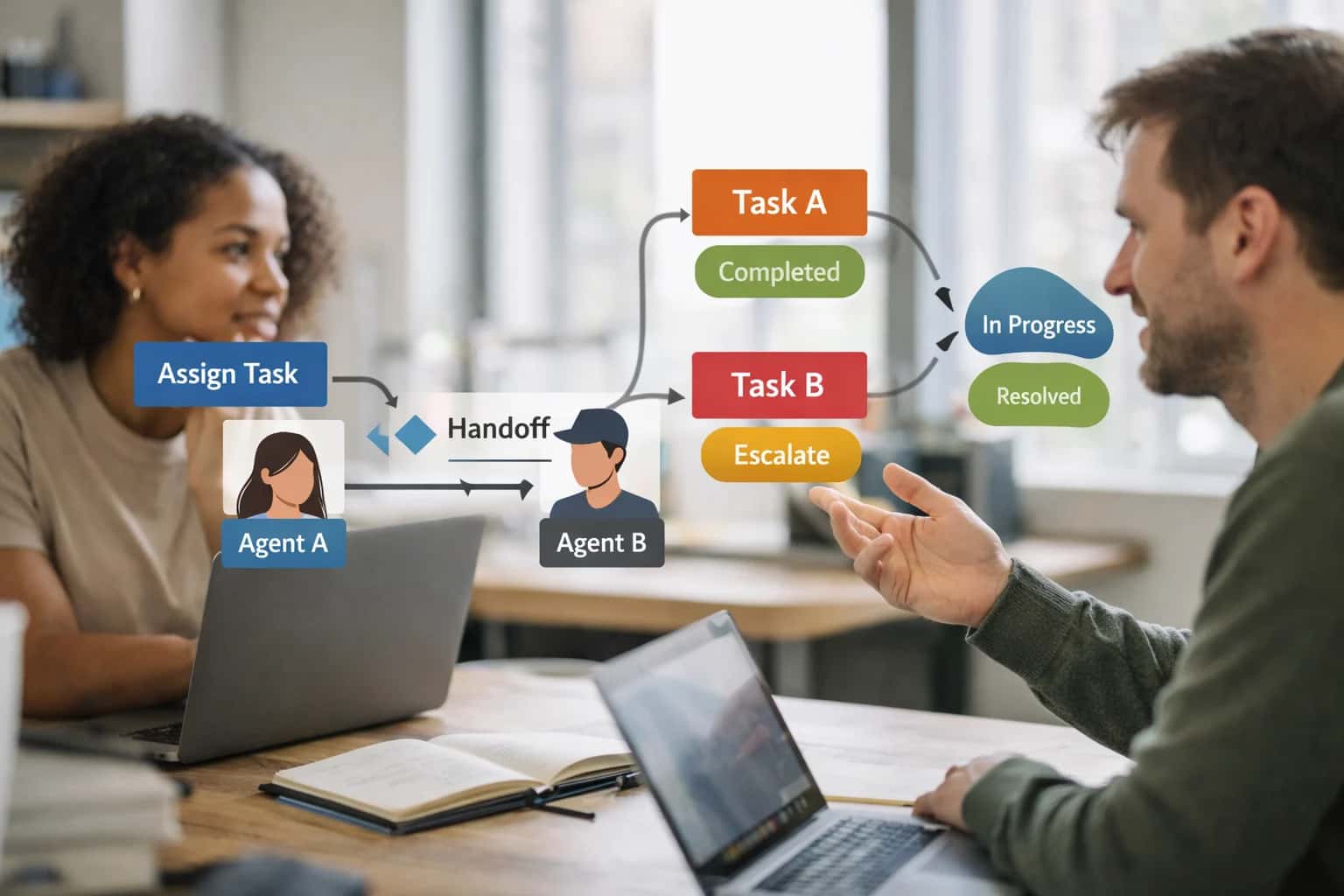
In practice, an AI agent listens to webhooks from connected data sources or monitors scheduled jobs. When a condition warrants action, the agent evaluates the task against a dynamic priority score—factoring in crop stage, economic impact, and compliance deadlines—before creating or updating a task record via the Trimble Ag API. For scheduling, the agent acts as a co-pilot to the human dispatcher, simulating multiple assignment scenarios across crews and machinery to minimize travel time and maximize daily completed acres. It can auto-assign tasks based on skill, location, and equipment compatibility, or present ranked recommendations within the Trimble interface for final approval, logging all decisions for audit.
Rollout is typically phased, starting with read-only AI analysis of historical task data to establish baseline efficiency and identify optimization patterns. A pilot phase then introduces AI-generated task suggestions into a single workflow (e.g., post-emergent herbicide application) for manager review before system creation. Full integration wires the AI's decisions directly into task creation and dispatch, governed by a human-in-the-loop approval rule for high-cost or high-risk operations. This architecture ensures AI augments the existing Trimble workflow without disrupting established operational protocols, turning reactive task management into a predictive, adaptive system.
AI FOR TASK MANAGEMENT
Key Integration Surfaces in Trimble Ag
Core Task Automation Layer
The Task & Work Order engine is the primary surface for AI-driven prioritization and dynamic scheduling. This is where AI agents can interact with Trimble Ag's data model to create, assign, and update tasks based on real-time field conditions, resource availability, and operational priorities.
Key API Objects & Workflows:
- Work Orders & Sub-Tasks: AI can generate detailed work orders from scouting reports, weather forecasts, or equipment alerts. This includes defining the task type (e.g., spraying, planting, irrigation), required resources, and estimated duration.
- Assignment Rules: Integrate with labor and equipment records to auto-assign tasks to the most suitable crew or machine based on skill, location, and current workload.
- Status Updates: AI can monitor task progress via integrated telematics or manual updates and automatically adjust dependent tasks or escalate delays.
Implementation Pattern: An AI agent listens to event streams (new field data, completed tasks, weather alerts), evaluates against business rules and optimization goals, and makes authenticated API calls to the Task Engine to create or modify the work plan.
TRIMBLE AG TASK MANAGEMENT
High-Value AI Use Cases for Task Management
Integrate AI agents directly into Trimble Ag's task and labor management modules to automate prioritization, optimize resource allocation, and generate dynamic work schedules based on real-time field data, weather, and operational constraints.
01
Dynamic Field Operation Scheduling
AI agents analyze weather forecasts, soil moisture data, equipment availability, and field readiness to automatically generate and prioritize the daily/weekly task schedule. Tasks like spraying, planting, or harvesting are dynamically re-sequenced to optimize for weather windows and resource utilization.
Hours -> Minutes
Schedule generation
02
Automated Task Generation from Scouting
Connect AI to process field scout notes, images, and sensor alerts. The system automatically creates and assigns work orders in Trimble Ag for issues like pest infestations, nutrient deficiencies, or irrigation repairs, eliminating manual data entry and reducing response time.
Same day
Issue to task
03
Labor & Equipment Optimization
AI models evaluate task complexity, location, and required skills to optimally assign crews and machinery. Considers travel time, operator certifications, and equipment capacity to minimize downtime and fuel costs while ensuring the right resource is at the right field.
10-15%
Estimated efficiency gain
04
Predictive Maintenance Tasking
Integrate with Trimble's equipment telematics. AI predicts maintenance needs based on engine hours, sensor readings, and usage patterns, then auto-generates preventive maintenance work orders in the task manager, scheduling service during planned downtime.
Batch -> Real-time
Alerting
05
Harvest Logistics Coordination
During harvest, AI synthesizes yield monitor data, trucking availability, and storage bin capacity to create and dispatch a synchronized flow of tasks for combining, hauling, and drying operations. Dynamically adjusts as conditions change.
1 sprint
Typical implementation
06
Compliance & Audit Workflow Automation
For regulated operations, AI monitors task completion data (e.g., pesticide applications, fertilizer timing) and automatically generates compliance checklists and audit trails. Flags missing records or potential violations before they become issues.
80% reduction
Manual audit prep
TRIMBLE AG TASK MANAGEMENT
Example AI-Powered Task Workflows
These are concrete, production-ready workflows showing how AI agents can automate and optimize task creation, prioritization, and assignment within Trimble Ag's operational modules. Each example details the trigger, data context, AI action, and system update.
Trigger: A field scout submits a report via the Trimble Ag mobile app, tagging a specific field with an issue (e.g., "weed pressure in northwest corner").
Context/Data Pulled: The AI agent retrieves:
- The scout's notes and uploaded images.
- The field's boundary, crop type, and growth stage from the Trimble Ag field master.
- Recent weather data for the location.
- Available equipment and labor calendars.
- Historical treatment records for that field.
Model/Agent Action: A multi-modal AI model (vision + language) analyzes the image to confirm weed species and estimate infestation level. It cross-references the crop stage and weather to determine the optimal treatment window and product recommendation from an approved agronomic database.
System Update/Next Step: The agent automatically creates a spray work order in Trimble Ag Task Management with:
- Assigned field and geo-boundary.
- Recommended product and rate.
- Calculated estimated duration and input cost.
- Priority flag (e.g., "High - treat within 72 hours").
- Suggested equipment (e.g., "Sprayer #3") based on location and availability.
The work order is routed to the farm manager for one-click approval, moving it directly to the scheduling board.
FROM FIELD DATA TO AUTOMATED TASKING
Implementation Architecture & Data Flow
A production-ready architecture for embedding AI-driven task prioritization and scheduling into Trimble Ag's operational workflows.
The integration connects to Trimble Ag's Task Management API and Field Data API to create a closed-loop system. AI agents ingest real-time data streams—including weather forecasts, soil moisture sensor readings, satellite NDVI indices, and equipment telematics—alongside static records like field boundaries, crop plans, and labor contracts. This data is vectorized and stored in a low-latency vector database, enabling the AI to perform semantic retrieval for context-aware decision-making. The core orchestration layer uses a multi-agent framework where a Prioritization Agent scores pending tasks based on agronomic urgency, weather windows, and resource availability, while a Scheduling Agent dynamically sequences them into optimal daily work plans for crews and machinery.
Automated task generation and assignment flow through Trimble Ag's REST APIs. For example, when the AI detects a field crossing a soil moisture threshold, it can automatically create a new irrigation task in Trimble, populate it with a calculated water volume, and assign it to the appropriate pivot system. Similarly, a predicted pest pressure spike can trigger a scouting work order with a pre-filled geo-boundary and recommended protocol. All AI-generated tasks are created as draft records with a source: ai_system flag, allowing for optional human-in-the-loop review via a dedicated queue in the Trimble UI before they become active, ensuring operational control and accountability.
Rollout is phased, starting with read-only data synchronization and shadow task generation to validate AI recommendations against historical human decisions. Governance is enforced via a centralized Prompt Management and Audit Layer that logs every AI decision, the data context used, and the final human action (approve, modify, reject). This traceability is critical for compliance, operator training, and continuous model refinement. The system is designed to be deployed as a containerized microservice alongside your Trimble Ag instance, using secure service accounts for API access and never storing raw PII or sensitive operational data outside your designated cloud environment.
TRIMBLE AG TASK MANAGEMENT
Code & Integration Patterns
Core Integration Points
AI agents for task management primarily interact with Trimble Ag's REST APIs and listen for webhook events. Key surfaces include:
- Tasks API: Create, update, and query
Taskobjects. Use this to inject AI-generated tasks (e.g., "Scout NW corner for water stress") or modify priorities and assignments. - Work Orders API: For more complex, multi-step operations, integrate with
WorkOrderrecords to adjust schedules or resource allocations. - Field & Boundary Data: Pull geospatial context via the
FieldsAPI to ground task generation in specific management zones. - Event Webhooks: Subscribe to events like
task.created,task.status_changed, orfield.activity_logged. Use these to trigger AI re-prioritization or dynamic reassignment in response to new field data or weather alerts.
A typical pattern listens for a new soil moisture alert, retrieves the affected field's task list, and uses an LLM to reprioritize irrigation-related work.
AI-PRIORITIZED FIELD OPERATIONS
Realistic Operational Impact & Time Savings
How AI-driven task management in Trimble Ag transforms manual planning and reactive dispatch into a dynamic, optimized workflow.
| Workflow / Metric | Before AI | After AI | Implementation Notes |
|---|---|---|---|
Daily Task Prioritization | Manual review of field notes, weather, and equipment status | AI-generated priority list with reasoning | Agent ingests scouting reports, sensor data, and forecast to score urgency |
Resource & Crew Dispatch | Phone calls and manual schedule adjustments based on availability | Optimized assignments with ETAs and skill matching | Integrates with labor modules and equipment telematics for real-time capacity |
Schedule Adherence & Re-planning | Reactive shifts when weather or breakdowns occur | Proactive re-sequencing with impact analysis | AI monitors live conditions and suggests alternative sequences within constraints |
Work Order Creation from Scouting | Manual entry of issues into the task module | Auto-generated work orders from image/note analysis | CV and NLP agents parse scout uploads, classify issues, and draft tasks |
Input & Material Forecasting | Weekly inventory checks and manual purchase triggers | Predictive alerts for input needs based on task pipeline | Correlates planned tasks with input consumption rates and lead times |
Post-Operation Reporting | End-of-day manual logging and note consolidation | Automated activity summaries and compliance tagging | Agent pulls from completed tasks, equipment logs, and operator inputs |
Cross-Field Constraint Optimization | Sequencing based on field proximity or manager intuition | Multi-variable optimization (travel time, soil conditions, crop stage) | Solves for fuel, labor hours, and operational windows simultaneously |
PRODUCTION-READY IMPLEMENTATION
Governance, Security & Phased Rollout
A structured approach to deploying AI agents within Trimble Ag's operational workflows, ensuring control, compliance, and measurable impact.
Integrating AI into Trimble Ag's task management requires a clear data governance model. AI agents should operate with read-only access to core operational data—such as field boundaries, equipment logs, and labor records—by default. Write actions, like creating or updating a Work Order or Task Assignment, should be routed through Trimble's existing APIs but gated by approval workflows or human-in-the-loop review steps configured within the platform. All AI-generated recommendations and actions must be logged to a dedicated audit table, linking to the source field, model version, and prompting context for full traceability.
A phased rollout minimizes risk and builds operational trust. Start with a pilot phase focused on low-risk, high-volume tasks: AI-driven prioritization of a single work type (e.g., soil sampling) within a limited geography. Use Trimble Ag's reporting modules to compare AI-suggested schedules against historical human-planned ones for accuracy and efficiency gains. The second phase introduces dynamic rescheduling based on weather integration, where the AI suggests adjustments to the task calendar, but changes require a manager's approval via a Trimble notification. The final production phase enables autonomous task assignment for routine operations, with the system sending optimized dispatch instructions directly to crew mobile devices via Trimble's field apps.
Security is paramount when connecting external AI models to farm data. Implement a gateway layer that anonymizes sensitive field identifiers before data leaves the VPC for model inference, and re-identifies results upon return. All prompts and context sent to LLMs should be scrubbed of PII and proprietary farm location details. For on-premise or VPC-deployed models, ensure role-based access control (RBAC) from Trimble Ag user roles is propagated to the AI service, so a field manager only triggers tasks for their assigned operational units. Continuous monitoring for data drift in field conditions and model performance degradation ensures recommendations remain agronomically sound season over season.
Enabling Efficiency, Speed & Accuracy
Intelligent Analysis, Decision & Execution
We build AI systems for teams that need search across company data, workflow automation across tools, or AI features inside products and internal software.
Talk to Us
Search across company data
Give teams answers from docs, tickets, runbooks, and product data with sources and permissions.
Useful when people spend too long searching or get different answers from different systems.
Enterprise searchRAGPermissions
Read more
Automate internal workflows
Use AI to route work, draft outputs, trigger actions, and keep approvals and logs in place.
Useful when repetitive work moves across multiple tools and teams.
AI agentsWorkflow automationGovernance
Read more
Add AI to products and internal tools
Build assistants, guided actions, or decision support into the software your team or customers already use.
Useful when AI needs to be part of the product, not a separate tool.
AI integrationDecision supportModel routing
Read moreIMPLEMENTATION AND WORKFLOW DETAILS
Frequently Asked Questions
Common technical and operational questions about integrating AI-driven task prioritization and scheduling into Trimble Ag's task management modules.
The AI agent uses a multi-factor scoring model that pulls real-time and forecast data from Trimble Ag's APIs to dynamically rank tasks. The workflow is:
- Trigger: A scheduled job (e.g., every 6 hours) or a manual refresh request initiates the prioritization cycle.
- Context Pull: The agent fetches:
- Field Data: Crop stage, soil moisture, NDVI health scores from Trimble's field monitoring.
- Task Data: Open work orders from the
TaskandWorkOrderobjects, including due dates, estimated durations, and required resources. - External Data: Hyper-local weather forecasts (precipitation, wind, temperature) and soil temperature.
- Resource Data: Availability of labor crews and machinery from the
Resourcemodule.
- Agent Action: A scoring model (e.g., a fine-tuned small language model or a rules-based engine) evaluates each task against weighted criteria:
- Agronomic Urgency (e.g., spraying before a disease threshold)
- Weather Window (e.g., finishing planting before forecasted rain)
- Resource Constraints (e.g., matching task to available equipment)
- Economic Impact (e.g., prioritizing high-value crop blocks)
- System Update: The agent updates the
priority_scoreandrecommended_start_datefields on the corresponding Trimble Ag task records via PATCH API calls. High-priority tasks can be flagged or moved to the top of dispatcher dashboards. - Human Review: The farm manager reviews the AI-generated priority list in the Trimble Ag interface, with the ability to manually override scores and add notes before final dispatch.

About the author
Prasad Kumkar
CEO & MD, Inference Systems
Prasad Kumkar is the CEO & MD of Inference Systems and writes about AI systems architecture, LLM infrastructure, model serving, evaluation, and production deployment. Over 5+ years, he has worked across computer vision models, L5 autonomous vehicle systems, and LLM research, with a focus on taking complex AI ideas into real-world engineering systems.
His work and writing cover AI systems, large language models, AI agents, multimodal systems, autonomous systems, inference optimization, RAG, evaluation, and production AI engineering.
LinkedIn
Limited slotsGet a Free AI Consultation
Partnered with leading AI, data, and software stack.





How We Work
Custom AI workflows for your Business
One-fit-all AI don't work for modern businesses. At Inferensys, we aim to understand your business & custom requirements; which we use to define most efficient agentic workflows, the data, and the tools for your business.
01
Review the use case
We understand the task, the users, and where AI can actually help.
Read more02
Pick the right approach
We define what needs search, automation, or product integration.
Read more03
Build the first useful version
We implement the part that proves the value first.
Read more04
Improve from there
We add the checks and visibility needed to keep it useful.
Read moreThe first call is a practical review of your use case and the right next step.
Talk to Us