AI integration for VelocityEHS incident triage connects at the initial report ingestion point, typically via the Incident Management module's API or webhook capabilities. The AI agent acts as a pre-processing layer, intercepting incoming reports—whether from mobile apps, web forms, or integrated systems—before they are fully logged. It analyzes the unstructured narrative text, witness statements, and any attached images to perform three core functions: severity assessment (e.g., OSHA recordable vs. first aid), priority assignment (e.g., high for a lost-time injury, medium for a near-miss), and initial categorization (e.g., slip/trip/fall, struck-by, ergonomic). This structured metadata is then passed back to VelocityEHS to auto-populate fields like Incident Severity, Priority Code, and Category, and to trigger the appropriate workflow routing rules.

Integration
AI Integration with VelocityEHS Incident Triage
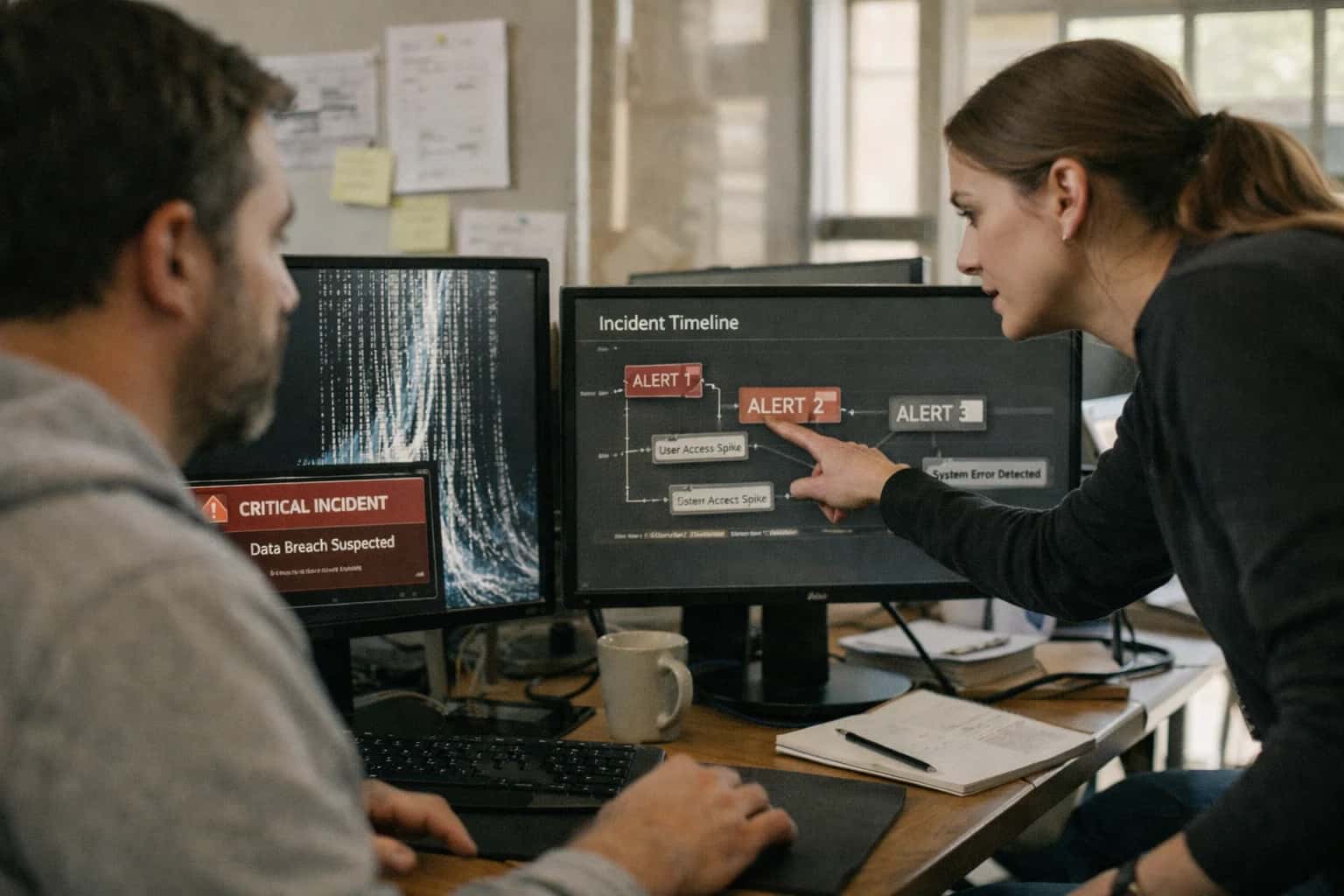
Where AI Fits in VelocityEHS Incident Workflows
A practical guide to embedding AI as a first responder within the VelocityEHS incident management lifecycle.
The implementation detail lies in grounding the AI's decisions. A production system doesn't just use a generic LLM; it's fine-tuned or prompted with your organization's specific incident classification matrix, site-specific hazard profiles, and historical data. For example, the AI can be configured to recognize that a report mentioning "chemical splash near Tank B-12" at your Houston facility should be routed to the Site Chemical Safety Officer and tagged with the Hazardous Material category, while also checking if a related Permit to Work was active. This is achieved by having the AI agent call VelocityEHS APIs to fetch contextual data (e.g., active permits, chemical inventory for the location) during its analysis, ensuring the triage is informed by live system state.
Rollout is phased, starting with AI-assisted triage where the AI's suggestions are presented to a human EHS coordinator for review and approval within the VelocityEHS interface. This builds trust and provides a feedback loop to improve the model. Governance is critical: all AI actions must be logged in a dedicated audit trail within VelocityEHS, linking the original report, the AI's reasoning (e.g., "assigned High priority due to keywords 'loss of consciousness' and 'fall from height'"), and the human reviewer's final decision. This creates a transparent, auditable process that satisfies compliance requirements. The final phase is automated routing for high-confidence, low-severity incidents (e.g., first aid cases), freeing your team to focus on complex investigations.
The impact is operational: reducing the time from report to assigned investigator from hours to minutes, ensuring severe incidents are never buried in a queue, and creating consistently categorized data for downstream analytics. This isn't about replacing your EHS team; it's about giving them a force multiplier that handles the initial sorting, so they can start their value-added investigative work immediately. For a deeper look at automating the subsequent investigation phase, see our guide on AI Integration for Intelex Root Cause Analysis.
VelocityEHS Touchpoints for AI Triage
Initial Report Intake
The Incident Reporting module is the primary entry point for AI triage. This is where unstructured data from mobile apps, web forms, or integrated systems (like wearables or IoT sensors) first lands. AI can act as a first responder here by:
- Parsing free-text descriptions from employees to auto-populate structured fields (e.g., injury type, body part, severity).
- Assessing report completeness in real-time and prompting the reporter for missing critical details.
- Applying initial severity scoring using historical incident data and pre-configured risk matrices to assign a Priority 1-4 label.
This immediate AI layer reduces manual data entry by up to 70% and ensures high-severity incidents are flagged for expedited review within seconds of submission.
High-Value AI Triage Use Cases for VelocityEHS
Integrate AI as a first responder within VelocityEHS to automatically process incoming incident reports, assess severity, assign priority, and route to the correct investigator—reducing manual triage time and accelerating initial response.
Automated Severity & Priority Scoring
AI analyzes the free-text incident description, reported body part, and initial witness statements to assign a preliminary severity score (e.g., First Aid, Recordable, Lost Time) and a priority level for investigation. This replaces manual checklist reviews, ensuring high-severity incidents are flagged immediately.
Intelligent Routing & Assignment
Based on the incident type (e.g., slip/fall, chemical exposure, machinery), location, and involved department, AI automatically routes the case to the pre-defined investigator or team within VelocityEHS. It checks investigator availability and workload to prevent bottlenecks, ensuring the right person gets the case within minutes.
Initial Report Enrichment & Structuring
AI parses unstructured initial reports (from mobile apps, email, or voice notes) to auto-populate critical VelocityEHS fields: incident category, sub-category, immediate causes, and contributing factors. This enforces data consistency, reduces back-and-forth for missing information, and creates a richer starting point for the investigator.
Regulatory Flagging & Reporting Triggers
AI cross-references the triaged incident details against OSHA recordability rules and internal reporting thresholds. It automatically flags potential recordables, triggers alerts for mandatory reporting timelines, and can draft initial sections of Form 301, ensuring compliance workflows start immediately within the VelocityEHS compliance calendar.
Similar Incident & Hazard Correlation
During triage, AI performs a real-time semantic search across past VelocityEHS incidents, safety observations, and audit findings. It surfaces historically similar cases, recurring hazards at that location, and past corrective actions. This provides immediate context to the investigator, highlighting potential patterns before the investigation even begins.
Proactive Action Item Generation
For clear-cut, high-frequency incident types (e.g., PPE non-compliance), AI can draft immediate corrective action items during triage. These are created as pending tasks in the VelocityEHS Action Tracking module, linked to the incident, and assigned to the relevant supervisor for quick intervention while the formal investigation proceeds.
Example AI Triage Workflows for VelocityEHS
These workflows illustrate how AI agents can act as a first responder within VelocityEHS, automatically processing incoming incident reports to assess severity, assign priority, and route to the correct team—reducing manual triage time from hours to minutes.
Trigger: A new incident report is submitted via the VelocityEHS mobile app or web portal.
AI Agent Action:
- Extracts and analyzes the free-text incident description, location, and initial witness statements.
- Cross-references the incident type (e.g., 'slip', 'chemical exposure', 'near-miss') against a configured severity matrix.
- Scores the incident based on keywords, potential injury severity (using historical data), and environmental impact.
- System Update: Automatically sets the
Incident Priorityfield (e.g., Critical, High, Medium, Low) and populates a preliminarySeverity Score.
Human Review Point: The AI's priority and score are presented as recommendations. A supervisor can override with one click before the workflow proceeds.
Next Step: The incident record is automatically routed to the next stage based on the assigned priority.
Implementation Architecture: Data Flow & Guardrails
A secure, governed architecture for connecting AI triage agents to VelocityEHS incident workflows without disrupting existing safety processes.
The integration connects at two primary surfaces within VelocityEHS: the Incident Management module's API for reading new reports and writing enriched data, and the Action Tracking system for creating follow-up tasks. In a typical flow: 1) A webhook from VelocityEHS notifies a secure endpoint when a new incident report is submitted. 2) The AI agent, hosted in your private cloud or VPC, retrieves the raw report text, location, and initial categorization via the VelocityEHS REST API. 3) Using a configured LLM (e.g., GPT-4, Claude 3) with a prompt chain tuned for EHS terminology, the agent assesses severity (e.g., OSHA recordability likelihood), suggests priority (P1-P4), and recommends an investigator based on historical assignment patterns and current workload. 4) Before any write-back, all AI-generated outputs pass through a human-in-the-loop approval queue or a rules-based validation layer (e.g., 'never auto-assign Severity 1 incidents'). 5) Approved enrichments are written back to predefined custom fields in the VelocityEHS incident record, and any immediate actions (e.g., 'Notify Site Manager') are created in Action Tracking.
Critical guardrails are implemented at the data layer and workflow level. All prompts and AI interactions are fully logged with the incident ID for audit trails, and the system operates on a zero-retention policy for external AI services unless explicitly configured for internal model fine-tuning. The architecture supports role-based access control (RBAC) mirroring VelocityEHS permissions, ensuring AI suggestions are only visible to users with appropriate clearance. For rollout, we recommend a phased approach: start with AI as a copilot in draft mode for a pilot team, where suggestions are presented in a side panel for reviewer acceptance, before progressing to limited auto-enrichment for low-severity, high-volume incidents (e.g., first-aid cases). This minimizes risk while building trust in the agent's judgment.
This pattern ensures the AI acts as a force multiplier within the existing safety governance framework. It does not replace investigator judgment but accelerates the initial 'sorting hat' phase, reducing the time from report to assigned investigation from hours to minutes. By keeping the core workflow in VelocityEHS and using AI as an intelligent middleware, you maintain full visibility and control, allowing safety leaders to fine-tune the agent's 'conservatism' based on performance reviews. For related architectural deep dives, see our guides on AI Integration for Cority Incident Management and implementing AI Governance and LLMOps Platforms for regulated environments.
Code & Payload Examples
Ingesting New Reports
When a new incident is logged in VelocityEHS, a webhook can trigger an immediate AI triage. This example shows a FastAPI endpoint receiving the webhook payload, extracting key fields, and calling an LLM for initial assessment.
pythonfrom fastapi import FastAPI, HTTPException from pydantic import BaseModel import openai app = FastAPI() class IncidentWebhook(BaseModel): incident_id: str title: str description: str # Free-text narrative location: str reported_by: str timestamp: str @app.post("/webhook/velocityehs/incident") async def triage_incident(incident: IncidentWebhook): """AI Triage Endpoint""" prompt = f""" You are an EHS incident triage specialist. Analyze this incident report. Title: {incident.title} Description: {incident.description} Location: {incident.location} Provide a JSON response with: 1. severity_score: 1-5 (5 most severe) 2. priority: 'Critical', 'High', 'Medium', 'Low' 3. suggested_category: e.g., 'Slip/Trip', 'Struck By', 'Chemical Exposure' 4. immediate_actions: list of 2-3 recommended first steps """ try: response = openai.chat.completions.create( model="gpt-4", messages=[{"role": "user", "content": prompt}], response_format={ "type": "json_object" } ) triage_result = json.loads(response.choices[0].message.content) # Update VelocityEHS via API update_payload = { "incident": { "id": incident.incident_id, "custom_fields": { "ai_severity": triage_result['severity_score'], "ai_priority": triage_result['priority'], "ai_category": triage_result['suggested_category'] } } } # velocityehs_api.update_incident(update_payload) return {"status": "triaged", "incident_id": incident.incident_id} except Exception as e: raise HTTPException(status_code=500, detail=str(e))
Realistic Time Savings & Operational Impact
This table illustrates the operational impact of integrating AI as a first responder into the VelocityEHS incident management workflow, focusing on realistic time savings and process improvements for EHS teams.
| Workflow Stage | Before AI | After AI | Key Notes |
|---|---|---|---|
Initial Report Triage & Classification | 15-45 minutes manual review | 2-5 minutes AI-assisted scoring | AI analyzes narrative, suggests incident type, severity, and priority based on historical data. |
Investigator Assignment & Routing | Manual search for SME availability | Automated routing to qualified, available personnel | Considers investigator location, workload, and incident type expertise. |
Severity & Priority Determination | Subjective, based on reviewer experience | Consistent, data-driven scoring with human oversight | Reduces bias and standardizes initial risk assessment across sites. |
Regulatory Flagging (OSHA Recordable?) | Manual checklist review | AI pre-flags potential recordables for validation | Highlights key terms and injury details for faster, more accurate determination. |
Immediate Action Item Generation | Delayed until investigator review | AI drafts preliminary immediate actions for supervisor approval | e.g., 'Isolate area,' 'Initiate drug testing protocol' based on incident nature. |
Data Entry & Report Structuring | Manual transcription from free-text fields | AI auto-populates structured fields from narrative | Ensures data quality for downstream analytics and regulatory reporting. |
Cross-Module Alerting (e.g., Audit, CAPA) | Manual notification after investigation | AI triggers alerts to related workflows (Audit, Risk Register) | Proactively links incidents to potential systemic issues or open audit findings. |
Governance, Security & Phased Rollout
A production AI integration for VelocityEHS incident triage requires a structured approach to security, governance, and user adoption to ensure reliability and trust.
Architecture & Data Security: The integration operates as a secure middleware layer, typically deployed in your cloud environment (e.g., AWS, Azure). It listens for new incident reports via VelocityEHS webhooks or API polling. All data in transit is encrypted, and sensitive fields (like employee names in narratives) can be programmatically masked before processing. The AI model (e.g., GPT-4, Claude 3) is called via a private endpoint, and prompts are engineered to prevent data leakage. Processed outputs—such as severity scores, priority flags, and suggested routing—are written back to designated custom fields in the VelocityEHS incident object via its REST API, maintaining a full audit trail within the platform's native change logs.
Governance & Human-in-the-Loop: Initial deployments should enforce a human review gate. For example, the AI can populate a Suggested Severity and Recommended Assignee field, but the workflow requires a supervisor's approval before these fields auto-populate the official Severity and Assigned To fields. This builds trust and allows for model calibration. Governance also involves monitoring the AI's confidence scores for its classifications and routing low-confidence cases to a manual review queue. Regular audits of AI-suggested actions versus human-overridden decisions are crucial for continuous improvement and demonstrating control to compliance teams.
Phased Rollout Strategy: Start with a pilot focused on high-volume, lower-risk incident types, such as environmental near-misses or first-aid cases. This limits initial exposure while generating valuable training data. Phase 1 might only auto-classify incident type and department. Phase 2 can introduce severity scoring and basic routing. Phase 3 adds narrative summarization and root cause suggestion. Roll out by site or business unit, using VelocityEHS's own user and role management to control access. This iterative approach de-risks the implementation, allows for stakeholder feedback at each step, and creates measurable wins—like reducing triage time from hours to minutes for pilot groups—that build momentum for broader adoption.
Enabling Efficiency, Speed & Accuracy
Intelligent Analysis, Decision & Execution
We build AI systems for teams that need search across company data, workflow automation across tools, or AI features inside products and internal software.
Talk to Us
Search across company data
Give teams answers from docs, tickets, runbooks, and product data with sources and permissions.
Useful when people spend too long searching or get different answers from different systems.

Automate internal workflows
Use AI to route work, draft outputs, trigger actions, and keep approvals and logs in place.
Useful when repetitive work moves across multiple tools and teams.

Add AI to products and internal tools
Build assistants, guided actions, or decision support into the software your team or customers already use.
Useful when AI needs to be part of the product, not a separate tool.
Frequently Asked Questions
Common technical and operational questions about integrating AI agents into VelocityEHS for automated incident triage and workflow acceleration.
The integration is built on VelocityEHS's REST API and webhook framework, allowing for bidirectional, event-driven communication.
Typical Connection Pattern:
- Trigger: A new incident report is submitted via VelocityEHS's web form, mobile app, or API.
- Event: VelocityEHS fires a configured webhook to our integration endpoint, passing the incident record ID and event type.
- Context Retrieval: The AI agent uses the record ID to call the VelocityEHS API, fetching the full incident details, including:
- Free-text description fields
- Selected form values (location, department, injury type)
- Attached documents or images
- Related records (person involved, equipment)
- Agent Action: The enriched context is sent to the LLM (e.g., GPT-4, Claude 3) with a structured prompt to perform triage tasks.
- System Update: The agent's output (severity score, priority, recommended assignee, initial action items) is written back to the VelocityEHS record via API, populating custom fields and potentially creating linked tasks or notifications.
Security: All connections use OAuth 2.0 with scoped permissions, ensuring the agent only accesses the necessary incident and reference data.

About the author
Prasad Kumkar
CEO & MD, Inference Systems
Prasad Kumkar is the CEO & MD of Inference Systems and writes about AI systems architecture, LLM infrastructure, model serving, evaluation, and production deployment. Over 5+ years, he has worked across computer vision models, L5 autonomous vehicle systems, and LLM research, with a focus on taking complex AI ideas into real-world engineering systems.
His work and writing cover AI systems, large language models, AI agents, multimodal systems, autonomous systems, inference optimization, RAG, evaluation, and production AI engineering.
Partnered with leading AI, data, and software stack.





How We Work
Custom AI workflows for your Business
One-fit-all AI don't work for modern businesses. At Inferensys, we aim to understand your business & custom requirements; which we use to define most efficient agentic workflows, the data, and the tools for your business.
01
Review the use case
We understand the task, the users, and where AI can actually help.
Read more02
Pick the right approach
We define what needs search, automation, or product integration.
Read more03
Build the first useful version
We implement the part that proves the value first.
Read more04
Improve from there
We add the checks and visibility needed to keep it useful.
Read moreThe first call is a practical review of your use case and the right next step.
Talk to Us