AI integration for VelocityEHS Incident Response focuses on the critical minutes and hours after an event is reported. The primary architectural touchpoints are the Incident Management module's API, the Emergency Communication system, and the underlying Action Tracking workflows. AI acts as an orchestration layer that listens for new incident records via webhook, analyzes the initial report (often free-text from a mobile app or call center), and triggers a cascade of automated, context-aware responses. This includes parsing location, severity, and incident type to auto-populate fields like Incident.SeverityCode and Incident.IncidentType, reducing manual data entry during a high-stress period.

Integration
AI Integration with VelocityEHS Incident Response
Automate the immediate response phase of safety incidents within VelocityEHS using AI to generate emergency communications, mobilize resources, and initiate regulatory notifications, reducing critical response time from hours to minutes.
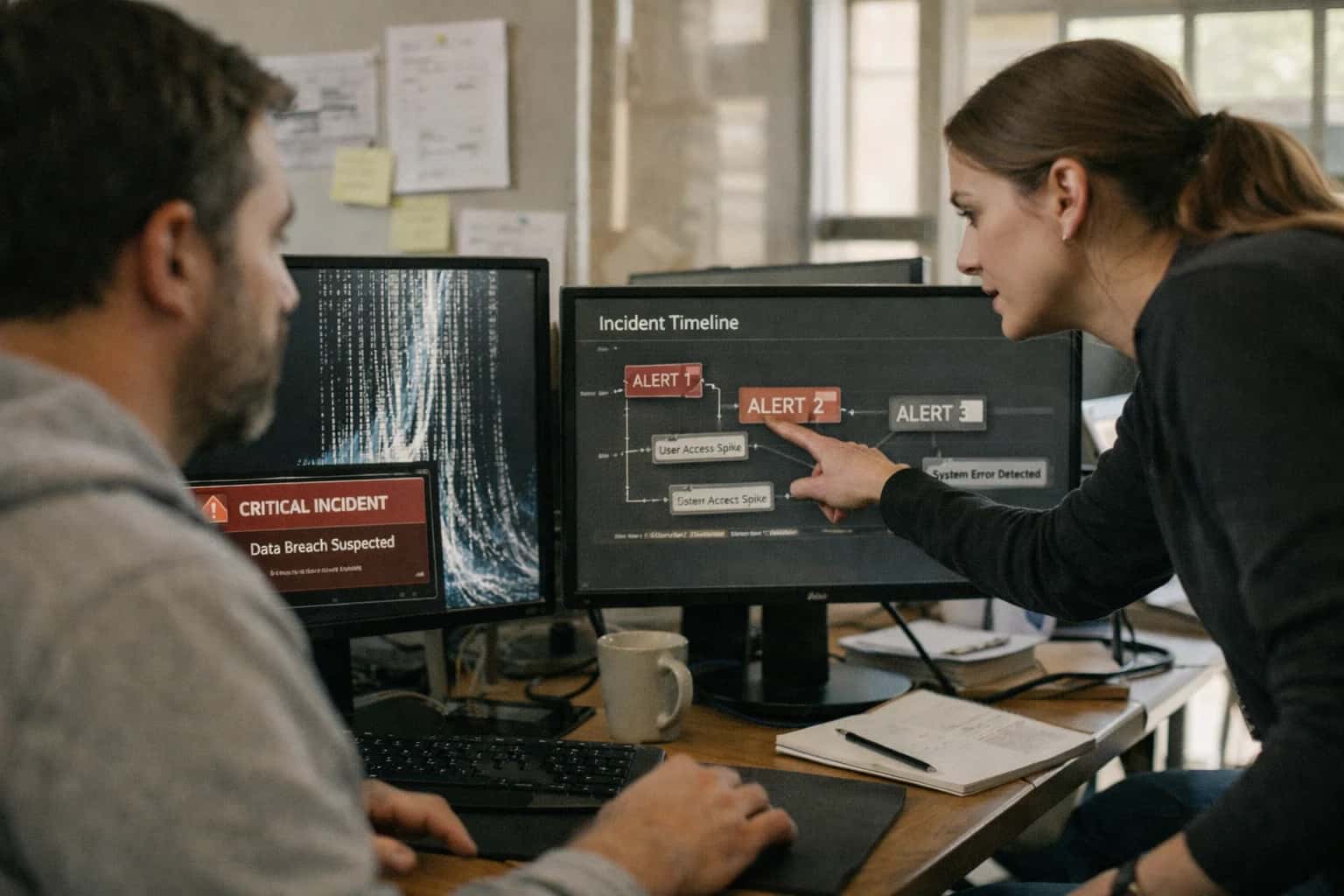
ARCHITECTURE & ROLLOUT
Where AI Fits in VelocityEHS Incident Response
Integrating AI into the immediate response phase transforms reactive workflows into coordinated, data-driven actions.
The high-value implementation is automating the initial response checklist and resource mobilization. For example, upon classifying an incident as a Chemical Spill - Tier 2, an AI agent can:
- Cross-reference the site's
Chemical Inventoryto identify the spilled material and its SDS. - Generate and dispatch a tailored spill response checklist to the designated
Response Teamgroup in VelocityEHS. - Initiate regulatory notification workflows by drafting a preliminary report for the
Site EHS Lead, pulling in required data fields for agencies like EPA or OSHA. - Update the
Incident.Statusand log all automated actions in theAudit Trailfor full transparency. The impact is measured in time-to-action: moving from manual triage and lookup to automated, parallel execution of critical first steps.
Rollout requires a phased, governance-first approach. Start with a pilot on non-injury, environmental incident types to refine the AI's classification logic and action triggers. Implement a human-in-the-loop approval step for any automated external communication or regulatory filing. Governance is critical: the AI's decision logic (e.g., "when to trigger a Tier 2 spill response") must be documented as a controlled procedure within VelocityEHS itself, and all AI-generated content should be tagged in the Activity Log. This ensures the integration enhances, rather than compromises, the rigorous accountability required for EHS incident management. For teams managing complex, multi-site operations, this architecture turns VelocityEHS from a system of record into a system of intelligent response.
INCIDENT RESPONSE FOCUS
VelocityEHS Modules and Surfaces for AI Integration
Core Incident Module & Mobile App
The Incident Management module is the primary surface for AI integration during initial response. AI can act as a first responder for incoming reports via the VelocityEHS mobile app or web portal.
Key AI Touchpoints:
- Severity Assessment: Automatically analyze free-text descriptions and selected fields (injury type, body part) to assign initial severity and priority scores, routing high-severity incidents for immediate human review.
- Regulatory Flagging: Cross-reference incident details (e.g., 'amputation', 'hospitalization') against OSHA recordability rules to provide immediate guidance to the reporter on potential reporting obligations.
- Data Enrichment: Use NLP to extract entities (people, equipment, locations) from witness statements and populate corresponding fields in the incident record, reducing manual data entry.
This layer ensures critical incidents are not delayed by manual triage queues.
VELOCITYEHS INTEGRATION
High-Value AI Use Cases for Incident Response
Integrating AI into the immediate response phase of an incident within VelocityEHS automates critical workflows, reduces human error, and accelerates time-to-action. These use cases focus on the first 60 minutes after an event is reported.
01
Automated Emergency Notification & Escalation
AI parses the initial incident report to determine severity and scope, then automatically triggers the correct emergency notification workflow. It populates pre-defined call lists, SMS/email templates, and initiates conference bridges based on incident type (e.g., medical, fire, chemical release). This ensures the right responders are mobilized within seconds, not minutes.
Minutes -> Seconds
Notification time
02
Intelligent Resource Mobilization Checklists
Based on the incident classification, AI generates and assigns dynamic response checklists within VelocityEHS. For a confined space rescue, it automatically tasks the safety officer with verifying atmospheric monitoring gear and assigns the ERT leader to confirm rescue equipment readiness. Checklists are tailored to the specific hazard, location, and time of day.
Batch -> Real-time
Checklist generation
03
Regulatory Reporting Triage & Drafting
AI immediately analyzes the incident details against OSHA recordability rules and internal reporting thresholds. It drafts the initial sections of mandatory reports (e.g., OSHA Form 301 details) by extracting data from the VelocityEHS incident record and witness statements, flagging potential recordables for quick supervisor review. This shifts documentation from a post-event chore to a concurrent activity.
Hours -> Same day
Initial report draft
04
Site-Specific Procedure Retrieval & Guidance
An AI agent integrates with VelocityEHS document control and site profiles. During an incident, it instantly surfaces the relevant emergency response plans, site maps, and chemical SDS sheets for the affected facility. For responders on mobile, it provides step-by-step voice guidance for procedures like spill containment or evacuation routes, reducing reliance on memory under stress.
Manual Search -> Instant
Procedure access
05
Initial Causal Factor Analysis & Data Structuring
As initial data flows in, AI applies NLP to witness statements and log entries to suggest probable root cause categories (e.g., equipment failure, procedure not followed). It structures fragmented notes into a preliminary timeline within the VelocityEHS investigation module, pre-populating fields for the assigned investigator. This provides a head start on the formal root cause analysis.
1 sprint
Investigation acceleration
06
Stakeholder Communication Log & Audit Trail
AI automatically creates a chronological communication log within the VelocityEHS incident record. It captures all system-generated notifications, tags manual updates by responders, and can integrate with unified comms platforms (e.g., Teams, Zoom) to log key discussion points from emergency calls. This creates a defensible, real-time audit trail for post-incident review and regulatory inquiries.
Manual → Automated
Compliance logging
AUTOMATED EMERGENCY OPERATIONS
Example AI-Augmented Incident Response Workflows
These workflows demonstrate how AI agents, triggered by an incident record in VelocityEHS, can automate critical response steps to accelerate mobilization, ensure regulatory compliance, and reduce manual coordination errors.
Trigger: A high-severity incident (e.g., chemical release, serious injury) is logged in VelocityEHS with a specific classification.
AI Agent Actions:
- Context Retrieval: The agent pulls the incident location, type, and severity from the VelocityEHS API.
- Stakeholder Notification:
- Queries the integrated contact database for the site's emergency response team, management, and EHS personnel.
- Generates and sends templated SMS/email alerts via Twilio or SendGrid, including a secure link to the live incident record.
- Resource Checklist Mobilization:
- Fetches the site-specific emergency response plan and equipment checklist from linked documents or a custom object.
- Creates a task in VelocityEHS (or connected system like Jira) for the response team lead to confirm availability of key resources (e.g., spill kits, first aid supplies, air monitors), auto-populating the required items.
Human Review Point: The response team lead must confirm checklist completion. The AI agent logs all communication and task creation for the incident audit trail.
AI-ENHANCED EMERGENCY RESPONSE
Implementation Architecture: Data Flow and System Design
A production-ready architecture for integrating AI into the immediate response phase of a VelocityEHS incident workflow.
The integration connects to the VelocityEHS Incident Management module via its REST API, listening for webhooks on new or updated incident records with a status of Reported or Under Investigation. When triggered, the AI agent ingests the initial incident data—including fields like Incident Type, Location, Description, Injured Party, and any attached files or images. A dedicated AI Response Orchestrator service, hosted within your cloud environment, processes this payload. It first enriches the data by calling internal APIs to fetch relevant context: site-specific emergency contacts, chemical inventories from the MSDS/SDS Management module if a spill is involved, and pre-approved notification templates.
The core AI workflow executes three parallel actions: 1) Automated Communications drafts and queues immediate notifications via email and SMS to pre-defined response teams (ERT, site leadership, medical) using VelocityEHS's notification engine. 2) Resource Mobilization generates a dynamic checklist in the incident's action plan, pulling from a knowledge base of response procedures for the incident type (e.g., Chemical Spill, Fall from Height). 3) Regulatory Triage analyzes the incident description against a rules engine to flag potential OSHA recordable or RIDDOR-reportable events, creating a draft regulatory notification task with relevant form references. All AI-generated outputs—messages, checklists, flags—are written back to the incident record as notes or action items, maintaining a full audit trail of AI activity within the VelocityEHS audit log.
Rollout follows a phased approach, starting with a pilot site for non-injury incidents to refine prompts and validate the checklist logic. Governance is critical: all AI-generated communications and regulatory flags are configured for human-in-the-loop approval before sending or filing. The system is designed for resilience, with fallback to standard operating procedures if the AI service is unavailable. This architecture reduces the critical time between incident occurrence and coordinated response from hours to minutes, while keeping the human investigator firmly in control of the final decisions. For related architectural patterns on automating downstream investigation, see our guide on AI Integration for Intelex Root Cause Analysis.
AI-ENHANCED INCIDENT RESPONSE WORKFLOWS
Code and Payload Examples
AI-Powered First Response
When an incident is logged in VelocityEHS, an AI agent can immediately ingest the initial report—often unstructured text from a mobile app or email—and perform critical triage. This involves classifying incident type (e.g., injury, near miss, environmental release), assessing potential severity based on keywords and historical data, and routing it to the correct response team.
Example JSON Payload to AI Service:
json{ "incident_id": "VHS-2024-INC-04567", "source": "mobile_app", "reporter_text": "Employee slipped on wet floor near Bay 3. Grabbed railing, no fall. Complaining of shoulder strain. Floor was mopped 10 mins ago, no wet floor sign present.", "facility": "Springfield Plant", "timestamp": "2024-05-15T14:22:00Z", "attachments": ["photo_url_1"] }
The AI returns a structured classification, suggested priority (HIGH), and triggers automated workflows: notifying the safety lead, creating a preliminary investigation record, and flagging the location for immediate corrective action.
AI FOR IMMEDIATE INCIDENT RESPONSE
Realistic Time Savings and Operational Impact
How AI integration accelerates critical response workflows within VelocityEHS, reducing manual coordination and ensuring faster, more consistent execution.
| Metric | Before AI | After AI | Notes |
|---|---|---|---|
Initial Incident Triage & Severity Assignment | Manual review by supervisor (15-30 min) | AI-assisted scoring & routing (<2 min) | AI suggests severity based on report keywords and history; human confirms |
Emergency Communication List Activation | Manual lookup and call/email (20-45 min) | Automated list deployment via pre-built templates (2-5 min) | AI triggers notifications to pre-defined groups (ERT, management, regulators) based on incident type |
Resource Mobilization Checklist Execution | Paper/PDF checklist, manual verification (30-60 min) | AI-driven digital checklist with status tracking (10-15 min) | AI surfaces location-specific checklists (e.g., spill kit, first aid) and tracks completion |
Initial Regulatory Notification Drafting | Manual form filling and data lookup (1-2 hours) | AI auto-populates draft from incident data (15-20 min) | Generates draft for OSHA, EPA, or internal forms; legal/management review required |
Witness & Evidence Collection Coordination | Ad-hoc calls and emails to locate personnel | AI identifies and notifies potential witnesses via system of record (5 min) | Pulls from training records, access logs, and work schedules to suggest witnesses |
Response Team Briefing Document Creation | Manual compilation from multiple sources (45+ min) | AI-generated situation report with key facts (5 min) | Consolidates incident details, resources deployed, and initial actions into a single brief |
Post-Response Activity Logging | Disparate notes consolidated at shift end (30 min) | AI-assisted timeline generation during response (Ongoing) | Voice-to-text and action logging creates an auditable, real-time activity trail |
CONTROLLED DEPLOYMENT FOR CRITICAL SAFETY WORKFLOWS
Governance, Security, and Phased Rollout
A production-ready AI integration for VelocityEHS Incident Response is built with audit trails, role-based controls, and a phased approach to ensure safety and compliance are never compromised.
Architecture with Audit Trails: The AI layer operates as a middleware service, never storing primary incident data. All AI-generated outputs—such as automated emergency notification drafts, resource checklist suggestions, or initial regulatory filing summaries—are logged as system activities within the VelocityEHS Audit Trail module. This creates a complete lineage showing the human-in-the-loop review, edits, and approvals before any AI-suggested action is finalized or communicated externally. API calls to LLM providers are configured to exclude sensitive PII or confidential business information from prompts, using data masking and entity extraction at the integration layer.
Phased Rollout for Risk Mitigation: We recommend a three-phase deployment, starting with Phase 1: AI-Assisted Drafting. Here, AI generates draft communications and checklists in a "review mode" for a single pilot site or incident type, allowing safety managers to validate quality without automation. Phase 2: Conditional Automation introduces rule-based triggers (e.g., for high-severity incidents) where AI populates fields and workflows, but requires a supervisor's electronic approval within the VelocityEHS Action Tracking system before proceeding. Phase 3: Full Integration expands to all incident types and sites, with continuous monitoring of AI performance metrics (e.g., suggestion acceptance rate, time-to-acknowledgment) fed back into the system.
Security and Access Governance: The integration respects VelocityEHS's existing Role-Based Access Control (RBAC). AI features and automated workflows are permission-gated, ensuring only authorized personnel (e.g., EHS Managers, Site Supervisors) can enable or modify automation rules. All external AI service credentials are managed via a secure secrets manager, and the integration service itself is deployed within your cloud tenancy or a compliant Inference Systems environment, ensuring data never traverses unnecessary networks. A rollback protocol is established, allowing any AI-driven step to be manually overridden or the entire automation layer to be disabled without impacting core VelocityEHS incident recording and reporting functions.
Enabling Efficiency, Speed & Accuracy
Intelligent Analysis, Decision & Execution
We build AI systems for teams that need search across company data, workflow automation across tools, or AI features inside products and internal software.
Talk to Us
Search across company data
Give teams answers from docs, tickets, runbooks, and product data with sources and permissions.
Useful when people spend too long searching or get different answers from different systems.
Enterprise searchRAGPermissions
Read more
Automate internal workflows
Use AI to route work, draft outputs, trigger actions, and keep approvals and logs in place.
Useful when repetitive work moves across multiple tools and teams.
AI agentsWorkflow automationGovernance
Read more
Add AI to products and internal tools
Build assistants, guided actions, or decision support into the software your team or customers already use.
Useful when AI needs to be part of the product, not a separate tool.
AI integrationDecision supportModel routing
Read moreIMPLEMENTATION AND WORKFLOW DETAILS
Frequently Asked Questions
Practical questions from EHS leaders and technical teams planning AI integration for VelocityEHS incident response. Focused on architecture, security, rollout, and concrete workflow automation.
The integration typically uses a combination of VelocityEHS APIs and webhooks to create a real-time, event-driven architecture.
- Trigger: A new incident is created or its status changes in VelocityEHS (e.g., status moves to 'Under Investigation'). A configured webhook sends a JSON payload to a secure endpoint managed by the AI layer.
- Context Retrieval: The AI service uses the VelocityEHS REST API (with appropriate OAuth 2.0 permissions) to pull the full incident record, including custom fields, linked persons, location data, and initial description.
- AI Processing: The core AI agent analyzes the data. For immediate response, this often involves:
- Classifying incident severity and type.
- Extracting key entities: chemicals involved, equipment IDs, injured body parts.
- Drafting initial emergency communications.
- Generating a dynamic checklist for site-specific emergency response procedures.
- System Update: The AI service posts back to VelocityEHS via API, updating custom fields (e.g.,
AI_Initial_Severity_Score,AI_Generated_Comms_Draft), creating follow-up tasks, or attaching generated documents to the incident record.
This keeps the system of record (VelocityEHS) as the source of truth, with AI acting as an intelligent automation layer.

About the author
Prasad Kumkar
CEO & MD, Inference Systems
Prasad Kumkar is the CEO & MD of Inference Systems and writes about AI systems architecture, LLM infrastructure, model serving, evaluation, and production deployment. Over 5+ years, he has worked across computer vision models, L5 autonomous vehicle systems, and LLM research, with a focus on taking complex AI ideas into real-world engineering systems.
His work and writing cover AI systems, large language models, AI agents, multimodal systems, autonomous systems, inference optimization, RAG, evaluation, and production AI engineering.
LinkedIn
Limited slotsGet a Free AI Consultation
Partnered with leading AI, data, and software stack.





How We Work
Custom AI workflows for your Business
One-fit-all AI don't work for modern businesses. At Inferensys, we aim to understand your business & custom requirements; which we use to define most efficient agentic workflows, the data, and the tools for your business.
01
Review the use case
We understand the task, the users, and where AI can actually help.
Read more02
Pick the right approach
We define what needs search, automation, or product integration.
Read more03
Build the first useful version
We implement the part that proves the value first.
Read more04
Improve from there
We add the checks and visibility needed to keep it useful.
Read moreThe first call is a practical review of your use case and the right next step.
Talk to Us