AI integration connects directly to Intelex's core environmental data objects—Emissions Inventories, Water/Wastewater Monitoring Results, Permit Tracking Records, and Environmental Incident logs. The primary surface areas are the calculation engines for mass balance and plume modeling, the reporting modules for regulatory submissions (like TRI, NPRI, or GHG reports), and the compliance calendars that track permit conditions and deadlines. By injecting AI at these points, you can automate data validation, predict exceedances before they occur, and generate narrative explanations for trends that typically require manual analyst review.

Integration
AI Integration for Intelex Environmental Analytics
Add AI to Intelex's environmental modules to automate complex calculations, integrate with external models, generate predictive insights, and reduce manual reporting from days to hours.
ARCHITECTURE AND IMPLEMENTATION
Where AI Fits in Intelex Environmental Analytics
Integrating AI into Intelex's environmental modules transforms raw monitoring data into predictive insights and automated compliance actions.
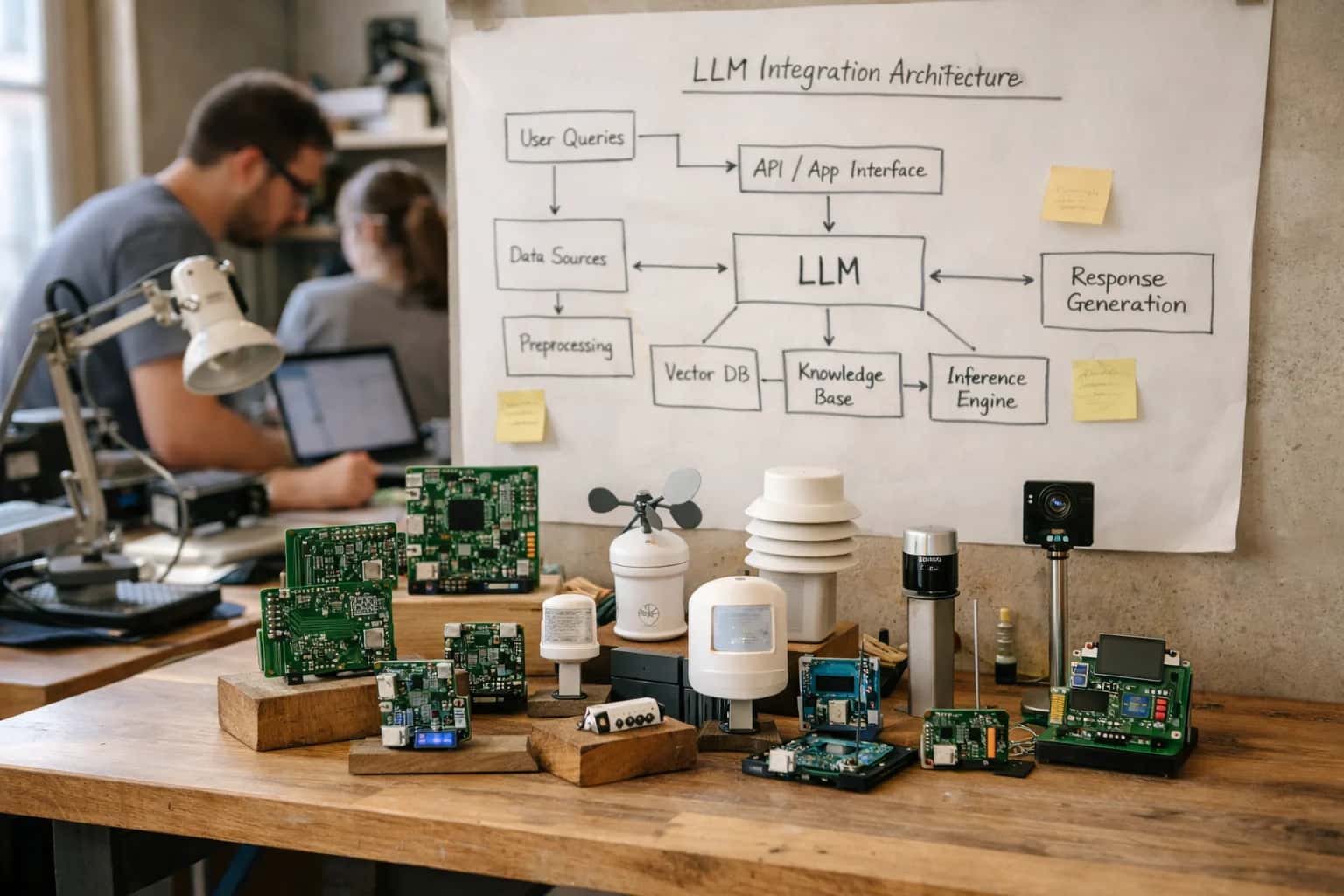
A practical implementation involves deploying retrieval-augmented generation (RAG) agents and predictive models as middleware services. These services listen for new data payloads via Intelex's API or scheduled ETL jobs. For example, when new stack test results or continuous emissions monitoring system (CEMS) data is logged, an AI service can immediately: 1) check values against permit limits using a vector store of permit conditions, 2) run a lightweight predictive model to forecast next-period emissions based on operational parameters, and 3) if a potential exceedance is detected, draft an alert for the environmental manager and auto-populate a Management of Change (MOC) or Corrective Action workflow in Intelex. This shifts response time from days of manual review to minutes of automated triage.
Rollout should be phased, starting with a single high-value workflow like automated emissions reporting or predictive water quality alerts. Governance is critical: all AI-generated insights or draft reports must be flagged for human review and approval within Intelex's existing Document Control and Approval Routing modules, creating a clear audit trail. This ensures environmental professionals remain in control while delegating repetitive analysis. For teams managing complex sites, this integration can reduce the manual data consolidation and sense-making for quarterly reports from weeks to days, while providing earlier warning signals for compliance risks.
For a deeper dive into related implementation patterns, see our guides on AI Integration for Intelex Environmental Compliance and AI Integration for EcoOnline Environmental Monitoring.
ENVIRONMENTAL ANALYTICS
Key Intelex Modules and Data Surfaces for AI
Air Emissions Tracking and Modeling
AI integration targets the Emissions Management and Air Quality modules, which handle continuous monitoring data, stack test results, and regulatory calculations (e.g., GHG, Criteria Air Contaminants). Key data surfaces include:
- Hourly/Daily emissions datasets from CEMS (Continuous Emissions Monitoring Systems) for anomaly detection and predictive exceedance alerts.
- Calculation engines for mass balance and emission factors, where AI can validate inputs, suggest optimized factors, and automate QA/QC.
- Plume modeling inputs and outputs, where AI can pre-process meteorological data, run scenario comparisons, and summarize dispersion impacts for permit applications or community reporting.
Integrating here allows for automated TRI (Toxics Release Inventory) and NPRI report drafting, predictive maintenance alerts for monitoring equipment, and real-time compliance dashboards that explain deviations.
INTELLIGENT AUTOMATION
High-Value AI Use Cases for Intelex Environmental Analytics
Move beyond static dashboards. Integrate AI directly into Intelex's environmental modules to automate complex calculations, predict compliance risks, and generate actionable insights from your operational data.
01
Automated Emissions Inventory & Reporting
AI ingests source data (fuel logs, meter readings, purchase records) to automatically calculate Scope 1 & 2 emissions using the latest emission factors. It validates data, flags anomalies, and drafts TRI, NPRI, or GHG inventory reports, reducing manual compilation from days to hours.
Days -> Hours
Report preparation
02
Predictive Exceedance Alerts for Permit Limits
Continuously analyzes time-series data from CEMS, stack tests, and water discharge monitors. AI models forecast trends and predict potential permit limit exceedances before they occur, triggering proactive workflow alerts in Intelex for operations teams to adjust processes.
Reactive -> Proactive
Compliance posture
03
Plume Modeling & Impact Scenario Integration
Connects Intelex's chemical inventory and release data with external atmospheric dispersion models (like AERMOD). AI automates scenario setup and executes models for planned changes or incident response, importing results back into Intelex to assess community impact and inform reporting.
1-2 Weeks
Typical modeling timeline
04
Intelligent Mass Balance Reconciliation
For complex processes, AI performs automated mass balance calculations across input streams, production, and waste outputs. It identifies and reconciles data gaps or inconsistencies, providing a more accurate picture of material flow and loss for sustainability reporting and process optimization.
>90%
Data accuracy target
05
Automated Environmental Impact Forecasting
Leverages historical Intelex data on production volumes, resource consumption, and weather patterns to forecast future environmental impacts (e.g., water usage, waste generation). This supports capital planning, sustainability goal setting, and scenario analysis for management reviews.
Batch -> Real-time
Forecast updates
06
Regulatory Change Impact Analysis
AI scans and interprets new environmental regulations, then maps requirements to your specific facilities, permits, and monitored parameters in Intelex. It generates a prioritized impact assessment and recommended action items, ensuring your compliance calendar is always current.
Same day
Impact assessment speed
ENVIRONMENTAL ANALYTICS
Example AI-Enhanced Workflows in Intelex
These workflows illustrate how AI agents can be integrated into Intelex's environmental modules to automate complex calculations, generate predictive insights, and streamline reporting. Each flow connects to specific Intelex objects, APIs, and user roles.
Trigger: A new batch of raw material usage data is logged in Intelex via an API from the MES or a manual entry form.
Context Pulled: The AI agent retrieves:
- The specific
Materialrecord (e.g., Solvent X) and its properties. - Associated
Processdata (e.g., Batch ID, reactor vessel). - Historical
Input/Outputrecords for the same process from the last 30 batches. - Relevant
Emission Factorrecords from the environmental library.
Agent Action:
- Executes a mass balance calculation:
(Input Mass) - (Output Product Mass) = (Theoretical Loss). - Compares the theoretical loss against the
Reported Air Emissionsvalue logged for the batch. - Uses a statistical model to determine if the variance is within expected bounds or an anomaly.
System Update:
- If within bounds: Agent logs a verification note on the
Batch Recordand updates aData Quality Scorefield. - If an anomaly: Agent creates a
Discrepancy Findingrecord in Intelex, linked to the batch. It auto-populates:- Title: "Mass Balance Variance Exceeds Threshold for Batch [ID]"
- Priority: Calculated based on variance magnitude and material hazard.
- Assigned To: The process engineer role for the relevant site.
- Suggested Actions: "Review meter calibration for [Vessel-12]; Verify feedstock assay report [Doc-ID]."
Human Review Point: The assigned engineer reviews the finding, investigates the root cause, and updates the finding with corrective actions, which closes the loop.
CONNECTING AI TO ENVIRONMENTAL DATA WORKFLOWS
Implementation Architecture: Data Flow and Integration Points
A practical blueprint for integrating AI into Intelex's environmental analytics modules, focusing on data flow, system touchpoints, and governance for mass balance, plume modeling, and impact forecasting.
The integration connects to three primary data surfaces within Intelex: the Environmental Data Management module for raw monitoring data (air, water, emissions), the Compliance & Permitting module for regulatory limits and permit conditions, and the Reporting & Analytics engine for calculated metrics and historical trends. AI agents are deployed as a middleware layer, typically via REST API or a dedicated integration user, to read source data (e.g., continuous emission monitoring system feeds, lab sample results, material usage logs) and write back enriched insights, forecasts, and automated narrative summaries as custom objects or annotated records within Intelex.
A typical workflow for plume modeling integration illustrates the data flow: 1) An AI agent is triggered by a new stack emission reading exceeding a threshold, pulling relevant meteorological data from a connected weather API. 2) The agent calls a dedicated environmental simulation API or runs a lightweight, governed model to generate a dispersion forecast. 3) Results—including impacted areas and estimated concentrations—are written back to the related incident or monitoring record in Intelex, automatically tagging relevant stakeholders and triggering pre-configured notification workflows if predicted impacts breach permit conditions. This turns a raw data point into a proactive operational insight within the same system of record.
For mass balance calculations and environmental impact forecasting, the architecture emphasizes auditability. All AI-generated calculations, such as predicted waste generation or future resource consumption, are stored as versioned outputs with a complete audit trail linking back to the source data IDs, the prompt or model parameters used, and the responsible integration service account. This allows for recalibration and review. Rollout is phased, starting with read-only analysis and alerting in a sandbox environment, progressing to assisted data entry (e.g., AI-drafted monitoring report narratives), and finally to closed-loop automation for low-risk, high-volume forecasting tasks, all governed by Intelex's existing role-based access controls.
INTELEX ENVIRONMENTAL ANALYTICS
Code and Payload Examples
Automating Material Flow Analysis
Mass balance calculations are foundational for environmental reporting and permit compliance. AI can ingest raw operational data (purchase records, tank levels, production logs) and apply known chemical formulas or emission factors to calculate unmeasured losses.
A typical integration involves querying Intelex for Material_Usage records and Production_Batch data, then using an LLM to apply the appropriate calculation logic (e.g., for VOC emissions from coating operations). The AI validates inputs, flags anomalies, and posts the calculated mass balance results back to a dedicated Environmental_Calculation object for audit trails.
python# Example: AI-driven mass balance calculation for a solvent process import requests # 1. Retrieve source data from Intelex API intellex_payload = { "object": "Material_Usage", "filters": { "site_id": "SITE-101", "material": "Toluene", "date_range": {"start": "2024-01-01", "end": "2024-01-31"} } } usage_data = requests.post(INTELLEX_API_URL + "/query", json=intellex_payload).json() # 2. Construct prompt for LLM calculation calculation_prompt = f""" Given the following material usage data for Toluene: {usage_data} and a known production output of 5000 units, calculate the mass balance. Assume a typical process loss factor of 2%. Return JSON with keys: 'input_mass', 'output_mass', 'unaccounted_loss', 'loss_percentage'. """ # 3. Call LLM and parse structured result llm_result = call_llm(calculation_prompt) balance_result = json.loads(llm_result) # 4. Post results back to Intelex post_payload = { "object": "Environmental_Calculation", "data": { "type": "Mass_Balance", "material": "Toluene", "results": balance_result, "timestamp": "2024-01-31T18:00:00Z", "calculation_source": "AI_Engine_v1.2" } } requests.post(INTELLEX_API_URL + "/create", json=post_payload)
AI-ENHANCED ENVIRONMENTAL ANALYTICS
Realistic Time Savings and Operational Impact
How AI integration transforms specialized environmental data workflows within Intelex, focusing on mass balance, plume modeling, and impact forecasting.
| Metric | Before AI | After AI | Notes |
|---|---|---|---|
Mass Balance Calculation & Reconciliation | Manual data entry and spreadsheet reconciliation (2-4 hours per site) | Automated data ingestion and calculation with anomaly flagging (15-30 minutes) | AI validates inputs, suggests discrepancies, and generates audit-ready calculation logs. |
Plume Model Input Preparation | Manual compilation of source, meteorological, and terrain data (1-2 days) | Automated data aggregation and parameter extraction from permits and monitoring systems (2-4 hours) | AI structures data for direct import into AERMOD or CALPUFF, reducing setup errors. |
Environmental Impact Forecast Drafting | Analyst-led report writing based on static model outputs (3-5 days) | AI-generated narrative summaries of forecasted impacts with key risk highlights (1 day) | Human expert reviews and refines the AI-generated draft, focusing on strategic interpretation. |
Regulatory Scenario Analysis | Manual review of permit conditions to assess compliance under new operational scenarios (1 week+) | AI cross-references operational plans against permit libraries to flag potential non-compliance (Same day) | Identifies high-risk scenarios for deeper human review, prioritizing analyst effort. |
Emissions Inventory Data Validation | Spot-check sampling and manual review for data completeness (Ongoing, hours weekly) | Continuous automated validation against expected ranges and historical patterns (Minutes weekly) | AI flags outliers and missing data for investigation, improving overall data quality for reporting. |
Trend Analysis for Key Environmental Parameters | Quarterly manual charting and analysis to identify patterns | Real-time dashboard with AI-driven anomaly detection and trend explanations | Shifts from reactive reporting to proactive management of air/water quality trends. |
Stakeholder Report Preparation | Manual collation of charts, tables, and narrative from multiple sources (2-3 days) | Automated assembly of pre-approved visualizations and AI-summarized insights (4-8 hours) | Ensures consistency and frees up specialists for high-value communication and stakeholder engagement. |
ARCHITECTING FOR PRODUCTION
Governance, Security, and Phased Rollout
Integrating AI into Intelex's environmental analytics requires a deliberate approach to data governance, model security, and controlled rollout.
AI models for mass balance calculations, plume modeling integration, and environmental impact forecasting operate on sensitive operational data. A production architecture typically involves a dedicated inference service that pulls data from Intelex's Environmental Data Objects (e.g., emission points, monitoring results, material inventories) via secure APIs. This service runs models in a private cloud or VPC, with all prompts, inputs, and outputs logged to a separate audit system. Access is controlled via Intelex's existing RBAC, ensuring only users with permissions to the source data can trigger AI analyses or view results.
A phased rollout mitigates risk and builds confidence. Start with a read-only pilot in a single facility or for a single use case, such as AI-assisted anomaly detection in continuous emissions monitoring data. In this phase, the AI generates insights but does not write back to Intelex or trigger automated workflows. The output is presented as a 'suggested analysis' for an environmental engineer to review and approve. This human-in-the-loop stage is critical for validating model accuracy against domain expertise and refining prompts for your specific operational context.
Upon validation, phase two introduces controlled automation. For example, the AI can auto-populate fields in a draft emissions report within Intelex, but the submission requires a manager's electronic signature. All AI-generated content is watermarked and traceable back to the source data and model version used. Finally, governance is maintained through regular reviews of the audit logs and model performance metrics, ensuring the AI's forecasts and calculations remain aligned with regulatory methodologies and internal quality standards.
Enabling Efficiency, Speed & Accuracy
Intelligent Analysis, Decision & Execution
We build AI systems for teams that need search across company data, workflow automation across tools, or AI features inside products and internal software.
Talk to Us
Search across company data
Give teams answers from docs, tickets, runbooks, and product data with sources and permissions.
Useful when people spend too long searching or get different answers from different systems.
Enterprise searchRAGPermissions
Read more
Automate internal workflows
Use AI to route work, draft outputs, trigger actions, and keep approvals and logs in place.
Useful when repetitive work moves across multiple tools and teams.
AI agentsWorkflow automationGovernance
Read more
Add AI to products and internal tools
Build assistants, guided actions, or decision support into the software your team or customers already use.
Useful when AI needs to be part of the product, not a separate tool.
AI integrationDecision supportModel routing
Read moreIMPLEMENTATION DETAILS
Frequently Asked Questions
Common technical and operational questions about integrating AI into Intelex's environmental analytics workflows, focusing on mass balance, plume modeling, and forecasting.
AI integrates via Intelex's REST API and webhook system, acting as a middleware layer that processes data from environmental modules. A typical architecture involves:
- Trigger: A new set of monitoring data (e.g., stack emissions, water discharge lab results) is saved in Intelex, triggering a webhook.
- Context Pull: The AI service fetches the relevant payload via API, along with historical data from the same source and related permits/limits from the
PermitsandRegulatory Requirementsobjects. - Model Action: Specialized models perform calculations (e.g., mass balance for fugitive emissions) or run predictive scenarios (e.g., plume dispersion under forecasted weather conditions).
- System Update: Results, anomalies, or forecast exceedances are written back to Intelex as a new
Environmental Analysisrecord or as a comment/alert on the source data record. - Governance: All AI-generated insights are tagged with a source (
AI-Assisted Calculation) and linked to the source data for full auditability within Intelex's native audit trail.

About the author
Prasad Kumkar
CEO & MD, Inference Systems
Prasad Kumkar is the CEO & MD of Inference Systems and writes about AI systems architecture, LLM infrastructure, model serving, evaluation, and production deployment. Over 5+ years, he has worked across computer vision models, L5 autonomous vehicle systems, and LLM research, with a focus on taking complex AI ideas into real-world engineering systems.
His work and writing cover AI systems, large language models, AI agents, multimodal systems, autonomous systems, inference optimization, RAG, evaluation, and production AI engineering.
LinkedIn
Limited slotsGet a Free AI Consultation
Partnered with leading AI, data, and software stack.





How We Work
Custom AI workflows for your Business
One-fit-all AI don't work for modern businesses. At Inferensys, we aim to understand your business & custom requirements; which we use to define most efficient agentic workflows, the data, and the tools for your business.
01
Review the use case
We understand the task, the users, and where AI can actually help.
Read more02
Pick the right approach
We define what needs search, automation, or product integration.
Read more03
Build the first useful version
We implement the part that proves the value first.
Read more04
Improve from there
We add the checks and visibility needed to keep it useful.
Read moreThe first call is a practical review of your use case and the right next step.
Talk to Us