AI integration connects directly to the core data objects and workflows within the VelocityEHS Contractor Management module. The primary surfaces are the contractor profile, pre-qualification questionnaires, safety performance metrics (like EMR, TRIR), and compliance documents (insurance certificates, training records). An AI agent can be triggered via API or scheduled job to evaluate new contractor submissions, re-assess existing contractors based on updated incident data, or monitor for expiring credentials. The integration acts as a co-pilot for the EHS professional, not a replacement, by flagging high-risk contractors, suggesting required corrective actions, and auto-populating evaluation summaries.

Integration
AI Integration with VelocityEHS Contractor Management
Add AI-driven evaluation, automated pre-qualification checks, and real-time compliance monitoring to your VelocityEHS contractor management workflows.
ARCHITECTURE & WORKFLOW INTEGRATION
Where AI Fits into VelocityEHS Contractor Management
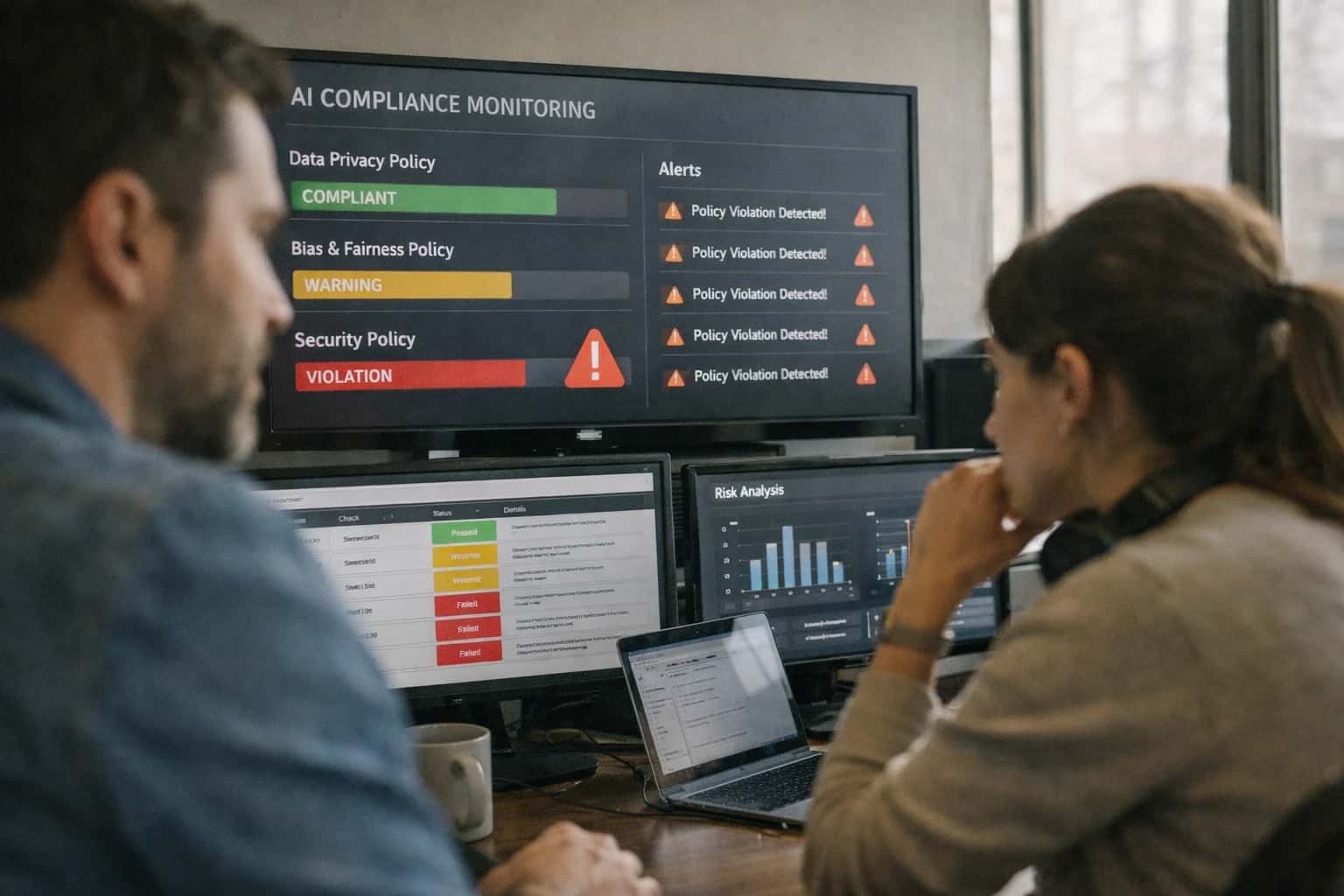
Integrating AI into VelocityEHS Contractor Management transforms a reactive qualification database into a proactive, intelligent risk management layer.
A practical implementation wires an AI layer between your contractor intake sources (e.g., procurement systems, web portals) and the VelocityEHS platform. For example, when a new contractor submits their pre-qualification packet, the AI can:
- Parse and summarize safety programs and manuals.
- Cross-reference the contractor's reported incident rates against industry benchmarks.
- Extract key dates and clauses from certificates of insurance for automated expiry tracking.
- Generate a risk score and a concise narrative summary for the reviewer. This reduces manual review from hours to minutes and ensures a consistent, auditable evaluation criteria is applied to every contractor, regardless of reviewer workload.
Rollout should be phased, starting with document intelligence for insurance and training certs to demonstrate quick ROI, then expanding to performance analytics and automated communications for corrective action follow-up. Governance is critical: all AI-generated summaries and scores should be stored as audit trail entries within the contractor's VelocityEHS record, and a human-in-the-loop approval step should be maintained for final contractor status changes. This architecture ensures AI augments the process while the EHS manager retains oversight and accountability for contractor approval decisions.
CONTRACTOR MANAGEMENT MODULE
Key Integration Surfaces in VelocityEHS
Automating Contractor Onboarding and Risk Scoring
The Contractor Profile object is the primary integration surface for AI-driven prequalification. AI can ingest and analyze documents like insurance certificates, safety manuals, and past performance data submitted via the portal. By connecting to the Prequalification Workflow, an AI agent can:
- Extract key data (e.g., EMR ratings, OSHA 300 logs) from uploaded PDFs to auto-populate profile fields.
- Score contractor risk based on historical incident rates, safety program maturity, and industry benchmarks.
- Flag missing or expiring documents and automatically generate tasks for the contractor or your internal team.
This transforms a manual review process that takes days into a same-day, data-driven gate for site access.
VELOCITYEHS CONTRACTOR MANAGEMENT
High-Value AI Use Cases for Contractor Safety
Integrate AI directly into VelocityEHS Contractor Management to automate pre-qualification, monitor real-time performance, and ensure compliance across your contractor ecosystem. These use cases reduce manual review cycles and provide data-driven oversight.
01
Automated Pre-Qualification & Risk Scoring
AI analyzes contractor-submitted documents (insurance certificates, safety programs, incident logs) against your company's standards. It extracts key data, flags missing or non-compliant items, and generates a risk score to prioritize manual reviews. This shifts the initial screening from a days-long manual checklist to a same-day automated triage.
Days -> Hours
Screening time
02
Real-Time Safety Performance Monitoring
Connect AI to live data feeds from your sites and the contractor's VelocityEHS records. The system continuously analyzes near-misses, observations, and audit findings linked to the contractor, generating real-time alerts for deteriorating safety trends. This enables proactive interventions before incidents occur, moving oversight from periodic report reviews to continuous monitoring.
Batch -> Real-time
Oversight mode
03
AI-Powered Contractor Onboarding Workflows
Orchestrate the multi-step onboarding process within VelocityEHS. An AI agent guides contractors through digital forms, checks training completions against required curricula, and automatically routes approvals to the correct internal stakeholders (EHS, Procurement, Site Manager). This eliminates email chains and spreadsheet tracking, compressing onboarding from weeks to days.
Weeks -> Days
Onboarding cycle
04
Compliance & Training Gap Analysis
AI cross-references the contractor's employee roster and training records in VelocityEHS against the specific hazards and permit requirements of your work site. It automatically identifies individuals with missing or expired certifications (e.g., confined space, forklift) and generates targeted assignment lists, ensuring no worker steps on site without proper clearance.
100% Coverage
Audit readiness
05
Post-Incident Contractor Performance Review
When an incident involves a contractor, AI instantly aggregates their relevant safety history from VelocityEHS—past incidents, corrective actions, audit scores—and drafts a structured performance review summary. This gives EHS managers and procurement a complete context in minutes, supporting data-driven decisions about contract renewal or suspension.
Hours -> Minutes
Review preparation
06
Predictive Contractor Tiering & Sourcing
Leverage historical performance data within VelocityEHS to build AI models that predict future contractor risk. The system can suggest contractor tiers (preferred, approved, watchlist) based on predictive scores, enabling procurement and operations to make smarter sourcing decisions for upcoming projects, focusing on outcome-based selection rather than just cost.
CONTRACTOR PRE-QUALIFICATION & ONGOING MONITORING
Example AI-Augmented Workflows
These workflows illustrate how AI agents can automate high-friction processes within VelocityEHS Contractor Management, reducing manual review cycles and proactively managing compliance risks.
Trigger: A new contractor is added to the vendor master or submits a pre-qualification packet via a portal integration.
AI Agent Action:
- Ingests and parses submitted documents (insurance certificates, safety manuals, EMR rates, past incident logs).
- Cross-references contractor data against internal risk criteria (e.g., required insurance limits, acceptable EMR thresholds, NAICS code risk profiles).
- Generates a quantitative risk score and a summary report highlighting gaps, expirations, or areas of excellence.
System Update:
- The agent updates the contractor's record in VelocityEHS with the risk score, status (
Pending Review,Approved,Rejected), and attaches the analysis report. - An automated task is created for the Contractor Manager: "Review AI-scored pre-qualification for [Contractor Name]. Score: 82/100. Key Gap: Workers' Comp Insurance expires in 14 days."
Human Review Point: The final approval or rejection decision remains with the Contractor Manager, but the AI provides a structured, auditable recommendation, cutting initial review time from hours to minutes.
CONTRACTOR PRE-QUALIFICATION & ONGOING MONITORING
Implementation Architecture & Data Flow
A practical architecture for integrating AI into VelocityEHS Contractor Management to automate safety performance evaluation and compliance monitoring.
The integration connects to the Contractor Management module's core data objects: the Contractor record, associated Safety Questionnaires, Training Certifications, Insurance Documents, and past Incident data. An AI agent, triggered by a new contractor submission or a scheduled review, orchestrates a multi-step workflow: it first calls the VelocityEHS API to retrieve all relevant documents and performance history. Using a Retrieval-Augmented Generation (RAG) pipeline, the agent grounds its analysis in your specific safety policies and historical contractor benchmarks stored in a vector database. It then evaluates the contractor's submission against key criteria like Experience Modification Rate (EMR) trends, training completion rates, and past safety violations.
For implementation, we deploy a secure middleware service that handles the orchestration. This service subscribes to webhooks from VelocityEHS for events like contractor.submitted or certificate.expiring. It processes document payloads through vision/OCR models for certificate validation and uses LLMs to generate a concise risk summary and a recommended pre-qualification status (Approved, Approved with Conditions, Not Approved). This summary and status are posted back to a custom object or a dedicated field on the Contractor record via the VelocityEHS API, creating a clear audit trail. High-risk flags can automatically trigger a workflow to route the contractor for manual review by a safety manager.
Rollout is phased, starting with a pilot for new contractor onboarding to refine the AI's scoring logic against human decisions. Governance is critical: all AI-generated summaries are stored with confidence scores, and a human-in-the-loop review step is maintained for borderline cases. This architecture reduces manual vetting from hours to minutes for each contractor and provides consistent, policy-based evaluations, turning the Contractor Management module into a dynamic, intelligence-driven risk control point.
CONTRACTOR MANAGEMENT INTEGRATION PATTERNS
Code & Payload Examples
Automated Safety Record Review
This example shows an AI agent workflow triggered when a new contractor is added to the VelocityEHS Contractor object. The agent retrieves the contractor's submitted safety documentation (e.g., EMR, OSHA 300 logs) via the platform's API, analyzes the text for past incidents and program maturity, and returns a structured risk score and recommendation for the PreQualificationStatus field.
python# Example: AI Agent for Contractor Pre-Qual Review def evaluate_contractor_safety(contractor_id): # 1. Fetch contractor record and documents from VelocityEHS API contractor_data = velocityehs_api.get_contractor(contractor_id) safety_docs = velocityehs_api.get_documents(contractor_id, doc_type='safety') # 2. Prepare context for LLM analysis analysis_prompt = f""" Analyze this contractor's safety performance: - Experience Modification Rate (EMR): {contractor_data.get('emr')} - OSHA Recordable Rate: {contractor_data.get('osha_rate')} - Submitted Safety Manual Excerpt: {safety_docs.get('manual_text')[:2000]} Provide a risk score (1-5) and a recommendation: 'Approve', 'Review', or 'Reject'. """ # 3. Call LLM via Inference Systems orchestration layer llm_response = inference_llm_client.complete( prompt=analysis_prompt, temperature=0.1 ) # 4. Parse response and update VelocityEHS record risk_score, recommendation = parse_llm_response(llm_response) update_payload = { "PreQualificationStatus": recommendation, "AISafetyScore": risk_score, "LastAIAnalysisDate": datetime.now().isoformat() } velocityehs_api.update_contractor(contractor_id, update_payload)
AI FOR CONTRACTOR PRE-QUALIFICATION AND MONITORING
Realistic Time Savings & Operational Impact
How AI integration transforms manual, reactive contractor management into a proactive, data-driven workflow within VelocityEHS.
| Workflow / Metric | Before AI | After AI | Implementation Notes |
|---|---|---|---|
Contractor Safety Questionnaire Review | Manual review of 10+ page documents per contractor | AI-assisted scoring and risk flagging | Human final approval required; AI highlights key gaps |
Insurance & Certification Expiry Tracking | Manual calendar checks and email follow-ups | Automated expiry alerts and dashboard flags | AI parses documents to extract dates; system triggers workflows |
Incident History Analysis | Manual search of contractor-submitted logs or external databases | Automated summary of safety performance trends | AI analyzes narrative data from past incidents for patterns |
Site-Specific Orientation & Training Verification | Spreadsheet tracking and manual access provisioning | Automated check against training matrix and access rules | AI cross-references contractor role with site requirements |
Pre-Work Hazard Assessment Support | Generic JSA templates applied to all contractors | AI-suggested hazards & controls based on work scope history | Leverages historical data from similar tasks performed |
Performance Monitoring During Engagement | Periodic manual audits or reactive response to issues | Continuous monitoring of safety observations and near-misses | AI tags and routes contractor-related events for review |
Annual Contractor Re-qualification | Full manual re-review of all documentation | AI-driven delta analysis highlighting changes from prior year | Focuses reviewer effort on what's new or has deteriorated |
Reporting for Stakeholders & Leadership | Manual compilation from multiple data sources | Automated dashboard with contractor risk tiers and compliance status | AI aggregates data across modules for a unified view |
ARCHITECTING CONTROLLED DEPLOYMENT
Governance, Security & Phased Rollout
A production-grade AI integration for contractor management requires a security-first architecture and a phased rollout to manage risk and demonstrate value.
The integration architecture is designed to operate as a secure, governed layer atop your existing VelocityEHS data. AI agents interact with the platform via its secure APIs, typically accessing contractor records, training certifications, incident history, and safety performance data objects. All data flows are encrypted in transit, and we implement strict role-based access control (RBAC) to ensure AI agents and users only access data permissible within their existing VelocityEHS permissions. Audit logs capture all AI-generated evaluations, recommendations, and automated actions, creating a transparent trail for compliance reviews and continuous improvement.
We recommend a phased rollout to validate workflows and build organizational trust. Phase 1 focuses on a single, high-value use case: automated pre-qualification scoring for new contractors. In this phase, an AI agent analyzes submitted safety documentation (manuals, insurance certificates, past performance data) against your company's risk criteria, generating a preliminary score and flagging missing elements. This output is presented as a recommendation to a human reviewer within the VelocityEHS contractor module for final approval, creating a 'human-in-the-loop' safeguard. Phase 2 expands to continuous monitoring, where AI agents periodically re-evaluate active contractors based on new incident data, expired training, or updated regulatory requirements, triggering alerts in the system's action tracking module.
Governance is embedded into the workflow design. All AI-generated content—such as risk summaries or non-compliance flags—is clearly labeled as system-generated. Key decision points, like blocking a contractor from the approved vendor list, remain gated by manual approval workflows native to VelocityEHS. This approach allows safety and procurement teams to move from manual, periodic reviews to AI-assisted, continuous monitoring, reducing oversight cycles from weeks to days while maintaining strict control over final decisions. The result is a defensible, scalable system that augments your team's expertise without introducing unmanaged risk.
Enabling Efficiency, Speed & Accuracy
Intelligent Analysis, Decision & Execution
We build AI systems for teams that need search across company data, workflow automation across tools, or AI features inside products and internal software.
Talk to Us
Search across company data
Give teams answers from docs, tickets, runbooks, and product data with sources and permissions.
Useful when people spend too long searching or get different answers from different systems.
Enterprise searchRAGPermissions
Read more
Automate internal workflows
Use AI to route work, draft outputs, trigger actions, and keep approvals and logs in place.
Useful when repetitive work moves across multiple tools and teams.
AI agentsWorkflow automationGovernance
Read more
Add AI to products and internal tools
Build assistants, guided actions, or decision support into the software your team or customers already use.
Useful when AI needs to be part of the product, not a separate tool.
AI integrationDecision supportModel routing
Read moreIMPLEMENTATION AND WORKFLOW DETAILS
Frequently Asked Questions
Practical questions for teams evaluating AI integration within VelocityEHS Contractor Management. These answers focus on technical feasibility, workflow changes, and rollout considerations.
The AI agent connects to the VelocityEHS API to pull structured contractor records (incident rates, audit scores, training completion) and unstructured data (investigation reports, corrective action notes).
Typical workflow:
- Trigger: A new contractor is added to the pre-qualification queue or an existing contractor's annual review is due.
- Context Pull: The agent retrieves the contractor's:
- Total Recordable Incident Rate (TRIR) and Days Away, Restricted or Transferred (DART) rate over the past 3-5 years.
- Audit finding history (open/closed, severity trends).
- Training compliance percentage for safety-critical courses.
- Narrative text from past incident investigations.
- Agent Action: A language model analyzes the consolidated data against your company's risk thresholds and generates a summary scorecard with:
- A quantitative risk tier (e.g., Low, Medium, High, Critical).
- Key risk drivers (e.g., "Recurring lockout/tagout violations," "High severity rate for hand injuries").
- A natural language summary of performance trends.
- System Update: The scorecard and risk tier are written back to a custom object or field in the contractor's VelocityEHS record. This can trigger an automated workflow, such as routing high-risk contractors for manual review.
- Human Review Point: The system flags contractors where the AI's confidence score is below a set threshold or where the risk tier has changed significantly, requiring a safety manager's final approval.

About the author
Prasad Kumkar
CEO & MD, Inference Systems
Prasad Kumkar is the CEO & MD of Inference Systems and writes about AI systems architecture, LLM infrastructure, model serving, evaluation, and production deployment. Over 5+ years, he has worked across computer vision models, L5 autonomous vehicle systems, and LLM research, with a focus on taking complex AI ideas into real-world engineering systems.
His work and writing cover AI systems, large language models, AI agents, multimodal systems, autonomous systems, inference optimization, RAG, evaluation, and production AI engineering.
LinkedIn
Limited slotsGet a Free AI Consultation
Partnered with leading AI, data, and software stack.





How We Work
Custom AI workflows for your Business
One-fit-all AI don't work for modern businesses. At Inferensys, we aim to understand your business & custom requirements; which we use to define most efficient agentic workflows, the data, and the tools for your business.
01
Review the use case
We understand the task, the users, and where AI can actually help.
Read more02
Pick the right approach
We define what needs search, automation, or product integration.
Read more03
Build the first useful version
We implement the part that proves the value first.
Read more04
Improve from there
We add the checks and visibility needed to keep it useful.
Read moreThe first call is a practical review of your use case and the right next step.
Talk to Us