AI integration for EcoOnline Energy Management focuses on three primary data surfaces: the energy consumption data lake, meter and sub-meter time-series data, and the project portfolio module where efficiency initiatives are tracked. The goal is to inject intelligence between raw data ingestion and human analysis. This typically involves deploying an AI agent that periodically queries EcoOnline's APIs for new meter readings, weather data, and production schedules. The agent then runs models to establish dynamic baselines, flag anomalies (e.g., a 15% overnight load spike in Building A), and correlate waste patterns with specific equipment IDs or operational events logged in the system.

Integration
AI Integration for EcoOnline Energy Management
Add AI intelligence to EcoOnline's energy management modules to automate consumption analysis, detect waste patterns, and recommend efficiency projects—reducing manual review and accelerating energy savings.
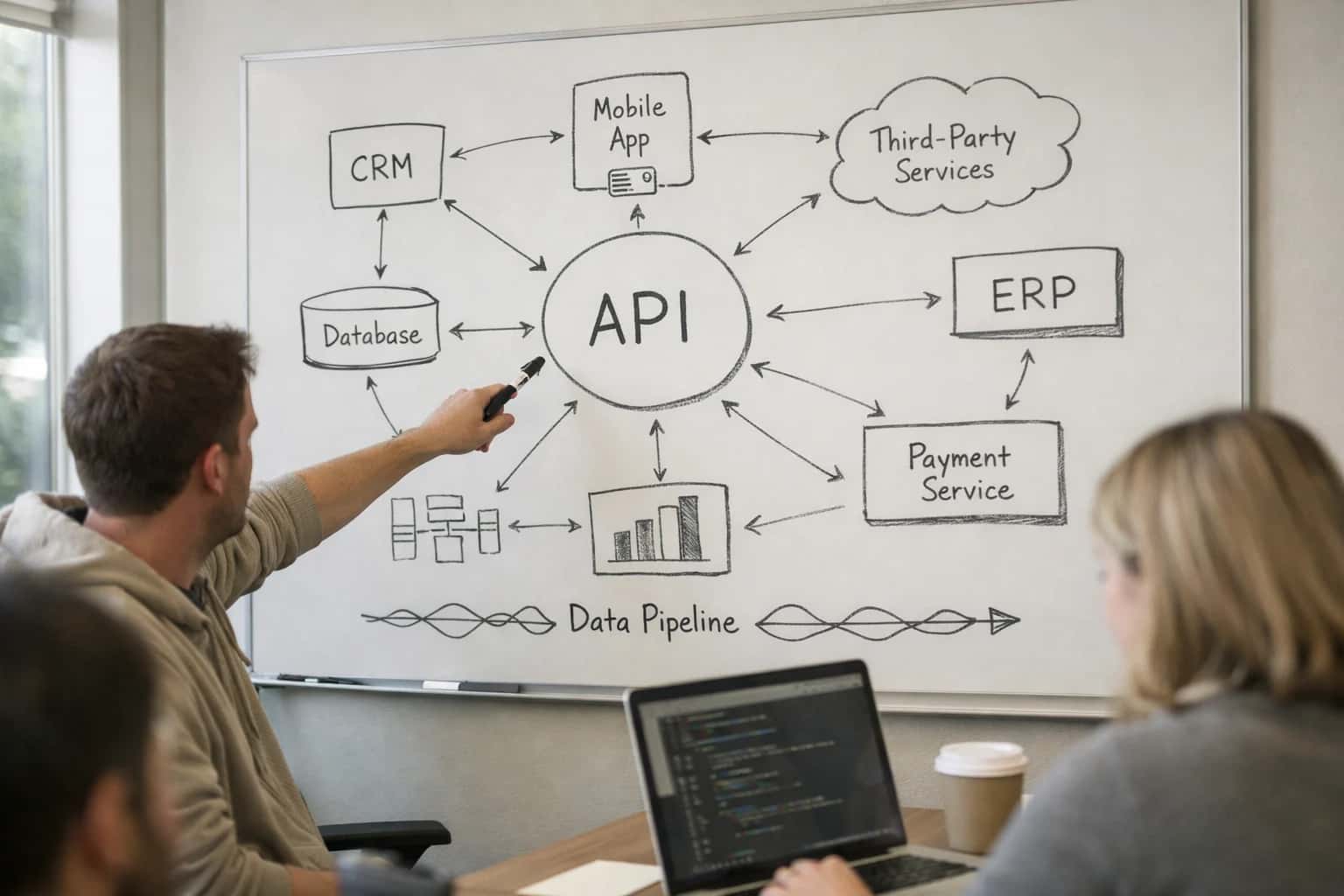
ARCHITECTURE AND IMPLEMENTATION
Where AI Fits into EcoOnline Energy Management
A practical blueprint for integrating AI into EcoOnline's energy data workflows to move from reactive reporting to predictive efficiency.
High-value workflows center on automated waste detection and project prioritization. For example, an AI model can analyze 15-minute interval data across hundreds of meters to identify "always-on" equipment or inefficient setpoints, generating a structured finding in EcoOnline with estimated annual waste (kWh and cost). Another agent can scan the project pipeline, evaluating proposed efficiency projects against historical performance data, regulatory incentives, and payback thresholds to recommend a prioritized shortlist. This shifts the energy manager's role from data detective to decision-maker, reviewing AI-generated insights and converting them into actionable work orders or capital requests within the same platform.
A production rollout follows a crawl-walk-run approach. Phase one wires a secure cloud function (or on-prem container) to pull data from EcoOnline's REST APIs, process it with lightweight regression and clustering models, and post findings back as structured records. Governance is critical: all AI-generated recommendations include confidence scores, source data references, and require a human-in-the-loop approval within EcoOnline's workflow engine before any automated task creation or alert dissemination. This ensures accountability and allows for model tuning based on user feedback logged directly in the system's audit trail.
WHERE TO DEPLOY AI AGENTS AND AUTOMATION
Key EcoOnline Energy Modules and AI Touchpoints
Centralized Consumption Data
The Energy Data Hub is the primary ingestion point for meter readings, utility bills, and IoT sensor streams. AI integration here focuses on automated data validation and anomaly detection.
AI Touchpoints:
- Anomaly Flagging: Use LLM-powered agents to review incoming data streams against historical baselines and operational schedules (e.g., flagging a 30% spike in a building's kWh usage on a weekend).
- Unit & Source Reconciliation: Automatically correct common data entry errors (e.g., converting Therms to kWh) and map disparate meter IDs to the correct facility or asset in the hierarchy.
- Gap Filling: Use predictive models to estimate missing interval data for more accurate reporting and analytics.
This layer ensures the data feeding all other modules is clean, consistent, and reliable for AI-driven analysis.
ECOONLINE ENERGY MODULES
High-Value AI Use Cases for Energy Management
Integrating AI into EcoOnline's energy management platform automates data analysis, identifies waste patterns, and generates actionable efficiency recommendations. These use cases target the core workflows of energy managers, sustainability leads, and facility operations teams.
01
Automated Energy Anomaly Detection & Alerting
AI continuously analyzes meter and sub-meter data within EcoOnline to detect abnormal consumption spikes or drops. It correlates anomalies with operational schedules, weather data, and production volumes to pinpoint the likely source—like a malfunctioning HVAC unit or an after-hours equipment run—and triggers an alert with a root-cause hypothesis.
Batch -> Real-time
Detection speed
02
Predictive Energy Consumption Forecasting
Leverages historical energy data, production forecasts, and weather patterns within EcoOnline to generate accurate short-term and long-term energy demand forecasts. This enables proactive procurement, budget accuracy, and identification of periods where efficiency projects will have the highest impact, feeding directly into the platform's planning modules.
Hours -> Minutes
Forecast generation
03
AI-Powered Efficiency Project Identification
Analyzes consumption patterns across facilities and equipment hierarchies in EcoOnline to automatically identify and prioritize energy-saving opportunities. The AI generates project briefs with estimated savings, payback periods, and recommended actions (e.g., retrofitting lighting, optimizing setpoints), streamlining the business case development workflow for sustainability teams.
1 sprint
Project discovery cycle
04
Automated Regulatory & ESG Reporting Drafts
For reports like SECR, GRESB, or CDP, AI aggregates energy data from across EcoOnline modules, performs the required calculations (e.g., GHG emissions via selected factors), and drafts narrative sections explaining consumption trends, efficiency initiatives, and year-over-year performance. This reduces manual data consolidation and report writing from days to hours.
Days -> Hours
Report preparation
05
Intelligent Utility Bill Validation & Variance Analysis
AI cross-references incoming utility bills in EcoOnline against metered consumption data and contracted rates. It flags discrepancies for review, explains variances (e.g., "15% increase due to colder-than-average month"), and automates the accrual and cost allocation workflows, ensuring financial accuracy and catching billing errors early.
Same day
Discrepancy alerting
06
Natural-Language Energy Dashboard Queries
Enables energy managers to ask questions of their EcoOnline data in plain language (e.g., "Which site had the highest energy intensity last quarter and why?"). The AI queries the underlying data model, generates insights, and creates visualizations on the fly, turning static dashboards into interactive analytics copilots.
Minutes -> Seconds
Insight generation
ECOONLINE ENERGY MANAGEMENT
Example AI-Enhanced Energy Workflows
These concrete workflows illustrate how AI agents and automations can be integrated into EcoOnline's energy management modules to move from reactive data collection to proactive efficiency and cost savings.
Trigger: Hourly energy consumption data is ingested from IoT meters, building management systems (BMS), or utility APIs into EcoOnline.
AI Action: A background agent compares real-time usage against a baseline model that accounts for factors like production schedules, weather, and occupancy.
System Update: When a significant deviation (e.g., a 20% spike in a non-operational hour) is detected:
- An alert is automatically created in EcoOnline's action tracking module.
- The alert is enriched with a probable cause generated by the AI (e.g., "Potential HVAC system fault in Building A based on simultaneous temperature sensor data").
- The alert is routed via email or Teams/Slack to the relevant facility manager with a link to the detailed analysis.
Human Review Point: The manager reviews the AI's hypothesis, investigates on-site if needed, and updates the alert status in EcoOnline, creating a work order if necessary. This feedback loop improves the AI's baseline models over time.
CONNECTING AI TO ENERGY DATA WORKFLOWS
Implementation Architecture: Data Flow and Integration Points
A practical blueprint for integrating AI agents and analytics into EcoOnline's energy management modules to automate analysis and drive efficiency.
The integration connects at three primary points within the EcoOnline platform: the Energy Data Hub for raw consumption data (e.g., meter readings, utility bills, IoT sensor streams), the Project Portfolio module for tracking efficiency initiatives, and the Reporting Engine for generating insights and compliance documents. AI agents are deployed as a middleware layer, typically via secure API calls or webhook listeners, to ingest structured data from EcoOnline's REST API or scheduled data exports. This architecture ensures the AI operates on a real-time or daily snapshot of energy performance without disrupting core platform operations.
A typical workflow begins with an AI agent analyzing consumption patterns across sites and time periods. It identifies anomalies—such as a 15% overnight load at an unoccupied facility—and correlates them with operational data (production schedules, weather feeds) held in EcoOnline. The agent then generates a structured recommendation, which is posted back into EcoOnline as a draft Energy Efficiency Opportunity record, complete with estimated savings, payback period, and proposed actions. For ongoing monitoring, another agent can be configured to watch key performance indicators (KPIs) and automatically trigger alerts or create tasks in EcoOnline's action tracking system when targets are deviating.
Rollout is phased, starting with a pilot on a single facility's data to tune anomaly detection models. Governance is critical: all AI-generated recommendations are flagged for review by an energy manager within EcoOnline, maintaining a human-in-the-loop for approval. The integration includes a full audit trail, logging every AI-initiated data pull and recommendation created. This approach minimizes risk while automating the heavy lifting of data sifting, turning what was a monthly manual analysis into a continuous, automated insight engine. For related architectural patterns, see our guides on AI Integration for EcoOnline Environmental Monitoring and AI Integration for EcoOnline Carbon Accounting.
AI INTEGRATION PATTERNS FOR ECOONLINE
Code and Payload Examples
Ingesting and Analyzing Energy Consumption Data
AI integration for energy management typically starts with programmatically accessing meter and consumption data via EcoOnline's REST APIs or database connectors. The goal is to retrieve time-series data for analysis, then post back AI-generated insights or anomaly flags as custom fields or related records.
Example Python Workflow:
- Authenticate with OAuth 2.0 to obtain a bearer token.
- Query the
EnergyConsumptionorMeterReadingendpoints for a specific site and date range. - Send the structured JSON payload to an inference endpoint for pattern analysis.
- Parse the AI response (e.g., detected waste patterns, efficiency recommendations) and create a new
EnergyFindingrecord or update the site'sEnergyProfile.
This pattern enables continuous monitoring and automated insight generation, moving from manual spreadsheet analysis to AI-driven operational intelligence.
AI-ENHANCED ENERGY MANAGEMENT
Realistic Time Savings and Operational Impact
This table illustrates the operational impact of integrating AI into EcoOnline's energy management workflows, focusing on efficiency gains, data processing improvements, and enhanced decision support for energy managers and sustainability teams.
| Metric | Before AI | After AI | Notes |
|---|---|---|---|
Energy Anomaly Detection | Manual review of weekly/monthly reports | Daily automated alerts for unusual consumption | Shifts from reactive to proactive management, identifying waste 1-2 weeks earlier |
Utility Bill Data Entry & Validation | 2-3 hours per site, per month | Automated ingestion and validation in minutes | Reduces manual errors and frees analyst time for higher-value tasks |
Efficiency Project Identification | Quarterly manual analysis of benchmark data | Continuous, automated opportunity scoring | AI surfaces projects based on consumption patterns, weather data, and facility profiles |
Regulatory & ESG Report Drafting | Days consolidating data and writing narratives | Automated data aggregation and narrative generation in hours | Human review remains critical for accuracy and strategic messaging |
Energy Consumption Forecasting | Static, spreadsheet-based monthly forecasts | Dynamic, AI-driven weekly forecasts with confidence intervals | Improves budget accuracy and supports demand-side response planning |
Variance Analysis (Actual vs. Target) | Manual investigation post-period close | Automated root-cause analysis with suggested drivers | Explains variances using operational data (e.g., production volume, weather) |
Portfolio-Wide Energy Performance Review | Manual compilation for quarterly management reviews | Automated executive summary with prioritized insights | Enables faster, data-driven strategic decisions on capital planning |
ARCHITECTING FOR CONTROLLED DEPLOYMENT
Governance, Security, and Phased Rollout
A practical approach to implementing AI in EcoOnline that prioritizes data integrity, controlled access, and measurable, low-risk value.
Implementation begins by mapping AI access to specific EcoOnline data objects and user roles. We typically create a dedicated service account with scoped API permissions—read-only for energy consumption, meter, and project data, and write access only to designated fields like Recommendation_Notes or Efficiency_Score within the energy management module. All AI-generated outputs are stored with an audit trail, tagging the source as an AI agent and the prompting logic used, ensuring full traceability for compliance reviews.
A phased rollout is critical for adoption and risk management. We recommend starting with a pilot workflow, such as AI-driven anomaly detection in utility meter feeds for a single facility. This provides immediate value by flagging spikes for investigation without altering core processes. The second phase often introduces automated efficiency recommendations, where the AI analyzes historical consumption against weather, production schedules, and tariff data to suggest no-cost or low-cost operational adjustments, with recommendations routed to facility managers for review and approval within EcoOnline.
Governance is built into the workflow. Before any AI-generated project recommendation is promoted to an active capital project in EcoOnline, it should pass through a configured approval chain. This can involve a human-in-the-loop review by an energy manager, who assesses the AI's projected savings, payback period, and implementation notes. The integration architecture supports configurable confidence thresholds; for example, only recommendations with a calculated savings certainty above 90% might auto-populate a draft project form, while others remain in a review queue. This controlled, stepwise approach ensures the AI augments—rather than disrupts—existing energy governance protocols.
Enabling Efficiency, Speed & Accuracy
Intelligent Analysis, Decision & Execution
We build AI systems for teams that need search across company data, workflow automation across tools, or AI features inside products and internal software.
Talk to Us
Search across company data
Give teams answers from docs, tickets, runbooks, and product data with sources and permissions.
Useful when people spend too long searching or get different answers from different systems.
Enterprise searchRAGPermissions
Read more
Automate internal workflows
Use AI to route work, draft outputs, trigger actions, and keep approvals and logs in place.
Useful when repetitive work moves across multiple tools and teams.
AI agentsWorkflow automationGovernance
Read more
Add AI to products and internal tools
Build assistants, guided actions, or decision support into the software your team or customers already use.
Useful when AI needs to be part of the product, not a separate tool.
AI integrationDecision supportModel routing
Read moreIMPLEMENTATION AND WORKFLOWS
Frequently Asked Questions
Practical questions about integrating AI agents and automation into EcoOnline's energy management modules for consumption analysis, waste detection, and efficiency project planning.
This workflow connects AI to EcoOnline's energy data ingestion points and meter dashboards.
- Trigger: Scheduled daily or weekly batch job, or a real-time webhook when a new meter reading or utility bill is uploaded into EcoOnline.
- Context/Data Pulled: The AI agent retrieves time-series consumption data (kWh, therms, etc.) for a defined period and facility. It also pulls relevant context: facility operating hours, production output data (if integrated), and weather data for the period.
- Model/Agent Action: A machine learning model (often a lightweight forecasting model) analyzes the data to establish a baseline expected consumption. The AI then compares actual usage against this baseline, flagging significant deviations.
- It identifies patterns like loads running during non-operational hours, simultaneous peak draws, or inefficient setpoints for HVAC systems.
- For waste identification, it uses rules and NLP to analyze descriptive fields (e.g., "meter associated with compressed air system") to categorize waste types.
- System Update/Next Step: The AI creates a structured finding in a designated EcoOnline module (e.g., an Action Item or an entry in a custom "Energy Findings" object). The finding includes:
Facility: Building AMeter/System: HVAC Chiller #3Pattern Identified: Extended runtime on weekends (48 hrs of unnecessary operation)Estimated Waste: ~1,200 kWh/weekPotential Savings: $X/week
- Human Review Point: The finding is assigned to the facility manager or energy lead for validation. They can confirm, adjust, or reject the finding within EcoOnline, triggering the next workflow for project recommendation.

About the author
Prasad Kumkar
CEO & MD, Inference Systems
Prasad Kumkar is the CEO & MD of Inference Systems and writes about AI systems architecture, LLM infrastructure, model serving, evaluation, and production deployment. Over 5+ years, he has worked across computer vision models, L5 autonomous vehicle systems, and LLM research, with a focus on taking complex AI ideas into real-world engineering systems.
His work and writing cover AI systems, large language models, AI agents, multimodal systems, autonomous systems, inference optimization, RAG, evaluation, and production AI engineering.
LinkedIn
Limited slotsGet a Free AI Consultation
Partnered with leading AI, data, and software stack.





How We Work
Custom AI workflows for your Business
One-fit-all AI don't work for modern businesses. At Inferensys, we aim to understand your business & custom requirements; which we use to define most efficient agentic workflows, the data, and the tools for your business.
01
Review the use case
We understand the task, the users, and where AI can actually help.
Read more02
Pick the right approach
We define what needs search, automation, or product integration.
Read more03
Build the first useful version
We implement the part that proves the value first.
Read more04
Improve from there
We add the checks and visibility needed to keep it useful.
Read moreThe first call is a practical review of your use case and the right next step.
Talk to Us