AI connects directly to Cority's Laboratory Information Management (LIMs) and Environmental Compliance modules, primarily interacting with Sample records, Test Result data objects, and Discharge Monitoring Report (DMR) workflows. The integration acts on two key data flows: 1) the ingestion of laboratory analytical results (e.g., pH, BOD, TSS, metals) and 2) the scheduled generation of permit-mandated reports. By processing this data through a dedicated AI service layer, you can automate the validation of results against permit limits, flag potential exceedances for review, and draft narrative explanations for trends or anomalies.

Integration
AI Integration for Cority Water Quality Monitoring
A technical guide to integrating AI with Cority's water quality modules to automate lab result analysis, predict compliance exceedances, and generate regulatory reports.
ARCHITECTURE AND IMPLEMENTATION
Where AI Fits into Cority Water Quality Workflows
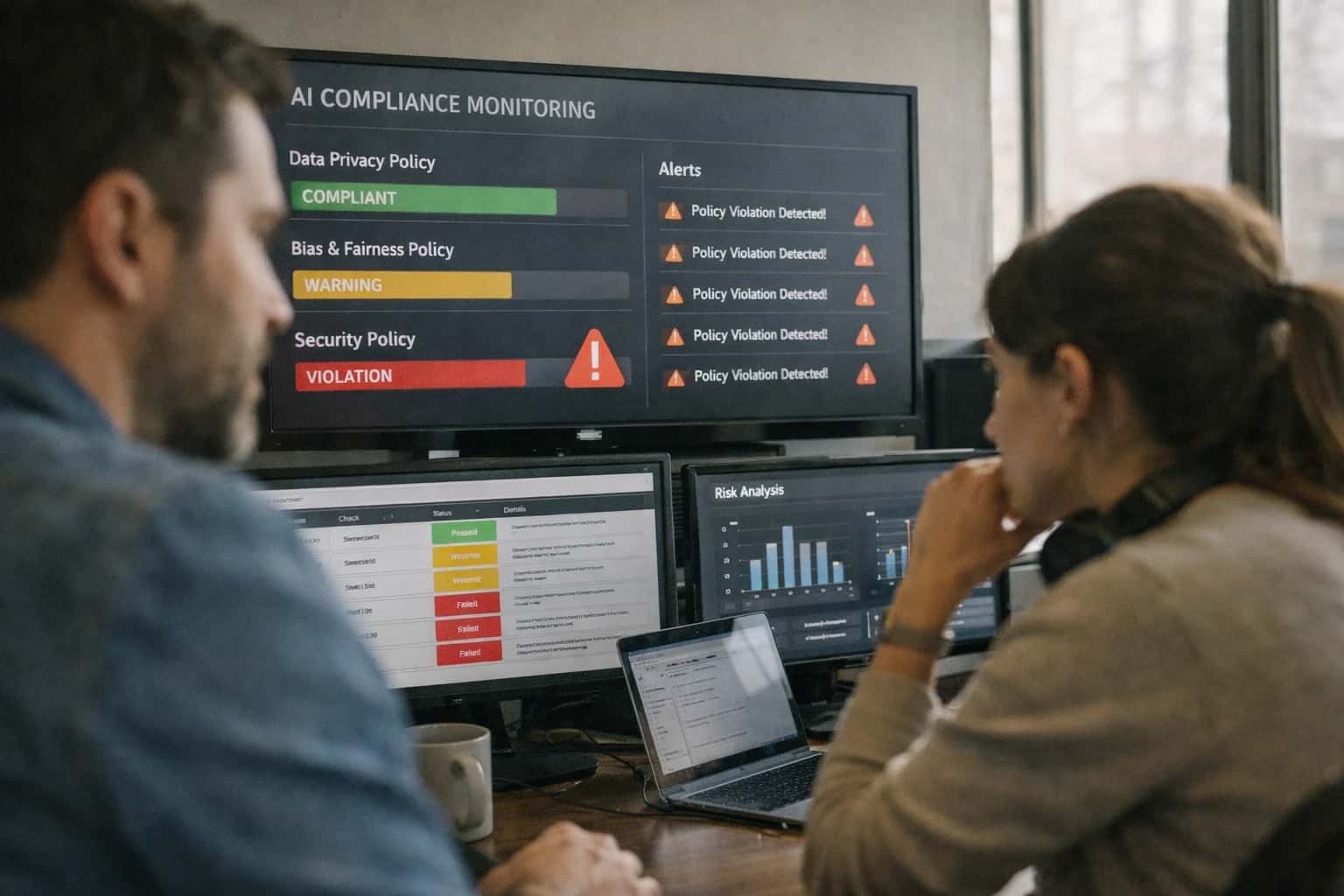
Integrating AI into Cority's water quality modules automates sample analysis, predicts compliance risks, and generates regulatory reports.
A typical implementation uses a secure API gateway to send batched sample data from Cority to a vectorized water quality knowledge base. This base contains historical results, permit conditions, and regulatory context. An AI agent then analyzes incoming results, performing tasks like:
- Anomaly Detection: Identifying statistically significant deviations from baseline for a given sampling point.
- Predictive Compliance: Forecasting potential future exceedances based on trends, weather data, or upstream process changes.
- Automated DMR Drafting: Populating report tables and generating the required narrative summary of the monitoring period. Results and recommended actions are posted back to Cority as Tasks or Findings, triggering existing approval workflows and maintaining a full audit trail within the system.
Rollout should be phased, starting with a single National Pollutant Discharge Elimination System (NPDES) permit or outfall. Governance is critical: all AI-generated content, especially for regulatory submissions, must be reviewed and approved by a Qualified Responsible Person (QRP) within Cority's workflow before submission. The system should be configured for human-in-the-loop review, where the AI provides a draft and supporting rationale, but the final sign-off and submission remain a manual, logged step. This approach reduces manual data consolidation from hours to minutes, shifts compliance monitoring from reactive to proactive, and ensures the integration enhances—rather than replaces—the established, accountable processes within Cority.
WATER QUALITY MONITORING
Key Integration Surfaces in Cority
Ingesting and Analyzing Sample Results
The Laboratory Data Management module is the primary surface for AI integration, handling the structured data from water quality tests (e.g., pH, BOD, TSS, heavy metals). AI can be injected here to automate the validation of incoming lab results against historical baselines and permit limits.
Key integration points include:
- API/webhook listeners for automated data ingestion from LIMS or third-party labs.
- Automated anomaly detection that flags out-of-spec results for immediate review, reducing manual data screening time from hours to minutes.
- Trend analysis that correlates parameter changes across sampling locations and dates to identify emerging contamination patterns.
This enables environmental managers to shift from reactive data logging to proactive monitoring, ensuring faster response to potential compliance events.
CORITY INTEGRATION PATTERNS
High-Value AI Use Cases for Water Quality
Integrating AI with Cority's water quality modules automates data analysis, predicts compliance risks, and generates critical reports, shifting EHS teams from reactive data entry to proactive environmental stewardship.
01
Automated Discharge Monitoring Report (DMR) Generation
AI parses lab sample results from Cority's Laboratory Data Management module, validates them against NPDES permit limits, and auto-populates EPA DMR forms. It flags exceedances, drafts explanatory narratives for violations, and routes the draft for supervisor review, ensuring same-day submission readiness instead of manual weekly compilation.
Weekly -> Same-day
Report turnaround
02
Predictive Compliance Risk Forecasting
Analyzes historical water sample trends, flow data, and operational logs (e.g., from Cority's Environmental Monitoring registers) to predict potential future permit exceedances. The AI identifies leading indicators—like a gradual pH drift or rising TSS—and generates proactive work orders for maintenance or process adjustments within Cority's Action Tracking system.
Reactive -> Proactive
Risk posture
03
Intelligent Lab Data Validation & Anomaly Detection
Acts as a QA/QC layer for incoming laboratory water sample data. The AI cross-checks new results against historical baselines, detects statistical outliers or physically impossible values (e.g., negative concentrations), and flags them for review in the Sample Management workflow before they are committed to compliance records, preventing reporting errors.
Manual -> Automated
QA check
04
Narrative Generation for Water Quality Incidents
When a non-compliance event is logged in Cority's Incident Management module, the AI automatically drafts the initial incident description and regulatory impact summary. It pulls relevant context—permit details, sample results, corrective actions—saving investigators hours on report writing and ensuring consistent, audit-ready documentation.
Hours -> Minutes
Initial report drafting
05
Automated Regulatory Change Impact Analysis
Monitors for updates to water quality regulations (e.g., EPA, state WQBELs). When a change is detected, the AI maps the new requirements to your facility's specific permits and monitoring parameters in Cority. It generates a gap analysis, highlights affected Compliance Calendars and Monitoring Plans, and recommends sampling frequency or parameter adjustments.
1-2 Weeks
Impact assessment time
06
Unified Water Balance & Source Intelligence
Integrates data from Cority's water modules with utility meter logs and production data. The AI constructs a dynamic water balance model, identifying anomalies in intake vs. discharge volumes that may indicate unmetered uses or leaks. Insights are surfaced in Cority's EHS Dashboard, supporting water conservation goals and sustainability reporting.
Batch -> Real-time
Balance visibility
CORITY WATER QUALITY MONITORING
Example AI-Augmented Workflows
These workflows illustrate how AI agents can integrate directly with Cority's water quality modules, automating data analysis, compliance checks, and report generation to reduce manual effort and improve predictive accuracy.
Trigger: Scheduled job runs at the end of a reporting period (e.g., monthly NPDES report).
Context/Data Pulled: The agent queries Cority's WaterSampleResults and MonitoringPoint objects for the period, pulling parameter codes (e.g., BOD, TSS, pH), sample dates, lab IDs, and permit limit values.
Model/Agent Action: An LLM-powered agent analyzes the dataset:
- Identifies samples that exceed permit limits, calculating the magnitude and duration of the excursion.
- Flags any missing or out-of-sequence samples required by the permit.
- Drafts the narrative section for the DMR, explaining any exceedances and describing corrective actions taken (pulling from linked
CorrectiveActionrecords). - Populates a structured JSON payload with values for the regulatory form fields.
System Update/Next Step: The draft narrative and structured data are posted to a Cority ReportDraft record. A workflow notification is sent to the Environmental Specialist for review and submission.
Human Review Point: The specialist reviews the AI-generated draft within Cority, verifies data accuracy, adds any necessary context, and submits the final report. All AI actions are logged in the record's audit trail.
FROM SAMPLE TO REPORT
Implementation Architecture & Data Flow
A production-ready AI integration for Cority water quality monitoring connects lab data, predictive models, and regulatory reporting into a single automated workflow.
The integration architecture is built around Cority's core environmental data objects—primarily the Water Sample and Discharge Monitoring Report (DMR) modules. AI agents are triggered via webhook or scheduled job when new laboratory results (Analyte, Concentration, Detection Limit) are written to a sample record. The system performs an immediate compliance check against permit limits stored in Cority's Permit or Regulatory Requirement objects, flagging any exceedances for review. For predictive use cases, a separate AI service ingests time-series data from historical samples, flow rates, and operational parameters (e.g., from a connected SCADA or historian) to forecast potential future exceedances, generating a Predictive Alert record linked to the relevant monitoring location.
For automated reporting, the architecture employs a multi-step agent workflow: 1) A Data Aggregation Agent queries Cority's API for all finalized sample results within the DMR reporting period, validating completeness. 2) A Calculation & Validation Agent performs required averages, maximums, and loading calculations, cross-referencing with permit formulas. 3) A Narrative Generation Agent drafts the executive summary and compliance statements, explaining trends and any excursions. 4) A Form-Filling Agent structures the validated data into the required regulatory template (e.g., EPA NetDMR format). This workflow executes in a queue, with each step creating audit log entries in Cority and requiring approval gates for high-risk outputs before final submission.
Rollout follows a phased approach, starting with a single discharge point or NPDES permit. Governance is critical: all AI-generated DMR drafts are routed through Cority's existing Document Review workflow, requiring sign-off by the designated Environmental Lead. The AI's confidence scores and source data citations are embedded in the draft for traceability. The system is designed for incremental trust—initially acting as a copilot that prepares 90% of the report, reducing manual compilation from hours to minutes, while maintaining human oversight for legal submission. Over time, as the model's accuracy is validated, the workflow can be configured for fully automated submission of routine, in-compliance reports, with exceptions always escalated.
INTEGRATION PATTERNS
Code & Payload Examples
Ingesting Lab Results via Cority API
AI analysis begins with structured water quality data. This example shows a Python script to fetch recent laboratory sample results from Cority's REST API, preparing them for AI processing. The payload includes key parameters like analyte concentration, detection limits, sample location, and collection date—essential for compliance analysis and trend detection.
pythonimport requests import pandas as pd # Cority API endpoint for sample results url = "https://your-instance.cority.com/api/v1/water/samples" headers = { "Authorization": "Bearer YOUR_ACCESS_TOKEN", "Content-Type": "application/json" } params = { "facilityId": "FAC-001", "dateFrom": "2024-01-01", "limit": 100 } response = requests.get(url, headers=headers, params=params) sample_data = response.json() # Transform to DataFrame for AI pipeline df = pd.DataFrame(sample_data['results']) required_fields = ['sampleId', 'collectionDate', 'analyte', 'result', 'unit', 'mcl'] df_clean = df[required_fields] # Send to AI service for analysis # ai_payload = df_clean.to_dict('records')
This structured data feed enables real-time monitoring and predictive alerting for exceedances.
AI-ENHANCED WATER QUALITY WORKFLOWS
Realistic Time Savings & Operational Impact
How AI integration transforms manual, reactive water quality monitoring in Cority into a proactive, efficient process.
| Workflow / Task | Before AI | After AI | Key Impact & Notes |
|---|---|---|---|
Lab Result Review & Flagging | Manual scan of 100s of data points per sample | Automated anomaly detection & priority flagging | Focus shifts from finding issues to acting on them; reduces oversight risk. |
Discharge Monitoring Report (DMR) Drafting | 1-2 days of manual data collation and form entry | Automated data aggregation & form population in hours | Ensures consistency, reduces transcription errors, and accelerates submission. |
Compliance Trend Analysis | Monthly manual spreadsheet analysis; reactive identification | Continuous monitoring with automated alerts on negative trends | Enables proactive interventions before permit limits are approached. |
Sample Data Validation & Entry | Manual transfer from lab reports; prone to keystroke errors | AI-assisted extraction & validation from PDF/email attachments | Improves data integrity at source; frees staff for higher-value QA. |
Regulatory Limit Check | Cross-reference against static permit tables | Dynamic checking against permit library with change alerts | Mitigates risk of missed permit updates; audit-ready documentation. |
Investigation Support for Exceedances | Manual root cause analysis, searching historical logs | AI-suggested correlating factors (e.g., rainfall, process upsets) | Accelerates root cause identification from days to hours. |
Reporting for Management Review | Manual compilation of slides and narrative summaries | Automated generation of executive summaries with key insights | Provides consistent, data-driven narrative for EHS leadership meetings. |
IMPLEMENTING AI IN A REGULATED ENVIRONMENT
Governance, Security & Phased Rollout
Deploying AI for water quality monitoring requires a controlled approach that prioritizes data integrity, regulatory compliance, and user trust.
A production integration for Cority Water Quality Monitoring is architected with a clear separation of duties. The AI layer acts as a co-processor to Cority's core Laboratory Information Management (LIMs) and Environmental Compliance modules. Raw sample results, instrument data, and permit limits are pulled via Cority's secure APIs into a governed processing environment. Here, AI models perform analysis—such as anomaly detection in Total Suspended Solids trends or predicting exceedances for Biological Oxygen Demand (BOD)—but never write data directly back to the system of record without a review checkpoint. All AI-generated insights, predictive flags, and draft Discharge Monitoring Report (DMR) narratives are staged in a dedicated audit table, requiring validation by an environmental specialist or lab manager before promotion to official compliance records.
Security is enforced at multiple levels: API calls between systems use OAuth 2.0 with scoped permissions limited to read/write for specific data objects like Water_Sample_Result and Permit_Limit. All AI model inferences are logged with a full chain-of-custody trace, linking the output back to the source sample IDs, the model version used, and the prompting context. For sensitive compliance workflows, a human-in-the-loop approval step is mandatory before any AI-suggested action—like flagging a potential violation or generating a regulatory report—can proceed. This ensures the environmental professional retains final sign-off authority, maintaining the legal defensibility of all data submitted to agencies like the EPA or state DEP.
We recommend a three-phase rollout to de-risk adoption and demonstrate value incrementally. Phase 1 (Assistive Analytics): Deploy AI as a read-only insight engine, analyzing historical water sample data to surface hidden trends and provide automated commentary for monthly performance reviews. Phase 2 (Predictive Guardrails): Integrate AI-driven alerts into daily operations, providing early warnings for potential parameter excursions 24-48 hours in advance, allowing for corrective action before a sample is even taken. Phase 3 (Automated Drafting): Activate AI-assisted generation of routine compliance documents, such as populating DMR forms or drafting quarterly summary narratives, which are then reviewed, edited, and submitted by the compliance team. This phased approach builds confidence, allows for tuning of models with real-world feedback, and ensures the operational workflow adapts smoothly to the new AI capabilities without disrupting critical compliance deadlines.
Enabling Efficiency, Speed & Accuracy
Intelligent Analysis, Decision & Execution
We build AI systems for teams that need search across company data, workflow automation across tools, or AI features inside products and internal software.
Talk to Us
Search across company data
Give teams answers from docs, tickets, runbooks, and product data with sources and permissions.
Useful when people spend too long searching or get different answers from different systems.
Enterprise searchRAGPermissions
Read more
Automate internal workflows
Use AI to route work, draft outputs, trigger actions, and keep approvals and logs in place.
Useful when repetitive work moves across multiple tools and teams.
AI agentsWorkflow automationGovernance
Read more
Add AI to products and internal tools
Build assistants, guided actions, or decision support into the software your team or customers already use.
Useful when AI needs to be part of the product, not a separate tool.
AI integrationDecision supportModel routing
Read moreCORITY WATER QUALITY MONITORING
Frequently Asked Questions
Practical questions for teams planning to integrate AI into Cority's water quality and discharge monitoring workflows.
AI integration typically connects via Cority's API layer or through a scheduled data export/ingestion pipeline. The most common pattern involves:
- Trigger: A new laboratory analysis result is logged in the Cority
Water SampleorLaboratory Datamodule. - Data Pull: An integration service (like a secure, containerized agent) calls the Cority API to retrieve the new sample record, including fields like:
Sample ID,Location,Collection Date/TimeAnalyte(e.g., Total Suspended Solids, Biochemical Oxygen Demand)Result Value,Detection Limit,Units- Associated
Permit IDandPermit Limitvalues
- Context Enrichment: The service may also pull related time-series data for that location and analyte to establish a historical baseline.
- AI Processing: This structured payload is sent to an inference endpoint where a model evaluates the result against limits, checks for trends, and flags anomalies.
- System Update: The agent posts the AI-generated insights (e.g.,
"Predicted Exceedance Risk: High","Trend Alert: 3-consecutive increasing results") back to a custom object or a notes field on the sample record in Cority, triggering any configured alerts or workflows.

About the author
Prasad Kumkar
CEO & MD, Inference Systems
Prasad Kumkar is the CEO & MD of Inference Systems and writes about AI systems architecture, LLM infrastructure, model serving, evaluation, and production deployment. Over 5+ years, he has worked across computer vision models, L5 autonomous vehicle systems, and LLM research, with a focus on taking complex AI ideas into real-world engineering systems.
His work and writing cover AI systems, large language models, AI agents, multimodal systems, autonomous systems, inference optimization, RAG, evaluation, and production AI engineering.
LinkedIn
Limited slotsGet a Free AI Consultation
Partnered with leading AI, data, and software stack.





How We Work
Custom AI workflows for your Business
One-fit-all AI don't work for modern businesses. At Inferensys, we aim to understand your business & custom requirements; which we use to define most efficient agentic workflows, the data, and the tools for your business.
01
Review the use case
We understand the task, the users, and where AI can actually help.
Read more02
Pick the right approach
We define what needs search, automation, or product integration.
Read more03
Build the first useful version
We implement the part that proves the value first.
Read more04
Improve from there
We add the checks and visibility needed to keep it useful.
Read moreThe first call is a practical review of your use case and the right next step.
Talk to Us