AI integration for ERP tax automation targets specific functional surfaces within platforms like SAP S/4HANA, Oracle Cloud ERP, NetSuite, and Infor. The primary touchpoints are the tax determination engine (e.g., condition tables for transaction tax), the general ledger for provision entries, and the reporting and compliance modules for filings. AI agents connect via the ERP's native APIs—such as SAP's OData services, Oracle REST APIs, or NetSuite SuiteTalk—to read transactions, validate tax codes against master data, and write back proposed adjustments or compliance flags. The integration layer typically sits between the ERP and dedicated tax engines like Avalara or Vertex, using AI to handle exceptions, interpret ambiguous tax scenarios, and prepare data for indirect tax filings.

Integration
AI Integration for ERP Tax Automation
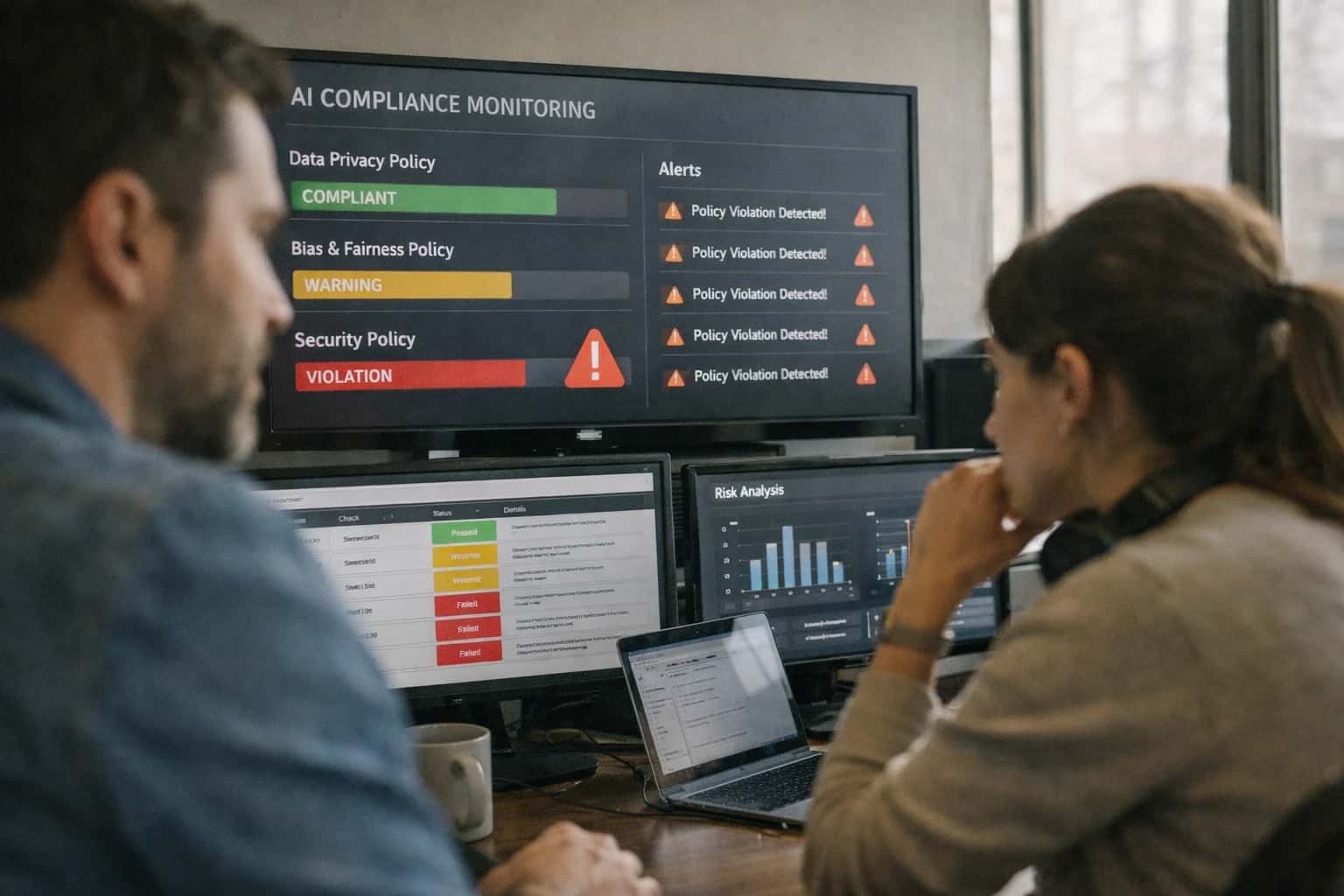
Where AI Fits into ERP Tax Workflows
A practical guide to embedding AI into ERP tax determination, provision, and compliance processes for tax directors and IT leaders.
High-value use cases focus on reducing manual review and accelerating close cycles. For example, an AI workflow can:
- Validate tax codes on incoming invoices or sales orders by cross-referencing item descriptions, customer locations, and nexus rules, flagging mismatches for an accountant.
- Automate sales and use tax accruals by analyzing GL accounts and transaction history at period-end, generating draft journal entries for the provision with supporting documentation.
- Support indirect tax filing preparation by extracting, aggregating, and reconciling taxable transaction data from the ERP, then populating jurisdictional worksheets with variance explanations. Impact is measured in hours saved per close cycle, reduced penalty risk from filing errors, and improved audit readiness through a complete, queryable log of all AI-proposed determinations and overrides.
A production rollout requires careful governance. Start with a pilot on a single tax jurisdiction or transaction type (e.g., US sales tax). Implement a human-in-the-loop approval step within the existing ERP workflow (like a custom approval screen in SAP Fiori or a NetSuite checklist) where a tax analyst reviews AI recommendations before posting. Ensure the AI system writes a full audit trail back to the ERP as custom records or document attachments, capturing the source data, reasoning, and final action. For tax directors, the key is maintaining control: the AI acts as a copilot that proposes, but the certified tax professional approves, ensuring policy compliance and providing a clear boundary for liability.
ERP Tax Module Touchpoints for AI Integration
Transaction Tax Determination
This surface covers the real-time calculation of sales, use, and VAT taxes during order entry, invoice creation, and procurement. AI integration focuses on enhancing the standard tax engine's logic.
Key Integration Points:
- Tax Code Assignment: Use AI to analyze line-item descriptions, customer location, and product attributes to suggest or validate the correct tax code, reducing manual overrides.
- Nexus Analysis: Automatically evaluate if a transaction creates a new tax obligation based on evolving jurisdictional rules, flagging transactions for review.
- Exemption Certificate Validation: Integrate AI to parse and validate uploaded exemption certificates, checking for expiry dates and applicable jurisdictions.
Implementation Pattern: Intercept transaction payloads (e.g., from a sales order API) before posting, call an AI service for classification, and return enriched data for the ERP's native tax engine to process. This maintains audit trails within the core tax module.
High-Value AI Use Cases for Tax Directors
Integrating AI directly into your ERP's tax modules automates high-effort, high-risk workflows. These patterns connect to transaction data, master records, and compliance engines in SAP, Oracle, NetSuite, and Infor to reduce manual review and improve accuracy.
Automated Transaction Tax Classification
AI reviews ERP sales orders, purchase orders, and invoices in real-time to assign and validate tax codes. It cross-references item masters, customer/vendor locations, and contract terms against jurisdictional rules, flagging exceptions for review before posting. This reduces manual coding errors that lead to audit exposure.
Indirect Tax Provision Calculation Support
For monthly/quarterly provisions, AI aggregates taxable transactions from the ERP GL and sub-ledgers, applies current rates, and generates a preliminary calculation workbook. It highlights material variances from prior periods and provides narrative explanations based on changes in volume, mix, or nexus, streamlining the tax accountant's review.
Sales & Use Tax Return Preparation
AI orchestrates data extraction from ERP tax detail reports, auto-populates filing forms, and performs reconciliations against the general ledger. It identifies discrepancies (e.g., untaxed exempt sales) and generates a summary of findings and required manual adjustments for the tax manager's sign-off before submission.
Continuous Nexus & Obligation Monitoring
By analyzing ERP shipment destinations, employee locations, and vendor addresses, AI monitors economic nexus thresholds across jurisdictions. It triggers alerts and workflow tasks in the ERP (e.g., 'Register in State X') when thresholds are breached, ensuring proactive compliance instead of reactive catch-up.
Tax Authority Notice Triage & Response
When a tax notice is logged in the ERP vendor or case management module, AI extracts key details (ID, period, amount). It then retrieves relevant transaction data and prior correspondence, drafts a preliminary response for reviewer approval, and updates the case status—drastically cutting research time.
Vendor Certificate & Exemption Validation
AI automates the validation and renewal workflow for tax exemption certificates stored in the ERP vendor master. It parses incoming certificates, checks for validity dates and proper form, flags expired or incomplete documents, and triggers automated requests to vendors via integrated email, keeping the audit trail within the ERP.
Example AI-Powered Tax Automation Workflows
These workflows illustrate how AI agents can be embedded into ERP tax modules to automate high-volume, error-prone tasks. Each pattern connects to specific APIs, data objects, and approval surfaces within platforms like SAP, Oracle, NetSuite, and Infor.
Trigger: A new sales order, purchase order, or journal entry is saved in the ERP.
Data Context: The AI agent is invoked via a REST webhook or a custom script (e.g., NetSuite SuiteScript, SAP BAdI). It receives the transaction header and line item data, including item codes, ship-from/to addresses, and customer/vendor tax registrations.
Agent Action:
- Calls a tax determination service (like Avalara or Vertex) or an internal rules engine via API to fetch the correct tax jurisdiction and code.
- Compares the suggested code against the code entered by the user or system.
- If a mismatch or missing code is detected, the agent analyzes historical similar transactions for patterns.
System Update:
- Low-risk match: The agent automatically corrects the tax code and posts an audit log entry.
- High-risk or complex mismatch: The transaction is flagged in a dedicated "Tax Review" queue within the ERP UI (e.g., a custom Fiori app, NetSuite dashboard). The agent attaches a plain-English explanation: "Item X is typically taxed at 8.5% for CA, but 0% was applied. Suggested correction based on 250 similar past transactions."
Human Review Point: All high-risk exceptions and any automatic corrections over a configurable confidence threshold require a sign-off from a tax analyst before the transaction posts.
Implementation Architecture: Data Flow & Guardrails
A production-ready blueprint for integrating AI into ERP tax workflows, focusing on secure data flow, deterministic outputs, and human oversight.
The integration connects at three key layers within your ERP's tax module: transaction processing, provision calculation, and compliance reporting. For a platform like SAP S/4HANA, this means tapping into SD (Sales and Distribution) and MM (Materials Management) BAPIs for real-time tax determination, the FI (Financial Accounting) module for period-end tax accruals, and the S4HANA Tax Reporting framework for filing outputs. In Oracle Cloud ERP, integration targets the Tax Determination Service APIs, General Ledger balances for provision data, and the Oracle Tax Reporting Cloud for form generation. The core data flow extracts transactional headers, line items, and tax codes, passes them through a governed AI layer for validation and enrichment, and returns structured recommendations (e.g., corrected tax jurisdiction, validated exemption certificate ID, proposed journal entry for a tax provision adjustment) back into the ERP via its native APIs or a middleware queue.
A practical workflow for sales tax validation illustrates the architecture: 1) An order is saved in the ERP, triggering an event (e.g., a NetSuite SuiteScript, an SAP BAdI, or an Oracle ESS Job). 2) Key fields—ship-to address, product category, customer tax code—are sent to a secure AI service. 3) The AI cross-references the data against the latest jurisdictional rules (via integrated providers like Avalara or Vertex), identifies mismatches (e.g., a product taxed as tangible when it's a digital service), and returns a corrected tax code with a confidence score and reasoning. 4) For high-confidence matches, the system can auto-correct the transaction; for lower scores or amounts above a pre-defined threshold, it routes the exception to a tax specialist's queue in the ERP or a connected workflow tool like ServiceNow. All recommendations and overrides are logged to a dedicated audit table linked to the original transaction ID.
Rollout requires a phased, ledger-by-ledger approach, starting with a single legal entity or tax type (e.g., U.S. sales tax). Governance is critical: implement a human-in-the-loop approval for any AI-proposed journal entry affecting the tax provision or a direct posting to the general ledger. Use role-based access control (RBAC) to ensure only authorized tax managers can approve overrides. Finally, maintain a closed-loop feedback system where specialist corrections are used to retrain and improve the AI models, ensuring the system adapts to new tax laws and complex entity-specific scenarios without compromising audit readiness.
Code & Payload Examples for Key Interactions
Real-Time Tax Code Validation
When a sales order or invoice is created in the ERP, an AI agent can be triggered via a REST webhook to validate the assigned tax code against the transaction's attributes. This prevents downstream filing errors.
Example Python payload sent to an AI service for validation:
pythonpayload = { "transaction_id": "SO-2024-78910", "line_items": [ { "product_code": "SW-ENT", "description": "Enterprise Software License", "ship_from": "CA, USA", "ship_to": "NY, USA", "customer_entity_type": "BUSINESS", "erp_tax_code": "CA-NY-SOFTWARE" } ], "context": "New sales order from portal" } # AI returns: {"is_valid": false, "suggested_code": "NY-SOFT-SAAS", "reasoning": "Product is digital service delivered to NY; CA code not applicable.", "confidence": 0.92}
The result is written back to a custom field in the ERP transaction via a SuiteScript (NetSuite) or BAdI enhancement (SAP), flagging it for review or auto-correcting.
Realistic Time Savings and Operational Impact
This table illustrates the tangible impact of integrating AI into core ERP tax workflows, focusing on reducing manual effort, accelerating cycle times, and improving accuracy for tax directors and their teams.
| Tax Workflow | Before AI | After AI | Implementation Notes |
|---|---|---|---|
Transaction Tax Classification | Manual review of line items; 2-5 minutes per invoice | AI-assisted classification with human review; 30-60 seconds per invoice | Leverages ERP item master and historical data; integrates via REST API for real-time validation |
Tax Code Validation & Exception Review | Monthly batch review of thousands of line items; 8-16 hours | Daily automated exception report with root-cause analysis; 1-2 hours | AI flags mismatches between ERP tax codes and product/service descriptions for targeted review |
Indirect Tax Provision Calculation | Manual data pulls, spreadsheet consolidation; 3-5 days per period | Automated data aggregation with AI-generated narratives; 1-2 days per period | Connects to ERP GL, sales, and purchase data; provides variance explanations for auditors |
Sales & Use Tax Return Preparation | Manual compilation from multiple ERP reports; 2-3 days per filing | AI-driven data assembly and preliminary form population; 4-8 hours per filing | Generates draft returns with source references; final review and submission by tax staff |
Tax Authority Notice Triage | Manual reading and routing of all notices; variable, high-priority disruption | AI summarizes notice content and suggests response priority; minutes per notice | Integrates with ERP document management; routes to correct specialist based on content |
Nexus Determination Analysis | Quarterly manual review of sales/employee data across states; 1-2 weeks | Continuous monitoring with AI alerts on threshold breaches; same-day visibility | Monitors ERP transaction and payroll data against jurisdictional rules; dashboard alerts |
Tax Research & Update Workflow | Manual monitoring for rate/rule changes; reactive updates | AI scans updates, highlights relevant changes to ERP configurations; proactive alerts | Feeds into ERP tax engine maintenance tickets; includes impact assessment on open transactions |
Governance, Security, and Phased Rollout
A practical approach to deploying AI for tax automation within your ERP, balancing speed with control.
Integrating AI into ERP tax determination and reporting requires a secure, governed architecture. The core integration typically connects via the ERP's native APIs—like SAP's OData services, NetSuite's SuiteTalk REST, or Oracle's Financials REST APIs—to read transaction data (sales orders, invoices, journal entries) and write back validated tax codes or provision calculations. A critical design pattern is the 'AI review queue', where the system's tax code suggestions are logged in a custom object or staging table for human review before final posting, ensuring an audit trail. All AI interactions should be scoped with strict role-based access controls (RBAC) tied to existing ERP security roles (e.g., Tax Analyst, Tax Manager) and logged for compliance.
A phased rollout mitigates risk and builds confidence. Start with a non-posting, advisory phase where the AI analyzes historical transactions and provides tax code recommendations in a side report, allowing the tax team to validate accuracy without affecting live data. Phase two could automate low-risk, high-volume domestic transactions based on learned rules, while flagging complex international or exempt transactions for manual review. The final phase expands to automated provision calculations and indirect tax filing support, integrating with dedicated tax engines like Avalara or Vertex via their APIs. Each phase should include parallel runs and defined accuracy thresholds (e.g., 95%+ match rate on tax classification) before proceeding.
Governance is anchored in the tax team's oversight. Implement a weekly review workflow where the tax director or a designated lead audits a sample of AI-processed transactions and exception logs via a dedicated dashboard. Use the ERP's native workflow tools or a lightweight external system to manage approval chains for any overrides or rule changes. Crucially, maintain a 'prompt library' and model version log to track the exact instructions and AI models used for each tax jurisdiction's logic, enabling reproducibility for audits. This controlled, incremental approach transforms the tax function from manual data wrangling to AI-assisted governance, reducing errors and accelerating close cycles without sacrificing compliance.
Enabling Efficiency, Speed & Accuracy
Intelligent Analysis, Decision & Execution
We build AI systems for teams that need search across company data, workflow automation across tools, or AI features inside products and internal software.
Talk to Us
Search across company data
Give teams answers from docs, tickets, runbooks, and product data with sources and permissions.
Useful when people spend too long searching or get different answers from different systems.

Automate internal workflows
Use AI to route work, draft outputs, trigger actions, and keep approvals and logs in place.
Useful when repetitive work moves across multiple tools and teams.

Add AI to products and internal tools
Build assistants, guided actions, or decision support into the software your team or customers already use.
Useful when AI needs to be part of the product, not a separate tool.
FAQ: Technical and Commercial Questions
Common questions from tax directors and IT leaders on integrating AI with ERP tax modules for determination, compliance, and reporting workflows.
AI integrates with your ERP's transaction processing layer via APIs or middleware to provide real-time tax decisions. The typical architecture involves:
- Trigger: A sales order, invoice, or journal entry is created or updated in the ERP (e.g., SAP
BAPI_SALESORDER_CREATEFROMDAT2, NetSuiterecord.submit). - Context Pull: The integration captures key fields: ship-to/ship-from addresses, product/service codes, customer tax exemption certificates, and contract terms.
- AI Agent Action: A dedicated tax agent calls a configured LLM (like GPT-4 or Claude 3) with a structured prompt containing the transaction context and your tax rules. The model evaluates nexus, determines the correct taxability and rate, and cites the relevant authority.
- System Update: The agent returns the validated tax code (e.g.,
US-CA-STATE-TAXABLE) and calculated amount to the ERP via the same API, populating the tax line before the transaction is posted. - Human Review Point: Transactions exceeding a pre-defined confidence threshold or monetary limit are flagged in a queue for tax analyst review within the ERP or a connected dashboard before posting.
This happens in milliseconds, ensuring compliance without slowing down order-to-cash or procure-to-pay cycles.

About the author
Prasad Kumkar
CEO & MD, Inference Systems
Prasad Kumkar is the CEO & MD of Inference Systems and writes about AI systems architecture, LLM infrastructure, model serving, evaluation, and production deployment. Over 5+ years, he has worked across computer vision models, L5 autonomous vehicle systems, and LLM research, with a focus on taking complex AI ideas into real-world engineering systems.
His work and writing cover AI systems, large language models, AI agents, multimodal systems, autonomous systems, inference optimization, RAG, evaluation, and production AI engineering.
Partnered with leading AI, data, and software stack.





How We Work
Custom AI workflows for your Business
One-fit-all AI don't work for modern businesses. At Inferensys, we aim to understand your business & custom requirements; which we use to define most efficient agentic workflows, the data, and the tools for your business.
01
Review the use case
We understand the task, the users, and where AI can actually help.
Read more02
Pick the right approach
We define what needs search, automation, or product integration.
Read more03
Build the first useful version
We implement the part that proves the value first.
Read more04
Improve from there
We add the checks and visibility needed to keep it useful.
Read moreThe first call is a practical review of your use case and the right next step.
Talk to Us