AI translation is not a separate application; it's a service layer that connects to your ECM's event system, metadata model, and workflow engine. In platforms like OpenText Content Suite, Hyland OnBase, or Laserfiche, this typically means listening for new document uploads via webhook or polling a designated ingestion folder. The integration should read the document's existing metadata—like Document Type, Language, Project Code, or Country—to determine if translation is required, which languages are needed, and which approval workflow to trigger post-translation. This ensures the process is contextual, not blanket.

Integration
AI Integration for Real-Time Translation in Multilingual Document Repositories
Implement on-demand, secure AI translation for documents in enterprise content management platforms to enable cross-border collaboration and meet multilingual compliance requirements.
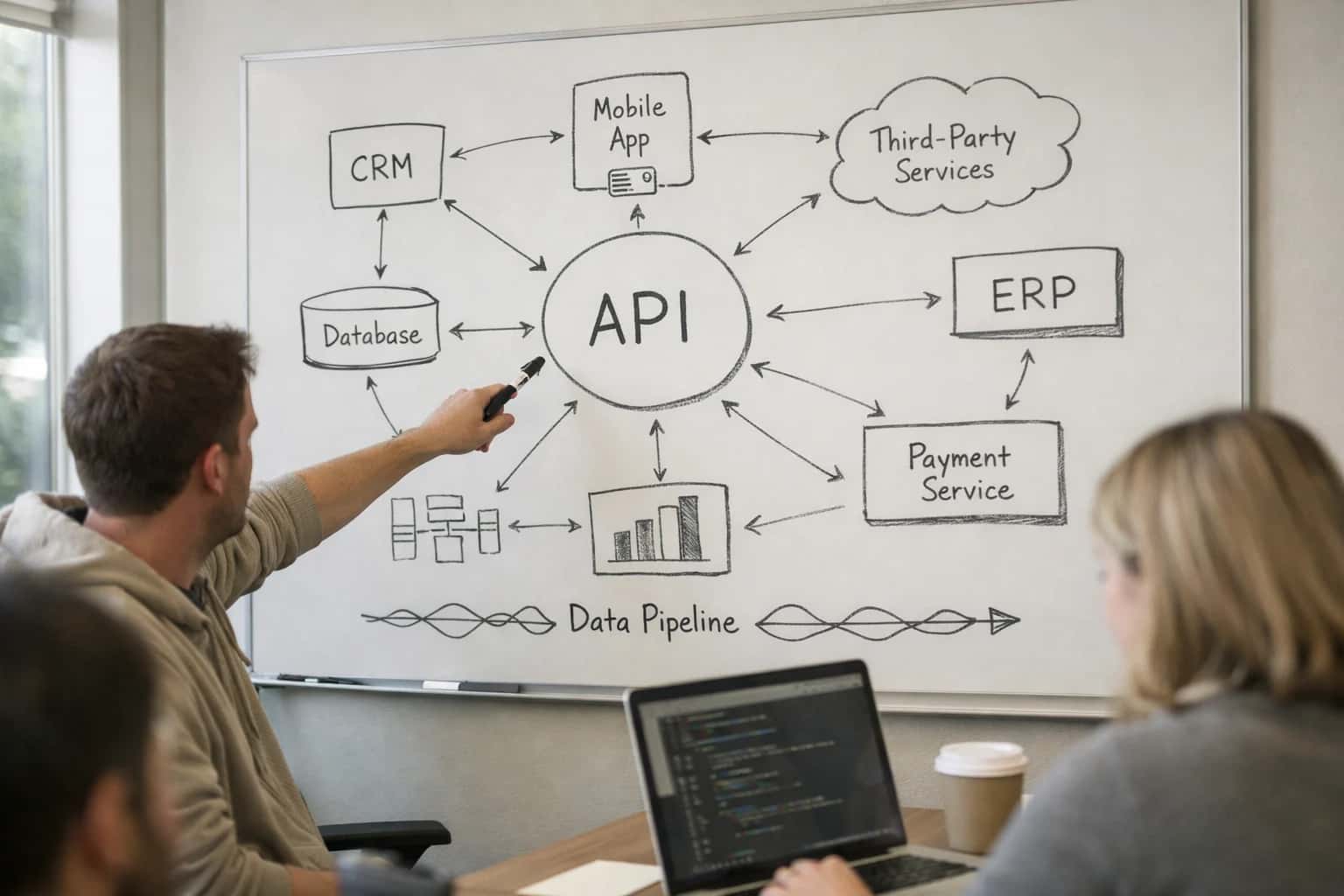
ARCHITECTURE & ROLLOUT
Where AI Translation Fits in Your ECM Stack
A practical guide to implementing on-demand translation as a secure, governed service layer within your existing content management infrastructure.
Implementation follows a decoupled, event-driven pattern: 1) A document is tagged for translation (manually or via a rules engine). 2) An event triggers a serverless function or containerized service that extracts text via the ECM's native APIs or a configured OCR service. 3) The text is sent to a translation model (like Azure AI Translator or a fine-tuned LLM) with instructions for domain-specific terminology. 4) The translated document is created as a new version or sibling record in the repository, linked to the source via a translated_from metadata field. 5) A workflow is initiated for human review if required by compliance policy, routing the task to a qualified linguist or subject-matter expert within the system.
Governance is critical. The integration must log all translation activity—source document ID, target languages, model used, cost, and reviewer—to the ECM's native audit trail for compliance with disclosure requirements (e.g., SEC, EU regulations). Access to trigger translation should be controlled via the ECM's existing RBAC, often tied to a Translation Requester role or a custom permission set. For rollout, start with a pilot repository for high-value, repetitive documents like multilingual product manuals, cross-border contract annexes, or global HR policies. Measure success by the reduction in manual outsourcing lead time (from days to hours) and the improvement in internal findability via translated metadata.
IMPLEMENTATION BLUEPRINT
ECM Platform Touchpoints for AI Translation
Real-Time Translation at Ingest
AI translation can be injected directly into document ingestion pipelines. When a file is uploaded via a web portal, email ingestion service, or scanning station, a serverless function can call a translation API (e.g., Azure AI Translator, Google Translate, Amazon Translate) before the document is committed to the repository.
Key Integration Points:
- Capture Scripts/Workflows: In Laserfiche Quick Fields or Hyland Brainware, add a post-OCR translation step.
- Event Listeners: Use Box webhooks, SharePoint event receivers, or OpenText Content Server events to trigger translation on
file.created. - Batch Processing: For backlogs, use ECM platform APIs (e.g., OpenText Content Server REST API, Box API) to iterate through folders, translating documents and saving the output as a new version or sibling file.
This approach ensures translated versions are immediately available for search and collaboration, reducing the manual step of sending documents out for translation.
ENTERPRISE CONTENT MANAGEMENT PLATFORMS
High-Value Use Cases for AI-Powered Translation
Integrate on-demand translation directly into your ECM workflows to unlock global collaboration, meet multilingual compliance mandates, and accelerate cross-border operations without manual overhead.
01
On-Demand Translation for Global Teams
Embed a translation widget within SharePoint, Box, or OpenText interfaces, allowing users to instantly translate documents for review. Workflow: User selects a file, chooses target language, and receives a translated copy with source linkage for audit. Value: Enables real-time collaboration across regions, eliminating delays from centralized translation services.
Days -> Minutes
Translation latency
02
Automated Multilingual Disclosure Workflows
Trigger AI translation as a step in Laserfiche or Hyland workflows for financial, regulatory, or ESG documents requiring simultaneous multilingual publication. Workflow: Upon final approval, the system generates translated versions, applies compliance watermarks, and routes to appropriate disclosure channels. Value: Ensures timely, consistent compliance with regulations like the SEC's multilingual disclosure guidance.
Batch -> Real-time
Compliance publishing
03
Translation-Enabled Enterprise Search
Augment SharePoint or OpenText search with a translation layer, allowing users to query in their native language and receive results from documents in any stored language. Workflow: Query is translated, a RAG pipeline retrieves relevant content from all language repositories, and results/snippets are translated back. Value: Breaks down language silos, making the entire corporate knowledge base universally accessible.
100%
Repository coverage
04
Intelligent Supplier & Contract Document Processing
Integrate translation into inbound document processing for global supply chains. Workflow: Invoices, certificates, or contracts in foreign languages ingested into Box or OpenText are automatically translated, key data is extracted via IDP, and records are filed with both versions. Value: Accelerates AP, procurement, and legal review by providing immediate English context for non-English documents.
Hours -> Minutes
Review readiness
05
Multilingual Customer Correspondence Management
Route inbound customer letters and emails from global markets stored in ECM to an AI agent for translation, summarization, and sentiment analysis before triage. Workflow: Document is translated, summarized, tagged with intent/sentiment, and pushed to a CRM-integrated case queue. Value: Empowers service teams to respond accurately and quickly, improving customer satisfaction in international markets.
Same day
Response initiation
06
Automated Retention & Disposition for Translated Records
Govern translated documents as records with proper lineage. Workflow: When AI generates a translation in a system like Laserfiche Records Management, it automatically links the derivative to the source record, applies the same retention schedule, and manages disposition as a compound record. Value: Maintains a legally defensible audit trail and ensures compliant lifecycle management of all document versions.
Zero manual
Lineage tracking
IMPLEMENTATION PATTERNS
Example Translation Workflows and Automations
These workflows illustrate how to integrate real-time translation into ECM platforms like OpenText, Hyland, and SharePoint. Each pattern connects to native APIs and automation layers to translate content on-demand while preserving metadata, security, and audit trails.
Trigger: A user in a multinational team uploads a project report in English to a shared SharePoint library or Box folder.
Context Pulled: The system checks the document's metadata (e.g., ContentType, Region column) and the user's profile (e.g., PreferredLanguage from Entra ID).
Agent Action: An AI agent, triggered via a Microsoft Power Automate flow or Box Skill, calls a translation model (e.g., Azure AI Translator, Google Translate API). The agent translates the document's extractable text while preserving the original formatting and structure.
System Update: The translated document is saved as a new version or a sibling file (e.g., report_fr.docx) in the same repository. The ECM system automatically links the two files via a TranslatedFrom relationship. Metadata (author, dates, security labels) is copied from the source.
Human Review Point: Optionally, the workflow can assign a review task in the ECM's workflow engine (e.g., Laserfiche Workflow) to a bilingual team member for quality assurance before the translation is published.
SECURE, SCALABLE TRANSLATION PIPELINE
Implementation Architecture: Data Flow and Guardrails
A production-ready architecture for on-demand translation integrates securely with your ECM repository, balancing low-latency user experience with enterprise governance.
The integration is event-driven, triggered by a user action in the ECM interface (e.g., a 'Translate' button in OpenText Content Server, a custom action in a SharePoint document library, or a workflow step in Laserfiche). This triggers a serverless function or microservice via a secure API call, passing the document's unique identifier and target language. The service fetches the document binary and text via the ECM platform's native API (OpenText OTDS, SharePoint Graph API, Box API), ensuring authentication and permissions are respected. The source text is extracted, chunked for optimal processing, and sent to a configured translation model—such as Azure AI Translator, Google Translate API, or a fine-tuned, domain-specific LLM—via a secure, governed connection.
Critical guardrails are enforced at each layer. Content Filtering scans source and translated text for sensitive data (PII, PHI) using pre-processing models, applying redaction or blocking translation as defined by policy. Audit Logging captures the who, what, when, and which-language for every translation event, writing immutable records back to the ECM's audit system or a dedicated SIEM. Cost and Rate Limiting is managed via API gateways to prevent runaway usage, and Quality Gates can be implemented using confidence scoring or post-translation human review for high-stakes documents like legal disclosures. The translated text is stored as a new version or a linked sibling document with clear metadata (ai_translated: true, source_doc_id, model_used, timestamp), preserving the original's integrity.
Rollout follows a phased approach, starting with a pilot group and a limited set of document types (e.g., internal project reports in SharePoint). Governance is maintained through a centralized configuration defining allowed language pairs, approved departments, and spending limits. The system is designed for zero data persistence; the translation service holds text only in memory for the duration of the request, and no customer data is used to train external models. This architecture, built on Inference Systems' experience with ECM APIs and secure AI orchestration, delivers immediate utility while fitting within enterprise compliance and operational risk frameworks.
IMPLEMENTATION PATTERNS
Code and Payload Examples
Webhook Handler for On-Demand Translation
This pattern uses platform webhooks to trigger translation when a new document is uploaded or tagged for multilingual processing. The handler extracts text, calls a translation service, and stores the translated version with proper metadata linking to the source.
python# Example: Flask endpoint for Box webhook def handle_document_upload(event): file_id = event['source']['id'] file_name = event['source']['name'] # 1. Download source file via ECM API source_text = download_and_extract_text(file_id) # 2. Determine target language from metadata or rules target_lang = infer_target_language(file_metadata) # 3. Call translation API (e.g., Azure, Google, DeepL) translated_text = translate_text( text=source_text, target_lang=target_lang, glossary_id='legal_terms' ) # 4. Upload translated version back to repository upload_translation( parent_folder_id=event['parent']['id'], translated_text=translated_text, source_file_id=file_id, language_code=target_lang )
This serverless function runs in response to ECM platform events, enabling real-time translation without user intervention.
AI-POWERED TRANSLATION FOR ECM
Realistic Time Savings and Operational Impact
How on-demand translation changes multilingual document workflows in platforms like OpenText, Hyland, and SharePoint.
| Workflow Stage | Before AI | After AI | Notes |
|---|---|---|---|
Document discovery & triage | Manual search for language experts | Automated language detection & routing | System identifies document language and priority for translation queue |
Initial translation request | Email/request to translation vendor (1-2 days) | Self-service portal request (minutes) | Users submit documents directly from ECM interface; no procurement delay |
Standard document translation | External vendor turnaround (3-5 business days) | Automated translation draft (minutes) | AI provides immediate draft; human review optional based on content sensitivity |
Urgent/regulatory disclosure | Expedited vendor fees (24-48 hours, high cost) | Same-day draft with legal review | AI handles bulk translation; legal team reviews key sections only |
Cross-team collaboration | Sequential reviews by language groups | Simultaneous multi-language review | All teams work from synchronized, translated versions in real-time |
Compliance documentation | Manual compilation of multilingual evidence | Automated version alignment & audit trail | AI ensures translated versions match source content for regulatory submissions |
Repository search & retrieval | Language-specific searches miss content | Unified semantic search across all languages | Users query in their native language; results include translated content from all repositories |
Ongoing operations | Fixed translation budget per document | Variable cost based on volume & complexity | Pay-per-use model scales with business needs; reduces fixed vendor retainers |
ARCHITECTING FOR COMPLIANCE AND SCALE
Governance, Security, and Phased Rollout
A production-ready translation integration requires careful design for data sovereignty, model governance, and controlled user adoption.
The integration architecture must respect the ECM platform's native security model. Translation requests should be processed using the user's existing permissions, ensuring they can only translate documents they have access to view. For platforms like OpenText Content Server or SharePoint, this means passing the user's security context (via JWT or delegated permissions) to the translation service. All translated versions should inherit the source document's access control lists (ACLs) and be stored as related records, maintaining a clear audit trail of who requested translation, when, and which model was used. Sensitive content flagged by the ECM's classification engine or containing detected PII/PHI should be automatically blocked from external translation or routed to an on-premises/private cloud model.
A phased rollout minimizes risk and validates ROI. Start with a pilot group and a single, high-value document type—such as global SOPs in OpenText Extended ECM or multilingual safety data sheets in Hyland OnBase. Implement a two-step workflow where AI generates the translation, but a human reviewer in the relevant region must approve it before publication. Use the ECM's native workflow engine (e.g., Laserfiche Workflow, SharePoint Power Automate) to manage this approval chain, logging all actions. Metrics to track include reduction in external translation costs, time-to-availability for regional teams, and user satisfaction scores. This controlled approach builds trust and surfaces any needed adjustments to terminology management or model performance before enterprise-wide deployment.
Long-term governance requires a centralized terminology hub. Integrate with translation management platforms like Smartling or Phrase via API to maintain approved glossaries and brand terms. Configure the AI translation service to reference this hub, ensuring consistency across all translated assets. For regulated industries, maintain a model card and version log for the translation LLM, and implement a quarterly review to audit translation quality against a sample of documents. Finally, establish a clear rollback plan: all original source documents remain the system of record, with translations treated as derivative assets that can be regenerated if models improve or regulations change.
Enabling Efficiency, Speed & Accuracy
Intelligent Analysis, Decision & Execution
We build AI systems for teams that need search across company data, workflow automation across tools, or AI features inside products and internal software.
Talk to Us
Search across company data
Give teams answers from docs, tickets, runbooks, and product data with sources and permissions.
Useful when people spend too long searching or get different answers from different systems.
Enterprise searchRAGPermissions
Read more
Automate internal workflows
Use AI to route work, draft outputs, trigger actions, and keep approvals and logs in place.
Useful when repetitive work moves across multiple tools and teams.
AI agentsWorkflow automationGovernance
Read more
Add AI to products and internal tools
Build assistants, guided actions, or decision support into the software your team or customers already use.
Useful when AI needs to be part of the product, not a separate tool.
AI integrationDecision supportModel routing
Read moreIMPLEMENTATION BLUEPRINT
Frequently Asked Questions
Practical questions and workflow patterns for adding real-time AI translation to multilingual document repositories in OpenText, Hyland, Laserfiche, SharePoint, and Box.
A production implementation usually follows an event-driven, API-first pattern to avoid blocking user workflows.
Core Components:
- Trigger: A webhook or event listener (e.g., Box Event API, SharePoint webhook, Laserfiche Workflow event) fires when a document is uploaded or tagged for translation.
- Context Enrichment: The system fetches the document binary and any relevant metadata (source language hint, target audience, project ID) from the ECM's REST API.
- Orchestration & Processing: A lightweight middleware service (often serverless) manages the flow:
- Extracts text via OCR (if needed) or from native text layers.
- Calls the translation model (e.g., Azure AI Translator, Amazon Translate, or a fine-tuned LLM) with the source/target language pair.
- Optionally applies post-processing (format preservation, terminology validation).
- System Update: The translated text is written back to the ECM platform, typically as:
- A new translated version of the document.
- A separate language-specific file in a parallel folder structure.
- Translated metadata stored in a custom property/field for search indexing.
- Audit & Governance: All actions are logged with user ID, source/target languages, document ID, and model version for compliance (e.g., GDPR, internal disclosure policies).
This keeps the core ECM system unmodified and allows for scaling, cost monitoring, and easy swapping of translation providers.

About the author
Prasad Kumkar
CEO & MD, Inference Systems
Prasad Kumkar is the CEO & MD of Inference Systems and writes about AI systems architecture, LLM infrastructure, model serving, evaluation, and production deployment. Over 5+ years, he has worked across computer vision models, L5 autonomous vehicle systems, and LLM research, with a focus on taking complex AI ideas into real-world engineering systems.
His work and writing cover AI systems, large language models, AI agents, multimodal systems, autonomous systems, inference optimization, RAG, evaluation, and production AI engineering.
LinkedIn
Limited slotsGet a Free AI Consultation
Partnered with leading AI, data, and software stack.





How We Work
Custom AI workflows for your Business
One-fit-all AI don't work for modern businesses. At Inferensys, we aim to understand your business & custom requirements; which we use to define most efficient agentic workflows, the data, and the tools for your business.
01
Review the use case
We understand the task, the users, and where AI can actually help.
Read more02
Pick the right approach
We define what needs search, automation, or product integration.
Read more03
Build the first useful version
We implement the part that proves the value first.
Read more04
Improve from there
We add the checks and visibility needed to keep it useful.
Read moreThe first call is a practical review of your use case and the right next step.
Talk to Us