AI integration for IoT and OT security focuses on extending the detection and response capabilities of platforms like CrowdStrike Falcon, SentinelOne Singularity, and Sophos Central to the operational technology layer. This involves ingesting and analyzing data from specialized IoT/OT sensors, network traffic analyzers (like Claroty or Nozomi Networks), and protocol-specific gateways. The AI layer correlates this OT telemetry—monitoring for anomalous PLC commands, unexpected Modbus traffic, or unauthorized SCADA system access—with IT endpoint alerts to identify cross-domain attack chains, such as an IT workstation compromise leading to lateral movement into a manufacturing cell.

Integration
AI Integration for Endpoint Security for IoT Devices
A technical guide to applying AI-driven detection, investigation, and response patterns to IoT and OT devices, integrating telemetry analysis with enterprise EDR consoles for unified security operations.
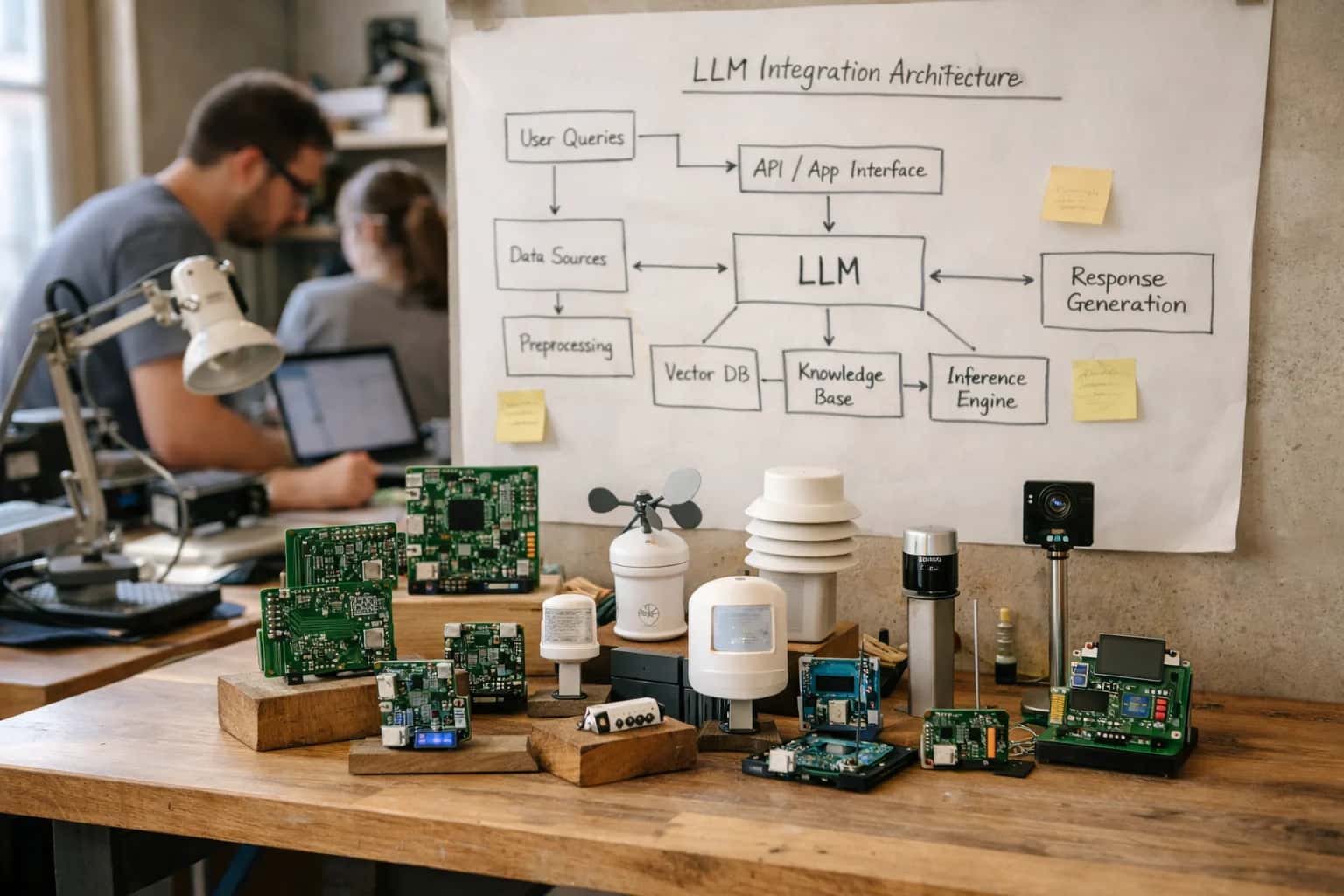
BRIDGING THE IT/OT SECURITY GAP
Where AI Fits in IoT and OT Endpoint Security
Applying AI-driven telemetry analysis and automated response to unmanaged IoT and OT devices by integrating with IT endpoint security consoles.
Implementation centers on a bidirectional integration hub. AI agents consume enriched IoT/OT alerts and asset context, then use the IT EDR platform's APIs (e.g., CrowdStrike's Falcon Device Control API) to execute containment actions on the managed IT gateways that bridge networks—not the OT devices themselves. For example, upon detecting a malicious engineering workstation, the AI can automatically trigger a CrowdStrike Fusion playbook to isolate that workstation from the OT network segment via firewall policy updates, while generating a natural-language summary for the SOC analyst that explains the OT impact. High-fidelity detections can also prompt the AI to use SentinelOne Deep Visibility queries to hunt for related malicious processes on other IT assets with OT access.
Rollout requires careful governance. AI-driven actions in OT environments should default to human-in-the-loop approvals for any network segmentation or device quarantine commands, given the potential for operational disruption. The AI system must maintain a strict audit log linking OT anomalies to the IT-side actions taken, which is critical for compliance in regulated industries. Start with monitoring and alert enrichment use cases—like AI summarizing a complex OT protocol anomaly for an IT analyst—before progressing to semi-automated response workflows that require explicit analyst approval via the EDR console.
ARCHITECTURAL BLUEPRINT
Key Integration Surfaces for IoT Security AI
IoT Protocol Decoding & Anomaly Detection
Integrating AI at the network layer involves analyzing raw traffic from IoT devices to establish behavioral baselines and detect deviations. This surface connects to network monitoring tools, packet brokers, or specialized IoT security gateways.
Key Integration Points:
- Ingestion Pipelines: Streaming telemetry from tools like Zeek, Corelight, or custom sensors capturing MQTT, CoAP, Modbus, BACnet, and DNP3 traffic.
- Behavioral Modeling: AI models analyze sequences of protocol commands, message frequencies, and payload sizes to flag anomalous sessions (e.g., a thermostat initiating an outbound SSH connection).
- Enrichment & Triage: Detected anomalies are enriched with device context (type, criticality, location) and routed to the IT SOC console (e.g., CrowdStrike Falcon, SentinelOne) as a high-fidelity alert for investigation.
Implementation Pattern: A streaming service processes network flows, applies lightweight ML models for real-time scoring, and uses webhooks to create alerts in the primary EDR platform, ensuring a unified incident queue.
INTEGRATION OPPORTUNITIES
High-Value AI Use Cases for IoT Endpoint Security
Applying AI to IoT and OT security requires a different lens than traditional IT endpoints. These cards outline practical integration patterns where AI analyzes device telemetry, protocol data, and asset context to automate detection, investigation, and response workflows, bridging the gap between IT security consoles and operational technology.
01
Protocol Anomaly Detection & Alert Triage
AI models analyze raw network traffic and industrial protocol data (e.g., Modbus, OPC UA, MQTT) from IoT/OT sensors to establish behavioral baselines. The system flags deviations like unauthorized command sequences or abnormal polling rates, automatically triages alerts, and enriches them with device context (make, model, criticality) for prioritization in the EDR console.
Batch -> Real-time
Detection speed
02
Asset Intelligence & Risk Scoring
An AI agent ingests passive discovery data, vulnerability scans, and threat intelligence to build a dynamic inventory of IoT/OT assets. It continuously calculates a risk score per device based on firmware version, network exposure, known CVEs, and observed behavior, surfacing high-risk devices for immediate patching or segmentation within the security platform's asset management view.
1 sprint
To initial inventory
03
Automated Threat Investigation for OT Incidents
When an EDR platform (like SentinelOne or CrowdStrike) detects a threat on a gateway device, an AI workflow automatically correlates it with downstream OT device telemetry. It reconstructs the potential impact chain—from the IT network to PLCs or sensors—and generates a plain-language investigation summary for the SOC analyst, detailing affected processes and safety implications.
Hours -> Minutes
Investigation time
04
Response Orchestration & Containment Workflows
AI evaluates high-confidence IoT compromises and executes conditional response playbooks via integrated APIs. Actions can include: quarantining a device at the network layer (via NAC or firewall), disabling a compromised user account in Active Directory, and creating a ticket in the ITSM platform (e.g., ServiceNow) for physical device inspection—all logged back to the EDR case.
05
Natural Language Query for Device Telemetry
A copilot interface embedded in the EDR console allows security operators to ask questions like "Show me all devices communicating on port 44818 in the last hour" or "Which PLCs had firmware updates in the last week?" The AI translates this into the appropriate query language for the IoT monitoring platform and returns summarized results, eliminating the need for complex query syntax.
06
Predictive Maintenance & Failure Forecasting
By analyzing sensor time-series data (temperature, vibration, error rates) alongside security events, AI identifies patterns that precede device failure or performance degradation. It generates proactive alerts in the security console, linking potential hardware issues to security stability, and can trigger work orders in a connected CMMS like Fiix or UpKeep for preemptive maintenance.
Same day
Proactive alerting
INTEGRATING EDR TELEMETRY WITH OT/IOT DEVICE CONTEXT
Example AI-Driven IoT Security Workflows
These workflows illustrate how AI can analyze endpoint-like telemetry from IoT and OT devices, correlate it with network protocol data, and trigger automated actions or analyst alerts within your primary IT security console.
Trigger: An IoT gateway sensor (e.g., a building management controller) transmits a sequence of Modbus TCP function codes that deviates from its learned baseline.
Context/Data Pulled:
- Device telemetry (process list, network connections) from a lightweight agent or network sensor.
- Protocol metadata (source/dest IP, function codes, payload patterns) from a passive network monitor.
- Asset registry context (device type, normal operational profile, criticality score).
Model or Agent Action:
- AI model evaluates the sequence against behavioral baselines and known attack patterns (e.g., reconnaissance, command injection).
- Agent enriches the raw event with: calculated anomaly score, potential MITRE ATT&CK technique mapping (e.g., T0886 - Modbus Enumeration), and device criticality.
System Update or Next Step:
- A high-confidence, enriched alert is created in the connected EDR/XDR console (e.g., CrowdStrike Falcon, SentinelOne Singularity).
- Alert is tagged with
iot-otand includes a pre-drafted investigation note for the SOC analyst. - If integrated with a SOAR platform, a playbook is initiated to isolate the device network segment via firewall API.
Human Review Point: All automated containment actions require analyst approval via a dedicated approval queue in the SOAR or EDR platform before execution, unless under a pre-authorized critical incident response policy.
BRIDGING IT AND OT SECURITY
Implementation Architecture: Data Flow and AI Layer
A practical architecture for applying AI-driven EDR principles to IoT and OT environments by integrating with existing IT security consoles.
The core challenge in IoT/OT security is the lack of native EDR agents. Our integration architecture establishes a telemetry ingestion layer that consumes data from IoT gateways, network sensors (like Claroty or Nozomi Networks), and industrial protocol monitors. This raw data—encompassing device state, network traffic, PLC logic changes, and operational parameters—is normalized and streamed into a security data lake. Here, an AI inference layer applies behavioral models trained on normal OT patterns to flag anomalies such as unexpected device communication, unauthorized firmware updates, or process parameter manipulation that could indicate a compromise.
The AI layer's outputs are mapped to incident objects within your primary IT EDR console (e.g., CrowdStrike Falcon or SentinelOne Singularity). This creates a unified security posture view. For example, an AI-detected anomaly on a programmable logic controller (PLC) generates a medium-severity alert in the Falcon console, enriched with device context, potential impact on physical processes, and recommended containment steps like segmenting the OT network VLAN. The workflow allows SOC analysts to investigate and respond to OT incidents using the same Falcon Fusion playbooks or SentinelOne Stories they use for IT endpoints, without needing specialized OT training.
Rollout is phased, starting with read-only monitoring and alerting to establish a baseline and tune AI models against false positives. Governance is critical: all AI-recommended containment actions (like isolating a device) require manual approval or are gated through a Change Advisory Board (CAB) workflow integrated with your ITSM platform, ensuring safety-critical systems are not disrupted. The final architecture provides a single pane of glass for security, correlating IT endpoint threats with OT device anomalies to detect cross-domain attacks, such as a compromised engineering workstation communicating with HMIs.
IoT ENDPOINT SECURITY INTEGRATION
Code and Payload Examples
IoT Telemetry Ingestion and Baseline Analysis
IoT devices communicate via protocols like MQTT, CoAP, and Modbus. AI models analyze this telemetry to establish behavioral baselines and detect anomalies indicative of compromise, such as unusual sensor readings or command frequencies.
A typical integration ingests raw logs from IoT gateways or security appliances into a processing pipeline. The AI agent enriches this data with context (device type, location, normal operational ranges) before evaluating it against learned patterns. Detected anomalies are formatted into security events compatible with your primary EDR console (e.g., CrowdStrike, SentinelOne) for centralized triage.
Example Payload for Anomaly Event:
json{ "event_type": "iot_anomaly", "timestamp": "2024-05-15T14:32:10Z", "device_id": "sensor-rack-b-07", "protocol": "MQTT", "anomaly_score": 0.92, "indicators": [ "publish_frequency_5x_baseline", "unexpected_topic_structure" ], "raw_payload_sample": "{...}", "recommended_action": "isolate_and_investigate" }
This structured event can be forwarded via webhook to your EDR platform's ingestion API, creating a unified alert for SOC analysts.
IOT SECURITY OPERATIONS
Realistic Operational Impact and Time Savings
This table illustrates the tangible operational improvements when integrating AI-driven analysis with IoT/OT endpoint security platforms, focusing on protocol-aware anomaly detection and automated investigation workflows.
| Metric | Before AI | After AI | Notes |
|---|---|---|---|
Protocol Anomaly Detection | Manual log review across siloed tools | Automated behavioral baselining & alerting | AI models learn normal Modbus, BACnet, DNP3 traffic patterns |
Alert Triage & Prioritization | Hours spent correlating device alerts with IT EDR | Minutes for AI to correlate & score cross-domain threats | Links IoT device alerts to CrowdStrike/SentinelOne endpoint events |
Threat Investigation Scope | Manual process tree reconstruction per device | Automated attack chain mapping across IT/OT boundary | AI correlates process, network, and firmware events across asset types |
Containment Workflow Initiation | Next-day manual isolation after team review | Same-day automated network segmentation playbooks | AI triggers API calls to NAC/OT firewall; human approval optional |
Forensic Data Collection | Ad-hoc script execution via jump hosts | Pre-defined, context-aware evidence packages | AI determines relevant logs (PLC memory, historian data) based on alert type |
Compliance Reporting | Monthly manual spreadsheet compilation | Weekly automated posture & exception reports | AI maps device behavior to NIST CSF, IEC 62443 controls |
Vulnerability Prioritization | Static CVSS scores, manual patch testing | Dynamic risk scoring based on network exposure & active threats | AI correlates vuln scans with live telemetry to identify exploitable IoT assets |
OPERATIONALIZING AI FOR IOT/OT SECURITY
Governance, Policy, and Phased Rollout
Integrating AI with IoT endpoint security requires a controlled, policy-driven approach that respects the unique constraints of operational technology environments.
A production rollout begins with a read-only analysis phase. AI agents are first connected to the EDR console's APIs (e.g., CrowdStrike Falcon Data Replicator, SentinelOne Deep Visibility streams) and configured to analyze telemetry from a non-critical segment of IoT devices. The initial use case is typically anomaly detection and alert summarization, where the AI processes protocol traffic logs, process trees from lightweight agents, and device state data to identify deviations from learned baselines. All outputs are logged to a separate security data lake for human review before any automated action is permitted.
The policy layer is critical for governing autonomous decisions. For IoT/OT, policies must be context-aware, factoring in device criticality (e.g., PLC vs. sensor), network segmentation, and operational impact. For example, a policy might state: IF AI confidence score > 0.9 AND device is in IT-managed segment AND threat matches known ransomware TTP THEN initiate network isolation via the EDR platform's containment API. IF device is in OT production segment OR confidence < 0.8 THEN escalate to human analyst with enriched evidence packet. These policies are codified in a central governance engine that audits every AI-recommended action.
A phased rollout progresses through three stages: 1) Assist Mode (AI provides summaries and recommendations within the SOC console), 2) Approval Mode (AI can queue containment or investigative actions that require one-click analyst approval), and 3) Guarded Autonomy Mode (AI executes low-risk, high-confidence actions like alert enrichment or non-disruptive forensic collection based on policy). For OT devices, the rollout often stops at Stage 2, maintaining a human-in-the-loop for any action that could disrupt physical processes. Continuous evaluation against a ground-truth dataset of past incidents ensures the AI's anomaly detection and response logic remains accurate and does not drift over time.
Enabling Efficiency, Speed & Accuracy
Intelligent Analysis, Decision & Execution
We build AI systems for teams that need search across company data, workflow automation across tools, or AI features inside products and internal software.
Talk to Us
Search across company data
Give teams answers from docs, tickets, runbooks, and product data with sources and permissions.
Useful when people spend too long searching or get different answers from different systems.
Enterprise searchRAGPermissions
Read more
Automate internal workflows
Use AI to route work, draft outputs, trigger actions, and keep approvals and logs in place.
Useful when repetitive work moves across multiple tools and teams.
AI agentsWorkflow automationGovernance
Read more
Add AI to products and internal tools
Build assistants, guided actions, or decision support into the software your team or customers already use.
Useful when AI needs to be part of the product, not a separate tool.
AI integrationDecision supportModel routing
Read moreIMPLEMENTATION AND ARCHITECTURE
Frequently Asked Questions on IoT Security AI
Practical questions for teams extending Endpoint Detection and Response (EDR) platforms and AI to secure IoT and OT devices.
IoT devices typically lack traditional EDR agents. Integration requires a multi-layer architecture:
-
Telemetry Collection Agent: Deploy a lightweight agent or gateway software on the IoT device itself (if possible) or on a network segment gateway. This agent collects:
- Network traffic (protocols like MQTT, Modbus, BACnet)
- Process activity (on Linux-based devices)
- System logs and authentication events
- Asset metadata (firmware version, open ports)
-
Normalization & Forwarding: The collector normalizes data into a schema (e.g., OCSF, CEF) and forwards it via syslog, API, or a message queue to your EDR platform's ingestion endpoint (e.g., CrowdStrike LogScale, SentinelOne DataSet) or a dedicated security data lake.
-
AI Analysis Layer: An AI agent subscribes to this enriched telemetry stream. It performs:
- Protocol anomaly detection (e.g., unusual Modbus function codes)
- Behavioral baselining to spot deviations
- Correlation with IT endpoint alerts to identify cross-network threats
The key is treating the IoT telemetry stream as a first-class data source within your existing security operations console.

About the author
Prasad Kumkar
CEO & MD, Inference Systems
Prasad Kumkar is the CEO & MD of Inference Systems and writes about AI systems architecture, LLM infrastructure, model serving, evaluation, and production deployment. Over 5+ years, he has worked across computer vision models, L5 autonomous vehicle systems, and LLM research, with a focus on taking complex AI ideas into real-world engineering systems.
His work and writing cover AI systems, large language models, AI agents, multimodal systems, autonomous systems, inference optimization, RAG, evaluation, and production AI engineering.
LinkedIn
Limited slotsGet a Free AI Consultation
Partnered with leading AI, data, and software stack.





How We Work
Custom AI workflows for your Business
One-fit-all AI don't work for modern businesses. At Inferensys, we aim to understand your business & custom requirements; which we use to define most efficient agentic workflows, the data, and the tools for your business.
01
Review the use case
We understand the task, the users, and where AI can actually help.
Read more02
Pick the right approach
We define what needs search, automation, or product integration.
Read more03
Build the first useful version
We implement the part that proves the value first.
Read more04
Improve from there
We add the checks and visibility needed to keep it useful.
Read moreThe first call is a practical review of your use case and the right next step.
Talk to Us