AI integration for ransomware protection focuses on two critical surfaces within your EDR platform: the detection engine and the response automation layer. For CrowdStrike Falcon, this means analyzing Falcon Insight telemetry for mass file encryption, shadow copy deletion (vssadmin), and unusual ransom note file creation. In SentinelOne Singularity, AI monitors Deep Visibility for process lineage anomalies and file entropy spikes. The integration connects via the platform's REST APIs (e.g., CrowdStrike's Detection & Prevention APIs, SentinelOne's Threat API) to stream high-fidelity alerts into an AI decision engine that evaluates the confidence of an active ransomware attack.

Integration
AI Integration for Endpoint Security AI for Ransomware Protection
A technical guide to integrating AI with EDR platforms to detect ransomware precursor activity and automate aggressive containment, turning minutes of encryption into seconds of response.
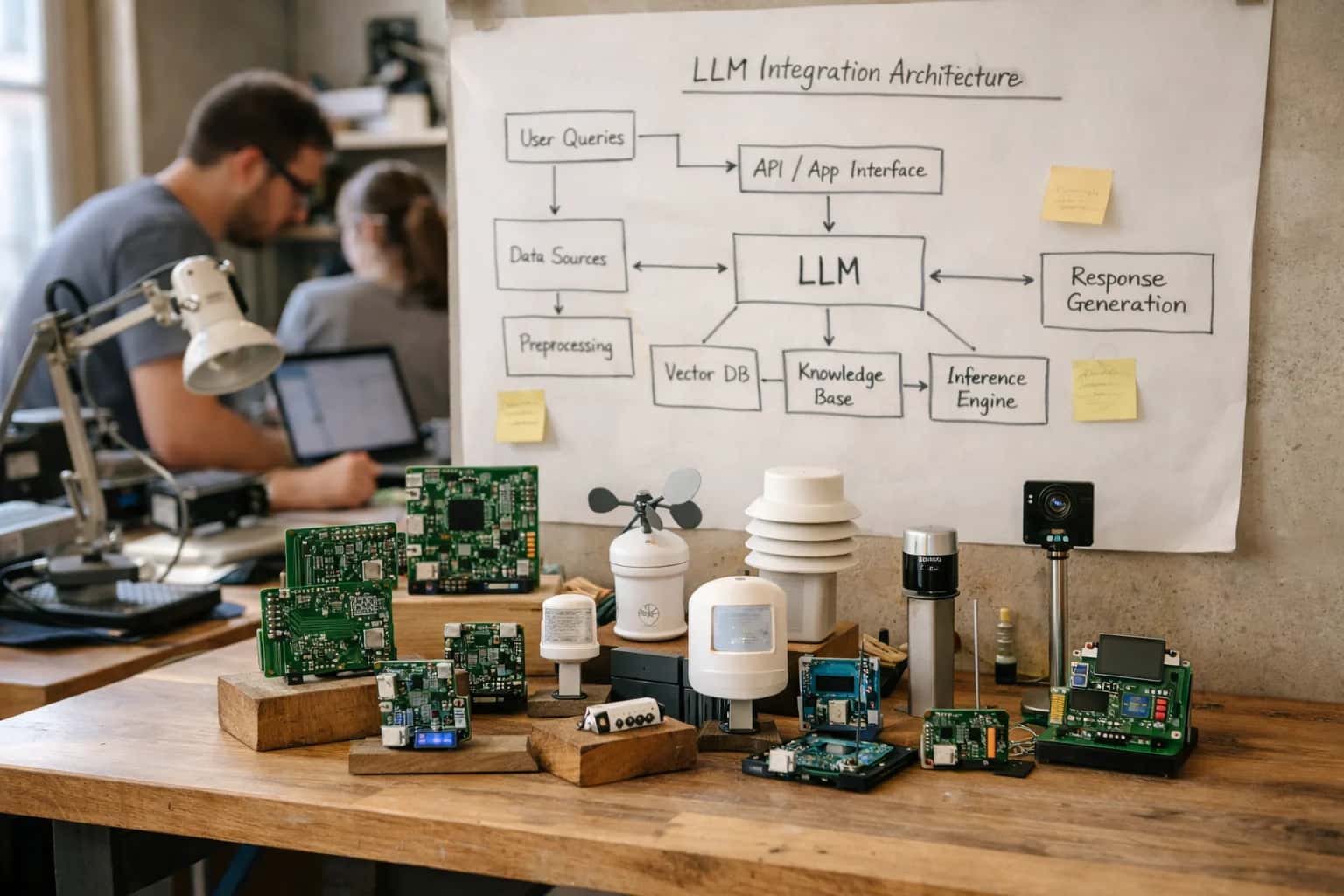
ARCHITECTURE FOR AUTONOMOUS RESPONSE
Where AI Fits in Ransomware Defense: From Detection to Autonomous Containment
A practical blueprint for integrating AI agents with EDR platforms to detect ransomware precursor activity and execute aggressive, automated containment workflows.
When a high-confidence event is identified, the AI agent triggers immediate containment via the EDR's live response capabilities. This is not a simple alert; it's a conditional workflow. For example, upon detecting wmic shadowcopy delete across multiple endpoints, the AI can: 1) Isolate the host from the network using the platform's containment API, 2) Terminate the malicious process tree, and 3) Initiate a forensic data collection job (e.g., via CrowdStrike's Real Time Response or Sophos Live Response) to capture memory and key files for later analysis. This sequence, executed in seconds, can halt encryption before it spreads beyond the initial host.
Rollout requires careful governance. We implement a phased approach: start with AI-assisted triage where the agent summarizes alerts and recommends actions for analyst approval within the EDR console. After validating accuracy, move to semi-autonomous mode for clear-cut indicators (e.g., execution of known ransomware binaries), requiring a one-click analyst approval. Full autonomous containment is reserved for pre-defined, high-confidence scenarios and can be gated by risk scores (e.g., only for servers tagged as 'critical'). All actions are logged to a dedicated audit trail in your SIEM or SOAR platform, and rollback procedures (like de-isolation) are kept simple and fast.
The business impact is operational: reducing the critical detection-to-containment time from hours or days to seconds. This directly limits data loss and business disruption. By embedding this logic directly into your existing CrowdStrike, SentinelOne, Sophos, or Trellix stack, you avoid a new console and leverage the security team's existing workflows and tribal knowledge. For a deeper look at automating specific containment actions, see our guide on AI-Driven Endpoint Isolation.
WHERE AI CONNECTS TO DETECT AND CONTAIN
EDR Platform Surfaces for Ransomware AI Integration
Alert Streams and Telemetry Feeds
AI integration begins by consuming the high-fidelity detection streams from the EDR platform. This includes real-time alerts for behaviors like mass file encryption, shadow copy deletion, and suspicious RDP activity. For CrowdStrike, this means subscribing to the Falcon Streaming API for DetectionSummary events. In SentinelOne, you ingest Deep Visibility events filtered for ransomware-related activities. Sophos provides alerts via Sophos Central Event Journal, while Trellix uses the MVISION EDR Threat Event API.
The AI layer applies secondary scoring to these alerts, using contextual signals (time of day, user role, endpoint criticality) to suppress false positives and escalate true ransomware precursors with high confidence. This immediate triage prevents alert fatigue and ensures containment workflows trigger only for credible threats.
ENDPOINT DETECTION AND RESPONSE
High-Value AI Use Cases for Ransomware Protection
Integrating AI with EDR platforms like CrowdStrike, SentinelOne, Sophos, and Trellix enables autonomous detection of ransomware precursor activity and triggers aggressive, automated containment to stop attacks before data is encrypted.
01
Pre-Encryption Behavioral Detection
AI models analyze raw endpoint telemetry for subtle, correlated behaviors that precede encryption: mass file renaming, shadow copy deletion (vssadmin), and unusual process spawning. This detects attacks earlier than static IOCs, generating high-fidelity alerts for immediate investigation.
Days -> Minutes
Detection lead time
02
Automated Aggressive Containment
Upon high-confidence AI detection, the system automatically executes containment via the EDR's Live Response or automation API: isolate the endpoint, kill malicious processes, and quarantine suspicious binaries. This happens within seconds, blocking the encryption chain. Actions are logged for audit and can be configured with human-in-the-loop approvals for critical assets.
Manual -> Auto
Response action
03
Forensic Triage & Scope Analysis
After containment, an AI agent automatically executes a forensic data collection script via the EDR to determine the attack's scope. It analyzes accessed file paths, network connections, and lateral movement attempts, then generates a concise incident summary for the SOC. This replaces manual evidence gathering, accelerating investigation.
Hours -> Minutes
Investigation setup
04
ITSM Integration for Recovery Workflows
The AI integration automatically creates a ticket in ServiceNow or Jira Service Management with the incident summary, affected asset list, and recommended recovery steps (e.g., restore from backup, reimage machine). It can trigger pre-approved change requests and notify the IT operations team, streamlining the post-incident process.
Next day -> Same day
Recovery initiation
05
User & Asset Risk Profiling
AI continuously profiles endpoint behavior to identify high-risk users or assets most vulnerable to ransomware. It analyzes factors like frequent exposure to phishing, use of unauthorized software, or access to sensitive file shares. This risk score drives proactive security measures like mandatory patching or additional monitoring.
Reactive -> Proactive
Security posture
06
Executive & Compliance Reporting
An AI agent synthesizes ransomware detection events, containment actions, and mean-time-to-response metrics from the EDR platform. It generates plain-language reports for leadership and evidence packs for cyber insurance or compliance audits (e.g., demonstrating specific containment capabilities).
1 sprint
Report generation
PRODUCTION AUTOMATION PATTERNS
Example AI-Driven Ransomware Containment Workflows
These workflows illustrate how AI agents, integrated with your EDR platform, can detect ransomware precursor activity and execute aggressive, automated containment to halt attacks before data encryption completes. Each pattern is designed to be implemented via APIs and webhooks, with clear human review points.
Trigger: EDR platform (e.g., CrowdStrike Falcon, SentinelOne) generates a high-severity alert for suspicious process activity (e.g., vssadmin.exe delete shadows, fsutil behavior set) or a rapid spike in file modification events.
AI Agent Action:
- Context Enrichment: The agent immediately queries the EDR API for the host's recent process tree, network connections, and logged-on users.
- Confidence Scoring: Using a pre-trained model, the agent analyzes the telemetry for ransomware indicators (e.g., file extensions changing to .locky, .phobos; accessing shadow copy volumes). It outputs a confidence score (0-1).
- Decision & Action: If confidence exceeds a pre-defined threshold (e.g., 0.85), the agent calls the EDR's containment API (e.g., CrowdStrike's
containendpoint, SentinelOne'sdisconnect-from-networkaction). - System Update: The agent creates a high-priority incident in the connected SOAR or ITSM platform (e.g., ServiceNow), tagging it "AI-Contained: Ransomware Suspected."
Human Review Point: All automated isolation actions generate an immediate notification to the SOC lead via Slack/MS Teams, with a link to the incident and the AI's reasoning log. An analyst must review within 15 minutes to approve sustained containment or initiate recovery steps.
BUILDING A PRODUCTION-GRADE RANSOMWARE DEFENSE
Implementation Architecture: Data Flow, APIs, and the AI Decision Layer
A practical blueprint for connecting AI to your EDR platform to detect and autonomously contain ransomware activity.
The integration architecture connects your EDR platform's detection stream to an AI decision layer, which then executes containment actions via the platform's response APIs. The core data flow begins with your EDR (e.g., CrowdStrike Falcon, SentinelOne Singularity) streaming high-fidelity alerts for precursor behaviors like mass file encryption, shadow copy deletion (vssadmin.exe), or ransom note creation to a secure queue. An AI agent consumes these alerts, enriched with real-time process tree and file system telemetry from the EDR's Deep Visibility or Event Stream APIs. The agent's primary role is to perform a rapid, multi-factor confidence assessment: correlating the alert with known ransomware TTPs, analyzing the speed and scope of file operations, and checking for suspicious network connections to C2 servers. Based on a pre-defined confidence threshold, the AI layer decides on an action—typically network containment or host isolation—and invokes the EDR's Live Response or containment API (e.g., CrowdStrike's Real Time Response API, SentinelOne's Threat Actions endpoint) to execute it within seconds.
For high-confidence ransomware detection, the AI decision layer is configured to trigger aggressive, automated containment without waiting for human approval. This is implemented by wiring the AI agent's "high severity" output directly to the EDR platform's isolation command. For example, upon detecting a 95%+ confidence ransomware event, the system would automatically execute a command like netstop on the endpoint via the EDR's remote shell or initiate a contain action that blocks all network traffic. This workflow is critical for stopping encryption before it spreads. The implementation must include robust audit logging, capturing the original alert data, the AI's confidence score and reasoning, and the exact API call made to the EDR for every action. This audit trail is essential for post-incident review and tuning the AI's decision thresholds to balance security with operational risk.
Rollout and governance for this integration require a phased approach. Start in a monitor-only mode where the AI layer analyzes alerts and recommends actions to SOC analysts via a Slack or Teams webhook, but does not execute them. This builds trust in the AI's judgment. After a validation period, move to a semi-automated mode where high-confidence actions are presented to a human-in-the-loop for one-click approval within the SOC's workflow platform. Finally, for the most critical and unambiguous ransomware signatures, enable full automation for a subset of endpoints, such as servers housing critical data. Governance must include regular reviews of the AI's action log, false positive analysis, and continuous tuning of the detection models based on new adversary techniques. This architecture transforms your EDR from a detection tool into an autonomous response system, reducing the critical window for ransomware encryption from hours to seconds.
RANSOMWARE PROTECTION
Code and Payload Examples for Key Integration Points
Detecting Precursor Activity via EDR Telemetry
AI models monitor for anomalous file system activity that precedes ransomware execution. This involves analyzing process creation events, file handle operations, and entropy changes across thousands of endpoints in real-time.
Example Python logic for analyzing CrowdStrike Falcon Detection Events:
python# Pseudo-code for detecting mass file encryption patterns def analyze_for_encryption_pattern(detection_events): high_risk_processes = ['vssadmin.exe', 'wmic.exe', 'bcdedit.exe', 'wbadmin.exe'] encryption_indicators = [] for event in detection_events: # Look for shadow copy deletion or volume shadow service manipulation if event['process_name'] in high_risk_processes: if 'delete' in event['command_line'].lower() and 'shadow' in event['command_line'].lower(): encryption_indicators.append({ 'endpoint_id': event['device_id'], 'indicator': 'SHADOW_COPY_DELETION', 'process': event['process_name'], 'command_line': event['command_line'] }) # Look for rapid, sequential file modifications with new extensions if event['operation_type'] == 'FILE_MODIFY' and event.get('file_extension') in ['.encrypted', '.locked', '.crypt']: encryption_indicators.append({ 'endpoint_id': event['device_id'], 'indicator': 'SUSPICIOUS_FILE_EXTENSION', 'file_path': event['file_path'] }) return encryption_indicators
This logic would be part of a continuous monitoring agent that streams detection events from the EDR platform's API, applying the AI model to score and flag high-confidence ransomware activity.
AI-DRIVEN RANSOMWARE CONTAINMENT
Realistic Time Savings and Operational Impact
This table illustrates the operational impact of integrating AI with EDR platforms to detect and contain ransomware precursor activity. Metrics are based on typical SOC workflows before and after implementing AI-driven automation.
| Metric | Before AI | After AI | Notes |
|---|---|---|---|
Mass File Encryption Alert Triage | Manual review of file system alerts (15-30 min) | AI correlates I/O patterns, process lineage, and shadow copy activity (< 2 min) | AI reduces alert noise and identifies high-confidence ransomware behavior. |
Containment Decision & Execution | Analyst investigates, escalates, then manually isolates endpoint (30-60 min) | AI evaluates confidence score and executes automated network isolation via EDR API (1-2 min) | Human-in-the-loop approval can be configured for critical assets. |
Forensic Data Collection Scope | Manual determination of files/processes to capture; slow, inconsistent | AI defines scope based on attack chain; triggers EDR Live Response scripts (3-5 min) | Ensures consistent, relevant evidence for post-incident analysis. |
Incident Summary for Handoff | Analyst manually drafts timeline and IOCs for escalation (20-40 min) | AI generates structured narrative with MITRE ATT&CK mapping and IOCs (Instant) | Provides consistent briefing for IR team or MSSP. |
Cross-Platform Threat Hunting | Manual query construction across EDR and SIEM for related activity (Hours) | AI translates natural language to platform queries (FQL, etc.) and correlates results (Minutes) | Proactively finds compromised endpoints before encryption begins. |
Policy & Exclusion Review | Post-incident manual analysis to tune detection policies (Days) | AI analyzes false positives and attack success to recommend policy updates (Ongoing) | Reduces future alert fatigue and hardens defenses. |
Executive Reporting | Manual compilation of metrics and impact for leadership (Half-day) | AI synthesizes containment metrics, dwell time, and risk reduction (Automated report) | Demonstrates ROI and operational efficiency gains. |
ENSURING CONTROLLED, HIGH-CONFIDENCE AUTOMATION
Governance, Policy, and Phased Rollout Considerations
Integrating AI for ransomware protection requires a deliberate approach to policy, human oversight, and staged deployment to prevent disruption while maximizing defensive speed.
The core governance challenge is balancing autonomous speed against the risk of false positives. A containment action like aggressive endpoint isolation can halt business operations. Therefore, AI-driven ransomware workflows must be governed by a clear confidence scoring framework that evaluates signals like mass file encryption entropy, shadow copy deletion events, and suspicious process lineage. Actions should be gated: high-confidence detections may trigger automated containment via the EDR's Live Response or isolation APIs, while medium-confidence events should route to a human-in-the-loop approval queue within the SOC's SOAR or ticketing system before execution.
Implementation requires tight integration with the EDR platform's RBAC and audit systems. AI agents should execute actions using service accounts with scoped privileges (e.g., containment but not policy deletion), and every AI-initiated action—whether a process kill, file quarantine, or network isolation—must generate an immutable audit log in the EDR console (like CrowdStrike's Audit Logs or SentinelOne's Activity Log). This creates a verifiable chain of custody for post-incident review and compliance. Furthermore, AI logic should be configured to respect policy-based exclusions for critical servers or engineering workstations to avoid interrupting legitimate bulk file operations.
A phased rollout is critical. Start with a Detection-Only Phase, where the AI analyzes telemetry and generates high-fidelity alerts with recommended containment scripts, but all actions are manually executed by analysts. This builds trust in the AI's judgment. Next, move to a Supervised Automation Phase for pre-defined, high-volume/low-risk precursor activities (e.g., automatically quarantining a single ransomware-like binary). Finally, after validating accuracy over weeks, enable Conditional Autonomous Response for the highest-confidence ransomware patterns, with immediate notifications to the SOC and a defined rollback procedure. This staged approach, coupled with regular drift detection on the AI models to monitor for performance degradation, ensures the integration enhances security without introducing operational instability.
Enabling Efficiency, Speed & Accuracy
Intelligent Analysis, Decision & Execution
We build AI systems for teams that need search across company data, workflow automation across tools, or AI features inside products and internal software.
Talk to Us
Search across company data
Give teams answers from docs, tickets, runbooks, and product data with sources and permissions.
Useful when people spend too long searching or get different answers from different systems.
Enterprise searchRAGPermissions
Read more
Automate internal workflows
Use AI to route work, draft outputs, trigger actions, and keep approvals and logs in place.
Useful when repetitive work moves across multiple tools and teams.
AI agentsWorkflow automationGovernance
Read more
Add AI to products and internal tools
Build assistants, guided actions, or decision support into the software your team or customers already use.
Useful when AI needs to be part of the product, not a separate tool.
AI integrationDecision supportModel routing
Read moreAI FOR RANSOMWARE PROTECTION
Frequently Asked Questions (FAQ)
Practical questions about integrating AI with EDR platforms like CrowdStrike, SentinelOne, Sophos, and Trellix to detect and autonomously contain ransomware activity.
The AI agent monitors EDR telemetry streams for specific behavioral sequences that strongly correlate with ransomware staging. It looks for combinations of events across multiple endpoints, such as:
- Mass file access patterns: Unusual enumeration or reads of a high volume of files in a short timeframe.
- Shadow Copy deletion: Commands like
vssadmin delete shadowsorwbadminoperations. - Suspicious process execution: Tools like PsExec, Mimikatz, or living-off-the-land binaries (e.g.,
wmic,bcdedit) used in conjunction with the above. - Network activity: Rapid connection attempts to multiple internal systems (lateral movement) preceding file activity.
The agent uses a scoring model that weights these events. A high-confidence score triggers an immediate containment workflow, while a medium score may prompt the agent to gather more forensic data (e.g., pull process trees, check for known ransomware file extensions) before acting.

About the author
Prasad Kumkar
CEO & MD, Inference Systems
Prasad Kumkar is the CEO & MD of Inference Systems and writes about AI systems architecture, LLM infrastructure, model serving, evaluation, and production deployment. Over 5+ years, he has worked across computer vision models, L5 autonomous vehicle systems, and LLM research, with a focus on taking complex AI ideas into real-world engineering systems.
His work and writing cover AI systems, large language models, AI agents, multimodal systems, autonomous systems, inference optimization, RAG, evaluation, and production AI engineering.
LinkedIn
Limited slotsGet a Free AI Consultation
Partnered with leading AI, data, and software stack.





How We Work
Custom AI workflows for your Business
One-fit-all AI don't work for modern businesses. At Inferensys, we aim to understand your business & custom requirements; which we use to define most efficient agentic workflows, the data, and the tools for your business.
01
Review the use case
We understand the task, the users, and where AI can actually help.
Read more02
Pick the right approach
We define what needs search, automation, or product integration.
Read more03
Build the first useful version
We implement the part that proves the value first.
Read more04
Improve from there
We add the checks and visibility needed to keep it useful.
Read moreThe first call is a practical review of your use case and the right next step.
Talk to Us