
Inferensys

Integration

AI Integration for Oracle Health Millennium and Soarian

A practical guide for technical leaders on embedding AI into Oracle Health's acute care (Millennium) and financials (Soarian) platforms for clinical alerting, documentation, and charge capture automation.
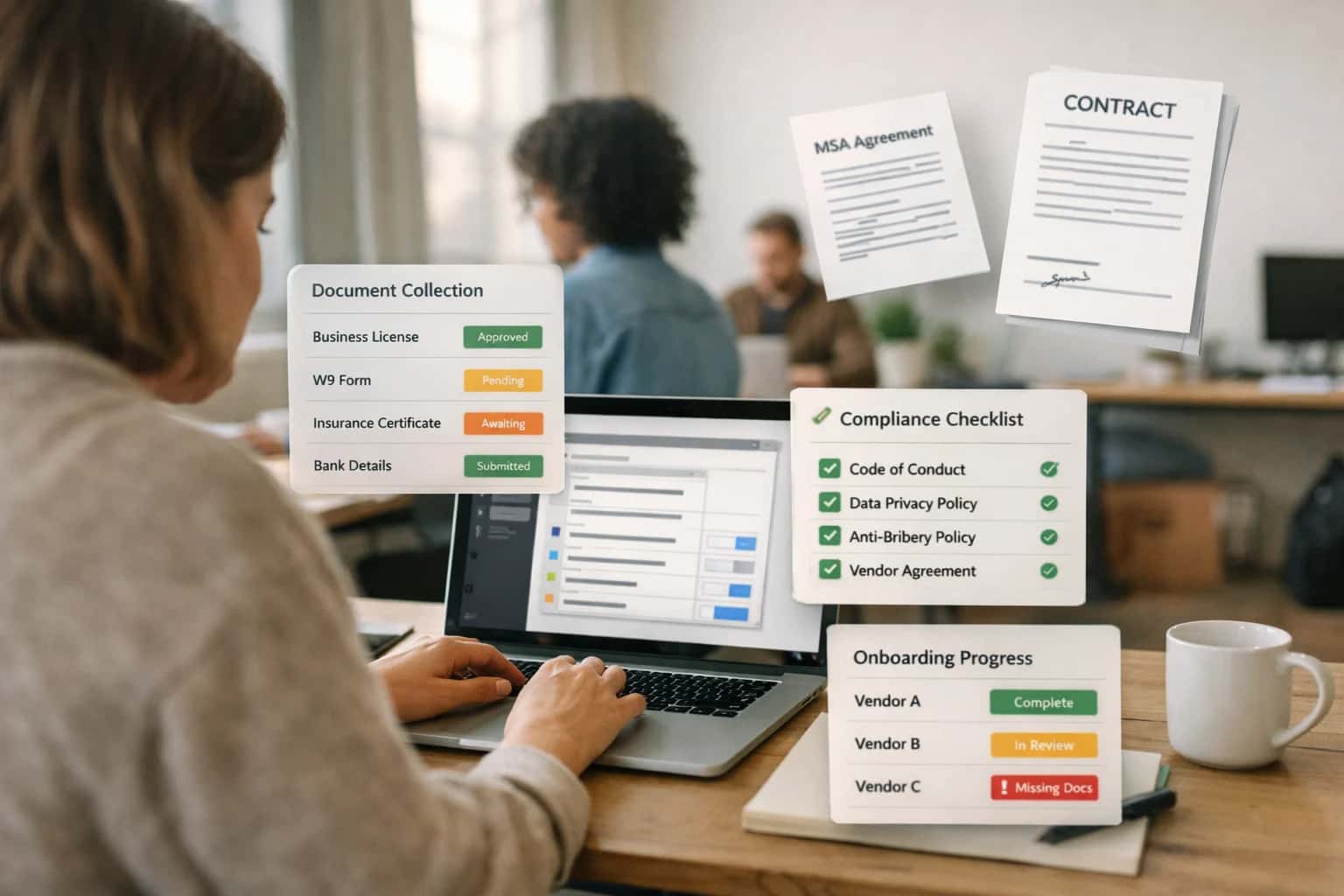
Operations team reviewing AI vendor onboarding platform on laptop, forms and contracts visible, casual office workspace.
ARCHITECTURE FOR ACUTE CARE AND REVENUE CYCLE AUTOMATION

Where AI Fits into Oracle Health's Clinical and Financial Workflows

A practical blueprint for integrating AI into Oracle Health Millennium's clinical modules and Soarian's financial workflows to reduce documentation burden and accelerate revenue capture.

AI integration for Oracle Health targets two primary surfaces: the Millennium acute care platform for clinical workflows and the Soarian financial suite for revenue cycle management. In Millennium, AI connects to key data objects and user interfaces to assist with:

  • Clinical Documentation: Drafting progress notes, H&Ps, and discharge summaries by pulling from structured data in CernerPowerNote templates, ClinicalEvent results, and Order histories.
  • Clinical Decision Support: Providing context-aware alerts and recommendations within PowerChart by analyzing patient ProblemList, Medication, and Result data against clinical guidelines.
  • Care Coordination: Automating handoff communication and referral summaries by synthesizing data from the Encounter, Person, and ClinicalEvent tables for transitions of care.

For financial automation, integration focuses on the Soarian platform's claim and denial workflows. Implementation typically involves:

  • Charge Capture: Using AI to review Document objects (e.g., transcribed notes, scanned forms) within Millennium to suggest missing CPT/ICD codes before claims are submitted to Soarian.
  • Claim Scrubbing: Intercepting claims via Soarian's FinancialManagement APIs to perform pre-submission audits for coding accuracy, medical necessity (LCD/NCD rules), and demographic completeness.
  • Denial Management: Automating the first-pass appeal process by analyzing denial reason codes from payer ERA files, retrieving relevant clinical documentation from Millennium, and drafting appeal letters for staff review.

A production rollout follows a phased, governance-first approach. Start with a single Millennium module (e.g., PowerChart ED for ED notes) or a discrete Soarian workflow (e.g., ClaimStatus monitoring). Use Oracle Health's FHIR Server and CernerOpenDeveloperExperience APIs for data retrieval, and deploy AI services as a middleware layer that writes suggestions back to Note objects or Workitem queues. Crucially, all AI outputs should route through a human-in-the-loop review step within the native Oracle Health UI, with full audit trails logged to the AuditTrail table. This ensures compliance and allows for continuous model refinement based on clinician and coder feedback.

This architecture is designed for incremental value. The goal isn't to replace Oracle Health, but to augment it—turning hours of manual chart review into minutes of assisted documentation, and converting next-day charge lag into same-day capture. For teams evaluating this integration, the priority is mapping high-volume, rule-based documentation and coding tasks to AI, while ensuring the implementation respects existing clinical and financial governance workflows. For related patterns, see our guides on AI Integration for EHR Clinical Documentation and AI Integration for EHR Revenue Cycle Management.

ARCHITECTURE FOR CLINICAL AND FINANCIAL WORKFLOWS

Key Integration Surfaces in Millennium and Soarian

Clinical Documentation & Computerized Physician Order Entry

Integrate AI directly into the physician workflow within Millennium PowerChart and PowerOrders. Key surfaces include:

  • Note Templates & SmartForms: Inject AI-generated narrative summaries into structured note fields, auto-populating HPI, Assessment, and Plan sections from prior visit data and active problems.
  • Order Entry Panels: Provide context-aware order suggestions during CPOE, checking for duplicates, drug interactions, and protocol-based order sets. AI can surface relevant standing orders based on the patient's problem list and recent labs.
  • Result Review & InBasket: Automatically triage and summarize incoming lab and radiology results in the Clinician InBasket, flagging critical values and suggesting follow-up actions.

Implementation typically uses a sidecar application launched via Cerner's uCern extension points or a SMART on FHIR app, calling an AI service via secure API to process context from the open chart before writing suggestions back to discrete fields.

MILLENNIUM & SOARIAN INTEGRATION PATTERNS

High-Value AI Use Cases for Oracle Health

Practical AI integration blueprints for Oracle Health's acute care (Millennium) and financials (Soarian) platforms. Focus on clinical alerting, documentation, and charge capture workflows where AI can connect directly to existing modules and data models.

01

Automated Clinical Documentation in PowerChart

Integrate AI to draft SOAP notes and H&Ps by summarizing Millennium PowerChart data—vitals, labs, meds, prior notes. The AI generates a narrative draft within the clinician's workflow, reducing manual entry from 30+ minutes to under 5. Supports structured data auto-fill into flowsheets and problem lists.

30+ min -> <5 min
Note drafting time
02

Intelligent Charge Capture & CDI

Connect AI to the Soarian Financials and Millennium RevCycle modules to review clinical documentation in real-time. Automatically suggests CPT/ICD-10 codes and identifies potential Clinical Documentation Improvement (CDI) queries based on note content, improving coding accuracy and reducing claim denials.

Same-day review
CDI query cycle
03

AI-Powered Clinical Decision Support

Embed AI agents within PowerOrders and Care Pathways to provide evidence-based recommendations. Cross-references patient data (labs, meds, allergies) against clinical guidelines to suggest order sets, flag drug interactions, or recommend preventive screenings, enhancing protocol adherence at the point of care.

Real-time
Guideline checking
04

Prior Authorization Workflow Automation

Orchestrate AI with Soarian Scheduling and Millennium Ambulatory modules to automate prior auth. Extracts clinical criteria from notes, populates payer forms, and tracks submission status via Oracle Health APIs. Routes complex cases to staff for review, turning a multi-day process into hours.

Days -> Hours
Auth submission
05

Patient Communication & Inbox Triage

Integrate AI with the Patient Portal and InBasket to handle routine patient messages. Automatically categorizes inquiries (med refill, symptom, billing), drafts clinician-reviewed responses, and escalates urgent clinical messages, reducing administrative burden on care teams.

Batch -> Real-time
Inbox processing
06

Operational Analytics & Length of Stay Predictions

Leverage AI on top of Millennium's Cerner Command Center and HealtheIntent data. Analyzes real-time ADT, staffing, and resource data to predict patient discharge readiness and potential bottlenecks, providing actionable insights to reduce length of stay and improve bed turnover.

Proactive alerts
Discharge planning
PRACTICAL INTEGRATION PATTERNS

Example AI Agent Workflows for Millennium and Soarian

These concrete workflows illustrate how AI agents can be embedded into Oracle Health's acute care (Millennium) and financial (Soarian) platforms to automate high-volume tasks, augment clinical and revenue cycle staff, and improve data accuracy. Each pattern details the trigger, data context, agent action, and system update.

Trigger: A new patient is registered in the Emergency Department (ED) via Millennium's Prelude/ADT.

Context Pulled: The agent retrieves the patient's chief complaint from the triage nurse's initial note and fetches relevant history from the patient's longitudinal record via Cerner Command Language (CCL) or FHIR APIs.

Agent Action: Using a clinical LLM, the agent drafts a structured triage note, including:

  • An expanded History of Present Illness (HPI) based on the chief complaint.
  • A suggested review of systems.
  • A preliminary assessment and plan, referencing common ED protocols.

The draft is flagged for elements requiring clinician confirmation (e.g., medication allergies, past surgical history).

System Update & Human Review: The draft note is inserted into the appropriate PowerNote template in Millennium PowerChart. The triage physician is notified within Hyperspace to review, edit, and sign the note, reducing manual typing from 5-7 minutes to 1-2 minutes of review.

Governance Note: All AI-generated content is audited in the system's audit trail, and the final note is attributed to the signing clinician.

A PRODUCTION-READY BLUEPRINT

Implementation Architecture: Data Flow, APIs, and Guardrails

A secure, scalable architecture for integrating AI into Oracle Health's acute care (Millennium) and financials (Soarian) platforms.

A production-ready integration connects to Oracle Health's Millennium and Soarian platforms through a dedicated middleware layer, not directly to the core databases. This layer ingests data via Oracle Cerner's Millennium Platform APIs (for clinical data like orders, results, and notes) and Soarian Financials APIs (for charge capture, claims, and work queues). For real-time events, we configure HL7 ADT feeds to a message queue (e.g., Kafka, RabbitMQ) to trigger AI workflows for new admissions or status changes. The middleware normalizes this data into a structured format, redacts PHI where necessary, and sends context-rich payloads to the AI service layer, which hosts the LLM, RAG, and agent logic.

The AI service layer processes requests—such as generating a clinical alert summary or suggesting a charge code—and returns structured outputs (JSON) back to the middleware. These outputs are then posted back into the EHR via the same APIs to update specific modules: for Millennium, this could mean writing a summarization note to a Discern Expert alert or populating a PowerNote template; for Soarian, it could involve creating a task in a Financial Work Queue or appending documentation to a claim. All data flows are logged with full audit trails, and a human-in-the-loop review step can be configured for high-risk outputs (e.g., new clinical alerts) before they are committed to the patient record.

Governance is enforced at multiple levels: Role-Based Access Control (RBAC) ensures AI outputs are only written by service accounts with appropriate Millennium/Soarian security classes; a prompt management system version-controls all clinical and financial logic; and a drift detection monitor watches for degradation in AI output quality. Rollout follows a phased, service-line-specific approach, starting with non-critical workflows like after-visit summary generation or routine charge capture assistance, before expanding to real-time clinical decision support. This architecture ensures the integration is scalable, maintainable, and compliant with both Oracle Health's technical standards and healthcare regulations.

ORACLE HEALTH MILLENNIUM AND SOARIAN

Code and Payload Examples

Real-Time Alert Generation with CCL

Oracle Health Millennium's Cerner Command Language (CCL) is the primary method for embedding logic into clinical workflows. An AI integration can use CCL to trigger real-time alerts by querying patient data and calling an external AI service via HTTP.

Example CCL Snippet for AI Risk Scoring:

sql
SELECT INTO "NL:"
  p.name_full_formatted,
  p.person_id
FROM person p
WHERE p.person_id = $personId
DETAIL
  ;-- Call external AI service with patient context
  status = call_ai_alert_service(p.person_id, 'fall_risk')
  IF (status = "HIGH_RISK") 
    CALL ECHO("AI Alert: High Fall Risk Identified")
  ENDIF
WITH maxrec = 1, nocounter

This pattern allows AI models to evaluate streaming clinical data (vitals, labs, notes) and surface alerts directly in the clinician's workflow without manual chart review.

AI INTEGRATION FOR ORACLE HEALTH MILLENNIUM AND SOARIAN

Realistic Time Savings and Operational Impact

This table illustrates the directional impact of integrating AI into Oracle Health's acute care (Millennium) and financials (Soarian) platforms. Estimates are based on typical workflows before and after AI-assisted automation, assuming a phased rollout with human-in-the-loop governance.

Workflow / MetricBefore AI IntegrationAfter AI IntegrationImplementation Notes

Clinical Documentation (Progress Notes)

15-25 minutes per note

5-10 minutes with AI draft

AI drafts from structured data & prior notes; clinician reviews/edits. Reduces clerical burden.

Charge Capture & Code Assignment

Manual review post-visit; potential missed charges

Real-time AI suggestion during encounter

AI suggests CPT/ICD codes based on documentation; coder validates. Improves accuracy and timeliness.

Clinical Alert Triage & Prioritization

All alerts presented equally; alert fatigue

AI scores & prioritizes critical alerts

AI filters non-urgent alerts, surfaces high-risk items first. Reduces cognitive load for clinicians.

Prior Authorization Document Prep

45-60 minutes gathering/formatting records

15-20 minutes with AI assembly

AI extracts relevant clinical data from Millennium; staff reviews output before submission.

Patient Discharge Summary Drafting

30-45 minutes manual compilation

10-15 minute AI-generated first draft

AI pulls key data from stay (labs, meds, procedures); physician finalizes. Accelerates discharge process.

Soarian Financial Exception Workflow

Manual queue review for denials/pending claims

AI-assisted routing & recommendation

AI categorizes exceptions, suggests next-best-action (e.g., appeal, rebill). Staff executes.

Rollout & Change Management

Pilot: 8-12 weeks for single unit

Pilot: 4-6 weeks with templated workflows

Start with high-volume, rule-based tasks (e.g., discharge summaries). Expand based on user feedback.

ARCHITECTING FOR PRODUCTION

Governance, Security, and Phased Rollout

A secure, phased implementation is critical for AI integrations in regulated healthcare environments.

Production AI for Oracle Health requires a zero-trust architecture anchored in the EHR's existing security model. This means AI agents and workflows operate under the same role-based access controls (RBAC) defined in Millennium and Soarian, with all API calls and data movements logged to the platform's native audit trails. Sensitive PHI is processed in a secure, HIPAA-compliant inference environment, with prompts and outputs stripped of direct identifiers before any external model calls. The integration layer itself should be deployed within the health system's private cloud or VPC, ensuring data never leaves the controlled network perimeter during processing for use cases like clinical note drafting or charge capture review.

A successful rollout follows a tightly-scoped, clinician-led pilot before enterprise expansion. Start with a single, high-value workflow in a supportive clinical department—for example, AI-assisted history of present illness (HPI) generation in Millennium PowerNotes for an outpatient cardiology clinic. This initial phase focuses on a closed-loop, opt-in tool where physicians can accept, edit, or reject AI suggestions, with all interactions tracked for feedback and model refinement. Concurrently, a parallel pilot in the revenue cycle might target automated charge reconciliation in Soarian Financials, comparing scheduled procedures against documented clinical activities to surface potential missed charges for manual review by coders.

Governance is established through a cross-functional oversight committee including clinical leadership, IT security, compliance, revenue cycle, and the AI engineering team. This group approves use case expansion, reviews performance metrics (e.g., clinician acceptance rates, time-saved estimates, charge capture lift), and manages the change control process. Rollout to additional Millennium modules (e.g., OpTime for surgical documentation) or Soarian workflows (e.g., denial management appeal drafting) proceeds only after demonstrating measurable benefit and stability in the initial pilots, with continuous monitoring for model drift or unintended workflow impacts.

IMPLEMENTATION AND WORKFLOW DETAILS

Frequently Asked Questions

Common technical and operational questions about integrating AI into Oracle Health Millennium and Soarian for clinical and financial workflow automation.

AI integrates as a background service that augments, rather than interrupts, the clinician's workflow in Millennium. The typical pattern involves:

  1. Trigger: An event in Millennium (e.g., a note opened, an order signed, a result posted) sends a secure webhook or writes to a designated audit table.

  2. Context Pull: Our integration service retrieves the relevant patient context via FHIR APIs (e.g., Patient/[ID], Encounter/[ID], Observation?patient=[ID]) or, where necessary, via Oracle Health's proprietary APIs for structured data like flowsheets.

  3. AI Action: A governed LLM or specialized model processes this context. Examples:

    • Note Drafting: Generates a SOAP note draft from the day's vitals, labs, and orders.
    • Alert Triage: Summarizes a new critical lab result with prior trends and relevant medications.
    • Charge Capture: Reviews documented procedures and medications to suggest applicable CPT/HCPCS codes.
  4. System Update: The output is delivered back as structured data (JSON) to a middleware layer. It is then presented as:

    • A draft in the NoteWriter or free-text field.
    • A non-interruptive alert or inbox message in the Clinical Review queue.
    • A suggestion in a custom sidebar or PowerChart component.
  5. Human Review Point: All AI-generated content requires clinician review and sign-off before becoming part of the legal record. The integration is designed to save time on drafting and information synthesis, not to make autonomous decisions.

Prasad Kumkar

About the author

Prasad Kumkar

CEO & MD, Inference Systems

Prasad Kumkar is the CEO & MD of Inference Systems and writes about AI systems architecture, LLM infrastructure, model serving, evaluation, and production deployment. Over 5+ years, he has worked across computer vision models, L5 autonomous vehicle systems, and LLM research, with a focus on taking complex AI ideas into real-world engineering systems.

His work and writing cover AI systems, large language models, AI agents, multimodal systems, autonomous systems, inference optimization, RAG, evaluation, and production AI engineering.




