AI connects to the preventive care workflow by ingesting and analyzing key data objects from your Practice Management System (PMS) like Dentrix or Open Dental. This includes patient visit history, clinical charting data (periodontal charting, caries risk assessments), demographics, insurance benefit details, and appointment records. The AI builds a dynamic risk profile for each patient, identifying those due for specific preventive interventions—such as sealants for high-caries-risk patients, fluoride varnish applications, or oral cancer screenings based on age and tobacco use—far more precisely than static recall dates.

Integration
AI Integration for Dental Preventive Care AI
A technical guide to building AI-driven preventive care programs by integrating with Dentrix, Eaglesoft, Open Dental, or Curve Dental. Automate patient risk scoring, identify due services, and trigger personalized outreach.
ARCHITECTURE & ROLLOUT
Where AI Fits into Dental Preventive Care
Integrating AI into preventive care programs transforms reactive reminders into proactive, personalized patient health management.
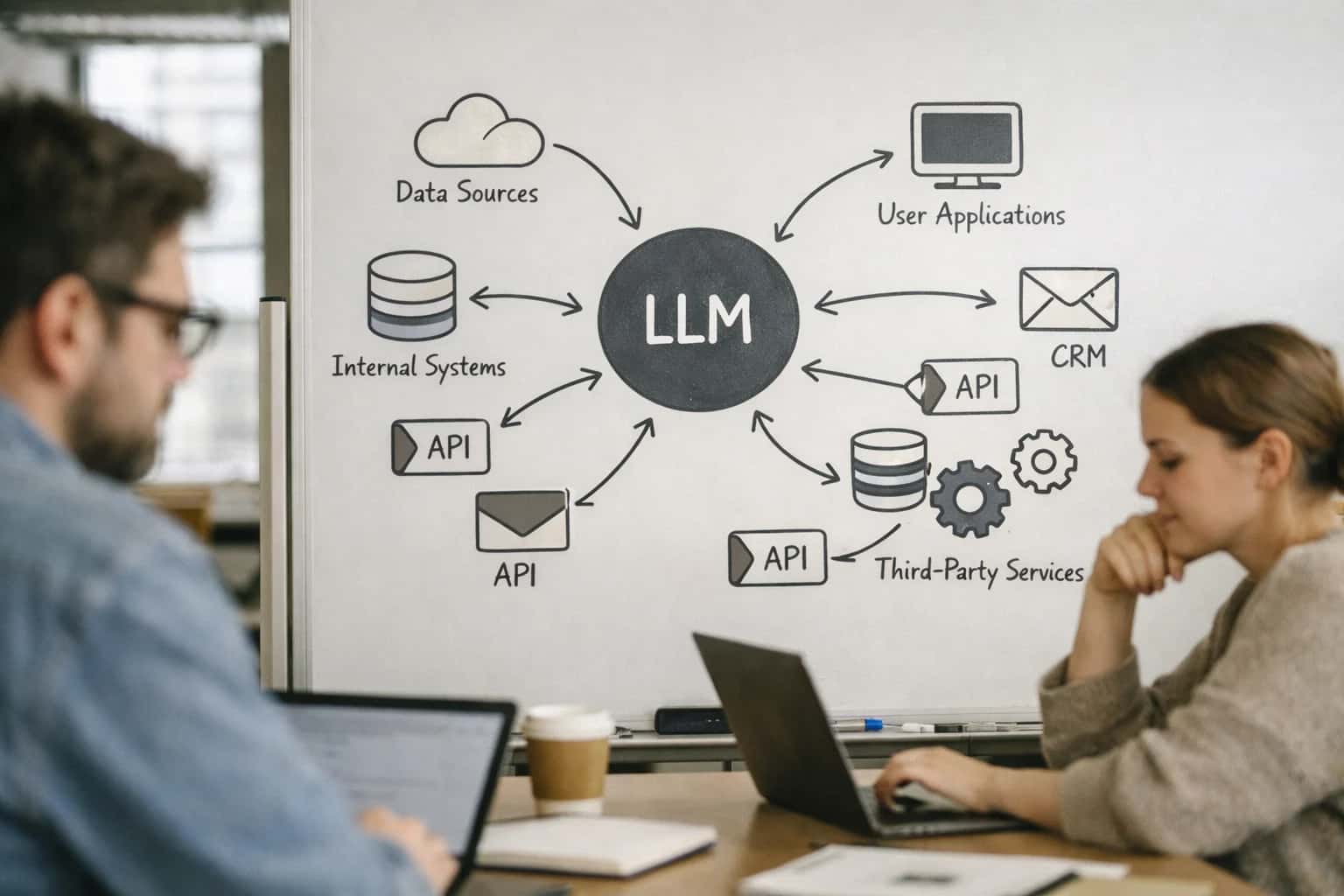
Implementation typically involves a secure cloud service that polls the PMS database via API or listens for webhook events (e.g., appointment_completed, chart_saved). For each patient, the AI evaluates rules and predictive models, then triggers actions back into the PMS workflow: creating recall appointments, populating the hygiene schedule with flagged patients, drafting personalized patient messages for the communications module, and adding clinical notes for the hygienist to review. This creates a closed-loop system where the AI suggests, the staff approves, and outcomes are logged for model refinement.
Rollout should be phased, starting with a single high-impact preventive service like hygiene reactivation. Governance is critical: all AI-generated recommendations should require hygienist or dentist review before patient contact, creating a human-in-the-loop for clinical validation. Audit logs must track which AI suggestions were acted upon, feeding back into the system to improve accuracy. This approach ensures the AI augments—rather than replaces—clinical judgment, turning your PMS into an intelligent partner for driving long-term patient health and practice production.
DENTAL PREVENTIVE CARE AI
Connecting AI to Key PMS Modules for Preventive Care
The Foundation for Risk-Based Care
The patient record module is the primary data source for preventive AI. This includes structured fields like medical history, allergy alerts, and medication lists, as well as unstructured clinical notes from past hygiene and restorative visits. An AI integration extracts and analyzes this longitudinal data to build a dynamic risk profile for each patient.
Key integration points are the patient demographics table, clinical notes (SOAP notes), and the periodontal charting history. By processing this data, AI can identify patients at elevated risk for caries (based on diet, hygiene recall frequency, past restorations) or periodontal disease (based on historical pocket depths, bleeding points, smoking status). This enables the practice to move from a time-based recall model (e.g., every 6 months) to a risk-based preventive schedule, automatically flagging high-risk patients for more frequent monitoring or specific interventions like fluoride varnish or sealants.
INTEGRATED WITH DENTRIX, EAGLESOFT, OPEN DENTAL, AND CURVE DENTAL
High-Value Preventive Care AI Use Cases
Transform reactive patient care into proactive health management by integrating AI directly into your practice management system. These workflows use patient history, risk factors, and visit data to automate preventive care programs, improve patient outcomes, and optimize hygiene schedules.
01
Automated Recall & Reactivation Campaigns
AI analyzes each patient's recall due date, periodontal status, and past engagement to personalize outreach. It triggers automated SMS/email sequences via the PMS's communication module, prioritizing high-risk patients and adjusting messaging tone based on previous response rates.
Batch -> Real-time
Outreach cadence
02
Risk-Based Sealant & Fluoride Targeting
Scans patient charts for age, caries risk assessment scores, and insurance benefits to flag eligible candidates for preventive treatments. Generates a daily worklist in the PMS for hygienists and front desk, complete with patient-specific talking points and benefit verification status.
Same day
Eligibility identification
03
Oral Cancer Screening Prioritization
Integrates with health history forms and clinical note NLP to identify patients with elevated risk factors (tobacco use, HPV status, age). Flags their chart in the clinical dashboard and automatically schedules extended screening time during their next hygiene appointment within the PMS scheduler.
1 sprint
Implementation timeline
04
Periodontal Maintenance Optimization
Uses historical probing depths, bleeding points, and compliance data to predict which patients are likely to downgrade from periodontal maintenance to prophy. Alerts the clinical team via the PMS task system to schedule a preemptive consultation, helping to stabilize patients and protect production.
Hours -> Minutes
Risk analysis time
05
Preventive Care Gap Reporting
A daily AI-generated report for the Office Manager, delivered within the PMS reporting module. Highlights the percentage of patients overdue for preventive services, projected revenue impact, and recommends specific recall batches to run, turning population health data into actionable tasks.
Batch -> Real-time
Report generation
06
Integrated Patient Education & Consent
When a preventive treatment is recommended, AI dynamically generates a personalized education micro-site (linked from the patient portal) explaining the 'why' using the patient's own risk data. Tracks views and questions, logging engagement back to the PMS chart to support case acceptance.
PMS-INTEGRATED AUTOMATION
Example AI-Powered Preventive Care Workflows
These workflows illustrate how AI agents, triggered by events in your practice management system (Dentrix, Eaglesoft, Open Dental, Curve), can automate patient identification, outreach, and scheduling for preventive services like sealants, fluoride treatments, and oral cancer screenings.
Trigger: A patient's last prophylaxis date passes the standard 6-month recall interval without a future hygiene appointment scheduled.
AI Agent Action:
- Queries the PMS for the patient's full history: age, insurance plan, past treatment acceptance, caries risk assessment scores, and periodontal status.
- Runs a risk model to prioritize this patient for outreach (e.g., high caries risk child vs. low-risk adult).
- If high-priority, generates a personalized message explaining why their specific preventive care (e.g., fluoride varnish) is recommended based on their history.
- Includes a direct scheduling link to the next available hygiene slot that matches the required procedure time.
System Update: The agent logs the outreach attempt, message content, and any patient click/response in the PMS patient communication history. If the link is used, the appointment is booked directly into the schedule.
FROM PATIENT DATA TO PREVENTIVE ACTION
Implementation Architecture: Data Flow & System Design
A secure, event-driven architecture that connects AI models to your practice management system to automate preventive care identification.
The integration is built on a secure API gateway that listens for key events in your PMS (Dentrix, Eaglesoft, Open Dental, or Curve). When a patient completes a hygiene visit, a new radiograph is saved, or a health history form is updated, a de-identified payload containing the patient ID, procedure codes, charting notes, and medical alerts is sent via a webhook to a dedicated processing queue. This event-driven design ensures the AI analyzes the most current patient data without requiring full database replication or intrusive batch jobs.
A central orchestration service pulls events from the queue and executes a multi-step workflow: 1) It fetches additional structured data (like age, insurance type, last prophylaxis date) via a secure, read-only API call back to the PMS. 2) It uses NLP to extract risk factors from unstructured clinical notes. 3) It runs this consolidated patient profile against preventive care rules and machine learning models trained on historical practice data. The output is a ranked list of recommended actions—such as "schedule sealant for tooth 30" or "recommend oral cancer screening due to tobacco use"—with associated clinical rationale.
These AI-generated recommendations are then routed. High-confidence, routine items (e.g., fluoride treatment due) can be pushed directly into the PMS as a preventive care task attached to the patient's record, visible in the clinical dashboard or recall module. For higher-complexity recommendations or patients with contraindications, the system creates a review queue for the hygienist or dentist within a separate dashboard, requiring a one-click approval before the task is created in the PMS. All actions are logged with a full audit trail linking the AI inference back to the source patient data and the approving clinician, ensuring governance and compliance.
IMPLEMENTATION PATTERNS
Code & Payload Examples for Key Interactions
Patient Risk Scoring API Call
This pattern queries the PMS for patient history and calculates a preventive care risk score, flagging patients due for interventions like sealants or oral cancer screenings.
Typical Workflow:
- Query PMS for patients with a visit in the last 3 years.
- Enrich with age, medical history (e.g., tobacco use), and past procedure codes (e.g.,
D1351for sealant). - Call an AI model to generate a risk score and recommended next action.
- Write the recommendation back to a custom field in the patient record for front-desk or hygienist review.
python# Example: Fetch patient data and call risk scoring service import requests # 1. Query PMS API for patient cohort (pseudocode - adapt to Dentrix/Eaglesoft/Open Dental API) patients = pms_api.query_patients( filters={ 'last_visit_after': '2022-01-01', 'age_range': (6, 18) # For pediatric sealant program }, fields=['id', 'date_of_birth', 'medical_alert_codes', 'last_prophylaxis_date'] ) # 2. Prepare payload for AI service for patient in patients: payload = { 'patient_id': patient['id'], 'age': calculate_age(patient['date_of_birth']), 'risk_factors': parse_medical_alerts(patient['medical_alert_codes']), # e.g., 'TOBACCO' 'months_since_last_cleaning': months_since(patient['last_prophylaxis_date']), 'preventive_history': pms_api.get_procedure_history(patient['id'], code_family='D1000-D1999') } # 3. Call AI scoring endpoint response = requests.post('https://ai-service.inferencesystems.com/risk/preventive', json=payload, headers={'Authorization': 'Bearer YOUR_API_KEY'}) risk_result = response.json() # 4. Update PMS with recommendation pms_api.update_patient_field( patient['id'], field='custom_preventive_recommendation', value=risk_result['recommended_action'] # e.g., "Due for sealants on teeth 3, 14, 19, 30" )
PREVENTIVE CARE PROGRAM AUTOMATION
Realistic Time Savings & Operational Impact
How AI integration transforms manual, reactive preventive care management into a proactive, data-driven system within your practice management software.
| Workflow | Before AI | After AI | Implementation Notes |
|---|---|---|---|
Patient Risk Identification | Manual chart review (5-10 min/patient) | Automated batch scoring (seconds/patient) | Runs nightly via API; flags high-risk patients for review |
Recall List Generation | Filtering by last visit date (15-30 min weekly) | Dynamic list with risk-based priority (2 min weekly) | Integrates with PMS recall module; exports to campaign tool |
Personalized Outreach Drafting | Generic template messages | AI-generated, condition-specific reminders | Uses patient history, preferred channel; human edits before send |
Campaign Response Triage | Front desk reviews calls/portal messages | AI categorizes & routes patient replies | Tags intent (e.g., 'books now', 'questions cost'); updates PMS task |
Hygiene Schedule Optimization | First-available slot for recalls | Risk-based slot assignment & duration buffering | Considers perio status & provider skill; suggests to scheduler |
Program Effectiveness Reporting | Monthly manual report compilation | Automated dashboard with booking & ROI metrics | Pulls from PMS & comms platform; shows reactivation rates |
Clinical Note Flagging for Providers | Dentist/Hygienist reviews full history | AI highlights 'due for' recommendations in chart | Contextual alerts appear during patient check-in/encounter |
IMPLEMENTING AI IN A REGULATED CLINICAL ENVIRONMENT
Governance, Compliance & Phased Rollout
A practical framework for deploying preventive care AI in dental PMS with control, compliance, and clinician trust.
Deploying AI for preventive care requires a governance-first architecture that respects clinical workflows and patient data. Your integration should connect via the PMS API (e.g., Dentrix Open Dental Connect, Eaglesoft's eServices) to a secure, isolated processing layer. This layer ingests only the necessary data—patient demographics, visit history, procedure codes (CDT), and radiographic notes—for risk scoring, applying strict role-based access controls (RBAC) mirroring your PMS permissions. All AI-generated recommendations (e.g., 'patient due for sealants') should be written back to the PMS as non-clinical notes or flags within the patient record, creating a full audit trail of which AI suggestion was reviewed by which staff member and when.
Compliance is non-negotiable. The AI system must operate as a HIPAA-compliant Business Associate, with data encryption in transit and at rest, and should be configured to avoid processing protected health information (PHI) beyond the minimum necessary. For preventive alerts, we recommend a human-in-the-loop approval step: the system surfaces a list of eligible patients to the hygienist or office manager within the PMS interface, who then reviews and triggers the recall communication. This maintains clinical oversight, reduces alert fatigue, and ensures the practice's standard of care governs all patient interactions. All model outputs should be explainable; for example, showing the factors (e.g., 'last sealant 3 years ago, high caries risk score') that contributed to a recommendation.
A phased rollout de-risks adoption. Start with a single, high-impact workflow in a pilot group, such as identifying patients overdue for oral cancer screenings based on age and tobacco use history. Run the AI in shadow mode for 2-4 weeks, comparing its outputs to your manual process to calibrate accuracy and build team confidence. Phase two might expand to fluoride treatment eligibility for pediatric patients, integrating with the schedule to flag appointments during check-in. Finally, scale to full preventive care orchestration, using the AI to power automated recall campaigns via the PMS's patient communication module. Each phase should include staff training on the new workflow and establish clear metrics, like the percentage of AI-identified patients who schedule appointments, to measure incremental impact without disrupting daily operations.
Enabling Efficiency, Speed & Accuracy
Intelligent Analysis, Decision & Execution
We build AI systems for teams that need search across company data, workflow automation across tools, or AI features inside products and internal software.
Talk to Us
Search across company data
Give teams answers from docs, tickets, runbooks, and product data with sources and permissions.
Useful when people spend too long searching or get different answers from different systems.
Enterprise searchRAGPermissions
Read more
Automate internal workflows
Use AI to route work, draft outputs, trigger actions, and keep approvals and logs in place.
Useful when repetitive work moves across multiple tools and teams.
AI agentsWorkflow automationGovernance
Read more
Add AI to products and internal tools
Build assistants, guided actions, or decision support into the software your team or customers already use.
Useful when AI needs to be part of the product, not a separate tool.
AI integrationDecision supportModel routing
Read moreIMPLEMENTATION & WORKFLOW
Frequently Asked Questions (FAQ)
Practical questions about integrating AI into your dental PMS to automate preventive care programs, from data access to patient outreach.
The system connects to your PMS (Dentrix, Eaglesoft, Open Dental, or Curve) via its API or a secure database bridge. It runs scheduled queries to analyze patient records, focusing on:
- Visit History: Last prophylaxis date, missed recall appointments.
- Clinical Indicators: Historical caries risk, periodontal charting data (e.g., pocket depths >4mm), fluoride varnish history.
- Demographic & Risk Factors: Age (for sealants), tobacco use, medical conditions (e.g., diabetes, xerostomia).
- Insurance Benefits: Remaining coverage for preventive services like fluoride or oral cancer screenings.
The AI applies a rules engine combined with a predictive model to score each patient's need and likelihood to accept care, generating a prioritized outreach list.

About the author
Prasad Kumkar
CEO & MD, Inference Systems
Prasad Kumkar is the CEO & MD of Inference Systems and writes about AI systems architecture, LLM infrastructure, model serving, evaluation, and production deployment. Over 5+ years, he has worked across computer vision models, L5 autonomous vehicle systems, and LLM research, with a focus on taking complex AI ideas into real-world engineering systems.
His work and writing cover AI systems, large language models, AI agents, multimodal systems, autonomous systems, inference optimization, RAG, evaluation, and production AI engineering.
LinkedIn
Limited slotsGet a Free AI Consultation
Partnered with leading AI, data, and software stack.





How We Work
Custom AI workflows for your Business
One-fit-all AI don't work for modern businesses. At Inferensys, we aim to understand your business & custom requirements; which we use to define most efficient agentic workflows, the data, and the tools for your business.
01
Review the use case
We understand the task, the users, and where AI can actually help.
Read more02
Pick the right approach
We define what needs search, automation, or product integration.
Read more03
Build the first useful version
We implement the part that proves the value first.
Read more04
Improve from there
We add the checks and visibility needed to keep it useful.
Read moreThe first call is a practical review of your use case and the right next step.
Talk to Us