AI integration targets the clinical charting module of your dental PMS (Dentrix, Eaglesoft, Open Dental, or Curve). The workflow typically begins when a hygienist or dentist opens a patient's periodontal chart. An AI agent, listening via a secure API or webhook for this event, can pre-fetch the patient's historical pocket depths, bleeding points, and mobility readings. As the clinician performs the manual six-point probing, they can input measurements via voice, touchscreen, or probe sensors. The AI acts as a real-time copilot, suggesting likely values for missing sites based on patterns from the patient's own history and population-level data, flagging significant changes for immediate review, and auto-populating the chart to reduce manual entry and mental calculation.

Integration
AI Integration for Dental Periodontal Charting AI
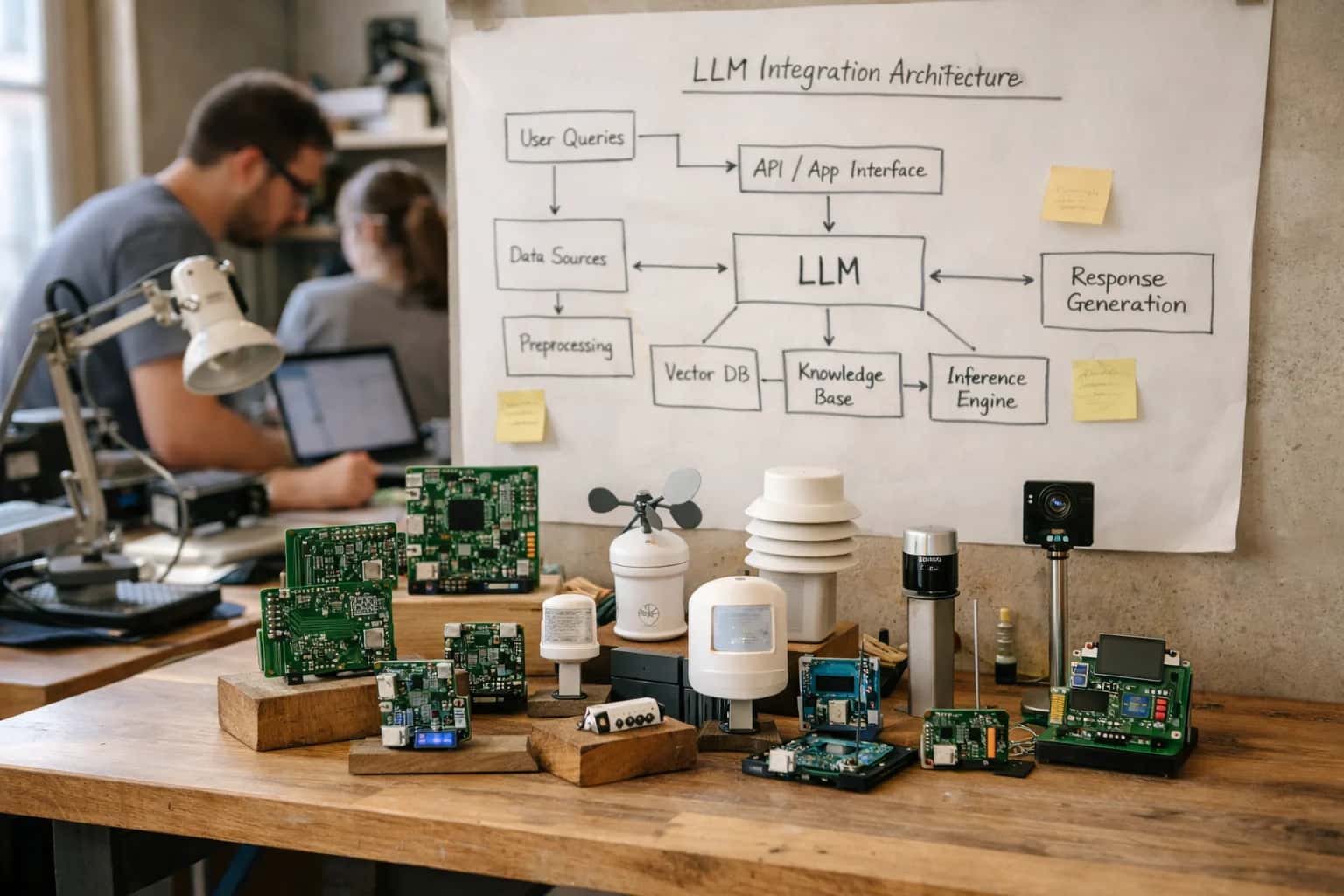
Where AI Fits into the Periodontal Charting Workflow
A practical blueprint for integrating AI into the periodontal exam process within your existing practice management software.
Implementation requires a secure bridge between the PMS database and an inference service. A common pattern is a lightweight middleware service that subscribes to charting events, extracts the relevant patient and clinical context, and calls an AI model (hosted on-premises or in a compliant cloud). The model returns structured suggestions—like "Site 3-6: Probable pocket depth 5mm, bleeding on probing likely"—which are presented as clickable overlays in the PMS interface. All suggestions are logged with an audit trail, and the clinician maintains final approval, ensuring the AI augments rather than replaces professional judgment. This reduces charting time from 10-15 minutes to 3-5 minutes per exam and improves the consistency of recorded data.
Rollout should be phased, starting with a single hygienist or operatory. Governance is critical: establish clear protocols for model retraining using de-identified charting data, and define alert thresholds for when the AI's confidence is low, forcing a manual entry. This integration doesn't require replacing your PMS; it layers intelligence onto your existing clinical workflow, turning charting from a documentation task into a diagnostic support system. For related architectural patterns, see our guides on Dental Clinical Notes automation and secure PMS API strategies.
Integration Touchpoints by Dental PMS Platform
Direct Integration with Periodontal Charts
The periodontal charting interface within your PMS is the primary surface for AI augmentation. Integration typically occurs via:
- Real-time API calls from the charting screen, sending partial pocket depth and bleeding point data for AI-assisted completion.
- Background processing of historical charting data to establish patient baselines and flag significant changes.
- UI overlay or companion panel that displays AI-suggested values (e.g., likely pocket depths for unmeasured sextants) for hygienist review and one-click acceptance.
Key data objects include the periodontal_chart record, patient_visit, and provider ID. The AI service must return structured JSON that maps directly to the PMS's chart data model (e.g., { "tooth_18": { "mesial_buccal": 4, "distal_buccal": 3, "bleeding": true } }). This enables the AI to act as a co-pilot, reducing manual entry from 5-7 minutes per patient to under 60 seconds while improving consistency.
High-Value AI Use Cases for Periodontal Charting
Integrate AI directly into your dental practice management system to transform time-consuming manual charting into a guided, efficient process that improves accuracy and frees up clinical time.
Voice-to-Chart Automation
Hygienists dictate findings during the exam (e.g., '4mm, BOP, 30% calculus on #3-DL'). An AI agent listens, interprets the structured data, and instantly populates the corresponding periodontal chart fields in the PMS, eliminating post-exam data entry.
Predictive Pocket Depth Suggestions
The AI analyzes the patient's historical charting data and current partial inputs. As the hygienist records a few sites, the system suggests probable depths and bleeding points for adjacent sites, serving as a clinical second set of eyes to prevent oversights.
Automated PSR/CPI Code Generation
Based on the completed pocket depth and bleeding point data, the AI automatically calculates and assigns the correct Periodontal Screening and Recording (PSR) or Community Periodontal Index (CPI) codes, ensuring standardized reporting for insurance and treatment planning.
Longitudinal Change Detection & Alerts
The AI compares new charting data against the last 2-3 visits, automatically flagging sites with significant deterioration (e.g., +2mm pocket depth increase, new furcation involvement). Alerts appear directly in the PMS chart for immediate clinical review.
Integrated Patient Education & Case Acceptance
Once charting is complete, the AI generates a visual, patient-friendly summary of findings. It can draft personalized narrative explanations and highlight areas of concern, ready for the dentist to use during the case presentation within the PMS treatment plan module.
Hygiene Recall & Re-care Prioritization
The AI uses the finalized charting data to score periodontal disease severity and stability. This score automatically prioritizes the patient in the PMS recall system, suggesting optimal re-care intervals (3, 4, or 6 months) and triggering personalized reminder messages.
Example AI-Assisted Charting Workflows
These workflows illustrate how AI can be integrated into the periodontal charting process within your existing dental practice management system (Dentrix, Eaglesoft, Open Dental, Curve). Each pattern connects to the PMS's clinical data model via API or database to augment, not replace, the hygienist's workflow.
Trigger: Hygienist opens a new periodontal chart for a recall patient.
Context Pulled: AI agent queries the PMS for:
- The patient's last 2-3 full periodontal charts (pocket depths, bleeding points, recession, furcation).
- Recent bitewing and periapical radiographs (via integrated imaging software API).
- Patient's medical history flags (e.g., diabetes, smoking status).
AI Action: A model trained on historical progression analyzes the data to predict likely current measurements. It generates a pre-filled chart highlighting:
- Sites with a high probability of increased pocket depth (>4mm).
- Areas where previous bleeding was noted.
- Suggested furcation or recession changes based on bone loss visible in radiographs.
System Update: The pre-filled chart is presented as a draft overlay within the PMS charting module. The hygienist reviews, adjusts with actual probe measurements, and confirms. All edits are logged for model retraining.
Human Review Point: Mandatory. The hygienist must verify every AI-suggested measurement against physical probing. The system tracks agreement rates to improve accuracy.
Implementation Architecture: Data Flow & Security
A secure, event-driven architecture for injecting AI insights into the periodontal charting workflow without disrupting clinical operations.
The integration connects at the clinical module layer of your PMS (e.g., Dentrix Perio Chart, Eaglesoft Clinical, Open Dental Perio). Our agent listens for charting session events via a secure webhook or polls the PMS database for new PerioExam records. When a hygienist begins a new exam or updates pocket depths, the system extracts the partial chart data, along with historical perio records and patient medical alerts, and sends a secure payload to our inference service. The AI suggests likely pocket depths and bleeding points for remaining sextants, returning structured suggestions (e.g., { "tooth": 31, "surface": "MB", "suggested_pocket": 5, "confidence": 0.87 }) that are presented as clickable overlays in the existing PMS charting interface.
Data flow is strictly one-way for inference: patient PHI is never stored in the AI service. We use a zero-retention pipeline where the payload is processed in memory, the suggestion is returned, and the data is purged. All communication is encrypted in transit (TLS 1.3) and access is controlled via API keys tied to specific PMS user roles (e.g., Hygienist, Dentist). Audit logs track every AI suggestion generated, accepted, or overridden, linking back to the PMS user ID and patient chart for full traceability. This ensures compliance with HIPAA's Minimum Necessary Standard and provides a clear record for clinical review.
Rollout follows a phased, provider-specific enablement. Start by piloting the AI as a "second set of eyes" for a single hygienist during maintenance appointments. The AI's confidence scores and user acceptance rates are monitored in a separate dashboard. Governance is managed through a configurable approval layer: suggestions can be auto-accepted for low-severity, high-confidence predictions, while flagged anomalies (e.g., a sudden 7mm pocket suggestion) can require a dentist's review before being written to the permanent chart. This controlled integration reduces charting time by 30-50% per exam while keeping the dentist as the final clinical decision-maker, ensuring the AI augments—rather than replaces—professional judgment.
Code & Payload Examples
Connecting to the PMS Charting Module
Integrating AI for periodontal charting requires a secure, bidirectional link to the practice management system's clinical data layer. The typical pattern involves subscribing to appointment events (e.g., hygiene_exam_started) via webhook, fetching the patient's historical charting data via a REST API, and posting AI-suggested measurements back for hygienist review.
Key API endpoints you'll interact with include:
GET /patients/{id}/periodontal_chartsto retrieve past pocket depths, recession, and bleeding points.POST /appointments/{id}/charting_suggestionsto submit AI-generated charting data as a draft, linked to a specific appointment.PATCH /charting/{id}/confirmto mark AI suggestions as accepted or modified after clinician review.
Security is paramount: all calls must use OAuth 2.0 with scopes for clinical:read and clinical:write, and PHI must be encrypted in transit and at rest.
Realistic Time Savings & Clinical Impact
How AI integration reduces manual data entry and improves charting accuracy during hygiene exams, directly within your practice management software.
| Workflow Step | Before AI | With AI Integration | Clinical & Operational Impact |
|---|---|---|---|
Pocket Depth Recording | Manual entry of 6 sites per tooth, 2-3 minutes per tooth | AI suggests depths based on historical data & partial inputs, 30-45 seconds per tooth | Reduces charting fatigue, allows hygienist to focus on tactile feedback and patient communication |
Bleeding Point Notation | Visual identification and manual checkboxes, 1-2 minutes per quadrant | AI flags likely bleeding sites from historical patterns, 20-30 seconds per quadrant | Improves detection consistency, ensures no sites are missed due to oversight |
Furcation & Mobility Notation | Separate manual assessment and entry | AI prompts for assessment based on bone loss indicators from prior radiographs | Creates a more complete clinical picture by connecting radiographic data to charting |
Chart Review & Anomaly Check | Hygienist mentally compares to last visit | AI highlights significant changes (>2mm depth increase, new bleeding sites) for review | Adds a safety net for detecting progressive disease, supports clinical decision-making |
Patient Education & Case Presentation | Manual creation of visual aids from chart data | AI auto-generates patient-friendly periodontal chart visuals and trend graphs | Improves case acceptance for perio therapy by making changes tangible for the patient |
SOAP Note Documentation | Manual narrative summarizing findings post-exam | AI drafts a structured clinical note from charting data, ready for hygienist review/edit | Reduces post-appointment admin time, notes are completed before patient leaves |
Recall Interval Recommendation | Standard 6-month recall or hygienist judgment | AI suggests personalized recall based on disease risk score from current charting & history | Optimizes schedule for high-risk patients, improves preventive care outcomes |
Governance, Compliance, and Phased Rollout
Implementing AI for periodontal charting requires a security-first architecture and a controlled rollout to protect patient data and ensure clinical accuracy.
Integrating AI into the clinical charting workflow of your dental PMS (Dentrix, Eaglesoft, Open Dental, or Curve) requires a clear data governance model. The AI service should act as a read-only processor of de-identified clinical data—such as historical pocket depths, bleeding points, and tooth numbers—sent via a secure API. All Protected Health Information (PHI) like patient names and dates of birth must be stripped or tokenized before processing, with the AI returning only suggested charting values (e.g., B: 4, L: 5, B: 3) to be reviewed and manually entered or approved by the hygienist within the native PMS interface. This ensures the AI never writes directly to the patient record without human oversight, maintaining an audit trail of who approved which suggestions.
A phased rollout is critical for clinical adoption and risk management. Start with a pilot program in a single hygiene operatory, using the AI as a silent second opinion where its suggestions are logged but not shown to the clinician. This allows you to measure baseline accuracy against the hygienist's manual entries. Phase two introduces the AI as an assistive overlay, displaying suggestions in a separate window or sidebar during the exam for the hygienist to accept or modify. The final phase integrates approved suggestions via a one-click import into the PMS charting module, but always retains the original manual entry as a fallback. This staged approach builds trust, captures edge cases, and allows for continuous model retraining based on real-world corrections.
Compliance is non-negotiable. The integration architecture must enforce HIPAA-compliant encryption in transit and at rest, implement strict role-based access controls (RBAC) so only licensed clinical staff can approve AI suggestions, and maintain detailed logs of all data exchanges for audit purposes. Furthermore, the AI model itself must be regularly validated against updated clinical guidelines to prevent drift, and its performance metrics—like reduction in charting time or improvement in intra-examiner reliability—should be monitored. By treating the AI as a governed clinical support tool, not an autonomous agent, practices can safely harness its efficiency gains while upholding their standard of care and regulatory obligations.
Enabling Efficiency, Speed & Accuracy
Intelligent Analysis, Decision & Execution
We build AI systems for teams that need search across company data, workflow automation across tools, or AI features inside products and internal software.
Talk to Us
Search across company data
Give teams answers from docs, tickets, runbooks, and product data with sources and permissions.
Useful when people spend too long searching or get different answers from different systems.

Automate internal workflows
Use AI to route work, draft outputs, trigger actions, and keep approvals and logs in place.
Useful when repetitive work moves across multiple tools and teams.

Add AI to products and internal tools
Build assistants, guided actions, or decision support into the software your team or customers already use.
Useful when AI needs to be part of the product, not a separate tool.
Frequently Asked Questions
Practical questions for integrating AI into periodontal charting workflows within Dentrix, Eaglesoft, Open Dental, or Curve Dental.
The integration typically uses a secure, read-only API connection or a database bridge to access the necessary patient data for AI-assisted charting.
Common Data Sources:
- Patient Demographics & Medical History: Pulled from the patient record to provide context (e.g., diabetes status, smoking history).
- Historical Periodontal Charting: Previous pocket depth, recession, bleeding, and furcation measurements.
- Radiographic Data: Links to periapical and bitewing X-rays (via DICOM or image paths) for bone level correlation.
- Current Appointment & Provider Info: Identifies the patient, hygienist, and operatory for workflow context.
Security & Permissions:
- The connection uses service accounts with minimal, role-based access (RBAC).
- All data is encrypted in transit (TLS 1.3).
- PHI is never stored permanently in the AI service; it's processed ephemerally for the session.

About the author
Prasad Kumkar
CEO & MD, Inference Systems
Prasad Kumkar is the CEO & MD of Inference Systems and writes about AI systems architecture, LLM infrastructure, model serving, evaluation, and production deployment. Over 5+ years, he has worked across computer vision models, L5 autonomous vehicle systems, and LLM research, with a focus on taking complex AI ideas into real-world engineering systems.
His work and writing cover AI systems, large language models, AI agents, multimodal systems, autonomous systems, inference optimization, RAG, evaluation, and production AI engineering.
Partnered with leading AI, data, and software stack.





How We Work
Custom AI workflows for your Business
One-fit-all AI don't work for modern businesses. At Inferensys, we aim to understand your business & custom requirements; which we use to define most efficient agentic workflows, the data, and the tools for your business.
01
Review the use case
We understand the task, the users, and where AI can actually help.
Read more02
Pick the right approach
We define what needs search, automation, or product integration.
Read more03
Build the first useful version
We implement the part that proves the value first.
Read more04
Improve from there
We add the checks and visibility needed to keep it useful.
Read moreThe first call is a practical review of your use case and the right next step.
Talk to Us