
Inferensys

Integration

AI Integration for Dental Payment Processing

A technical guide to implementing AI-driven payment posting and reconciliation for dental practices, automating the matching of electronic and patient payments to open claims in Dentrix, Eaglesoft, Open Dental, and Curve Dental.
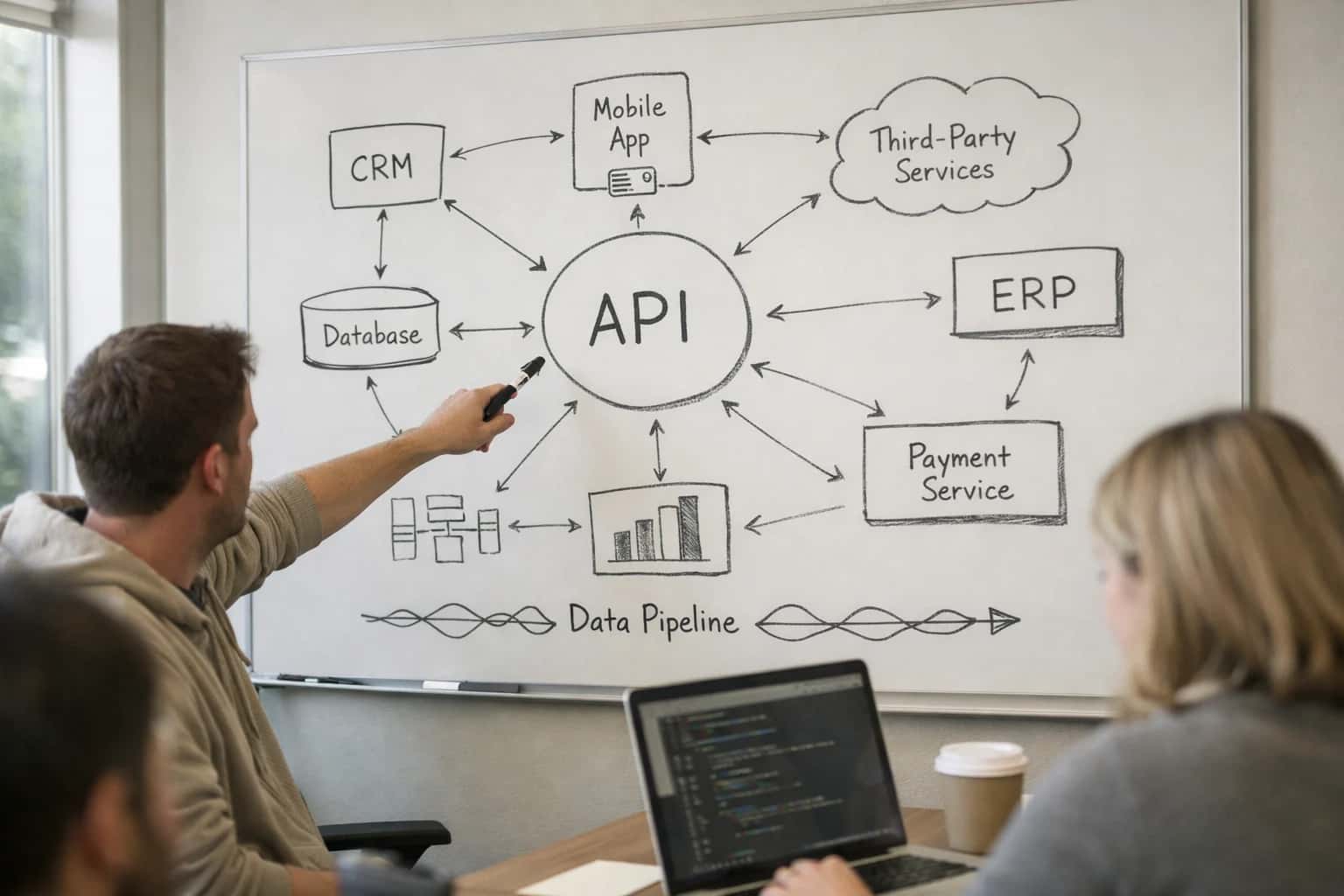
Enterprise integration architect reviewing API connections on laptop, diagram showing systems connecting, modern office setup.
ARCHITECTURE & IMPLEMENTATION

Where AI Fits in Dental Payment Processing

A practical blueprint for connecting AI to the payment posting and reconciliation workflows within your dental practice management system.

AI integration for payment processing connects directly to the Accounts Receivable (A/R) module and payment posting interfaces of your PMS (Dentrix, Eaglesoft, Open Dental, or Curve). The core function is to automate the matching of incoming electronic remittance advices (ERAs) and patient payment batches to the corresponding open claims and patient balances in the system. This typically involves:

  • Ingesting data via the PMS API or secure file drops (e.g., ERA 835 files, bank deposit reports).
  • Applying NLP and pattern matching to link payment line items to specific procedures and patients, even when payer references are incomplete.
  • Flagging discrepancies like underpayments, overpayments, or denials for human review before posting.
  • Executing the posting via the PMS API to update patient ledgers and claim statuses, creating a complete, auditable transaction trail.


The implementation centers on a stateful orchestration layer that sits between your payment sources and the PMS. This service listens for new payment files via webhooks or scheduled batch jobs, processes them through an AI model trained on your practice's historical payment data and CDT codes, and then presents a reconciliation dashboard for final approval by your billing staff. High-impact workflows include:

Automated ERA Posting: Reduces manual data entry from 15-20 minutes per file to a 2-minute review, posting hundreds of line items in seconds. Patient Payment Matching: Uses fuzzy matching on patient names, dates of service, and amounts to automatically apply cash, check, and card payments from your merchant processor, drastically reducing unapplied cash. Denial & Shortfall Triage: Classifies underpayments by reason (e.g., contractual adjustment, bundling) and automatically routes them to the appropriate follow-up workflow or staff member within the PMS.

Rollout requires a phased, provider-specific approach. Start with a single, high-volume payer's ERA feed to train the model on their remittance format and your posting rules. Governance is critical: all AI-suggested postings should require human-in-the-loop approval before the PMS is updated, with a clear rollback procedure. The system must maintain a complete log of source files, AI decisions, and user actions for compliance. Success is measured by the reduction in Days in A/R and posting labor hours, not by aiming for 100% fully automated posting—the goal is to eliminate the routine 80% so your team can focus on the complex 20% that truly requires human judgment.

WHERE AI AUTOMATES RECONCILIATION

Payment Processing Touchpoints in Major Dental PMS

The Core Reconciliation Surface

Payment posting is the primary module where AI can automate the match between incoming payments and open balances. In Dentrix, Eaglesoft, Open Dental, and Curve Dental, this is typically a grid or ledger view where staff manually apply electronic funds transfers (EFTs), credit card batches, and patient checks to specific claims or patient accounts.

An AI integration connects to this module via API or database to:

  • Ingest daily bank feeds and payment processor reports (e.g., from Square, Stripe, or practice merchant accounts).
  • Automatically match payments to open accounts receivable using algorithms that understand payer IDs, patient names, amounts, and dates, even with discrepancies.
  • Post payments directly into the PMS, applying the correct allocation (e.g., co-pay vs. insurance portion) and updating the account status.
  • Flag exceptions for human review, such as partial payments, overpayments, or payments with no clear match, logging them in a dedicated queue within the PMS interface.
DENTAL REVENUE CYCLE

High-Value AI Use Cases for Payment Processing

AI-driven automation for dental payment posting and reconciliation, connecting directly to your practice management system (Dentrix, Eaglesoft, Open Dental, Curve) to match electronic and patient payments to open claims, flag discrepancies, and accelerate cash flow.

01

Automated Payment Posting & Reconciliation

AI matches incoming EFT/ERA files and patient check/credit card payments to open claims and balances in the PMS. It automatically posts payments, applies adjustments, and flags any mismatches (underpayments, overpayments) for human review, turning a daily manual task into a batch process.

Hours -> Minutes
Daily reconciliation
02

Intelligent Denial & Discrepancy Triage

When payments don't match expected amounts, AI analyzes the explanation of benefits (EOB) or remark codes using NLP. It categorizes denials (e.g., missing documentation, bundling), suggests next-step actions (appeal, write-off, rebill), and can even auto-generate appeal letters by pulling data from the patient's chart.

Batch -> Real-time
Exception handling
03

Patient Payment Plan & Collections Orchestration

AI reviews aged accounts receivable, patient payment history, and treatment plan estimates to prioritize collection efforts. It can trigger personalized SMS/email payment reminders, suggest feasible payment plans based on soft credit signals, and update the PMS with payment promises—all while keeping sensitive communications compliant.

Same day
AR follow-up
04

Credit Balance & Refund Identification

Continuously scans the PMS accounts receivable ledger to identify patient or insurance overpayments that have created credit balances. AI flags these for review, can auto-generate refund request documentation for insurance, or prepare patient refund checks, ensuring compliance and improving patient satisfaction.

05

Cash Flow Forecasting & Anomaly Detection

By analyzing historical payment patterns, claim submission dates, and payer mix, AI provides a rolling 30/60/90-day cash flow forecast. It alerts the office manager to unexpected dips (e.g., a major payer slowing payments) and suggests proactive interventions, like prioritizing claims for a specific insurer.

1 sprint
Implementation timeline
06

PMS-to-Accounting Software Sync

AI acts as an intelligent bridge between your dental PMS and accounting software (e.g., QuickBooks). It automatically categorizes posted payments, adjustments, and write-offs into the correct general ledger accounts, reconciling daily deposits and eliminating manual data entry errors. Learn more about our approach to financial platform integrations.

PAYMENT POSTING & RECONCILIATION

Example AI Automation Workflows

These workflows illustrate how AI agents can automate the high-volume, error-prone task of matching payments to patient accounts and insurance claims within your dental PMS, turning a manual daily chore into a hands-off, auditable process.

Trigger: An 835 ERA file is received from the clearinghouse or payer.

Context/Data Pulled: The AI agent ingests the 835 file and queries the PMS for:

  • Open claims matching the payer, patient, and service dates.
  • Current patient account balances.
  • Provider and fee schedule details.

Model/Agent Action:

  1. Parses & Matches: Uses NLP to extract payer adjustments, patient responsibility amounts, and payment details. It matches each line item to the corresponding open claim in the PMS.
  2. Calculates & Validates: Calculates the expected payment based on the practice's fee schedule and contract with the payer. Flags any discrepancies (e.g., underpayments, unusual write-offs) that exceed a configurable threshold.
  3. Generates Posting Instructions: Creates a batch of precise posting instructions for the PMS's payment API.

System Update/Next Step: The batch is executed via the PMS API, posting payments and adjustments directly to the patient's account and closing the claim. A reconciliation report is generated for the billing manager, highlighting only the flagged discrepancies for review.

Human Review Point: The billing manager reviews the exception report. The AI provides context for each flag (e.g., "Payer paid 10% below contracted rate for D2750").

FROM PAYMENT POSTING TO RECONCILIATION

Implementation Architecture & Data Flow

A secure, event-driven architecture to automate payment matching and exception handling within your dental PMS.

The integration connects to your Practice Management System's (PMS) financial modules—typically the Payment Posting screen, Accounts Receivable (A/R) ledger, and Claim History—via its API or a secure database connection. The core flow is triggered by new payment events: when an electronic remittance advice (ERA) file is imported or a patient payment is recorded, the system extracts the payment details, payer information, and patient account numbers. This data is sent to an AI service that performs the critical matching logic, comparing the payment against open claims and outstanding balances in the PMS to propose the correct allocation.

The AI matching engine uses a combination of rules and machine learning to handle discrepancies. It cross-references payment amounts with claim totals, checks for split payments across multiple procedures, and flags common issues like underpayments, overpayments, or payments applied to the wrong patient. Matched transactions are posted back to the PMS via API, updating the patient ledger and claim status automatically. Unmatched or flagged payments are routed to a human-in-the-loop review queue within a separate dashboard, where staff can review the AI's reasoning and make corrections, which then feed back into the system as training data to improve future accuracy.

For governance and rollout, the system is deployed as a cloud service that sits adjacent to your PMS, ensuring no disruption to core operations. Access is controlled via role-based permissions, and a full audit trail logs every AI suggestion and user action for compliance. A phased implementation typically starts with a single payment type (e.g., ERAs from a major insurer) in a monitoring-only mode to validate accuracy before enabling full automation, minimizing risk while delivering immediate visibility into payment posting bottlenecks.

AI PAYMENT POSTING & RECONCILIATION

Code & Payload Examples

Automated Payment Posting Endpoint

This API call is triggered when an electronic remittance advice (ERA) file is received or a patient payment is captured via a payment gateway. The AI service matches the payment to open claims and patient balances in the PMS, posts the payment, and flags any discrepancies for human review.

python
import requests

# Example: Posting a matched payment to Dentrix via its API
payment_data = {
    "transaction_id": "PMT_20240517_001",
    "patient_id": "DENTRIX_PAT_12345",
    "claim_ids": ["CLM_78910", "CLM_78911"],
    "amount": 150.75,
    "payment_method": "CC",
    "date_received": "2024-05-17",
    "payer": "Delta Dental",
    "applied_allocations": [
        {"claim_id": "CLM_78910", "procedure_code": "D1110", "amount": 85.50},
        {"claim_id": "CLM_78910", "procedure_code": "D0120", "amount": 65.25}
    ],
    "discrepancy_flag": False,
    "discrepancy_note": ""
}

# Call to the PMS API to post the payment
response = requests.post(
    "https://api.dentrix.com/v1/payments",
    json=payment_data,
    headers={"Authorization": "Bearer YOUR_API_KEY", "Content-Type": "application/json"}
)

if response.status_code == 201:
    print(f"Payment posted successfully. PMS Payment ID: {response.json()['id']}")
else:
    print(f"Posting failed: {response.text}")
PAYMENT POSTING & RECONCILIATION

Realistic Time Savings & Operational Impact

How AI-driven automation transforms manual payment workflows in dental practice management systems.

MetricBefore AIAfter AINotes

Payment to Posting Time

1-2 business days

Same day

Electronic payments matched and posted automatically upon receipt

Payment Matching Accuracy

Manual keying, ~95%

Automated validation, >99%

AI cross-references EFT/ERA data with open claims and patient balances

Discrepancy Resolution

Manual review of aging report

Automated flagging & prioritization

System flags mismatches for staff review, ranked by amount and age

Staff Time per Batch

45-60 minutes

5-10 minutes review

Time spent on exception handling vs. full manual posting

Claim Denial Correlation

Manual spot-checking

Automated pattern detection

AI links payment shortfalls to specific denial reasons for proactive appeal

Patient Statement Trigger

End-of-month batch

Real-time after payment

Statements generated automatically for remaining balances after insurance pays

Reconciliation for Month-End

2-3 hour manual process

Automated report generation

AI provides audit-ready reconciliation report with all exceptions noted

SECURE, CONTROLLED IMPLEMENTATION

Governance, Security & Phased Rollout

A practical framework for deploying AI in dental payment workflows without disrupting revenue operations.

A production AI integration for payment processing must operate within the strict access controls and audit trails of your Practice Management System (PMS). This means implementing a service account with role-based permissions scoped exclusively to the billing and payment posting modules (e.g., Dentrix Payment Manager, Eaglesoft Transaction Ledger). All AI actions—fetching open claims, posting payments, flagging discrepancies—should generate immutable logs in the PMS audit trail, creating a clear lineage from AI suggestion to human-confirmed financial transaction. Data in transit between your PMS and our inference layer is encrypted, and we never store raw patient financial data (PHI/PFI) after processing.

The implementation follows a phased, value-driven rollout to de-risk the project and build stakeholder confidence:

  1. Phase 1: Read-Only Reconciliation Assistant. The AI ingests daily EFT/ERA files and patient check scans, matches them to open balances in the PMS, and presents a discrepancy report in a secure dashboard. Staff review and post payments manually, validating the AI's accuracy.
  2. Phase 2: Assisted Posting with Human-in-the-Loop. For validated payment types, the AI suggests full posting entries directly within the PMS interface. A billing staff member must approve each batch before the AI executes the write via API, maintaining a four-eyes principle.
  3. Phase 3: Conditional Autopilot. After establishing high confidence thresholds (e.g., >99.5% match accuracy for clean electronic payments), the system automatically posts exact-match transactions, flagging only exceptions for human review. This phase focuses on reducing manual work for the most repetitive, high-volume tasks.

Governance is maintained through continuous monitoring and a clear rollback protocol. We instrument key metrics: match accuracy rate, auto-post volume, and exception handling time. A dedicated dashboard allows the Office Manager or CFO to monitor system performance. If drift is detected or a new payment pattern emerges, the system can be instantly reverted to a prior phase. This controlled approach ensures the AI augments your team's efficiency while keeping financial controls and compliance—like HIPAA and PCI DSS considerations for payment data—firmly intact.

AI PAYMENT POSTING IMPLEMENTATION

Frequently Asked Questions

Practical questions about integrating AI for automated payment posting and reconciliation within dental practice management systems like Dentrix, Eaglesoft, Open Dental, and Curve Dental.

The AI agent orchestrates a multi-step verification workflow:

  1. Trigger: A new electronic payment (EFT/ERA) or patient payment (check, credit card) is posted to the practice's bank feed or payment processor.
  2. Context Pull: The agent queries the PMS via its API for:
    • Unapplied payments in the system.
    • Open claims by patient and date of service.
    • Patient account balances and payment history.
  3. AI Action: Using NLP and rule-based logic, the model:
    • Parses payer remittance advice (ERA) to extract procedure codes, allowed amounts, and patient responsibility.
    • For patient payments, analyzes the amount against outstanding balances and recent statements.
    • Scores potential matches based on patient ID, date, amount, and procedure details.
  4. System Update: The agent creates a batch of proposed payment postings in the PMS, applying funds to specific claims and patient accounts.
  5. Human Review Point: For matches below a confidence threshold (e.g., partial payments, discrepancies), the posting is flagged in a review queue within the PMS for office staff final approval before posting.
Prasad Kumkar

About the author

Prasad Kumkar

CEO & MD, Inference Systems

Prasad Kumkar is the CEO & MD of Inference Systems and writes about AI systems architecture, LLM infrastructure, model serving, evaluation, and production deployment. Over 5+ years, he has worked across computer vision models, L5 autonomous vehicle systems, and LLM research, with a focus on taking complex AI ideas into real-world engineering systems.

His work and writing cover AI systems, large language models, AI agents, multimodal systems, autonomous systems, inference optimization, RAG, evaluation, and production AI engineering.


