AI integration for dental claim submission targets the specific data objects and workflows within your Practice Management System (PMS). The primary touchpoints are the patient chart (for clinical notes and procedures), the insurance claim form (CMS-1500/Dental), and the clearinghouse submission queue. An AI agent acts on events—like a completed appointment or a saved treatment plan—to extract procedure details (CDT codes), review clinical narratives for medical necessity, and scrub the claim against a payer's ruleset before electronic submission via the PMS's native clearinghouse connection. This happens in the background, typically via secure API calls or by processing data exports, without disrupting the front-desk workflow.

Integration
AI Integration for Dental Claim Submission AI
A technical guide to automating dental insurance claim preparation, coding, and submission using AI integrated with Dentrix, Eaglesoft, Open Dental, and Curve Dental.
ARCHITECTURE AND IMPACT
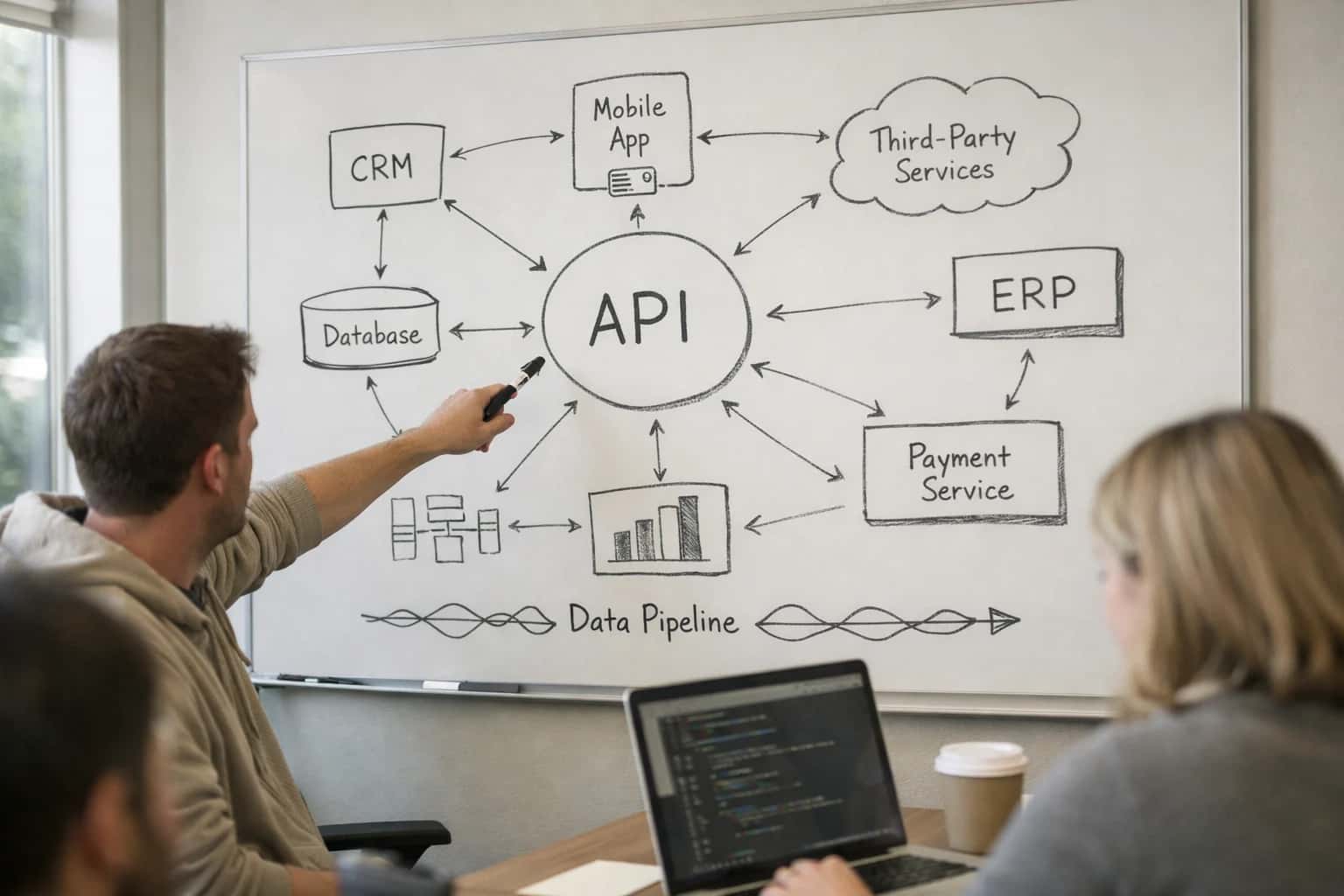
Where AI Fits in the Dental Claim Submission Workflow
A practical blueprint for integrating AI into the core revenue cycle of a dental practice, from clinical documentation to payer submission.
The high-value impact is turning a multi-step, error-prone manual process into a validated, automated pipeline. For example, an AI can:
- Parse clinical notes from the SOAP note module to ensure the documented diagnosis supports the billed procedure.
- Apply correct CDT codes and modifiers based on the narrative and tooth surfaces, reducing coding errors that lead to denials.
- Pre-scrub claims by checking for missing patient demographics, expired insurance IDs, or mismatched dates of service against the schedule.
- Generate an audit trail of changes and validations, stored as a note on the claim record in the PMS for compliance. The result is a cleaner claim submitted faster, which accelerates reimbursement and reduces the administrative burden on staff who typically perform this review manually.
A production rollout requires a phased approach. Start with a pilot on preventive claims (D0120, D1110) which have simpler rules, integrating via the PMS's API or a monitored export/import folder. Govern the AI's output with a human-in-the-loop review for the first 30-60 days, comparing its suggestions to historical submissions. Use this period to tune prompts and validation rules. Once confidence is high, expand to more complex basic and major restorative procedures. Critical to success is ensuring the AI system has read-only access to clinical data and writes only to designated audit fields, maintaining the integrity of the PMS's core billing engine. For practices using systems like Dentrix or Open Dental, this often involves partnering with a vendor like Inference Systems that understands the specific data models and secure integration patterns required for healthcare.
WHERE AI CONNECTS TO THE CLAIMS WORKFLOW
Integration Touchpoints in Major Dental PMS Platforms
Core Patient and Payer Records
The patient record and insurance modules are the primary data sources for claim preparation. AI integration here focuses on real-time data validation and enrichment.
Key Integration Points:
- Patient Demographics API: Pull name, DOB, and address to pre-fill claim forms (CMS-1500/Dental).
- Insurance Plan API: Retrieve subscriber ID, group number, and payer-specific rules to apply correct filing logic.
- Eligibility & Benefits Check: Trigger real-time verification via the PMS's clearinghouse connector before claim creation to confirm active coverage and benefits.
AI agents use this data to scrub for common errors (e.g., mismatched patient/insured details) before submission, reducing front-end rejections.
REVENUE CYCLE AUTOMATION
High-Value AI Use Cases for Dental Claim Submission
Integrating AI into your dental practice management system transforms the manual, error-prone claim process into an automated, intelligent workflow. These use cases target specific bottlenecks in the submission lifecycle, from initial coding to final payment, to reduce denials and accelerate revenue.
01
Automated CDT Code Assignment
An AI agent reviews the clinical notes and radiograph notes from the patient's chart in the PMS, then suggests the most accurate and billable Current Dental Terminology (CDT) codes. It cross-references the planned procedures against the patient's insurance benefits on file to flag potential coverage issues before submission.
Minutes -> Seconds
Coding time
02
Intelligent Claim Scrubbing & Error Prevention
Before a claim batch is sent to the clearinghouse, an AI pre-submission scrubber analyzes each claim. It checks for missing patient demographics, incorrect place-of-service codes, mismatched dates, and incomplete narratives. It flags errors with specific correction instructions, drastically reducing the 'returned for correction' rate.
>90%
First-pass acceptance
03
EOB & Remittance Advice Processing
When electronic Explanation of Benefits (EOBs) or paper EOBs (via OCR) are received, AI extracts key data: payer adjustments, patient responsibility amounts, denial reasons, and allowed amounts. It then automatically posts payments and adjustments to the correct claim in the PMS and updates the patient ledger, reconciling expected vs. actual payment.
Batch -> Real-time
Payment posting
04
Denial Triage & Automated Appeal Drafting
AI categorizes claim denials by root cause (e.g., 'missing x-ray', 'medical necessity'). For common, rule-based denials, it automatically gathers the required supporting documentation from the patient's chart and drafts a structured appeal letter. It routes complex denials to a human biller with a summary of the issue and suggested action.
1-2 Days
Appeal turnaround
05
Predictive A/R Prioritization
AI analyzes the aging accounts receivable report from the PMS, scoring claims by likelihood of successful collection. It prioritizes follow-up actions, suggesting which claims need a phone call vs. a statement, and can even draft personalized patient payment reminder messages based on past payment behavior.
Focus on Top 20%
Collection effort
06
Real-Time Eligibility & Benefit Verification
Integrated directly into the scheduling or check-in workflow, an AI agent performs a real-time eligibility check via the payer's portal or a clearinghouse. It parses the complex response to update the PMS with accurate coverage details, annual maximums, deductibles met, and waiting periods, preventing surprise denials.
At Check-in
Coverage certainty
PRODUCTION BLUEPRINTS
Example AI-Automated Claim Submission Workflows
These are concrete, production-ready workflows for integrating AI into the dental claim lifecycle. Each example details the trigger, data flow, AI action, and system update, showing how intelligence is injected directly into your existing PMS (Dentrix, Eaglesoft, Open Dental, Curve) to reduce errors and accelerate revenue.
Trigger: A provider completes and signs a procedure in the clinical charting module.
Context Pulled: The PMS API is called with the patient and appointment IDs to retrieve:
- Completed procedure details (tooth numbers, surfaces, materials)
- Attached clinical notes and radiograph notes
- Patient's insurance plan details (primary vs. secondary)
- Historical claim data for similar procedures
AI Action: A specialized NLP model analyzes the unstructured clinical notes against the procedure data.
- Validates Procedure: Confirms the documented clinical work supports the billed procedure.
- Suggests CDT Codes: Recommends the most accurate, billable CDT code, highlighting any need for modifiers (e.g., D2391 vs. D2392 for resin composite).
- Scrubs for Errors: Flags potential issues like mismatched tooth numbers for quadrants or missing narrative requirements.
System Update: A draft claim is auto-populated in the PMS billing module with:
- The AI-suggested CDT code (provider can override)
- A generated claim narrative pulled from the model's analysis
- Internal flags for any recommended attachments (e.g., perio chart, X-ray)
- The claim status is set to 'Ready for Review'.
Human Review Point: The billing coordinator reviews the AI-generated claim, makes any final adjustments, and submits the batch.
FROM MANUAL CLAIM PREP TO AUTOMATED SUBMISSION
Implementation Architecture: Data Flow and System Components
A production-ready AI integration for dental claim submission connects your Practice Management System (PMS) to intelligent services that review, code, scrub, and submit claims.
The core integration pattern is an event-driven workflow. When a new procedure is charted and marked as complete in your PMS (Dentrix, Eaglesoft, Open Dental, or Curve), a secure webhook or API call triggers the AI claim engine. This engine ingests the patient's clinical notes, procedure codes, and insurance details from the PMS. Using NLP, it first reviews the clinical documentation for completeness and medical necessity, cross-referencing the planned CDT codes. It then applies a rules-based and ML-powered claim scrubber, checking for common errors like mismatched tooth surfaces, missing narratives, or incorrect age limitations that typically cause denials.
The scrubbed claim data is formatted into a HIPAA-compliant 837D electronic claim file. The system then submits this file directly to your PMS's integrated clearinghouse (e.g., Change Healthcare, Availity, DentalXChange) via its API. Submission statuses (accepted, rejected, pending) are captured and written back to the PMS, updating the claim's status and logging the transaction in the audit trail. For rejected claims, the AI analyzes the rejection reason (e.g., Missing Tooth Number, Invalid Modifier) and can either auto-correct and resubmit or flag the claim for a human biller with a specific remediation note attached to the patient's account in the PMS.
Governance is critical. This architecture operates under a strict RBAC model, mirroring your PMS permissions. All AI suggestions and automated actions are logged as discrete events with a clear audit trail showing the source data, the AI's reasoning, and the user who approved the action. A human-in-the-loop approval step is configurable for high-value claims or new procedure types before submission. The entire system is deployed as a cloud service that calls your PMS APIs, requiring no software installation on practice servers, and scales across multiple locations for DSOs.
CLAIM SUBMISSION WORKFLOW
Code and Payload Examples
Extracting Clinical Notes and Procedure Data
Before a claim can be scrubbed, relevant data must be extracted from the PMS. This typically involves querying the patient's chart for the date of service, clinical notes, and planned procedures. The AI agent calls the PMS API to retrieve this structured and unstructured data, which will be used for code validation and narrative generation.
Example API Call (Pseudocode - Open Dental):
python# Fetch appointment and procedure data for claim generation import requests def get_procedure_data(patient_id, appointment_date): # Authenticate with PMS API headers = {"Authorization": f"Bearer {API_TOKEN}"} # Query for the specific appointment and linked procedures endpoint = f"https://api.opendental.com/v1/patients/{patient_id}/appointments" params = {"date": appointment_date, "expand": "procedures"} response = requests.get(endpoint, headers=headers, params=params) appointment_data = response.json() # Extract procedure codes and notes procedures = [] for proc in appointment_data.get('procedures', []): procedures.append({ "code": proc['procedure_code'], "description": proc['description'], "tooth": proc.get('tooth_number'), "surface": proc.get('surface'), "note": proc.get('clinical_note') }) return { "patient_id": patient_id, "date_of_service": appointment_date, "procedures": procedures, "clinical_notes": appointment_data.get('clinical_summary') }
This function returns a clean JSON payload containing all necessary elements for the AI to begin claim review.
AI-ENHANCED CLAIM SUBMISSION
Realistic Time Savings and Operational Impact
How AI integration for dental claim submission transforms manual, error-prone workflows into automated, high-accuracy processes within your PMS.
| Workflow Step | Before AI | After AI | Key Impact |
|---|---|---|---|
Clinical Note Review | Manual reading and code lookup (5-10 min) | NLP auto-extraction and CDT code suggestion (1 min) | Reduces coder fatigue, standardizes code selection |
Claim Scrubbing | Batch review with clearinghouse edits (Next day) | Real-time error detection and correction (Same day) | Submits cleaner claims, reduces front-end rejections |
Electronic Submission | Manual file export and upload (15-30 min per batch) | Automated, event-triggered submission via PMS API (2 min) | Frees staff for patient-facing tasks, accelerates cash flow |
EOB and Denial Triage | Manual review and sorting of paper/PDF EOBs (Hours) | Automated OCR, NLP classification, and PMS status update (Minutes) | Prioritizes follow-up, surfaces denial patterns for training |
Patient Balance Calculation | Manual math after payment posting (Prone to error) | AI matches payments to claims, calculates patient responsibility | Improves accuracy of patient statements, reduces billing calls |
Coding Audit & Compliance | Quarterly manual sample audit (Reactive) | Continuous AI audit on 100% of claims (Proactive) | Identifies coding drift early, supports defensible documentation |
Staff Training & Onboarding | Weeks of shadowing for claim workflows | AI acts as a real-time copilot with rule explanations | Reduces ramp time, ensures consistency across team members |
CONTROLLED IMPLEMENTATION FOR DENTAL REVENUE CYCLE
Governance, Security, and Phased Rollout
A secure, phased approach to integrating AI into your dental practice management system for claim submission.
A production-ready AI integration for dental claim submission requires a secure-by-design architecture that respects the sensitive data in your PMS. This typically involves a dedicated integration service that sits outside the PMS, communicating via its secure API (e.g., Dentrix Open API, Eaglesoft's eServices, Open Dental's REST API, or Curve Dental's webhooks). Patient data for claim review is pulled in real-time or in scheduled batches, processed by the AI for coding and scrubbing, and results are posted back as a draft claim or an alert within the PMS. All data in transit and at rest is encrypted, and access is governed by role-based access controls (RBAC) tied to existing PMS user roles (e.g., billing manager, dentist). Every AI suggestion and user action is logged to a tamper-evident audit trail within the PMS or a linked system for compliance.
Rollout follows a low-risk, high-value phased approach. Phase 1 (Pilot): Start with a single provider or location, applying AI only to a subset of claim types (e.g., preventive procedures like D1110, D0120). The AI acts as a "co-pilot" for your billing staff, suggesting CDT codes and highlighting potential errors in a side panel, but requiring manual review and final submission. This builds trust and gathers feedback. Phase 2 (Expansion): Expand to all providers and more complex procedures (e.g., crowns, bridges). Introduce automated claim scrubbing where the AI runs the built-in rules of your clearinghouse (e.g., Change Healthcare, Waystar) pre-submission, flagging mismatched tooth surfaces or missing narratives. Phase 3 (Automation): For high-confidence, low-risk claims (e.g., recurring hygiene visits), enable auto-submission with a human-in-the-loop exception queue for any claim scoring below a defined confidence threshold.
Governance is critical. Establish a cross-functional oversight committee (billing manager, dentist owner, IT) to review AI performance metrics like claim acceptance rate, reduction in days to payment, and manual review time saved. Implement regular model monitoring to detect drift in coding accuracy, especially after CDT code updates. Use the phased rollout to create a feedback loop where denied claims are analyzed to retrain and improve the AI. This controlled, iterative process minimizes disruption to your cash flow while systematically unlocking efficiency gains, turning a 15-minute manual claim review into a 30-second verification task.
Enabling Efficiency, Speed & Accuracy
Intelligent Analysis, Decision & Execution
We build AI systems for teams that need search across company data, workflow automation across tools, or AI features inside products and internal software.
Talk to Us
Search across company data
Give teams answers from docs, tickets, runbooks, and product data with sources and permissions.
Useful when people spend too long searching or get different answers from different systems.
Enterprise searchRAGPermissions
Read more
Automate internal workflows
Use AI to route work, draft outputs, trigger actions, and keep approvals and logs in place.
Useful when repetitive work moves across multiple tools and teams.
AI agentsWorkflow automationGovernance
Read more
Add AI to products and internal tools
Build assistants, guided actions, or decision support into the software your team or customers already use.
Useful when AI needs to be part of the product, not a separate tool.
AI integrationDecision supportModel routing
Read moreDENTAL CLAIM SUBMISSION AI
Frequently Asked Questions (FAQ)
Common technical and operational questions about integrating AI for intelligent claim preparation and submission directly into your dental practice management system.
The integration connects via the PMS's API or a secure database bridge (for on-premise systems like Dentrix or Eaglesoft). The typical data flow is:
- Trigger: A claim is marked as "Ready to Submit" or a batch submission job is initiated in the PMS.
- Context Pull: The AI agent retrieves the claim header, procedure details, clinical notes, and attached documentation (e.g., X-rays, perio charts) via API calls.
- Data Enrichment: The system cross-references the patient's insurance plan details and benefit history from the PMS to apply plan-specific rules.
- AI Processing: The claim data is sent to the AI engine for validation and scrubbing.
- System Update: Results (clean claim file or error report) are posted back to a dedicated field or work queue within the PMS for review or automatic submission.
For cloud-native systems like Curve Dental, integration typically uses webhooks and REST APIs for real-time event-driven processing.

About the author
Prasad Kumkar
CEO & MD, Inference Systems
Prasad Kumkar is the CEO & MD of Inference Systems and writes about AI systems architecture, LLM infrastructure, model serving, evaluation, and production deployment. Over 5+ years, he has worked across computer vision models, L5 autonomous vehicle systems, and LLM research, with a focus on taking complex AI ideas into real-world engineering systems.
His work and writing cover AI systems, large language models, AI agents, multimodal systems, autonomous systems, inference optimization, RAG, evaluation, and production AI engineering.
LinkedIn
Limited slotsGet a Free AI Consultation
Partnered with leading AI, data, and software stack.





How We Work
Custom AI workflows for your Business
One-fit-all AI don't work for modern businesses. At Inferensys, we aim to understand your business & custom requirements; which we use to define most efficient agentic workflows, the data, and the tools for your business.
01
Review the use case
We understand the task, the users, and where AI can actually help.
Read more02
Pick the right approach
We define what needs search, automation, or product integration.
Read more03
Build the first useful version
We implement the part that proves the value first.
Read more04
Improve from there
We add the checks and visibility needed to keep it useful.
Read moreThe first call is a practical review of your use case and the right next step.
Talk to Us