AI integration for Salesforce Field Service targets three primary surfaces: the Service Appointment and Work Order objects for scheduling logic, the Field Service Mobile app for technician copilots, and the Service Resource and Service Territory data model for capacity and routing. The goal is to inject intelligence into the GSP (Geographic Service Planning) engine and the technician workflow without replacing the core FSL data model. This means using the FSL API and Apex triggers to call external AI services that analyze real-time variables—traffic, weather, parts inventory, technician skill and certification, customer priority, and estimated job duration—to propose optimal schedules, dynamic reroutes, and accurate ETAs.

Integration
AI Integration for Salesforce Field Service
A technical blueprint for embedding AI into Salesforce Field Service to optimize scheduling, forecast parts, automate work order summaries, and enable dynamic routing based on real-time conditions.
ARCHITECTURE AND ROLLOUT
Where AI Fits into Salesforce Field Service
A practical blueprint for integrating AI agents and models into Salesforce Field Service Lightning (FSL) to optimize scheduling, empower technicians, and automate service delivery.
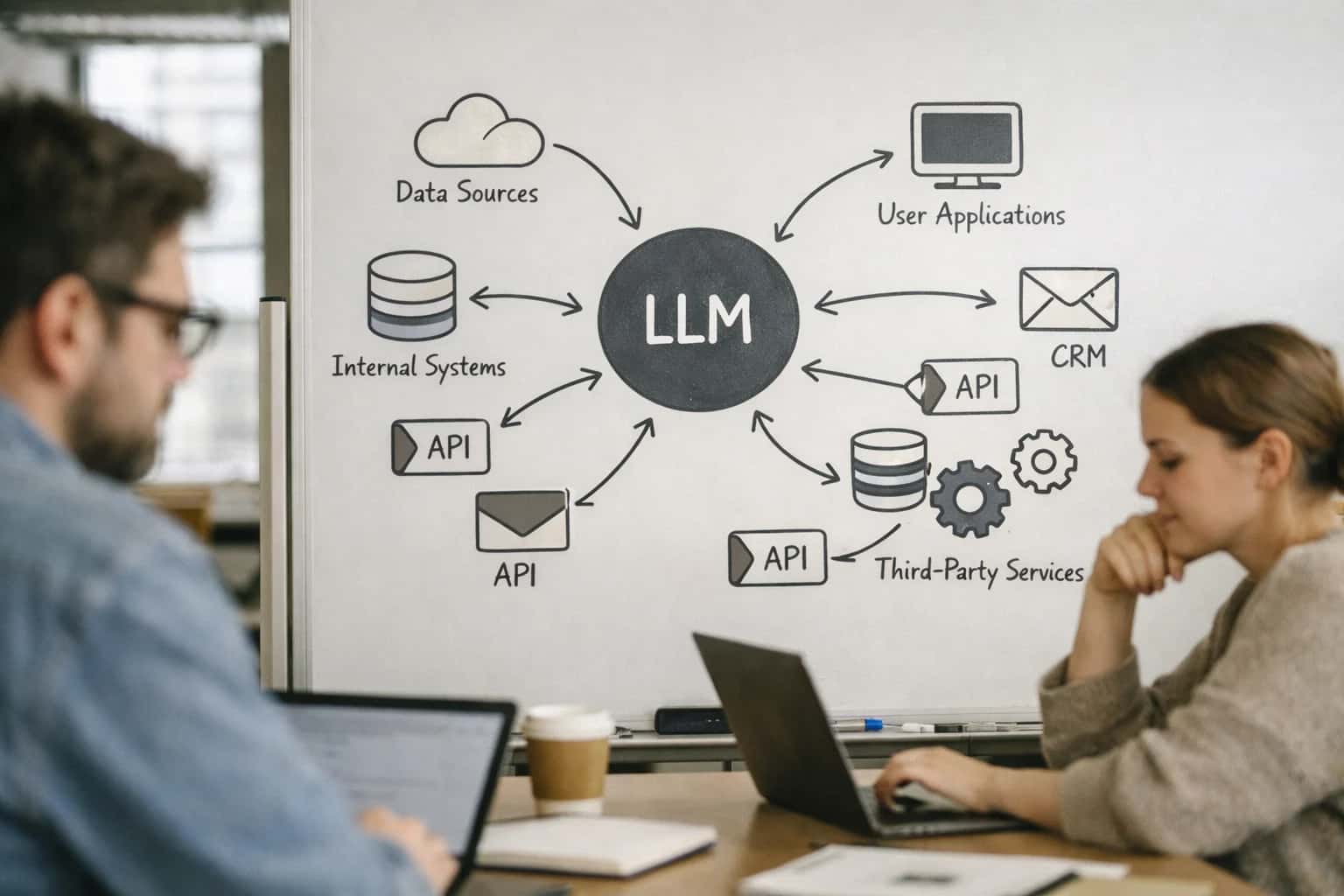
Implementation typically involves a queue-based architecture. An AI agent listens for events like a new Work Order creation, a Service Appointment rescheduling, or a technician status change (Dispatched, In Progress, Completed). It processes the event payload, calls a model for optimization or generation, and posts recommendations back to Salesforce as a Recommended Schedule Change record or a chat message in the Field Service Mobile feed. For example, an AI model can predict parts failure probability based on asset history and automatically create a Product Request line on the Work Order before dispatch, reducing repeat visits. Another agent can summarize verbose technician notes from the Work Order Line Item into a clear customer-facing summary for the Service Report.
Rollout requires a phased, territory-first approach. Start with a single service territory or a specific work type (e.g., Preventive Maintenance) to validate AI recommendations against dispatcher decisions, building trust in the model's logic. Governance is critical: all AI-generated recommendations should be logged in a custom AI Recommendation Log object with traceability to the source data and model version, and key actions (like auto-accepting a schedule change) should require configurable approval steps. The integration succeeds when it reduces dispatcher manual effort for complex multi-technician scheduling, cuts mean travel time, and gives technicians contextual intelligence at the point of service, all while operating within the familiar Salesforce FSL interface and audit trail.
WHERE AI AGENTS CONNECT TO THE SERVICE WORKFLOW
Key Integration Surfaces in Salesforce Field Service
Optimizing the Service Appointment Object
The core of Field Service is the Service Appointment (ServiceAppointment) object. AI integration here focuses on dynamic scheduling by analyzing:
- Real-time constraints: Travel time, technician skill sets (
SkillRequirement), and parts availability (ProductItem). - External signals: Traffic, weather, and customer priority from the associated Work Order (
WorkOrder).
An AI agent can consume these signals via the Salesforce REST API or Platform Events to continuously re-optimize the Gantt chart in the Dispatcher Console. The output is a set of proposed schedule adjustments, which can be applied via Apex triggers or approved by a dispatcher, updating ArrivalWindowStartTime and ArrivalWindowEndTime fields.
Impact: Reduces travel time by 15-25%, increases first-time fix rates, and improves technician utilization.
IMPLEMENTATION PATTERNS
High-Value AI Use Cases for Salesforce Field Service
Move beyond basic scheduling with AI agents that connect to Service Appointment, Work Order, and Service Resource objects to optimize operations, empower technicians, and improve customer outcomes.
01
Intelligent Scheduling & Dynamic Dispatch
AI analyzes real-time traffic, technician skill/certification, parts inventory on the service vehicle, and appointment priority to dynamically re-optimize the daily schedule. Reduces travel time, improves first-time fix rates, and handles last-minute cancellations or emergency calls by re-assigning in near real-time.
Hours -> Minutes
Schedule optimization
02
Predictive Parts & Inventory Forecasting
An AI model consumes historical Work Order data, asset types, and failure codes to predict the parts and tools a technician will need for a scheduled job. Automatically generates pick lists for the warehouse, checks truck stock via Inventory objects, and creates pre-emptive purchase orders for common failures.
Same day
Parts readiness
03
Automated Work Order Summaries from Notes
Post-visit, an AI agent processes the technician's voice notes or typed observations from the Field Service Mobile app. It extracts completed tasks, used parts, and follow-up recommendations to auto-populate the Work Order description and update related Asset records, saving administrative back-office time.
Batch -> Real-time
Note-to-record workflow
04
Technician Copilot for Diagnostics & Resolution
A mobile-accessible AI assistant provides technicians with step-by-step guidance by querying the knowledge base (Salesforce Knowledge), past Work Orders for similar assets, and OEM manuals. It can analyze photos of equipment to suggest diagnostic steps or parts, all logged as Service Report activities.
1 sprint
Pilot implementation
05
Proactive Maintenance & Asset Health Scoring
AI models IoT sensor data from connected assets (via Platform Events) with service history to calculate a real-time asset health score. Automatically generates preventive Service Appointments in Salesforce when thresholds are breached, moving from break-fix to predictive service models.
Reduce manual triage
For IoT alerts
06
Customer Communication & Self-Service Automation
Integrate an AI chatbot with the customer portal (Experience Cloud) to handle appointment booking, ETA updates, and simple Q&A. For complex issues, it can auto-create Cases, pre-fill Asset details, and schedule a dispatcher-reviewed Service Appointment, improving CX while reducing call volume.
Hours -> Minutes
Customer wait time
IMPLEMENTATION PATTERNS
Example AI-Powered Field Service Workflows
These concrete workflows illustrate how AI agents and models connect to Salesforce Field Service Lightning (FSL) objects—Work Orders, Service Appointments, Service Resources, and Assets—to automate high-effort tasks and improve first-time fix rates.
Trigger: A new WorkOrder is created with priority, required skills, and an estimated duration.
Context Pulled: The AI agent queries:
- Available
ServiceResourcesmatching skill and certification requirements. - Real-time location and status from connected telematics (e.g., Samsara, Geotab) or the Resource's mobile app.
- Current traffic and weather conditions via external APIs.
- Historical performance data (average job duration, customer rating) for each potential Resource.
Agent Action: A lightweight model evaluates all constraints and scores each potential assignment. It recommends the optimal ServiceResource and proposes a ServiceAppointment time window that minimizes travel time and maximizes schedule density.
System Update: The recommendation is posted to the dispatcher's console via a Lightning Web Component. Upon approval, the system automatically:
- Assigns the
ServiceResourceto theServiceAppointment. - Updates the
WorkOrderstatus. - Sends a push notification to the technician's FSL Mobile app with job details and navigation.
Human Review Point: The dispatcher retains final approval, especially for high-priority accounts or complex multi-technician jobs. The AI provides a clear rationale for its recommendation.
FROM SCHEDULING TO SERVICE DELIVERY
Implementation Architecture & Data Flow
A practical blueprint for integrating AI agents into Salesforce Field Service to optimize dispatch, empower technicians, and automate post-visit workflows.
The integration connects AI models to key Salesforce Field Service objects and automations. The primary data flow begins with the Service Appointment and Work Order. An AI scheduling agent consumes real-time data—including technician Skill, Location, Parts Inventory levels, and estimated job duration—to optimize the Gantt chart, dynamically reassigning appointments to minimize travel time and maximize first-time fix rates. This agent operates as a headless service, calling the Scheduling API to propose changes, which are then presented to dispatchers for approval within the Dispatcher Console, maintaining human oversight.
For technicians in the field, a copilot agent surfaces within the Field Service Mobile App. This agent uses the Work Order Line Item and Asset records to provide contextual guidance: it can generate a step-by-step repair checklist by analyzing past Service Reports, forecast required parts by cross-referencing the Product catalog with symptom descriptions, and draft customer-facing summaries from technician voice notes. All agent interactions are logged as Activities against the Work Order, creating a full audit trail. Critical parts requests can trigger automated workflows to check local Inventory levels and create Purchase Orders if stock is low.
Post-service, the architecture automates administrative closure. An AI summarization agent processes the technician's notes, photos, and meter readings attached to the Work Order to generate a completed Service Report, populating key fields like Resolution_Code__c and Parts_Used__c. This report is then attached to the Case (if one exists) and can trigger a follow-up customer satisfaction survey. The entire flow is governed by Platform Events for loose coupling, Named Credentials for secure API access to AI models, and Permission Sets to control which roles can invoke or override AI recommendations, ensuring the integration scales within enterprise IT and compliance frameworks.
SALESFORCE FIELD SERVICE INTEGRATION PATTERNS
Code & Payload Examples
Automating Technician Note Processing
After a field service visit, technicians log notes, parts used, and completion codes in the Service Appointment or Work Order. An AI agent can consume this unstructured data to generate a professional summary for the customer and internal stakeholders.
Implementation Flow:
- A
WorkOrderstatus change toCompletedtriggers a Salesforce Flow. - The Flow collects the Work Order record ID and related
ServiceReportor note attachments. - This payload is sent via an Apex callout or external service (like n8n) to an LLM endpoint.
- The LLM returns a structured summary, which is appended to the Work Order description and emailed.
Example Payload to LLM API:
json{ "work_order_id": "0WO0x0000008TkGGAU", "technician_notes": "Replaced compressor unit Model X-2024. Found corrosion on line B. Performed pressure test - passed. Customer advised on monthly filter check.", "parts_used": ["Compressor X-2024", "Sealant Kit AB-12"], "completion_code": "Repair Completed", "instruction": "Generate a concise, customer-friendly service summary highlighting work performed, parts replaced, and any recommendations." }
SALESFORCE FIELD SERVICE AI INTEGRATION
Realistic Time Savings & Operational Impact
This table outlines the operational impact of integrating AI into key Salesforce Field Service workflows, focusing on realistic time savings and process improvements for dispatchers, technicians, and service managers.
| Workflow / Metric | Before AI | After AI | Implementation Notes |
|---|---|---|---|
Schedule Optimization & Dispatch | Manual drag-and-drop based on static rules, 30-60 min daily | AI-recommended assignments in <5 min, dynamic for real-time changes | AI consumes work order priority, skills, location, traffic, parts availability; human dispatcher approves |
Parts Forecasting for Truck Stock | Weekly manual review of common parts, high risk of truck rolls for missing items | Daily AI-generated pick list per technician, reduces 'parts not on truck' by ~40% | Model analyzes historical work order completion data and upcoming scheduled jobs |
Work Order Summarization from Notes | Technician writes narrative; back-office admin transcribes to final report (15-20 min per WO) | AI drafts summary from technician voice/text notes in <2 min; admin reviews & finalizes | Integrates with Salesforce Mobile; summary populates Work Order description and customer communications |
First-Time Fix Rate Analysis | Monthly manual report to identify root causes of repeat visits | AI flags at-risk work orders in real-time based on notes, parts used, and technician skill match | Proactive alerts allow dispatchers to reassign or add parts before technician arrival |
Dynamic Route Adjustments | Reactive phone calls for traffic or urgent priority jobs disrupts entire schedule | AI proposes schedule reshuffles and notifies impacted technicians via mobile app | Consumes live traffic API and incorporates new high-priority work orders as they are created |
Preventive Maintenance Scheduling | Calendar-based or manual triggers, often too early or too late | AI recommends PM jobs based on asset sensor data, usage patterns, and failure history | Creates Service Appointment records in Salesforce; integrates with IoT platforms via API |
Service Contract Renewal Identification | Quarterly manual review of expiring contracts and asset lists | AI scores renewal likelihood monthly and surfaces top opportunities in a list view | Analyzes service history, customer satisfaction scores, and asset age from Salesforce data |
CONTROLLED DEPLOYMENT FOR FIELD OPERATIONS
Governance, Security, and Phased Rollout
A practical guide to implementing AI in Salesforce Field Service with appropriate controls, security, and a low-risk rollout strategy.
A production AI integration for Salesforce Field Service must respect the platform's data model and security context. This means your AI agents and workflows should operate within the existing Permission Sets, Field-Level Security (FLS), and Sharing Rules that govern WorkOrder, ServiceAppointment, ServiceResource, and ServiceTerritory objects. All AI-generated content—like work order summaries or parts forecasts—should be written to custom fields or objects with clear audit trails, and any automated dispatch suggestions should be routed through existing approval queues or require a dispatcher's final sign-off to maintain operational control.
We recommend a phased rollout, starting with a single, high-value workflow in a controlled pilot group. A common first phase is AI-Powered Work Order Summarization, where an agent listens for WorkOrder status changes to 'Completed', uses the Salesforce API to fetch the technician's notes from the WorkOrderLineItem or related FeedItem, and generates a concise customer-facing summary. This output is written to a custom text field, flagged for human review by a back-office coordinator, and only published after approval. This low-risk use case demonstrates value without impacting live scheduling.
Subsequent phases can introduce more complex automation. Phase two might deploy Predictive Parts Forecasting as a dispatcher copilot, suggesting parts to add to a WorkOrder based on the ServiceReport history of similar assets. Phase three could pilot Dynamic Scheduling Optimization in a single territory, where an AI agent analyzes real-time variables (traffic, technician skill, parts inventory) and proposes schedule changes to the dispatcher via a custom Lightning component. Each phase expands only after validating accuracy, user adoption, and system performance in the prior stage.
Security is paramount, especially when integrating external LLM APIs. All calls should be proxied through a secure middleware layer that enforces data masking (e.g., stripping PII from notes before sending for summarization), manages API keys, and logs all inputs and outputs for compliance. This architecture ensures your Salesforce org remains the system of record, with AI acting as a controlled enhancement to human decision-making, not a replacement. For related architectural patterns, see our guide on Custom AI Development for Salesforce.
Enabling Efficiency, Speed & Accuracy
Intelligent Analysis, Decision & Execution
We build AI systems for teams that need search across company data, workflow automation across tools, or AI features inside products and internal software.
Talk to Us
Search across company data
Give teams answers from docs, tickets, runbooks, and product data with sources and permissions.
Useful when people spend too long searching or get different answers from different systems.
Enterprise searchRAGPermissions
Read more
Automate internal workflows
Use AI to route work, draft outputs, trigger actions, and keep approvals and logs in place.
Useful when repetitive work moves across multiple tools and teams.
AI agentsWorkflow automationGovernance
Read more
Add AI to products and internal tools
Build assistants, guided actions, or decision support into the software your team or customers already use.
Useful when AI needs to be part of the product, not a separate tool.
AI integrationDecision supportModel routing
Read moreIMPLEMENTATION AND WORKFLOW DETAILS
Frequently Asked Questions
Practical questions and workflow blueprints for integrating AI into Salesforce Field Service Lightning (FSL) to optimize scheduling, empower technicians, and automate post-visit operations.
This workflow uses real-time data and predictive models to continuously optimize the dispatch board.
- Trigger: A new work order is created, an existing appointment is rescheduled, or a real-time condition changes (e.g., traffic, technician delay, part availability).
- Context Pulled: The AI agent queries the FSL data model for:
- Technician
ServiceResourcerecords (skills, certifications, location, current workload). WorkOrderdetails (required skills, estimated duration, priority, customer location).- Real-time external data via API (traffic conditions, weather, parts inventory levels at nearby warehouses).
- Historical performance data (actual vs. estimated job times for similar work orders).
- Technician
- Model Action: A constraint optimization model evaluates thousands of potential schedule permutations to minimize:
- Total travel time
- Overtime costs
- Priority SLA breaches
- Skill mismatches It outputs a ranked list of optimal technician assignments and ETAs.
- System Update: The top recommendation is presented to the dispatcher via a Lightning component or automatically applied via an Apex trigger, updating the
ServiceAppointmentrecord'sAssignedResourceandArrivalWindow. - Human Review Point: For high-priority or complex jobs, the system can require dispatcher approval before auto-assigning, presenting the "why" behind the recommendation.

About the author
Prasad Kumkar
CEO & MD, Inference Systems
Prasad Kumkar is the CEO & MD of Inference Systems and writes about AI systems architecture, LLM infrastructure, model serving, evaluation, and production deployment. Over 5+ years, he has worked across computer vision models, L5 autonomous vehicle systems, and LLM research, with a focus on taking complex AI ideas into real-world engineering systems.
His work and writing cover AI systems, large language models, AI agents, multimodal systems, autonomous systems, inference optimization, RAG, evaluation, and production AI engineering.
LinkedIn
Limited slotsGet a Free AI Consultation
Partnered with leading AI, data, and software stack.





How We Work
Custom AI workflows for your Business
One-fit-all AI don't work for modern businesses. At Inferensys, we aim to understand your business & custom requirements; which we use to define most efficient agentic workflows, the data, and the tools for your business.
01
Review the use case
We understand the task, the users, and where AI can actually help.
Read more02
Pick the right approach
We define what needs search, automation, or product integration.
Read more03
Build the first useful version
We implement the part that proves the value first.
Read more04
Improve from there
We add the checks and visibility needed to keep it useful.
Read moreThe first call is a practical review of your use case and the right next step.
Talk to Us