AI integration for commission tracking typically connects at three key layers within your CRM: the Opportunity/Deal object, the Product/Quote line items, and the Commission custom object or related list. The primary function is to interpret the raw, closed-won data—including deal amount, product mix, discounts, and rep tier—against the often-nested logic of your compensation plans. Instead of relying on manual spreadsheet exports or brittle formula fields, an AI agent can be triggered via a platform event or a Closed-Won status change. It ingests the deal context, parses the compensation plan document (often stored as a PDF in Salesforce Files or SharePoint), and executes a multi-step reasoning process to calculate the correct payout, populating a Commission record with a detailed, auditable breakdown.

Integration
AI Integration for CRM Commission Tracking
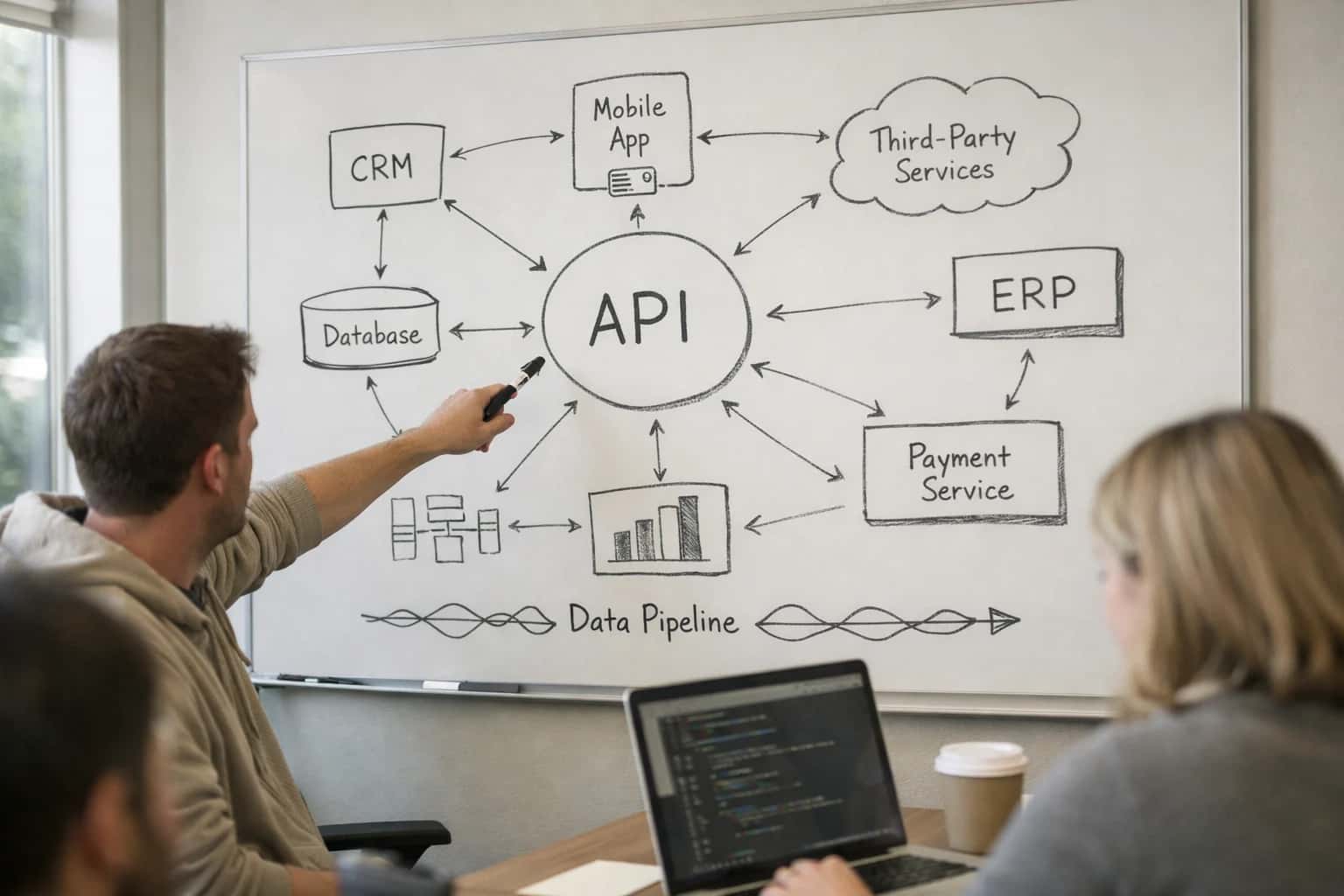
Where AI Fits into CRM Commission Workflows
A technical blueprint for integrating AI into CRM-based commission tracking to automate calculations, verify payouts, and reduce disputes.
The high-value impact is moving from a monthly reconciliation cycle plagued by disputes to a near-real-time, transparent calculation. For example, a complex plan with accelerators, team splits, and clawback provisions can be processed in seconds post-close. The AI can flag anomalies for human review—like a discount exceeding a threshold or a product sold outside a rep's territory—before the commission is finalized. This is implemented by deploying a lightweight orchestration agent (using a framework like LangChain or a custom service) that calls your CRM's REST API (e.g., Salesforce Composite API) to fetch deal data, uses an LLM with a reasoning prompt to apply plan rules, and then writes the results back, creating an audit log entry. The system can also generate a plain-language summary for the rep in a Chatter post or an email, explaining the calculation.
Rollout requires a phased, governance-first approach. Start with a pilot on a single, well-defined compensation plan and a controlled group of reps. Implement a human-in-the-loop approval step in the automation flow where all AI-generated commissions are routed to a finance manager for a final sign-off before syncing to your payroll system (e.g., ADP, Workday). This builds trust and provides a feedback loop to refine the AI's prompts. Critical to success is ensuring the AI has access to a clean, version-controlled source of truth for comp plans—often integrating with a Contract Lifecycle Management (CLM) platform like Ironclad or a dedicated wiki. Over time, the system can evolve to predict commission impacts for pipeline deals and provide reps with "what-if" modeling, directly within the CRM dashboard.
CRM Surfaces for AI Commission Integration
The Core Data Model for AI
AI models need structured access to the compensation rules to perform calculations. This typically involves integrating with custom objects or modules where plans are defined.
Key surfaces for integration:
- Plan Definition Objects: Where tiers, rates, accelerators, and quotas are stored (e.g.,
Commission_Plan__c,Compensation_Tier__c). AI agents query these to understand the rule set. - Product/Service Catalogs: Commission rates often vary by product SKU or service line. Linking to
Product2orService__cobjects provides necessary context. - Territory & Role Assignments: Rules change based on rep territory or role. AI must join plan data with
User,Territory, orRoleobjects to apply the correct logic.
Implementation Pattern: An AI service periodically ingests a snapshot of the active plan definitions, product mappings, and assignment rules via the CRM's REST or Bulk API. This creates a referenceable knowledge base for the calculation engine.
High-Value AI Use Cases for Commission Tracking
Commission tracking is a high-stakes, error-prone process often trapped in spreadsheets and manual reviews. AI integration with your CRM automates the interpretation of complex compensation plans, verifies closed-won data, and generates accurate, auditable payout reports, turning a monthly fire drill into a seamless, trusted operation.
Automated Plan Interpretation & Calculation
AI agents ingest your complex, multi-tiered compensation plan documents (PDFs, spreadsheets) and map them to CRM objects like Opportunities, Products, and Quotes. For each closed deal, the system automatically applies the correct rates, accelerators, splits, and caps, calculating the exact commission due without manual spreadsheet work.
Deal Data Verification & Anomaly Detection
Before calculating payouts, AI cross-references the closed-won Opportunity record against related data—contract value, product SKUs, discount approvals, and payment terms—to flag discrepancies. It detects potential errors like misapplied discounts or incorrect product bundling that would skew commissions, prompting finance review.
Self-Service Commission Inquiry Agent
Deploy an AI-powered chatbot within the CRM (e.g., as a Salesforce Lightning component or Slack bot) that allows reps to ask natural language questions: 'What's my YTD commission on Enterprise deals?' or 'Why was my Q4 accelerator different?'. The agent retrieves and explains calculations directly from the integrated tracking system, deflecting 80% of inquiries from finance.
Dispute Triage & Resolution Workflow
When a rep contests a payout, AI analyzes the dispute, pulls the relevant deal history, plan rules, and calculation audit trail, and suggests a resolution. It can auto-route to the correct approver (Sales Ops, Finance) within Service Cloud or a custom object, attaching all evidence to accelerate resolution and maintain a clean audit trail.
Forecasting & Accelerator Modeling
AI models use live pipeline data from the CRM to forecast future commission payouts by rep, team, and region. It simulates the impact of 'what-if' scenarios (e.g., closing a specific deal, hitting a quota tier) on accelerator payouts, helping sales leaders and finance with cash flow planning and territory incentives.
Audit-Ready Reporting & Payout Feeds
Automatically generate detailed, narrative commission statements for each rep and summary reports for finance. The AI system creates an immutable audit log of all calculations and can format payout data into the exact feed required by your payroll system (e.g., ADP, Workday) or ERP, ensuring a seamless, error-free transfer.
Example AI Commission Workflows
These concrete workflows illustrate how AI agents can automate and verify commission calculations by interpreting complex compensation plans, analyzing closed-won CRM data, and generating accurate payout reports. Each flow connects to your CRM's data model and automation layer.
Trigger: A deal reaches the 'Closed-Won' stage in Salesforce, HubSpot, or Zoho CRM.
Context Pulled: The AI agent retrieves the full opportunity record, including:
- Deal amount, product line items, and discounts.
- Associated sales rep(s), their roles (e.g., Account Executive, Sales Engineer), and any split percentages.
- The effective date and the linked compensation plan ID.
Agent Action:
- Fetches the relevant compensation plan document (PDF, Word, or structured data in a system like Pave) and uses an LLM with RAG to interpret the rules (e.g., "10% commission on first $100K, 15% thereafter, with a $5K accelerator for deals closed in Q4").
- Applies the interpreted rules to the deal data, calculating gross commission for each involved rep.
- Cross-references against any existing manual adjustments or holds logged in a custom
Commission_Adjustment__cobject.
System Update:
- Creates a
Commission_Calculation__crecord (or equivalent) linked to the opportunity and rep(s). - Populates fields:
Calculated_Amount__c,Rule_Version__c,Calculation_JSON__c(for full auditability). - Triggers an approval workflow in the CRM if the calculated amount deviates by more than 10% from a historical average or if a manual adjustment flag is present.
Human Review Point: The calculated record is routed to the sales operations manager for review within the CRM before being sent to payroll. The agent provides a plain-English summary of the applied rules.
Implementation Architecture: Data Flow & System Design
A production-ready architecture for AI-driven commission tracking integrates directly with your CRM's core compensation objects and financial data streams.
The integration typically connects to three primary data surfaces within your CRM: the Opportunity/Deal object (for closed-won details like product, price, and discount), the Account/Contact object (for rep and payee information), and a custom Compensation Plan object (or external system) housing the complex rules—tiers, accelerators, splits, and holdbacks. An AI agent acts as an interpreter, ingesting the raw deal data and the plan's logic to execute a multi-step calculation. This is not a simple lookup; the agent reasons through scenarios like: 'Does this deal qualify for the Q4 accelerator? Was the split between the SDR and AE correctly applied based on the first-touch rule defined in section 2.1 of the plan?'
The system design follows an event-driven pattern. A Closed-Won status change in Salesforce or HubSpot triggers a webhook, placing a message on a queue (e.g., Amazon SQS, RabbitMQ). A serverless function picks up the job, calls the AI model with the deal context and plan rules, and writes the detailed, line-item calculation back to a custom Commission Calculation Record. This record links to the original Opportunity and includes fields for the calculated gross amount, adjustments, explanatory notes from the AI, and a confidence score. For governance, all inputs, the AI's reasoning chain (via tracing), and the final output are logged to an immutable audit table. Disputed calculations can be re-run with human-override flags, and the audit trail provides clear justification for any payout variance.
Rollout is phased. Start with a shadow mode where the AI calculates commissions in parallel with the existing manual process for one quarter, comparing outputs and tuning prompts for edge cases. Phase two automates calculations for a single, straightforward product line or sales team, with results routed to a finance manager for approval within the CRM (e.g., via an Approval Process in Salesforce). The final phase expands to the entire organization, with the AI generating preliminary payout reports and a human-in-the-loop step for final sign-off. The key is maintaining a closed feedback loop: any manual correction made by the compensation team is used to retrain or refine the AI's interpretation of the plan rules, continuously improving accuracy and reducing the dispute rate over time.
Code & Payload Examples
Parsing Complex Compensation Rules
AI models ingest commission plan documents (PDFs, Word files) and structured quota data to build a dynamic rules engine. This interprets multi-tiered accelerators, product splits, team overrides, and clawback clauses that are often too complex for standard CRM formula fields.
Typical Inputs:
- Commission plan PDFs attached to
Compensation_Plan__cor custom objects. - Quota assignments on
UserorSales_Rep__crecords. - Product family mappings from
PricebookEntryor customProduct_Group__c.
AI Output: A structured JSON rule set that can be evaluated against closed-won opportunity data, replacing manual spreadsheet logic.
json// Example AI-Generated Rule Payload { "plan_id": "FY25-Q2-Enterprise", "rules": [ { "rule_id": "accelerator_tier_1", "condition": "deal_amount > 100000 && product_family == 'Platform' && rep_tenure > 12", "action": "apply_multiplier", "parameters": { "multiplier": 1.15, "cap": null } }, { "rule_id": "team_override_split", "condition": "is_team_deal == true", "action": "split_commission", "parameters": { "primary_rep_share": 0.7, "secondary_rep_share": 0.3 } } ] }
Realistic Time Savings & Operational Impact
A comparison of manual commission workflows versus AI-augmented processes, showing realistic time savings and operational improvements for finance and sales operations teams.
| Process | Manual Workflow | AI-Augmented Workflow | Key Impact & Notes |
|---|---|---|---|
Commission Plan Interpretation | Finance manually reviews 50+ page PDF plans per rep/role | AI parses plan documents, maps rules to CRM fields | Setup time reduced from days to hours for new plans; ensures rule consistency |
Deal Data Validation & Mapping | Ops reviews each closed-won record for product, tier, discount compliance | AI validates deal attributes against plan rules, flags exceptions | Review time per deal drops from 15-30 minutes to near-instant; catches 95%+ of mapping errors |
Preliminary Calculation Run | Finance runs spreadsheet models, manually inputs data, checks formulas | AI generates preliminary calculations using validated CRM data | First-pass calculation time shifts from days to same-day; allows for iterative scenario modeling |
Dispute Triage & Investigation | Reps submit tickets; Ops manually pulls deal records, emails, notes | AI pre-fetches relevant deal context, communications, and rule history | Investigation prep time reduced from 1-2 hours to minutes; provides auditors with structured evidence |
Payout Report Generation & Distribution | Manual compilation, formatting, and secure distribution to reps/managers | AI auto-generates personalized reports, triggers secure distribution via CRM | Report assembly time goes from half a day to automated; ensures timely, consistent communication |
Audit Trail & Compliance Documentation | Quarterly scramble to compile evidence for SOX/internal audits | AI maintains immutable log of all calculations, rule applications, and overrides | Audit prep effort reduced by 60-80%; provides clear lineage for regulators |
Plan Performance & Anomaly Analysis | Manual spot-checks; deep analysis only after major disputes arise | AI continuously monitors payout patterns, flags statistical outliers and plan inefficiencies | Shifts from reactive to proactive governance; identifies costly plan flaws before next cycle |
Governance, Security & Phased Rollout
Implementing AI for commission tracking requires a deliberate approach to data governance, security, and controlled rollout to ensure accuracy and maintain trust.
The integration architecture must enforce strict role-based access controls (RBAC) within the CRM (e.g., Salesforce, HubSpot) to ensure only authorized users—such as compensation analysts, sales ops, and finance—can view or modify AI-generated commission calculations and underlying models. All AI-driven adjustments to Opportunity, Closed Won, or custom Commission Statement objects should create a full audit trail, logging the original data, the AI's reasoning (e.g., which compensation plan rule was applied), the user who approved the change, and the timestamp. Data flows between the CRM and the AI service should be encrypted in transit, and any Personally Identifiable Information (PII) should be masked or pseudonymized before processing to meet internal compliance standards.
A phased rollout is critical for managing risk and building confidence. Start with a pilot group—a single sales team or region—and run the AI system in shadow mode. Here, the AI generates commission calculations in parallel with the existing manual or rules-based process, allowing you to compare outputs, identify discrepancies in complex scenarios (like multi-tiered accelerators or split commissions), and refine the AI's logic without impacting live payouts. The next phase involves human-in-the-loop approval, where the AI generates draft commission statements and flags low-confidence calculations for a compensation analyst's review within the CRM workflow before finalization. Only after achieving a high accuracy rate (>99%) should you move to full automation for standard, well-defined plan components.
Ongoing governance requires a Commission Review Board—typically comprising Sales Operations, Finance, and IT—to oversee the AI system. This board is responsible for validating the AI's performance against each new compensation plan cycle, auditing a sample of calculations monthly, and establishing a clear escalation path for disputes. The AI model itself should be versioned and retrained periodically as plan rules change, with all changes documented. This structured, transparent approach transforms AI from a black-box risk into a governed, scalable system that reduces reconciliation workload while ensuring every rep is paid accurately and on time.
Enabling Efficiency, Speed & Accuracy
Intelligent Analysis, Decision & Execution
We build AI systems for teams that need search across company data, workflow automation across tools, or AI features inside products and internal software.
Talk to Us
Search across company data
Give teams answers from docs, tickets, runbooks, and product data with sources and permissions.
Useful when people spend too long searching or get different answers from different systems.

Automate internal workflows
Use AI to route work, draft outputs, trigger actions, and keep approvals and logs in place.
Useful when repetitive work moves across multiple tools and teams.

Add AI to products and internal tools
Build assistants, guided actions, or decision support into the software your team or customers already use.
Useful when AI needs to be part of the product, not a separate tool.
Frequently Asked Questions
Common technical and operational questions about integrating AI into CRM commission tracking workflows.
AI models are not directly given your compensation plan document. Instead, the plan's logic is operationalized into a structured data format the system can query. Here’s the typical implementation pattern:
- Plan Decomposition: Your compensation rules (e.g., tiered rates, accelerators, product-specific bonuses, SPIFs) are broken down into a set of machine-readable rules, often stored in a configuration database or as code.
- Context Retrieval: When a deal is marked
Closed-Wonin the CRM (e.g., Salesforce), an AI agent is triggered. It retrieves:- The deal record (amount, products, close date, rep).
- The rep's record (quota, tenure, tier).
- Any applicable overrides or special terms from a custom object.
- AI Interpretation & Calculation: The agent uses a language model to:
- Parse unstructured notes attached to the deal for manual adjustments or exceptions.
- Generate a human-readable explanation of which rules applied and why.
- Call a deterministic calculation engine (the rule set from step 1) with the structured data to compute the final payout. The LLM does not do the math itself but orchestrates the process and explains it.
- Audit Trail: The system logs the input data, the rules invoked, the calculated result, and the AI-generated rationale as a new
Commission Calculation Auditrecord in the CRM.

About the author
Prasad Kumkar
CEO & MD, Inference Systems
Prasad Kumkar is the CEO & MD of Inference Systems and writes about AI systems architecture, LLM infrastructure, model serving, evaluation, and production deployment. Over 5+ years, he has worked across computer vision models, L5 autonomous vehicle systems, and LLM research, with a focus on taking complex AI ideas into real-world engineering systems.
His work and writing cover AI systems, large language models, AI agents, multimodal systems, autonomous systems, inference optimization, RAG, evaluation, and production AI engineering.
Partnered with leading AI, data, and software stack.





How We Work
Custom AI workflows for your Business
One-fit-all AI don't work for modern businesses. At Inferensys, we aim to understand your business & custom requirements; which we use to define most efficient agentic workflows, the data, and the tools for your business.
01
Review the use case
We understand the task, the users, and where AI can actually help.
Read more02
Pick the right approach
We define what needs search, automation, or product integration.
Read more03
Build the first useful version
We implement the part that proves the value first.
Read more04
Improve from there
We add the checks and visibility needed to keep it useful.
Read moreThe first call is a practical review of your use case and the right next step.
Talk to Us