The integration surface spans three critical connection points: the Salesforce Opportunity object, the Ironclad Workflow Engine API, and a shared contract metadata layer. AI agents orchestrate the flow, triggering an Ironclad contract draft from a qualified Salesforce opportunity, then parsing the executed agreement to push key obligations, dates, and financial terms back into the corresponding Salesforce Account, Opportunity, and custom objects. This creates a closed-loop system where sales data informs contract creation, and contract intelligence enriches the CRM.

Integration
AI Integration for Ironclad and Salesforce
Architecture for bi-directional AI integration between Ironclad CLM and Salesforce, automating contract creation from opportunities, and pushing obligation data back to account records.
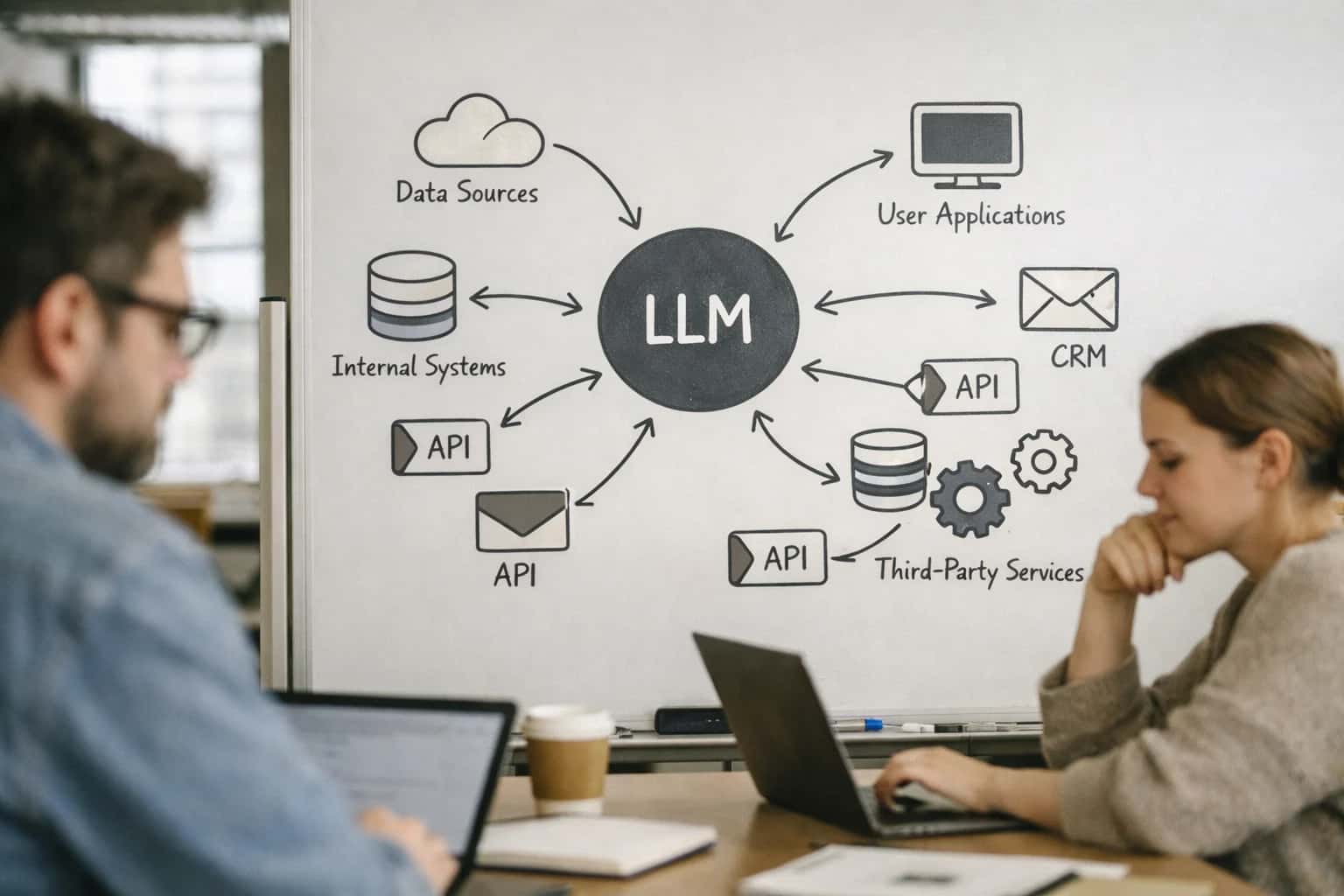
ARCHITECTURE FOR BI-DIRECTIONAL AUTOMATION
Where AI Fits in the Ironclad-Salesforce Stack
A technical blueprint for connecting AI across Ironclad's contract workflows and Salesforce's opportunity-to-cash records.
Implementation centers on a middleware service that listens for Salesforce Platform Events (e.g., Opportunity_Stage_Changed) and calls Ironclad's APIs to launch a configured workflow. The AI layer acts at two stages: first, using a fine-tuned model to populate the Ironclad draft with deal-specific terms from the Salesforce record; second, after execution, employing a RAG pipeline over the final PDF to extract obligations into structured JSON. This payload is then mapped to Salesforce fields via the Composite API, updating records and creating Tasks or Salesforce CPQ quote lines for tracking.
Rollout requires careful governance: AI-suggested contract terms should route through Ironclad's approval workflows for legal review, and extracted obligation data in Salesforce must have clear ownership (e.g., Sales Ops, Customer Success). Start with a pilot on a single contract type like NDAs or Order Forms, using the audit trails in both platforms to trace AI actions. For broader context, see our guides on /integrations/customer-relationship-management-platforms/ai-integration-for-salesforce and /integrations/contract-lifecycle-management-platforms/ai-integration-for-ironclad-contract-lifecycle-management.
IRONCLAD AND SALESFORCE
Key Integration Surfaces for AI
From Salesforce Opportunity to Ironclad Draft
This surface automates contract creation by using AI to interpret the commercial terms captured in a Salesforce Opportunity. When an Opportunity reaches a specific stage (e.g., 'Contracting'), an AI agent is triggered.
Key Workflow:
- Data Extraction: The agent pulls key fields from the Opportunity and related objects (Account, Contact, Products, Quotes from Salesforce CPQ).
- Template Selection & Assembly: Using the deal type, product mix, and region, the AI selects the correct Ironclad template (e.g., MSA, Order Form, NDA) from the clause library.
- Dynamic Population: The agent populates the draft contract with extracted data, ensuring consistency and reducing manual copy-paste errors.
- Initial Risk Flag: The AI performs a first-pass review against standard playbooks, flagging any deal-specific terms (e.g., unusual liability caps) that require legal review before routing the draft into Ironclad's workflow engine.
IRONCLAD AND SALESFORCE INTEGRATION
High-Value AI Use Cases
Connecting AI across Ironclad and Salesforce automates the contract-to-cash loop, turning static agreements into dynamic business triggers. These patterns synchronize legal data with commercial operations.
01
Opportunity-to-Contract Drafting
AI analyzes a won Salesforce Opportunity, its products, and custom terms to auto-generate a first-draft contract in Ironclad. It pulls approved clauses from the playbook, populates pricing schedules from the Quote, and routes for legal review, cutting drafting time from days to hours.
Days -> Hours
Drafting time
02
Obligation Sync to Account Health
Upon contract execution in Ironclad, an AI agent parses the document to extract key obligations, SLAs, and reporting requirements. It creates custom fields, tasks, and timeline events on the related Salesforce Account and Opportunity, giving Customer Success and Sales a live view of contractual commitments.
Manual -> Automated
Data sync
03
AI-Powered Contract Review for Sales
A copilot embedded in Salesforce provides real-time risk scoring for inbound vendor or customer paper. It summarizes key deviations from standard playbooks, flags non-standard clauses (e.g., liability caps, auto-renewals), and suggests negotiation points—empowering sales reps before escalating to legal.
80% Reduction
Initial legal escalations
04
Renewal Forecasting & Trigger Automation
AI monitors Ironclad for contracts approaching renewal or termination windows. It enriches Salesforce renewal forecasts with actual contract terms, auto-creates renewal Opportunities, and triggers personalized email sequences from Marketing Cloud or Pardot based on the agreement type and value.
Proactive Alerts
90+ days in advance
05
Unified Contract Q&A for Revenue Teams
A RAG-powered assistant, accessible via Salesforce Lightning or Slack, allows sales, finance, and support to ask natural language questions (e.g., "What's the payment term for Acme Corp?"). It retrieves answers from the executed contract in Ironclad, grounding responses in the specific document to reduce errors and legal back-and-forth.
Self-Service
For commercial teams
06
Compliance & Audit Evidence Workflow
For regulated sales (e.g., healthcare, finance), AI validates that draft contracts in Ironclad contain required clauses (e.g., BAA, security addendums). Upon signature, it automatically generates an audit packet—linking the final PDF, clause attestations, and approval trail—and attaches it to the Salesforce Opportunity record for future audits.
Audit-Ready
In 1 sprint
IRONCLAD AND SALESFORCE
Example AI-Driven Workflows
These concrete workflows illustrate how AI agents can automate the bi-directional flow of data and intelligence between Ironclad and Salesforce, turning contract data into actionable business insights and vice versa.
Trigger: A Salesforce Opportunity reaches a "Contracting" stage or a "Generate Agreement" button is clicked.
AI Agent Action:
- The agent calls the Salesforce API to retrieve the Opportunity record, including Account details, Products, Pricing, and key contacts.
- It analyzes the deal context (e.g., product type, region, deal size) against business rules to select the correct Ironclad template (e.g., MSA, Order Form, NDA).
- The agent populates the Ironclad template via API, mapping Salesforce fields to Ironclad variables (e.g.,
{{Account_Name}},{{Total_Amount}},{{Effective_Date}}). - For non-standard terms requested in a Salesforce field (e.g., "Special Payment Terms"), the agent uses an LLM to draft appropriate clause language, grounded in the company's approved playbook stored in Ironclad.
System Update: A new contract workflow is initiated in Ironclad, pre-populated and routed to the correct legal or sales approver. The Salesforce Opportunity is updated with a link to the pending Ironclad contract and its status.
BI-DIRECTIONAL AI WORKFLOW
Implementation Architecture & Data Flow
A practical architecture for connecting Ironclad and Salesforce with AI to automate contract creation and enrich account records.
The integration operates on a bi-directional data flow, triggered by key events in both systems. In the primary flow, a Salesforce Opportunity reaching a specific stage (e.g., 'Contracting') triggers a webhook to an orchestration layer. This layer uses the Opportunity, Account, and Product data to call an AI agent, which drafts a contract in Ironclad by selecting the correct template, populating clauses from a playbook, and inserting deal-specific terms. The draft is then created in Ironclad via its REST API, initiating its native workflow for legal review and redlining.
In the reverse flow, once a contract is executed in Ironclad, an AI extraction service parses the final document. Using a fine-tuned model or RAG pipeline over your clause library, it identifies key obligations, dates, SLAs, and financial terms. This structured data is then pushed back to the corresponding Salesforce Account and Opportunity records, populating custom fields like Contract Expiry Date, Key Obligations Summary, and Auto-Renewal Flag. This creates a closed-loop system where sales has immediate visibility into contract terms, and service/account management can proactively track deliverables.
Governance is enforced through a central API gateway that manages authentication (using OAuth for both platforms), logs all AI prompts and payloads for audit trails, and routes requests. A human-in-the-loop checkpoint is configured for high-value deals, where the AI's draft or extracted terms are presented in a review queue within Ironclad or Salesforce for a legal or sales ops user to approve before final creation or data sync. This architecture ensures AI augments the process while maintaining control, turning a multi-day manual drafting and data entry cycle into a same-day, automated workflow.
BI-DIRECTIONAL INTEGRATION PATTERNS
Code & Payload Examples
Triggering a Contract from an Opportunity
When a Salesforce Opportunity reaches a specific stage (e.g., 'Contracting'), an Apex trigger or Flow calls a webhook to Ironclad's Workflow API, passing key deal data. The AI layer enriches this payload by fetching standard clauses from the playbook based on product type and region, then assembles a first draft.
json// Webhook Payload from Salesforce to Ironclad AI Service { "trigger": "opportunity_closed_won", "opportunity_id": "0064x00000A1b2cC", "account_name": "Acme Corp", "primary_contact_email": "[email protected]", "deal_attributes": { "product_type": "Enterprise SaaS", "total_contract_value": 125000, "billing_terms": "Annual", "region": "EMEA" }, "salesforce_context": { "owner_id": "0054x00000B2c3dE", "playbook_reference": "EMEA_SAAS_MASTER_2024" } }
The AI service processes this, retrieves the appropriate Ironclad template, populates it, and initiates a new contract workflow, returning the Ironclad document ID to Salesforce.
AI-ENABLED IRONCLAD AND SALESFORCE SYNC
Realistic Time Savings & Operational Impact
This table illustrates the tangible workflow improvements and time savings from a bi-directional AI integration between Ironclad and Salesforce, focusing on automating contract creation and obligation tracking.
| Process | Before AI | After AI | Implementation Notes |
|---|---|---|---|
Opportunity-to-Contract Draft | Sales rep manually requests legal, 1-3 day wait | AI auto-generates first draft from Salesforce data, <1 hour | Uses approved Ironclad templates; legal reviews final draft |
Clause Selection & Playbook Adherence | Manual review against PDF playbooks, high risk of deviation | AI suggests compliant clauses, flags deviations in real-time | Grounds LLM in your specific clause library; human final approval |
Contract Data Extraction for Salesforce | Admin manually transcribes key dates/values post-signature | AI extracts terms, auto-populates Salesforce custom objects | Maps to Account, Opportunity, and Contract objects; audit trail maintained |
Obligation & Milestone Tracking | Spreadsheet or calendar reminders, often missed | AI identifies obligations, creates Salesforce Tasks & Events | Triggers workflows for renewals, deliverables, and compliance checks |
Contract Risk Review Triage | Legal reviews all contracts, regardless of complexity | AI scores risk, routes only high/complex deals for legal review | Low-risk NDAs/SOWs can be auto-approved per business rules |
Sales Rep Contract Queries | Email legal or search repository, 2-4 hour response | AI Q&A assistant answers basic questions using RAG on contract corpus | Provides sourced answers; escalates complex queries to legal team |
Renewal Forecast Accuracy | Manual pipeline inspection, often outdated | AI analyzes contract terms & usage, predicts renewal likelihood/date | Updates Salesforce Opportunity stage and forecast category automatically |
ENTERPRISE IMPLEMENTATION PATTERNS
Governance, Security & Phased Rollout
A practical guide to deploying and governing AI integrations between Ironclad and Salesforce with control and measurable impact.
A production integration between Ironclad and Salesforce requires a secure, governed data pipeline. This typically involves:
- API Gateway & Service Account Management: Using a dedicated middleware layer (like an Azure Logic App or MuleSoft flow) with service accounts scoped to specific object permissions in Salesforce (e.g.,
Opportunity,Account,Contractobject) and Ironclad webhooks. - Data Flow & Audit Trail: All AI-triggered actions—such as creating a contract draft from a Salesforce Opportunity or pushing an extracted obligation back to an Account record—must be logged with a correlation ID. This creates an immutable audit trail across both systems for compliance and debugging.
- PII & Sensitive Data Handling: Contracts often contain sensitive commercial terms. The integration architecture should redact or tokenize specific fields (e.g., pricing, personal data) before processing by external LLMs, ensuring data residency and privacy policies are enforced at the pipeline level.
Rollout should follow a phased, risk-based approach:
- Phase 1: Read-Only Intelligence: Deploy AI agents to analyze executed contracts in Ironclad and generate summary insights (e.g., key dates, parties, obligation summaries) pushed to a custom Salesforce
Contract_Insights__cobject. This provides value without altering core workflows. - Phase 2: Assisted Drafting: Enable AI to generate first-pass contract drafts in Ironclad from a qualified Salesforce Opportunity, using a human-in-the-loop approval step in the Ironclad workflow before the draft is shared externally. This phase focuses on sales efficiency for high-volume, low-risk agreements like NDAs or Order Forms.
- Phase 3: Bi-Directional Automation: Activate closed-loop workflows where AI extracts obligations from executed contracts in Ironclad and creates tracked tasks or custom fields on the related Salesforce Account. Implement automated deviation alerts to notify legal ops in Slack or Teams if a contract draft significantly departs from the approved playbook.
Governance is critical for legal and procurement teams. Establish a cross-functional steering committee (Legal Ops, Sales Ops, IT) to:
- Review and approve all AI-generated clause suggestions and redlines against the company's legal playbook, stored in Ironclad's clause library.
- Define the risk scoring thresholds that determine automatic routing vs. mandatory legal review within Ironclad's workflow engine.
- Schedule quarterly model performance reviews, evaluating the AI's accuracy on clause extraction and obligation identification using a held-out set of contracts, and retraining models as needed.
This structured approach ensures the AI integration accelerates cycle times and improves data accuracy while maintaining the necessary legal and operational controls over the contract lifecycle.
Enabling Efficiency, Speed & Accuracy
Intelligent Analysis, Decision & Execution
We build AI systems for teams that need search across company data, workflow automation across tools, or AI features inside products and internal software.
Talk to Us
Search across company data
Give teams answers from docs, tickets, runbooks, and product data with sources and permissions.
Useful when people spend too long searching or get different answers from different systems.
Enterprise searchRAGPermissions
Read more
Automate internal workflows
Use AI to route work, draft outputs, trigger actions, and keep approvals and logs in place.
Useful when repetitive work moves across multiple tools and teams.
AI agentsWorkflow automationGovernance
Read more
Add AI to products and internal tools
Build assistants, guided actions, or decision support into the software your team or customers already use.
Useful when AI needs to be part of the product, not a separate tool.
AI integrationDecision supportModel routing
Read moreAI INTEGRATION FOR IRONCLAD AND SALESFORCE
Frequently Asked Questions
Practical answers for architects and operations leaders planning a bi-directional AI integration between Ironclad and Salesforce to automate contract workflows and enrich CRM data.
The most common trigger is a stage change in the Salesforce Opportunity object, such as moving to 'Contracting' or 'Final Review'.
Typical Implementation Flow:
- A workflow rule or process builder in Salesforce detects the stage change.
- An outbound message or callout is sent to a middleware layer (e.g., MuleSoft, a custom service) or directly to Ironclad's API.
- The integration service packages key Opportunity data:
json
{ "opportunityId": "006xx000000ABC", "accountName": "Acme Corp", "primaryContact": "003xx000000XYZ", "dealValue": 150000, "productLines": ["Enterprise Support", "Premium API"], "proposedTerm": 36 } - This payload is used to initiate a contract workflow in Ironclad, selecting the correct template (e.g., MSA, Order Form) and pre-populating clause variables.
- The newly created Ironclad contract ID is written back to a custom field on the Salesforce Opportunity for traceability.

About the author
Prasad Kumkar
CEO & MD, Inference Systems
Prasad Kumkar is the CEO & MD of Inference Systems and writes about AI systems architecture, LLM infrastructure, model serving, evaluation, and production deployment. Over 5+ years, he has worked across computer vision models, L5 autonomous vehicle systems, and LLM research, with a focus on taking complex AI ideas into real-world engineering systems.
His work and writing cover AI systems, large language models, AI agents, multimodal systems, autonomous systems, inference optimization, RAG, evaluation, and production AI engineering.
LinkedIn
Limited slotsGet a Free AI Consultation
Partnered with leading AI, data, and software stack.





How We Work
Custom AI workflows for your Business
One-fit-all AI don't work for modern businesses. At Inferensys, we aim to understand your business & custom requirements; which we use to define most efficient agentic workflows, the data, and the tools for your business.
01
Review the use case
We understand the task, the users, and where AI can actually help.
Read more02
Pick the right approach
We define what needs search, automation, or product integration.
Read more03
Build the first useful version
We implement the part that proves the value first.
Read more04
Improve from there
We add the checks and visibility needed to keep it useful.
Read moreThe first call is a practical review of your use case and the right next step.
Talk to Us